
Your Brain Isn’t Always a Reliable Narrator
From interpreting information to filling in missing details and deciding which memories deserve attention, your brain does far more work behind the scenes than you probably think. And while these shortcuts help you move through the world efficiently most of the time, they can also produce some surprisingly bizarre results. You might, for example, remember events that never happened, overlook something directly in front of you, hear sounds that aren’t there, or become convinced you knew an outcome all along. As you'll see, as much as we rely on our brains every day, the very thing we trust can also pull the rug from right under our feet.

1. False Memories Can Feel Completely Real
Memory isn’t a perfect recording of what happened, and your brain can alter details whenever you recall an event. Suggestions from other people, photographs, later information, and even repeated imagination can sometimes become incorporated into what you remember. In experiments, people have confidently recalled events that researchers established never occurred. The unsettling part is that a false memory can feel just as vivid and convincing as an accurate one.

2. You Can Miss Something Right in Front of You
When your attention is strongly focused on one task, surprisingly obvious events can pass unnoticed. This phenomenon, known as inattentional blindness, has been demonstrated in experiments where participants fail to notice unexpected people or objects appearing directly within their field of view. Your eyes may technically receive the information, but your awareness doesn't necessarily register it. Paying attention to one thing often means filtering out far more than you realize.

3. Your Brain Can Fill In Your Blind Spot
Each eye has a small area where the optic nerve leaves the retina and no light-detecting cells are present. You generally don't notice a missing section in your vision because your brain automatically supplies information based on the surrounding scene and input from your other eye. Under carefully designed viewing conditions, you can actually demonstrate this blind spot for yourself. Everyday vision feels continuous partly because your brain is constantly completing information that never reached it in the first place.

4. Déjà Vu Can Make a New Moment Feel Familiar
Déjà vu produces the strange conviction that you've already experienced a situation even when you know that shouldn't be possible. Researchers have proposed several explanations involving memory, familiarity, attention, and the brain's processing of similar situations. One possibility is that something about a new scene resembles a previous experience closely enough to trigger familiarity without producing a specific memory. That mismatch between what you know and what you feel can make an ordinary moment seem unusually significant.
 https://kaboompics.com/ on Pexels
5. You Can Hear Words That Aren’t Actually There
The brain doesn't process sound passively; it uses expectations and context to interpret what reaches your ears. If a noisy or unclear recording is paired with a written phrase, for example, you may suddenly become convinced that the recording contains those exact words. Similar effects can occur with repetitive background noise, music played backward, or ambiguous speech. Once your brain settles on an interpretation, it can become surprisingly difficult to hear the sound any other way.

6. Hallucinations Can Occur Randomly
Seeing or hearing something that isn't physically present isn't limited to severe psychiatric conditions. Hallucination-like experiences can occur during sleep deprivation, bereavement, certain neurological conditions, medication use, intense stress, or the transitions into and out of sleep. Some people also experience brief visual or auditory perceptions while otherwise healthy and fully aware that the experience was unusual. The brain is capable of generating sensory experiences internally, and occasionally those experiences can feel indistinguishable from information coming from outside.

7. Your Expectations Can Change What You Taste
Taste isn't produced by your tongue alone, because sight, smell, texture, temperature, and expectation all influence flavor perception. Changing the color or labeling of a food or drink can affect what people expect to taste and sometimes what they report actually tasting. Even price or presentation can shape judgments about how enjoyable something seems. Your brain begins interpreting the experience before you've had much time to evaluate the flavor itself.

8. You May Remember an Event Differently Every Time
Recalling a memory can temporarily make it flexible enough to be updated before it is stored again, a process often discussed as memory reconsolidation. That means remembering isn't necessarily the simple act of retrieving an unchanged event from storage. New emotions, information, interpretations, and conversations can affect the version you later recall. Over many years, a frequently repeated memory may gradually drift away from some of its original details without you noticing.

9. Your Brain Can Create Movement Where None Exists
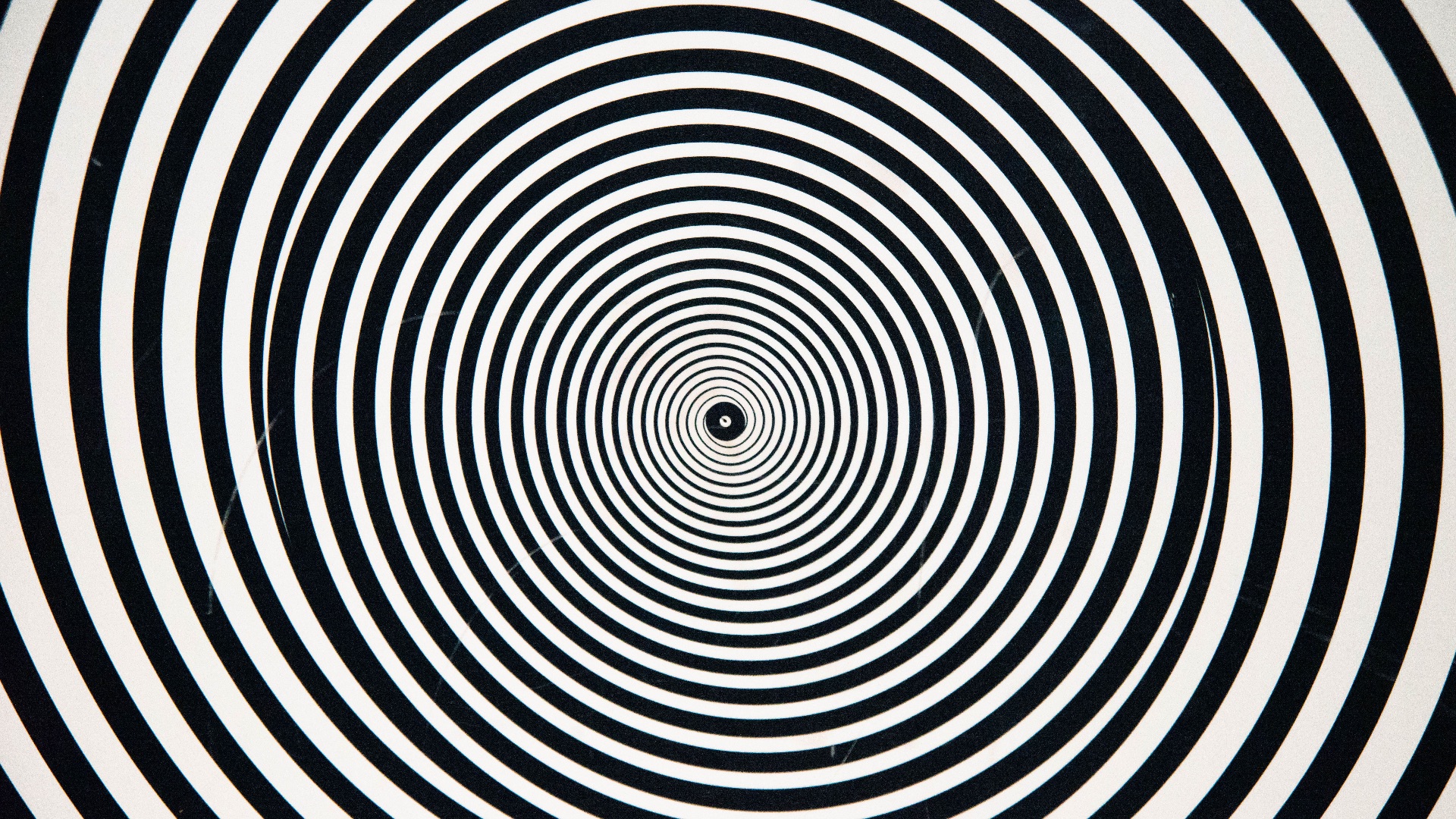
Certain optical illusions make completely stationary images appear to ripple, rotate, pulse, or shift. These effects exploit the way your visual system processes contrast, brightness, edges, and tiny movements of the eyes. The image itself isn't changing, even though your perception strongly suggests that something is happening. Knowing you're looking at an illusion doesn't always make the apparent motion disappear.
10. Things Can Become Temporarily Unrecognizable
After spending a long time concentrating on something familiar, you may occasionally experience a strange moment when an ordinary word, object, or place suddenly seems unfamiliar. Repeating a word over and over can produce a related effect called semantic satiation, in which the word briefly seems to lose its meaning. The knowledge hasn't disappeared, but the usual feeling of recognition can temporarily weaken. It's a small reminder that familiarity itself is something the brain actively produces.
11. Your Mind Can Invent Details to Complete a Story
When information is incomplete, your brain often makes reasonable assumptions without clearly marking them as assumptions. You might remember the general meaning of a conversation while unconsciously supplying wording that was never actually spoken. Similar errors can appear when people reconstruct the order, motivation, or context surrounding past events. Because the completed version makes sense, it can become difficult to separate what you actually observed from what your brain inferred afterward.

12. Anxiety Can Convince You That You’re in Danger
Anxiety can make the brain’s threat-detection systems respond strongly even when there isn’t an immediate danger. A harmless physical sensation, unfamiliar environment, or uncertain situation may be interpreted as a warning that something is wrong, which can increase your heart rate, breathing, and sense of fear. Those physical changes can then seem like further evidence that a threat is present, sometimes contributing to a panic attack. The danger may not be external, but the brain and body’s alarm response can still feel completely real.

13. Your Brain Can Make Time Feel Faster or Slower
A minute doesn't always feel like the same amount of time, even though the clock remains consistent. Attention, emotion, novelty, boredom, stress, and the number of memories created during an experience can all affect how long a period seems. Waiting for something unpleasant may make seconds feel unusually prolonged, while an absorbing activity can make an hour seem surprisingly short. Your internal sense of time is an interpretation rather than a precise stopwatch.

14. The Placebo Effect Can Produce Real Changes
Expecting a treatment to help can sometimes influence symptoms even when the treatment contains no active therapeutic ingredient. Placebo effects have been studied particularly in areas such as pain, nausea, fatigue, and other symptoms influenced by the nervous system. This doesn't mean people are pretending to feel better, because expectation can trigger measurable biological responses. What your brain anticipates can affect how your body experiences certain sensations.

15. You Can Be Certain You Knew Something All Along
Once you learn how an event turned out, the outcome often starts to seem more predictable than it really was. This is known as hindsight bias, and it can cause people to overestimate how clearly they anticipated an election result, relationship outcome, business failure, or other event. Earlier uncertainty becomes harder to reconstruct after the answer is known. Your brain effectively updates the story of the past using information that only became available later.

16. Faces Can Appear Where None Exist
Humans are highly responsive to faces, so the brain often detects them in arrangements that merely resemble eyes, a nose, and a mouth. Electrical outlets, building fronts, clouds, food, and household objects can suddenly appear to have recognizable expressions. This tendency is one form of pareidolia, the perception of meaningful patterns in ambiguous stimuli. You usually know the object isn't actually a face, but the facial impression can remain immediate and difficult to ignore.

17. Your Brain Can Hide Changes Happening in Plain Sight
You might assume you'd immediately notice a major alteration to a scene you're examining, but experiments on change blindness show otherwise. When a visual interruption occurs, people can overlook substantial differences between two images, including objects disappearing, colors changing, or people being replaced. Attention doesn't preserve a complete, detailed picture of everything around you. Instead, the brain prioritizes selected information and often leaves the rest surprisingly incomplete.

18. Dreams Can Turn Into Sleep Paralysis
During rapid eye movement sleep, the body normally suppresses most voluntary muscle activity so you don't physically act out your dreams. Sleep paralysis can occur when awareness returns before that temporary muscle inhibition has fully ended. Some people also experience vivid sensations, sounds, figures, pressure, or the feeling that another presence is nearby. Because parts of dream imagery can overlap with waking awareness, the experience may feel extremely real despite lasting only a short period.
19. Your Brain Can Make You Feel an Invisible Limb
Some people who have lost a limb continue to experience sensations that seem to come from the missing body part. These phantom limb sensations may include movement, pressure, itching, temperature, or pain. The phenomenon reflects the fact that your experience of your body depends heavily on neural representations rather than only on signals arriving from the body itself. Even after physical anatomy changes, the brain's internal body map may continue operating in unexpected ways.

20. Repetition Can Make a Claim Seem More Believable
Hearing the same statement repeatedly can increase its perceived truthfulness, even when repetition provides no new evidence. Psychologists call this the illusory truth effect, and familiarity appears to play an important role because repeated information becomes easier for the brain to process. That ease can be mistaken for accuracy, especially when you don't stop to examine the original source. Simply encountering an idea many times can therefore influence your judgment more than you might expect.

KEEP ON READING

20 Ways Perimenopause Changes Fitness and Appetite


20 Unhealthy Obsessions People Have

20 Gut-Friendly Fermented Foods For Everyday Meals