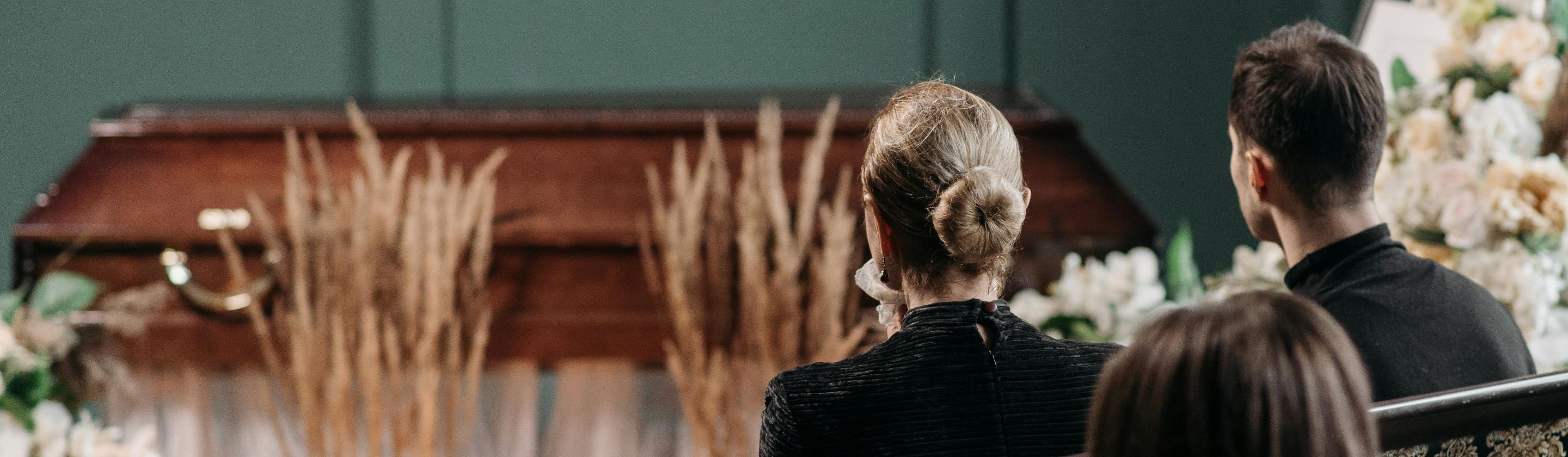
A Love That Faced Constant Opposition
My name is Mary, and at seventy years old, I've seen my fair share of life's ups and downs. The greatest joy I ever experienced was meeting Jerry, a brilliant lawyer with kind eyes and a gentle smile that could light up even the darkest room.
We met at a charity fundraiser when I was fifty-eight—both of us with decades of life experience behind us, both ready for a second chance at happiness. Our connection was immediate and profound, like finding a missing puzzle piece I hadn't realized I'd been searching for all along.
Within a year, we were married in a small ceremony by the lake, with only a handful of close friends in attendance. What should have been the beginning of our golden years together was instead the start of a family war that would last until Jerry's final breath.
The battle lines were drawn almost immediately, and I found myself facing three formidable opponents I never asked to fight.
 Image by RM AI
The Three Daughters Who Wanted Nothing To Do With Us
Jerry had three daughters from his previous marriage—Jen, Kayla, and Maureen. From the moment Jerry introduced me as his girlfriend, they made their disapproval crystal clear.
Jen, the oldest at thirty-five, was a corporate executive who inherited her father's sharp mind but none of his warmth. Kayla, the middle child at thirty-two, worked as a nurse but showed none of that profession's compassion when it came to her father's new relationship.
Maureen, the youngest at twenty-eight, was perhaps the most vocal in her disdain, frequently posting passive-aggressive comments on social media about 'gold-diggers' and 'trophy wives'—never tagging me directly but making sure the message reached me nonetheless. Their rejection cut Jerry deeply, though he tried not to show it.
I would often find him staring at old family photos late at night, a glass of scotch in hand, wondering where he had gone wrong. What hurt the most was knowing that I was the wedge driving them apart, though I had never intended to be.
 Image by RM AI
A Father's Generosity Despite Rejection
Despite being effectively cut out of his daughters' lives after our marriage, Jerry never stopped being a father. He paid for their college educations in full—Jen's MBA from Wharton, Kayla's nursing degree, and Maureen's film school tuition.
When Jen wanted to buy her first home, Jerry quietly transferred $50,000 into her account for the down payment. When Kayla's car broke down beyond repair, a new Honda appeared in her driveway with a simple note that read, 'Drive safely.
Love, Dad.' When Maureen's independent film project ran out of funding, an anonymous donor contributed exactly the amount needed to complete it. The girls accepted these gifts without acknowledgment, as if they were entitled to them.
Jerry never complained, saying only, 'They're my daughters, Mary. What else would I do?' I admired his unwavering love, even as I struggled to understand how he could give so much and receive so little in return.
Each birthday and Christmas, he would send cards and gifts that went unacknowledged, each silence another small crack in his heart.
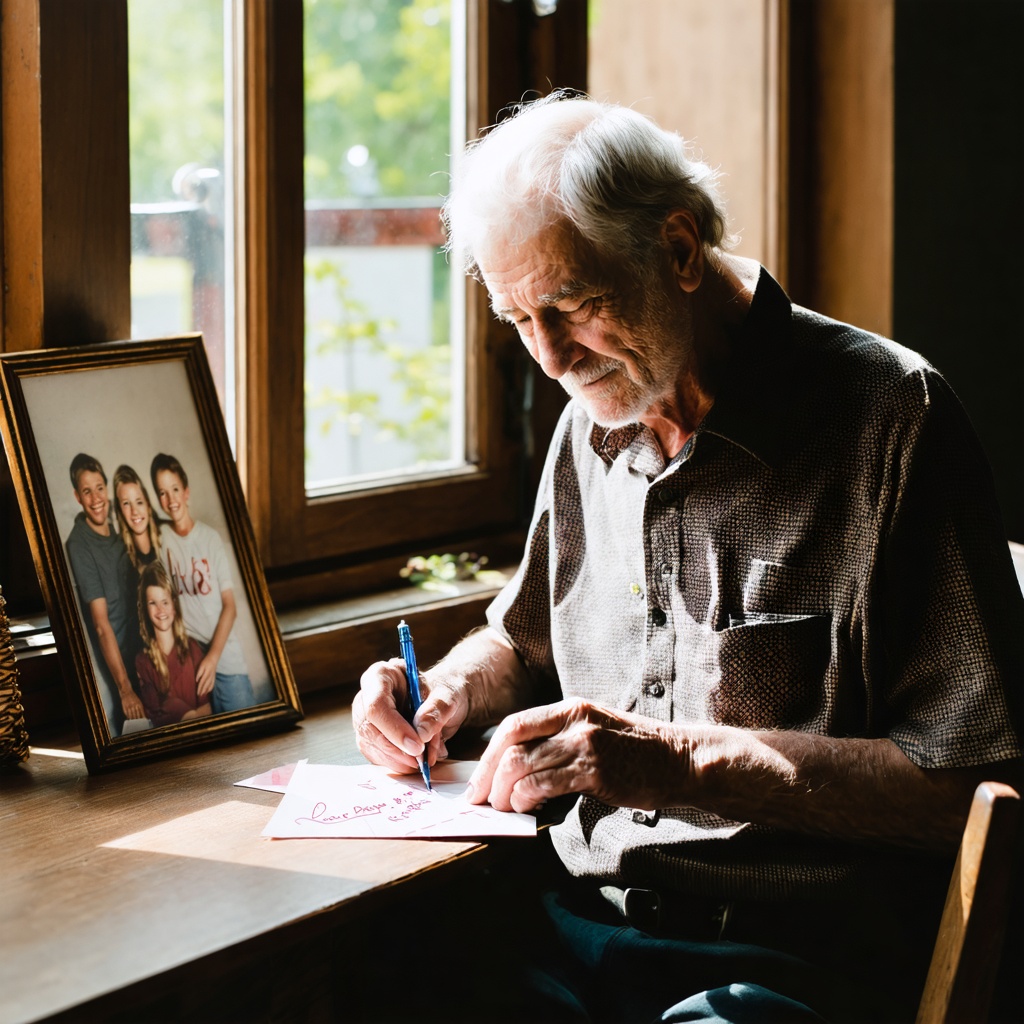 Image by RM AI
The Devastating Diagnosis That Changed Everything
The day the doctor said the word 'cancer,' I felt the world shift beneath my feet. Stage four pancreatic cancer—the diagnosis came like a death sentence, with a prognosis measured in months, not years.
Jerry took the news with the same quiet dignity he approached everything in life, squeezing my hand and whispering, 'We'll make the most of the time we have left.' That evening, as I held him while he finally allowed himself to cry, my phone began buzzing with notifications. Somehow, the news had reached Jen, Kayla, and Maureen, and suddenly, after years of silence, they were all reaching out with concerned messages and promises to visit soon.
Jerry's face lit up when I showed him the texts, hope blooming in his eyes for the first time since the diagnosis. 'Maybe something good can come from this after all,' he said, his voice weak but optimistic.
I didn't have the heart to voice my suspicions about their sudden change of heart, not when I could see how much their attention meant to him.
 Image by RM AI
The Suspicious Return of Long-Lost Daughters
Within a week of Jerry's diagnosis becoming known, all three daughters had made appearances at our home, bearing gifts and forced smiles. Jen brought an expensive organic tea set, claiming it had 'cancer-fighting properties.' Kayla arrived with medical journals and second opinion referrals, positioning herself as the healthcare expert.
Maureen showed up with a professional camera, suggesting she document 'Dad's journey' for a personal film. I watched from the sidelines as Jerry embraced them, tears streaming down his face, overjoyed at what he believed was a reconciliation.
But I noticed how their eyes darted around our home, taking inventory of the artwork, the antiques, the signs of the comfortable life Jerry had built. I caught Jen opening drawers in his study when she thought no one was looking.
I overheard Kayla on the phone discussing Jerry's 'assets' with someone. I saw Maureen photographing documents left on his desk.
Something felt wrong about their sudden reappearance, but for Jerry's sake, I kept my concerns to myself. His happiness was all that mattered now, even if it was built on what I suspected was a foundation of greed.
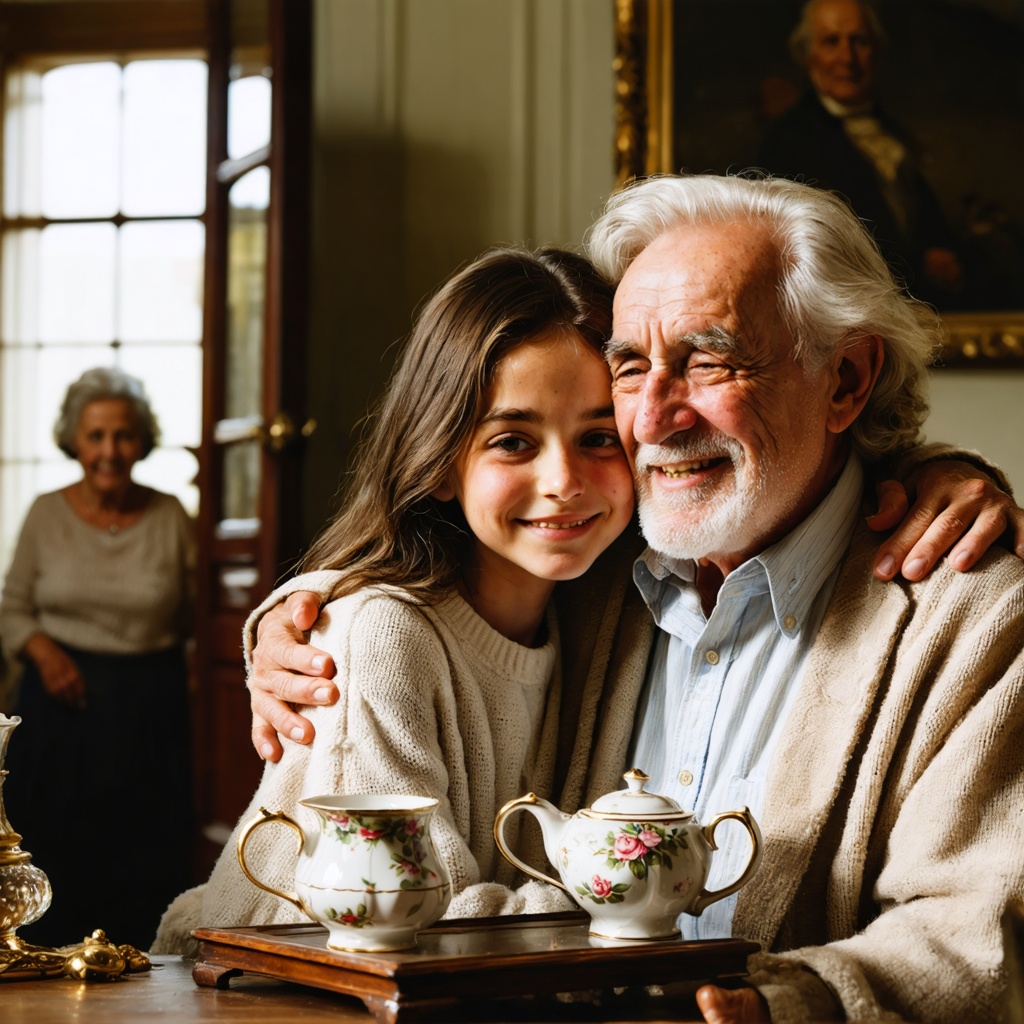 Image by RM AI
The Hospital Room That Became Our Second Home
Jerry's condition deteriorated rapidly, and within three weeks of his diagnosis, he was admitted to the hospital full-time. I transformed his sterile room into something more personal—bringing his favorite blanket from home, setting up framed photos on the windowsill, playing the jazz music he loved on a small bluetooth speaker.
I practically lived there, sleeping in the uncomfortable recliner beside his bed, only leaving to shower and change clothes when absolutely necessary. The nurses began saving me coffee from their break room, and the night shift staff knew to bring an extra dinner tray.
Jerry's lucid moments became increasingly rare, but when he was awake, he would look at me with such love that it made all the discomfort worthwhile. 'You don't have to stay all the time,' he would whisper, to which I always replied, 'Where else would I be?' It was during this time that Jen, Kayla, and Maureen established a visiting pattern—they would arrive together, usually around lunchtime when the hospital cafeteria was serving, and stay just long enough to be seen by the medical staff before departing with promises to return soon.
 Image by RM AI
Social Media Vultures Circling for Likes
What disturbed me most about the daughters' hospital visits was their inappropriate behavior. While Jerry lay there, growing thinner and more jaundiced by the day, they treated his hospital room like a social media photo opportunity.
Jen would position herself beside his bed, carefully angling her phone to capture her 'concerned daughter' expression while ensuring her designer watch was visible in the shot. Kayla would don her nursing scrubs for visits, though she worked at a completely different hospital, and pose while pretending to check his vital signs.
Maureen was perhaps the worst, directing her sisters in what she called 'authentic family moment' videos, sometimes asking Jerry to repeat emotional statements if she felt the first take wasn't compelling enough. These photos and videos would promptly appear on their social media accounts with captions like 'Fighting alongside Dad #CancerWarriors' or 'Providing round-the-clock care for Daddy #DaughterlyDuty.' The comments would flood in, praising their dedication, while I—who actually hadn't left his side in days—was rarely mentioned or included in the frame.
The performative nature of their grief made my stomach turn.
 Image by RM AI
The Painful Reality Behind the Camera Flashes
What their social media followers couldn't see was what happened when the phones were lowered. Jen, Kayla, and Maureen would sit in the corner of the room, scrolling through their phones, occasionally showing each other the comments and likes their hospital posts were receiving.
They rarely engaged Jerry in meaningful conversation, even during his lucid periods. Once, when he asked Kayla about her son's baseball tournament, she responded with a distracted 'It was fine' before returning to her screen.
When he inquired about Jen's husband's new job, she muttered something about it 'going well' without looking up. When he expressed interest in seeing clips from Maureen's latest film project, she promised to show him 'next time.' The disconnect between their public personas as devoted daughters and their actual behavior was stark and heartbreaking.
One afternoon, after they left, Jerry reached for my hand and said, 'They're busy with their own lives. It's enough that they come at all.' His generosity of spirit, even now, moved me to tears.
I couldn't bring myself to shatter his illusion that they were there out of love rather than expectation.
 Image by RM AI
A Husband's Request for Peace in His Final Days
After a particularly difficult day when the daughters had spent their entire visit taking 'candid' photos of themselves bringing Jerry water he didn't ask for and adjusting pillows that were already comfortable, I finally broke down. Once they left, I gently told Jerry how much their behavior upset me—how they seemed more concerned with documenting their presence than actually being present, how they ignored him in favor of their phones, how they were using his illness for attention.
I expected him to be hurt or defensive, but instead, he just looked tired. 'Mary,' he said, his voice barely above a whisper, 'I know what they're doing.
I'm not blind.' He squeezed my hand with what little strength he had left. 'But I don't want to spend whatever time I have left fighting battles I can't win.
Let them have their photos. Let them tell whatever story makes them feel better.
What matters is that you and I know the truth about our life together.' His wisdom and forgiveness humbled me. I promised him I would keep the peace, no matter how difficult it might be.
Little did I know how soon that promise would be tested in ways I couldn't imagine.
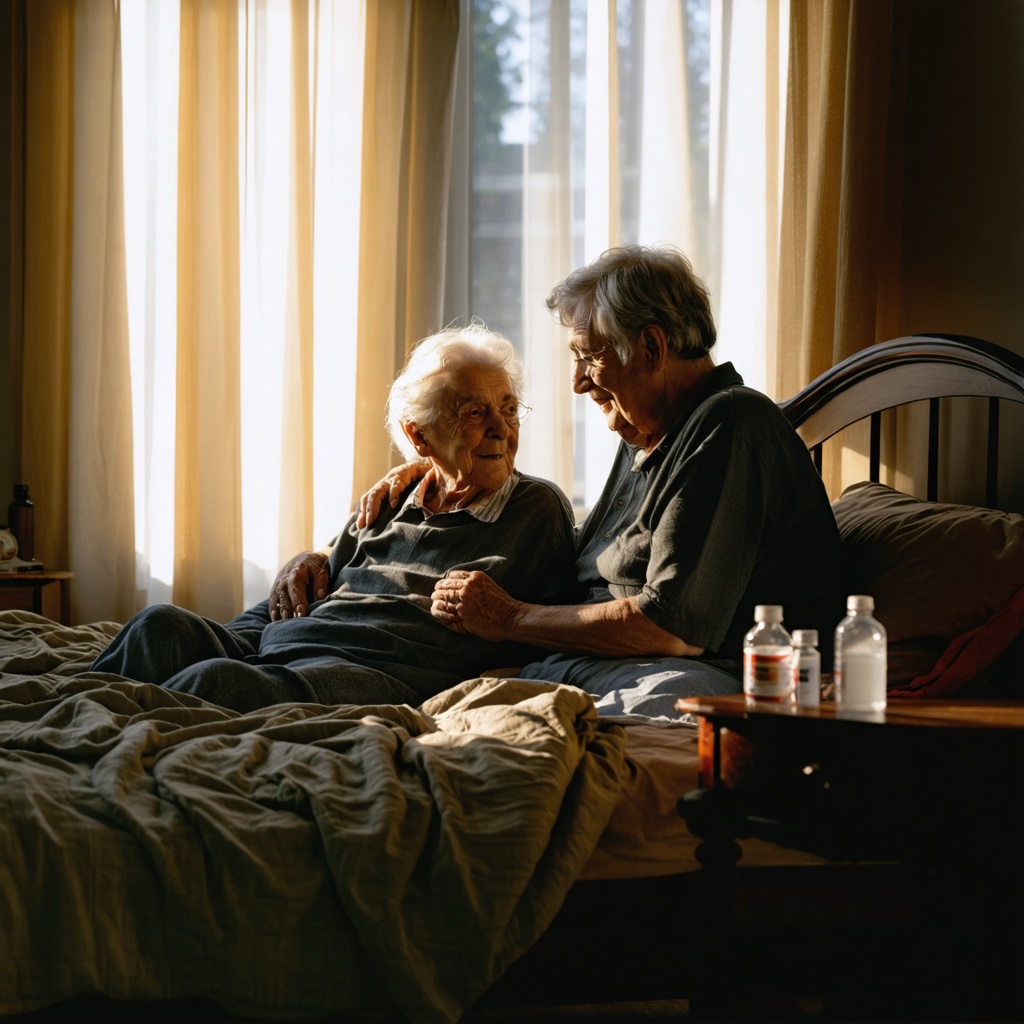 Image by RM AI
The Mysterious Words That Would Change Everything
It was during one of Jerry's increasingly rare moments of clarity, just two days before he passed, that he said something that initially made no sense to me. The hospital room was quiet that evening—no visitors, no medical staff performing checks, just the two of us and the rhythmic beeping of the monitors.
Jerry had been sleeping most of the day, but suddenly his eyes opened, surprisingly clear and focused. He looked directly at me and said, with unexpected urgency, 'Bureau, top left drawer.' I leaned closer, thinking I had misheard.
'What was that, love?' I asked. He repeated, 'Bureau, top left drawer.
Remember that.' Before I could ask him to explain, his eyes drifted closed again, and he fell back into a deep sleep. I made a mental note of the strange instruction, assuming it was just the medication causing confusion.
Perhaps he was dreaming about organizing his office, or maybe he was concerned about some document I needed to find. I stroked his hair and whispered that I loved him, not realizing that those cryptic words would soon prove to be the most important message he ever gave me.
 Image by RM AI
The Peaceful Goodbye That Broke My Heart
Two days after Jerry's mysterious message, I woke in the hospital recliner to an unusual silence. The constant beeping of the monitors had stopped.
In that moment, before I even opened my eyes fully, I knew he was gone. Jerry had passed peacefully in his sleep, his face relaxed in a way it hadn't been for months.
I sat there holding his hand for what felt like hours, talking to him as if he could still hear me, telling him how much I loved him and how grateful I was for our years together. The nurses were kind enough to give me space before calling the time of death and beginning the necessary procedures.
I was the one who called his daughters, my voice breaking as I delivered the news. Their responses were telling—Jen asked immediately about funeral arrangements and whether the lawyer had been notified, Kayla wanted to know if she could collect his personal effects from the hospital room, and Maureen asked if I would mind if she filmed the funeral for a 'memorial project.' Not one of them asked how I was holding up or offered condolences.
Within an hour of my calls, all three had posted black-and-white photos of themselves with Jerry on social media, accompanied by lengthy captions about their devastating loss.
 Image by RM AI
Social Media Mourning vs. Real-Life Responsibilities
In the days following Jerry's death, his daughters' social media accounts became virtual shrines to their 'beloved father.' Jen posted throwback photos from her childhood with captions detailing how Jerry had been her 'rock and inspiration.' Kayla shared medical information about pancreatic cancer, positioning herself as an advocate who had fought alongside her father until the end. Maureen created a video montage of hospital footage set to emotional music that garnered thousands of sympathetic comments.
What these posts didn't show was their complete absence from the actual work of laying their father to rest. When I called to ask for help selecting a casket, Jen claimed she had an important business meeting.
When I needed assistance with the obituary, Kayla said she was too emotionally fragile to contribute. When I requested family photos for the memorial display, Maureen promised to send them but never did.
I ended up handling everything myself—choosing the casket, writing the obituary, selecting the burial plot, arranging the service, addressing the invitations, and even picking out the suit Jerry would be buried in. The contrast between their public performance of grief and their private unwillingness to participate in the real work of mourning was stark and painful.
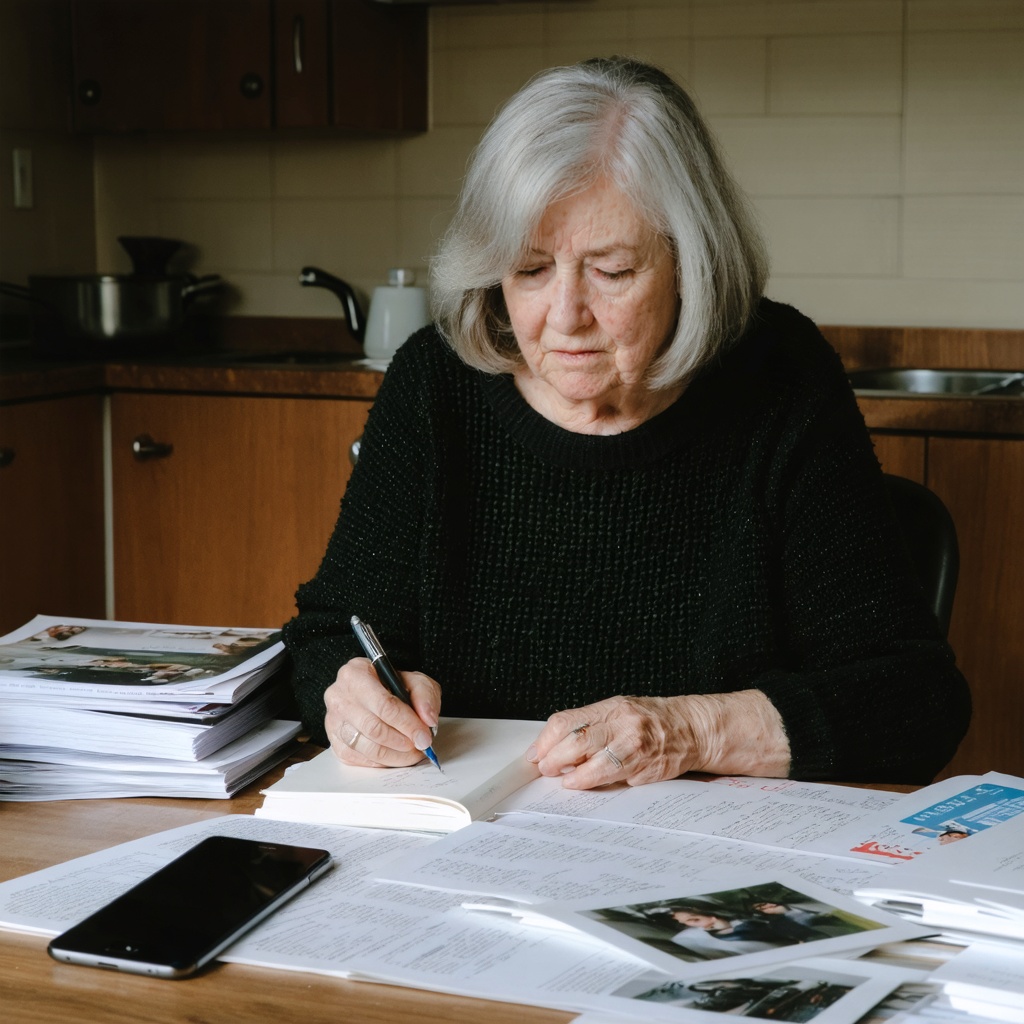 Image by RM AI
The Funeral That Revealed True Colors
Jerry's funeral was a dignified affair, attended by colleagues from his law firm, old friends from college, neighbors, and clients whose cases he had championed over the years. The church was filled with people whose lives he had touched, each with a story about his kindness, integrity, or generosity.
His daughters arrived late, dressed in designer black dresses that seemed more appropriate for a fashion show than a funeral, and immediately positioned themselves in the front row, tissues in hand for the cameras Maureen had arranged to have present. During the service, I noticed them checking their phones, presumably monitoring the social media response to the professional photos they had taken beside the casket before other guests arrived.
When it came time for family members to speak, all three declined, citing emotional distress, yet they had been composed enough to give interviews to a local newspaper reporter in the church vestibule earlier. After the burial, they made brief appearances at the reception, took more photos with prominent attendees, and left early, explaining they had flights to catch.
Several of Jerry's oldest friends approached me afterward, expressing confusion about the daughters' behavior, having heard for years how devoted Jerry was to them. I simply smiled sadly and changed the subject, honoring my promise to Jerry to keep the peace.
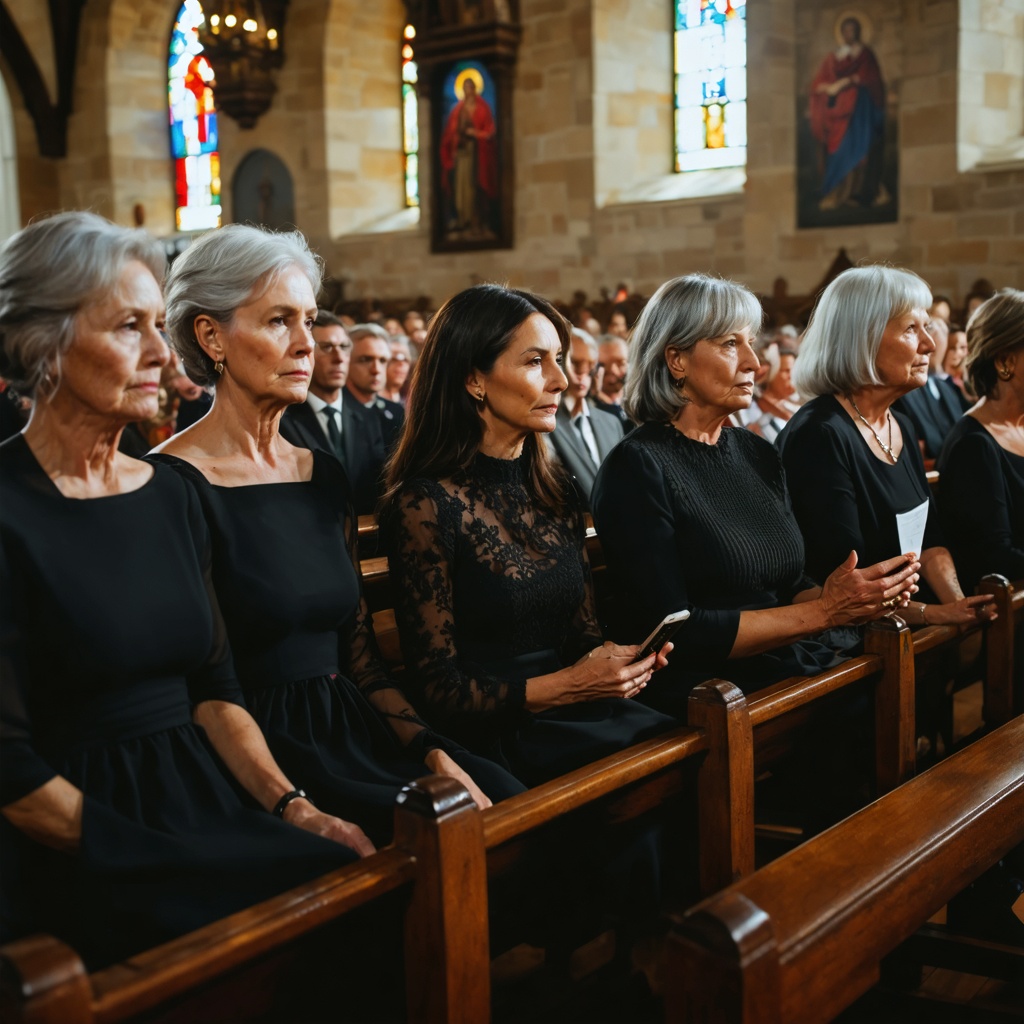 Image by RM AI
The Reading of the Will That Sparked a War
One week after the funeral, we gathered at the office of Jerry's law firm for the reading of his will. I arrived early, still numb with grief but determined to handle whatever came next with the dignity Jerry would have expected.
Dean, Jerry's longtime partner and friend, greeted me with a warm hug and a sympathetic smile. 'He adored you, Mary,' he said quietly.
'Never forget that.' Jen, Kayla, and Maureen arrived together, their expressions a mixture of anticipation and performative sadness. They had brought their spouses and Jen's personal attorney, a sharp-looking woman with a predatory smile.
The atmosphere in the conference room was tense as Dean prepared to read the document that would reveal Jerry's final wishes. I noticed the daughters exchanging confident glances, as if they had already divided his assets among themselves in their minds.
Dean cleared his throat and began reading the formal legal language, and I sat quietly, hands folded in my lap, prepared to accept whatever Jerry had decided. Nothing could have prepared any of us for what came next.
 Image by RM AI
The Shocking Inheritance That No One Expected
The conference room fell silent as Dean read the critical portion of the will: 'I, Gerald James Harrington, being of sound mind, do hereby bequeath my entire estate, including all properties, investments, savings, and personal effects, to my beloved wife, Mary Elizabeth Harrington.' He paused, looking up over his reading glasses at the stunned faces around the table.
The silence lasted only seconds before Jen slammed her hand on the table. 'This is impossible!' she shouted.
'There must be some mistake!' Kayla began to cry, though her eyes remained suspiciously dry. Maureen pulled out her phone as if to document the moment before her husband gently pushed it down.
Dean continued reading, explaining that Jerry had updated his will six months after his marriage to me, five years before his diagnosis. The document was properly witnessed and notarized, with no legal ambiguities.
As Dean finished reading, Jen's attorney requested copies of all documents, her expression calculating. The daughters huddled together, whispering furiously, occasionally shooting venomous glances in my direction.
I sat in shock, not because of the inheritance—Jerry and I had discussed his wishes—but because of the naked rage now directed at me from the three women who had claimed to love their father so deeply just days before.
 Image by RM AI
The Vicious Accusations That Followed
As soon as Dean concluded the formal reading, the daughters' facade of grief shattered completely. 'You manipulated him!' Jen accused, pointing a manicured finger at me.
'He would never have cut us out if you hadn't poisoned him against us!' Kayla joined in, her medical knowledge suddenly directed at questioning Jerry's mental capacity when he wrote the will. 'Dad was always forgetful, even before the cancer.
He wasn't thinking clearly when he did this.' Maureen, ever the dramatist, began filming the confrontation on her phone, narrating as if documenting a true crime story. 'This is what elder abuse looks like,' she said to her camera.
'This is how gold-diggers operate.' Their husbands looked uncomfortable but remained silent, clearly unwilling to contradict their wives. Dean attempted to restore order, reminding everyone that the will was legally sound and executed years before Jerry's illness, but the daughters were beyond reasoning with.
'We are his blood!' Jen shouted. 'We are his legacy, not some woman he married in his old age!' The word 'gold-digger' was repeated so many times it began to lose meaning.
I remained silent throughout their tirade, remembering my promise to Jerry to maintain peace. But as their accusations grew more vicious and personal, I realized that peace might no longer be an option.
 Image by RM AI
The Threat of Legal Action That Could Cost Me Everything
Before we left the conference room that day, Jen's attorney served me with notice of their intent to contest the will. 'We'll be filing on grounds of undue influence, lack of testamentary capacity, and elder financial abuse,' she informed me coldly.
'My clients are prepared to take this all the way to trial if necessary.' The daughters stood behind their lawyer, a united front of entitlement and anger. 'We'll take back what's rightfully ours,' Kayla declared.
'Dad would never have wanted you to have everything while his own children got nothing.' Maureen added dramatically, 'This is about justice for our father.' I looked at these women—these strangers who shared Jerry's last name but seemingly none of his character—and felt a profound sadness. Not for myself, but for Jerry, who had loved them so unconditionally despite their rejection.
Dean escorted me out through a back entrance to avoid the scene the daughters were creating in the reception area. In his car, he warned me that the legal battle ahead would be ugly and expensive.
'They're going to drag your name through the mud, Mary,' he said gravely. 'And they might win.
Jerry always provided for them financially, which establishes a pattern. The courts often favor biological children in contested wills.'
 Image by RM AI
The Lawyer's Warning That Left Me Terrified
The following day, Dean invited me to his office for a private conversation about the case. The comfortable leather chairs and book-lined walls that had once felt welcoming now seemed to close in around me as he explained the reality of my situation.
'Mary, I need to be completely honest with you,' he said, his expression grave. 'The girls have a strong case.
Jerry had always provided financial support to them throughout their lives—college tuition, down payments on homes, cash gifts. There's a clear pattern of financial provision.' He shuffled through some papers on his desk.
'Additionally, they'll argue that your marriage, coming later in Jerry's life, was too brief to justify disinheriting his children from a thirty-year marriage.' I felt my heart sink as he continued. 'The courts tend to be sympathetic to biological children in these cases, especially when there's a second spouse who entered the picture relatively recently.' He leaned forward, his voice dropping.
'Mary, I have to warn you—there's a very real possibility you could lose this case. If that happens, you might have to sell the house to pay them their share of the estate.' The thought of losing the home where Jerry and I had built our life together, short as it was, brought tears to my eyes.
For the first time since his death, I felt truly alone and vulnerable.
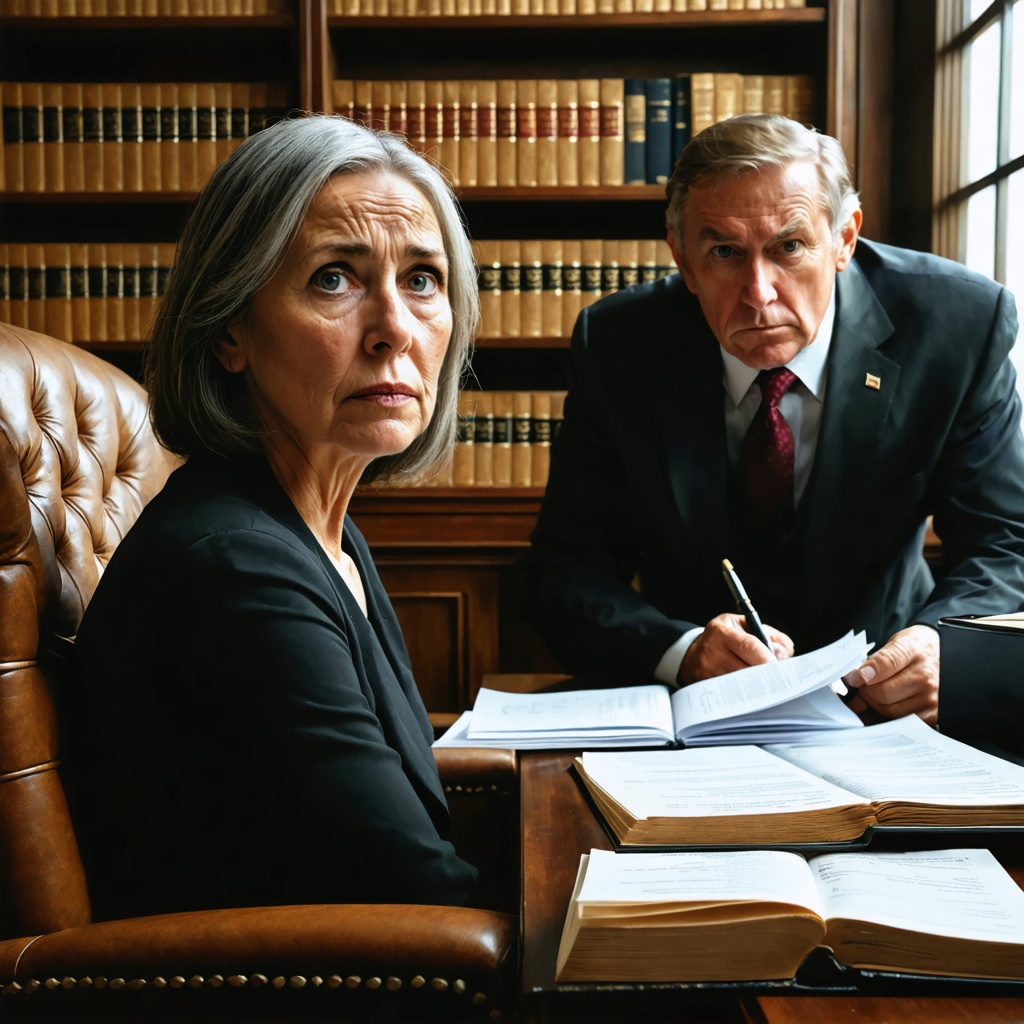 Image by RM AI
The House That Held So Many Memories
After meeting with Dean, I returned to the house that Jerry and I had shared—a beautiful Craftsman-style home with a wraparound porch where we'd spent countless evenings watching the sunset. Every corner held memories:
the kitchen where Jerry attempted to teach me his grandmother's lasagna recipe, always laughing at my culinary disasters; the living room where we'd dance to old records on Sunday mornings;
the garden where he'd patiently explained the difference between perennials and annuals as we planted together. The thought of losing this place, of strangers walking through these rooms with no knowledge of the love they had contained, was unbearable.
I wandered from room to room, touching familiar objects, remembering the life we'd shared. In our bedroom, I opened his closet and buried my face in his shirts, still carrying his scent.
In his office, I ran my fingers along the spines of his beloved law books. It was there, standing in the doorway of his office, that I suddenly remembered the strange words Jerry had spoken in the hospital:
'Bureau, top left drawer.' I had been so consumed by grief and the funeral arrangements that I'd completely forgotten his mysterious instruction. My heart racing, I crossed the room to the antique bureau where Jerry kept important documents.
With trembling hands, I pulled open the top left drawer.
 Image by RM AI
The Mysterious Drawer That Contained the Truth
The drawer slid open smoothly, revealing the usual assortment of folders and documents—property deeds, insurance policies, our marriage certificate. Nothing seemed unusual or out of place.
Had Jerry been confused after all? I was about to close the drawer when I noticed a manila folder pushed to the back, unmarked except for a small red dot in the corner—Jerry's personal system for identifying confidential information.
With a strange sense of anticipation, I pulled out the folder and opened it on his desk. Inside were three separate documents, each sealed in a clear plastic sleeve for protection.
The papers looked official, with laboratory letterheads and scientific terminology. As I began to read, my hand flew to my mouth in shock.
These were paternity test results, dated nearly twenty years earlier, for Jen, Kayla, and Maureen. Each report contained the same conclusion, stated in clinical, unambiguous language:
'The alleged father, Gerald James Harrington, is excluded as the biological father of the tested child.' I sat down heavily in Jerry's chair, my mind racing. Jerry had known for twenty years that the daughters he had raised, supported, and loved were not biologically his.
Yet he had never revealed this information, not even when they rejected him after our marriage. He had continued to provide for them, to love them unconditionally, to seek their approval and affection.
The magnitude of his generosity of spirit overwhelmed me.
 Image by RM AI
The Secret Jerry Had Kept for Decades
As I examined the documents more carefully, I found a handwritten note from Jerry tucked behind the test results. It was dated shortly after the tests were conducted, the paper yellowed with age.
'I have decided not to reveal these results to anyone,' he had written. 'Biology doesn't make a father.
Love does. I have loved these girls since the day they were born, and nothing will change that.
They are my daughters in every way that matters.' I traced his handwriting with my fingertip, tears blurring my vision. This was the man I had married—a man of such extraordinary compassion that he would raise another man's children as his own without complaint, even after discovering the truth.
The note continued: 'If you're reading this, Mary, it means I've told you where to find these documents.
Use them only if absolutely necessary to protect yourself. The girls don't need to know unless their actions force your hand.' I sat in his office until the sun set, thinking about what Jerry had known all these years, about the betrayal he had suffered not once but twice—first from his ex-wife's infidelity, and later from the daughters he had chosen to love despite everything.
The weight of this secret felt enormous, and I understood now why he had waited until the very end to share it with me.
 Image by RM AI
The Game-Changing Evidence I Never Wanted to Use
The next morning, I called Dean and asked him to come to the house immediately. When he arrived, I wordlessly handed him the folder.
I watched his expression change from curiosity to shock as he reviewed the documents, his legal mind immediately grasping their significance. 'Mary,' he said finally, looking up at me, 'these change everything.
With these test results, their case against you essentially disappears. They have no legal standing to contest the will if they're not Jerry's biological children.' He began pacing the room, thinking aloud.
'Jerry was under no legal obligation to provide for them at all, which makes his previous financial support even more generous. The fact that he continued to support them knowing they weren't biologically his actually strengthens your position rather than theirs.' He stopped and looked at me seriously.
'Are you sure Jerry wanted you to use these? This information will devastate them.' I showed him Jerry's note, and Dean nodded slowly.
'He was protecting you, even at the end.' The knowledge that I held the power to completely destroy the daughters' case—and potentially their understanding of their own identities—was overwhelming. This wasn't just about money or property anymore;
it was about fundamental truths that would reshape three women's understanding of who they were.
 Image by RM AI
The Ethical Dilemma That Kept Me Awake at Night
For three nights, I barely slept, wrestling with what to do with the information Jerry had left me. On one hand, the paternity tests would immediately end the legal threat to my home and financial security.
On the other hand, revealing this information would shatter the daughters' understanding of their identity and heritage. Despite their behavior toward Jerry and me, did they deserve such a devastating revelation?
I thought about Jerry's decades of silence—how he had chosen to be their father in every way that mattered, regardless of biology. Would revealing the truth now honor or betray his lifetime of discretion?
I called my sister for advice, careful not to reveal the specific details over the phone. 'If Jerry wanted you to have this information to protect yourself, then he meant for you to use it if necessary,' she said pragmatically.
'He wouldn't have told you where to find it otherwise.' I also spoke with my pastor, again in hypothetical terms, who reminded me that sometimes the kindest action isn't the easiest one. 'Truth and compassion aren't always opposing forces,' he said.
'Sometimes the most compassionate thing we can do is be truthful, even when that truth is painful.' By the fourth morning, I had made my decision. I called Dean and asked him to arrange a settlement meeting with the daughters and their attorney.
 Image by RM AI
The Settlement Offer They Didn't See Coming
Dean arranged the meeting at his office, a neutral territory where we might have a chance at a civil discussion. The daughters arrived together again, their expressions smug and confrontational.
Their attorney began by reiterating their demands—they wanted the entire estate divided equally among the three of them, with me receiving only what the law required for a spouse (which, in our state, was considerably less than what Jerry had left me). Dean listened patiently, then cleared his throat.
'Before we proceed with litigation, my client would like to offer a settlement,' he said calmly. The daughters exchanged victorious glances, clearly believing I was capitulating under pressure.
'Mrs. Harrington is prepared to offer you half of the estate's total value, to be divided equally among the three of you,' Dean continued.
'This is a one-time offer, made in good faith.' Their attorney looked surprised at the generosity of the offer, but before she could speak, Jen interjected. 'Half?
That's insulting! We're his children—we deserve everything!' Kayla nodded vigorously.
'Dad would have wanted us to have it all. She was just a blip at the end of his life.' Maureen, ever dramatic, added, 'We won't settle for crumbs from our father's table.' Their attorney tried to caution them, clearly recognizing that half the estate was a generous offer given the circumstances, but they wouldn't listen.
 Image by RM AI
The Rejection That Sealed Their Fate
The daughters' attorney pulled them aside for a hushed conference, clearly trying to make them understand that the settlement offer was more than fair. I could see her gesturing emphatically, her expression growing increasingly frustrated as they shook their heads.
When they returned to the table, their attorney looked resigned. 'My clients appreciate the offer,' she began diplomatically, 'but they feel it doesn't adequately reflect their father's true wishes or their position as his only children.' Jen couldn't resist adding, 'We know what Dad would have wanted.
He always took care of us. Always.' Dean and I exchanged glances.
He raised an eyebrow slightly, asking silently if I wanted to proceed. I nodded almost imperceptibly.
'In that case,' Dean said, his voice taking on a formal tone, 'we have no choice but to present evidence that will be entered into the court record if this case proceeds.' He opened a folder and slid copies of the paternity test results across the table. 'These are DNA paternity tests conducted by Gerald Harrington approximately twenty years ago.
As you can see, they conclusively prove that Mr. Harrington was not the biological father of any of the plaintiffs.' The room fell completely silent.
The daughters stared at the documents, their expressions shifting from confusion to disbelief to horror as the implications sank in.
 Image by RM AI
The Moment of Truth That Changed Everything
The silence in the conference room was deafening as Jen, Kayla, and Maureen stared at the paternity test results. Their attorney recovered first, quickly scanning the documents with a professional eye.
'These appear to be legitimate laboratory results,' she said quietly. Jen was the first daughter to speak, her voice shaking with rage and disbelief.
'This is a lie. A fabrication.
Our mother would never—' She couldn't finish the sentence. Kayla, with her medical background, was examining the technical aspects of the reports.
'These testing methods were standard twenty years ago,' she said, her voice hollow. 'The exclusion probability is 99.9%.' Maureen simply sat with her hand over her mouth, tears streaming down her face, for once not reaching for her phone to document the moment.
Their attorney cleared her throat uncomfortably. 'If these documents are authenticated, which they appear to be, then your claim against the estate becomes...
problematic. Legally speaking, you would have no standing to contest the will as non-biological children who were never formally adopted.' The daughters looked shell-shocked, the foundation of their identity crumbling before my eyes.
Despite everything they had done, my heart ached for them in that moment.
 Image by RM AI
The Compassion That Surprised Even Me
Looking at the three women across the table—their makeup streaked with tears, their confident postures now slumped in defeat—I felt an unexpected wave of compassion. Whatever their flaws, whatever their motivations in reconnecting with Jerry during his illness, they were now facing a truth that would forever alter their understanding of themselves.
'I want to be clear about something,' I said, speaking for the first time since the meeting began. 'Jerry knew about these test results for twenty years, but he never stopped considering you his daughters.
He never stopped loving you or supporting you.' I slid Jerry's handwritten note across the table. 'He wrote this when he got the results.' As they read his words about choosing to be their father regardless of biology, fresh tears fell.
'He kept this secret to protect you, not to hurt you,' I continued gently. 'And I'm not revealing it now out of malice.
I'm only doing so because you've left me no choice.' I looked at Dean. 'The settlement offer still stands.
Half of the estate, divided equally among the three of you. Not because you're legally entitled to it, but because I believe it's what Jerry would want.
He spent his life providing for you. I won't stop that now.'
 Image by RM AI
The Shattered Illusions That Couldn't Be Repaired
The daughters' attorney requested a brief recess to confer with her clients, who were clearly in no state to make decisions. They huddled in a corner of the conference room, occasionally glancing back at the paternity tests still lying on the table.
I could see the attorney speaking firmly, likely advising them to accept the settlement given the new evidence. When they returned to the table, they were subdued, the fight gone out of them.
'We'll accept the settlement,' Jen said flatly, not meeting my eyes. Their attorney quickly outlined the terms—half the estate's value to be divided equally among the three daughters, with all claims against the estate to be dropped and a confidentiality agreement regarding the paternity tests to be signed by all parties.
As Dean drafted the preliminary agreement, an uncomfortable silence filled the room. Finally, Kayla spoke, her voice barely above a whisper.
'Did he ever confront Mom about this?' I shook my head. 'Not that he ever told me.
I think he made a decision to protect your relationship with her as well.' Maureen looked up, her eyes red. 'So he just...
carried this secret all those years? Even when we treated him so badly after he married you?' I nodded, unable to find words that would ease their pain.
The truth was both simple and devastating: Jerry had loved them enough to bear their rejection without ever using this knowledge as a weapon, even when it might have explained so much.
 Image by RM AI
The Quiet Departure That Spoke Volumes
After signing the preliminary settlement agreement, the daughters gathered their belongings in silence. The swagger and hostility they had brought into the meeting had evaporated, replaced by a shell-shocked vulnerability that made them look younger, almost childlike.
As they prepared to leave, I touched Jen's arm gently. 'Your father—because that's who he was, in every way that matters—loved you very much.
Nothing about today changes that.' She looked at me for a long moment, her expression unreadable, then nodded slightly before turning away. At the door, Maureen paused and turned back.
'The videos and photos from the hospital,' she said quietly. 'I'll take them all down.
I'm sorry.' It was the only direct apology any of them offered, but it felt significant. Kayla said nothing, but as she passed me, she pressed something into my hand—a small, worn photograph of Jerry holding her as a baby, his face alight with joy.
The gesture spoke volumes about her recognition of the truth: biology aside, Jerry had been her father in the ways that counted.
After they left, Dean and I sat in silence for several minutes. 'That was incredibly generous, Mary,' he finally said.
'Both the settlement and how you handled the revelation.' I shook my head. 'It wasn't generosity.
It was honoring who Jerry was.'
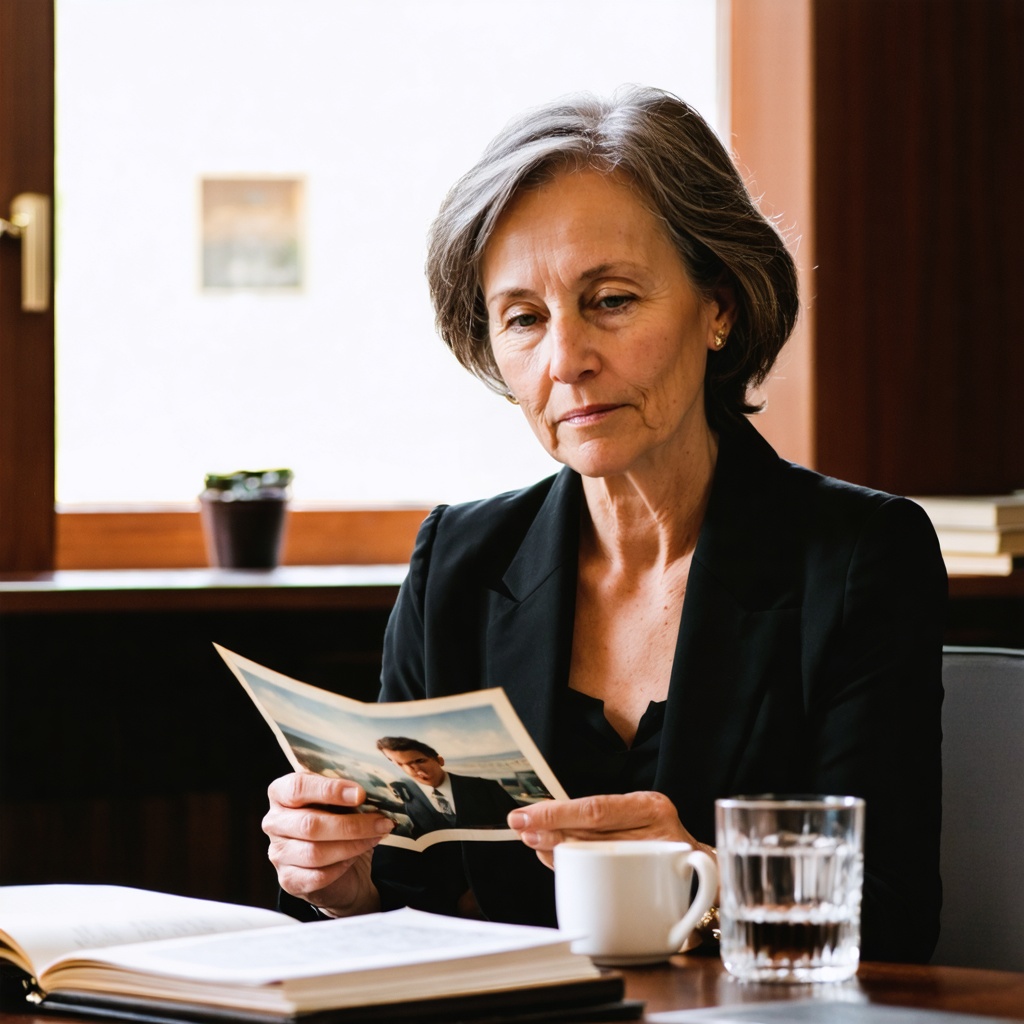 Image by RM AI
The Social Media Silence That Told Its Own Story
In the days following our settlement meeting, I noticed something strange: the daughters' social media accounts, which had been filled with posts about their 'beloved father' and their grief journey, suddenly went quiet.
No more throwback photos, no more cancer awareness posts, no more videos from the funeral. Jen's account showed she had taken a 'social media break for personal reasons.' Kayla had deleted all her recent posts about Jerry.
Maureen, true to her word, had removed all the hospital videos. Their online performance of grief had ended as abruptly as it had begun.
I wondered what they were telling their friends, their spouses, their children about the sudden change in their inheritance expectations. Were they sharing the truth about their paternity, or creating a new narrative that preserved their understanding of themselves?
I would likely never know. What I did know was that they were now facing the same kind of identity crisis that Jerry must have experienced twenty years earlier when he first saw those test results.
The difference was that Jerry had chosen to embrace the role of father despite biology, while they were now left questioning what it meant to be daughters. The silence of their usually active social media presence spoke volumes about the private reckoning they must be experiencing.
 Image by RM AI
The Legacy That Money Couldn't Measure
With the legal battle resolved, I turned my attention to honoring Jerry's memory in a way that reflected the man he truly was. The settlement meant I would keep our home and roughly half of our savings and investments—more than enough for me to live comfortably for the rest of my life.
But I kept thinking about Jerry's generosity, his commitment to helping others, his belief that privilege carried responsibility. One afternoon, as I was sorting through his papers, I found a folder of thank-you letters from pro bono clients he had represented over the years—immigrants seeking asylum, elderly people fighting predatory lenders, families facing wrongful eviction.
Reading their words of gratitude, I realized what I needed to do with the remaining money. I contacted Jerry's law firm and established the Gerald Harrington Legal Aid Foundation, endowed with half of my inheritance.
The foundation would provide free legal services to vulnerable populations and fund scholarships for law students committed to public interest work. When I announced the foundation at a small ceremony at Jerry's firm, several of his former colleagues approached me with tears in their eyes.
'This is exactly what Jerry would have wanted,' Dean told me, squeezing my hand. 'You've captured his essence perfectly.'
 Image by RM AI
The Unexpected Email That Arrived Six Months Later
Six months after our settlement, as I was beginning to find a new rhythm to my life without Jerry, an unexpected email arrived in my inbox. The sender was Maureen, the youngest daughter.
'Dear Mary,' it began, 'I've started and deleted this email a hundred times, never finding the right words. I'm not sure the right words exist for something like this.
But I wanted to reach out and thank you for your kindness during the settlement meeting. You had every right to be vindictive after how we treated you, but you showed us compassion instead.' She went on to explain that the paternity revelation had sent her into therapy, where she was working through not only this new understanding of her biological origins but also her behavior during Jerry's illness.
'I've been forced to confront some ugly truths about myself,' she wrote. 'The way I used Dad's illness for attention, the way I performed grief rather than actually experiencing it, the way I valued social media validation over genuine connection.
I'm not proud of any of it.' The email ended with a request that surprised me: 'I saw the announcement about the legal aid foundation.
If you're open to it, I'd like to volunteer my filmmaking skills to create a documentary about the foundation's work. It would be a small way to honor the man who chose to be my father, even when he didn't have to be.' I sat at my computer for a long time, tears streaming down my face, before typing my reply:
'I think Jerry would love that.'
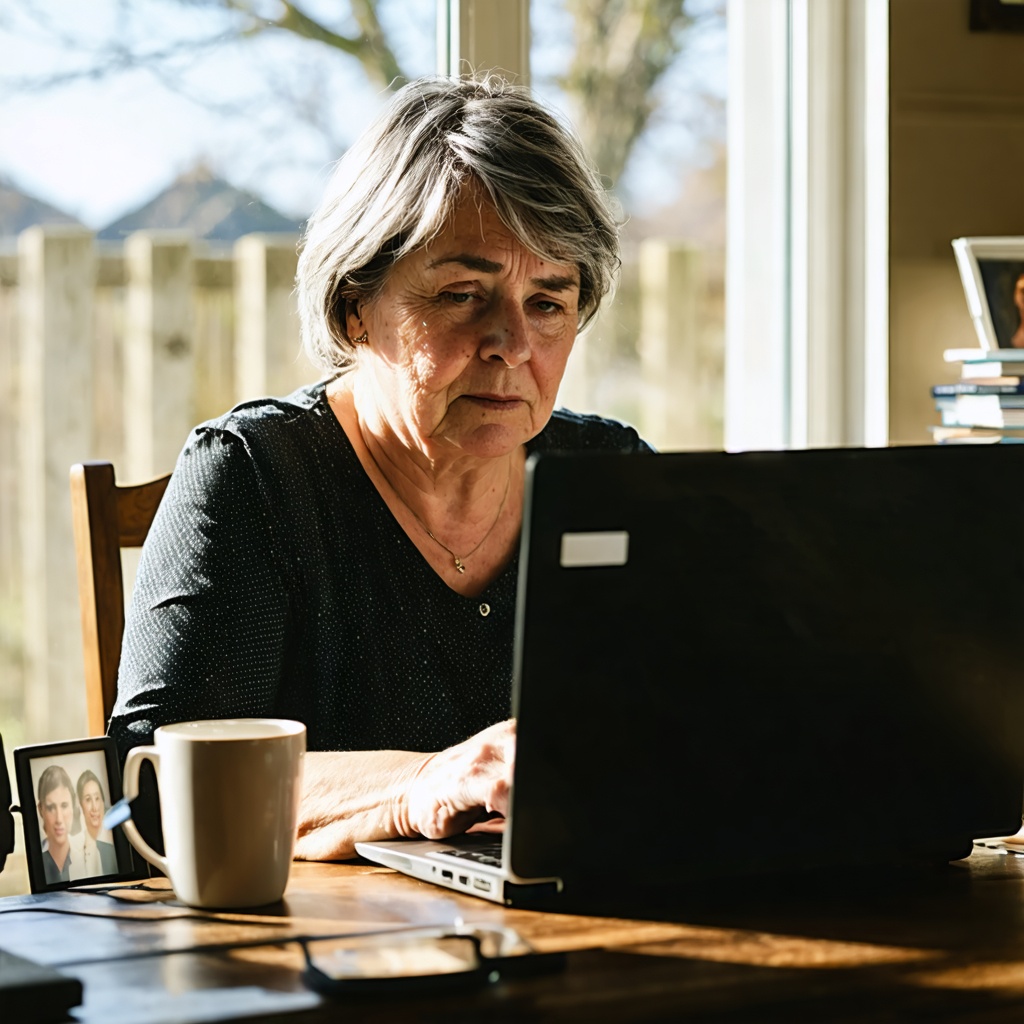 Image by RM AI
The First Anniversary Without Him
On the first anniversary of Jerry's death, I visited his grave alone, bringing a bouquet of the wildflowers he had loved to grow in our garden. The cemetery was peaceful in the early morning light, dew still clinging to the grass as I made my way to his headstone.
I had chosen a simple design with an inscription that read: 'Gerald James Harrington - Beloved husband, father, and friend - His love knew no boundaries.' I sat beside his grave and told him about my year—about the foundation's first successful cases, about the garden I had managed not to kill despite my notorious black thumb, about the grief support group that had become my lifeline.
'Maureen's documentary about the foundation is almost finished,' I told him, as if he could hear me. 'It's actually quite good.
She has your eye for detail.' I paused, running my fingers over the cool stone. 'Jen and Kayla haven't reached out like Maureen has, but I saw Jen's name on a donation to the foundation last month.
It wasn't large, but it was something. A beginning, maybe.' The morning breeze rustled the trees overhead, and I could almost hear Jerry's voice in the sound:
'Give them time, Mary. Some wounds take longer to heal.' I smiled through my tears, knowing that his capacity for forgiveness was one of the many reasons I had loved him so deeply.

The Lesson About Family That Transcended Blood
As I reflect on everything that happened—Jerry's illness, the daughters' return, the will contest, the paternity revelation—I'm struck by how complicated the concept of family truly is. Jerry knew for twenty years that the girls he raised weren't biologically his, yet he chose to be their father in every way that mattered.
He supported them financially, celebrated their achievements, worried about their setbacks, and loved them unconditionally—even when that love wasn't reciprocated. Biology didn't make Jerry a father;
his choices did. Similarly, the legal document naming me his heir didn't make me family;
our love and commitment to each other did. The daughters are still grappling with what it means to be family now that the biological connection they took for granted has been revealed as fiction.
Maureen seems to be finding her way toward a definition of family based on choice rather than blood. Perhaps Jen and Kayla will eventually do the same.
As for me, I've come to understand that family isn't defined by DNA or legal documents or social expectations. It's defined by love, by showing up, by choosing each other day after day.
Jerry understood that better than anyone I've ever known. In honoring his memory through the foundation, in keeping my promise to handle his final affairs with dignity, in offering compassion to the daughters who had shown me none, I hope I've been worthy of the family we created together, brief as our time was.
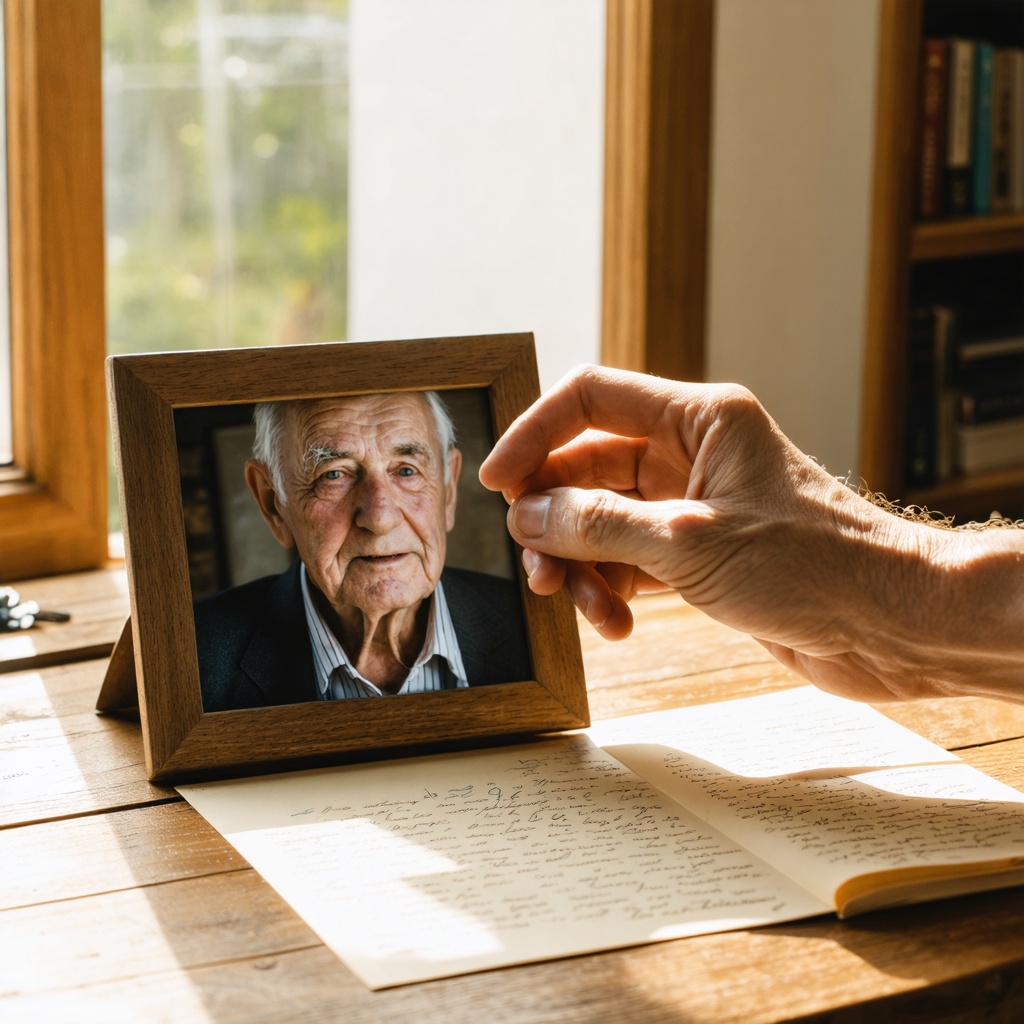 Image by RM AI
The Peace I Finally Found
Two years after Jerry's passing, I can finally say I've found a measure of peace. The legal battles are behind me, the foundation is thriving, and I've created a new life that honors Jerry's memory while allowing me to move forward.
I still live in our home, surrounded by reminders of our time together, but the sharp pain of grief has softened into a gentle ache of remembrance. I've even started dating again—nothing serious, just occasional dinners with a kind widower I met in my grief support group.
Jerry would approve, I think. He always said life was for the living.
Maureen's documentary about the foundation won a small award at a local film festival, and she's become a regular volunteer at foundation events. Jen occasionally attends fundraisers, usually standing quietly at the back, but her donations have become more substantial.
Kayla remains the most distant, though she sent a card on my birthday last month—the first personal acknowledgment from her since the settlement. I don't know if we'll ever have the relationship Jerry would have wanted for us, but the open hostility has been replaced by a cautious civility that feels like progress.
As I sit on our—my—porch swing this evening, watching the sunset as Jerry and I used to do, I feel his presence in the golden light. 'You did good, Mary,' I can almost hear him say.
And for the first time in a long time, I believe it's true.
 Image by RM AI
The Unexpected Gift Jerry Left Behind
People often ask if I regret marrying Jerry, knowing now how brief our time together would be and how much conflict would follow his passing. My answer is always the same:
not for a single moment. Beyond the love we shared, beyond the memories we created, Jerry gave me an unexpected gift in those final, cryptic words—'Bureau, top left drawer.' He trusted me with a truth he had protected for decades, not so I could use it as a weapon, but so I could defend myself if necessary.
In doing so, he taught me something profound about love and integrity. Jerry could have revealed the paternity test results when the daughters rejected him after our marriage.
He could have used that information to explain their behavior or to justify cutting them out of his will. He could have wielded that truth as a shield against their cruelty.
But he chose to protect them instead, to preserve their understanding of themselves and their place in the world, even at the cost of his own relationship with them. That choice—to love without conditions, to protect without expectation, to give without demanding recognition—embodied who Jerry was at his core.
It's a standard of integrity I strive to live up to every day.
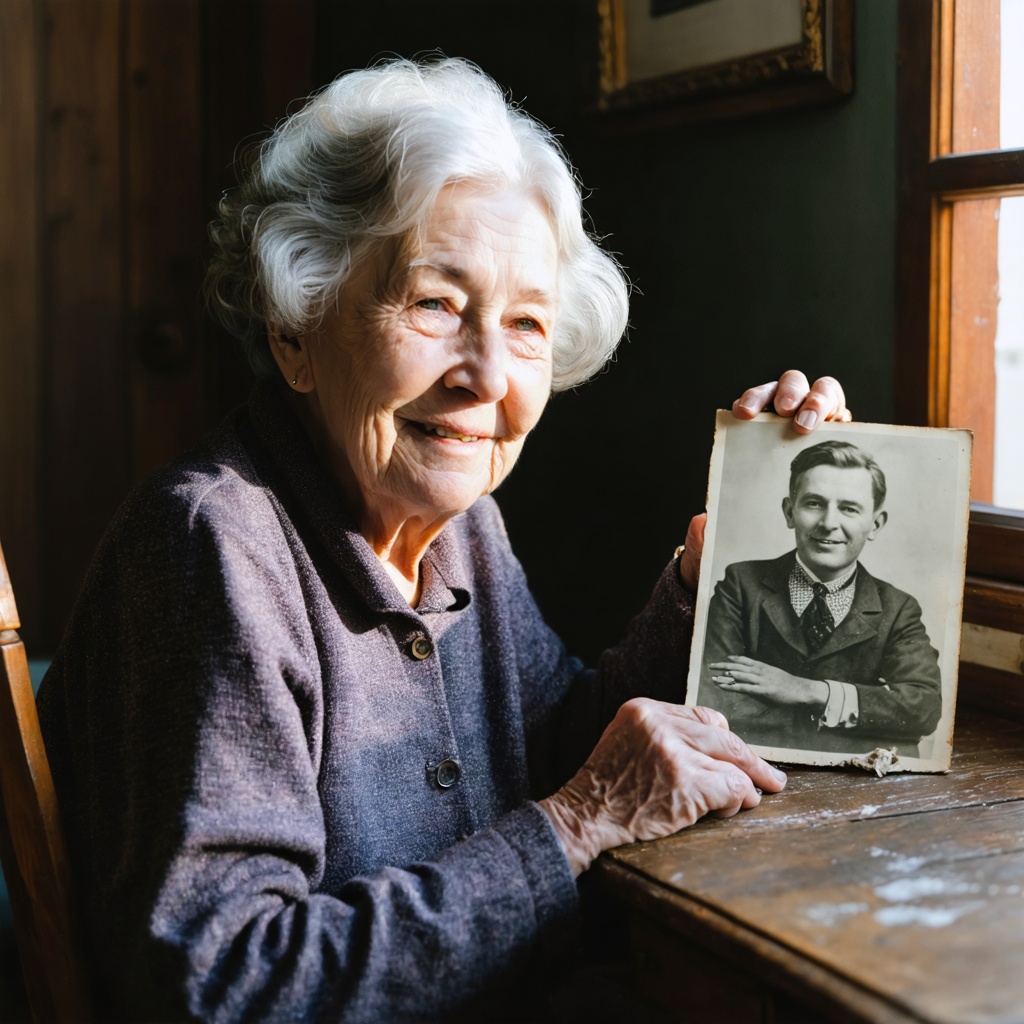 Image by RM AI
The Final Chapter That Became a New Beginning
As I close this chapter of my story, I realize that what began as a tale of loss and conflict has transformed into something unexpected—a story of growth, forgiveness, and new beginnings. The foundation bearing Jerry's name has helped dozens of families stay in their homes, supported immigrants seeking safety, and provided scholarships to five promising law students committed to public interest work.
Maureen has found her voice as a documentary filmmaker, using her talents to highlight social justice issues rather than seeking social media validation. Even Jen and Kayla, in their more distant ways, seem to be reckoning with the lessons of the past.
As for me, I've discovered strengths I never knew I possessed—the ability to stand firm in the face of hostility, to offer compassion when it would be easier to seek revenge, to build something meaningful from the ashes of loss. Jerry saw those qualities in me long before I recognized them in myself.
'You're stronger than you think, Mary,' he used to tell me. 'When the time comes, you'll know what to do.' He was right, as he so often was.
The path forward hasn't been easy or straightforward, but I've navigated it with as much grace and integrity as I could muster. And in doing so, I've honored the man who chose love over biology, compassion over retribution, and family over blood.
That, I believe, is the greatest tribute I could offer to the extraordinary man who was my husband.
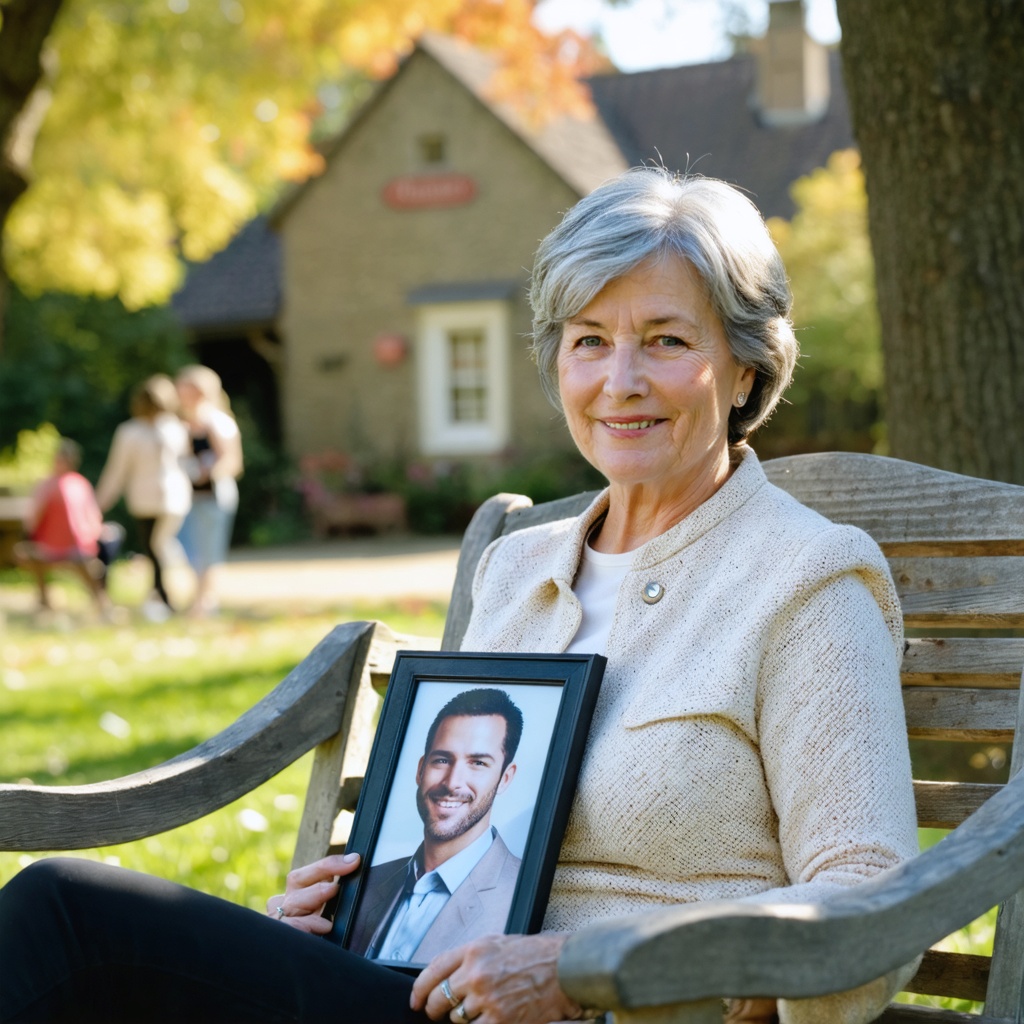 Image by RM AI
KEEP ON READING


20 Natural Ways You Can Boost Your Immune System
20 Ways To De-stress & Relax After Work
The 10 Most Common Diseases & The 10 Most Rare