Someone Kept Leaving Flowers Outside My House. When I Found Out Why, I Couldn't Believe It
Someone Kept Leaving Flowers Outside My House. When I Found Out Why, I Couldn't Believe It
The Cottage at the End of Maple Lane
I'm Nora, 66 years old and finally retired after four decades of nursing. Last month, I traded my cramped apartment for this charming cottage at the end of Maple Lane, complete with the garden I've always dreamed about. After years of hospital fluorescents, waking up to sunlight streaming through my kitchen window feels like a luxury I've earned. The cottage came with history—creaky floorboards that tell stories and built-in bookshelves perfect for my mystery novel collection. As I unpacked the last of my boxes yesterday, something caught my eye through the kitchen window—a rusted iron gate nearly hidden behind climbing roses at the far end of my garden. It's beautiful in that forgotten way things become when nature starts reclaiming them. The previous owner mentioned it connects to the neighboring property, though apparently that house has been vacant for years. 'That gate hasn't been opened in decades,' she'd said with a dismissive wave. 'The latch probably rusted shut long ago.' I found myself drawn to it this morning, coffee in hand, wondering what stories it might hold. What I didn't expect was finding fresh wildflowers placed neatly at its base, tied with simple twine, as if someone had left them there deliberately.
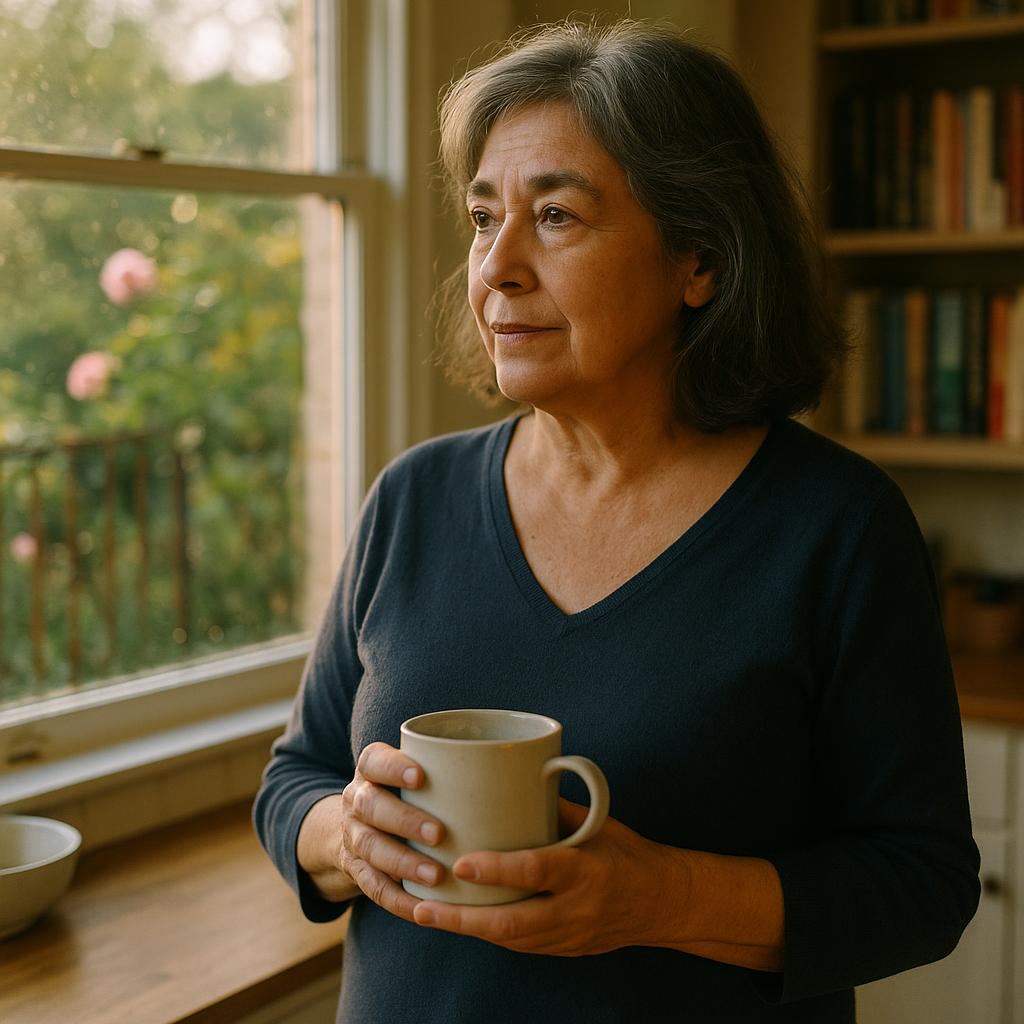 Image by RM AI
The Previous Owner's Warning
I was sweeping the porch yesterday when Mr. Jenkins, the previous owner, pulled into my driveway. 'Just dropping off some mail that came for you,' he said, handing me a small stack of envelopes. As he glanced toward my garden, his eyes lingered on the rusted gate. 'I see you've noticed it,' he said, following my gaze. 'That gate hasn't been opened in decades. The house next door has been vacant for years now.' Something in his tone made me curious. 'Is there a story there?' I asked. Mr. Jenkins shifted uncomfortably, jingling the keys in his pocket. 'Nothing worth mentioning,' he replied too quickly. 'Just old neighborhood history.' When I pressed further, asking about the wildflowers I'd found, his expression changed subtly. 'Some things are better left alone, Nora,' he said, suddenly interested in checking his watch. 'Anyway, I should get going.' As he turned to leave, he paused. 'You know, in all my years here, I never did figure out who leaves those flowers. Peculiar thing, isn't it?' He climbed back into his car with a wave, but I couldn't shake the feeling that Mr. Jenkins knew more than he was willing to share. And I couldn't help but wonder—what exactly was he warning me against?
 Image by RM AI
First Week Flowers
Saturday morning greeted me with golden sunlight streaming through my bedroom curtains. I'd been looking forward to this—my first weekend in the cottage meant uninterrupted garden time. Armed with new gardening gloves and a wide-brimmed hat, I stepped outside with my coffee, eager to tackle the overgrown beds. That's when I saw them—a small bouquet of wildflowers tied with simple twine, placed carefully at the base of the rusted gate. I froze, coffee mug halfway to my lips. They weren't there yesterday evening when I'd watered the roses. I scanned the neighboring property, but it remained as silent and still as a forgotten photograph. The windows of the vacant house reflected nothing but sky. 'Hello?' I called out, feeling slightly foolish. Only birdsong answered. I approached the gate, noticing how the morning dew still clung to the petals—these flowers had been placed recently. Kneeling down, I examined the bouquet: Queen Anne's lace, black-eyed Susans, and something blue I couldn't identify. They were arranged with care, not just grabbed hastily. I stood up, brushing soil from my knees, and felt a strange prickling sensation at the back of my neck—the distinct feeling of being watched. When I turned around, I could have sworn I saw a curtain fall back into place in one of the supposedly vacant house's windows.
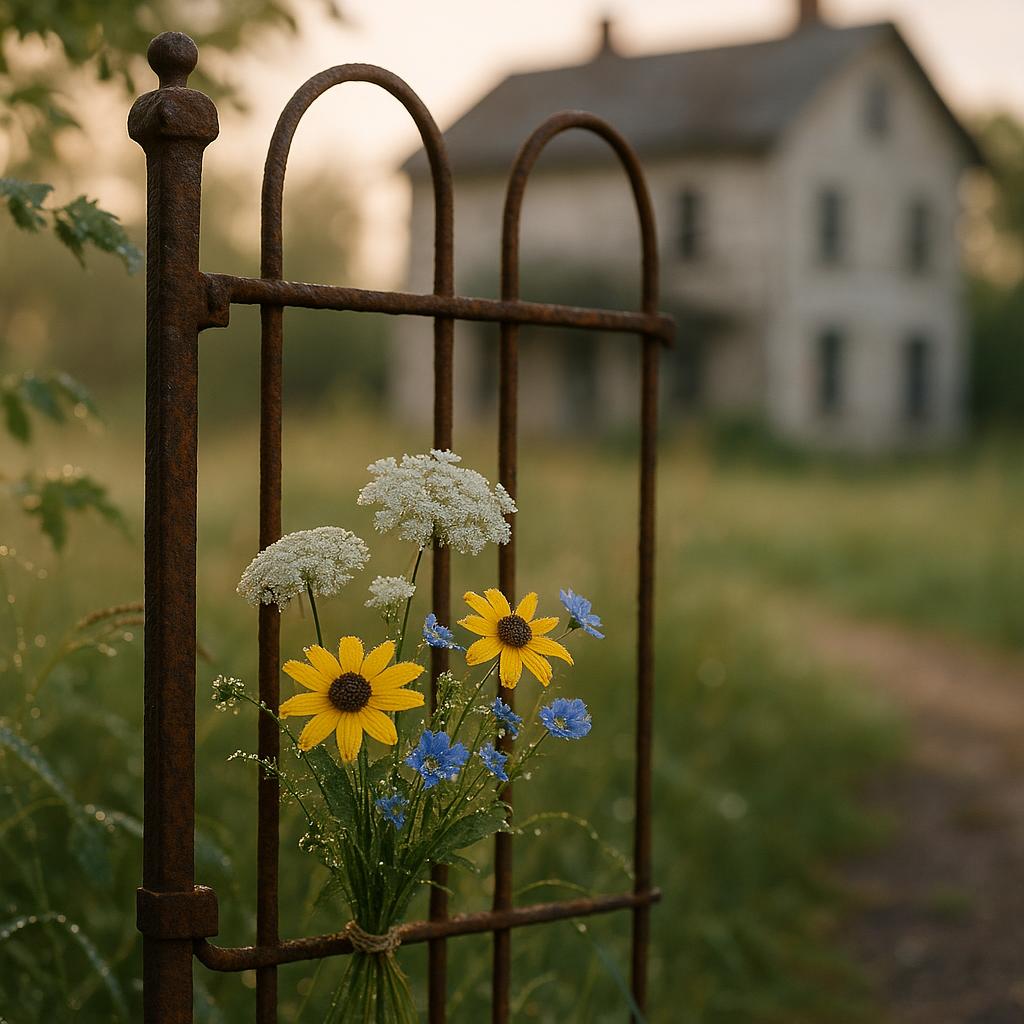 Image by RM AI
Meeting the Neighbors
After a week of flower mysteries, I decided it was time to meet the neighbors. Maybe someone knew something about the abandoned house next door. I put on my friendliest smile and walked down Maple Lane, introducing myself as 'the new retiree in the old Jenkins place.' Most folks were welcoming—offering gardening tips or neighborhood gossip. When I reached the tidy brick house across the street, Mrs. Patel invited me in for chai tea. Her home smelled of cardamom and cinnamon, walls lined with family photos spanning generations. 'How are you settling in?' she asked, pouring steaming tea into delicate cups. I mentioned loving the cottage but casually brought up the abandoned house and the mysterious gate. Mrs. Patel's hands froze mid-pour. 'That old place?' she said, her voice suddenly tight. 'Nobody's lived there for years.' When I mentioned the fresh flowers, she quickly set down the teapot and reached for a plate of cookies. 'Have you tried the community garden club? They meet Thursdays.' Each time I steered the conversation back to the gate, she'd redirect with surprising skill. As I left, she squeezed my hand a bit too firmly. 'Some things in this neighborhood have long memories, dear,' she whispered. 'Best to focus on making new ones.' Walking home, I couldn't shake the feeling that everyone on Maple Lane knew something about my gate that I didn't.
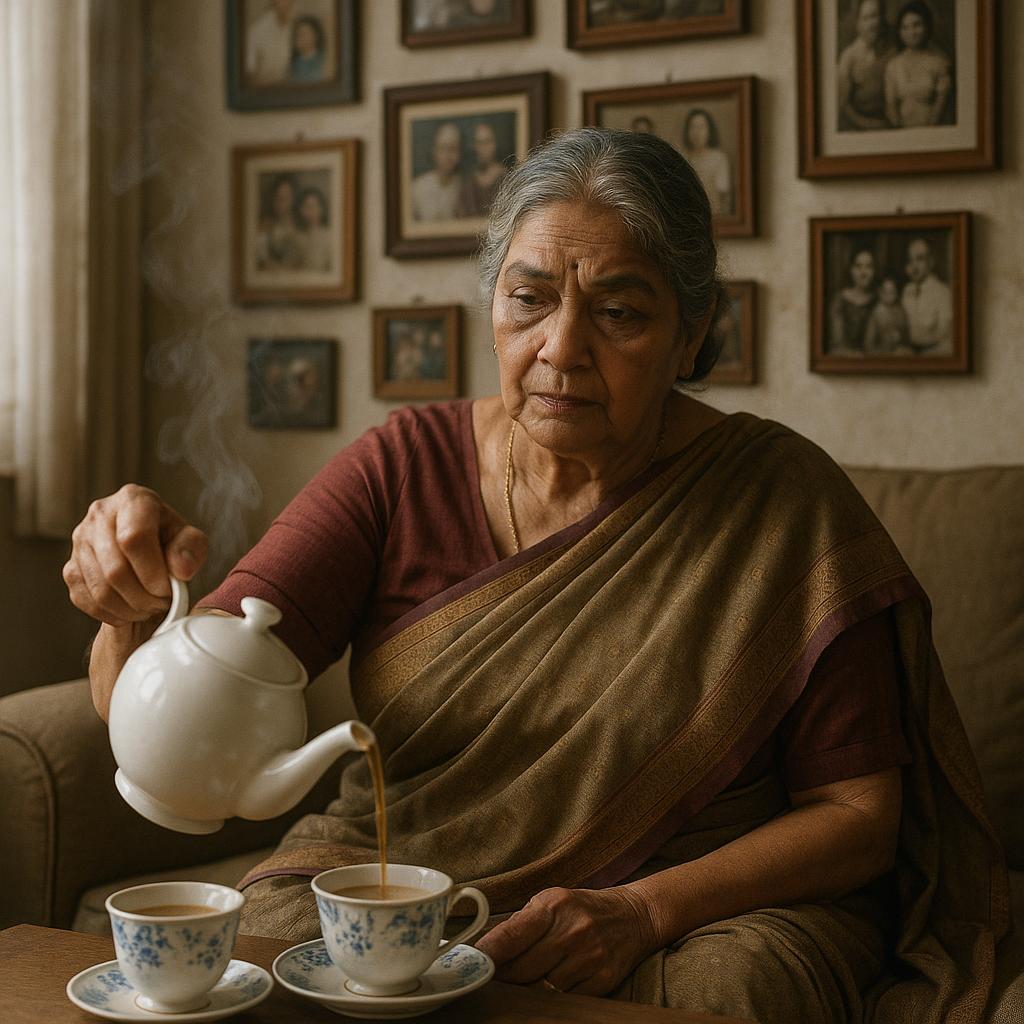 Image by RM AI
The Clockwork Delivery
The following Saturday, I woke with the sun, a new habit I'd developed since moving to the cottage. I'd been thinking about those mysterious flowers all week. Determined not to miss the delivery this time, I positioned myself by the kitchen window at 6:30 AM with a steaming mug of coffee and my crossword puzzle—the perfect cover for my stakeout. Sure enough, just as the clock on my microwave blinked 7:00, I caught a flash of movement near the gate. I nearly knocked over my coffee in my rush to the door! But by the time I'd fumbled with the lock and hurried outside, whoever it was had vanished completely. All that remained was a fresh bouquet of wildflowers—daisies, purple coneflowers, and delicate ferns—tied with the same simple twine as before. I stood in my slippers, scanning the neighboring property and the street beyond, but saw nothing except morning mist rising from the dewy grass. The only evidence someone had been there was the lingering scent of fresh flowers mingling with the morning air and... wait. I leaned closer to the gate. Was that perfume? Something familiar that tugged at a distant memory I couldn't quite place. I picked up the bouquet, bringing it to my nose. Yes, definitely perfume—the kind my mother used to wear decades ago. How strange that after all these years, I'd recognize that scent here, of all places.
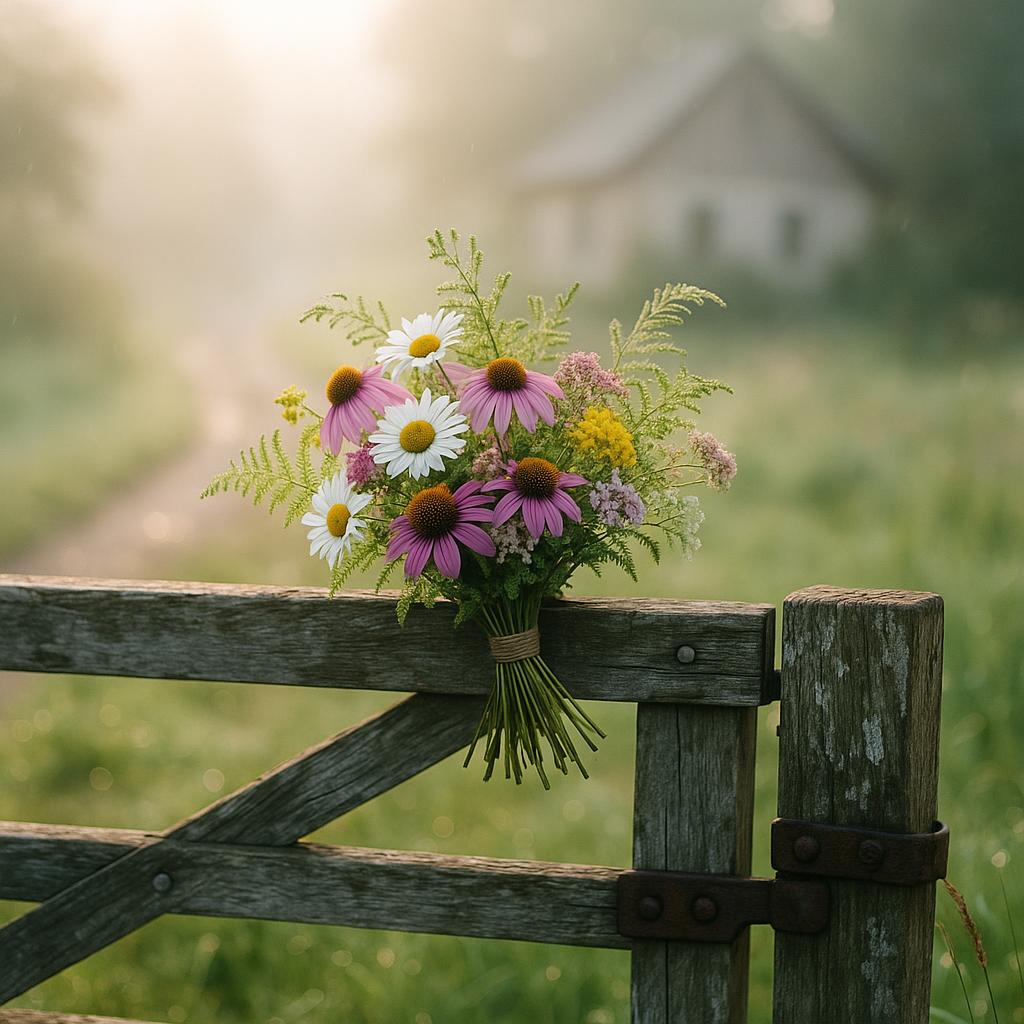 Image by RM AI
The Local Library Archives
Monday morning found me at the Maple Lane Public Library, a quaint brick building with floor-to-ceiling windows. 'I'm researching the history of my cottage,' I explained to Ms. Chen, the librarian with silver-streaked hair and kind eyes. She led me to a back room filled with town archives that smelled of old paper and dust. 'These houses have stories,' she said, pulling out property records from the 1950s. For hours, I pored over yellowed newspapers and faded photographs. My fingers trembled when I found it—a smiling photo of two young women standing proudly in front of newly built homes. 'Margaret Wilson and Eleanor Jenkins break ground on Maple Lane,' read the caption. The same names appeared repeatedly in social announcements: birthday celebrations, garden club victories, even a joint vacation to Cape Cod. 'They were inseparable,' Ms. Chen commented, peering over my shoulder. 'Until they weren't.' She pulled out a small folder containing clippings from 1963. 'Something happened that summer. No one knows exactly what, but they never spoke again.' I stared at the photograph, at the women's intertwined arms and beaming faces, wondering what could possibly have severed such a friendship. And then I saw it—around Eleanor's neck hung a small key that looked exactly like the one I'd found in my garden last week.
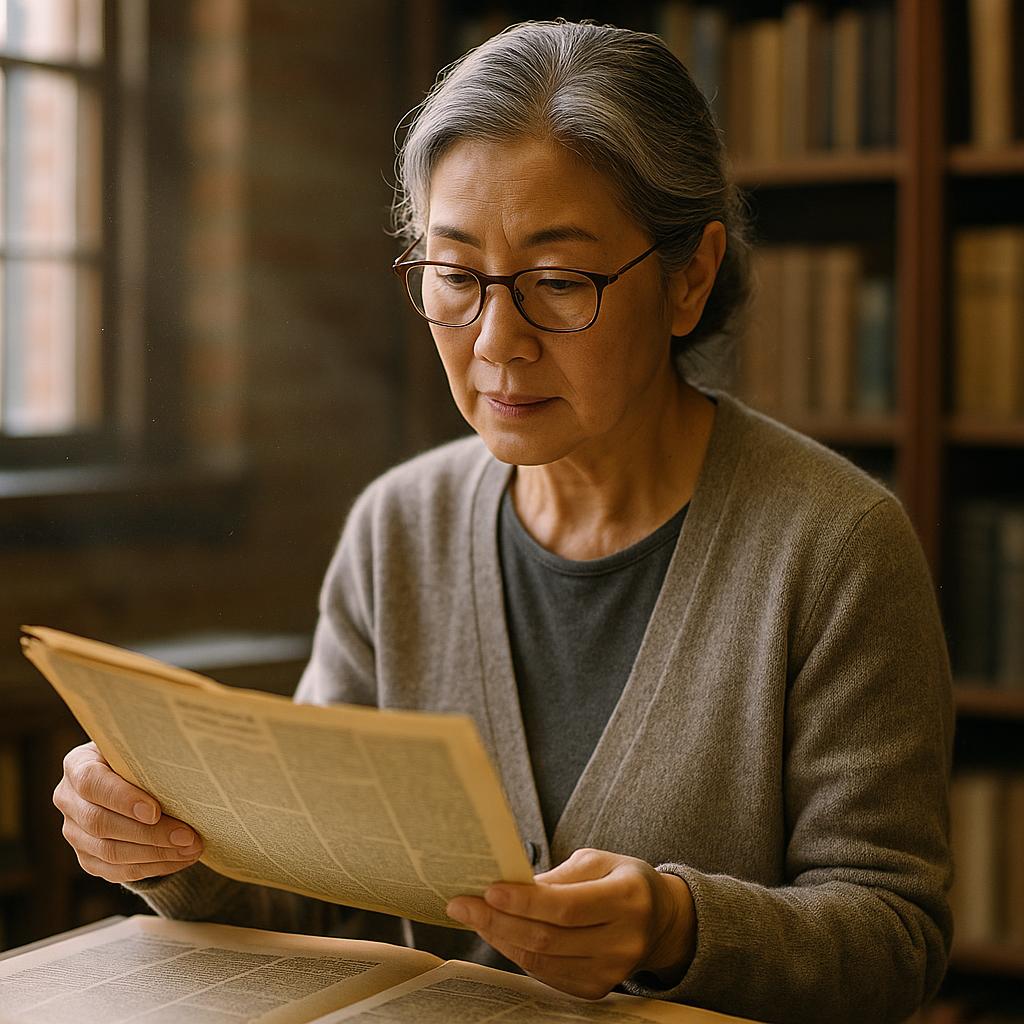 Image by RM AI
The Neighborhood Barbecue
The neighborhood association's annual barbecue was in full swing when I arrived with my potato salad. The scent of grilling burgers filled the air as children chased each other across Mr. Peterson's immaculately kept lawn. After making my rounds of introductions, I found myself beside Mr. Rodriguez, a gentleman in his eighties with kind eyes and a well-worn Cardinals cap. 'You're in Eleanor's old place, aren't you?' he asked, refilling my wine glass without waiting for an answer. Three glasses in, his stories flowed as freely as the wine. 'Those two women—Eleanor and Margaret—they were thick as thieves since grade school,' he said, gesturing toward my cottage and the abandoned house next door. 'Inseparable! They even bought those houses together back in '52.' His expression darkened slightly. 'Then something happened when they were in their twenties. Nobody knows exactly what—they both kept it quiet. But whatever it was, it was serious enough that they never spoke again.' I nearly choked on my wine. 'Never? Even though they lived right next to each other?' Mr. Rodriguez nodded solemnly. 'For decades. Can you imagine? Passing each other at the mailbox, seeing each other's lights at night—all those years of silence.' He leaned closer, lowering his voice. 'The strangest part? Neither one would ever move away.'
 Image by RM AI
The Third Bouquet
Saturday morning arrived with a gentle mist hovering over my garden. I'd developed a routine now—coffee in hand, positioned by the kitchen window at 6:45 AM, waiting. Like clockwork, at 7:00 sharp, a new bouquet appeared at the gate. I hurried outside, still in my slippers, but once again missed the mysterious visitor. This time, something caught my eye among the usual wildflowers—a single cultivated rose, deep red and perfectly formed, standing proudly among the Queen Anne's lace and daisies. I picked up the bouquet, my fingers trembling slightly. In my nursing days, I'd had a patient who was a florist. She'd told me flowers had their own language, developed in the Victorian era when people couldn't speak their feelings openly. Red roses meant love, passion, respect. Was this a message? A deviation from the pattern? I brought the bouquet inside, placing it in water on my kitchen table, that single red rose commanding attention among its wilder companions. As I stared at it, I remembered something else—Margaret's obituary I'd found in the library archives had mentioned her award-winning roses. The kind that had once won blue ribbons at the county fair. The kind that someone might still be growing, somewhere nearby.
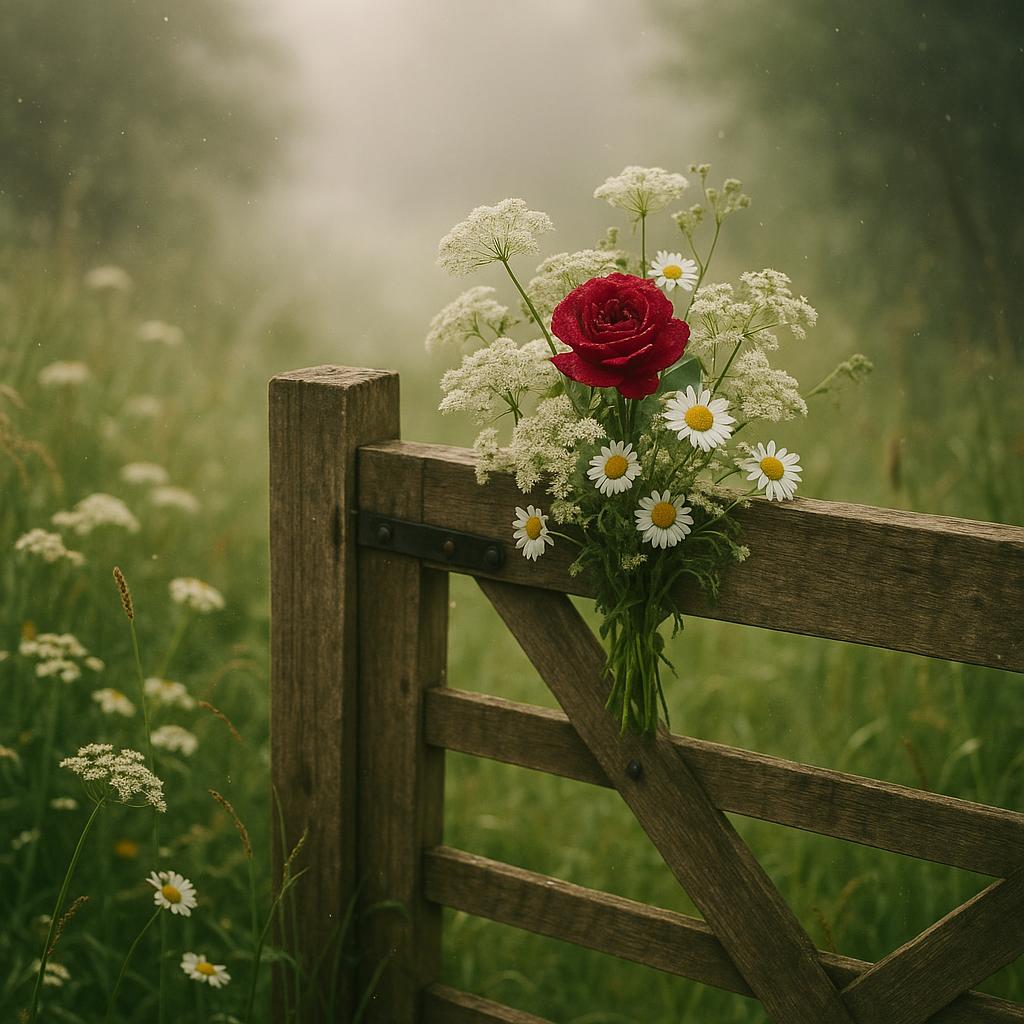 Image by RM AI
The Postman's Tale
I caught Mr. Okafor, our neighborhood postman, just as he was sliding my electric bill into the mailbox. His postal uniform was crisp despite the summer heat, and he greeted me with a warm smile I'd come to look forward to. 'Mr. Okafor,' I called out, 'do you know anything about that house next door?' I gestured toward the seemingly abandoned property. He adjusted his mail bag, considering my question carefully. 'Well, Ms. Nora, that's an interesting one,' he said, lowering his voice as if sharing a secret. 'Until about five years ago, I still delivered mail there occasionally. Nothing regular—mostly official-looking envelopes.' He glanced toward the house. 'The strangest part was I never once saw who lived there. The mail would disappear from the box between my visits, but whenever I passed by—morning or afternoon—that place looked empty as a ghost town.' He tapped his postal cap thoughtfully. 'Thirty years on this route, and I never caught so much as a glimpse of whoever collected that mail. Some folks around here, they value their privacy something fierce.' As he continued on his route, I couldn't help but wonder—who had been living next door all this time, invisible to everyone but somehow still present enough to collect their mail?
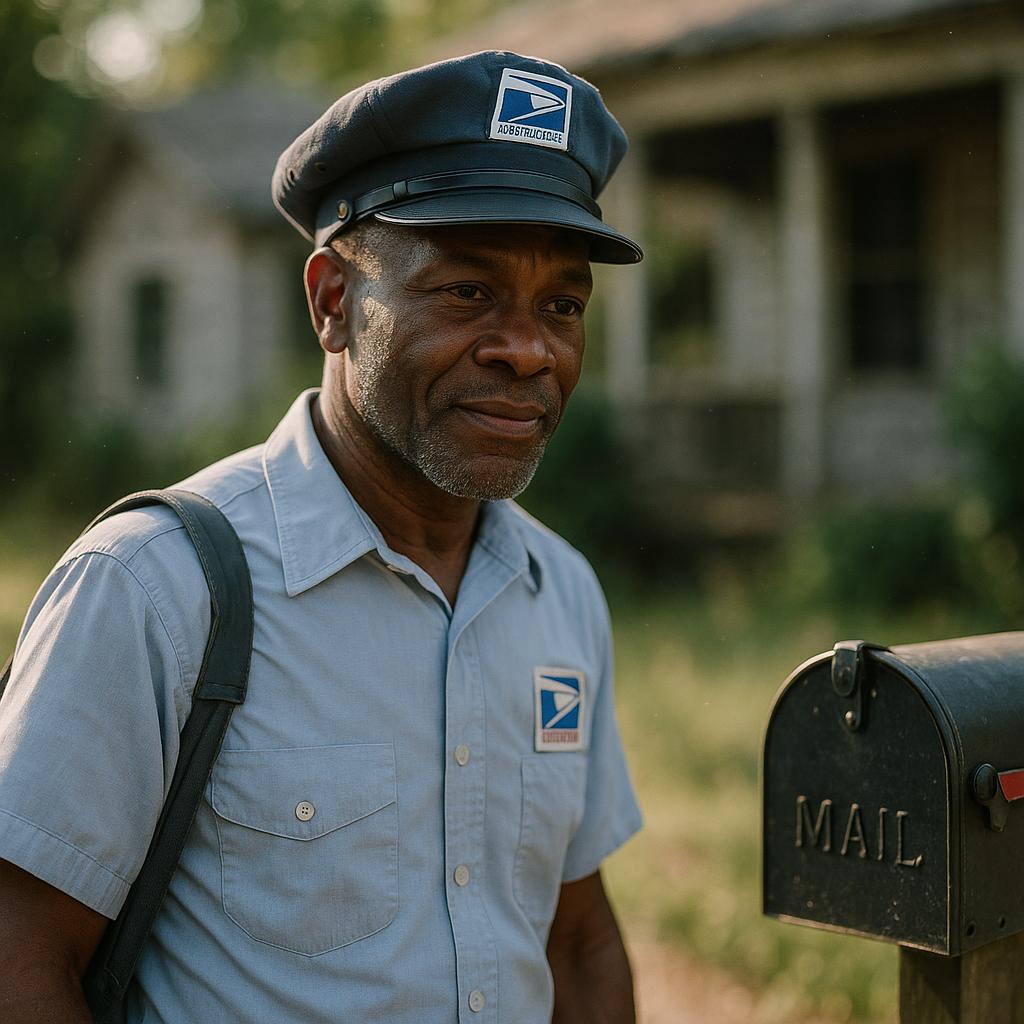 Image by RM AI
The Garden Society Meeting
Thursday afternoon found me at the Maple Lane Community Center, clutching a plate of lemon bars as I entered my first Garden Society meeting. The room buzzed with conversation and the scent of coffee as about fifteen people—mostly retirees—arranged chairs in a circle. I'd come hoping someone might shed light on my mysterious gate and its weekly flower deliveries. After introductions, a silver-haired woman named Vivian perked up when I mentioned my address. 'Oh! Eleanor's old place!' she exclaimed, eyes brightening. 'Before that Jenkins fellow bought it. Eleanor grew the most magnificent wildflowers in town—won the county fair three years running.' I seized the opportunity. 'Speaking of wildflowers,' I said casually, 'I've been finding bouquets of them by my garden gate every Saturday morning. Tied with twine.' The room fell so silent you could hear the wall clock ticking. Vivian's teacup froze halfway to her lips. A man in the corner suddenly became fascinated with his shoelaces. 'Well,' the society president finally said, clearing her throat, 'shall we discuss this year's tulip competition?' As everyone eagerly changed subjects, Vivian leaned close to me. 'Meet me after,' she whispered. 'There are things about Eleanor and Margaret that aren't discussed in public.'
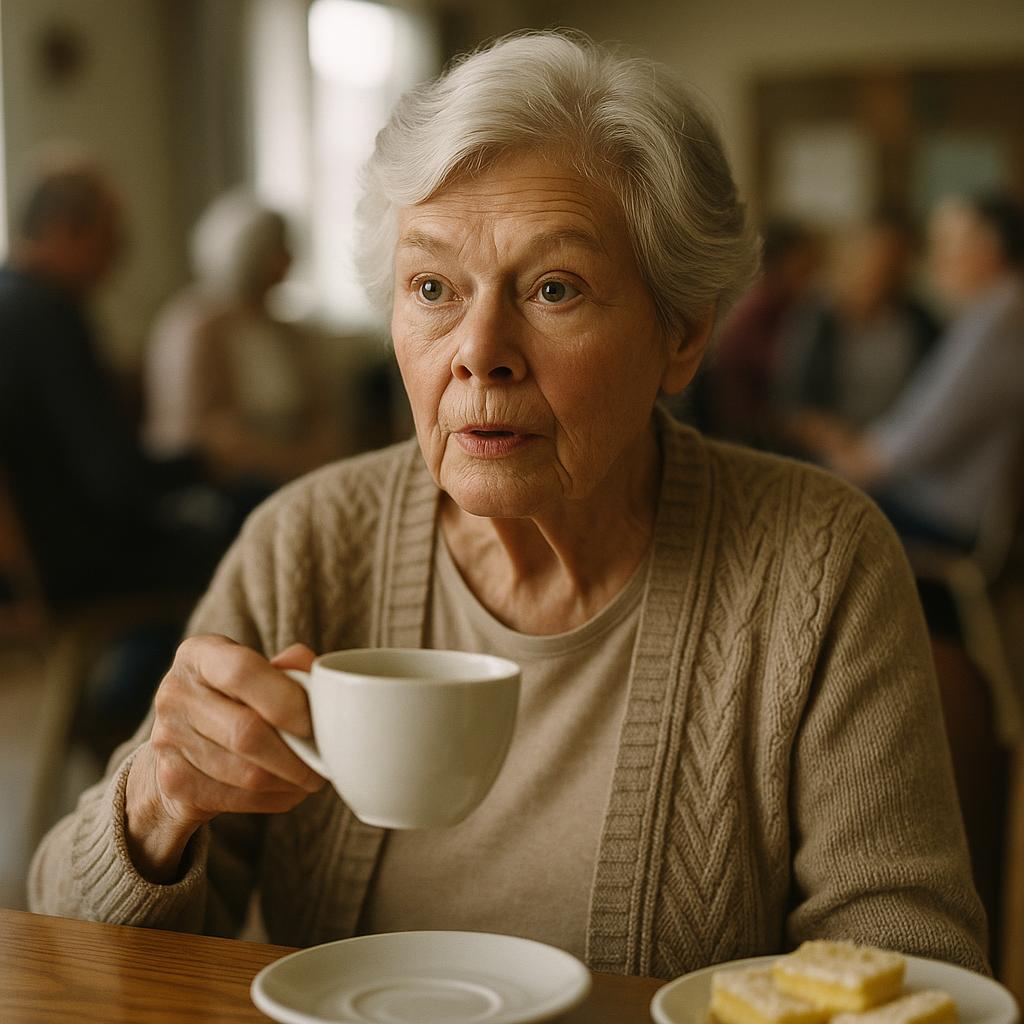 Image by RM AI
The Midnight Vigil
After a month of these mysterious flower deliveries, I'd had enough of wondering. I decided to solve this puzzle once and for all with an old-fashioned stakeout. Friday night, I prepared like I was going on a mission—thermos filled with chamomile tea, comfortable chair positioned by my darkened kitchen window, and a small notebook to record anything unusual. The hours ticked by slowly. Ten o'clock. Eleven. My eyelids grew heavy as midnight approached, but I forced myself to stay alert. Then, just as the grandfather clock in my hallway chimed twelve, a figure materialized at the gate like a ghost stepping out of the mist. I held my breath. It was a young woman in a blue coat, her movements deliberate yet gentle as she knelt to place a fresh bouquet at the base of the gate. The moonlight caught her profile for just a moment—she couldn't have been more than thirty. My heart pounded as I debated rushing outside, but something held me back. Before I could gather my courage, she stood, touched the gate briefly with gloved fingers, and disappeared into the shadows. I remained frozen at my window, tea gone cold in my hands, wondering who this woman was and why my rusty old gate meant so much to her.
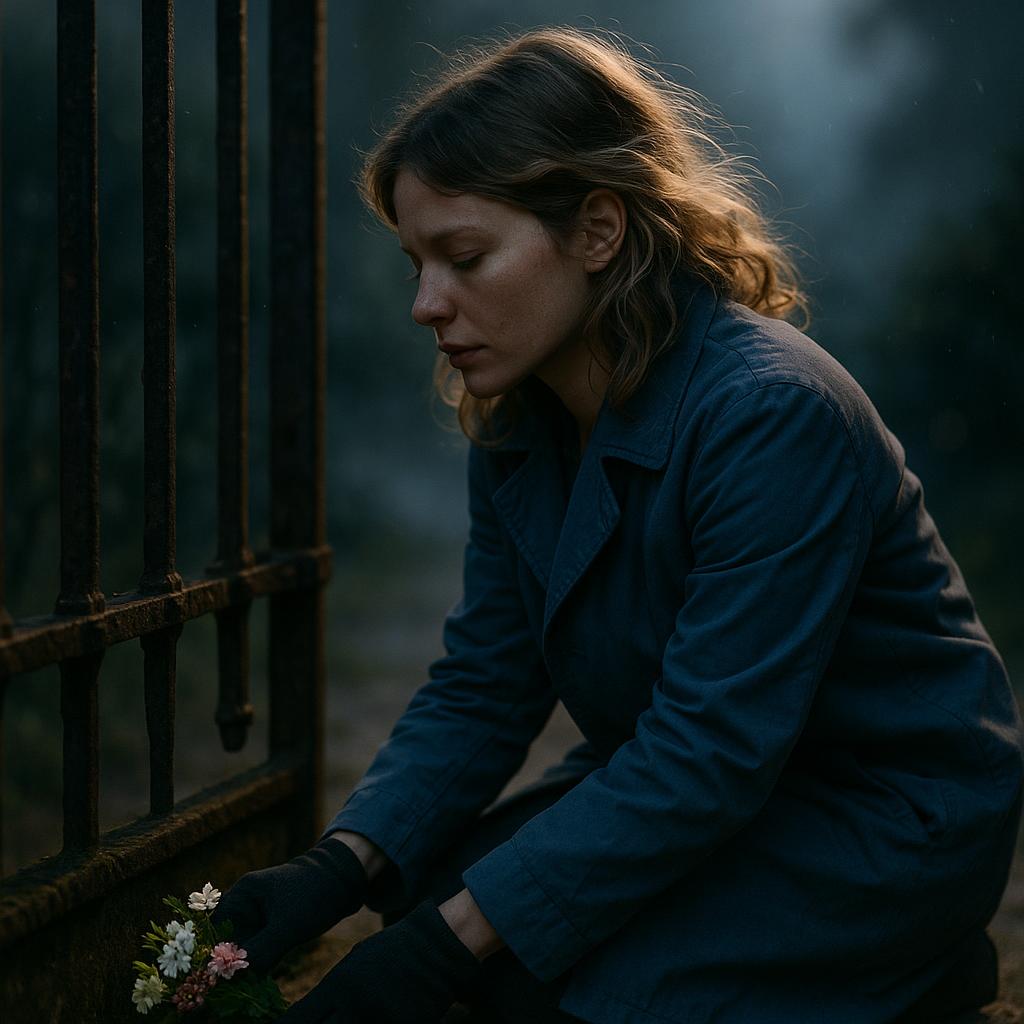 Image by RM AI
The Second Vigil
The following Saturday, I was ready. I'd spent the week planning my approach like a military operation. This time, I set up my vigil differently—chair positioned closer to the door, shoes already on, and a small flashlight in my pocket. I'd even practiced how quickly I could get from my kitchen to the gate (17 seconds, if you're wondering). As the grandfather clock ticked toward midnight, I sipped my tea and rehearsed what I might say. 'Hello?' Too startling. 'Excuse me?' Too formal. 'I've been watching you leave flowers.' Definitely too creepy. My hands trembled slightly as midnight approached. What if she didn't come? What if she did, but ran away before I could reach her? What if this whole mystery had a perfectly mundane explanation that would leave me feeling foolish? The clock struck twelve, and right on cue, a figure in that same blue coat materialized at the gate. I took a deep breath, set down my mug, and moved silently toward the door. This time, I wouldn't let curiosity keep me awake for another week. This time, I'd get answers. As I stepped onto my porch, the night air cool against my face, I called out softly, 'Hello there.'
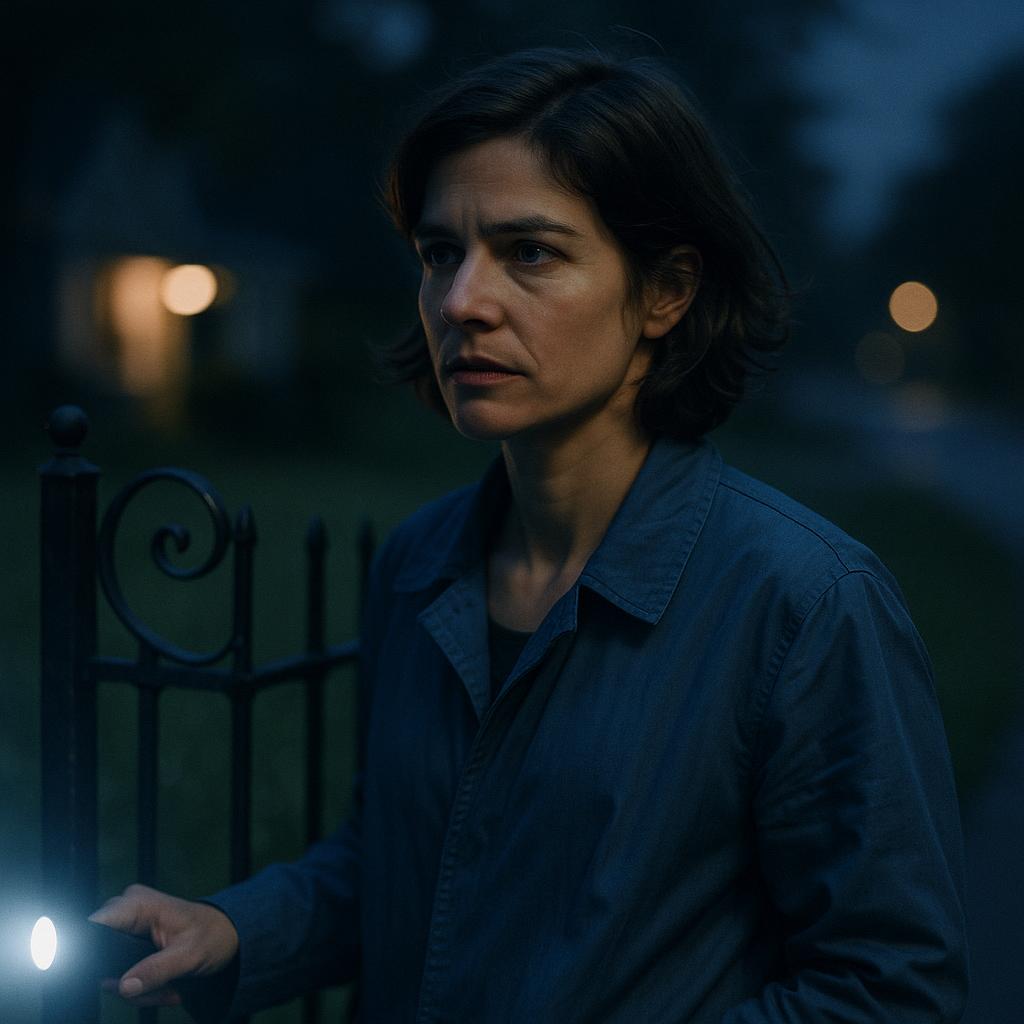 Image by RM AI
Meeting Lily
The young woman froze like a deer caught in headlights, her hand still clutching the bouquet of wildflowers. The moonlight illuminated her face—younger than I'd expected, maybe early thirties, with features that somehow seemed vaguely familiar. 'I'm sorry,' she stammered, taking a half-step backward. 'I didn't mean to trespass.' I moved closer, careful to keep my voice gentle. 'I'm not upset, dear. I'm just curious. You've been leaving flowers for weeks now.' She clutched her blue coat tighter around herself, as if debating whether to flee or stay. 'My name is Lily,' she finally said, her voice barely above a whisper. 'I... I can explain.' She glanced nervously at the gate, then back at me. 'It's about my grandmother. She used to live in your house.' Something in her expression—a mixture of sadness and determination—made me realize this wasn't just about flowers. This was about something much deeper, something that had been waiting decades to be uncovered. 'Would you like to come in for some tea?' I offered, gesturing toward my kitchen where the lights glowed warmly. 'I think we have a lot to talk about.' Little did I know that Lily's story would change everything I thought I knew about my charming little cottage and its mysterious gate.
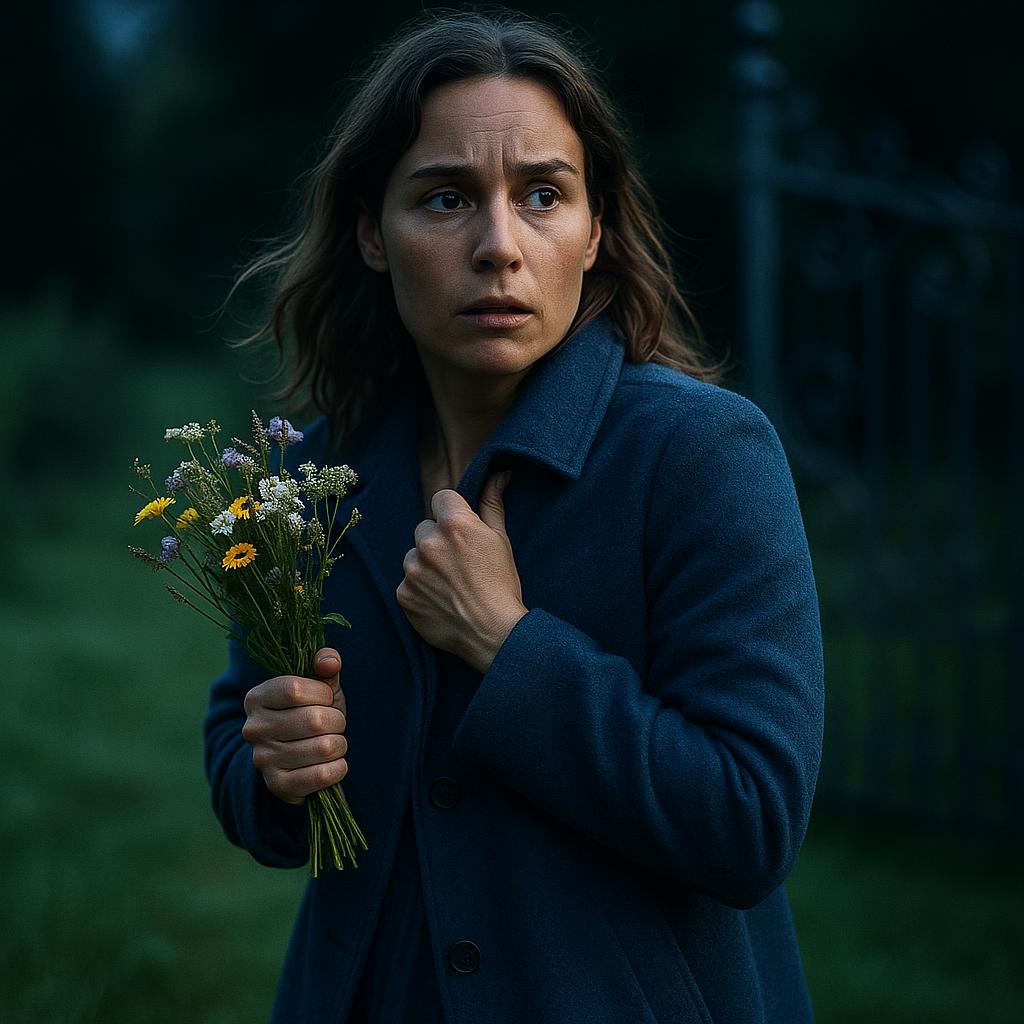 Image by RM AI
Lily's Explanation
My kitchen felt warmer somehow as Lily sat across from me, her hands wrapped around a steaming mug of chamomile tea. 'My grandmother Eleanor lived in this house for over fifty years,' she explained, her voice soft but steady. 'She and Margaret next door were inseparable since childhood—did everything together, even bought these houses at the same time.' Lily pulled out an old photograph from her coat pocket—two young women, arms linked, standing proudly in front of these very houses. 'Then something happened when they were in their twenties. A misunderstanding that neither would fully explain.' She traced the edge of the photo with her fingertip. 'Pride got in the way. They both refused to apologize, and eventually, the silence became a habit.' I couldn't imagine such stubbornness—living next door to your former best friend for decades, seeing each other's lights at night, passing on the street—never speaking a word. 'I found my grandmother's diaries after she passed,' Lily continued, her eyes glistening. 'The regret in those pages... it was heartbreaking. She wrote about Margaret every single day until the end.' What Lily told me next about those diaries would change everything I thought I knew about my charming little cottage.
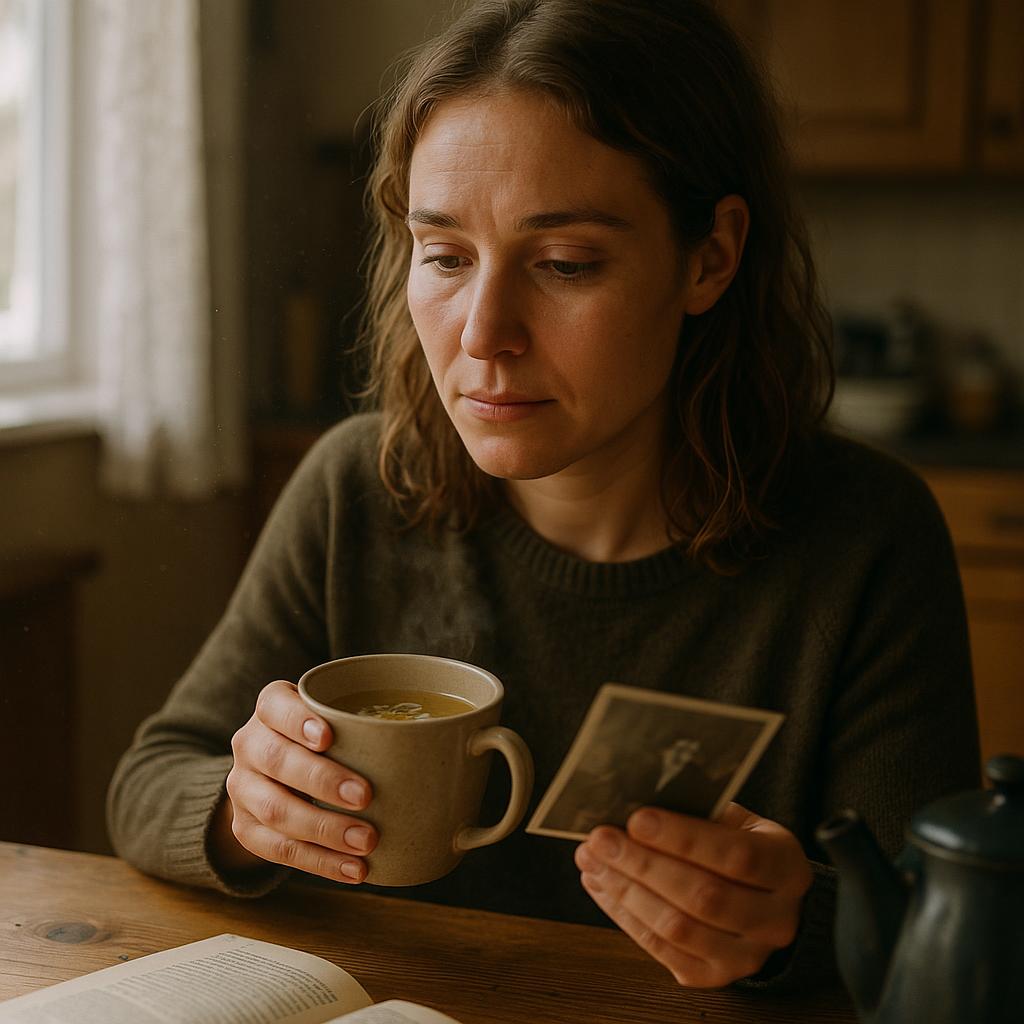 Image by RM AI
The Grandmother's Diary
Lily carefully opened her bag and pulled out a worn leather-bound journal, its pages yellowed with age. 'This is my grandmother's diary,' she said, her voice catching slightly. 'I found it after she passed five years ago.' As she gently turned the pages, I could see Eleanor's neat handwriting filling each one. 'They were inseparable since childhood,' Lily explained, showing me entries from the 1950s with pressed flowers and ticket stubs taped to the margins. 'But then came the argument—something about a man they both cared for.' She turned to later entries, where the handwriting had grown shakier. 'The last pages are what break my heart,' she whispered. 'Grandma wrote about seeing Margaret through her window, about wanting to cross that gate every single day but never finding the courage.' Lily's eyes welled with tears. 'Her final entry says, 'If I could do it all again, I'd choose friendship over pride in a heartbeat.'' She closed the diary carefully. 'That's why I bring the flowers—the same wildflowers they used to pick together as girls. It's my way of healing something that never got the chance.' What Lily said next about Margaret's house next door made my blood run cold.
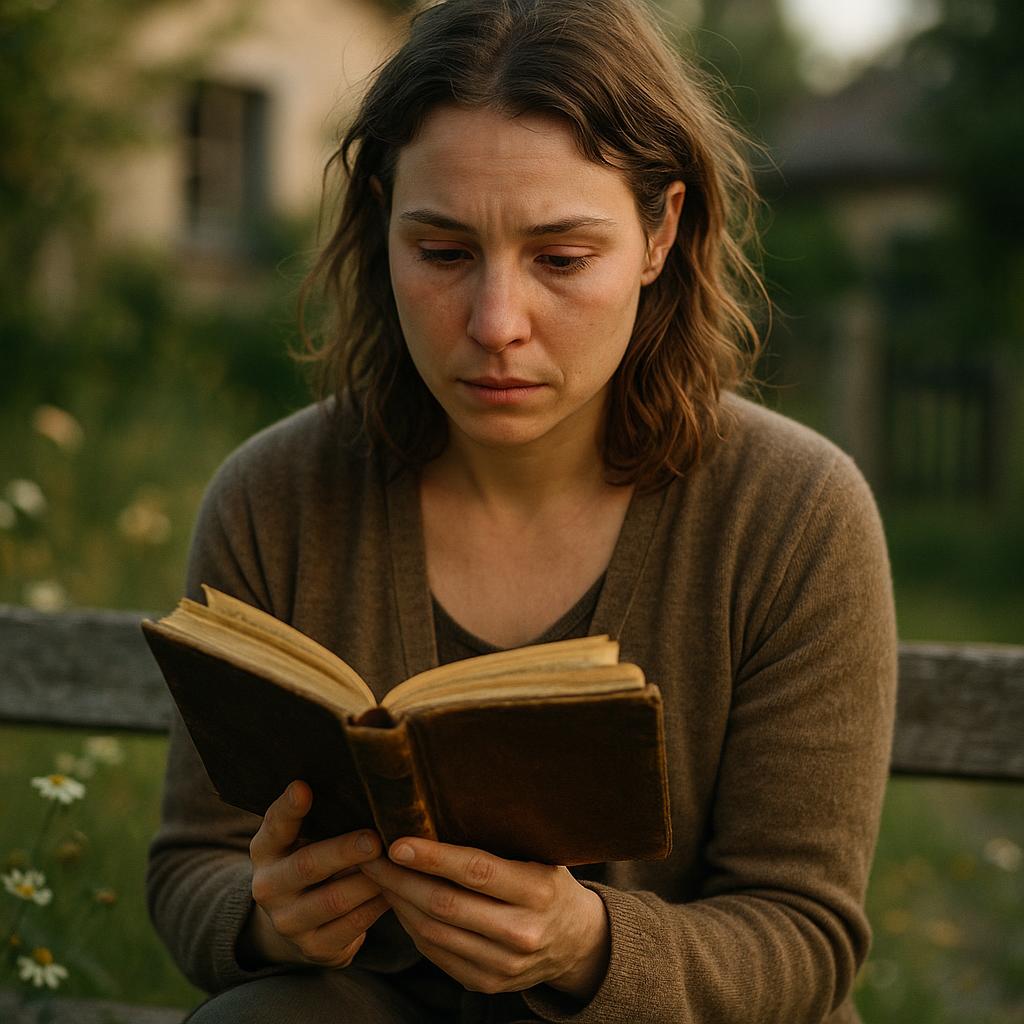 Image by RM AI
The Diary Entries
The following evening, Lily returned with a small stack of leather-bound journals, each one carefully preserved in plastic sleeves. 'I thought you might want to see these,' she said, placing Eleanor's diaries on my kitchen table. We settled in with fresh tea as I opened the earliest volume from 1952. The pages revealed two young women full of post-war optimism, planning gardens and sharing dreams. 'Look at this,' I pointed to an entry where Eleanor had pressed a four-leaf clover between the pages. 'Found by M. during our picnic. She says it means our friendship will last forever.' We laughed at their adventures—sneaking into drive-in movies, learning to jitterbug, and starting the neighborhood's first garden club. But as we reached the summer of 1958, the tone shifted dramatically. 'June 17th,' I read aloud, my voice faltering. 'Today I discovered M's betrayal. Some things can never be forgiven, no matter how much you've loved someone.' Lily and I exchanged glances. The next several pages had been torn out, leaving only ragged edges where Eleanor had ripped away whatever details she couldn't bear to keep. 'What could possibly have happened?' I whispered, but the answer came in the form of a small newspaper clipping that fluttered from between the pages—a wedding announcement with a familiar name that made my heart stop.
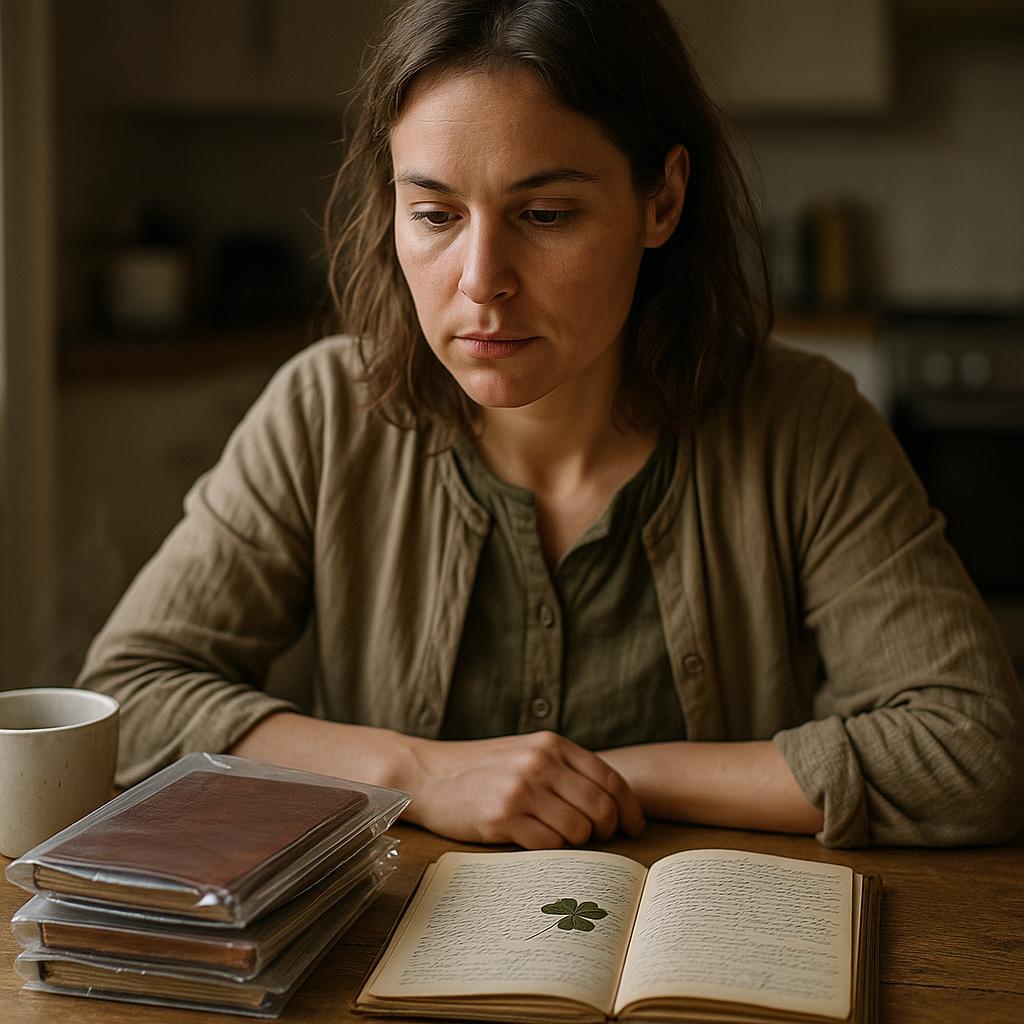 Image by RM AI
The Mystery Deepens
I carefully turned the yellowed pages of Eleanor's diary, my fingers trembling slightly as we reached the entries about Thomas. 'July 3rd, 1958,' I read aloud, 'I saw them together today. After everything we promised each other.' Lily shifted uncomfortably in her chair, her eyes darting away when I looked up. 'Your grandmother doesn't explain exactly what happened,' I said gently. Lily nodded, twisting the ring on her finger. 'She never did, not even to me. Just that Margaret had 'crossed a line that could never be uncrossed.'' Something in her voice made me pause. The way she avoided my gaze, the slight tension in her shoulders—she knew more than she was letting on. 'Lily,' I said, reaching across the table to touch her hand, 'is there something else?' She withdrew her hand quickly, almost knocking over her tea. 'It's getting late,' she said, gathering the diaries with unusual haste. 'I should go.' As she packed up, a small envelope slipped from between the pages of the last journal—addressed to Margaret in handwriting I hadn't seen before. Lily snatched it up so quickly I barely caught a glimpse of the return address: Thomas Harrington, San Francisco. What was Lily hiding about the man who had come between these two lifelong friends?
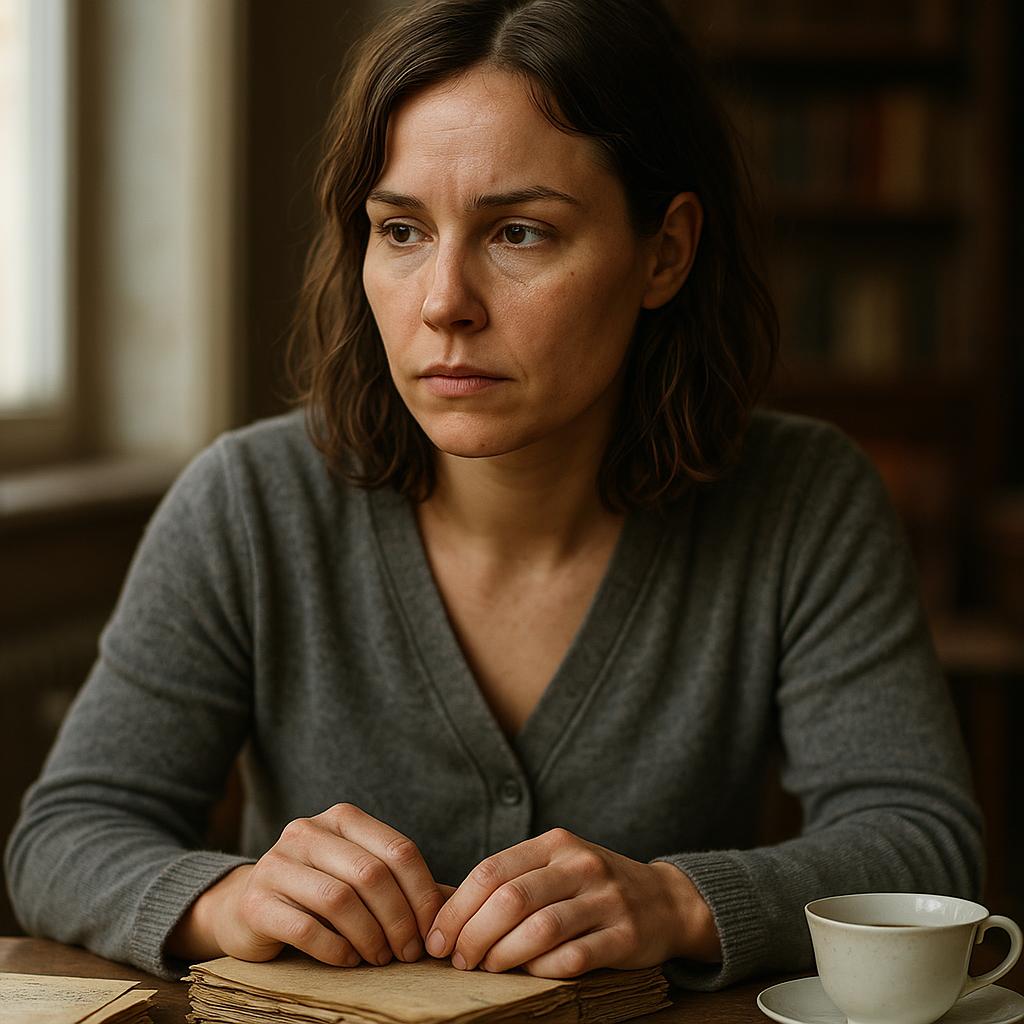 Image by RM AI
The Town Historical Society
The next morning, Lily and I found ourselves at the Oakridge Historical Society, a quaint brick building that smelled of old books and furniture polish. Dr. Nakamura, a petite woman with silver-streaked hair and cat-eye glasses, greeted us warmly. 'I've been curator here for thirty years,' she said, leading us through narrow aisles of filing cabinets. 'If it happened in this town, it's in here somewhere.' We spent hours poring over yellowed newspapers and faded photographs, my nurse's fingers carefully turning brittle pages. Then Lily gasped, holding up a photograph from the 1958 Summer Festival. There they were—Eleanor and Margaret, both beautiful in their summer dresses, standing on either side of a tall, handsome man in military uniform. 'That must be Thomas,' I whispered. The way both women leaned slightly toward him was telling, their smiles bright but their eyes holding something I recognized from my years of reading patients' faces—longing. Dr. Nakamura adjusted her glasses, studying the image. 'Interesting,' she murmured. 'I believe that's Thomas Harrington. Korean War veteran. Quite the catch back then.' She tapped the photo thoughtfully. 'You know, we have his military records somewhere. And if I'm not mistaken...' She paused, her expression changing. 'There was quite the scandal involving those three. Something the town elders still won't discuss openly.'
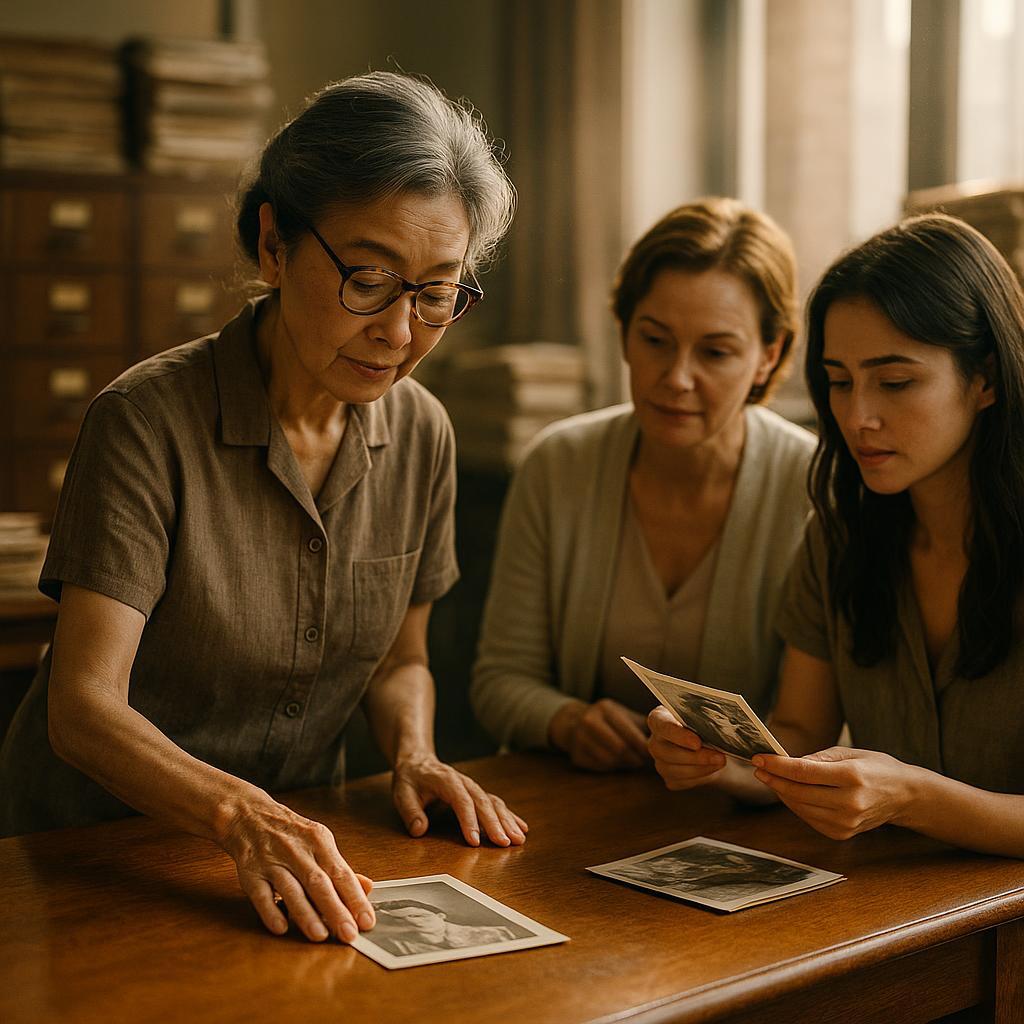 Image by RM AI
The Wedding Announcement
Dr. Nakamura carefully slid the brittle newspaper clipping across the table. 'Here it is,' she said, her voice hushed. I leaned forward, my heart racing as I read the headline: 'Engagement Announced: Wilson-Hayes.' There it was in black and white—Margaret Wilson and Thomas Hayes, the man who had apparently come between two best friends. The announcement, dated September 1958, mentioned Thomas had just returned from military service overseas and that the couple planned to move to Chicago after their wedding. I glanced at Lily, whose face had gone pale. 'This must be it,' I whispered, 'the betrayal your grandmother wrote about.' But something struck me as odd—there was no follow-up announcement about an actual wedding. When I pointed this out, Dr. Nakamura adjusted her glasses thoughtfully. 'That's quite observant of you, Nora. Many have missed that detail.' She pulled out another folder, this one considerably thinner. 'The curious thing is, there's no record of Margaret Wilson ever leaving Oakridge. And Thomas Hayes?' She paused dramatically. 'His name disappears from all local records after October 1958.' Lily's hands trembled as she reached for the clipping. 'My grandmother never mentioned what happened to Thomas,' she said quietly. 'But there's something else you should know about him—something that changes everything about this story.'
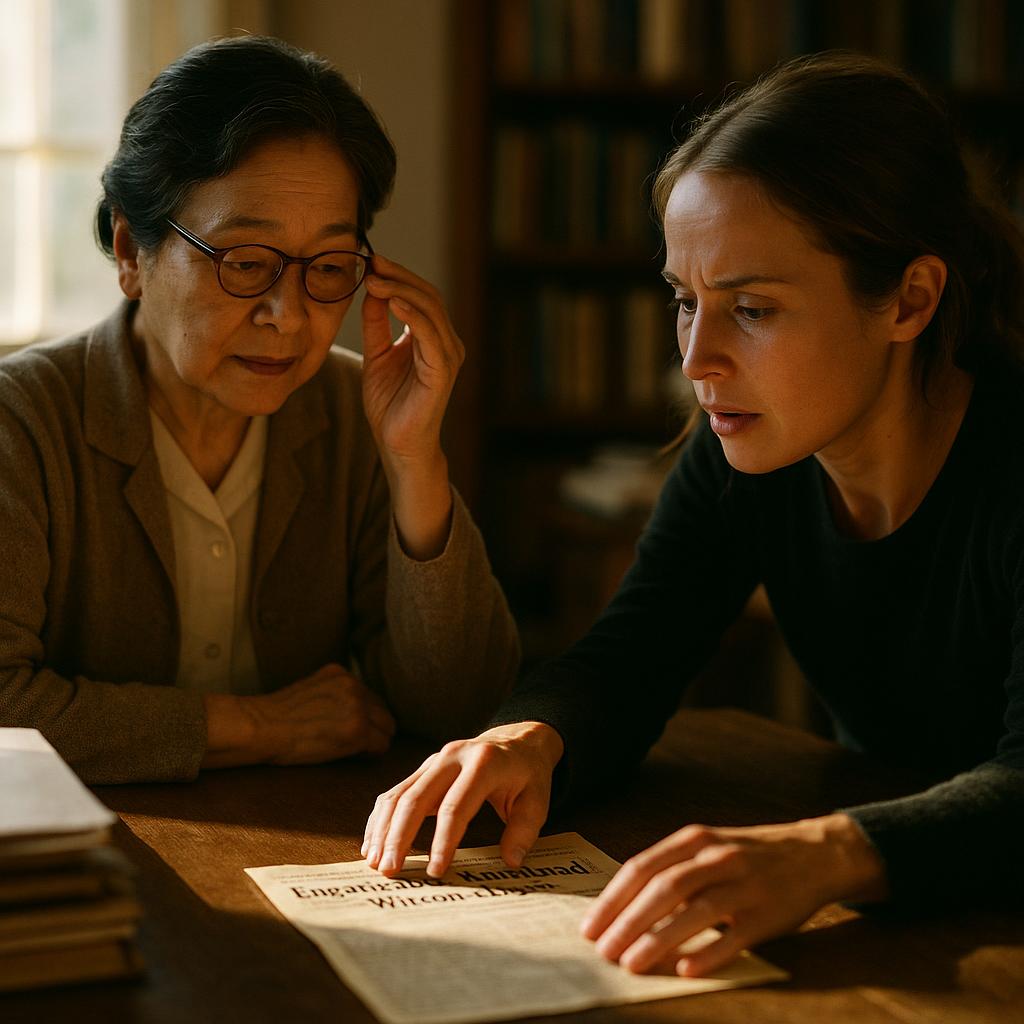 Image by RM AI
The Missing Pages
Back at my cottage, Lily and I sat at my kitchen table, the diaries spread before us like puzzle pieces missing their center. 'There's something I haven't told you,' Lily confessed, her fingers tracing the jagged edges where pages had been torn out. 'These gaps—they're not just wear and tear. Grandma Eleanor deliberately removed these pages.' I examined the diary more closely, noticing how the missing sections aligned perfectly with the dates surrounding the mysterious falling out. 'She must have wanted to erase whatever happened,' I said softly. Lily nodded, her eyes glistening. 'All my life, I wondered what was on those pages. What could have been so painful that she'd rather destroy it than let anyone read it?' She looked up at me, determination replacing her sadness. 'But she kept everything else—every memory, every photograph. She wanted to forget the argument but never the friendship.' I thought about how Eleanor had lived next door to Margaret for decades, separated only by a garden gate neither would open, both women carrying regret like a stone in their pocket. 'Do you think,' I asked carefully, 'that if she'd known how little time we all have, she might have crossed that gate?' Lily's answer was interrupted by a sharp knock at my front door that made us both jump.
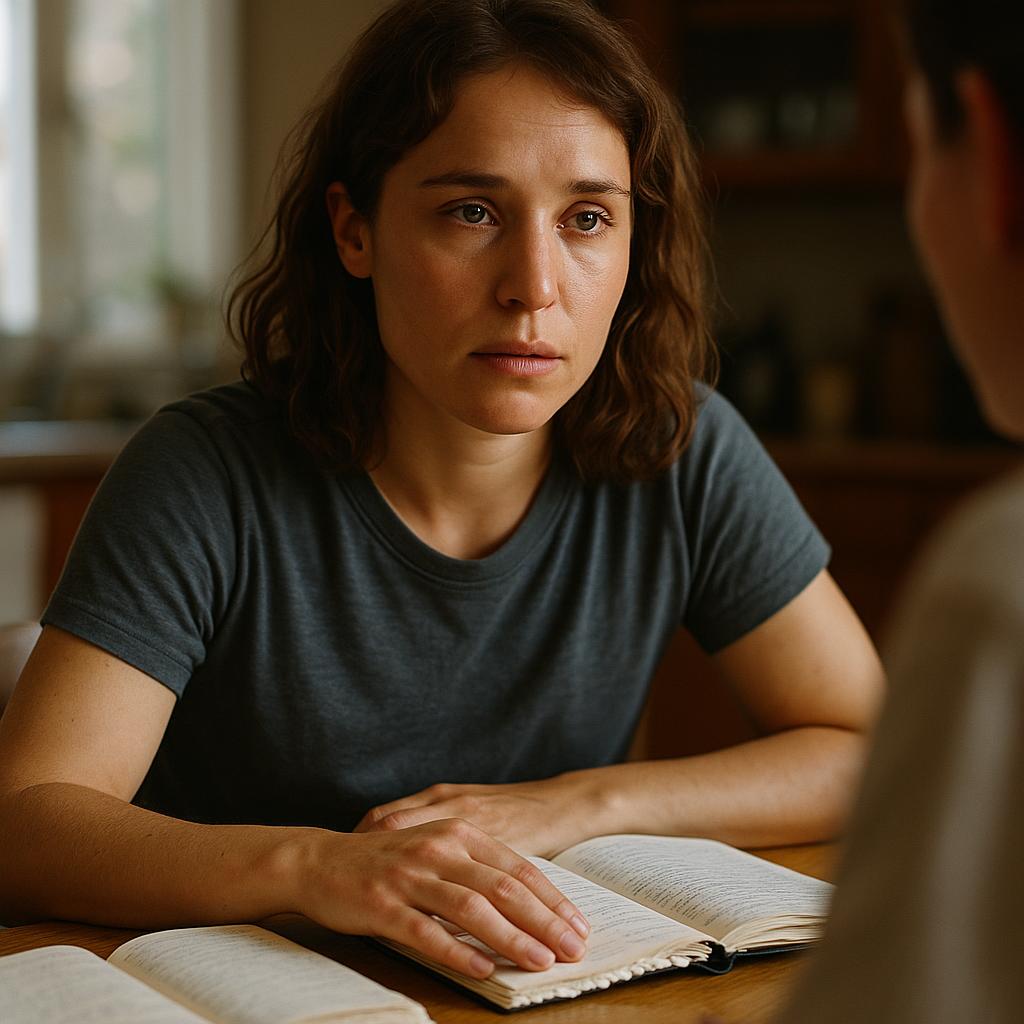 Image by RM AI
The Decision to Open the Gate
After weeks of piecing together Eleanor and Margaret's story, I felt a strange responsibility to these women I'd never met. One evening, as Lily and I sat on my porch watching fireflies dance above the garden, I voiced what had been on my mind. 'I think we should open the gate, Lily.' She looked startled, her teacup freezing halfway to her lips. 'Open it? But no one's been through there in decades.' I nodded, watching how the moonlight caught on the rusted hinges. 'That's exactly why we should. Two best friends lived their entire lives divided by a gate neither would open. Don't you think it's time?' Lily bit her lip, glancing toward the abandoned house. 'What if we're trespassing?' I couldn't help but chuckle. 'I'm a 66-year-old retired nurse. If anyone calls the police, I'll just look confused and offer them tea.' That made her smile. After a moment's hesitation, she nodded. 'Saturday at noon, then?' We clinked our teacups in agreement, a strange excitement building between us. Neither of us could have possibly imagined what waited for us on the other side of that gate—or the letter we would find tucked into the stone wall, yellowed with age but perfectly preserved, as if it had been waiting all these years for someone to finally find it.
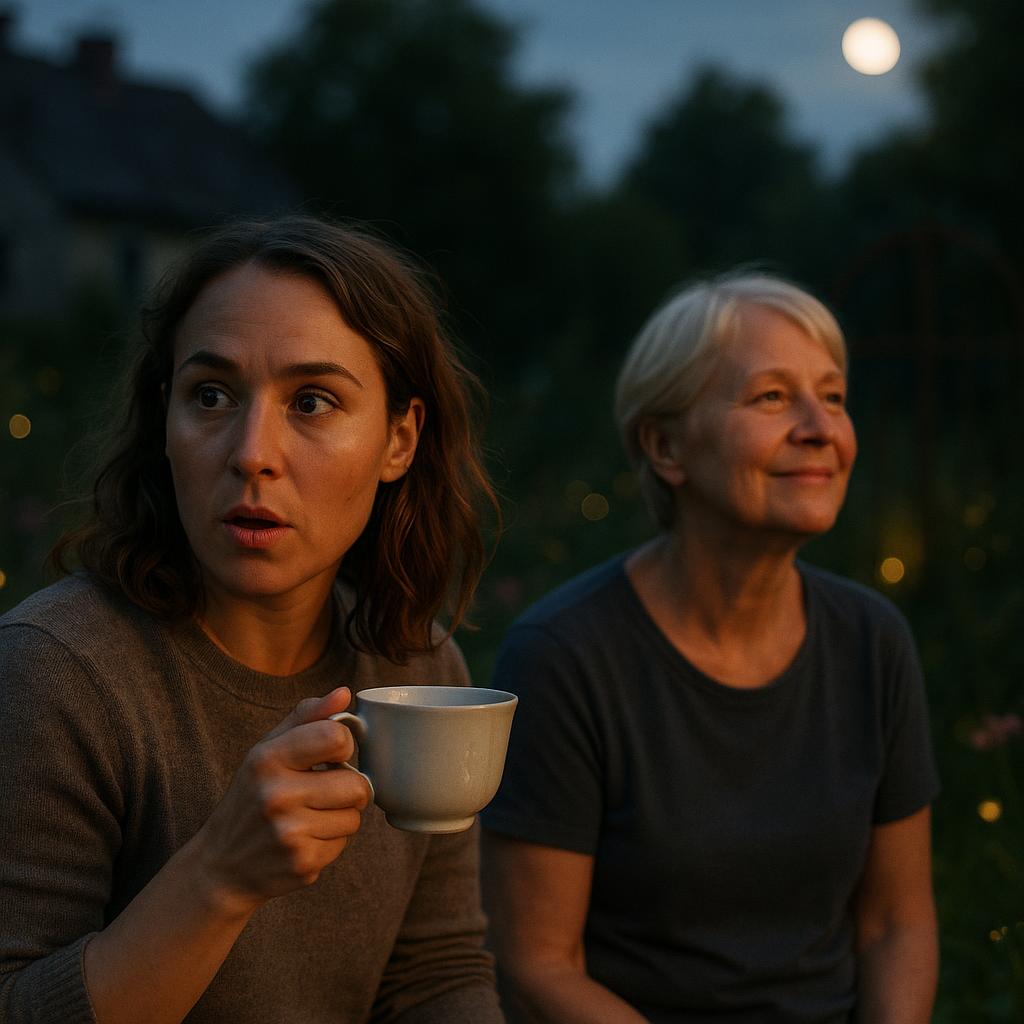 Image by RM AI
Preparing the Gate
Friday morning arrived with a gentle breeze that seemed to whisper encouragement as I gathered my gardening tools. 'Today's the day,' I told myself, feeling oddly nervous about clearing a simple gate. For hours, I knelt in the soft earth, my 66-year-old knees protesting as I snipped away decades of stubborn vines that had claimed the iron bars as their own. 'Eleanor, Margaret, I hope you don't mind,' I found myself saying aloud, brushing dirt from my hands. 'We're trying to fix what broke between you two.' The rust came away in flakes under my wire brush, revealing glimpses of the gate's original black paint. As the afternoon sun slanted across the garden, I finally cleared the last tendril away, stepping back to admire my work. That's when I noticed it—a small gap in the stone wall beside the gate, perfectly concealed until now. Just wide enough to slip something thin inside, like a letter or a photograph. My heart quickened as I ran my fingers along the opening. It wasn't natural—someone had deliberately created this hiding place. I glanced toward Margaret's abandoned house, wondering if Eleanor had ever stood exactly where I was standing, contemplating the same gap. Had she hidden something there? Or had Margaret? I couldn't resist slipping my fingers into the cool darkness, feeling for whatever secrets might have been waiting all these years for someone to finally discover them.
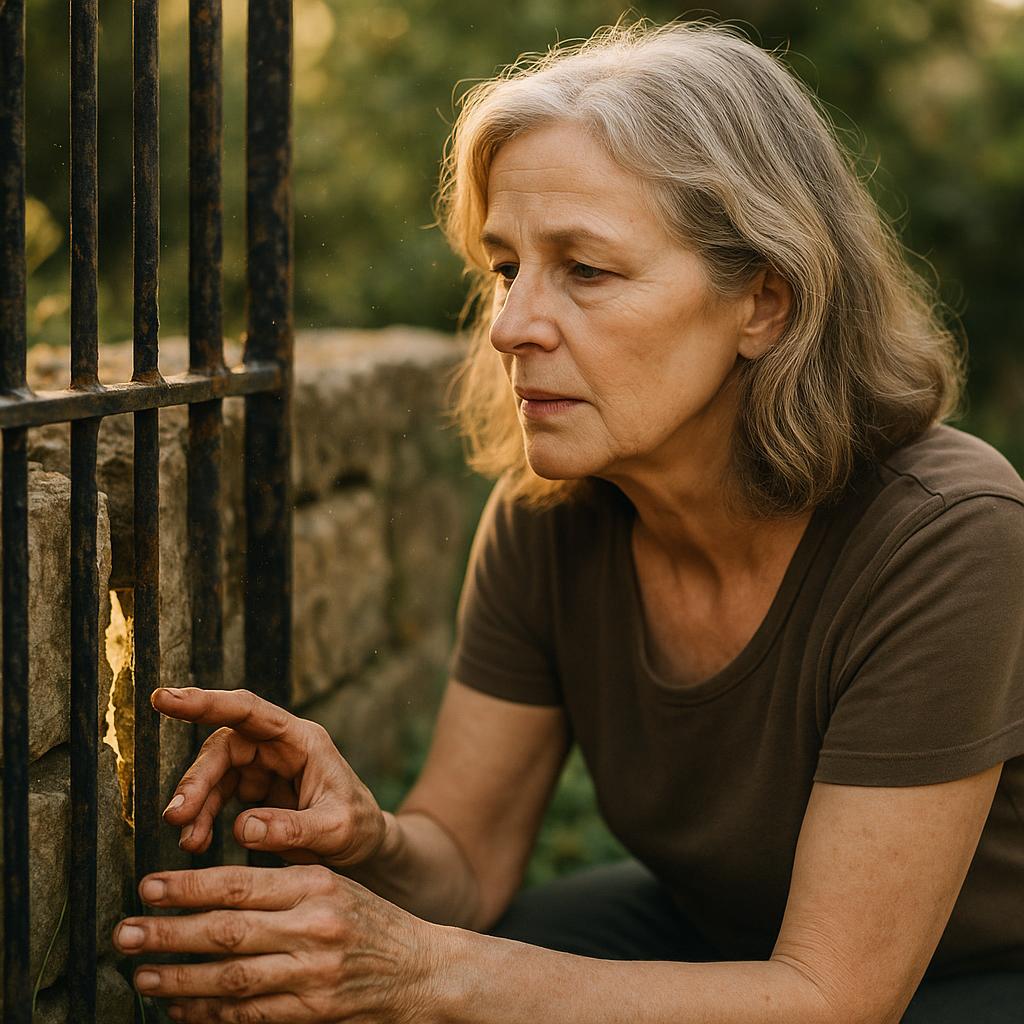 Image by RM AI
The Opening Ceremony
Saturday arrived with a sky so blue it felt like an omen. Lily appeared at my doorstep clutching a beautiful mixed bouquet—wild daisies and black-eyed Susans that Eleanor had loved, alongside deep crimson roses that Margaret had apparently been famous for growing. 'Ready?' she asked, her voice steady but her hands trembling slightly. I nodded, feeling strangely ceremonial as we walked together toward the gate I'd spent hours clearing. Several neighbors had gathered at a respectful distance, curiosity written across their faces. Mrs. Jenkins from across the street even brought her camera. 'What's happening?' someone whispered. 'Nora's opening the old gate,' another replied. 'It's been closed for decades.' As we approached the iron barrier that had divided two lives for so long, I felt the weight of Eleanor and Margaret's unresolved friendship on my shoulders. Lily and I exchanged a solemn look before I placed my hand on the latch. 'For Eleanor and Margaret,' I said softly. 'For second chances,' Lily added. The gate made a sound like a sigh as I pulled it open, metal scraping against stone for the first time in nearly sixty years. What happened next left everyone—including me—completely speechless.
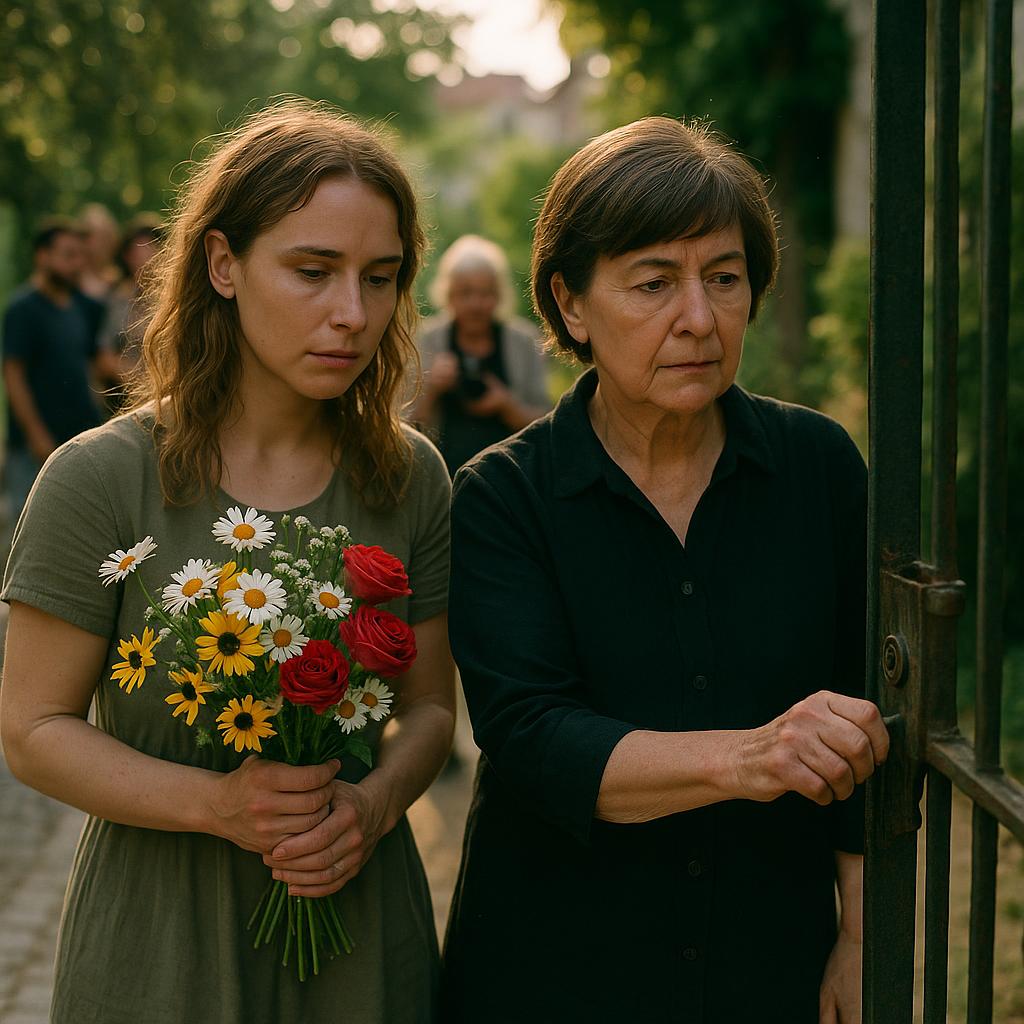 Image by RM AI
The Letter in the Wall
The gate creaked open with a sound like a long-held breath finally released. Lily and I stood there, hands still on the rusted iron, as if we'd just unlocked something far more significant than a simple garden entrance. That's when I remembered the gap I'd noticed in the stone wall. 'Wait,' I whispered to Lily, 'there's something here.' I slipped my fingers into the cool darkness between the stones, my heart skipping when I felt paper. With trembling hands, I carefully extracted an envelope, its edges yellowed and brittle with age, yet remarkably preserved within its stone sanctuary. 'To whoever finally opens this gate,' I read aloud, my voice catching. Lily gasped, her eyes wide. 'That's Margaret's handwriting,' she said, recognizing it from the old photographs we'd seen. We looked at each other, the weight of what we'd found hanging between us. This wasn't just paper and ink—it was a message that had waited patiently for decades, a voice from the past that refused to be silenced by pride or time. 'Should we open it?' Lily asked, her voice barely above a whisper. I nodded, my nurse's hands steady despite my racing heart. As I carefully broke the seal, neither of us could have possibly prepared for the confession that was about to change everything we thought we knew about Eleanor and Margaret's story.
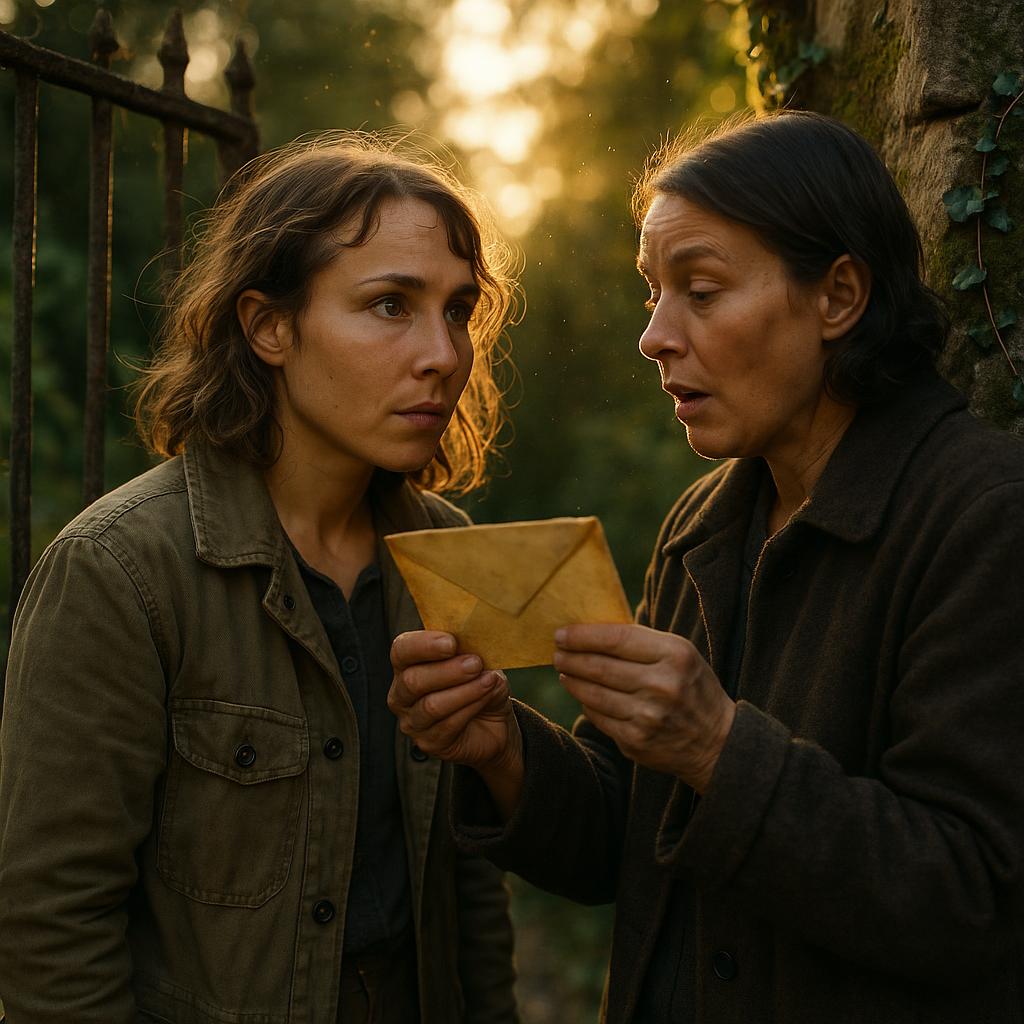 Image by RM AI
Margaret's Words
With trembling hands, I carefully opened the envelope, the paper crackling softly beneath my fingers. The letter inside was dated just three years ago—much more recent than either of us had expected. 'Dear Finder of This Letter,' it began in shaky but determined handwriting. I gasped, looking up at Lily. 'It's from Margaret. She was alive until recently.' Lily's eyes widened as she moved closer to read over my shoulder. The words blurred slightly as tears filled my eyes. 'I, Margaret Wilson, write this as an apology—not just to Eleanor, who may never read these words, but to anyone who finds this letter.' I had to pause, my throat tight with emotion. 'For sixty years, I've lived with the weight of my pride and stubbornness. For sixty years, I've looked at this gate and wished I had the courage to open it.' Lily placed her hand on my shoulder, her own tears falling freely now. 'She knew,' Lily whispered. 'She knew someone would eventually open it.' I nodded, unable to speak as I continued reading. The next paragraph began with a confession that made my blood run cold—the real reason behind their decades-long silence was nothing like what we'd imagined.
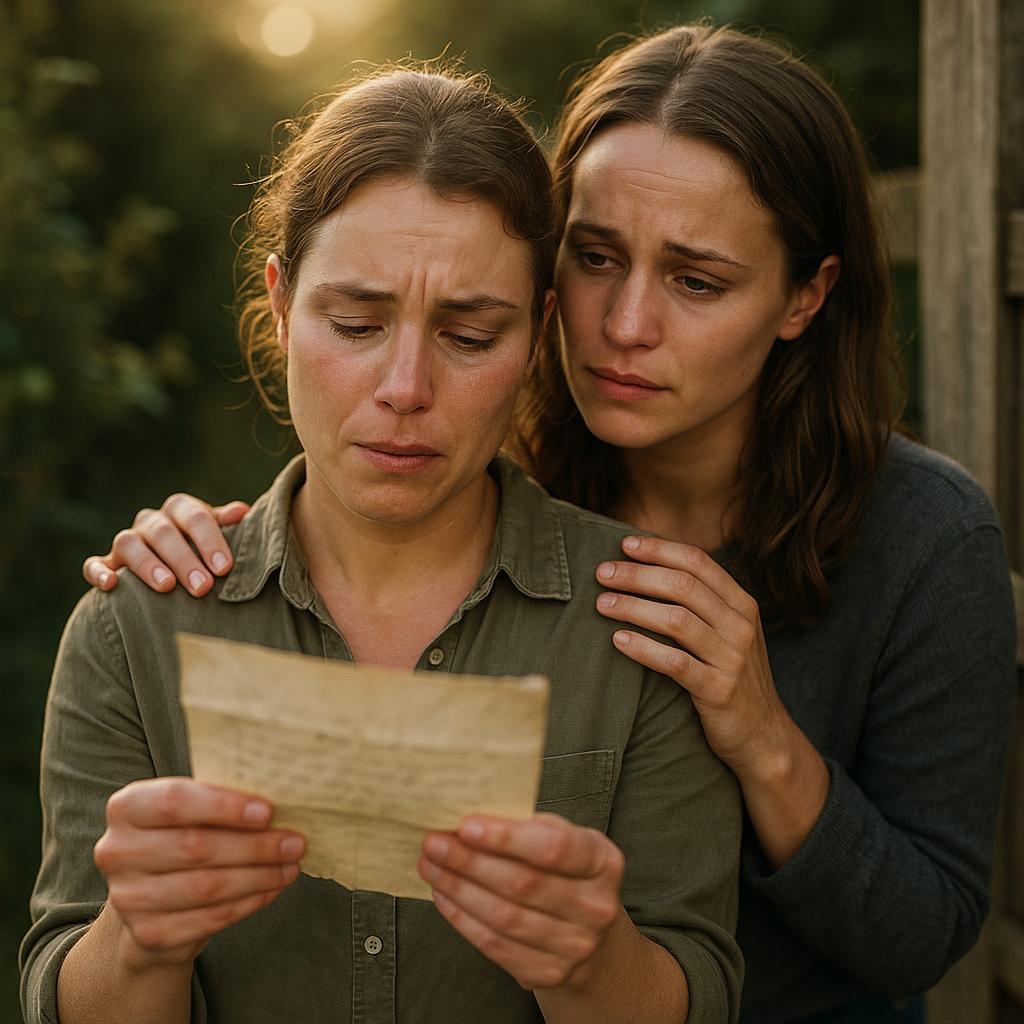 Image by RM AI
The Truth About Thomas
I sat on my porch swing, Margaret's letter trembling in my hands as I read the truth that had been hidden for sixty years. 'Thomas Hayes was a liar and a manipulator,' Margaret wrote, her handwriting growing more forceful. 'He courted us both in secret, telling Eleanor I was pursuing him while telling me she had given her blessing.' My heart ached as I read how Margaret had discovered his deception when she found Eleanor's handkerchief in his car. 'I confronted him immediately and broke our engagement,' she continued, 'but he went to Eleanor with a different story—that I had chased after him knowing how she felt.' I could almost feel Margaret's pain through the yellowed paper. 'By the time I gathered the courage to speak to Eleanor directly, she wouldn't open her door. Pride kept me from trying again.' Lily wiped tears from her cheeks as I read the final lines aloud: 'We wasted our lives over a man who deserved neither of us, all because we couldn't bring ourselves to speak directly to each other.' I looked up at the now-open gate, wondering how different their lives might have been if they'd only opened it sooner. But Margaret's letter wasn't finished—there was a second page that made my blood run cold.
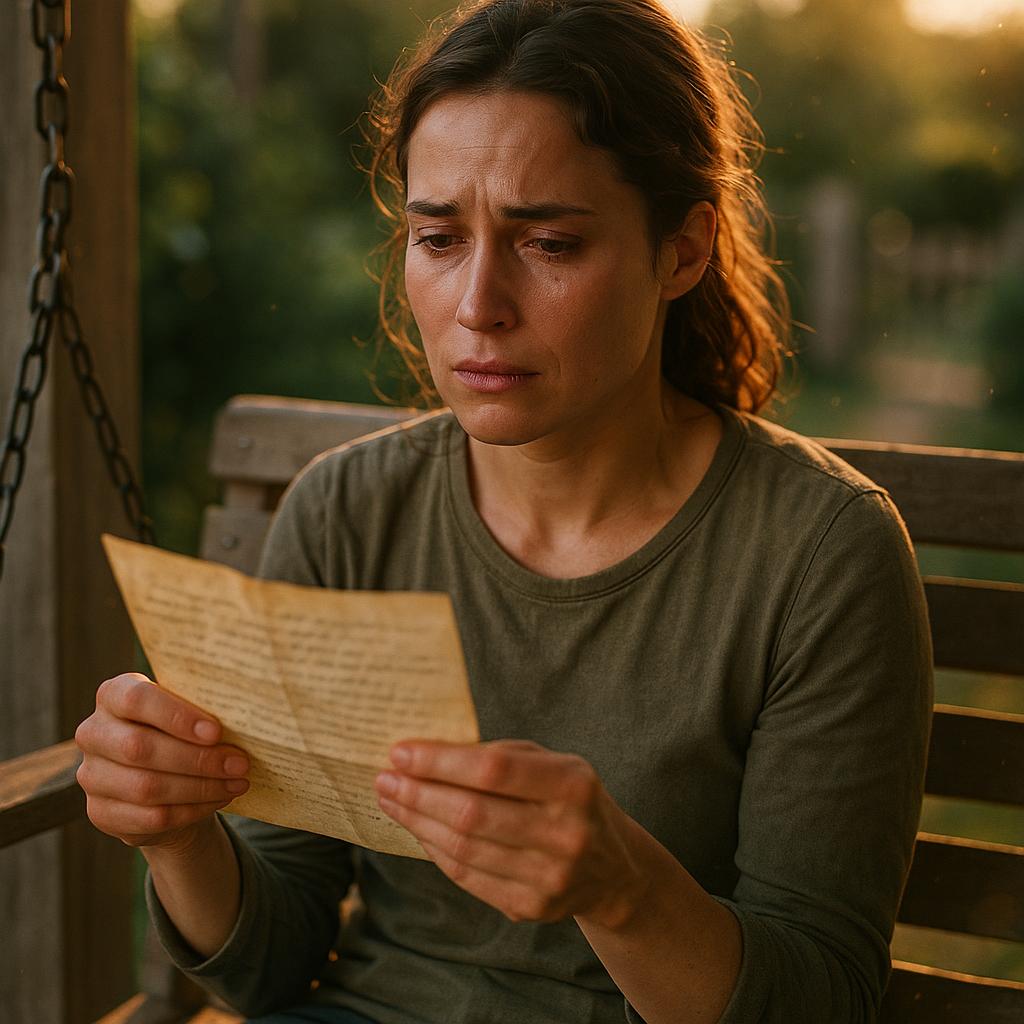 Image by RM AI
The Failed Reconciliation
I turned to the next page of Margaret's letter, my hands trembling slightly. 'I tried to tell Eleanor the truth,' Margaret wrote, her handwriting becoming more urgent. 'I knocked on her door three times that summer. The first time, she wouldn't even open it. The second time, she opened it just to tell me she never wanted to see me again.' My heart ached as I read how Margaret had stood on Eleanor's porch in the rain during her third attempt, begging for five minutes to explain. Eleanor had listened for exactly that long before saying, 'Even if what you say is true, we can never go back.' I glanced at Lily, who was wiping tears from her cheeks. 'For sixty years,' Margaret continued, 'I watched her from my window. I saw her plant roses the color of the dress she wore to our high school graduation. I saw her sit alone on summer evenings, just as I did on mine. Pride is a prison we built stone by stone, until neither of us remembered how to unlock the door.' I had to pause, overwhelmed by the weight of so much wasted time. What Margaret wrote next made me gasp aloud – there was one final attempt at reconciliation that changed everything.
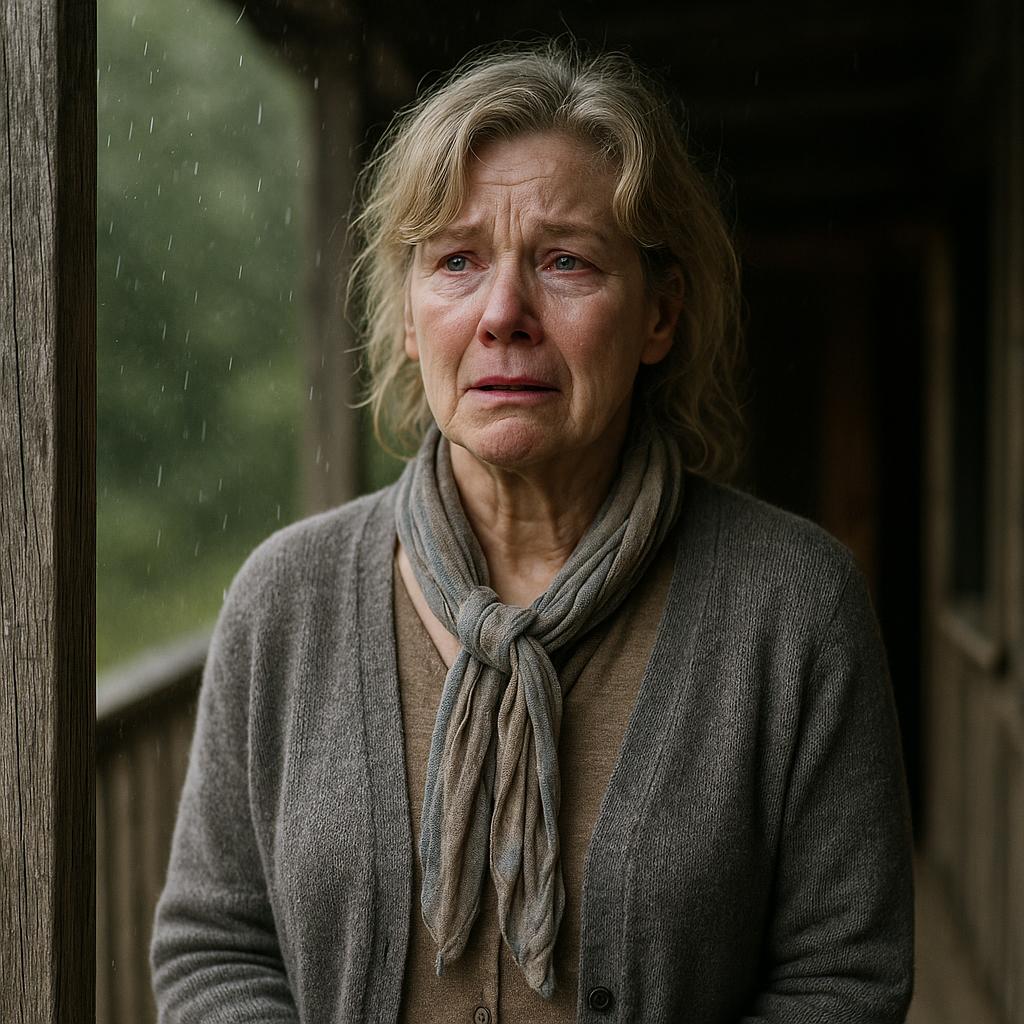 Image by RM AI
The Blessing
I wiped tears from my eyes as I read the final page of Margaret's letter. 'To whoever finds the courage to open this gate,' she wrote, 'I offer my blessing. May this simple act of opening what was closed for too long symbolize the breaking of all barriers that keep hearts apart.' Her handwriting grew shakier here, as if she'd struggled to maintain composure. 'Eleanor and I never found our way back to each other in life. Perhaps in death, we might find the peace that pride denied us.' The last part of the letter made my breath catch—a poem written in two distinct handwritings, clearly composed by both women in their youth: 'Friends are the family we choose, bound not by blood but by truth. Even when paths diverge, the roots remain entwined.' I folded the letter carefully, looking at Lily whose face mirrored my own emotion. 'They wrote this together,' I whispered. 'Before everything fell apart.' As we stood there in the gentle afternoon light, the open gate between us, I couldn't help but feel we'd been chosen somehow—entrusted with healing a wound that had festered for six decades. But what we discovered next in Margaret's abandoned house would reveal that the story of these two women contained one final, breathtaking twist.
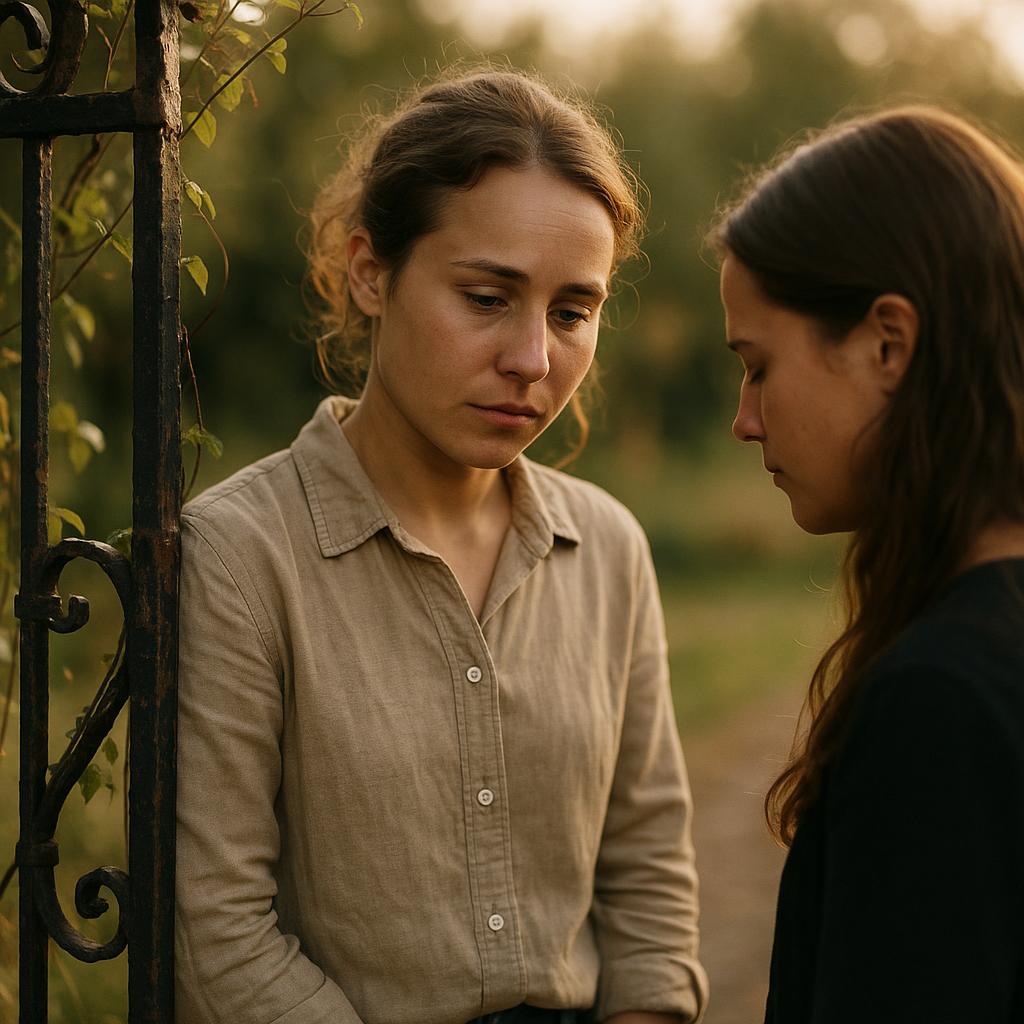 Image by RM AI
Exploring Margaret's Garden
With trembling hands, I pushed the gate open wider, and Lily and I stepped through together. The sound of our footsteps on the overgrown stone pathway seemed almost sacrilegious, breaking a silence that had lasted decades. Margaret's garden was a beautiful ruin—nature had reclaimed much of it, but you could still see the careful planning beneath the wildness. 'Look at these rose trellises,' I whispered, running my fingers along the weathered wood. 'They must have been magnificent once.' Lily nodded, her eyes taking in everything. We made our way deeper into the garden, discovering a small pond now filled with years of fallen leaves. But what truly broke my heart was the garden bench we found near the back door of Margaret's house. It was positioned perfectly—facing directly toward Eleanor's cottage, my cottage now. 'She sat here,' I said softly, lowering myself onto the bench. 'All those years, watching Eleanor from a distance.' Lily sat beside me, her shoulders shaking slightly. 'They were so close, yet so far apart.' I couldn't help but wonder how many sunsets Margaret had witnessed from this very spot, her eyes fixed on the home of the friend she'd lost. As we sat in contemplative silence, something caught my eye near the bench—a small metal box, partially buried in the soil, with Eleanor's name etched carefully on its rusted lid.
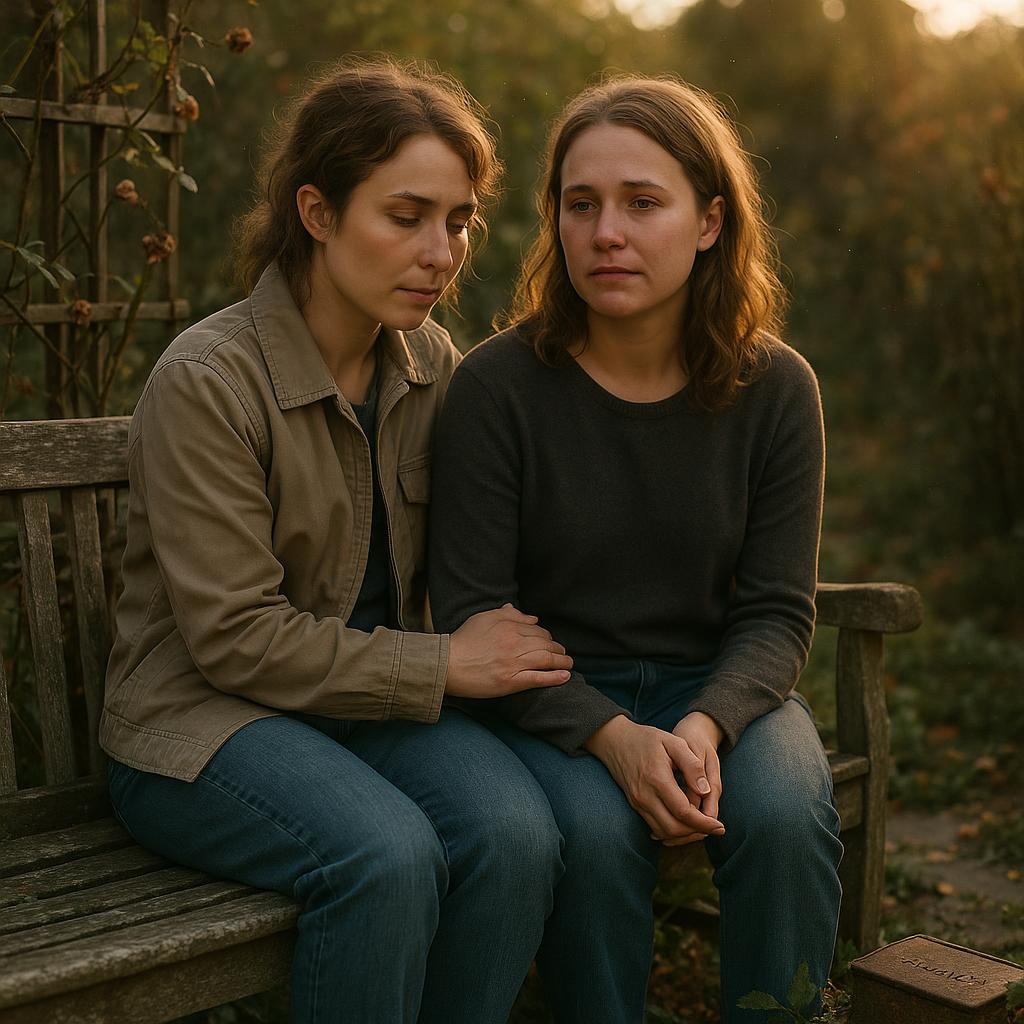 Image by RM AI
The Locked House
The metal box would have to wait. Lily and I approached Margaret's house, our footsteps crunching on the overgrown gravel path. It was a modest cottage, similar to mine but wearing its abandonment like a heavy cloak. I pressed my face against a dusty window, cupping my hands around my eyes to peer inside. 'It's like she just... vanished,' I whispered. The interior was frozen in time—furniture draped with yellowed sheets, picture frames still hanging on walls, and bookshelves packed with volumes waiting for hands that would never return to open them. 'Look at this,' Lily said, pointing to a small table visible near the window. 'There's a teacup still sitting there.' Something about that half-finished cup of tea made my heart ache more than anything else. 'We need to find out what happened to her,' Lily said, trying the back door and finding it locked. 'Maybe she has relatives somewhere who don't even know about all this.' I nodded, running my fingers along the doorframe, wondering how many times Eleanor had stood at this very threshold in their youth, before everything fell apart. 'The county records office might have information,' I suggested. 'Or maybe...' I paused, noticing something tucked beneath the doormat—the corner of what appeared to be a small brass key.
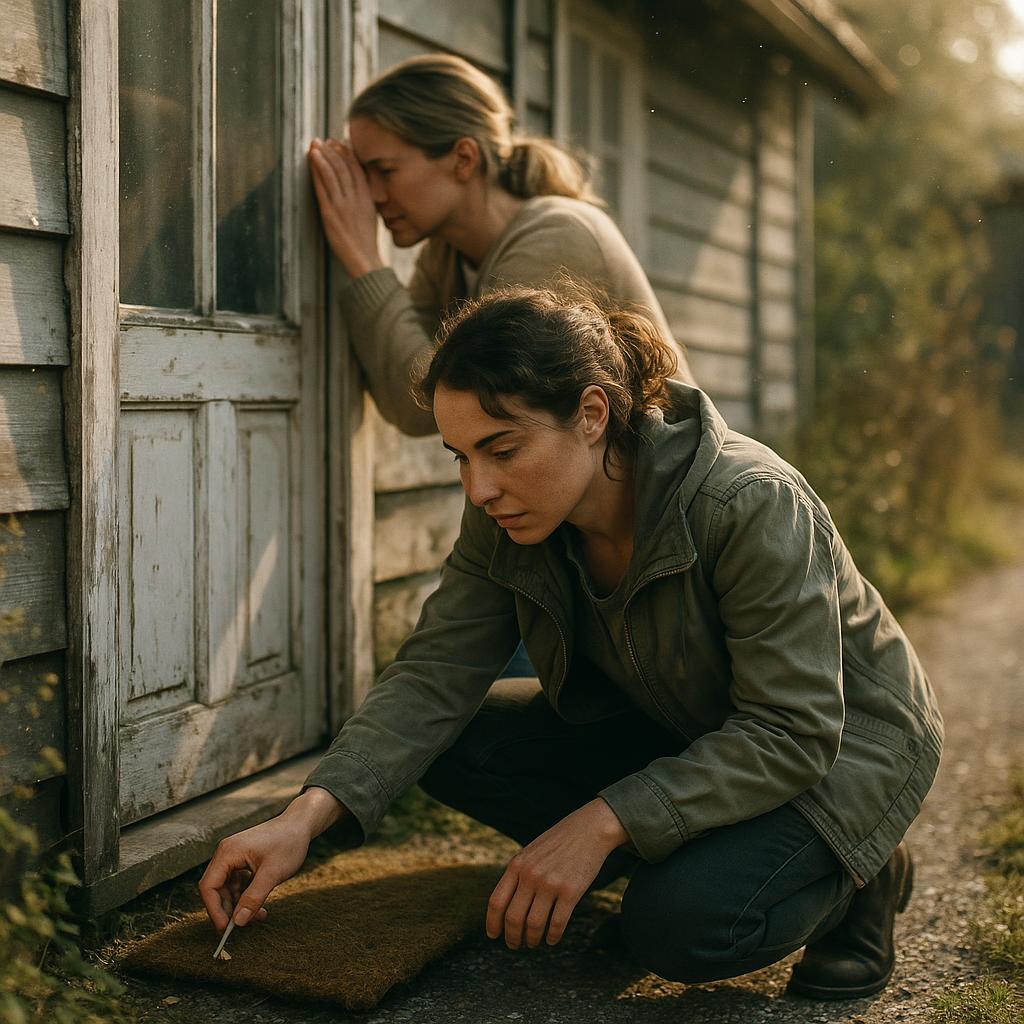 Image by RM AI
The Town Records
The next morning, Lily and I drove to the town hall, determined to uncover more about Margaret's life. The records clerk, Mr. Yamamoto, greeted us with a friendly smile that crinkled the corners of his eyes. 'Property records from the 1950s? Now that's an interesting Monday morning request,' he chuckled, leading us through a maze of filing cabinets. I explained our discovery of the gate and letter, watching his eyes widen with interest. 'The Wilson property? Oh yes, I remember processing those papers.' He pulled out a thick folder, dust dancing in the sunlight as he opened it. 'According to this, Margaret Wilson maintained ownership until her death just three years ago.' My heart skipped—exactly when she'd written that letter. 'The property transferred to a trust afterward,' he continued, adjusting his glasses, 'but there's no information about beneficiaries or plans for the house.' Lily and I exchanged glances. 'So it's just... sitting there?' I asked. Mr. Yamamoto nodded, sliding another document toward us. 'However, there is something unusual here. Margaret made annual payments to maintain a separate safety deposit box at Fairview Bank for over fifty years. The last payment was made the week before she died.'
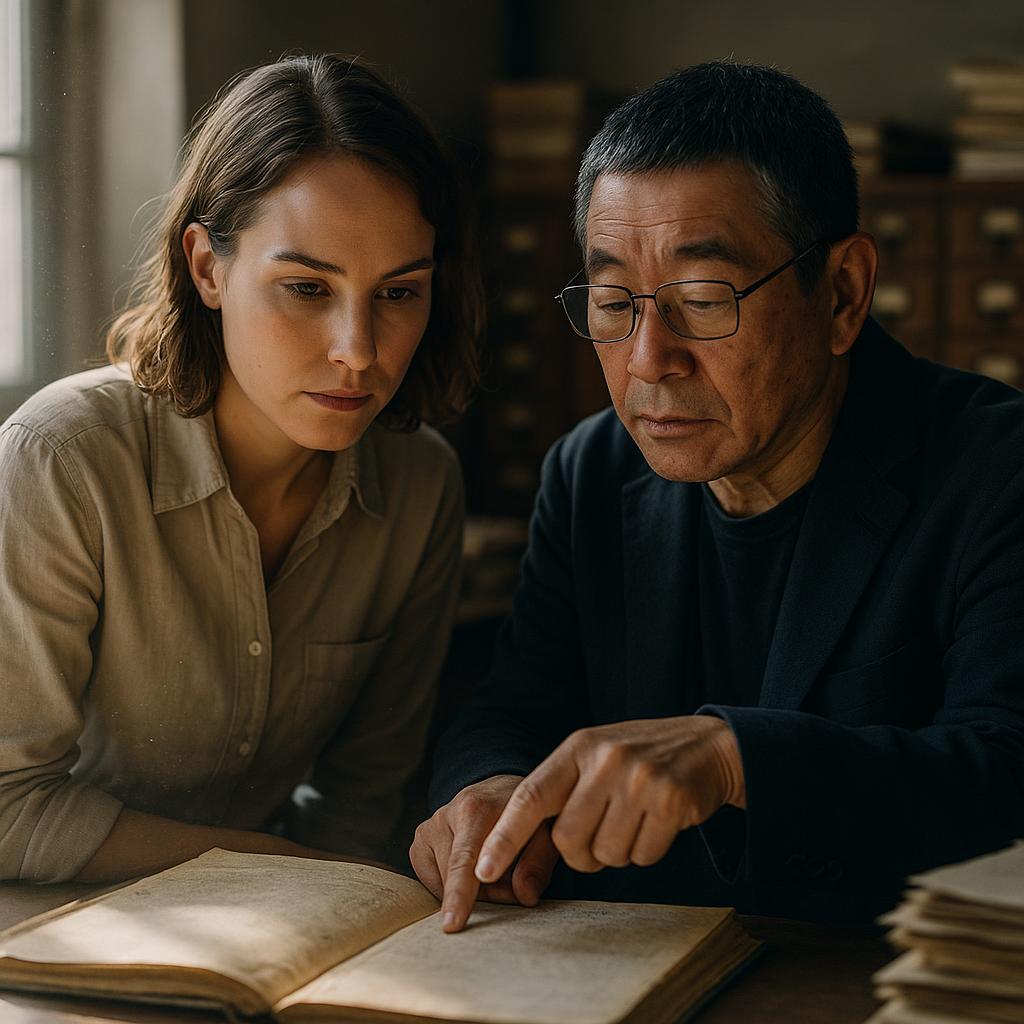 Image by RM AI
The Obituary
The next day, Lily and I found ourselves in the hushed atmosphere of the town library, where Ms. Chen, a librarian with kind eyes and silver-streaked hair, helped us locate Margaret's obituary. 'It should be in our digital archives,' she said, fingers flying across the keyboard. When the document appeared on screen, my heart sank. Margaret Wilson, 83, had indeed passed away three years ago at Sunset Valley Nursing Home. The notice was painfully brief—just four lines acknowledging her peaceful passing, that she was preceded in death by her parents, and that she had no surviving relatives. I felt Lily's hand squeeze mine as we both absorbed the stark loneliness of those words. 'That's it?' Lily whispered. 'No mention of Eleanor? Nothing about her life?' I shook my head, feeling a heaviness in my chest. For a woman who had lived eight decades, who had loved deeply enough to leave flowers at a gate for years, who had written that beautiful letter—this seemed like a final injustice. 'It's like she just... disappeared,' I murmured, staring at the screen. 'No funeral service, no celebration of life.' As Ms. Chen printed a copy for us, I couldn't help wondering if Margaret had died believing her story would never be told—but the safety deposit box Mr. Yamamoto mentioned might tell us otherwise.
 Image by RM AI
Sunset Valley Nursing Home
The following Tuesday, Lily and I drove to Sunset Valley Nursing Home, a brick building surrounded by well-tended gardens that somehow managed to look both cheerful and melancholy. At the front desk, a stern-faced administrator named Mrs. Patel initially shut us down with talk of 'confidentiality protocols' and 'privacy regulations.' I could feel our quest hitting a brick wall until Lily pulled out Margaret's letter. As Mrs. Patel read it, her professional veneer softened visibly. 'I remember Margaret,' she said quietly, removing her glasses. 'Kept to herself mostly. Always had a book.' She hesitated, then made a decision. 'Wait here.' Ten minutes later, we were sitting in a small break room with Doris, a nurse's aide who'd cared for Margaret during her final year. 'Oh, that woman had stories,' Doris told us, stirring sugar into her coffee. 'Never had visitors, but she'd talk about someone named Eleanor like they'd just had tea yesterday.' My heart clenched at this. 'The strange thing,' Doris continued, leaning forward conspiratorially, 'was what happened the day before she passed. She was agitated, insisting she needed to write something important. When I brought her paper, she smiled and said, 'It's time to open the gate.'
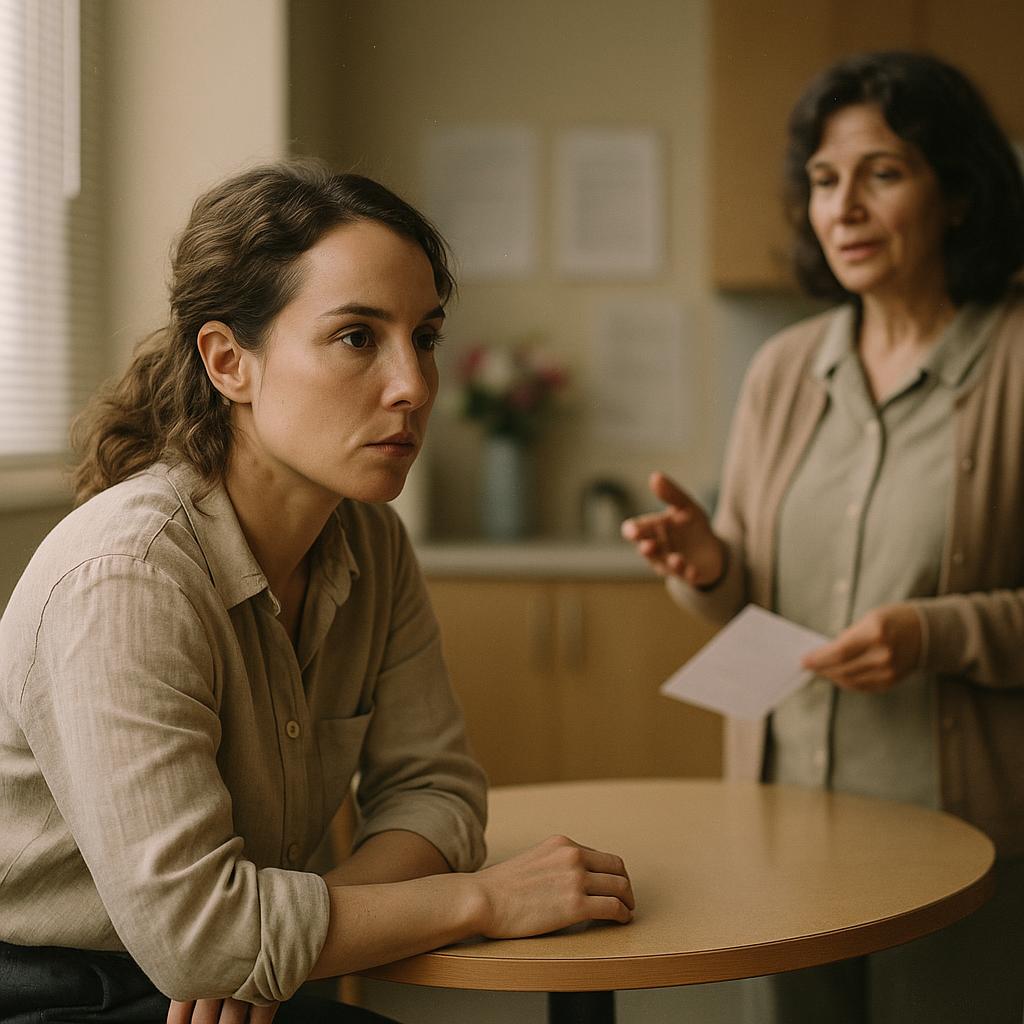 Image by RM AI
Nurse Rosario's Memories
After speaking with Doris, we were introduced to Nurse Rosario, a gentle woman with salt-and-pepper hair who'd cared for Margaret during her final two years. 'Margaret was the definition of quiet dignity,' she told us, her eyes softening with the memory. 'She kept to herself mostly, but when she did talk, it was often about her garden—especially those roses she was so proud of.' I leaned forward, hanging on every word. 'There was this one name she mentioned constantly—Eleanor. On certain days of the year, she'd become so melancholy. April 17th was particularly difficult, though she never explained why.' Nurse Rosario paused, then reached into her pocket. 'There's something else. Two days before she passed, Margaret gave me this.' She produced a small key. 'She made me promise to deliver an envelope to her house and place it in what she called 'the gap by the gate.' I did as she asked, though I never understood why it mattered so much.' Lily and I exchanged shocked glances—we'd found that very letter. 'Did she ever mention what was in the safety deposit box?' I asked carefully, watching Nurse Rosario's expression change to one of surprise.
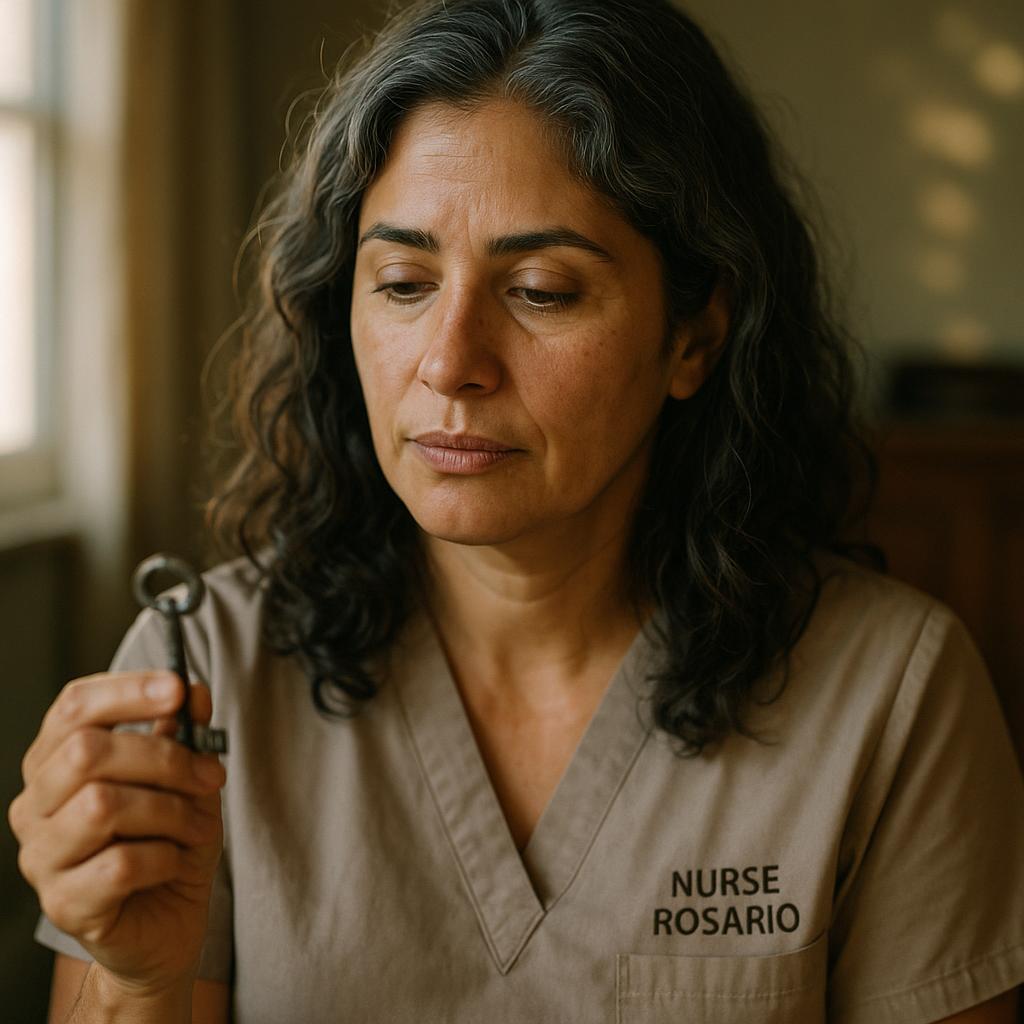 Image by RM AI
The Box of Photographs
Nurse Rosario disappeared into a back room and returned carrying a cardboard box labeled 'Wilson, M. - Personal Effects.' 'No one ever claimed these,' she explained, setting it gently on the table between us. My hands trembled as I lifted the lid. Inside lay the carefully preserved fragments of Margaret's life - birthday cards, newspaper clippings, a pressed flower bookmark. But what made my breath catch was a stack of photographs bound with a faded ribbon. Lily and I leaned closer together as I carefully untied it. The first photo made my heart stop - two young women, barely out of their teens, standing arm-in-arm in front of the very gate we'd just opened. Their faces radiated joy, caught mid-laugh in that perfect moment before everything fell apart. I turned it over with shaking fingers. There, in looping youthful handwriting: 'Eleanor and Margaret, best friends forever, 1955.' Lily's eyes met mine, both of us fighting tears. 'They were so happy,' she whispered. I nodded, unable to speak as I stared at Eleanor's face - Lily's grandmother - frozen in time with her best friend. As I flipped to the next photo, something small and metallic slipped from between the images and clinked onto the table - a key that looked exactly like the one we'd found beneath Margaret's doormat.
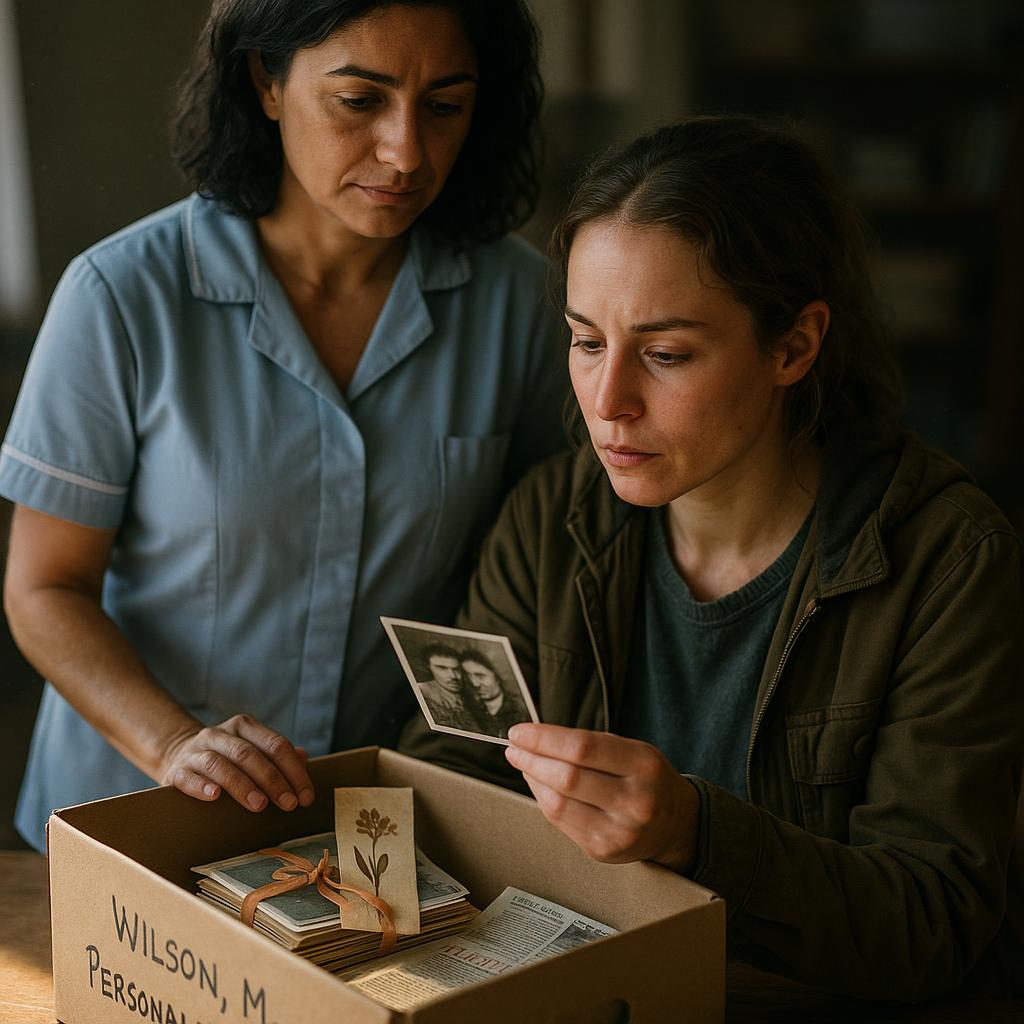 Image by RM AI
Thomas's Letters
I sat at Margaret's kitchen table, my fingers trembling as I opened the bundle of letters we'd found in her personal effects. 'My dearest Margaret,' the first one began, dated just weeks after Thomas had supposedly proposed to Eleanor. My stomach turned as I read his honeyed words, each letter revealing more of his manipulative nature. 'It was all a misunderstanding,' he wrote in one. 'Eleanor misinterpreted our friendship.' In another: 'You're the only one who truly understands me.' Lily watched my face as I reached the final letter, dated three days before what would have been his wedding to Eleanor. 'If you don't reconsider,' Thomas had written, 'I'll have no choice but to tell Eleanor things about you that will destroy any chance of reconciliation between you two.' Across this letter, in bold red ink that seemed to still carry Margaret's fury six decades later, she had written a single word: 'LIAR.' I looked up at Lily, my heart pounding. 'Your grandmother never knew about these threats,' I whispered. 'Margaret was protecting her.' As I carefully returned the letters to their envelope, something caught my eye—a small newspaper clipping tucked into the bottom of the box that would reveal Thomas's ultimate fate.
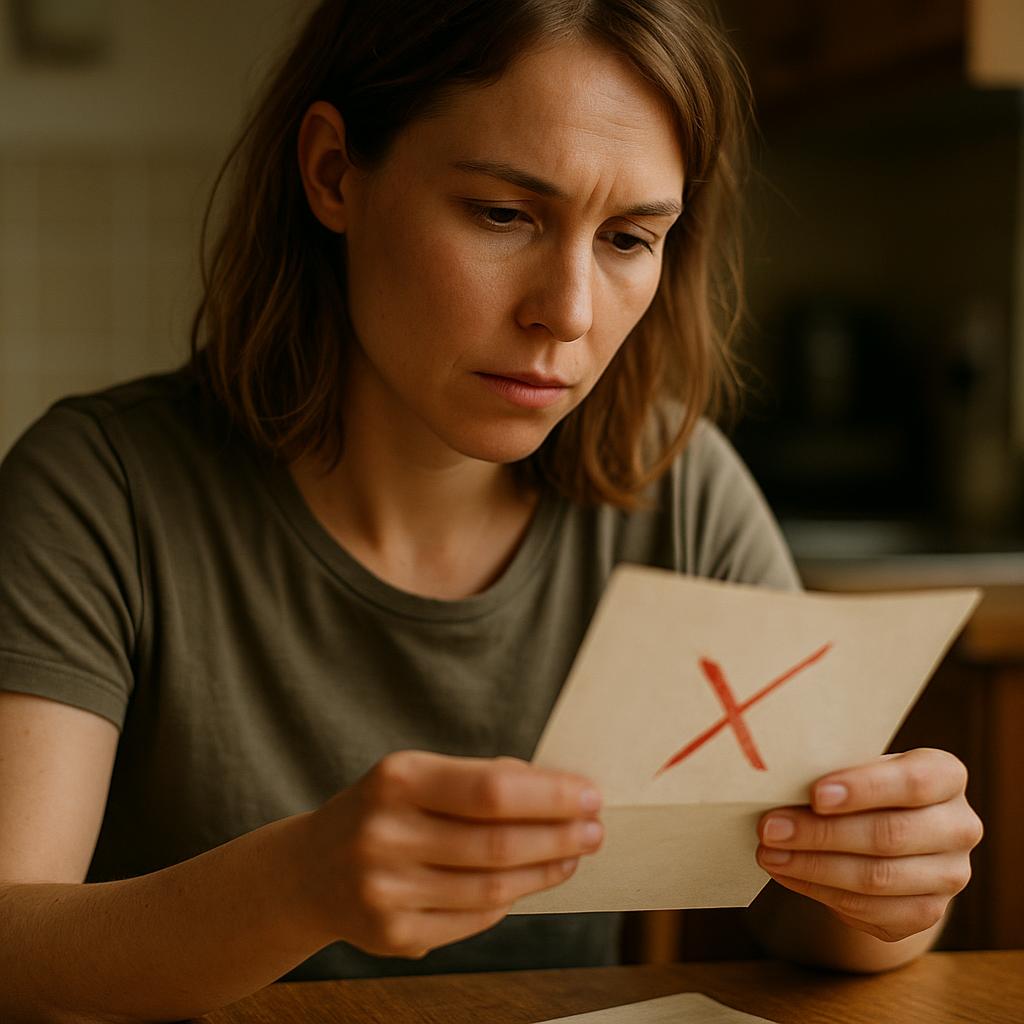 Image by RM AI
The Unsent Letters
I carefully untied the faded blue ribbon binding a stack of yellowed envelopes. 'To Eleanor,' each one began, never delivered, never read. The first was dated just weeks after their falling out. 'I never betrayed you,' Margaret had written in elegant script. 'Thomas lied to us both.' My hands trembled as I read through decades of Margaret's life, poured out in letters that never reached their destination. 'I saw your daughter playing in the yard today,' one from 1965 read. 'She has your smile.' Another from 1978: 'I almost knocked on your door today. After all these years, I still rehearse what I'd say.' The letters grew more poignant with time. 'My doctor says it's cancer,' she wrote in 2001. 'How strange to face this journey without you.' I had to stop reading when I reached the final letter, dated just after Eleanor's death. 'You're gone,' Margaret had written, her handwriting shaky. 'And now I must live with the knowledge that we'll never reconcile in this life.' Lily squeezed my hand as tears rolled down my cheeks. 'She loved her until the very end,' I whispered. But tucked inside the final envelope was something that made my blood run cold – a newspaper clipping about Thomas that would change everything we thought we knew.
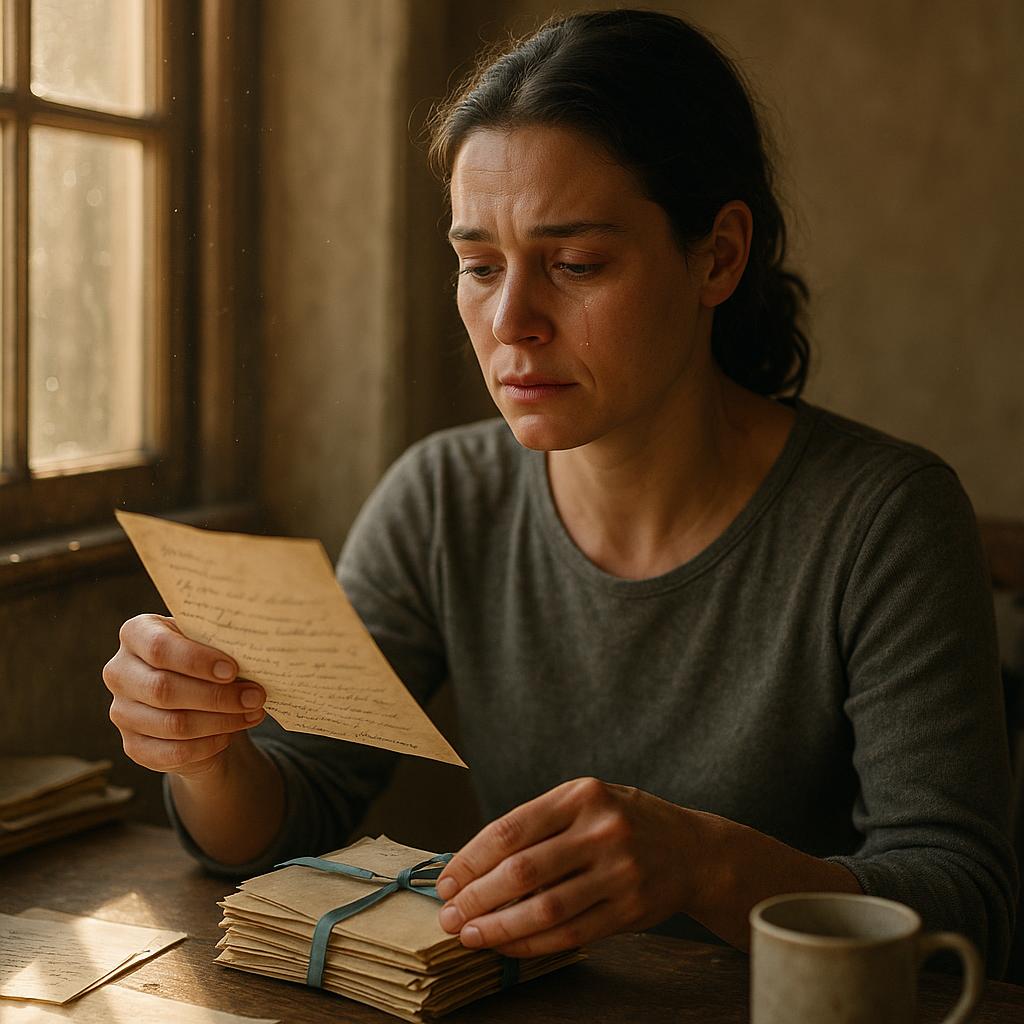 Image by RM AI
The Trust Documents
At the bottom of the box, beneath all the letters and photographs, I found a thick manila envelope labeled 'Trust Documents.' My hands trembled as I pulled out the legal papers inside. 'Oh my goodness,' I gasped, scanning the formal language. 'Lily, look at this.' The trust Margaret had established contained an extraordinary provision: her property was to be maintained until someone—anyone—finally opened the gate between our houses. At that point, whoever lived in Eleanor's cottage (my cottage now) would be offered Margaret's home for the symbolic price of one dollar. 'She never gave up hope,' Lily whispered, her voice breaking. 'Even after death, she was trying to heal the rift.' I ran my fingers over Margaret's signature at the bottom of the document, imagining her in her final days at Sunset Valley, carefully arranging this last act of reconciliation. 'She wanted the houses to be connected again,' I said softly. 'She wanted to make sure that what happened to them would never happen to anyone else.' As I carefully folded the papers back into their envelope, I couldn't help but wonder—was I meant to find all this? Had some invisible thread pulled me to this cottage, to this moment, to finally fulfill Margaret's last wish? And then I noticed something else in the box that made my blood run cold—a small diary with Eleanor's name on it, and a bookmark placed at an entry dated April 17, 1955.
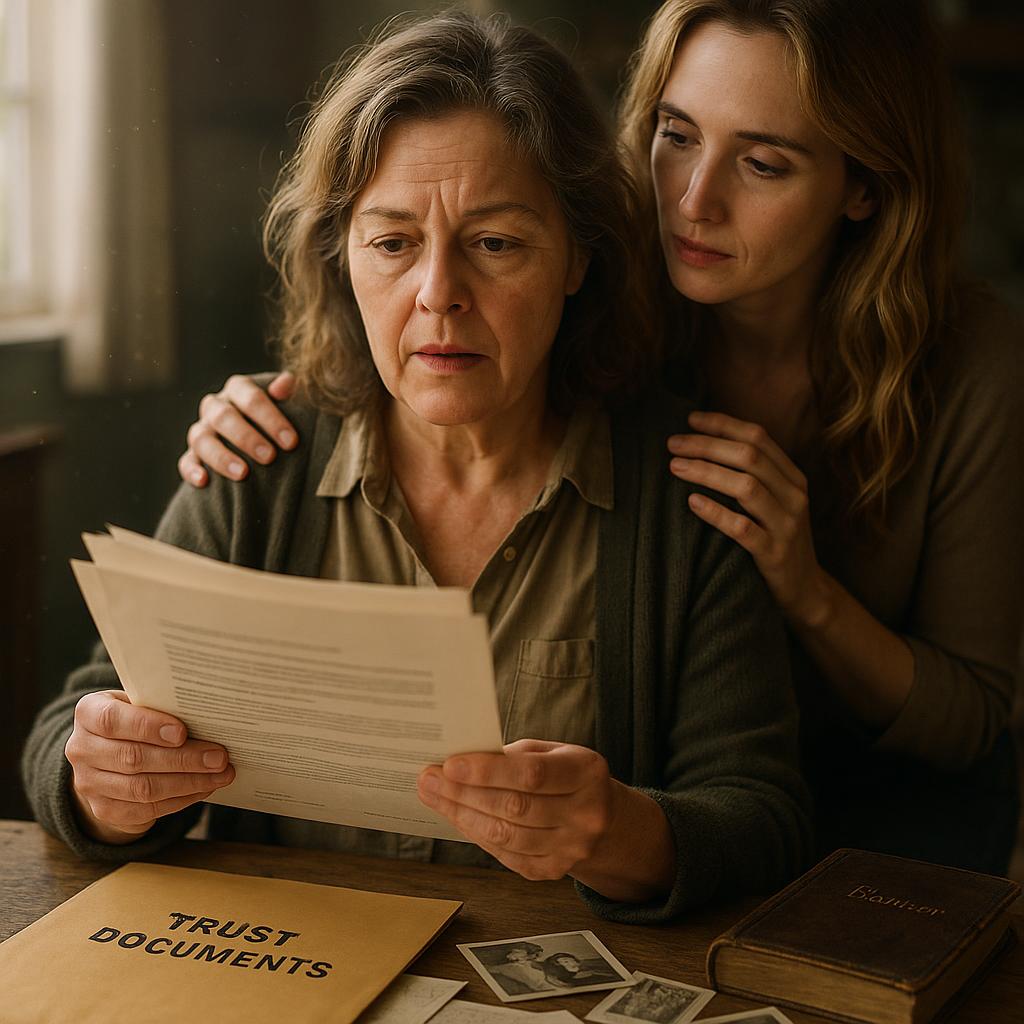 Image by RM AI
Contacting the Trustee
The next morning, with trembling hands, I dialed the number listed on Margaret's trust documents. After navigating through an automated system, I finally reached Ms. Gupta, the trustee at Blackwell & Associates. 'Mrs. Wilson's property?' she said, her voice brightening. 'Oh my, we've been waiting for this call for three years!' I explained how Lily and I had discovered the gate and finally opened it, fulfilling Margaret's unusual condition. Ms. Gupta chuckled warmly. 'In all my twenty years of practicing law, I've never seen a provision quite like this one. Margaret was... determined.' She confirmed what the documents had stated—I could purchase Margaret's home for just one dollar. ONE DOLLAR! 'She was very specific,' Ms. Gupta continued. 'She believed the houses belonged together, just as she and Eleanor once did.' As we wrapped up our call, she promised to email the paperwork immediately. 'Mrs. Wilson would be pleased,' she added softly before hanging up. I sat at my kitchen table afterward, staring out at Margaret's overgrown garden through the open gate. What does one do with a house full of memories that aren't their own? And why did I feel like Margaret had somehow chosen me specifically to receive this gift?
 Image by RM AI
The Key to Margaret's House
Ms. Gupta arrived at my cottage precisely at 10 AM, her sleek briefcase contrasting with the rustic setting. 'Mrs. Wilson was quite the character,' she smiled, handing me a manila envelope. 'One dollar for a house—that's a first in my career.' I fumbled in my purse for the coin, which seemed absurdly insignificant for what I was receiving. After signing the paperwork, Ms. Gupta presented me with a small cream-colored envelope. 'Margaret instructed that this be given to whoever fulfilled the condition of opening the gate.' Her eyes softened. 'I never met her, but preparing these documents... well, it's the most romantic thing I've encountered in twenty years of estate law.' After she left, I sat on my porch swing, turning the envelope over in my hands. Through the open gate, I could see Margaret's house—my house now—waiting patiently as it had for decades. The weight of this moment wasn't lost on me. At 66, I'd thought my life would be winding down, not beginning a new chapter entangled with two women's unfinished story. My fingers trembled as I carefully broke the seal. 'My dear friend,' the letter began in shaky handwriting, and suddenly I was crying before I'd even read the first paragraph. What Margaret had to say from beyond the grave would change everything I thought I knew about friendship, forgiveness, and the power of second chances.
 Image by RM AI
Margaret's Final Request
With trembling hands, I unfolded Margaret's letter, her final words reaching across time to touch my heart. 'My dear friend,' she began, 'though we've never met, I consider you a friend already.' Tears blurred my vision as I read how her greatest regret was letting pride destroy what she and Eleanor had shared. 'Sixty years is too long to hold onto anger,' she wrote in that shaky handwriting. 'Don't make our mistake.' What struck me most was her request—she wanted the gardens reunited, just as they'd been originally designed. 'Let the flowers flow freely between our properties,' she wrote, 'as a symbol of connection rather than division.' I gazed through the open gate at the overgrown beauty of Margaret's garden, imagining how it might look joined with mine, no boundaries between them. At 66, I never expected to become the caretaker of such a powerful legacy. Margaret's final wish wasn't just about plants and soil—it was about healing a wound that had festered for decades. As I carefully folded the letter, I noticed something I'd missed before: a small hand-drawn map tucked inside the envelope, yellowed with age, showing the original garden design from 1955.
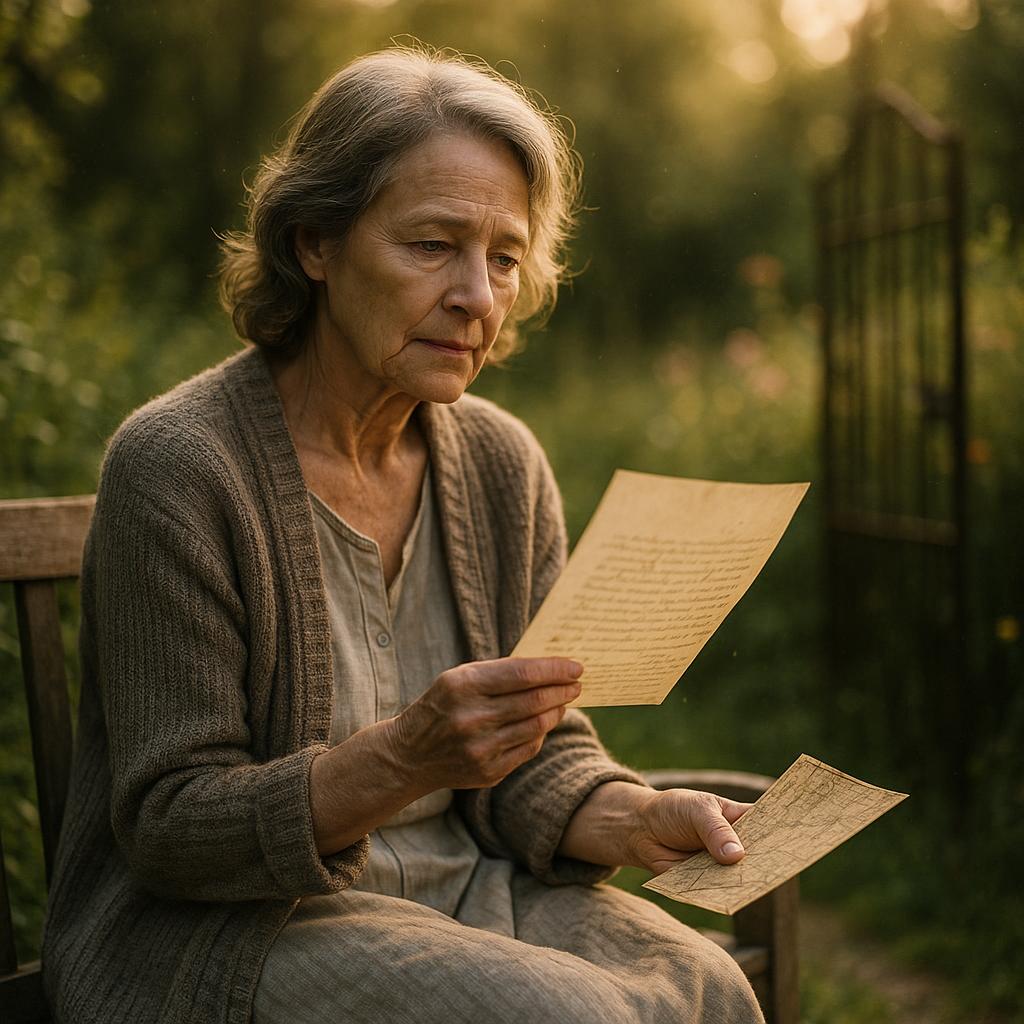 Image by RM AI
Entering Margaret's House
The key turned with a soft click, and Margaret's front door swung open on surprisingly silent hinges. 'Ready?' I whispered to Lily, who nodded, her eyes wide with anticipation. Stepping inside felt like crossing a threshold in time. Despite three years of emptiness, the house had a preserved, waiting quality—as if Margaret had just stepped out for a moment. White sheets draped over furniture created ghostly silhouettes in the living room. I ran my finger along a bookshelf, leaving a clean line in the thin layer of dust. 'Look at all these books,' Lily murmured, scanning the titles. 'Classics, poetry, gardening guides...' The walls were a gallery of Margaret's life—photographs from different decades showing a woman aging alone, her smile growing more reserved with time. In many frames, half the photo had been carefully cut away—Eleanor's absence made visible. I paused at a particularly striking image of Margaret in her 40s, standing beside a rose bush in full bloom. 'It's so strange,' I said, my voice barely audible in the stillness. 'Your grandmother lived right next door for decades, and this whole life was happening just feet away.' As we moved deeper into the house, something caught my eye on the dining room table—a leather-bound journal, open to a page dated just weeks before Margaret's death, with my name written clearly at the top.
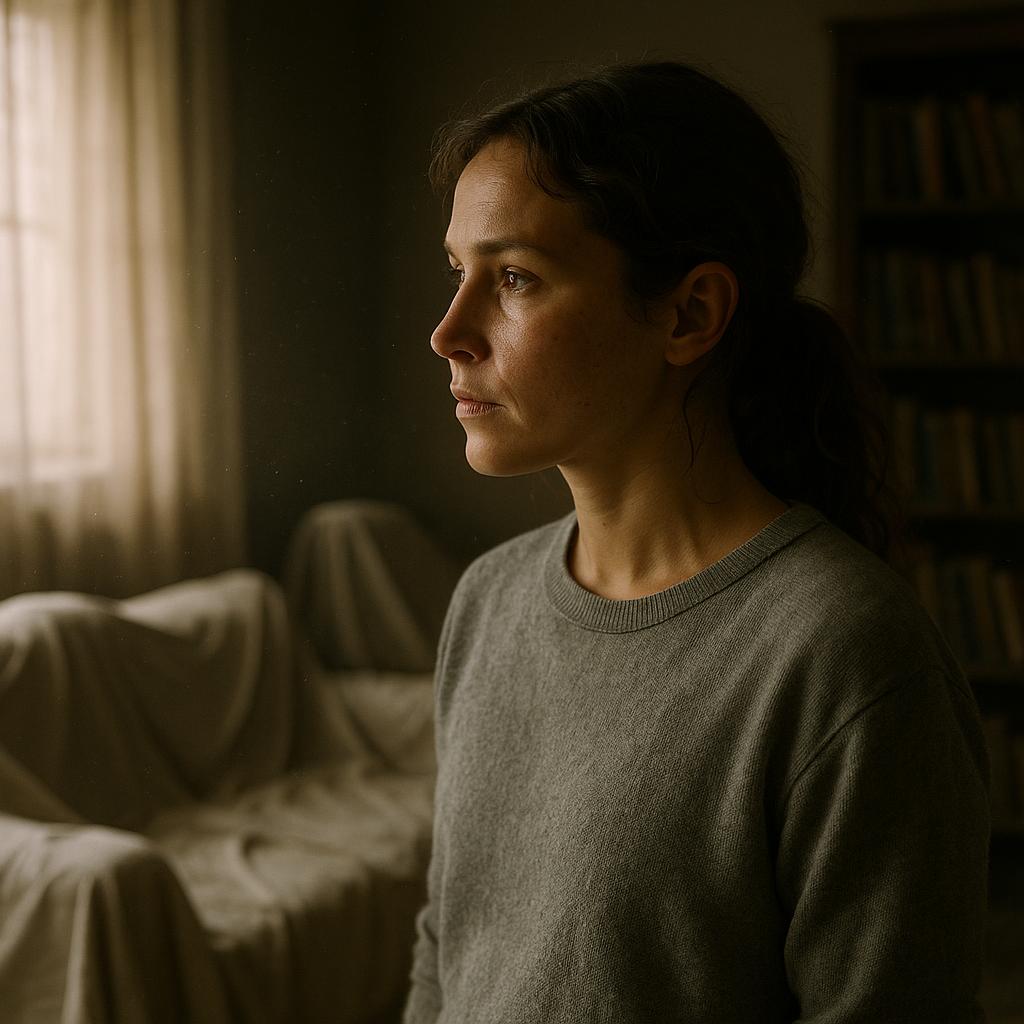 Image by RM AI
The Window Seat
I moved toward the living room's far corner, drawn to a window seat that seemed oddly worn compared to the rest of the preserved room. The cushions bore the distinct impression of someone who'd sat there daily, faithfully, for years. 'Oh my,' I whispered to Lily as I realized what I was seeing. The window faced directly toward my cottage—Eleanor's former home. Beside the seat sat a small table with a pair of binoculars and a weathered notebook. My hands trembled as I opened it. Inside were meticulous entries spanning decades—all observations of Eleanor's garden. 'April 12, 1978: E. planted tulip bulbs along the eastern fence.' 'June 3, 1992: The rosebush E. planted on her daughter's birthday is blooming early this year.' Page after page documented a life watched but never touched, flowers admired but never discussed. I ran my fingers over Margaret's neat handwriting, feeling the weight of all those lonely vigils. 'She never stopped caring,' Lily said softly, peering over my shoulder. 'All those years...' I couldn't finish my sentence as I turned to the final entry, dated just days before Margaret entered Sunset Valley, and saw something that made my blood run cold.
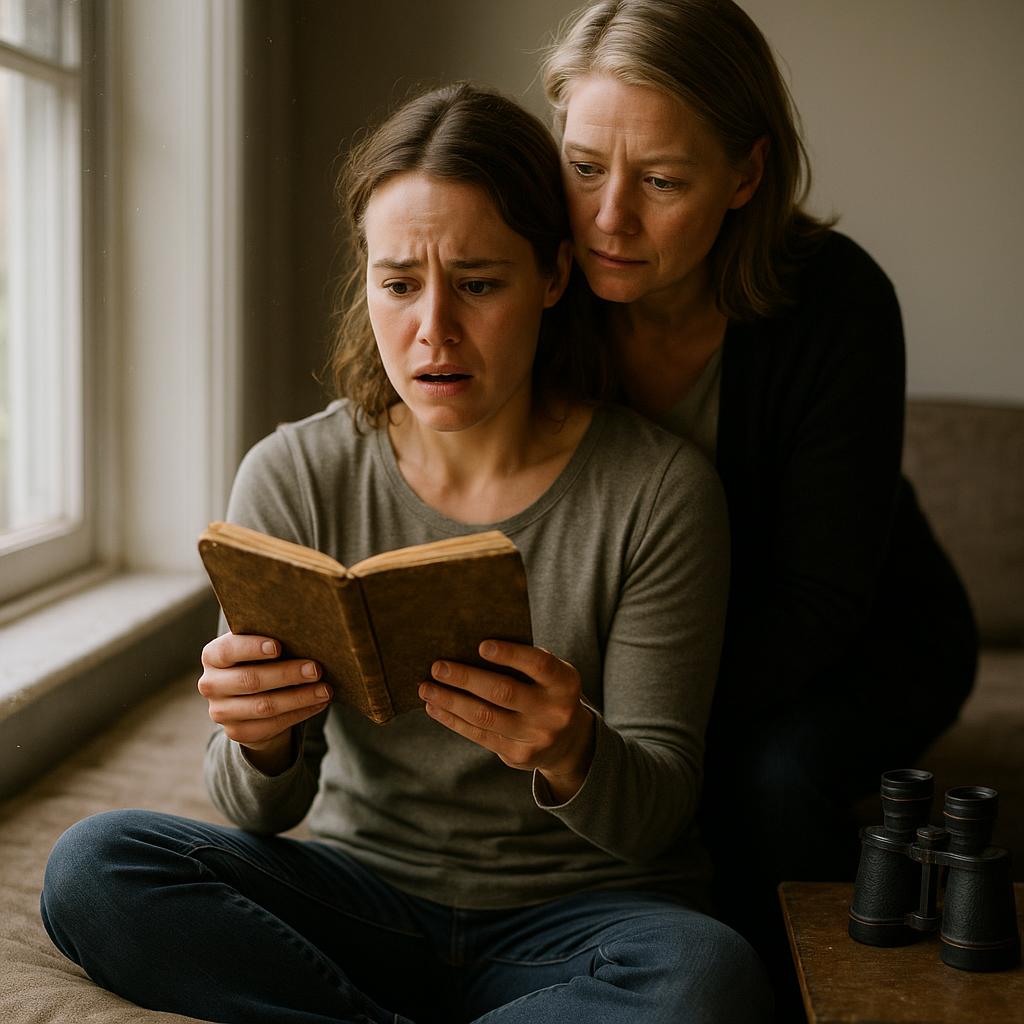 Image by RM AI
The Garden Plans
I pushed open the door to Margaret's study, and my breath caught in my throat. Spread across a large oak desk were dozens of garden plans, meticulously drawn on yellowed paper. 'Oh my goodness,' I whispered as Lily and I moved closer. Each sheet showed both properties—Margaret's and Eleanor's—with the gate open and the gardens flowing together as one beautiful, unified space. What struck me most was the dating on these plans—1956, 1963, 1975, 1992, 2010—spanning decades of hope. Margaret had never given up. The most recent plans, dated just three months before her death, included careful notes in shaky handwriting: 'Eleanor always loved delphiniums' and 'Blend the rose varieties at the center where our paths would meet.' I ran my fingers over the paper, feeling the indentations where Margaret had pressed her pen with such care. 'She was designing their reconciliation through flowers,' Lily said softly. I nodded, unable to speak past the lump in my throat. For sixty years, while a locked gate stood between them, Margaret had been planning for the day it would open. As I carefully rolled up the most recent garden plan, I noticed something tucked beneath it—a small envelope with my name written on it in that same shaky hand.
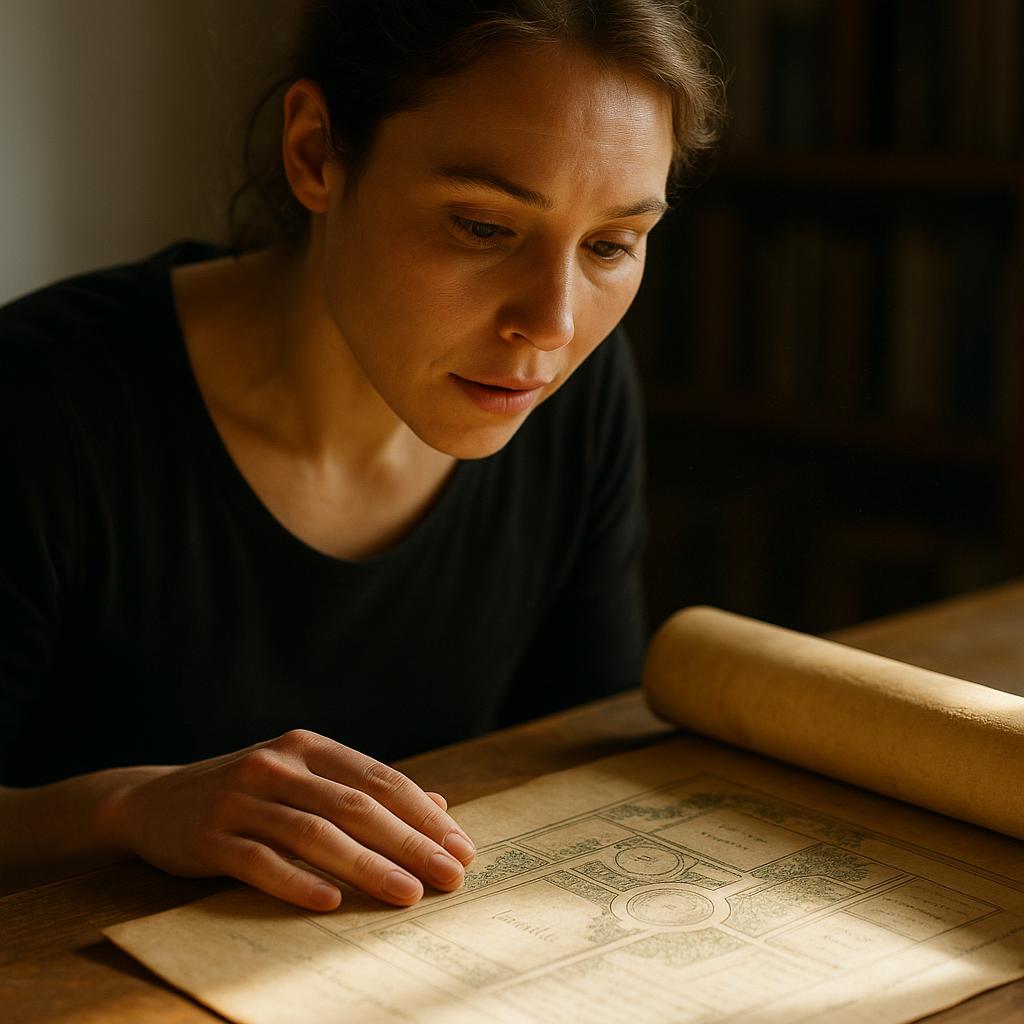 Image by RM AI
The Newspaper Clippings
I pulled open the bottom drawer of Margaret's desk and found a meticulously organized collection of newspaper clippings. My heart caught in my throat as I realized what I was seeing—Eleanor's life, carefully documented through yellowed newsprint. 'Lily, look at this,' I whispered. There were announcements of Eleanor's nursing awards from the 1960s, a feature article about her volunteer work at the children's hospital where she'd spent decades healing others, and eventually, her obituary from three years ago. Margaret had followed every public moment of Eleanor's life while maintaining their private silence. What struck me most was a clipping dated just last year—a small article about Lily winning a regional photography award, her smiling face captured mid-acceptance speech. 'She knew about you,' I said softly, handing Lily the clipping. 'All this time, she was watching over your family.' Lily's hands trembled as she took the paper. 'I never even knew she existed until I found Grandma's diary,' she whispered. As I carefully returned the clippings to their folder, my fingers brushed against something else hidden at the back of the drawer—a small velvet box that seemed to have been deliberately concealed beneath the newspaper archives.
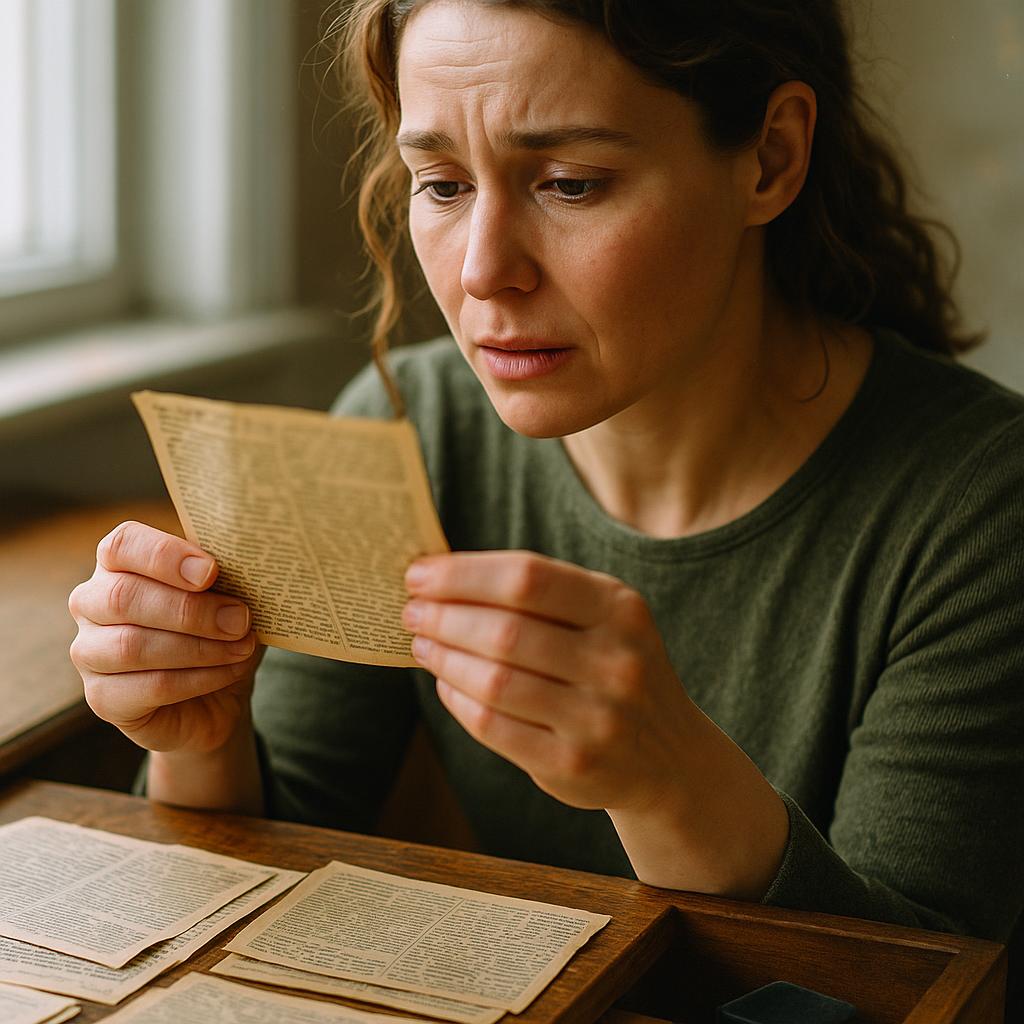 Image by RM AI
The Decision
Standing in Margaret's garden, surrounded by the ghosts of her hopes and dreams, I made my decision. 'Lily,' I said, my voice steady despite the emotion welling up inside me, 'we're going to honor Margaret's wish. We're going to reunite these gardens.' Lily's eyes filled with tears as I explained my vision—a memorial garden in the space between our houses, dedicated to Eleanor and Margaret's friendship. 'It's what they both would have wanted,' she whispered, squeezing my hand. At 66, I never imagined I'd become the caretaker of such a powerful legacy, but somehow it felt right. We spent the afternoon sketching plans, incorporating elements from Margaret's designs while adding our own touches. 'We'll plant delphiniums here,' I said, pointing to the area directly beneath the now-open gate. 'And roses where the paths meet, just like Margaret wanted.' As the sun began to set, casting long shadows across both properties, I couldn't help but feel that Eleanor and Margaret were watching us, perhaps finally at peace. 'You know,' Lily said thoughtfully as we rolled up our plans, 'I think this garden isn't just about healing their past—it's about our future too.' What neither of us realized then was that our work would soon unearth something buried decades ago—something that would change everything we thought we knew about Eleanor and Margaret's story.
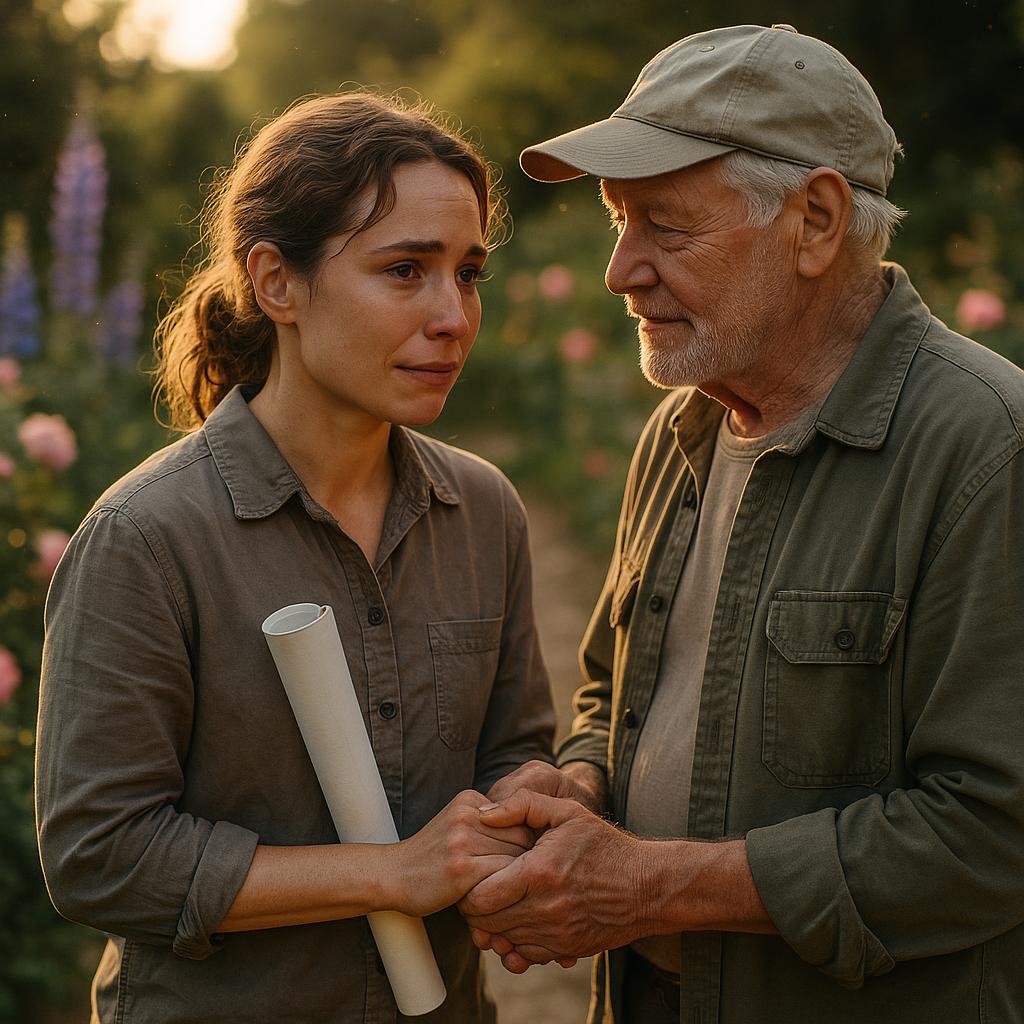 Image by RM AI
The Garden Committee
I never expected our garden project to become the talk of the neighborhood, but within days of starting work, people began appearing at the gate with gardening gloves and curious smiles. Mrs. Patel from three doors down brought homemade chai and memories. 'I knew both ladies,' she told me, setting down her thermos. 'Such sadness between them. I always wondered...' Mr. Rodriguez arrived with his wheelbarrow and decades of stonework experience. 'These pathways deserve to be beautiful again,' he said, already sketching designs that would connect our properties seamlessly. Even Ms. Chen from the library stopped by, her arms full of historical gardening books. 'We should create a plaque,' she suggested, eyes bright with purpose. 'People should know what happened here—how two lives ran parallel for so long without touching.' I stood in the center of what would become our memorial garden, surrounded by neighbors I barely knew a week ago, all of us somehow invested in healing a rift that had outlived its creators. 'Margaret would be overjoyed,' Lily whispered, watching the impromptu garden committee debate the merits of delphiniums versus lavender. What none of us realized was that as we dug deeper into the soil that had separated Eleanor and Margaret, we would unearth more than just roots and stones.
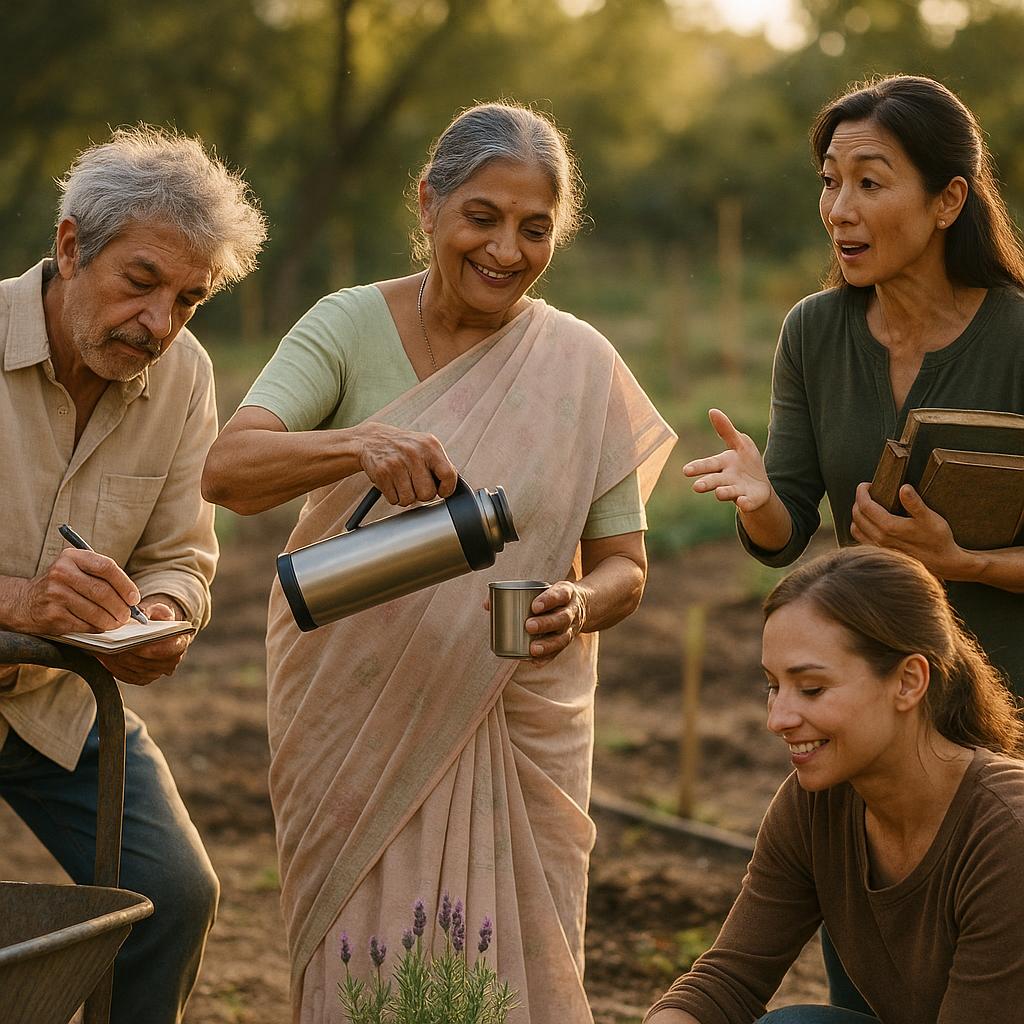 Image by RM AI
Clearing the Overgrowth
The garden committee arrived early Saturday morning, armed with pruning shears, gloves, and determination. 'It's like an archaeological dig,' I told Lily as we began cutting back the tangled vines that had claimed Margaret's once-beautiful garden. With each snip and pull, history emerged from beneath the chaos. 'Nora, look!' Mrs. Patel called out, pointing to what appeared to be a stone pathway peeking through decades of soil and moss. Mr. Rodriguez carefully cleared away more overgrowth, revealing the remains of what must have been magnificent rose trellises. 'They're salvageable,' he assured me with a confident nod. By midafternoon, we'd uncovered a small pond, its concrete basin cracked but repairable. 'Can you imagine how beautiful this was?' Lily whispered, her camera capturing each revelation. But it was Ms. Chen's discovery that left us all speechless. 'Everyone, come quickly!' she called from beneath a massive curtain of ivy she'd been battling. There, partially reclaimed by nature, stood a stone bench. My heart caught in my throat as I ran my fingers over the carved inscription: 'Eleanor & Margaret, 1955.' I looked up at Lily, whose eyes mirrored my own tears. 'This wasn't just their garden,' I said softly. 'This was their sanctuary.' What none of us realized then was that the bench wasn't the only thing buried beneath decades of silence and regret.
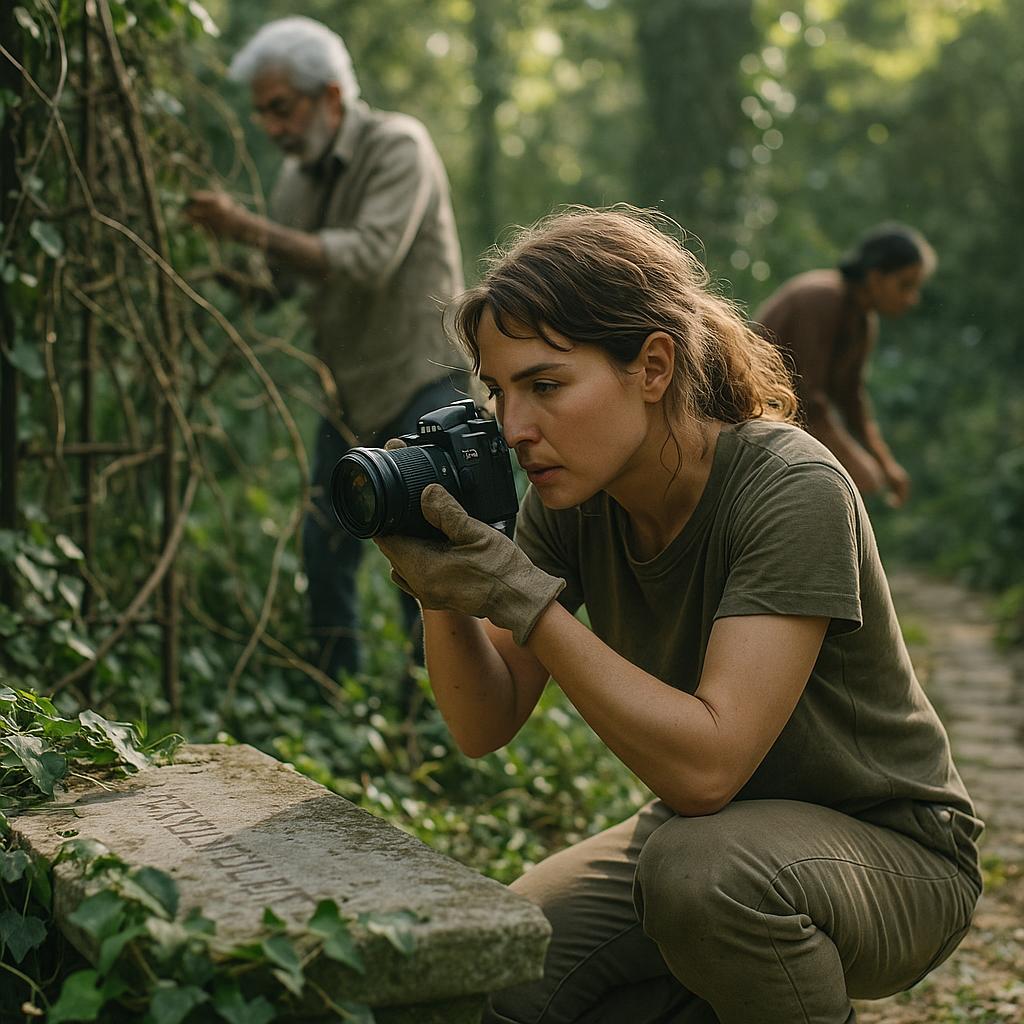 Image by RM AI
The Rose Cuttings
I was on my knees, pulling at a particularly stubborn tangle of weeds when Mr. Rodriguez called out from the far corner of Margaret's garden. 'Señora Nora, come quickly!' There was excitement in his voice that made me abandon my task immediately. I hurried over, wiping soil from my hands, to find him gently touching what looked like dead branches. 'These aren't dead,' he said, his weathered face breaking into a smile. 'These roses—they've survived.' He carefully brushed away decades of debris, revealing green stems beneath the gray exterior. 'These are Madame Hardy Damasks,' he explained, his voice reverent. 'Very rare now. Popular in the 1950s but hardly seen anymore.' I watched in awe as his expert hands took cuttings with surgical precision. 'With proper care, we can propagate new plants,' he said, wrapping the cuttings in damp cloth. 'My father taught me how when I was a boy.' Lily appeared beside us, camera in hand, capturing the moment. 'Living history,' she whispered. I couldn't help but wonder if Eleanor had once admired these same roses, perhaps receiving a cutting from Margaret in happier times. As Mr. Rodriguez carefully labeled each specimen, I noticed something peculiar about one of the rose bushes—a small metal tag hanging from its base, its engraving nearly worn away by time.
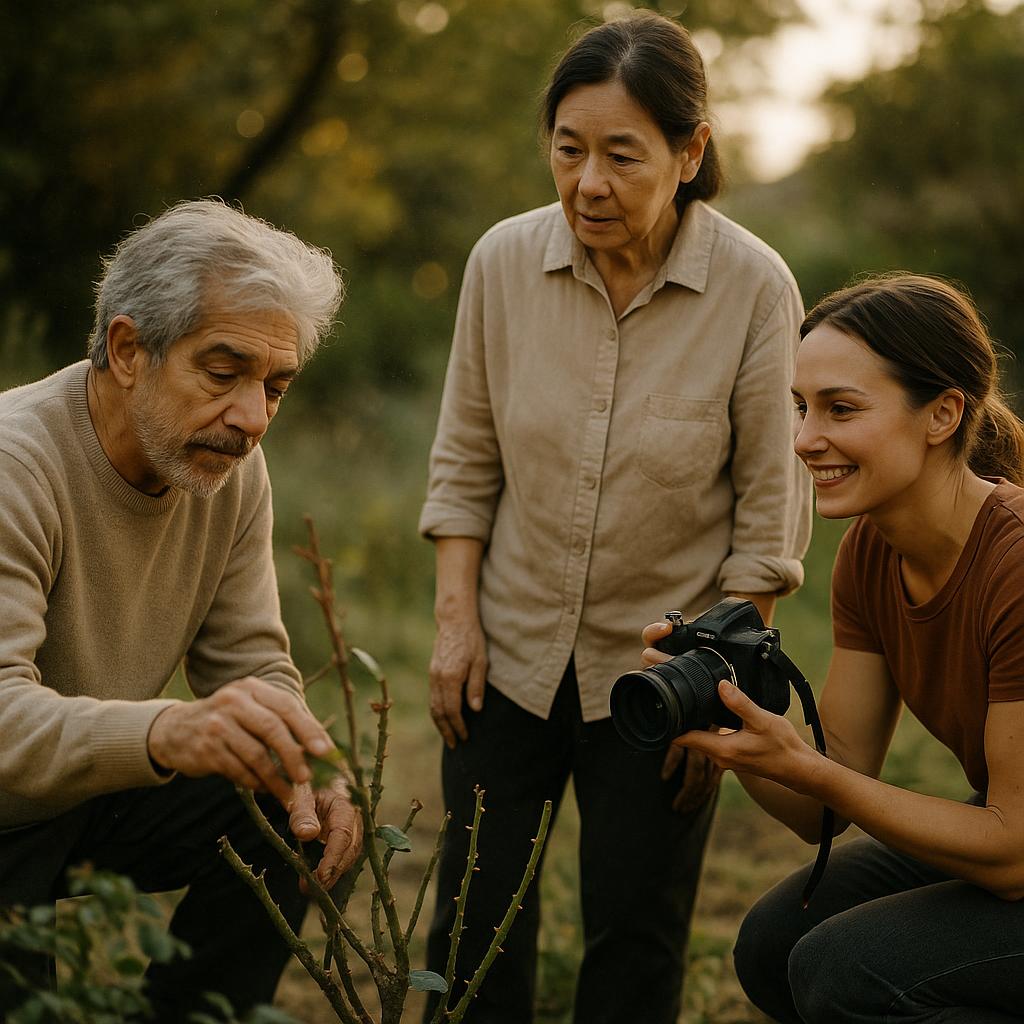 Image by RM AI
The Time Capsule
It was Mr. Rodriguez who spotted it first—a corner of metal peeking through the soil as we dug around the pond area. 'Señora Nora, look here!' he called, his trowel carefully scraping away decades of earth. The entire garden committee gathered as we unearthed a flat stone and, beneath it, a rusted metal box. My heart raced as Lily and I exchanged glances. 'Should we open it?' she whispered. With trembling hands, I lifted the lid to reveal a perfectly preserved time capsule—Eleanor and Margaret's secret treasure from 1955. Inside were pressed wildflowers, their colors still vibrant despite the years, photographs of two young women with arms linked and faces bright with laughter, and handwritten notes on yellowed paper. 'We, Eleanor Wilson and Margaret Hayes, bury these treasures on our 5th friendship anniversary,' read one note in elegant script. 'To be unearthed on our 50th, May 12, 2000.' At the bottom of the box lay two identical friendship bracelets, carefully braided threads of blue and green. I couldn't stop the tears that slipped down my cheeks. 'They never made it to their 50th anniversary,' I said softly. 'The gate was already locked by then.' What none of us expected was the small envelope at the very bottom, addressed simply: 'In case we fail.'
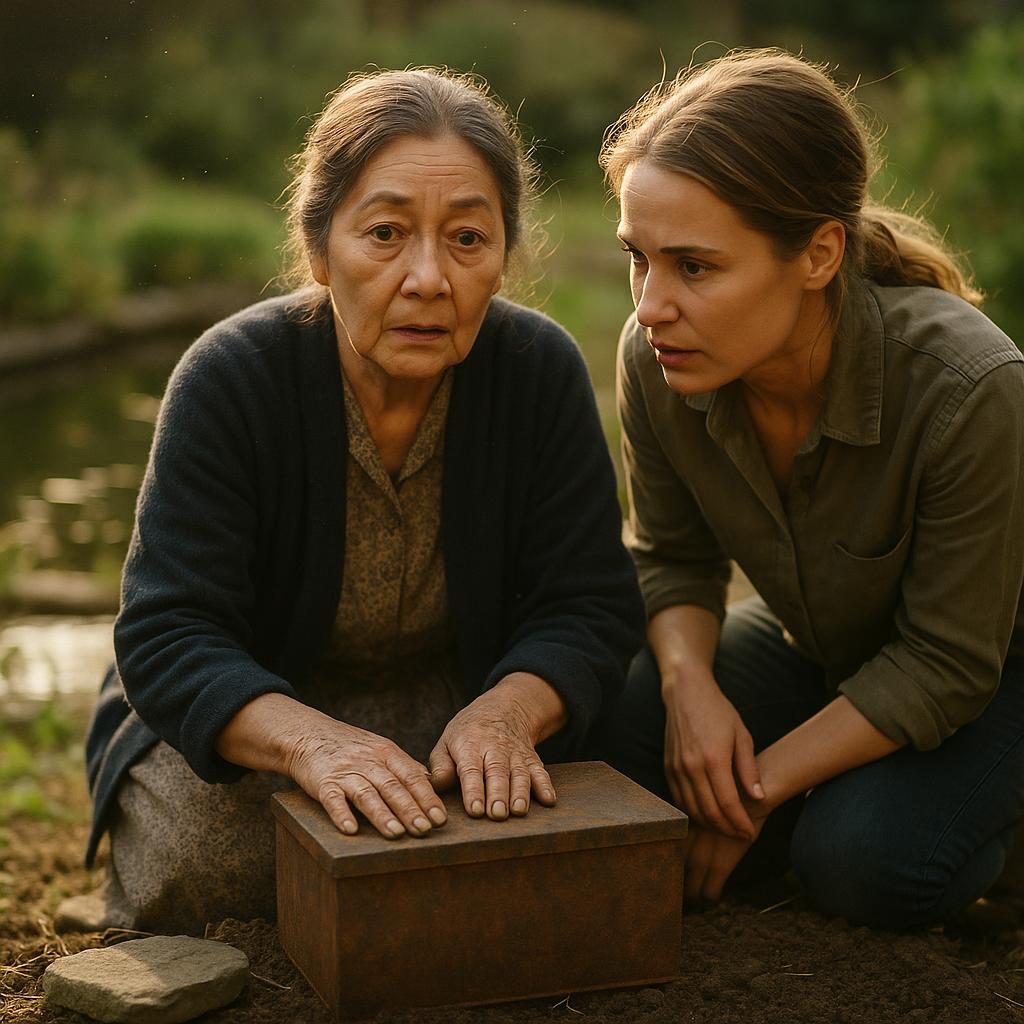 Image by RM AI
The Memorial Design
The next morning, I spread Margaret's garden plans across my kitchen table while Lily arranged the items from the time capsule beside them. 'I think we need to honor both their visions,' I said, tracing my finger along the yellowed paper. We decided the stone bench with 'Eleanor & Margaret, 1955' would become the centerpiece, carefully restored and placed where the gate once stood. 'We'll build an arbor here,' Lily suggested, sketching on tracing paper laid over Margaret's designs, 'with climbing roses from Margaret's cuttings.' I nodded, imagining how Eleanor's wildflowers would complement Margaret's formal roses—so different yet perfectly harmonious together. Mr. Rodriguez helped us design a flowing pathway connecting both properties, using stones uncovered during our clearing. 'The bench should face east,' Mrs. Patel insisted. 'That way, the morning sun will warm anyone sitting there.' As our design took shape, I felt a strange sense that we were fulfilling something that had been waiting sixty years to happen. 'What do you think they would say if they could see us now?' Lily asked softly. I was about to answer when Ms. Chen, who'd been carefully examining the 'In case we fail' envelope from the time capsule, suddenly gasped. 'Nora, Lily—you need to see this right away.'
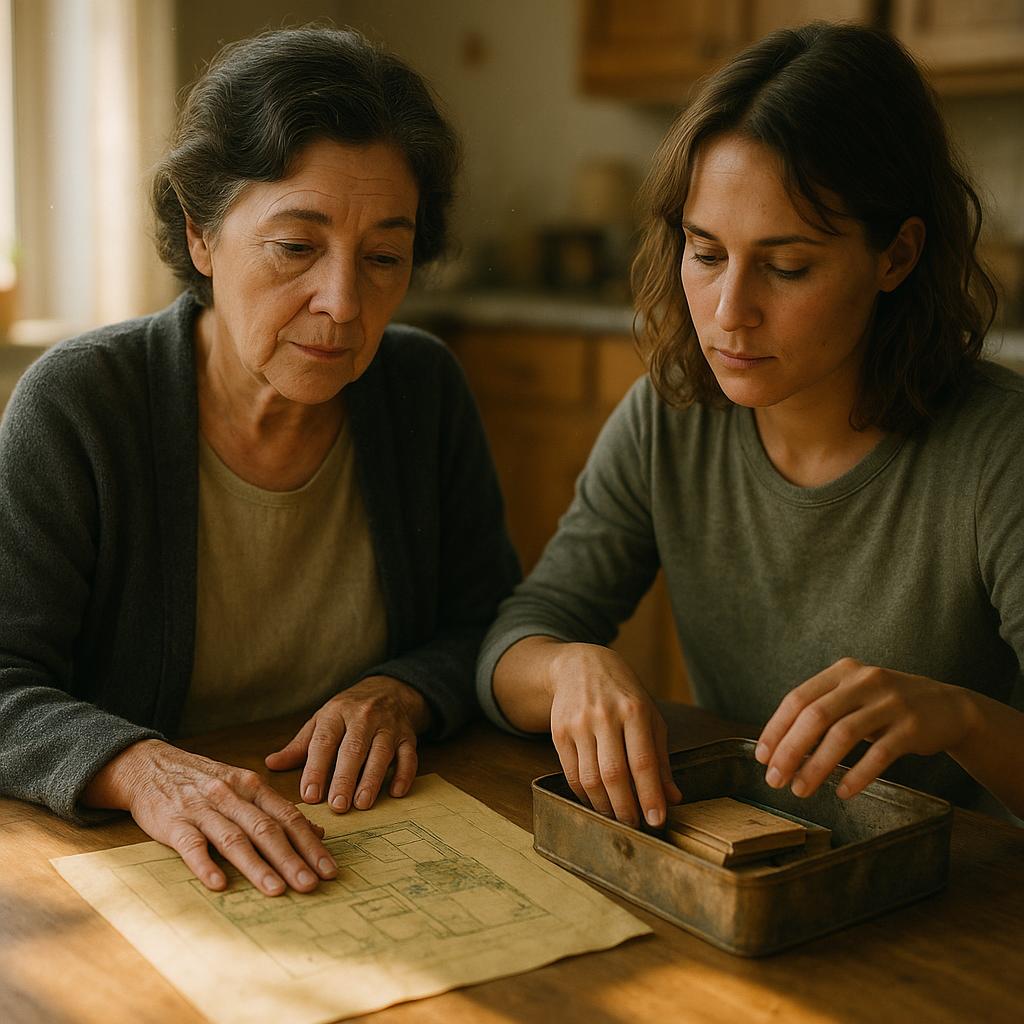 Image by RM AI
Thomas's Fate
Ms. Chen handed me a yellowed newspaper clipping, her hands trembling slightly. 'I found this while organizing Margaret's papers,' she said. The headline hit me like a physical blow: 'Chicago Man Arrested in Investment Scam Targeting Widows.' There was Thomas Hayes—Margaret's former fiancé—in a grainy black and white photo, being led away in handcuffs. I sank into a chair, scanning the article dated 1960. Thomas had apparently been running elaborate cons across several states, using his charm to gain wealthy women's trust before vanishing with their savings. 'My God,' I whispered to Lily, who was reading over my shoulder. 'Both our grandmothers narrowly escaped this man.' The article mentioned a 'string of broken engagements' across the Midwest. I thought of Eleanor and Margaret's shattered friendship, the decades of silence between them—all because of this manipulative fraud. 'They both lost so much,' Lily said softly, 'and never knew they'd actually been saved from something worse.' I nodded, my mind racing. 'But why would Margaret keep this?' I wondered aloud. 'Why preserve evidence of someone who hurt her so deeply?' Ms. Chen pointed to something I hadn't noticed—handwritten notes in the margin that made my blood run cold.
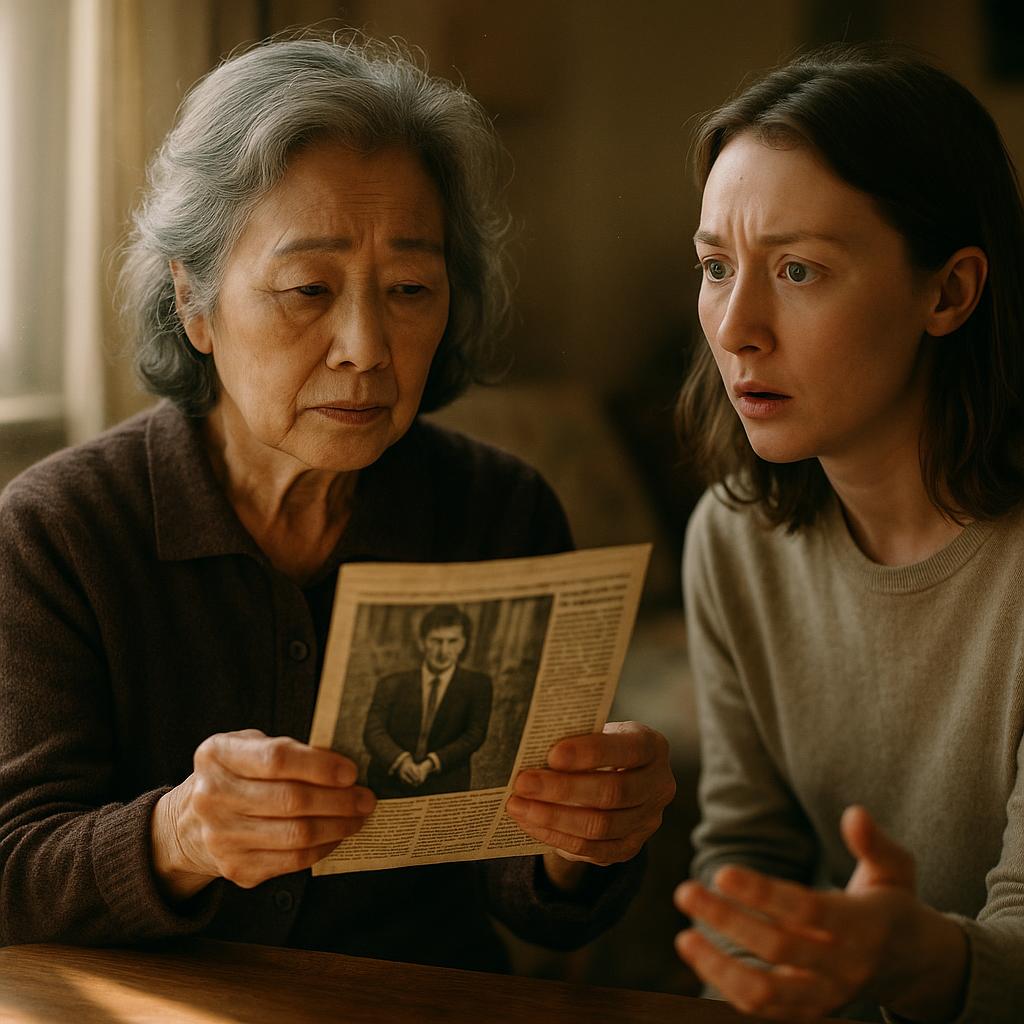 Image by RM AI
Eleanor's Missing Diary Pages
The next morning, Lily arrived at my cottage with a cardboard box, her eyes bright with anticipation. 'I found this in my storage unit last night,' she explained, setting it on my kitchen table. 'More of Grandma Eleanor's things.' We carefully sorted through faded photographs and trinkets until I spotted a sealed envelope tucked into an old recipe book. My hands trembled as I opened it. 'Oh my goodness,' I whispered, 'these are the missing pages from your grandmother's diary.' The yellowed papers contained entries from 1958—three years after the friendship had fractured. Eleanor's handwriting grew increasingly agitated as she described meeting a woman named Vivian at a hospital fundraiser. 'Vivian knew Thomas,' I read aloud, my voice catching. 'She warned Eleanor that he'd done the same thing to her in Milwaukee.' Lily's eyes filled with tears as we read how Eleanor had learned the devastating truth—that Thomas had been conning women across the Midwest. 'She writes here that she wanted to tell Margaret,' I said, turning the fragile page, 'but after three years of silence, she didn't know how to bridge the gap.' The final entry broke my heart: 'I see Margaret in her garden today. How do I tell her we've both been fools? That we threw away decades over a man who deserved neither of us?' What Eleanor couldn't have known was that Margaret had discovered the truth as well—but in a far more devastating way.
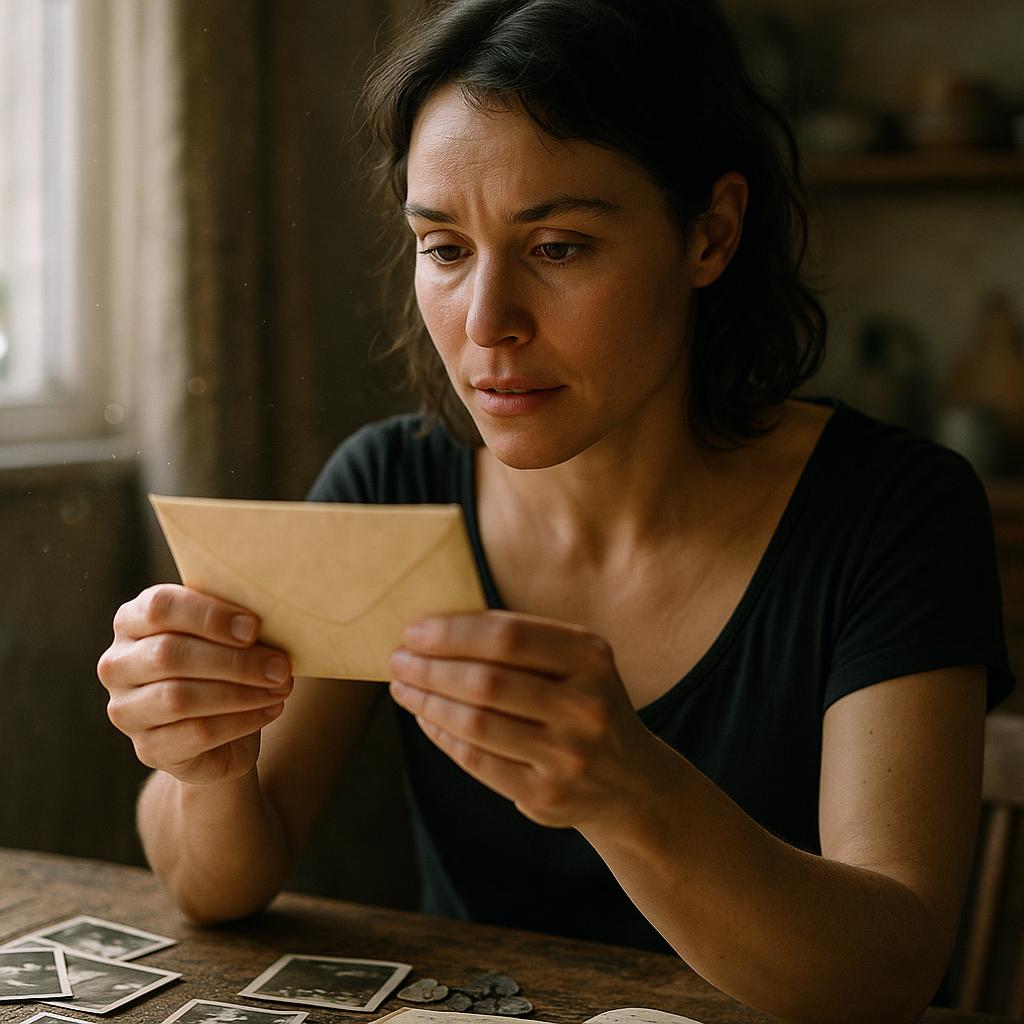 Image by RM AI
The Almost Reconciliation
I sat at my kitchen table, hands trembling as I read the entry from Eleanor's diary dated 1975. 'I baked Margaret's lemon cake today,' she had written, her penmanship more careful than usual, as if each word carried weight. 'The same recipe we used to make together for our Sunday teas.' My heart ached as I read how Eleanor had finally gathered her courage after twenty years of silence, wrapping the cake in her best linen napkin, rehearsing words of apology. She'd walked all the way to Margaret's door, cake in hand, only to freeze when she glimpsed Margaret through the window. 'She looked so peaceful,' Eleanor wrote, 'arranging flowers in her sitting room, her life seemingly complete without me in it.' I could almost feel Eleanor's resolve crumbling as she convinced herself that disrupting Margaret's carefully constructed solitude would be selfish. 'Who am I to reopen old wounds?' she'd written. 'Perhaps some bridges, once burned, should remain ashes.' I showed the entry to Lily, who wiped away tears. 'She went home and ate that cake alone,' I whispered. 'All those years, just a door away from reconciliation.' What broke my heart most was finding Margaret's diary entry from that exact same day, describing how she'd seen a shadow at her door but found no one when she opened it.
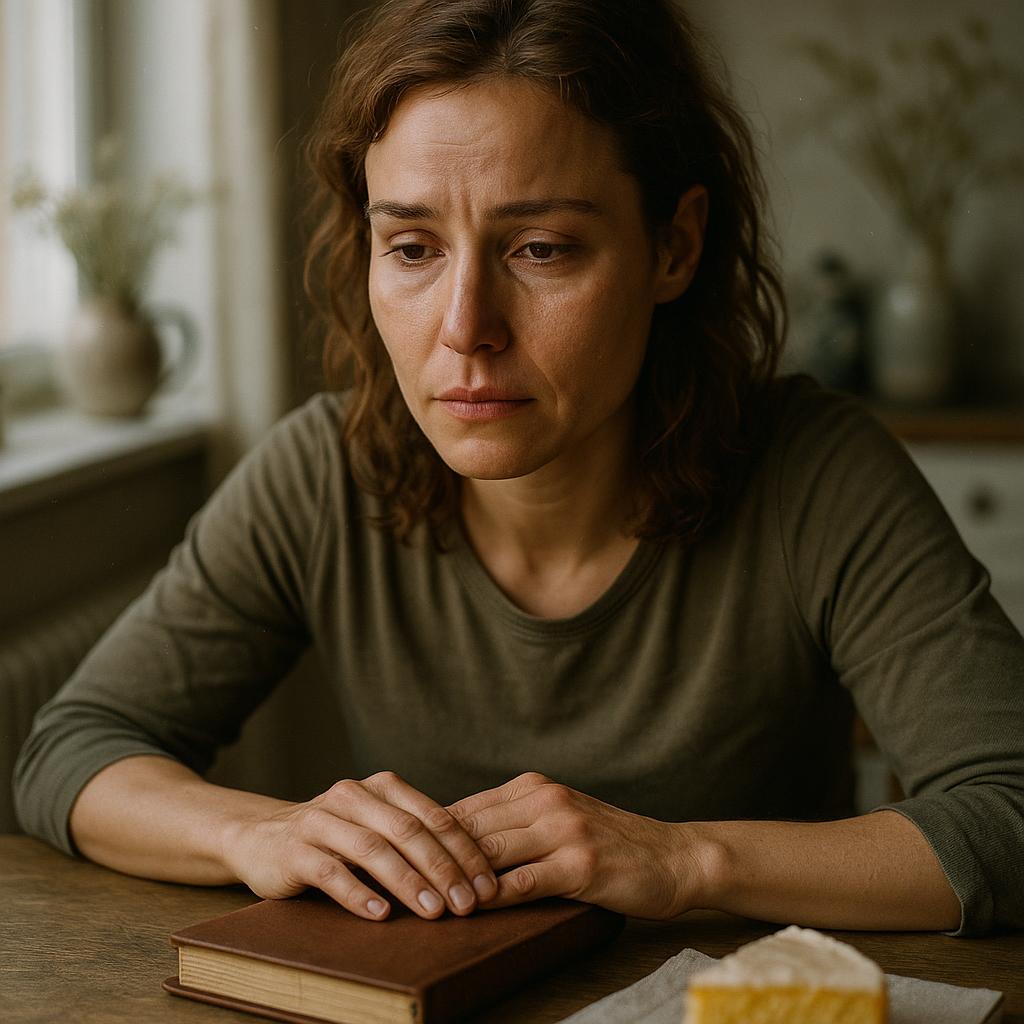 Image by RM AI
The Garden Takes Shape
Over the next three weeks, our little garden project blossomed into something truly magical. I'd wake up each morning to find Mr. Rodriguez already at work, carefully fitting stones into the pathway that now connected my cottage to Margaret's property. 'The stones remember where they belong,' he'd tell me with a wink. Mrs. Patel arrived daily with thermoses of chai and cuttings from her own garden—'These will complement Margaret's roses perfectly,' she assured me. Lily documented everything with her camera, capturing the transformation as we cleaned and refilled the pond, its surface soon reflecting the sky again after decades of emptiness. The centerpiece of it all was the restored bench, now positioned exactly where the gate had once stood—no longer a barrier but a place of connection. 'Eleanor and Margaret would be proud,' Lily whispered one evening as we stood back to admire our work. The arbor Mr. Rodriguez crafted now framed the entrance like a doorway between worlds, ready for Margaret's rescued roses to climb its lattice. What none of us expected was the visitor who appeared one morning, an elderly man leaning heavily on a cane, staring at our garden with tears streaming down his weathered face.
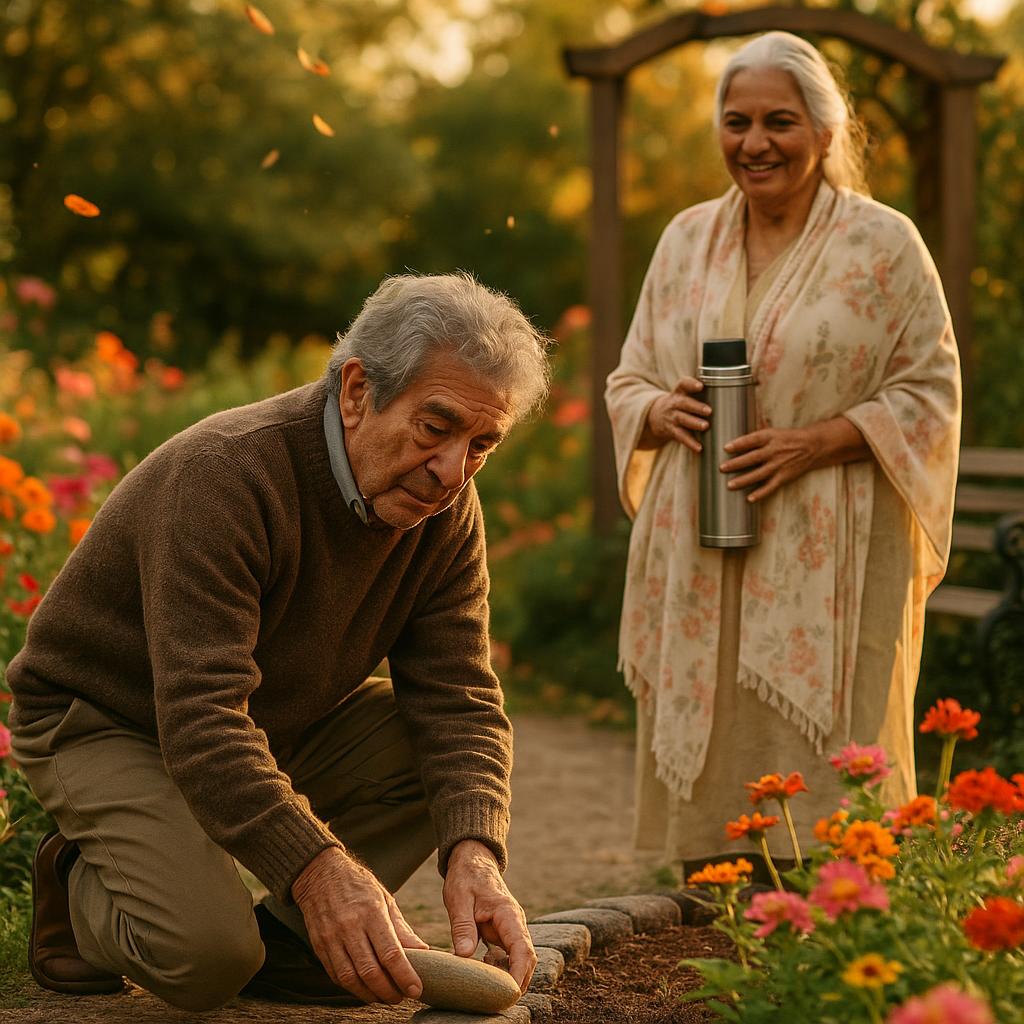 Image by RM AI
The Memorial Plaque
Ms. Chen arrived at the garden one morning with a small wooden box. 'I've been working on this,' she said, opening it to reveal a gleaming bronze plaque. My breath caught as I read the carefully etched words chronicling Eleanor and Margaret's story—their friendship, the painful separation, and the reconciliation that came too late in their lifetimes but lived on through our garden. 'It's perfect,' I whispered, running my fingers over the raised lettering. We decided to mount it on a stone pedestal near the bench, where visitors could pause and understand the significance of this space. The most touching part was the quote Ms. Chen had included from Margaret's letter: 'Sometimes, even silence holds a message. And sometimes, the simplest gestures—like opening a gate—can help heal wounds we never knew we shared.' As we gathered for the small dedication ceremony, I noticed Lily wiping tears from her eyes. 'Grandma Eleanor would be so proud,' she said softly. 'This garden isn't just about remembering the past—it's about creating new connections.' What none of us realized as we stood admiring the plaque was that the elderly man who had visited earlier was watching from a distance, clutching what appeared to be an old photograph in his trembling hands.
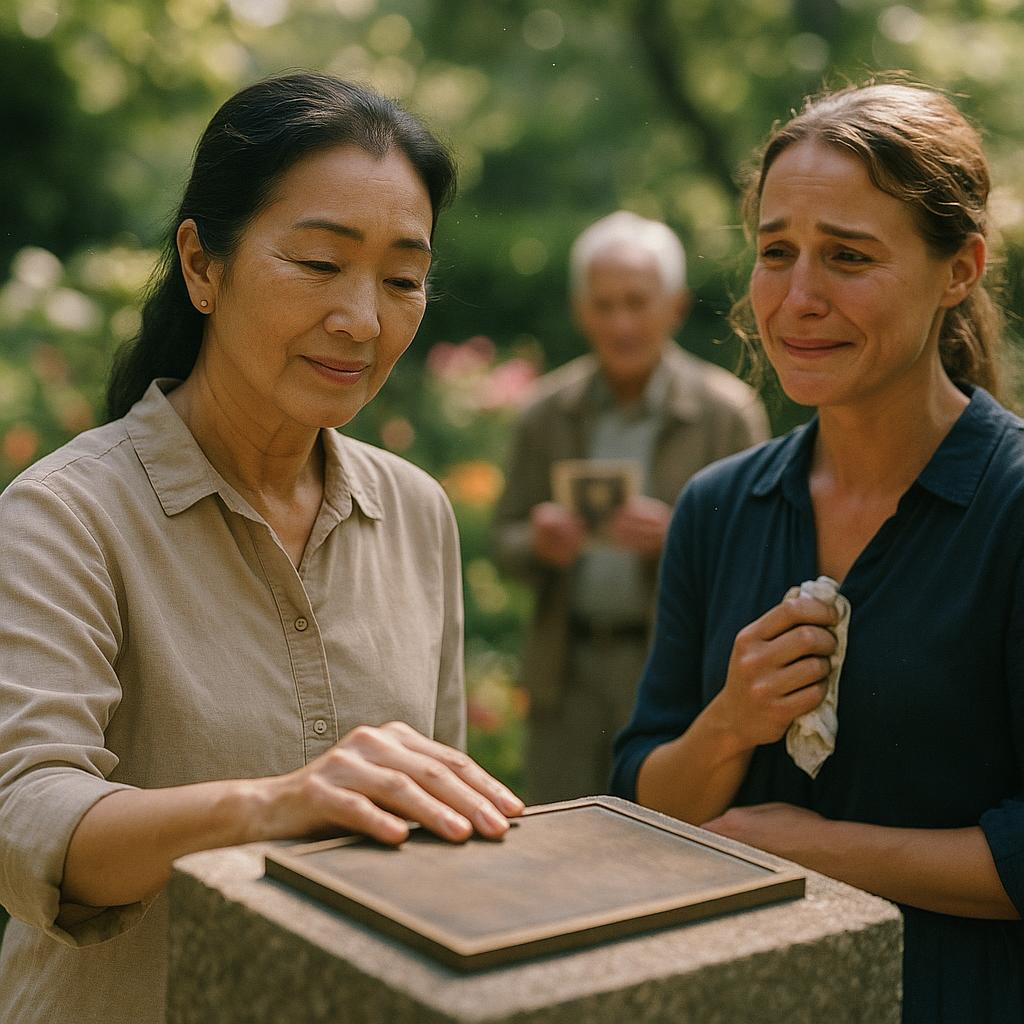 Image by RM AI
The Garden Opening
The day of our garden opening arrived with perfect sunshine, as if Eleanor and Margaret had arranged it themselves. I stood by the restored bench, watching as people streamed through where the gate once stood—not just our garden committee, but faces I'd never seen before. 'I worked with Eleanor at Memorial Hospital for thirty years,' an elderly nurse told me, pressing my hand. 'She never stopped missing Margaret, you know.' Mrs. Patel had organized a refreshment table with lemon cakes made from Eleanor's recipe, while Mr. Rodriguez proudly guided visitors along his meticulously crafted pathways. Lily captured everything with her camera, pausing occasionally to wipe away tears. When Ms. Chen unveiled the plaque, a hush fell over the crowd. 'To friendship interrupted but never truly broken,' she read, her voice carrying across the garden. What touched me most were the stories—how Eleanor had secretly kept newspaper clippings of Margaret's community awards, how Margaret had once rushed to the hospital when she heard Eleanor had fallen ill. 'They were watching over each other all along,' someone whispered. As the afternoon light softened, I noticed the elderly man with the cane standing at the edge of the gathering, still clutching his photograph, finally gathering courage to approach me.
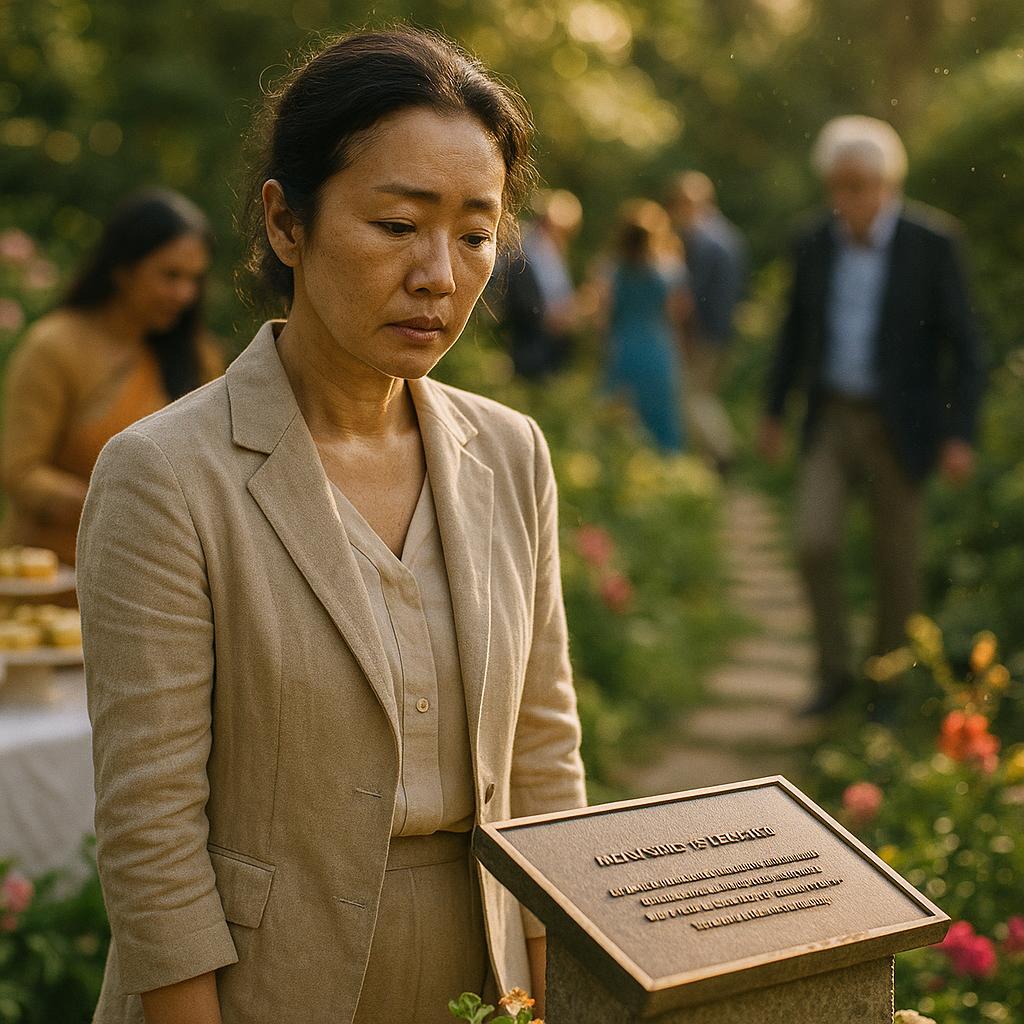 Image by RM AI
The New Tradition
As summer fades into autumn, the garden transforms with the season—russet and gold leaves drifting onto our pathways, creating a natural carpet around Eleanor and Margaret's bench. Every Saturday morning at precisely ten o'clock, Lily and I meet there with our carefully arranged bouquets. 'A little bit of both of them,' I tell anyone who asks, pointing to the wildflowers I've gathered from my morning walks (Eleanor's favorites) nestled among the Madame Hardy Damasks that Mr. Rodriguez so miraculously revived from Margaret's garden. What began as our private ritual has blossomed into something larger. Mrs. Patel brings marigolds from her garden, while Ms. Chen contributes elegant chrysanthemums. Even Mr. Rodriguez, not one for sentimentality, appears with perfect rosebuds. 'For the señoras,' he says simply, placing them gently on the bench. We sit together afterward, sharing tea and stories—sometimes about Eleanor and Margaret, sometimes about our own lives and the friendships we've lost or neglected. 'Don't wait until it's too late,' I often find myself saying, especially to younger visitors. 'Pride is a poor companion in old age.' Last Saturday, as we gathered for our ritual, I noticed a young couple watching from a distance, the woman clutching what looked like a faded photograph in her hands.
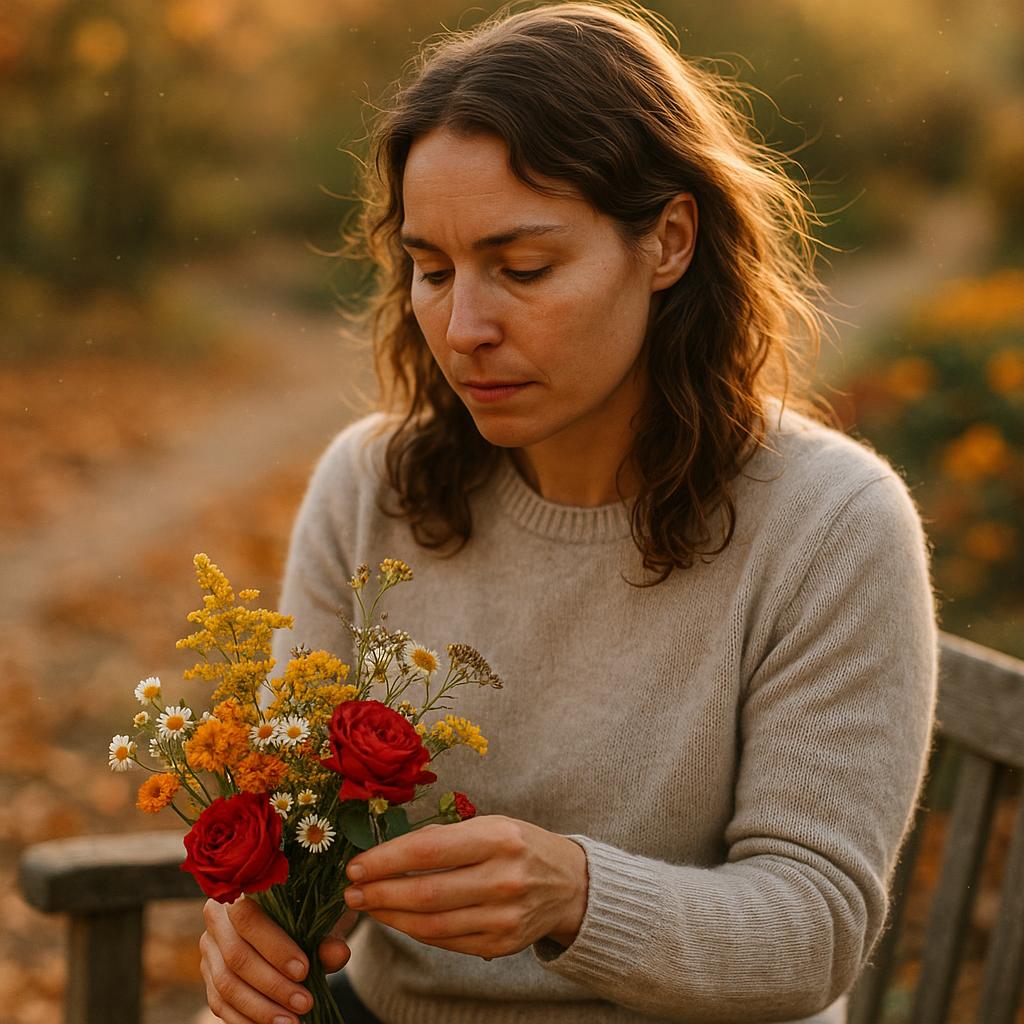 Image by RM AI
Margaret's House
I stood in Margaret's empty living room, sunlight streaming through windows we'd recently cleaned, illuminating dust motes dancing in the air. 'What do you think about turning this place into something for everyone?' I asked Lily as she photographed the built-in bookshelves. After weeks of clearing out personal items and furniture, the house felt ready for new purpose. 'A community space,' I continued, running my hand along the mantelpiece. 'Maybe a small library or meeting place where people can gather and share stories.' Lily's face lit up. 'Grandma Eleanor would have loved that idea.' We walked through each room, envisioning book clubs in the sunroom, children's story hours in what was once Margaret's bedroom, and community meetings in the spacious kitchen. 'It's perfect,' Lily whispered. 'Taking a place of isolation and turning it into connection.' Mr. Rodriguez appeared in the doorway with his toolbox. 'I can build more shelves,' he offered, already measuring the walls with his eyes. 'And perhaps a reading nook by the bay window.' As we sketched rough plans on the back of an envelope, I couldn't help but feel Eleanor and Margaret's presence, as if they were nodding in approval. What none of us expected was the letter that would arrive the next morning, postmarked thirty years ago, that would change everything about our plans.
 Image by RM AI
Full Circle
It's been exactly one year since I first spotted those mysterious wildflowers at the rusted gate. Today, I'm sitting on Eleanor and Margaret's bench, watching butterflies dance between blooms that have united two gardens into one glorious space. The memorial plaque catches the afternoon light, telling their story to anyone who pauses to read it. 'Sometimes I feel them here,' I told Lily this morning as we had our Saturday tea. At 66, I never expected to form such a meaningful friendship with someone Lily's age, but here we are—almost like we're completing a circle that Eleanor and Margaret couldn't. Mr. Rodriguez has added small solar lights along the pathways that illuminate the garden at dusk, creating a magical glow that connects both properties. 'It's like stars have fallen to guide them home,' Mrs. Patel said when she first saw them lit. Sometimes in the quiet evenings, I sit here alone and imagine Eleanor and Margaret finally reunited, walking arm-in-arm through the garden that once divided them. I swear I can almost hear their laughter carried on the breeze, as if sixty years of silence has finally given way to the conversation they were always meant to have. What I never expected was the letter that arrived yesterday—postmarked 1980 and addressed to 'The Future Resident of 42 Willow Lane,' written in Margaret's unmistakable handwriting.
 Image by RM AI