Finding Joy After Divorce
My name is Jan, and at 55, I've learned that life has a way of surprising you when you least expect it. After my divorce a few years ago, I found myself alone in a house that suddenly felt too big and too quiet.
My son Cameron had already moved out to start his own life with his wife, and the silence that filled my home was sometimes deafening. I needed something to fill my days and distract me from the emptiness that divorce leaves behind.
That's when I stumbled upon the local flea market one lazy Sunday afternoon. There was something magical about wandering through aisles of forgotten treasures, each with its own story to tell.
Before I knew it, I had developed a passion for hunting antiques and unique items that spoke to me. Little did I know that this innocent hobby, this search for beauty in discarded things, would lead me down a path I never could have imagined.
 Image by RM AI
The Thrill of the Hunt
Every weekend became an adventure as I explored different flea markets in neighboring towns. I'd wake up early, make myself a thermos of coffee, and set out with the excitement of a treasure hunter.
There's something deeply satisfying about sifting through tables of forgotten items, imagining the lives they've touched before finding their way to you. I started small – vintage teacups, old picture frames, the occasional piece of costume jewelry that caught my eye.
My home slowly transformed, each room telling a story through carefully curated pieces that reflected my newfound independence. My friends teased me about becoming a 'professional picker,' but I didn't mind.
This hobby had given me purpose during a time when I desperately needed it. And with each new find, I felt a little more like myself again – not just someone's ex-wife, but Jan, the antique enthusiast with an eye for the extraordinary.
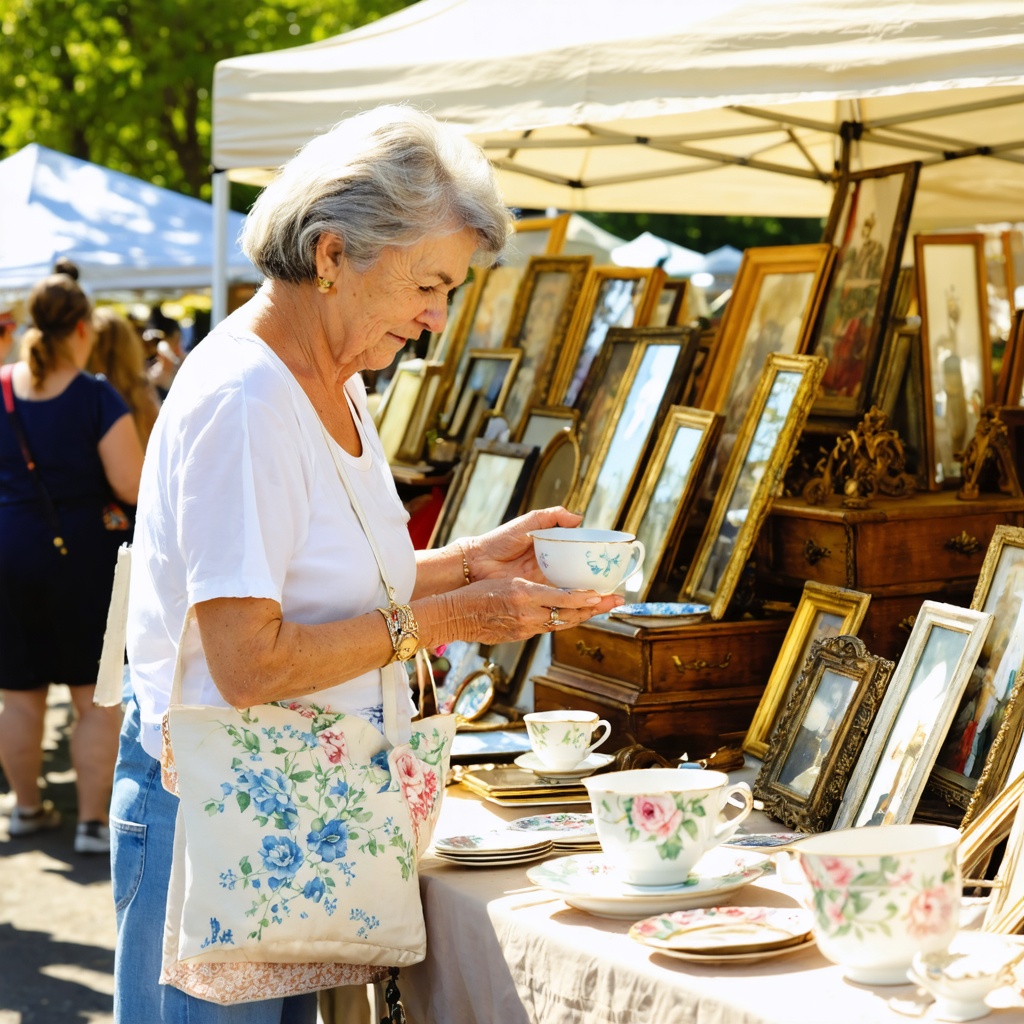 Image by RM AI
A Fateful Saturday Morning
It was a crisp autumn morning when I headed to the local flea market, the one that popped up monthly in the community center parking lot. The air had that perfect fall crispness that makes you want to wrap your hands around a warm cup of coffee and breathe deeply.
I had no shopping list that day, just an open mind and the fifty dollars I'd budgeted for my little excursion. The market was busier than usual, with vendors calling out to passersby and the smell of fresh kettle corn wafting through the air.
I wandered through the maze of tables, nodding hello to the regular vendors who recognized me by now. Some even saved items they thought might interest me – that's the kind of community these markets foster.
I had already picked up a vintage brooch and was considering calling it a day when something caught my eye at a table I'd nearly walked past. It was tucked between a tarnished candelabra and a stack of yellowed magazines, almost as if it wasn't meant to be noticed.
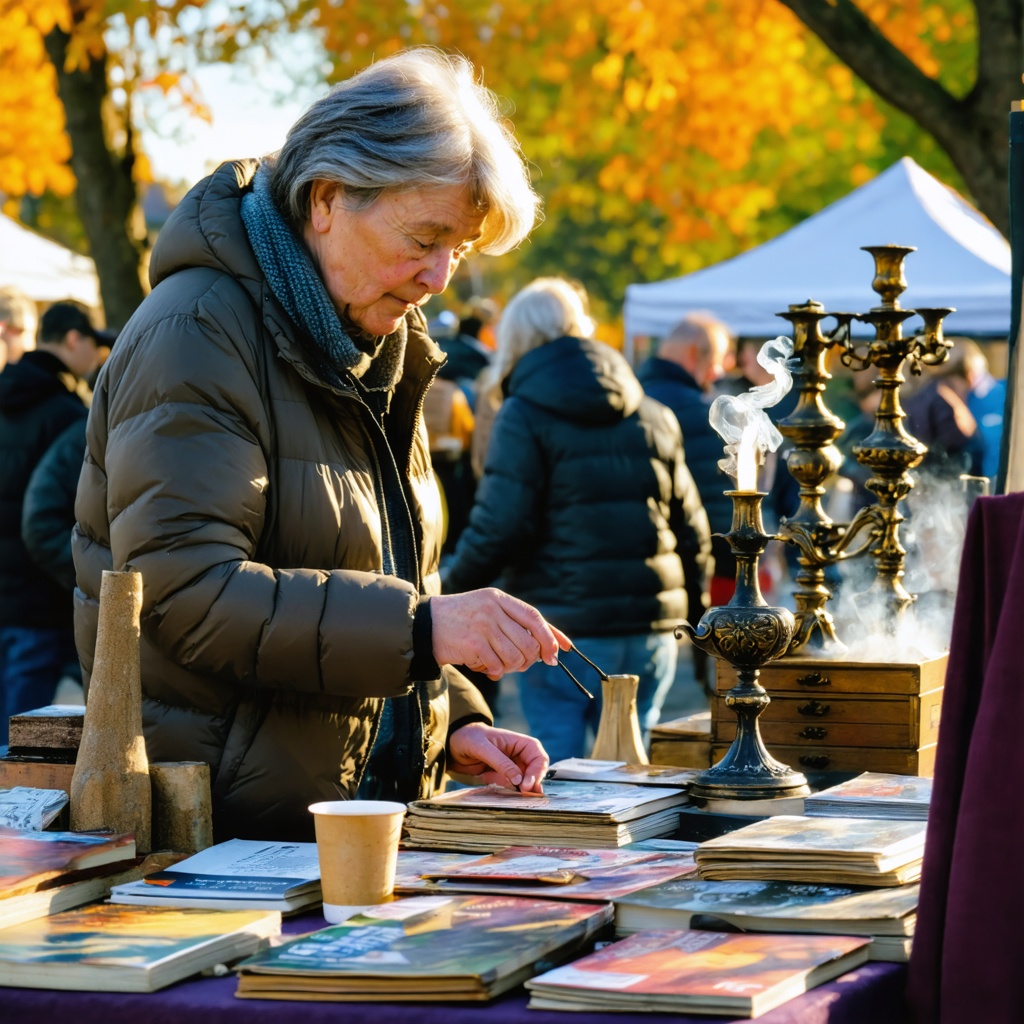 Image by RM AI
The Mysterious Metal Object
There it was – a small, peculiar metal object that seemed to call out to me from among the clutter. I couldn't explain why, but I felt drawn to it in a way that was almost magnetic.
It was about the size of my palm, with an unusual weight to it and intricate detailing that suggested craftsmanship from another era. The patina told me it was old, possibly very old, but I couldn't place its origin or purpose.
The vendor, an older gentleman with weathered hands and a kind smile, noticed my interest. He was arranging some glassware nearby and paused his work to approach me.
"Found something interesting?" he asked, his voice friendly but with a hint of something I couldn't quite identify. I held up the object, turning it over in my hands, feeling its substantial weight.
"What exactly is this?" I asked, genuinely curious about the strange item that had so captivated my attention.
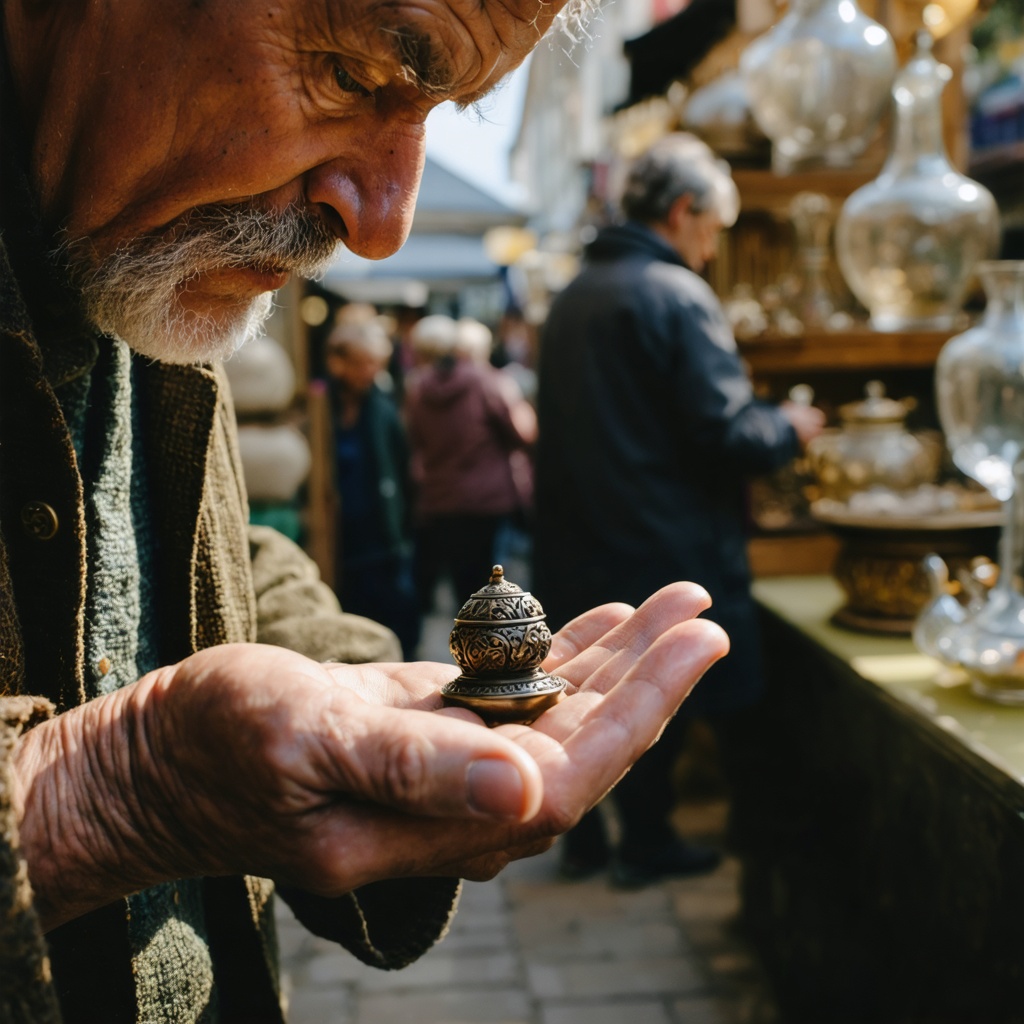 Image by RM AI
A Simple Transaction
"That there's an antique paperweight," the vendor explained, wiping his hands on his faded jeans. "European, I believe.
Picked it up at an estate sale last month." He took it from me briefly, turning it over in his hands with familiarity. "See how solid it feels?
They don't make them like this anymore." I nodded, still fascinated by the object's unusual design and the way the light caught its surface. There was something almost beautiful about its simplicity, and I could already envision it sitting on my writing desk at home.
"How much?" I asked, trying to sound casual despite my growing desire to own this curious little artifact. The vendor seemed to consider for a moment, looking from the object to me and back again.
"For you? Five dollars," he finally said with a smile that crinkled the corners of his eyes.
I was surprised by the low price – most unique items at these markets went for much more.
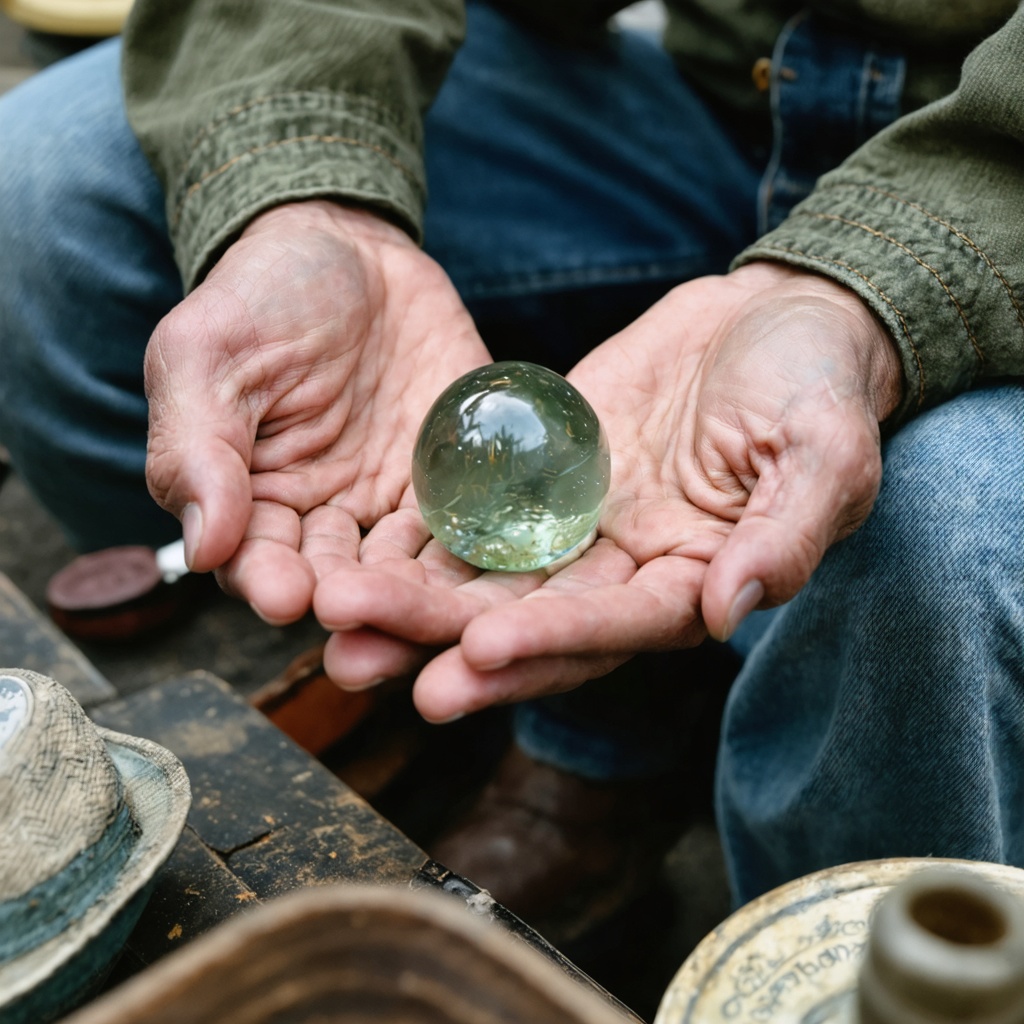 Image by RM AI
Too Good a Deal to Pass Up
"Only five dollars?" I echoed, certain I'd misheard him. The craftsmanship alone suggested it was worth considerably more, not to mention its apparent age and unique design.
The vendor just shrugged, his expression unreadable. "Sometimes it's not about the money," he said cryptically.
"Sometimes it's about finding the right home for things." I didn't need to be convinced further. Reaching into my purse, I pulled out a five-dollar bill and handed it to him, feeling a strange sense of accomplishment, as if I'd discovered something truly special.
He wrapped the paperweight in an old newspaper and handed it to me with what almost seemed like relief. "Enjoy it," he said, already turning back to his other merchandise.
As I walked away, I couldn't help but feel that I'd gotten an incredible bargain. The paperweight felt substantial in my hand, even through the newspaper wrapping, and I was eager to get it home and find the perfect spot for it.
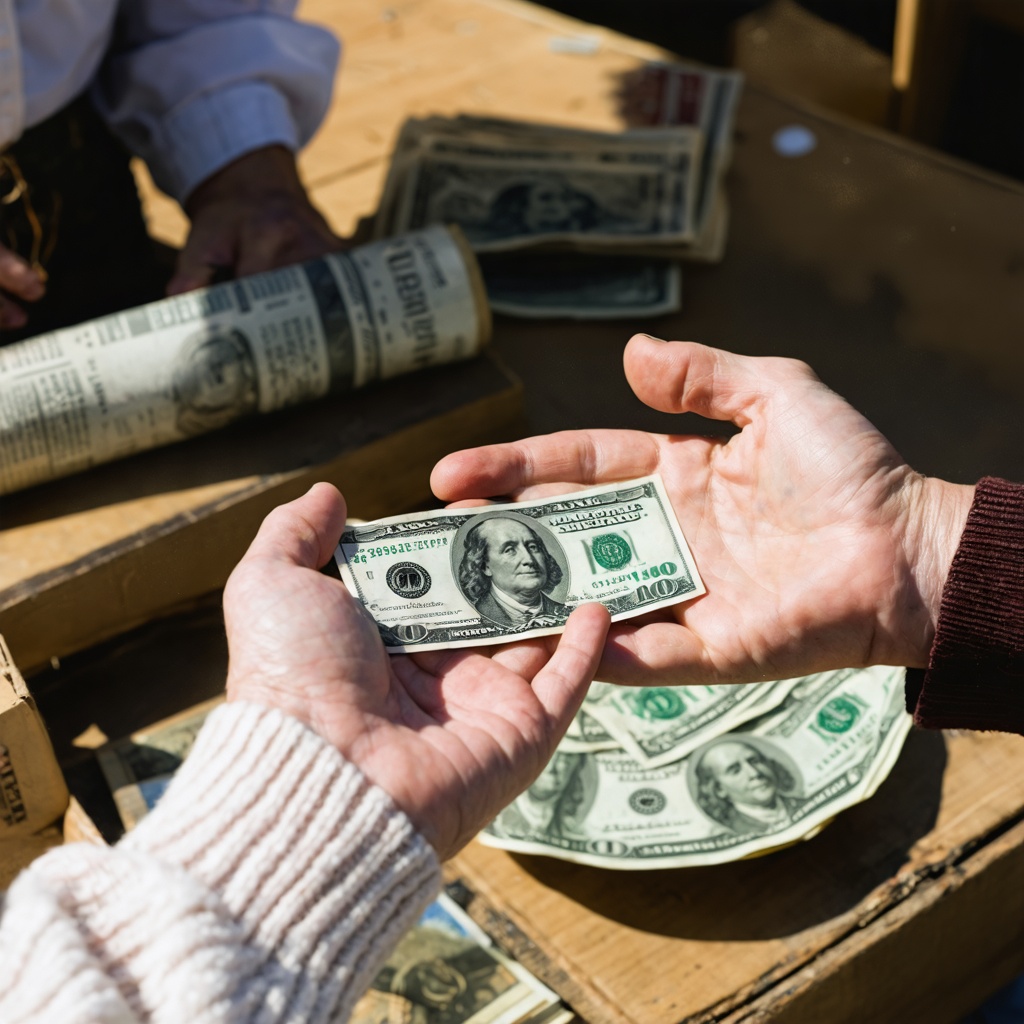 Image by RM AI
A New Addition to My Collection
Back at home, I unwrapped my new treasure and placed it on my mantelpiece, stepping back to admire how the afternoon sunlight played across its surface. There was something oddly satisfying about its weight and presence in my living room – it somehow tied together all my other collectibles in a way I hadn't anticipated.
Over the next few days, I found myself moving the paperweight from spot to spot, trying to find its perfect home. It migrated from the mantel to my bedside table, then to my home office desk, where it seemed most at home holding down my bills and correspondence.
I even found myself absentmindedly picking it up during phone calls, enjoying the cool feel of the metal against my palm. It became a conversation piece when my neighbor Elaine stopped by for coffee, though she couldn't identify what it was made of either.
"It's certainly unique," she commented, turning it over in her hands before setting it down quickly, as if it had suddenly become too heavy.
 Image by RM AI
Cameron's Visit
The following weekend, my son Cameron came to visit. At thirty-two, he had his father's height and my stubborn chin, a combination that had served him well in life.
He brought a bottle of wine and updates about his job at the architectural firm where he'd recently been promoted. We fell into our comfortable routine – he'd tell me about his projects while I prepared dinner, both of us dancing around the topic of his father and my ex-husband.
After dinner, as we settled in the living room with our wine glasses, I remembered my interesting find. "Oh, I want to show you something," I said, retrieving the paperweight from my desk.
"My latest flea market treasure." I handed it to Cameron with a hint of pride, watching as he examined it with the careful attention he gave to everything. His brow furrowed slightly as he turned it over in his hands, his architect's eye assessing its design and construction.
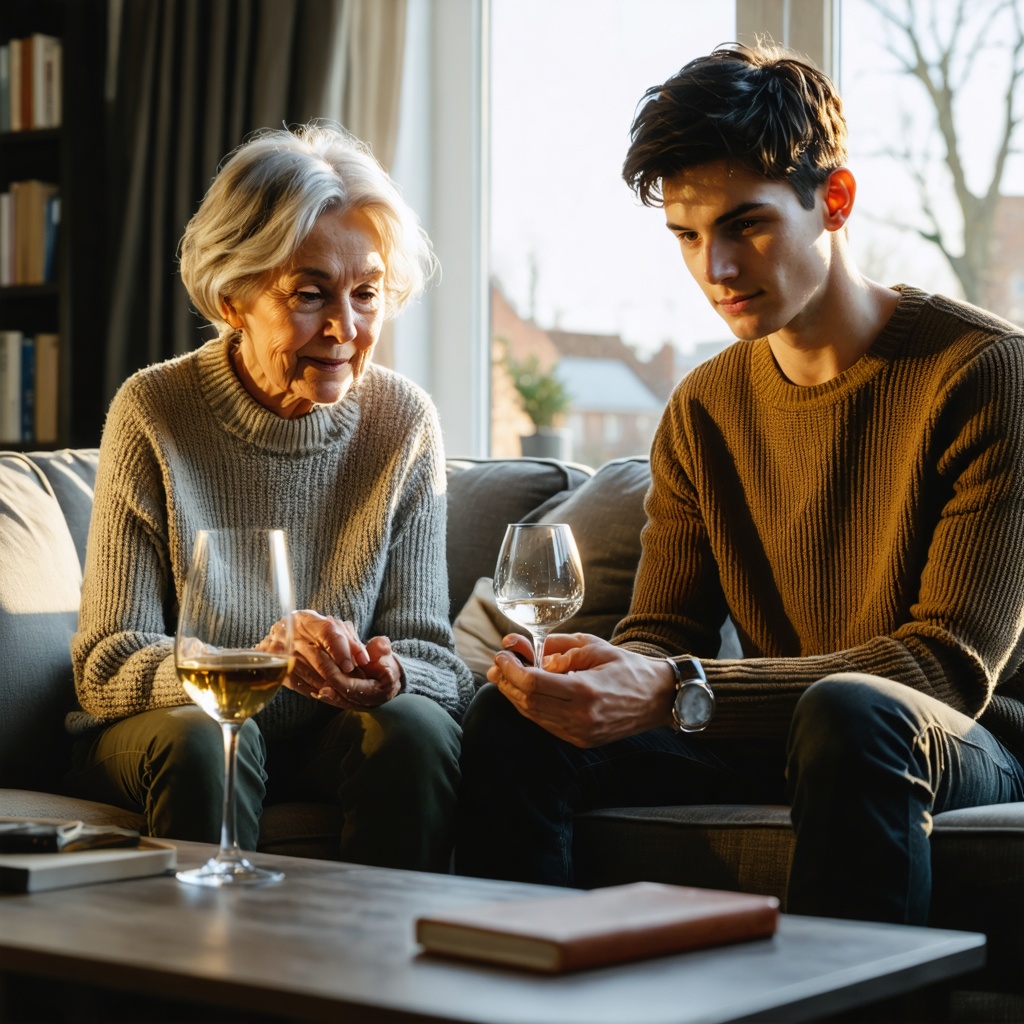 Image by RM AI
A Son's Concern
"What is it supposed to be?" Cameron asked, his voice carrying a note of skepticism that I hadn't expected. I explained what the vendor had told me – that it was an antique paperweight, likely European.
Cameron's frown deepened as he continued to study the object, holding it up to the light and examining the seams along its edges. "I don't know, Mom," he said finally, placing it carefully on the coffee table between us.
"This doesn't look like any paperweight I've ever seen. The design is...
unusual." I laughed off his concern, accusing him of being overly cautious, a trait he'd had since childhood. "It's just a paperweight, Cam.
And it was only five dollars." But Cameron didn't join in my laughter. Instead, he picked it up again, his expression serious.
"I have a strange feeling about this," he admitted, his voice lower now. "Something doesn't seem right about it."
 Image by RM AI
Dismissing the Warning
"You and your feelings," I teased, trying to lighten the mood. Cameron had always been intuitive, sometimes eerily so, but I chalked it up to an overactive imagination – something he'd inherited from me rather than his practical father.
"Next you'll be telling me it's cursed or something equally dramatic." Cameron didn't smile at my joke. Instead, he placed the paperweight back on the table with deliberate care, as if it might break – or worse, as if it might do something unexpected.
"Just... maybe have someone look at it," he suggested.
"Someone who knows about antiques. It's probably nothing, but..." He trailed off, and I could see he was trying not to worry me.
I promised I would, though I had no intention of doing so. It was just a paperweight, after all, and a beautiful one at that.
We moved on to other topics – his wife's new job, my garden plans for spring – but I noticed he kept glancing at the paperweight throughout the evening.
 Image by RM AI
An Unexpected Phone Call
Cameron left around nine, hugging me tightly at the door in a way that reminded me of when he was a little boy afraid of thunderstorms. I spent the rest of the evening reading, the paperweight now back on my desk where it had become a comforting presence.
I went to bed early, looking forward to sleeping in on Sunday morning. The shrill ring of my phone jolted me awake just after midnight.
Fumbling in the darkness, I answered without checking the caller ID, my heart racing with the kind of fear that only middle-of-the-night phone calls can bring. "Jan?
It's Lisa, Cameron's wife." Her voice was tight with worry, and immediately I was fully awake, sitting up in bed with the lamp already switched on. "What's wrong?
Is Cameron okay?" I asked, scenarios already racing through my mind – a car accident on the way home, a break-in at their apartment. What Lisa told me instead was both less dramatic and somehow more disturbing.
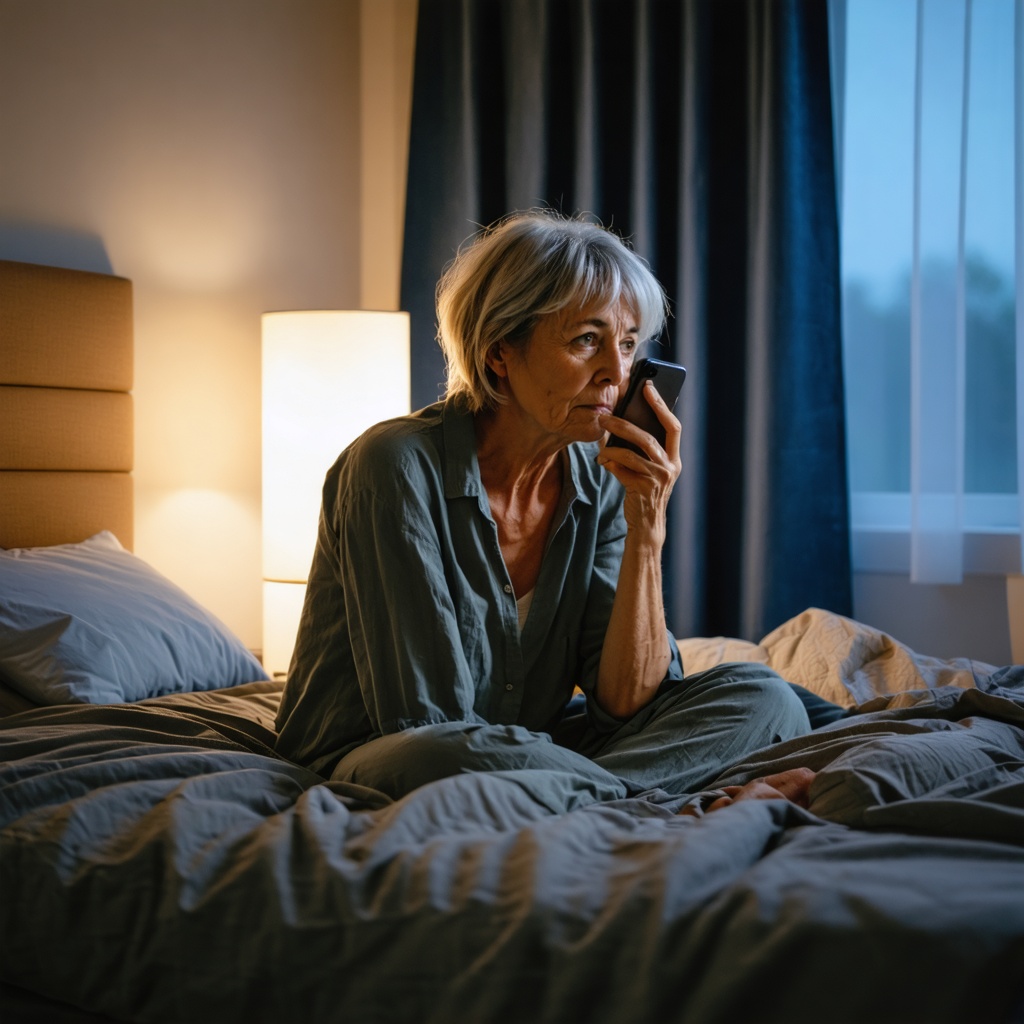 Image by RM AI
The First Signs of Trouble
"He's been throwing up for the last hour," Lisa explained, her voice strained with concern. "He's really pale and says he feels weak.
I wanted to take him to the emergency room, but he insisted I call you first." My mind raced, trying to connect the dots. Had we eaten something that had gone bad?
The pasta had been freshly made, the salad ingredients newly purchased. "Did he eat anything after he left here?" I asked, already getting out of bed and reaching for my robe.
Lisa's response was quick and certain – he hadn't eaten anything since dinner at my place. We agreed that she should take him to the hospital if the vomiting didn't stop soon, and I promised to check in first thing in the morning.
After hanging up, I sat on the edge of my bed, a nagging worry beginning to form. It wasn't until I stood up that I realized something was wrong with me too.
The room swayed slightly, and a wave of nausea rolled through my stomach. Before I could make sense of it, I was rushing to the bathroom, barely making it in time.
 Image by RM AI
Falling Ill
The next few days passed in a blur of misery. Whatever had struck Cameron had hit me too, though I didn't make the connection immediately.
I was too sick to call Lisa back, too weak to do more than drag myself between my bed and the bathroom. My symptoms were alarming – not just the persistent vomiting, but also dizziness, a strange metallic taste in my mouth, and a fatigue so profound it felt like my bones had turned to lead.
By the third day, I was beginning to worry that this was more than a simple stomach bug. I managed to text Cameron, only to learn that he was experiencing the same prolonged symptoms.
We both assumed it must have been food poisoning from our dinner together, though I couldn't figure out what could have caused such severe reactions. In my feverish state, I didn't connect our mysterious illness to the paperweight sitting innocently on my desk, its metal surface gleaming in the sunlight that streamed through my bedroom window.
 Image by RM AI
A Neighbor's Kindness
On the fourth day of my illness, when the worst of the vomiting had subsided but left me weak as a kitten, there was a knock at my door. I barely had the strength to answer it, wrapping my robe tightly around my nightgown and shuffling to the entryway.
Standing on my porch was David, my neighbor from three houses down. At sixty-two, David had been a fixture in the neighborhood for decades, a retired firefighter with salt-and-pepper hair and kind eyes that crinkled when he smiled.
"Jan, I haven't seen you out and about for days," he said, concern evident in his voice. "Everything okay?" In his hands was a container that steamed slightly in the cool air.
The smell of homemade chicken soup wafted toward me, and my stomach gave a hopeful gurgle – the first positive response to food in days. I explained my situation as David insisted on coming in to help.
 Image by RM AI
David to the Rescue
"You shouldn't be alone when you're this sick," David said firmly, moving past me into the kitchen with the authority of someone used to taking charge in emergencies. I was too weak to argue, following him slowly as he set the soup container on the counter and began opening cupboards to find a bowl.
There was something comforting about his presence, about not having to manage on my own for a little while. David had lost his wife to cancer two years earlier, and since then had thrown himself into community volunteering and checking in on neighbors.
He ladled soup into a bowl and insisted I sit at the kitchen table while he made tea. It was as he was bringing the steaming mug to the table that his gaze fell on the paperweight, which I'd moved to the kitchen windowsill during one of my more lucid moments.
The change in his expression was immediate and alarming.
 Image by RM AI
A Disturbing Recognition
David froze mid-step, the color draining from his face as he stared at my flea market find. The teacup in his hand trembled slightly, sloshing hot liquid onto his fingers, but he didn't seem to notice.
"Where did you get that?" he asked, his voice suddenly tight. I explained about finding it at the flea market, about the vendor selling it to me as a paperweight.
With each word, David's expression grew more concerned. He set the tea down carefully and approached the windowsill, examining the object without touching it.
"Jan," he said finally, turning to face me with an expression that sent a chill through my already aching body. "That's not a paperweight." His words hung in the air between us, heavy with implication.
I stared at him, then at the innocent-looking metal object that had sat in my home for days now. "What do you mean?
What is it then?"
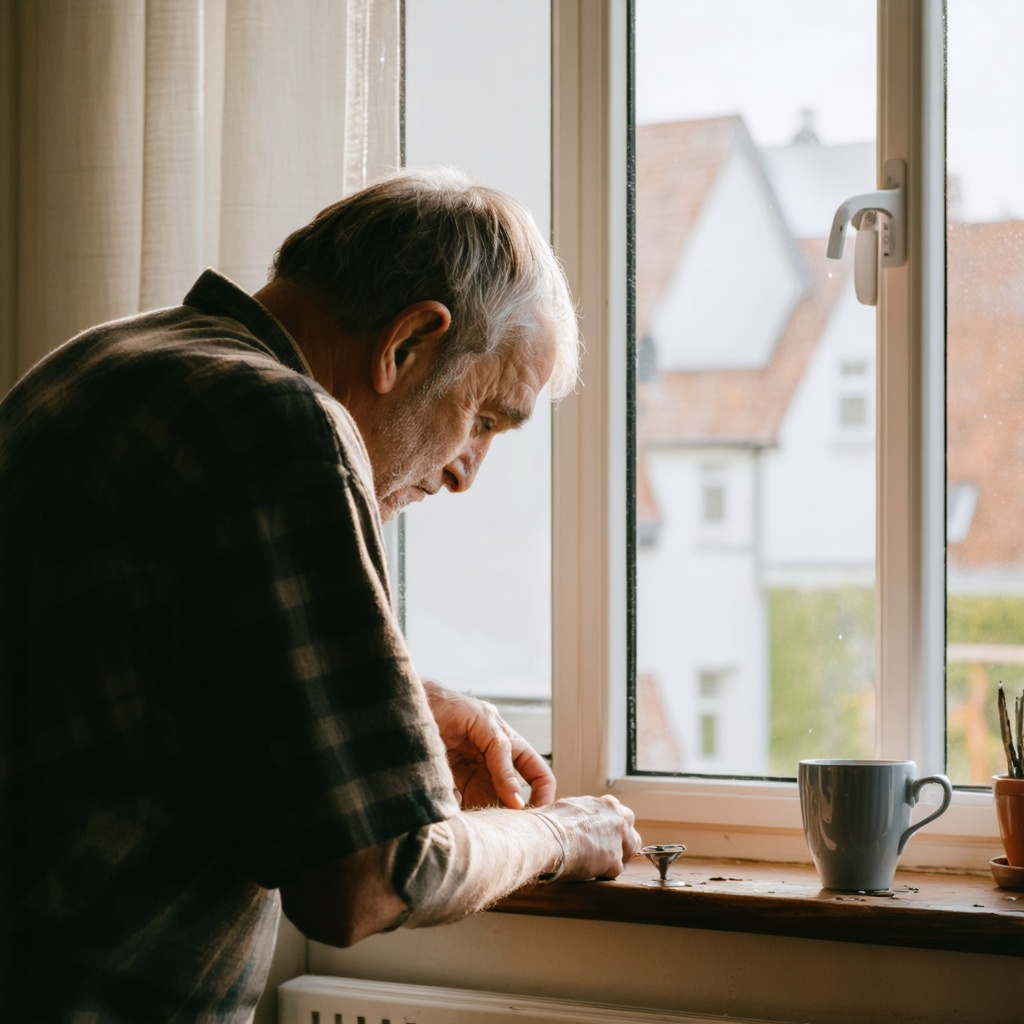 Image by RM AI
A Firefighter's Expertise
David hesitated, and I could see him weighing his words carefully, perhaps not wanting to frighten me. "I don't want to worry you unnecessarily," he said finally, which of course had the opposite effect.
"But I need you to trust me on this." He pulled out his phone and took several photos of the object from different angles, careful not to touch it. Then he turned to me with the decisive manner of someone who had handled countless emergencies.
"I'm going to drive you and Cameron to the hospital right now. When we get there, I want you to tell them your symptoms and that you suspect you've been poisoned." My heart began to race, fear cutting through the fog of illness that had clouded my mind for days.
"Poisoned? David, what are you saying?
What is that thing?" I demanded, my voice rising despite my weakness. David's expression was grim as he helped me to my feet.
 Vitaliy Shevchenko on Unsplash
The Urgent Hospital Trip
"I'll explain everything on the way," David promised, already dialing Cameron's number on his phone. "Right now, we need to get you both medical attention." The next thirty minutes passed in a blur as David helped me into a coat, guided me to his car, and drove to Cameron and Lisa's apartment.
My son looked even worse than I felt, his face gaunt and his normally vibrant eyes dulled by whatever was attacking our bodies. Lisa helped him into the backseat of David's SUV, her face tight with worry as David briefly explained the situation.
The drive to the hospital was tense, with David dividing his attention between the road and making calls on his hands-free phone. I caught fragments of conversations with former colleagues at the fire department, technical terms I didn't understand, and arrangements being made for something to be picked up from my house.
Through it all, David kept glancing at me with concern, reaching over occasionally to pat my hand reassuringly.
 Image by RM AI
David's Revelation
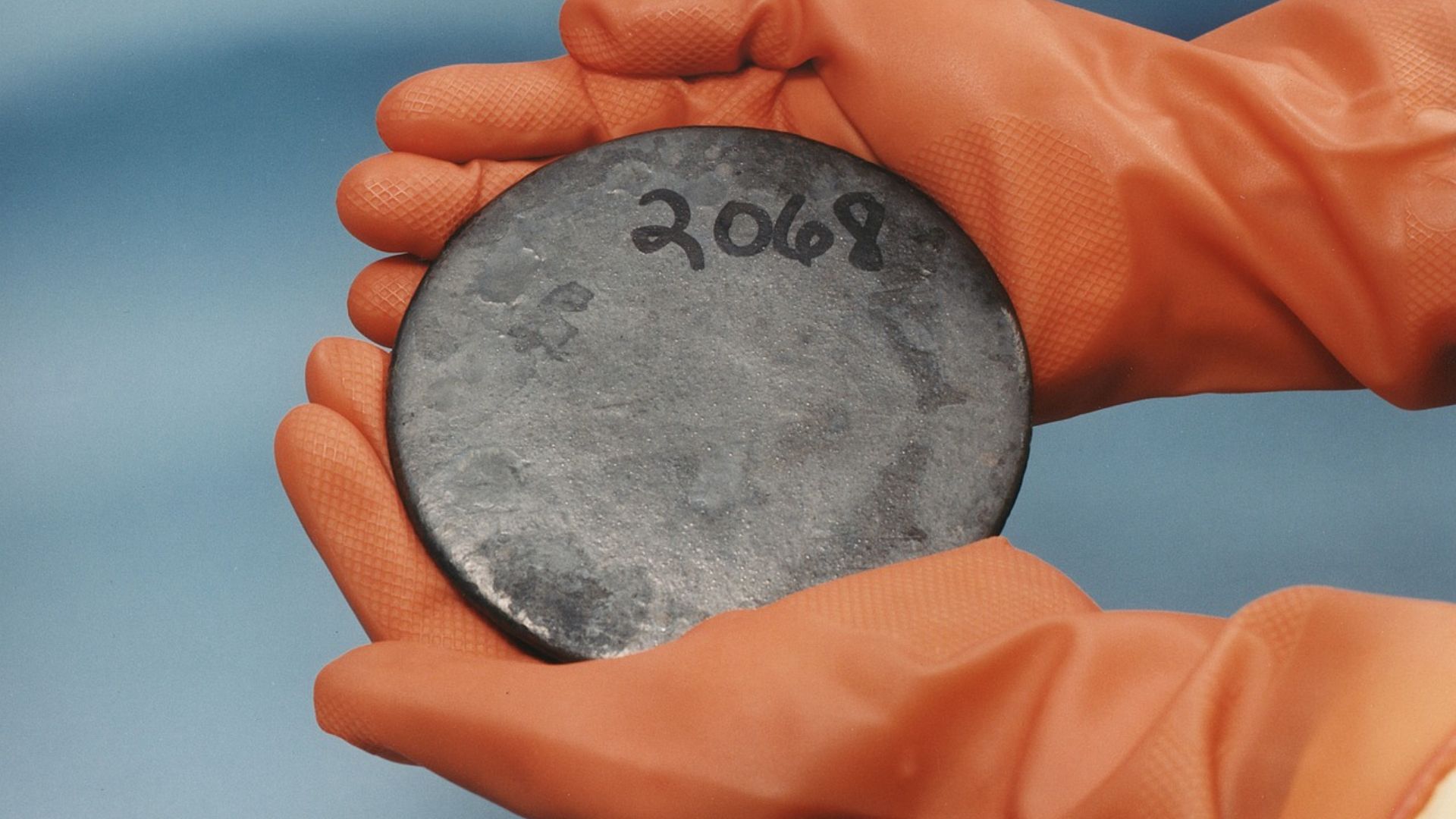
"I need to tell you what I suspect," David said finally, his voice steady despite the gravity of the situation. "Based on the design and age of that object, and your symptoms, I believe what you have is an old lead container." He paused, checking my reaction in the rearview mirror.
"These were used decades ago to store certain radioactive elements for industrial or medical purposes." The word 'radioactive' hung in the air like a physical presence. From the backseat, Cameron made a sound somewhere between a groan and a curse.
"I knew there was something wrong with that thing," he muttered weakly. David continued, explaining that as a firefighter, he'd received specialized training in identifying hazardous materials, including obsolete containers that occasionally turned up in old buildings or estate sales.
"If I'm right, and I pray I'm not, that container might hold thorium or a similar radioactive element. The lead casing would normally protect you, but if it's damaged or if you handled what's inside..."
The Hospital Struggle
We arrived at the emergency room entrance, where David helped both Cameron and me inside while Lisa parked the car. The waiting room was busy with the usual weekend night emergencies – a child with a high fever, an elderly man clutching his chest, a teenager with what looked like a sports injury.
David approached the triage nurse with an authority that came from years of emergency service, explaining our situation in low, urgent tones. Despite his obvious concern, the nurse seemed unimpressed.
She handed us clipboards with intake forms and directed us to the waiting area with a practiced smile that didn't reach her eyes. "But this could be radiation poisoning," David insisted, his voice rising slightly.
The nurse's expression hardened. "Sir, we have protocols to follow.
Unless you have confirmation of radioactive exposure, these symptoms suggest food poisoning or a stomach virus. Please take a seat and wait your turn."
 Image by RM AI
Frustration in the Waiting Room
We had no choice but to comply, finding seats in the crowded waiting area. Cameron leaned against Lisa, his eyes closed and his breathing shallow.
I could see the fear in Lisa's eyes as she stroked his hair, murmuring reassurances neither of them believed. David paced nearby, making more phone calls, his frustration evident in the set of his shoulders and the occasional sharp gesture.
An hour passed with excruciating slowness. My nausea had returned, and the fluorescent lights of the waiting room seemed to pierce my skull like needles.
Other patients came and went, their names called while we continued to wait. David checked on us frequently, bringing water and damp paper towels for our foreheads.
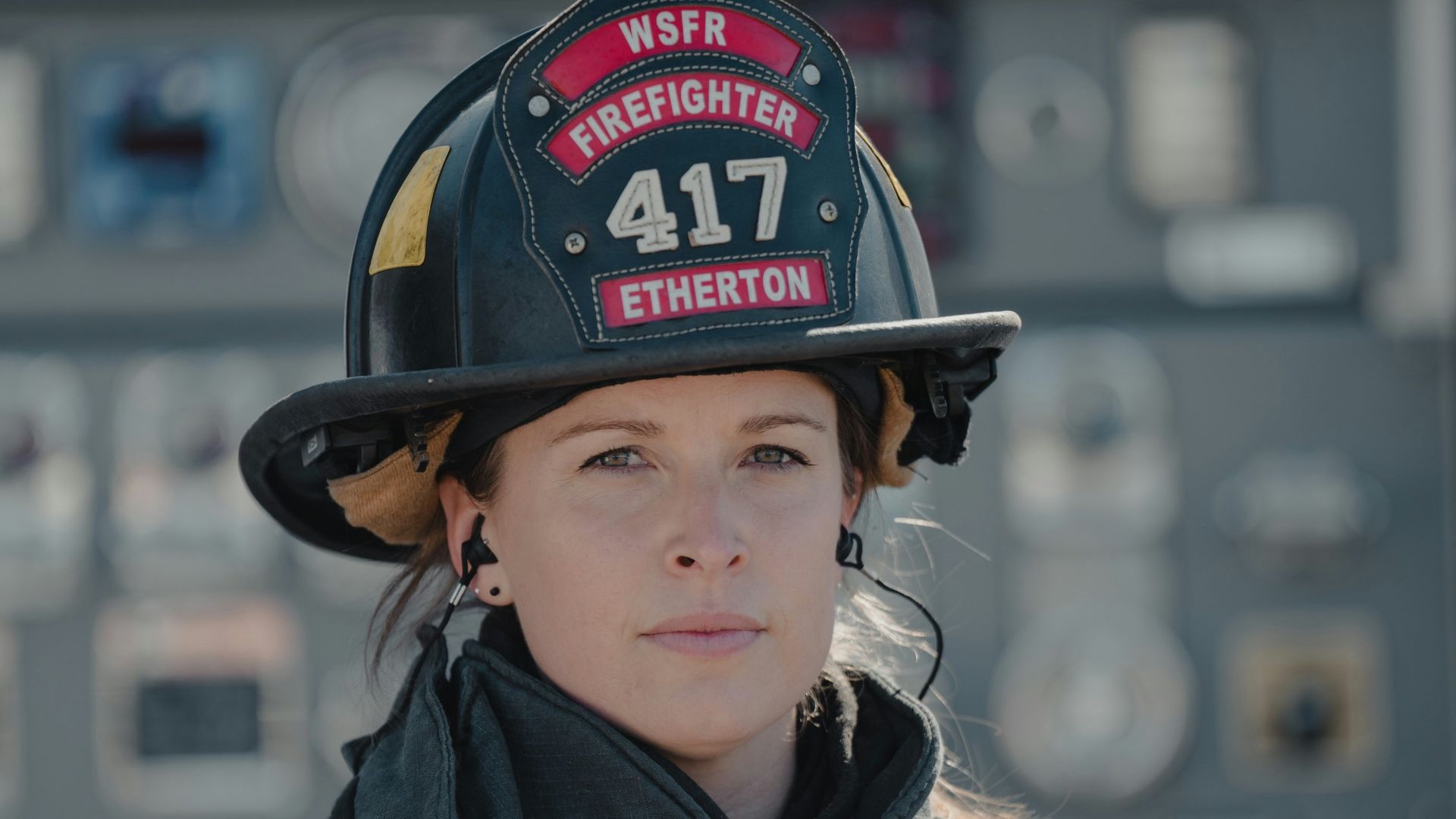
His kindness was a beacon in the frightening uncertainty of our situation. Just when I thought I couldn't bear another minute of waiting, the emergency room doors slid open, and two uniformed men entered – one in a fire chief's uniform and another in what looked like hazardous materials gear.
 fernandozhiminaicela on Pixabay
The Experts Arrive
The arrival of the Fire Chief and the hazmat specialist caused an immediate stir in the waiting room. Patients and staff alike turned to stare as the two men scanned the room, quickly spotting David and making their way toward us.
David stood to greet them, relief evident in his posture. The Fire Chief, a tall man with a commanding presence, shook David's hand with the familiarity of old colleagues.
"Got here as fast as we could," he said, before turning his attention to Cameron and me. The hazmat specialist was already consulting a handheld device, asking David questions in a low voice.
Their presence seemed to finally convince the hospital staff that our situation might be serious. The triage nurse approached, her professional demeanor now tinged with concern as she observed the fire department officials.
"What's going on here?" she asked, her clipboard clutched tightly against her chest.
 LOGAN WEAVER | @LGNWVR on Unsplash
Taking Us Seriously
The Fire Chief turned to the nurse, his expression grave. "We have reason to believe these patients have been exposed to radioactive material," he stated firmly.
"We've already secured the source from the woman's home, and preliminary readings confirm our suspicions." He handed the nurse a document that appeared to be some kind of official report. "They need immediate treatment for radiation exposure, specifically thorium poisoning." The effect was immediate.
The nurse's eyes widened, and she quickly summoned a doctor who had been passing through the waiting area. Within minutes, Cameron and I were being wheeled into separate treatment rooms, medical staff suddenly swarming around us with an urgency that had been absent before.
Blood was drawn, IVs were started, and questions were fired at us from all directions. Through it all, I kept looking for David, finding comfort in his steady presence nearby, watching over the proceedings with concerned eyes.
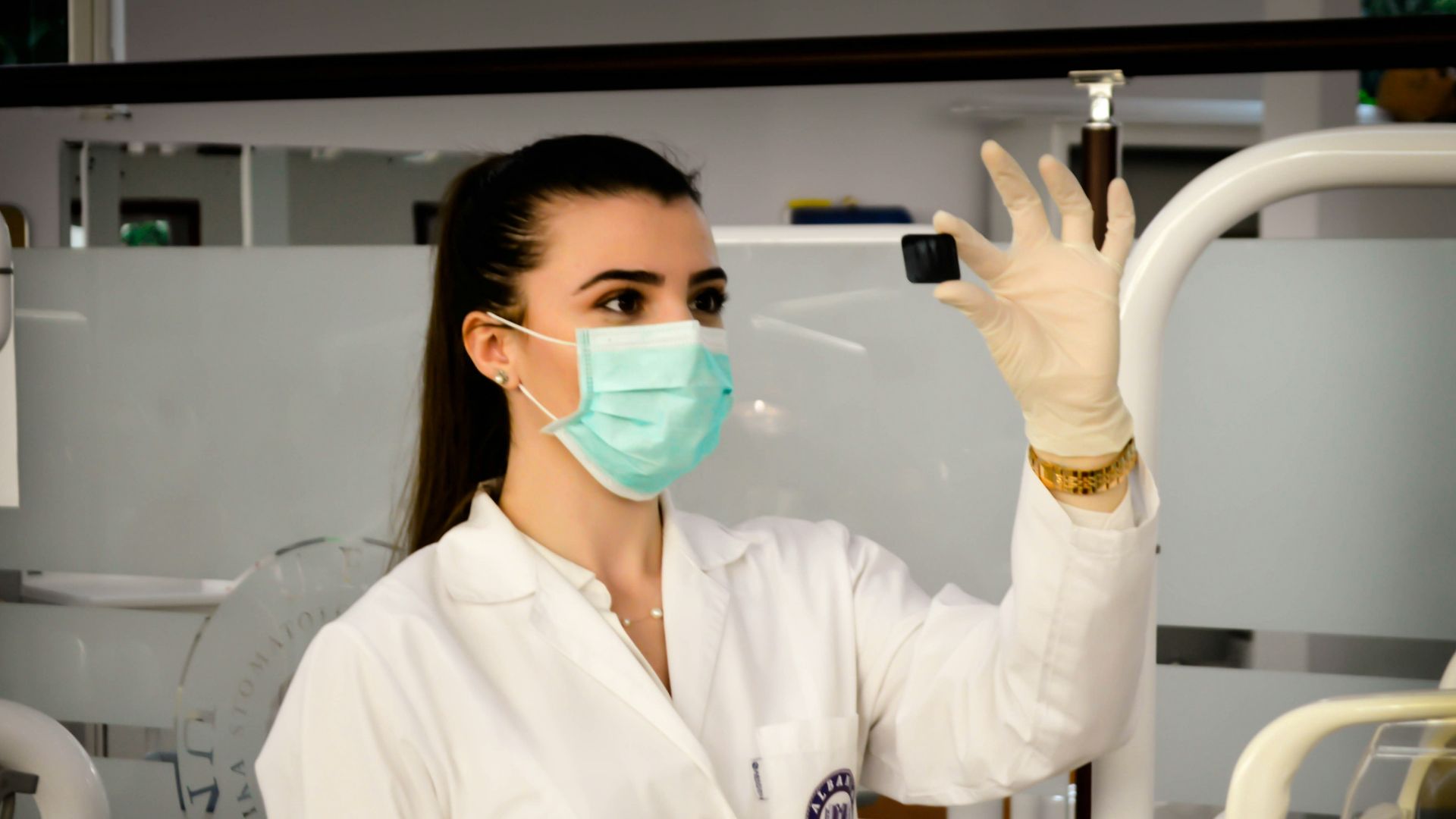
The Diagnosis Confirmed
The emergency room doctor, a woman with tired eyes and a gentle manner, confirmed what David had suspected. The blood tests showed elevated levels of radiation in both Cameron's system and mine, consistent with exposure to thorium.
"It's fortunate you came in when you did," she explained, adjusting my IV drip. "Thorium poisoning is serious, but treatable if caught early enough." She went on to explain the treatment protocol – a series of medications to help our bodies eliminate the radioactive particles, along with supportive care for the symptoms we'd been experiencing.
When I asked about long-term effects, her hesitation before answering sent a chill through me. "Let's focus on getting you stabilized first," she said diplomatically.
"Then we can discuss follow-up care and monitoring." The reality of our situation was finally sinking in – a simple flea market purchase, an innocent-looking paperweight, had exposed us to a potentially deadly substance.
 Image by RM AI
David's Explanation
During a quiet moment between tests and treatments, David came to sit beside my hospital bed. The worry lines around his eyes had deepened, but he managed a reassuring smile as he took my hand.
"The hazmat team confirmed it," he said softly. "Your 'paperweight' was actually an old lead container from the 1950s or 60s.
It was designed to hold thorium samples for industrial use." He explained that thorium had once been used in various applications, from gas lantern mantles to certain medical treatments, before its radioactive properties were fully understood. "The container itself wouldn't have been dangerous if it had been intact," David continued.
"But there was a crack in the casing, and the thorium sample inside had degraded over time. When you and Cameron handled it..." He didn't need to finish the sentence.
We had unknowingly exposed ourselves to radiation leaking from the damaged container.
 Image by RM AI
The Vendor's Responsibility
"What about the man who sold it to me?" I asked, suddenly thinking of the flea market vendor with his weathered hands and cryptic comments. "Did he know what he was selling?" David's expression darkened slightly.
"The fire department is looking into that," he said. "They've already contacted the market organizers to get his information.
If he knowingly sold a hazardous material..." He trailed off, but the implication was clear – there could be serious legal consequences. I thought back to the transaction, to the vendor's strange comment about finding the right home for things, to the surprisingly low price.
Had he been trying to get rid of something he knew was dangerous? Or was he just another link in a chain of people who had handled the object without understanding what it was?
Either way, I couldn't help but feel a surge of anger at the thought that Cameron and I might have suffered permanent harm because of someone's negligence or, worse, deliberate action.
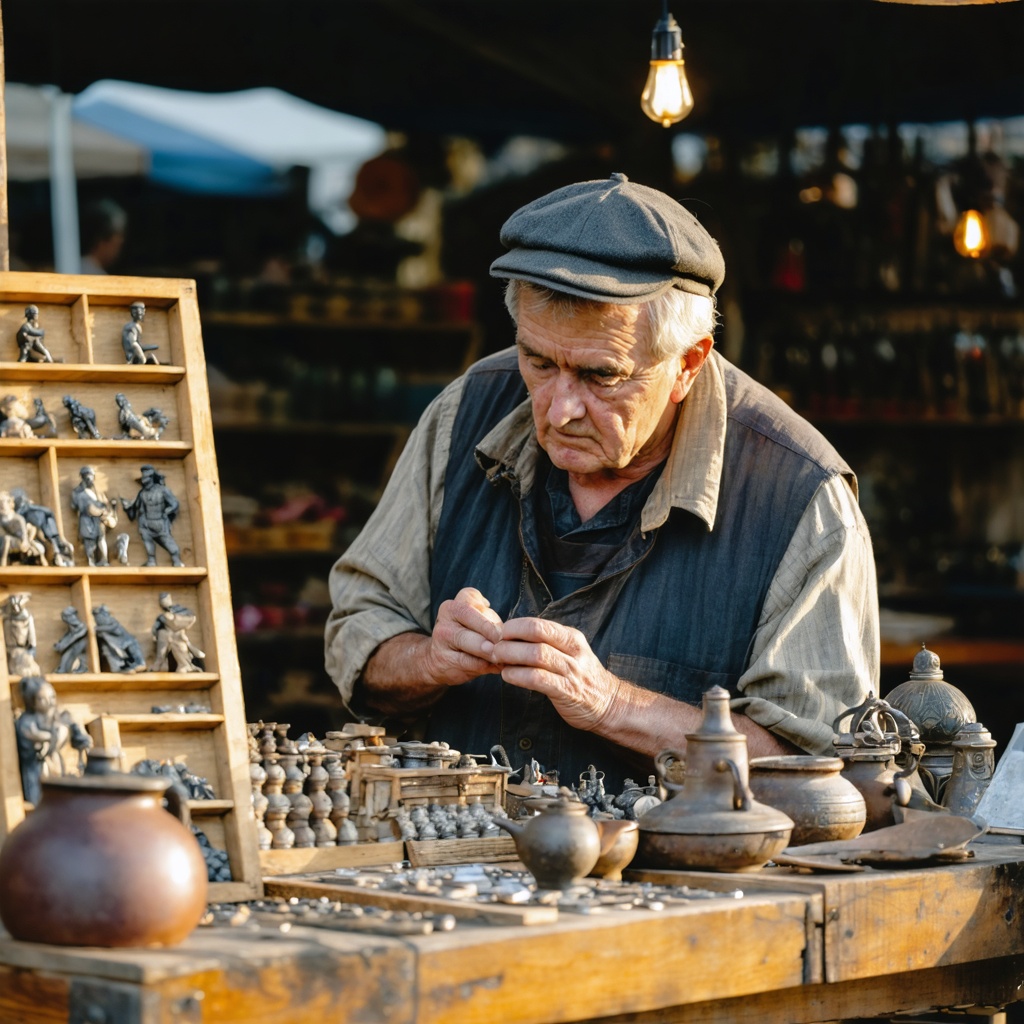 Image by RM AI
Cameron's Recovery
The doctors kept Cameron and me in the hospital for three days, monitoring our progress and administering treatments to help our bodies eliminate the radioactive particles. Cameron, being younger and generally healthier, responded more quickly to the treatment.
By the second day, his color had improved, and he was able to keep down small amounts of food. Lisa rarely left his side, alternating between fierce protectiveness and barely contained fear.
I watched them together during a brief visit to his room – the way she adjusted his pillows, the gentle touch of her hand on his forehead, the private language of long glances and small gestures that married couples develop. It reminded me of the early years with my ex-husband, before we grew apart, before silence replaced conversation and resentment replaced affection.
Despite the circumstances, I felt a surge of gratitude that my son had found someone who loved him so completely, who would stand by him even in the most frightening situations.

My Own Healing Process
My own recovery was slower, which the doctors attributed to my age and the fact that I had likely had more prolonged exposure to the thorium. The fatigue lingered, along with occasional waves of nausea that would wash over me without warning.
But gradually, I began to feel more like myself. The medical team was cautiously optimistic, explaining that while we would need regular check-ups to monitor for any long-term effects, the prompt treatment had likely prevented the worst outcomes.
During those days in the hospital, I had plenty of time to reflect on how quickly life can change, how a simple decision – picking up an interesting object at a flea market – could have such profound consequences. I thought about the randomness of it all, about how differently things might have turned out if Cameron hadn't visited that day, if David hadn't brought soup, if any link in the chain of events had been different.
 Image by RM AI
The Paperweight's Disposal
On my last day in the hospital, David came to visit, bringing a small potted plant and news about the "paperweight." "The hazardous materials team has secured it properly," he assured me, settling into the chair beside my bed. "It's been transported to a facility that handles radioactive waste.
You don't need to worry about it anymore." I felt an odd sense of loss at his words, which seemed ridiculous given the harm the object had caused. But it had been beautiful in its way, with its intricate design and satisfying weight.
David seemed to read my thoughts. "It's strange how we get attached to things, isn't it?" he said gently.
"Even things that aren't good for us." There was wisdom in his words that extended beyond radioactive paperweights, and I found myself nodding in agreement. We sat in comfortable silence for a while, the afternoon sun streaming through the hospital window, creating patterns on the bland institutional bedspread.
 Image by RM AI
Returning Home
The day I was discharged from the hospital, David insisted on driving me home. "Lisa is taking care of Cameron, but someone needs to look after you too," he said firmly, in a tone that brooked no argument.
I was touched by his concern, by the way he had stepped into this crisis without hesitation. My house had been cleared by the hazmat team, who had checked for any residual radiation and found none.
Still, walking through my front door felt strange, as if I were returning to the scene of a crime. David seemed to sense my unease, keeping up a steady stream of conversation as he carried my small overnight bag to the bedroom and then busied himself in the kitchen making tea.
I wandered through the rooms, noting the absence of the paperweight from the windowsill where it had last been. In its place was a small card from the fire department, certifying that the home had been inspected and cleared of hazardous materials.
 Image by RM AI
A New Perspective
That evening, as David and I sat on my porch watching the sunset, I found myself seeing my neighborhood through new eyes. The houses I had passed hundreds of times now seemed precious in their ordinariness.
The elderly couple walking their dog, the children riding bikes in the fading light, the sound of distant laughter – all of it struck me with a poignancy that brought tears to my eyes. "You okay?" David asked quietly, noticing my emotional state.
I nodded, unable to put into words the gratitude I felt for simply being alive, for having survived an encounter with something deadly that had masqueraded as something benign. "It's just...
everything looks different now," I managed finally. David nodded, understanding in his eyes.
"Near misses have a way of doing that," he said. "Makes you realize what matters." His hand found mine on the porch swing, a gentle pressure that offered comfort without demand.
 Image by RM AI
The Investigation Continues
Over the next few weeks, as Cameron and I continued our recovery with regular medical check-ups, the investigation into the thorium container progressed. The fire department, working with local police, had identified and interviewed the vendor who sold me the paperweight.
According to David, who kept me updated, the man claimed ignorance – he had purchased a box of items at an estate sale and had no idea what the metal object was. His story seemed plausible;
after all, how many people would recognize an obsolete radiation container from the mid-20th century? Still, the authorities were tracing the chain of ownership back as far as possible, trying to determine if anyone along the way had known the true nature of the object.
The flea market organizers had implemented new safety protocols, requiring vendors to have potentially hazardous items inspected before they could be sold. It was a small comfort to know that our experience might prevent someone else from going through the same ordeal.
 Image by RM AI
Cameron's Protective Instincts
Cameron called me daily during my recovery, his concern evident even through phone lines. "Mom, promise me you'll be more careful with what you bring into your house," he said during one of our conversations, his voice a mixture of worry and gentle teasing.
"No more mysterious metal objects, okay?" I promised, though I couldn't help but defend my hobby. "Not all antiques are radioactive, you know," I pointed out.
"Most of them are perfectly harmless." Cameron's sigh was audible. "I know, Mom.
But maybe stick to wooden picture frames and ceramic vases for a while? For my sake?" I agreed, touched by his protectiveness.
Our relationship had always been close, but this shared experience had created a new dimension to our bond. We had faced something frightening together, had both glimpsed our own mortality in a way that changed our perspective.
In our subsequent conversations, I noticed a new openness between us, as if the brush with danger had swept away some invisible barrier.
 Image by RM AI
David's Growing Presence
As the weeks passed, David became a regular presence in my life. What had begun as neighborly concern evolved into something more – shared meals, long conversations on my porch, drives to nearby towns just for the pleasure of each other's company.
He was different from any man I had known, including my ex-husband. Where John had been ambitious and often distracted, David was present and attentive.
He listened when I spoke, really listened, his eyes focused on mine as if my words were the most important thing in the world. He had a quiet strength that came from years of running into burning buildings to save strangers, yet there was a gentleness to him that surprised me.
One evening, as we washed dishes side by side after dinner at my place, our hands touched beneath the soapy water. Instead of pulling away, we both paused, a moment of connection that sent a flutter through my chest that had nothing to do with residual radiation effects.
 Image by RM AI
Healing Together
David had his own wounds, his own story of loss. Gradually, he shared with me the journey of his wife's illness, the three years of fighting cancer that had ended in defeat despite their best efforts.
"The hardest part wasn't losing her," he confided one evening as we walked along the river path near our neighborhood. "It was watching her suffer and not being able to fix it.
All those years as a firefighter, I was trained to rescue people, to solve problems. But I couldn't rescue her." The pain in his voice was still raw, even after two years.
I took his hand, offering the simple comfort of human connection. We walked in silence for a while, the river flowing beside us, constant and changing all at once.
There was something healing in sharing our stories, in acknowledging our losses without letting them define us. We were both learning that grief doesn't end, but it changes, becomes something you carry rather than something that crushes you.
 Image by RM AI
A Cautious Return to Antiquing
Three months after the incident, when my doctor had given me a cautiously optimistic bill of health, I felt the familiar pull of the flea market. I mentioned it casually to David over coffee one morning, watching his face for signs of disapproval or worry.
To my surprise, he smiled. "I was wondering when you'd want to go back," he said.
"Your house is full of beautiful things you've found. It's part of who you are." His understanding touched me deeply.
Still, I hesitated, the memory of those days of illness still vivid. "What if..." I began, not even sure how to articulate my fear.
David reached across the table and took my hand. "What if I came with you?" he suggested.
"Not to hover or make you nervous, but just to enjoy it together. I've never really explored antiques before.
You could teach me what to look for." The offer was so perfectly balanced – supportive without being overprotective, interested without being controlling – that I found myself nodding before I'd consciously decided.
 Image by RM AI
David's Antique Education
The following Saturday found us wandering through a flea market in a neighboring town, one I hadn't visited before. David approached the experience with the curiosity of a child, asking questions about how to determine the age of wooden furniture, why certain patterns of china were more valuable than others, what made some vintage clothing collectible while other pieces were just old clothes.
I found myself seeing my hobby through fresh eyes as I explained the differences between Art Deco and Art Nouveau, pointed out the hallmarks on silver pieces, demonstrated how to check for quality in old leather goods. David was an attentive student, his firefighter's eye for detail serving him well as he began to distinguish between genuine antiques and more recent reproductions.
We spent hours browsing, eventually purchasing only a small brass compass that caught David's eye. "For new adventures," he said with a smile as the vendor wrapped it carefully in tissue paper.
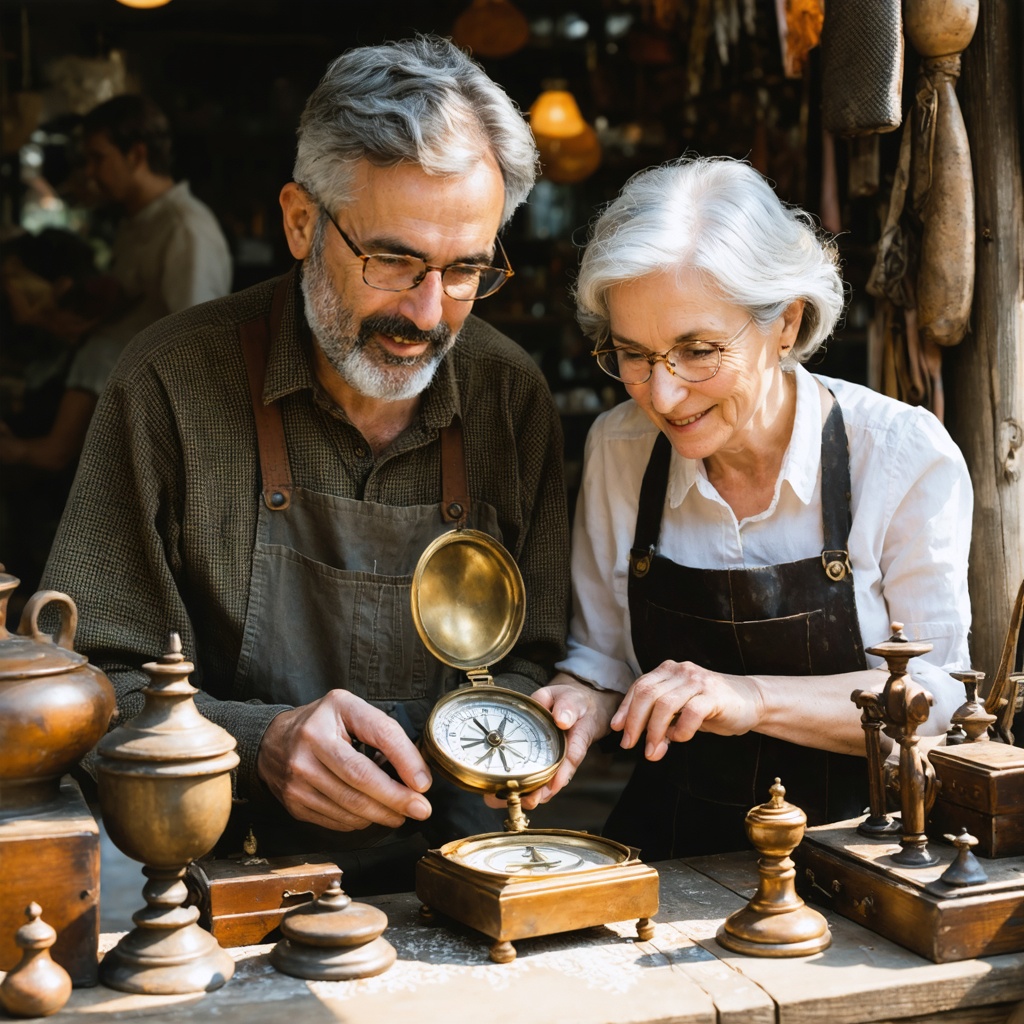 Image by RM AI
A Deepening Connection
As spring turned to summer, David and I fell into a comfortable rhythm. Sunday brunches at the local café, Wednesday night movies in his cozy living room, Saturday explorations of antique shops and flea markets.
We were taking things slowly, both of us cautious after our respective losses – his through death, mine through divorce. Neither of us wanted to rush into something that might not last.
Yet with each passing week, I found myself looking forward to seeing him more, missing him when we were apart, thinking of things to tell him throughout my day. It was different from the passionate beginning of my marriage to John, more measured and thoughtful, but no less meaningful for its quieter nature.
One evening, as we sat on his back deck watching fireflies rise from the grass like earthbound stars, David turned to me with an expression I hadn't seen before – vulnerable, hopeful, and just a little nervous. "Jan," he began, his voice soft in the gathering darkness.
"I need to tell you something."
 Image by RM AI
An Unexpected Confession
My heart quickened at his serious tone, a flutter of anxiety rising in my chest. Had he changed his mind about us?
Was there some health issue he hadn't shared? David must have read the concern in my expression because he quickly reached for my hand.
"It's nothing bad," he assured me. "At least, I hope you won't think so." He took a deep breath, his fingers warm around mine.
"I've been alone since Margaret died, and I thought that was how it would stay. I wasn't looking for anyone else." He paused, his eyes holding mine in the soft glow from the porch light.
"But then you got sick, and I was so scared for you, and I realized..." Another pause, longer this time. "I realized that somehow, without noticing it happening, I had fallen in love with you." The words hung in the summer air between us, honest and unadorned.
I felt a warmth spread through me that had nothing to do with the evening temperature and everything to do with the man beside me.
 Image by RM AI
My Heart's Response
For a moment, I couldn't speak, overwhelmed by the emotions his words had unleashed. David waited patiently, his expression open and vulnerable.
When I finally found my voice, the words came from a place of truth I hadn't accessed in years. "I think I've been falling in love with you too," I admitted, the confession both frightening and freeing.
"I just wasn't sure if it was too soon, or if you felt the same way." David's smile in response was like sunrise breaking across his face, years falling away in an instant. Slowly, giving me every chance to pull away if I wanted to, he leaned forward and kissed me.
It was a gentle kiss, tentative at first, then deepening as we both leaned into the connection we'd been building for months. When we finally parted, both a little breathless, David rested his forehead against mine.
"I never expected this," he whispered. "To find you, to feel this way again." I nodded, understanding completely.
Neither of us had been looking for love, yet somehow it had found us anyway.
 Image by RM AI
Telling Cameron
The next hurdle was telling Cameron about this new development in my life. Though he was an adult with his own marriage, I was nervous about his reaction.
He had been protective of me since the divorce, skeptical of my ex-husband's occasional attempts to reconnect, concerned about my well-being in a way that sometimes reversed our parent-child roles. I invited him and Lisa over for dinner, asking David to join us.
The evening was pleasant, filled with good food and easy conversation. David and Cameron discovered a shared interest in classic cars, while Lisa and I exchanged gardening tips and recipes.
After dessert, as we all sat in the living room with coffee, I exchanged a glance with David, who nodded encouragingly. "Cameron, Lisa," I began, my voice steadier than I felt.
"I wanted you both to know that David and I have been seeing each other. It's...
it's become important to me. To us." I held my breath, watching my son's face for his reaction.
 Image by RM AI
A Son's Blessing
Cameron was quiet for a moment, his expression thoughtful as he looked between David and me. Then, to my immense relief, he smiled – a genuine smile that reached his eyes.
"Mom, that's wonderful," he said warmly. "David's a good man." He turned to David, his expression becoming more serious.
"You saved my mother's life, you know. If you hadn't recognized that container for what it was..." He didn't finish the sentence, but he didn't need to.
We all understood the unspoken conclusion. David nodded, acknowledging the gravity of that moment that had brought us together.
"I'm just grateful I was there," he said simply. Lisa, always perceptive, reached over to squeeze my hand.
"You look happy, Jan," she said softly. "Happier than I've seen you in a long time." Her observation brought unexpected tears to my eyes.
I was happy, in a deep, quiet way that felt sustainable, unlike the roller-coaster emotions of my marriage's early days and its painful ending.
 Image by RM AI
Six Months Later
Life settled into a new pattern over the following months. David and I continued to take things slowly, enjoying the process of learning each other's habits, preferences, and histories.
We still maintained separate homes, though we spent most evenings together at one house or the other. My health continued to improve, with each check-up bringing better news about my recovery from the radiation exposure.
Cameron and Lisa announced they were expecting their first child, news that filled me with a joy I hadn't anticipated. The thought of becoming a grandmother opened a new chapter I was eager to explore.
David and I celebrated by buying the baby's first gift together – a handcrafted wooden rocking horse we found at an antique shop in a neighboring town. The vendor assured us it was lead-free, a joke that made us both laugh despite the memories it evoked.
As we loaded the rocking horse into David's truck, he turned to me with a thoughtful expression.

An Unexpected Proposal
"What would you think about combining our households?" David asked, his tone casual though I could sense the importance of the question. "My place or yours, or maybe somewhere new altogether?" I leaned against the truck, considering his suggestion.
We had discussed the possibility before, but always as something for the future, not an immediate plan. "Are you asking me to move in with you, David Miller?" I teased, though my heart was suddenly racing.
His smile was warm as he stepped closer, taking both my hands in his. "Actually, Jan Thompson, I'm asking you to marry me." The words were simple, direct, much like the man himself.
No grand gestures or flowery speeches, just an honest question from his heart to mine. For a moment, I was transported back to that day in the hospital when I'd realized how quickly life could change, how precious each moment was.
The answer came easily, rising from a place of certainty I hadn't known I possessed. "Yes," I said, squeezing his hands.
"Yes, I would like that very much."
 Image by RM AI
A New Beginning
We were married in a small ceremony in David's backyard, with Cameron and Lisa as our witnesses and a few close friends in attendance. At our age, with our histories, we didn't need the elaborate celebration that younger couples might choose.
What mattered was the commitment we were making to each other, the promise to face whatever came next together. As we exchanged vows under an arch of roses, I thought about the strange path that had led us to this moment – a flea market find, a dangerous object mistaken for something harmless, an illness that could have ended very differently.
Life was unpredictable, sometimes frightening, occasionally dangerous. But it was also beautiful and surprising in its capacity for new beginnings.
David's hand was warm and steady in mine as we spoke the words that would bind our lives together. Later, as we danced slowly on the patio while our friends chatted and laughed around us, I rested my head on his shoulder, content in a way I had never expected to be again.
 Image by RM AI
Reflections on an Unexpected Journey
Sometimes I take out the photograph David snapped of the thorium container before it was taken away – the only reminder we kept of the object that nearly killed me but ultimately changed my life. It sits in an album alongside happier memories:
our wedding day, Cameron and Lisa with their new baby, David and me on our honeymoon trip to the coast. The contrast is striking – a deadly object alongside images of joy and connection.
I've come to see it as a perfect metaphor for life itself, with its unpredictable mix of danger and beauty, loss and discovery. My collection of antiques continues to grow, though now each potential purchase is examined with more careful eyes – both mine and David's.
We've become quite the team at flea markets and estate sales, each of us bringing different knowledge and perspective to the hunt. And if we occasionally pass on an item that seems just a little too mysterious, well, that's a wisdom we've earned the hard way.
Some lessons come at a high price, but if they lead you where you're meant to be, perhaps they're worth the cost after all.
 Image by RM AI
40 Years of Memories in Our Little Slice of Heaven
My name is Ellen, and at 68 years old, I thought I'd seen it all. My husband Marty and I built our lives in a modest but charming neighborhood, the kind where people used to know each other's names and bring casseroles when someone was sick.
For four decades, we tended to our little Cape Cod with the blue shutters, planting perennials that returned each spring like old friends. Marty would spend weekends meticulously trimming our privet hedge, whistling as he worked, while I'd bring him lemonade and admire how the afternoon sun caught the silver in his hair.
We weren't rich by any means, but we were comfortable in our retirement, carefully budgeting our fixed income to cover property taxes, utilities, and the occasional dinner out at the Italian place where they knew our order by heart. We thought we'd grow old together in this house, watching the seasons change from our front porch until our grandchildren would someday help us up the steps.
But life has a way of rewriting even the most carefully planned stories.
 Image by RM AI
The Day the Doctor's Words Changed Everything
Two years ago, on an ordinary Tuesday that would become anything but ordinary, Marty came home from his annual physical with a shadow behind his eyes. I knew something was wrong before he even spoke.
'It's cancer, Ellie,' he said, his voice steady even as his hands trembled. 'Stage three.' The world seemed to tilt on its axis as he explained the diagnosis—pancreatic cancer with a grim prognosis.
We sat at our kitchen table, the same one where we'd shared thousands of meals, and held hands as we absorbed what this meant. The treatments started almost immediately:
aggressive chemotherapy that left my strong, vibrant husband hollow-cheeked and exhausted. Some days, he couldn't even get out of bed.
Other days, he'd try to maintain normalcy, shuffling out to the yard with clippers in hand, only to return minutes later, winded and defeated. I wanted to help, but my arthritic hip made gardening nearly impossible.
The medical bills mounted as quickly as the uncut grass, and soon our carefully managed retirement fund was stretched to its breaking point. Something had to give, and unfortunately, it was our once-immaculate yard.
 Image by RM AI
Enter Beth, the HOA President with the Designer Suits
Our neighborhood had changed over the decades. What was once a community of middle-class families had gradually transformed as younger, wealthier professionals discovered our tree-lined streets and 'charming potential' (as the real estate listings called our older homes).
The Home Owner's Association, once a casual group that organized block parties and holiday decorating contests, had evolved into something more rigid and rule-focused. At the center of this transformation was Beth Harrington, the newly elected HOA president.
At perhaps forty, with her sleek blonde bob and perpetual Bluetooth earpiece, Beth lived in what we locals called 'the mansion row'—the street of newly constructed mini-estates that had replaced the community playground. She drove a gleaming white Range Rover with personalized plates that read 'LAWBOSS,' a nod to her successful career as a corporate attorney.
I'd seen her at a distance during neighborhood meetings but had never spoken to her directly. That changed on a crisp autumn morning when her sharp knock rattled our front door.
I opened it to find Beth standing on our welcome mat, designer sunglasses perched on her head, tablet in hand, and an expression that suggested she'd smelled something unpleasant.
 Image by RM AI
The Three-Inch Violation That Started It All
'Mrs. Peterson, I'm Beth Harrington, president of the Oakwood Estates HOA,' she announced, as if I might not recognize a neighbor of five years.
Without waiting for an invitation, she angled her tablet toward me, showing a close-up photo of our front hedge. 'Your privet is currently 43 inches high.
According to bylaw 7.3.2, all front-facing hedges must be maintained at a maximum height of 40 inches.' Her perfectly manicured finger tapped at a measurement overlay on the screen. 'That's a violation of three inches.' I blinked at her, momentarily speechless.
Three inches? She'd come to our door over three inches of hedge growth?
I explained about Marty's cancer, how the aggressive treatments had left him too weak for yard work. I told her about my hip replacement that had never quite healed right, making it painful for me to do the gardening myself.
I even mentioned, though it embarrassed me, that our medical bills had depleted our savings, making hiring help impossible. Throughout my explanation, Beth's expression never changed—polite disinterest mixed with barely concealed impatience.
When I finished, she simply said, 'Perhaps you should consider downsizing if maintaining your property has become too burdensome.'
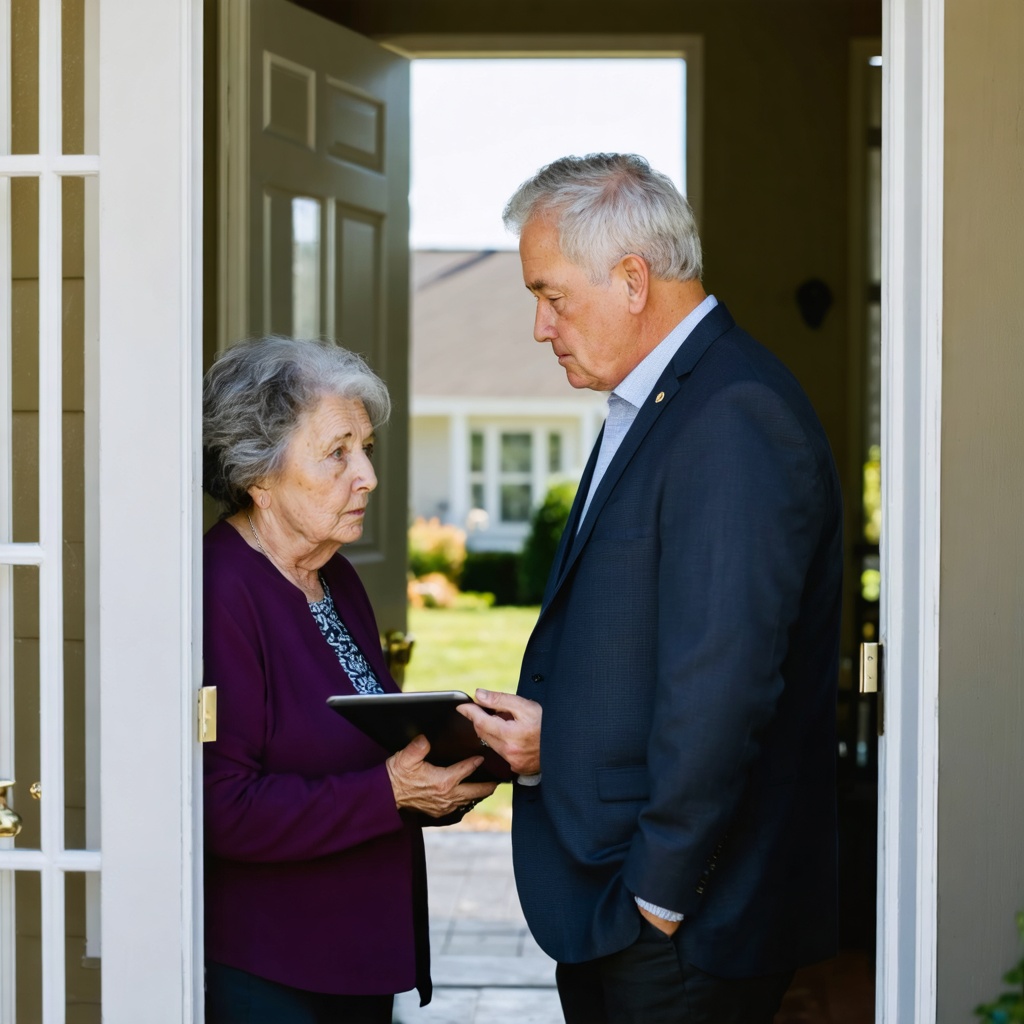 Image by RM AI
The Ultimatum That Felt Like a Slap in the Face
'Then you can't afford to live in this neighborhood.' The words hung in the air between us, sharp and cold. I'd lived in this house since Beth was probably in elementary school, yet here she was, suggesting we didn't belong anymore.
Before I could formulate a response that wouldn't involve words my mother taught me never to use, Beth continued with businesslike efficiency. 'You have five business days to bring the hedge into compliance.
After that, the HOA will be forced to take enforcement action.' She handed me a formal notice, printed on heavy cardstock with the HOA logo embossed at the top. 'The bylaws are quite clear about the escalating consequences for non-compliance.' I took the paper numbly, noticing how my hand trembled slightly against her steady one.
'My husband is fighting for his life,' I said quietly. 'Surely there can be some compassion here.' Beth's smile didn't reach her eyes as she stepped back from the door.
'Rules are rules, Mrs. Peterson.
They apply equally to everyone, regardless of personal circumstances. That's what makes them fair.' With that, she turned and walked back to her Range Rover, her heels clicking precisely on our cracked concrete walkway.
I closed the door and leaned against it, the notice crumpled in my fist, wondering how I would tell Marty about this new stress.
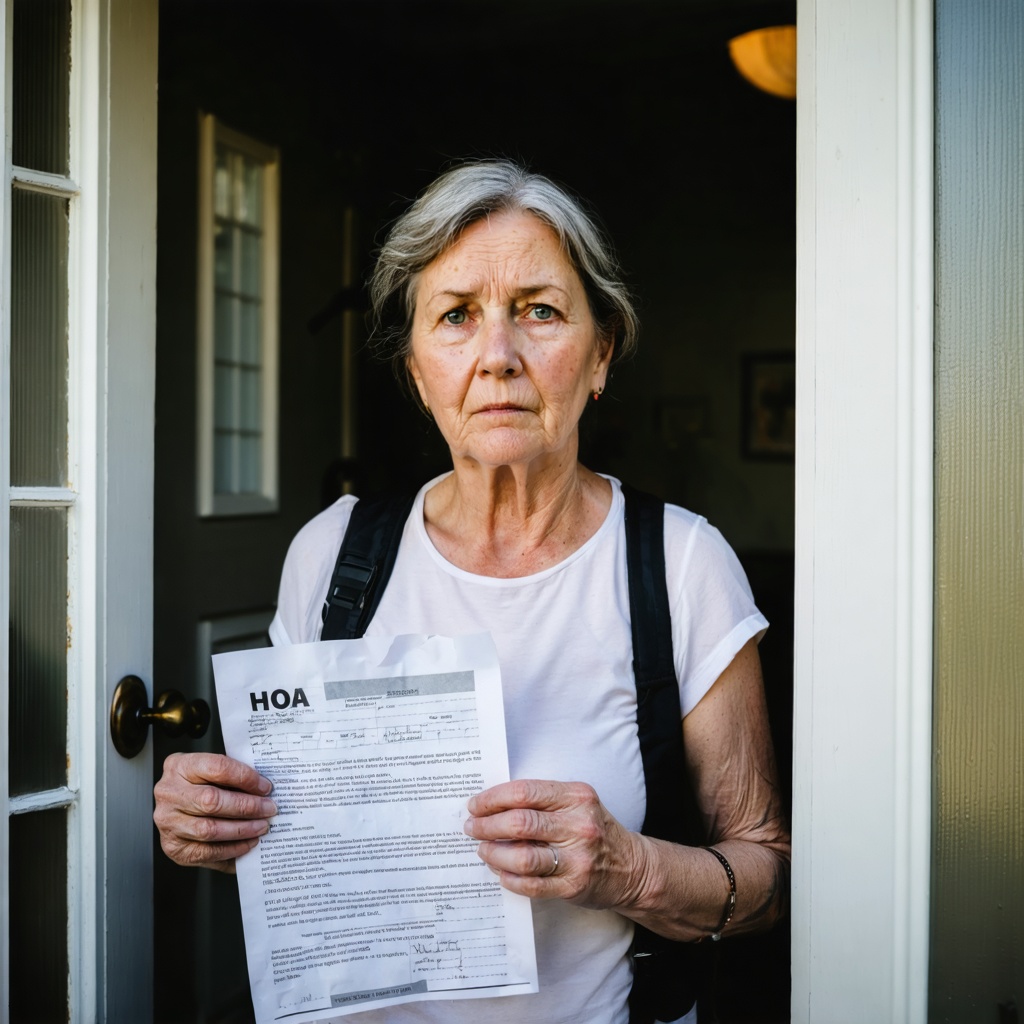 Image by RM AI
The Night Everything Fell Apart
That evening, I tried to keep the HOA situation from Marty. He was having one of his better days—he'd managed to eat half a bowl of soup and was sitting up in his favorite recliner watching a baseball game.
I didn't want to burden him with Beth's visit. But Marty had always been able to read me like a book, even after forty-three years of marriage.
'What's wrong, Ellie?' he asked during a commercial break, his once-robust voice now thin. 'You're doing that thing with your eyebrows.' I sighed and told him about Beth and the hedge, trying to downplay it as a minor annoyance.
Marty listened, his face growing increasingly flushed. 'I'll take care of it tomorrow,' he insisted, attempting to push himself up from the chair.
'It's just a hedge. I can still handle a pair of clippers.' I tried to stop him, to tell him it could wait, but Marty had always been stubborn about taking care of our home.
He stood too quickly, swayed for a moment, and then collapsed. The sound of his body hitting our hardwood floor is something I'll never forget—a dull thud followed by absolute silence.
I called 911 with shaking hands, watching helplessly as the color drained from my husband's face. The paramedics arrived within minutes, but those minutes stretched like hours as I knelt beside him, whispering that help was coming, that he would be okay, that the damn hedge didn't matter.
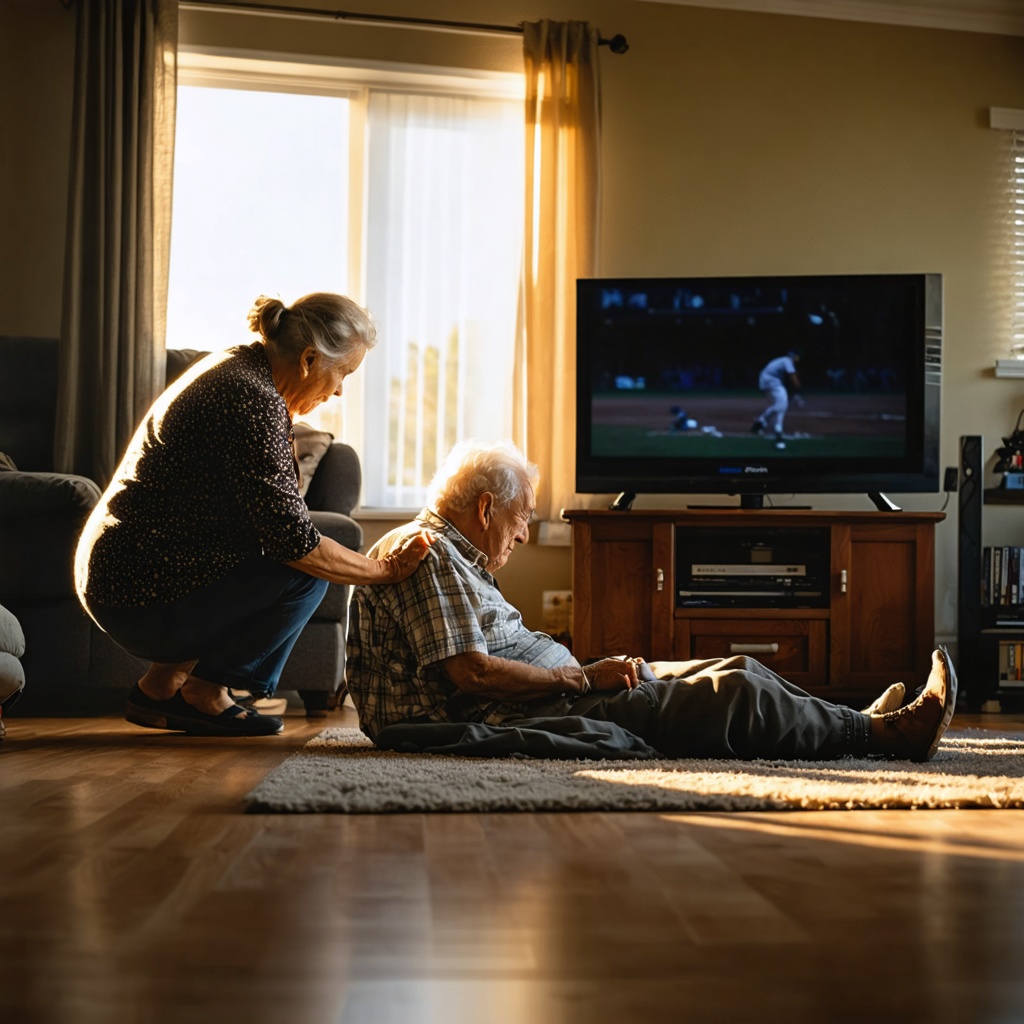 Image by RM AI
The Hospital Vigil That Ended in Heartbreak
The emergency room was a blur of harsh fluorescent lights, beeping machines, and medical terminology that washed over me like a foreign language. The doctors explained that Marty had suffered a serious fall, complicated by his weakened condition from the cancer and treatments.
They admitted him immediately, and I spent that night in an uncomfortable chair beside his hospital bed, holding his hand while he drifted in and out of consciousness. By morning, his breathing had become labored, and more specialists were called in.
For three days, I barely left his side, surviving on vending machine coffee and sympathy sandwiches brought by nurses. I called our son Roger, who booked the first flight he could from Seattle.
The doctors spoke in increasingly grave tones about organ failure and complications. On the third day, with Roger's flight still two hours from landing, Marty opened his eyes one last time.
'Ellie,' he whispered, his voice barely audible over the machines. 'You were the best part of my life.' He squeezed my hand with surprising strength, and then he was gone.
Just like that. Forty-three years of marriage, four decades in our home, countless memories—all culminating in this sterile hospital room with its mechanical symphony suddenly silenced.
I sat there holding his hand until it grew cold, completely forgetting about hedges and home associations and five-day notices.
 National Cancer Institute on Unsplash
Planning a Funeral While Drowning in Grief
Roger arrived at the hospital too late to say goodbye to his father, but just in time to help his mother navigate the bewildering aftermath of death. My practical, level-headed son took charge of the immediate details—speaking with the hospital staff, contacting the funeral home, driving me back to a house that suddenly felt cavernous without Marty's presence.
The next few days passed in a fog of grief punctuated by necessary decisions. Burial or cremation?
Which funeral home? What would Marty have wanted for his service?
Roger handled the calls to family and friends while I sat at our kitchen table, surrounded by sympathy cards that arrived with increasing frequency. I found myself staring at Marty's favorite coffee mug still sitting in the dish drainer, unable to put it away because it felt too final.
Roger gently guided me through selecting a casket, choosing readings for the service, and finding a suit for Marty that didn't hang too loosely on his cancer-thinned frame. We decided on a morning service at the small Methodist church where we'd been members for thirty years, followed by a graveside ceremony at Oakwood Cemetery.
In the midst of this emotional hurricane, Beth's hedge ultimatum completely slipped my mind. The five business days came and went while I was choosing hymns and writing an obituary for the man who had been my world since I was twenty-two years old.
 Image by RM AI
The Morning That Added Insult to Injury
The day of Marty's funeral dawned with the kind of perfect blue sky that seemed almost offensive in its beauty. Roger had helped me pick out a black dress that Marty had always liked, and I'd managed to style my hair the way my husband preferred it—'loose around your shoulders, Ellie, so I can see those silver streaks I love.' We were having a quiet cup of coffee, steeling ourselves for the emotional day ahead, when a metallic clanking sound from outside broke the morning stillness.
At first, I thought it might be the garbage collectors, though it wasn't our usual pickup day. The noise continued, growing more insistent.
'What on earth is that?' Roger asked, moving toward the front window. His sudden intake of breath made me join him.
There, in our driveway, were two figures hunched beside my ten-year-old Buick. Even from a distance, I recognized Beth's distinctive blonde bob.
Beside her was a tall man I assumed was her husband Dean, whom I'd seen at neighborhood gatherings but never spoken to. He was attaching something to my front wheel—something bright yellow and unmistakable.
A boot. They were putting a wheel clamp on my car.
On the morning of my husband's funeral.
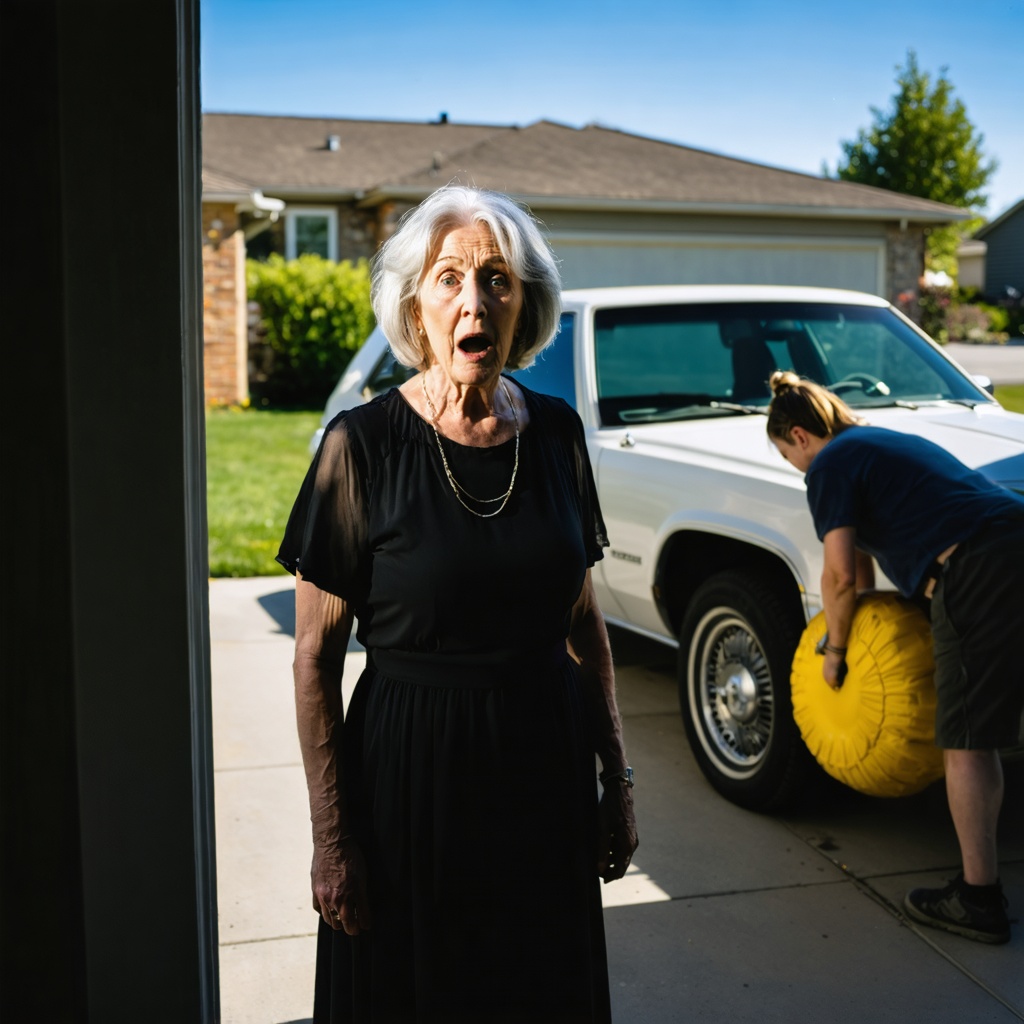 Image by RM AI
The Confrontation That Left Me Speechless
Roger was out the door before I could stop him, with me hobbling behind as quickly as my bad hip would allow. 'What the hell do you think you're doing?' my normally composed son demanded, his voice carrying across our front yard.
Beth straightened up, clipboard in hand, looking completely unruffled in a tailored pantsuit despite the early hour. 'Enforcing HOA regulations,' she replied coolly.
'Your mother was given proper notice about the hedge violation.' I finally caught up, my grief momentarily displaced by disbelief. 'Beth, my husband died three days ago,' I said, my voice breaking.
'We're on our way to his funeral this morning.' I gestured toward the house, where Marty's framed photograph sat by the front door, ready to be displayed at the service. For just a moment, something flickered across Beth's perfectly made-up face—perhaps a flash of doubt or even shame.
But it vanished so quickly I might have imagined it. Dean at least had the decency to look uncomfortable, shifting his weight and avoiding eye contact.
'I told you there would be consequences if you didn't trim your hedge,' Beth said, her voice slightly less certain but still firm. 'The bylaws don't make exceptions for personal circumstances.'
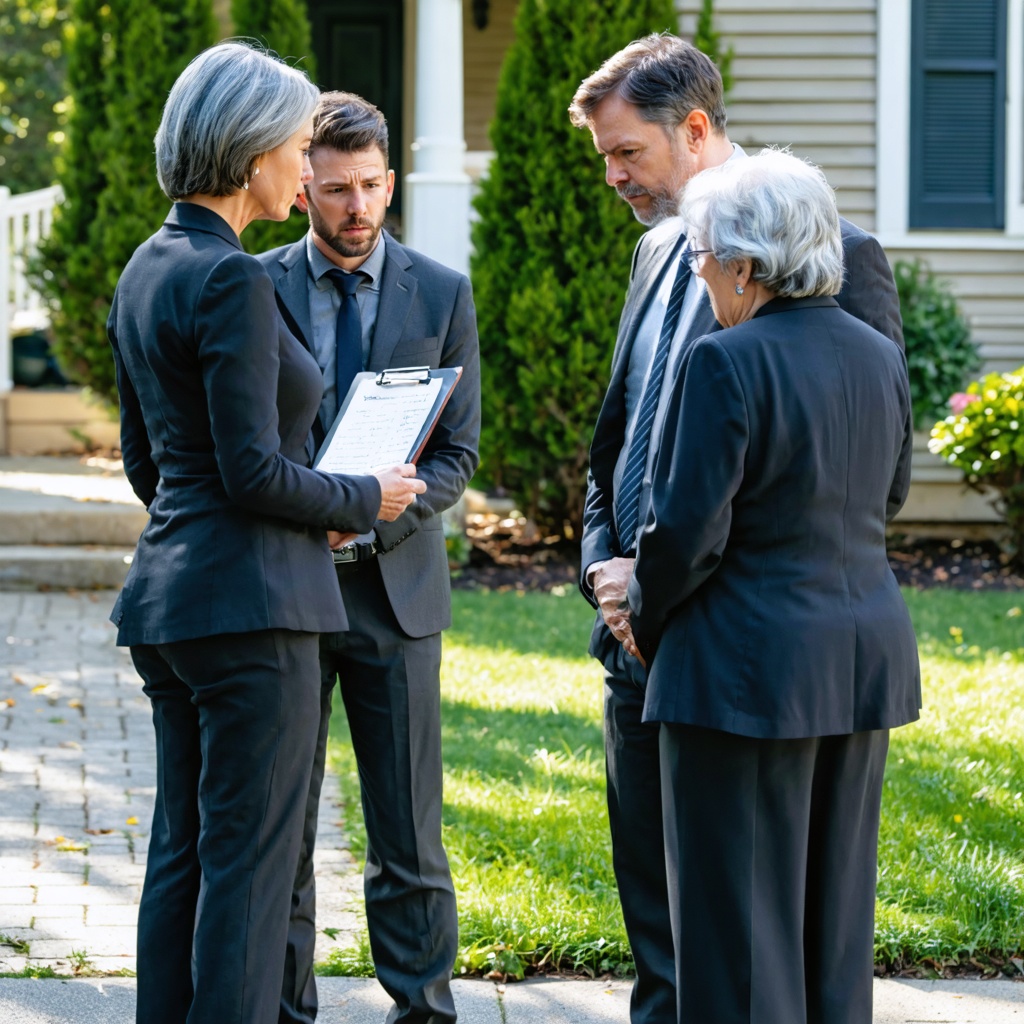 Image by RM AI
When 'Everyone Always Has an Excuse' Became the Cruelest Words
'My father just died,' Roger said, his voice dangerously quiet. 'We're burying him today.
Surely you can remove the boot and we can deal with this tomorrow.' Beth sighed, the sound dripping with exaggerated patience, as if we were being particularly difficult children. 'Everyone always has an excuse,' she said, checking something off on her clipboard.
'If we made exceptions, we'd have to make them for everyone. That's not how rules work.' I felt as if I'd been slapped.
Everyone always has an excuse? My husband of forty-three years was dead, his body lying in a funeral home waiting for us to arrive, and she was comparing this to common excuses for breaking HOA rules?
Roger took a step toward Beth, his hands clenched at his sides, and for a moment I feared what might happen. But my son has always had better control than his mother.
'Remove it,' he said simply. 'Now.' Beth took a step back, her expression hardening.
'I'm afraid I can't do that. The violation notice clearly stated the consequences.
The boot will remain until the hedge is brought into compliance and the enforcement fee is paid.' With that, she handed me another notice—this one detailing a $250 'enforcement action fee'—and walked back to her Range Rover with Dean trailing behind her.
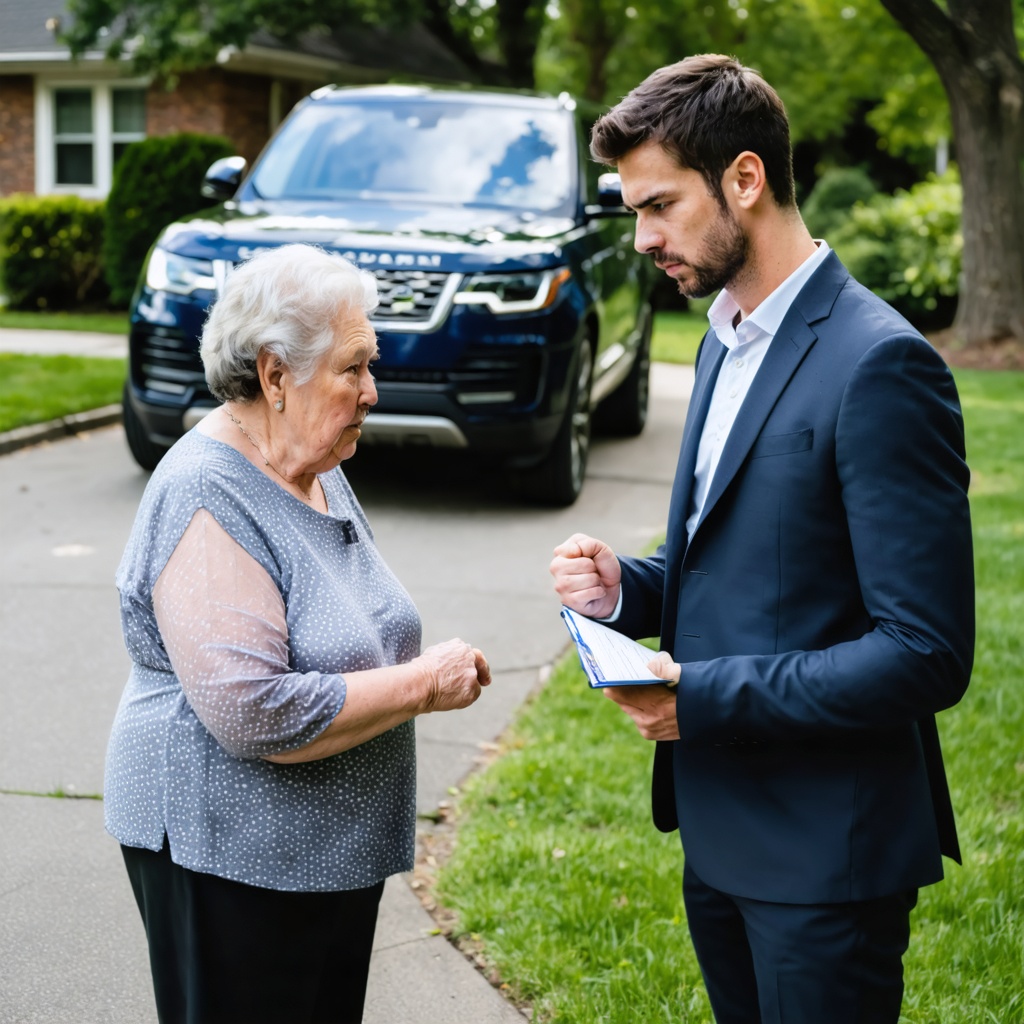 Image by RM AI
When Even the Police Won't Help You
As Beth's Range Rover disappeared down the street, Roger immediately pulled out his phone and called the police. I stood in our driveway, staring at the bright yellow boot on my car wheel, feeling utterly helpless.
The funeral home was expecting us in less than an hour. Guests would be arriving at the church.
And here we were, literally immobilized by three inches of hedge growth. Roger explained the situation to the dispatcher, his voice growing increasingly frustrated as the conversation continued.
When he finally hung up, his expression told me everything I needed to know. 'They said it's a civil matter, not criminal,' he reported, running a hand through his hair—a gesture so like his father's that it made my heart ache.
'Since the HOA bylaws we signed give them enforcement authority, including the right to immobilize vehicles for violations, there's nothing the police can do.' He kicked at a pebble on the driveway, sending it skittering across the concrete. 'The officer also mentioned that Beth Harrington is a well-known attorney in town who's represented the police union in contract negotiations.
Reading between the lines, they're not eager to get involved in a dispute with her.' I sank down onto our front step, the funeral notice still clutched in my hand, wondering how this day could possibly get any worse.
 Image by RM AI
The Bus Ride to My Husband's Funeral
With no other options and time ticking away, Roger quickly researched the public bus routes on his phone. There was a stop three blocks away, and if we hurried, we could catch the 9:15 bus that would get us within walking distance of the funeral home.
I changed from my heels to more practical shoes, and we set off at the fastest pace my hip would allow. The walk to the bus stop was excruciating, both physically and emotionally.
Here I was, a widow of three days, having to hurry through the neighborhood to catch public transportation to my husband's funeral. Neighbors driving by slowed down, their faces registering surprise at seeing Mrs.
Peterson and her son, dressed in funeral attire, hustling toward the bus stop. A few offered rides, but the bus was already approaching, and we waved them on with forced smiles.
The bus was crowded with morning commuters, and no one offered a seat to the elderly woman in black. Roger stood protectively beside me as I clutched the overhead rail, swaying with each stop and start, trying not to cry as I thought about how Marty would have been outraged by this indignity.
By the time we arrived at our stop, we were already fifteen minutes late. Roger helped me down the bus steps, and we hurried the final two blocks to the funeral home, arriving sweaty, disheveled, and visibly upset.
 Image by RM AI
Late to Say Goodbye to the Love of My Life
The funeral director's face registered polite concern as we rushed through the doors of Hartman's Funeral Home twenty minutes after the scheduled start time. 'Mrs.
Peterson, we were growing worried,' he murmured, guiding us toward the chapel where Marty's service was to be held. I could hear the minister's voice already intoning the opening prayers.
The double doors opened to reveal a room full of people who all turned simultaneously to look at us—the widow and son arriving late to their own loved one's funeral. The shame of it burned through my grief as Roger escorted me down the aisle to the reserved front row.
My sister-in-law Marion squeezed my hand as I sat down, whispering, 'What happened?' but I couldn't bring myself to explain. Not here, not now.
The minister, to his credit, smoothly incorporated our arrival into his remarks about life's unexpected challenges and continued with the service. But I couldn't focus on his words of comfort or the hymns that Marty had chosen.
All I could think about was that my final goodbye to my husband had been marred by Beth Harrington and her precious HOA rules. I hadn't even been able to have those last few quiet moments with Marty's casket that I'd been counting on.
Instead, I was thrust directly into the public ceremony, unprepared and uncentered.
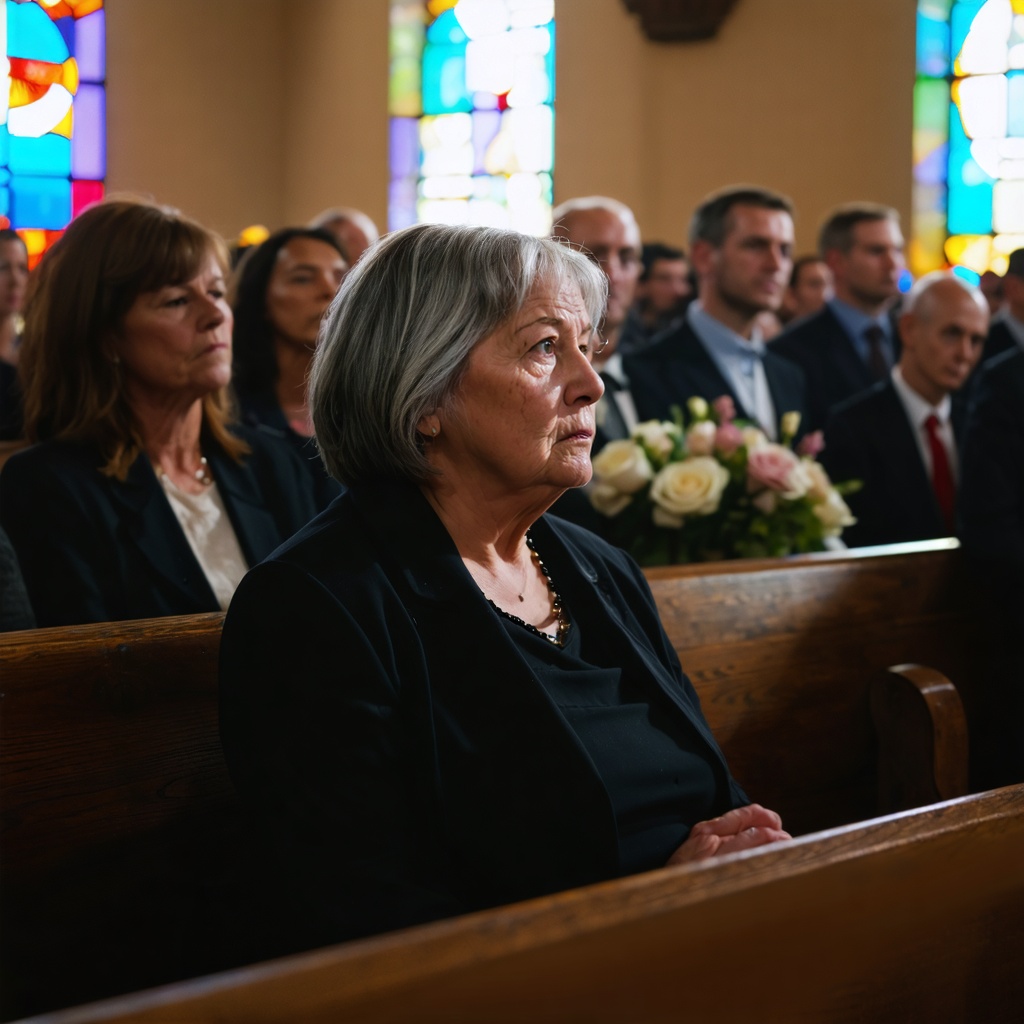 Image by RM AI
The Breakdown at the Cemetery That Changed Everything
After the church service, we formed a procession to the cemetery—friends and family offering rides so we wouldn't have to endure another bus journey. The graveside service was brief but beautiful, with the minister speaking about Marty's love for his garden and how he now rested in God's eternal garden.
As they lowered my husband's casket into the ground, something inside me finally broke. The tears I'd been holding back all morning came in a flood, and I found myself sobbing uncontrollably, my knees giving way beside the grave.
Roger caught me before I fell, his own tears streaming down his face. We clung to each other as Marty's friends and our family gathered around, a protective circle of shared grief.
When I could finally speak again, the words that came weren't about my forty-three years with Marty or how much I would miss him. Instead, what burst forth was the story of Beth Harrington and the wheel clamp, the indignity of having to take the bus to my husband's funeral, the cruelty of 'Everyone always has an excuse.' The words poured out between sobs, my anger and hurt mingling with my grief until I couldn't separate one from the other.
Roger held me tighter, and I felt his body stiffen with resolve.
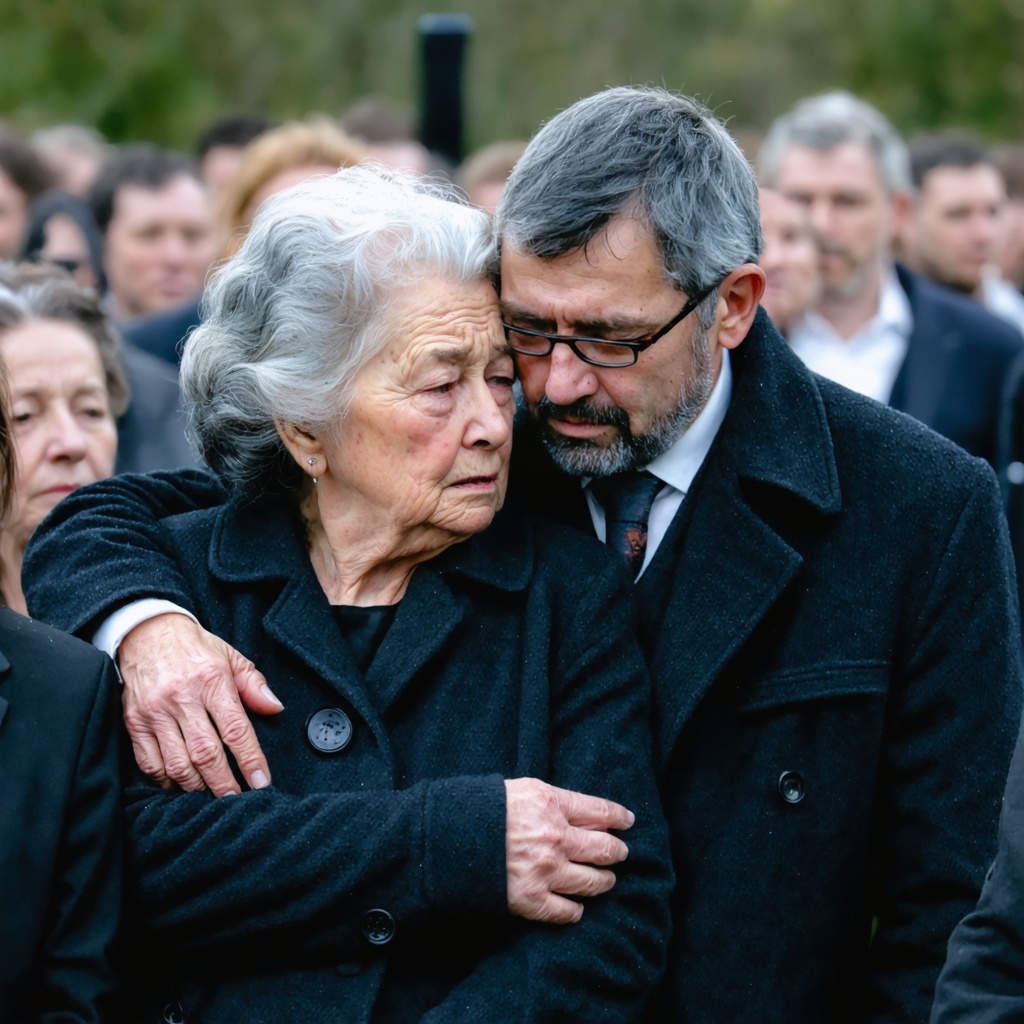 Image by RM AI
The Moment My Son Made a Solemn Vow
As the other mourners began to drift away toward their cars, murmuring in shocked disbelief at what they'd heard about Beth's actions, Roger and I remained by Marty's grave. The cemetery workers stood at a respectful distance, waiting to complete their work once we had left.
Roger helped me to a nearby bench beneath an old oak tree, the same kind of tree under which Marty had proposed to me all those years ago. My son's face had transformed from grief-stricken to determined, his jaw set in a way that reminded me powerfully of his father.
'I'm staying for an extra week,' he announced, his tone brooking no argument. 'I already have the vacation time saved up.' I started to protest that he had his own life to get back to in Seattle, his job as an IT project manager, his girlfriend Melissa who couldn't make it to the funeral due to a work commitment.
But Roger shook his head firmly. 'This isn't just about helping you adjust, Mom.
This is about making things right.' His eyes, so like Marty's, narrowed slightly. 'Beth Harrington needs to learn that she can't treat people this way.
Especially not my mother.' I recognized the expression on his face—it was the same one Marty would get when he felt an injustice needed to be corrected.

The Promise of Sweet Revenge
'What are you going to do?' I asked, both concerned and, if I'm being honest, a little intrigued. Roger had always been the peacemaker in the family, the one who mediated disputes between his more hot-headed father and equally stubborn mother.
To see him so set on retribution was unusual. 'I've got a plan,' he said, helping me to my feet as we finally prepared to leave Marty behind.
'Wait and see.' The drive back to the house was quiet, both of us lost in our thoughts. Friends and family would be arriving soon with casseroles and cakes, offering condolences and sharing memories of Marty.
The wheel clamp was still visible on my car as we pulled into the driveway in my neighbor Alice's sedan. Roger eyed it with distaste but said nothing.
That evening, after the last of the visitors had left and the house was quiet again, I found Roger at the dining room table with his laptop open, intently reading something. 'The HOA bylaws,' he explained when I asked.
'Every organization has its vulnerabilities, Mom. Even Beth Harrington's precious homeowner's association.' He smiled then, a smile that didn't quite reach his eyes.
'This is going to be big.'
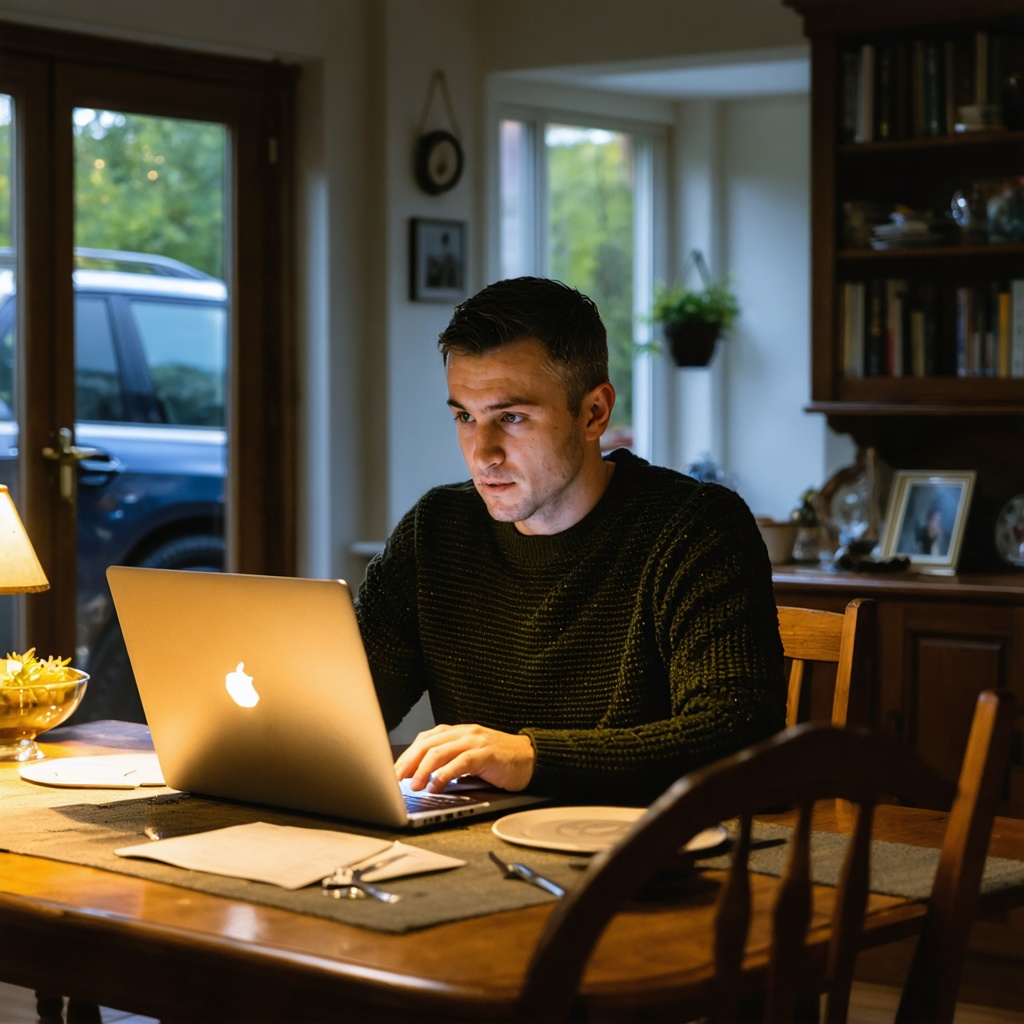 Image by RM AI
The Mysterious Disappearances of My Son
For the next three days, Roger was like a phantom in the house. He'd be there at breakfast, helping me make toast and coffee, talking gently about arrangements for Marty's things and whether I might want to consider grief counseling.
But by 9 AM, he'd be gone, taking my spare car key and disappearing for hours at a time. He'd return briefly for lunch, his expression carefully neutral but with a gleam of satisfaction in his eyes that grew stronger each day.
Then he'd be off again until dinner time. I tried not to pry, but curiosity eventually got the better of me.
'Roger, what exactly are you doing all day?' I asked on the third evening as we washed dishes together—me washing, him drying, just like he and Marty used to do. He handed me a glass to put away, his smile enigmatic.
'Building a case, Mom. And building support.' When I pressed for details, he simply shook his head.
'The less you know right now, the better. Plausible deniability and all that.' He winked, reminding me so much of Marty in that moment that my heart squeezed painfully in my chest.
'Just trust me. Beth Harrington isn't going to know what hit her.' I should have been concerned about whatever my son was planning, should have cautioned him against anything that might cause legal problems.
Instead, I found myself nodding, a small flame of anticipation warming my grief-chilled heart.
 Image by RM AI
The Mysterious Invitation That Arrived in My Mailbox
On the fourth day after the funeral, I was sorting through the mountain of mail that had accumulated—bills, condolence cards, the usual advertisements—when I came across an official-looking envelope with the Oakwood Estates HOA logo in the corner. My first thought was that it was another violation notice or perhaps a demand for payment of the 'enforcement fee' for the wheel clamp (which Roger had somehow managed to remove, though he refused to tell me how).
With trembling fingers, I opened the envelope, bracing myself for more bad news. Instead, I found a formal invitation to an emergency HOA meeting at the community center that evening at 7 PM.
The stated purpose was 'Discussion of Leadership and Bylaw Enforcement Practices.' I was reading it for the third time, trying to decipher what it might mean, when Roger came in from another of his mysterious errands. He glanced at the paper in my hand and broke into a genuine smile—the first I'd seen since before Marty's death.
'Ah, you got yours too,' he said, pulling an identical envelope from his pocket. 'We should probably get there early to get good seats.' There was something in his tone—a barely suppressed excitement—that made me realize this meeting was somehow connected to his secretive activities of the past few days.
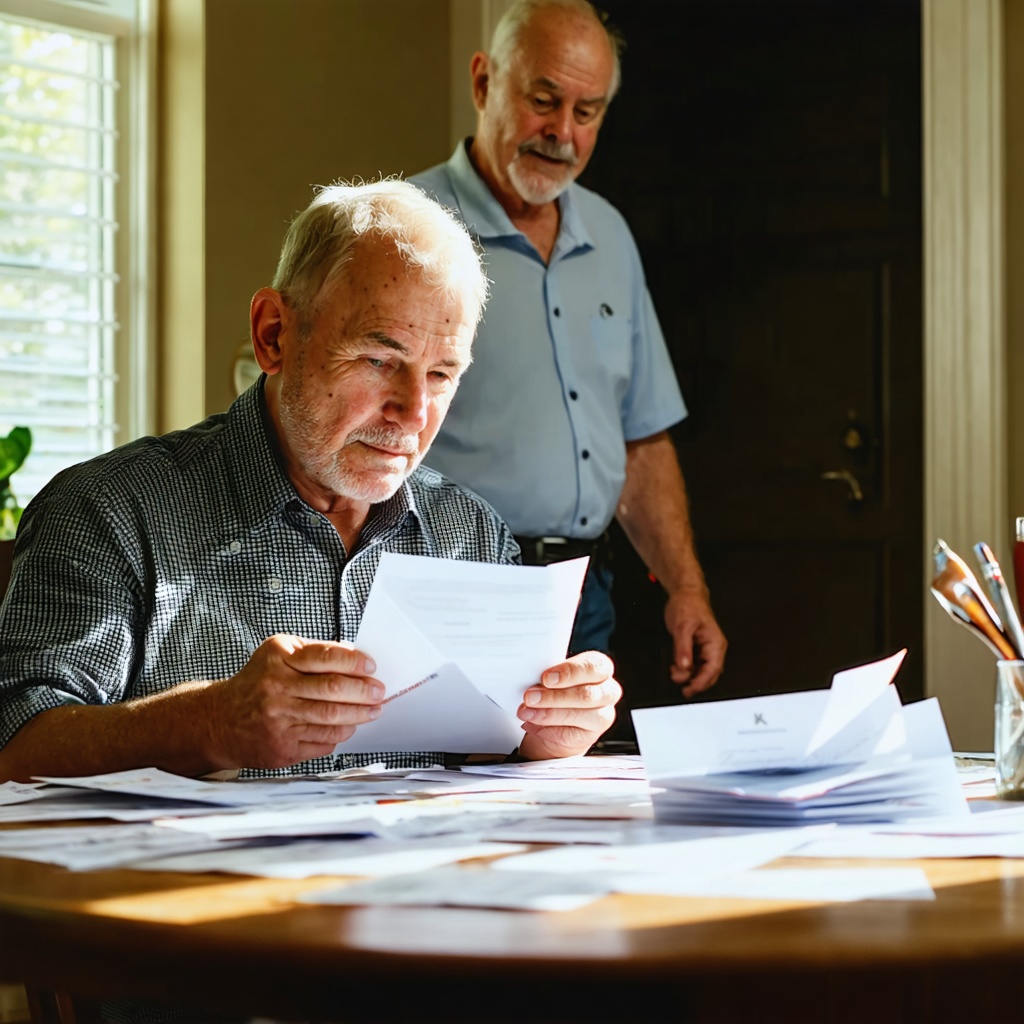 Image by RM AI
Preparing for a Showdown at the Community Center
As evening approached, I found myself growing increasingly nervous about the meeting. What exactly had Roger been planning?
Would Beth be there? Would there be a confrontation?
I changed my outfit three times, finally settling on a simple blue dress that Marty had always said brought out my eyes. Roger, meanwhile, was remarkably calm, organizing a folder of papers and checking something on his tablet.
'Should I be worried?' I finally asked him as we prepared to leave. He looked up, his expression softening.
'Not at all, Mom. Everything's in order.
Just follow my lead and remember—you've lived in this neighborhood longer than almost anyone. You have friends here.
More than you realize.' The community center was only a few blocks away, and the evening was mild, so we decided to walk. As we approached the building, I was astonished to see the parking lot completely full, with cars lining both sides of the adjacent streets.
'Looks like we've got a good turnout,' Roger remarked casually, but I could hear the satisfaction in his voice. Through the large windows, I could see that the meeting room was packed, with people standing along the walls.
Many were neighbors I'd known for years but hadn't spoken to recently as Marty's illness had increasingly confined us to our home.
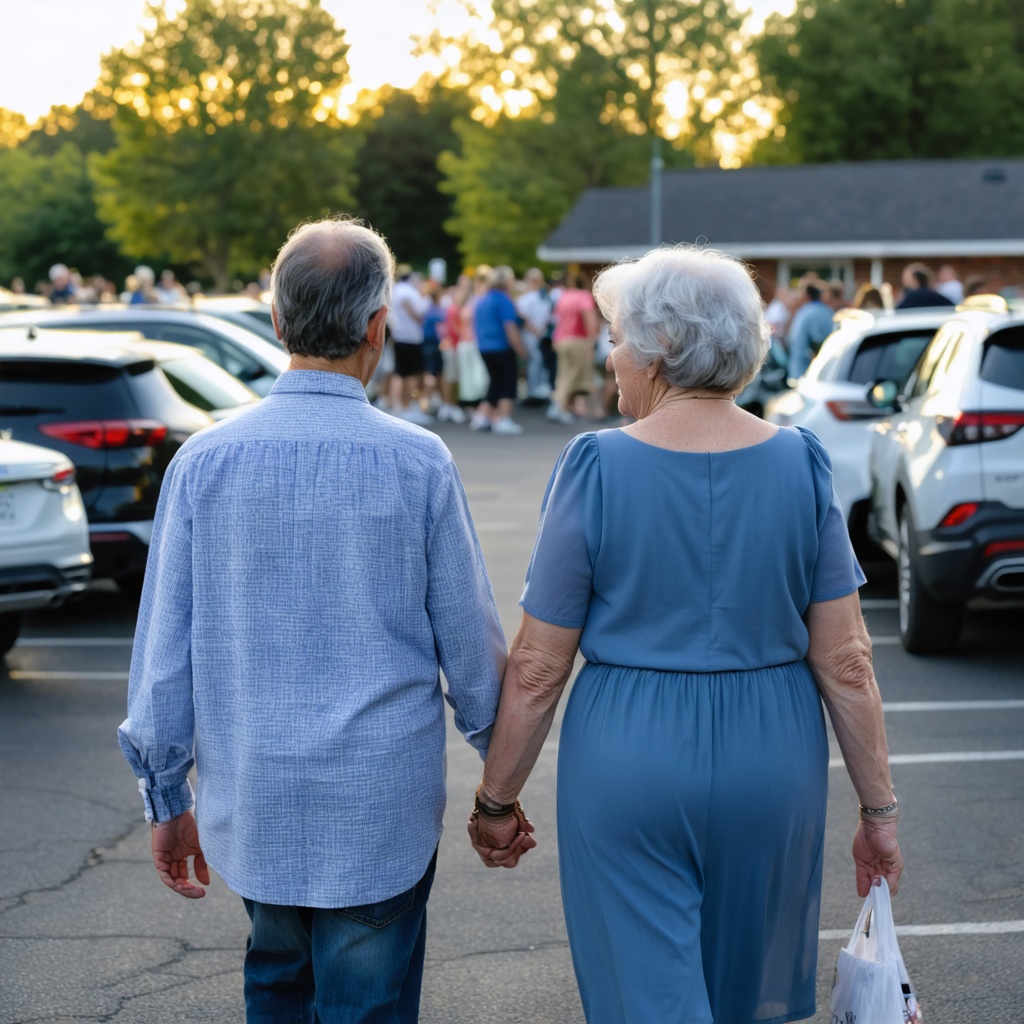 Image by RM AI
The Community Center Packed with Familiar Faces
Roger held the door for me as we entered the community center, and I was immediately struck by the buzz of conversation that filled the room. Neighbors I hadn't seen in months greeted me warmly, many offering belated condolences about Marty.
Alice from across the street hurried over to hug me, whispering, 'We're all here for you, Ellen.' Frank and Louise Miller, who had lived three doors down from us for thirty years, made space for us in the second row. As I looked around, I realized that nearly every household in the neighborhood was represented—from the original homeowners like us to the younger families who had moved in more recently.
Even Mrs. Abernathy, who must have been close to ninety and rarely left her house anymore, sat in her wheelchair near the front.
The only conspicuous absences were Beth and Dean Harrington, though their usual supporters—the residents of 'mansion row'—were clustered together near the back, looking uncomfortable. At precisely 7 PM, the vice president of the HOA, a mild-mannered high school teacher named Tom Wilkins, called the meeting to order.
'We have an unusual agenda tonight,' he announced, glancing at his notes. 'As many of you know, there have been some concerns raised about the current leadership of our association.'
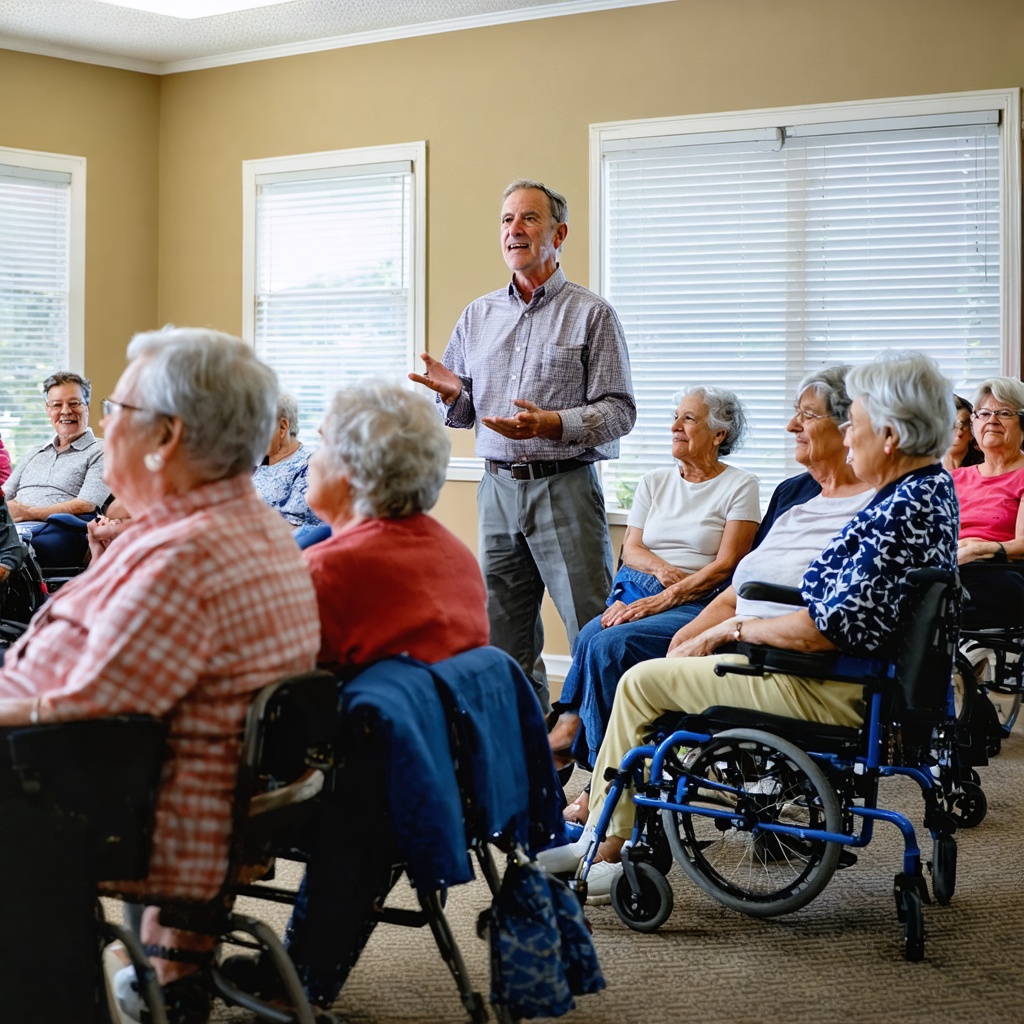 Image by RM AI
The Moment My Son Took the Floor
Tom had barely finished his introduction when the community center doors swung open and Beth and Dean Harrington made their entrance. Beth was dressed as if for court in a tailored suit, her expression a mixture of annoyance and confusion as she took in the unexpectedly large crowd.
She made her way to the front, Dean following in her wake, and took her place at the head table. 'I wasn't informed of the specific nature of this emergency meeting,' she said crisply into the microphone.
'Perhaps someone would care to explain?' There was a moment of awkward silence before Roger stood up beside me. 'I'd be happy to explain,' he said, his voice clear and confident.
All eyes turned to my son as he walked to the front of the room, carrying his folder of papers. I held my breath, suddenly nervous about what might happen next.
Roger introduced himself as Marty Peterson's son and my advocate, then launched into what I can only describe as a methodically prepared presentation. 'Over the past three days,' he began, 'I've had the opportunity to speak with many of you about your experiences with our current HOA leadership.
I've also taken the time to thoroughly review the association bylaws, particularly those regarding leadership removal procedures.' Beth's expression shifted from confusion to alarm as Roger continued.
 Image by RM AI
The Shocking Revelation of Beth's Reign of Terror
What followed was nothing short of astonishing. Roger had compiled testimonials from dozens of neighbors who had experienced similar treatment from Beth—elderly residents given violations for garbage cans left out an hour too long, a single mother fined because her children's bicycles were visible from the street, a family dealing with a medical crisis penalized for Christmas decorations that remained up two days past the January 5th deadline.
One by one, neighbors stood to share their stories, many speaking directly to Beth, whose face grew increasingly flushed. Mrs.
Abernathy, her voice quavering with age but strong with conviction, described how Beth had threatened to place a lien on her home over a faded mailbox that her arthritic hands couldn't manage to repaint. Frank Miller recounted how his request for a reasonable accommodation for his wife's wheelchair ramp had been denied three times on 'aesthetic grounds.' A young couple explained how they'd been fined for planting native wildflowers instead of the 'approved' non-native ornamentals, despite the environmental benefits.
With each testimony, the mood in the room grew more unified in its disapproval. Beth attempted to interject several times, citing specific bylaw numbers and the importance of 'community standards,' but her words were met with murmurs of disagreement.
Dean sat beside her, looking increasingly uncomfortable, occasionally whispering something in her ear that she would dismiss with a sharp shake of her head.
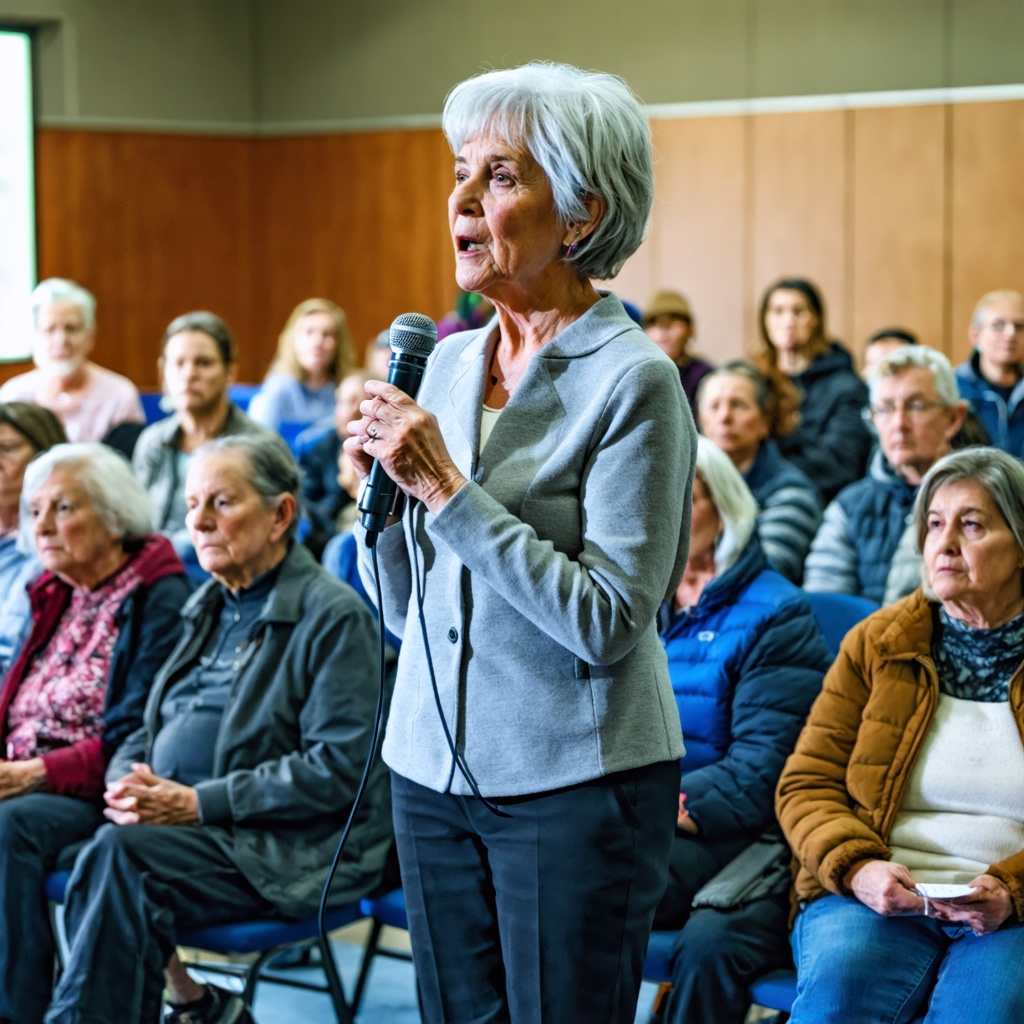 Image by RM AI
The Bylaws That Became Beth's Downfall
After the testimonials, Roger moved to the next phase of his presentation. 'While reviewing the HOA bylaws,' he explained, 'I discovered something interesting in Article 12, Section 3.' He projected a page from the bylaws onto the screen at the front of the room, highlighting a specific paragraph.
'This section states that the HOA president can be removed from office by a vote of no confidence if a petition signed by at least one hundred homeowners is presented to the board.' A murmur ran through the crowd as Roger continued. 'Our neighborhood has one hundred and thirty-eight homes.
Over the past three days, I've spoken with residents from one hundred and fifteen of those homes.' With a dramatic flourish that would have made his father proud, Roger produced a thick stack of papers from his folder. 'I have here one hundred and twelve signatures calling for the immediate removal of Beth Harrington as HOA president on grounds of abuse of power, failure to show reasonable accommodation, and actions detrimental to community well-being.' Beth's face had gone from flushed to pale as Roger handed the petition to Tom Wilkins.
'This is absurd,' she sputtered into the microphone. 'You can't possibly have verified all those signatures.
This is clearly a vindictive action based on personal grievance.' Roger remained calm, his voice steady. 'Every signature has been witnessed and dated according to bylaw requirements.
And while my mother's situation may have brought this issue to light, the overwhelming response suggests this is far from a personal grievance.'
The Vote That Changed Our Neighborhood Forever
Tom Wilkins reviewed the petition carefully, conferring quietly with the HOA secretary and treasurer. The room was tense with anticipation as we waited for his verdict.
Finally, he returned to the microphone. 'The petition appears to be in order,' he announced.
'According to our bylaws, we must now hold an immediate vote on the motion to remove Beth Harrington from the position of HOA president.' Beth stood up, her composure cracking. 'This is completely unprecedented!
I demand time to prepare a defense and review these so-called testimonials.' Tom consulted the bylaws again before responding. 'The procedure is quite clear, Beth.
Once a valid petition is presented, an immediate vote must be held.' He turned to address the room. 'All those in favor of removing Beth Harrington from the position of HOA president, please raise your hand.' The response was overwhelming.
Hands shot up throughout the room—old neighbors and new, young families and retirees, even some of the residents from mansion row who had previously supported Beth. Tom didn't need to count;
the visual was enough. 'The motion carries by clear majority,' he declared.
'Beth Harrington is hereby removed as president of the Oakwood Estates Homeowners Association, effective immediately.' A cheer erupted from the crowd, startling in its intensity. Beth stood frozen for a moment, her expression a mixture of disbelief and fury.
Beth's Dramatic Exit and the Aftermath
For a moment, it seemed Beth might challenge the vote. She leaned toward the microphone, her knuckles white as she gripped the edge of the table.
But Dean placed a restraining hand on her arm, whispering something urgent in her ear. Whatever he said must have made an impact, because Beth straightened up, smoothed her jacket, and gathered her papers with deliberate precision.
'This community clearly no longer values proper standards and rule enforcement,' she announced, her voice tight with controlled anger. 'I've given countless hours to maintaining the quality and property values of Oakwood Estates, often at the expense of my own professional obligations.
You'll soon discover what happens when rules are treated as optional suggestions.' With that parting shot, she marched down the center aisle toward the exit, Dean trailing behind her. The room fell silent as they passed, the collective breath held until the doors swung shut behind them.
Then a spontaneous round of applause broke out, growing in volume until it filled the community center. Neighbors were hugging each other, some wiping away tears of relief.
I sat in my chair, stunned by the sudden turn of events, watching as Roger accepted handshakes and back-slaps from people I'd known for decades. It was as if a weight had been lifted from the entire neighborhood—a weight I hadn't fully realized was there until it was gone.

An Unexpected Nomination That Left Me Speechless
As the celebration began to quiet down, Tom Wilkins called the meeting back to order. 'According to the bylaws,' he explained, 'when a president is removed mid-term, we must immediately elect an interim president to serve until the next regular election cycle.' He looked around the room.
'Do we have any nominations?' I was still processing everything that had happened when I heard Alice's voice ring out clearly: 'I nominate Ellen Peterson.' My head snapped up in surprise as several voices immediately seconded the nomination.
Roger was beaming at me from the front of the room, and I realized with a start that this had been part of his plan all along. Before I could formulate a response, Frank Miller stood up.
'I've known Ellen and Marty for thirty years,' he said, his voice thick with emotion. 'They've always been the heart of this neighborhood—the first to welcome new families, the first to offer help when someone was in need.
Ellen knows what community really means.' Mrs. Abernathy's wavering voice joined in:
'Ellen brought me soup every Wednesday for a month when I broke my hip last year. Never mentioned the HOA once!' A ripple of appreciative laughter ran through the crowd.
More neighbors stood to share stories—how Marty had helped shovel driveways after snowstorms, how I'd organized meal trains for new mothers, how our home had been a gathering place for neighborhood children on Halloween for decades.
 Image by RM AI
From Grieving Widow to Community Leader
I found myself being gently but firmly escorted to the front of the room, my protests waved away by well-meaning neighbors. Roger stood beside me, his hand supportive on my elbow.
'Mom,' he whispered, 'you can do this. The neighborhood needs someone who understands what community really means.' Tom Wilkins smiled encouragingly as he asked, 'Are there any other nominations?' The room remained silent.
'In that case,' he continued, 'all those in favor of Ellen Peterson serving as interim HOA president, please raise your hands.' Once again, a forest of hands rose throughout the room. 'The motion carries unanimously,' Tom announced.
'Congratulations, Madam President.' Someone pressed the gavel into my hand as applause erupted again. I stood there, overwhelmed by the sudden turn of events.
Just a week ago, I had been a grieving widow being harassed over three inches of hedge growth. Now I was standing before my neighbors as their chosen leader.
When the applause finally died down, I knew I needed to say something. My throat tight with emotion, I leaned toward the microphone.
'I'm... honored by your trust,' I began hesitantly.
'Marty and I always believed that a neighborhood should be a community first and foremost—a place where people look out for each other, especially in difficult times.' I paused, gathering my thoughts. 'I promise to lead with compassion and common sense.
And I can absolutely guarantee one thing—' I smiled, feeling a weight lift from my shoulders, '—I will never, ever put a wheel clamp on anyone's car!'
 Image by RM AI
The First Order of Business: Compassion Over Compliance
The laughter and applause that followed my promise about wheel clamps warmed my heart in a way I hadn't experienced since before Marty's diagnosis. As the meeting transitioned to other business, I found myself seated at the head table between Tom and the HOA treasurer, Sarah Kim.
'We should probably address some immediate concerns,' Tom suggested quietly. 'There are several outstanding violation notices that Beth issued in her last weeks as president.' Sarah slid a folder toward me containing at least two dozen violation notices, many for minor infractions similar to my hedge situation.
I flipped through them slowly, recognizing many of the names—the Johnsons, whose son was deployed overseas; the Garcias, who had just welcomed premature twins;
the elderly Nakamuras, who were both dealing with health issues. Each notice threatened escalating consequences for non-compliance within rigid timeframes.
I closed the folder and looked up at the expectant faces of my neighbors. 'My first act as president,' I announced, 'will be to suspend all current violation notices pending review by a newly formed Neighborhood Assistance Committee.' I glanced at Roger, who nodded encouragingly.
'This committee will work with homeowners facing hardships to find community-based solutions rather than punitive measures. Sometimes a neighbor with a hedge trimmer is better than a fine or a wheel clamp.'
 Image by RM AI
A New Dawn for Oakwood Estates
As the meeting concluded and neighbors lingered to chat, I found myself surrounded by people offering congratulations and support. Mrs.
Abernathy wheeled over to pat my hand. 'You'll do just fine, dear,' she assured me.
'Just remember what neighborhoods used to be like before all these fancy rules.' Young parents I barely knew approached to introduce themselves, many expressing relief at the change in leadership. 'We were actually considering moving,' one mother confided.
'The stress of constant violation notices was too much with three small children.' Roger stood nearby, chatting with Tom about the technical aspects of the HOA website and how it could be improved to facilitate better communication. I caught his eye and mouthed 'thank you,' receiving a wink in return.
By the time we walked home in the gentle evening air, I felt something I hadn't experienced since Marty's diagnosis—hope. The grief was still there, a constant companion that I knew would never fully leave me.
But alongside it now was a sense of purpose, a reason to get up each morning beyond simply surviving another day without my husband. As we reached our front door, I paused to look at our hedge—still three inches too tall according to Beth's precious bylaws.
'I think I'll trim it tomorrow,' I said to Roger. 'Not because of any rule, but because Marty would want it to look nice.'
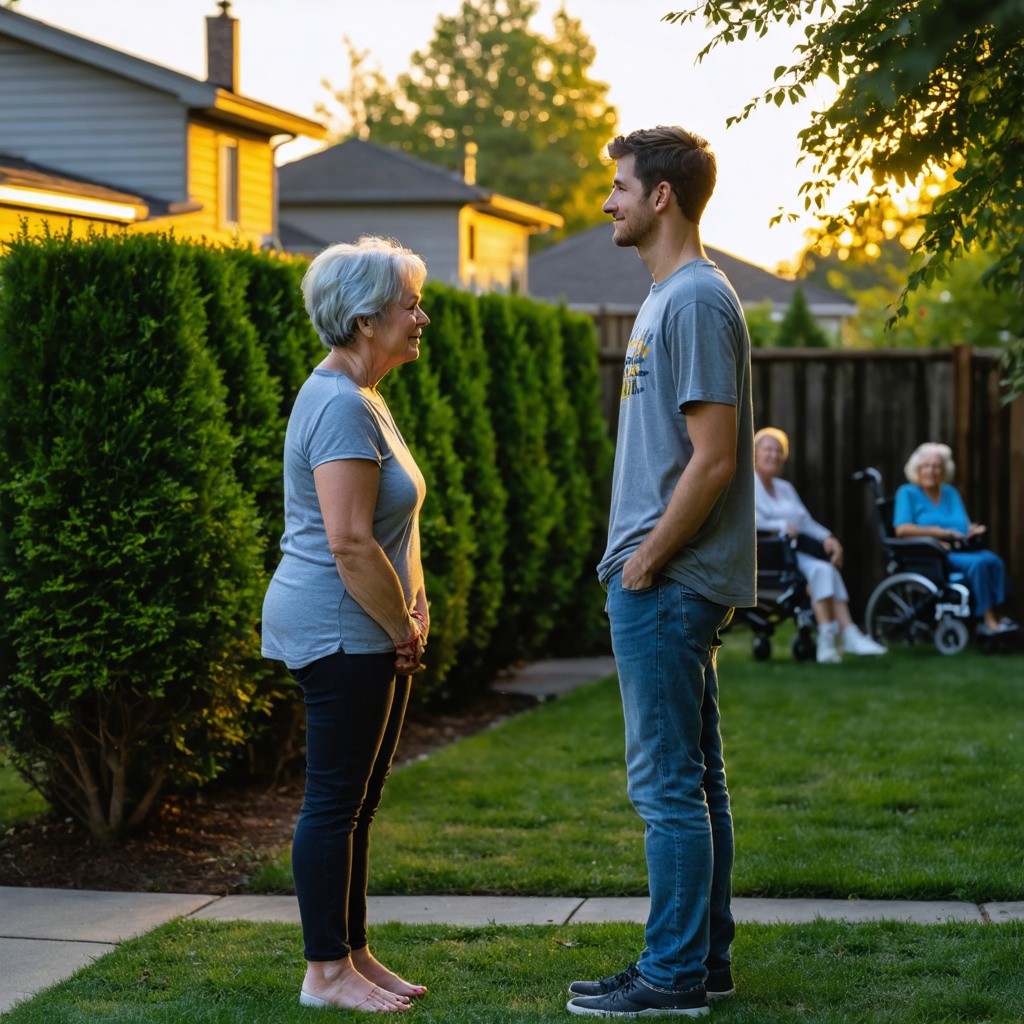 Image by RM AI
Roger's Return to Seattle and My New Beginning
The week after the HOA meeting passed in a blur of activity. Roger helped me set up the Neighborhood Assistance Committee, creating a simple system where neighbors could volunteer skills, tools, or time to help others maintain their properties.
We drafted revised enforcement guidelines that emphasized communication and flexibility over rigid compliance. And yes, we trimmed the hedge together, Roger carefully following the contours Marty had established over decades of meticulous care.
All too soon, it was time for Roger to return to his life in Seattle. As we stood at the airport departure gate, I found myself struggling to express my gratitude.
'What you did...' I began, my voice catching. Roger pulled me into a hug.
'Dad would have done the same,' he said simply. 'He never could stand bullies.' We both knew it was true.
Marty's sense of justice had always been one of his defining characteristics. 'I'll be back for Thanksgiving,' Roger promised as his boarding group was called.
'And I expect a full report on your presidential accomplishments.' I watched him disappear down the jetway, my heart full of pride and love. The drive home felt different somehow—the neighborhood more vibrant, the future less bleak.
As I pulled into my driveway, I noticed Mrs. Nakamura struggling with her recycling bin.
Without hesitation, I parked the car and went to help her, just as Marty would have done. 'Thank you, Madam President,' she said with a twinkle in her eye.
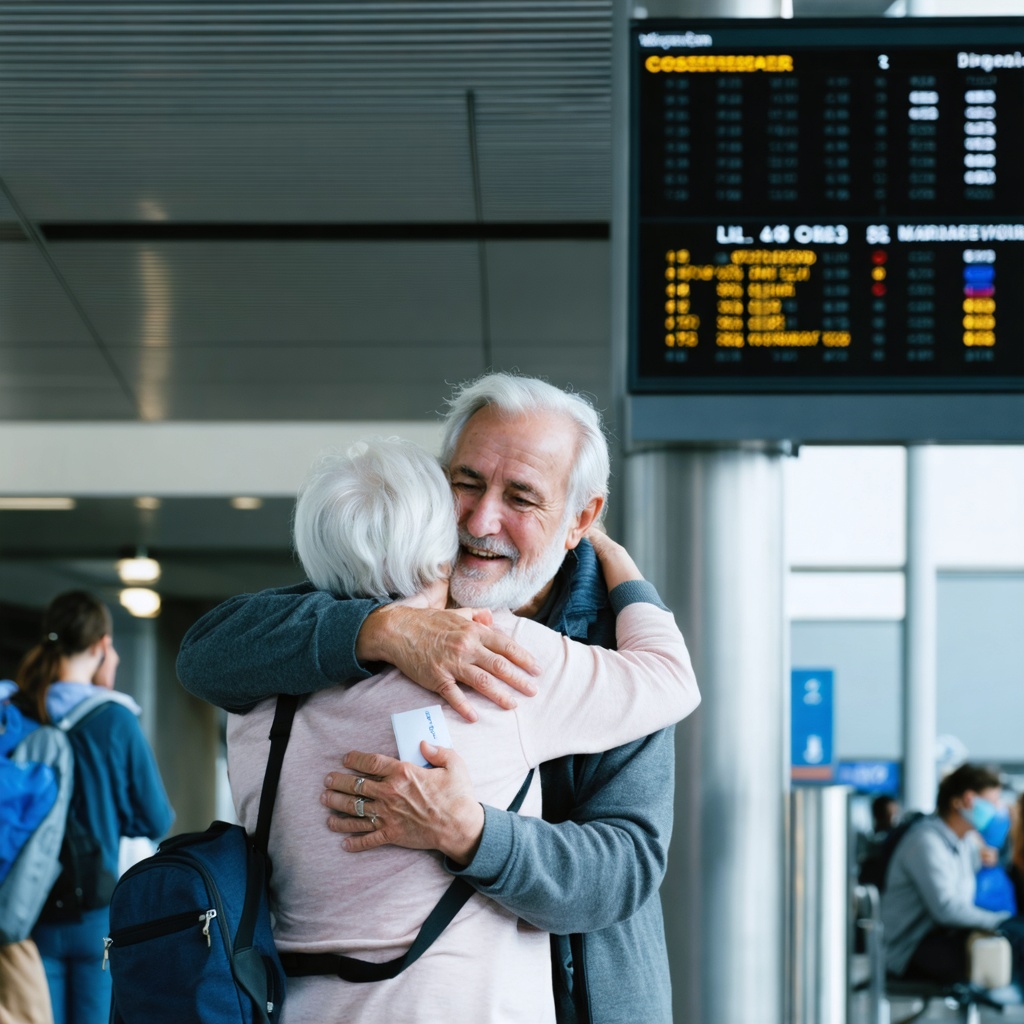 Image by RM AI
Six Months Later: A Community Transformed
It's been half a year since that fateful HOA meeting, and Oakwood Estates has undergone a remarkable transformation. The Neighborhood Assistance Committee has become the heart of our community, with a rotating schedule of volunteers helping those who need it.
Last month, twenty neighbors showed up to repaint Mrs. Abernathy's house in a single Saturday.
The week before that, the high school robotics team helped the Nakamuras install a smart irrigation system to conserve water while keeping their garden healthy. We still have rules—necessary ones about safety and true property maintenance issues—but they're enforced with flexibility and understanding.
Beth and Dean Harrington put their house on the market three months after the meeting and moved to a gated community across town. I heard through the grapevine that Beth is already on their HOA board.
Some people never change. As for me, I'm learning to live with my grief while embracing this unexpected new chapter.
Marty's garden is thriving under the care of a neighborhood teenager who needed community service hours for school. I've started hosting monthly coffee gatherings for newcomers to the neighborhood, continuing the welcome tradition Marty and I began decades ago.
And every night before bed, I tell Marty about my day, knowing that somewhere, somehow, he's proud of what our community has become—a place where three inches of hedge height matters far less than looking out for one another.
 Image by RM AI
The Wheel Clamp That Now Serves a Better Purpose
There's one last detail I haven't mentioned. That yellow wheel clamp that Beth put on my car the morning of Marty's funeral?
Roger somehow managed to remove it before he left for Seattle, though he still refuses to tell me exactly how. ('Some IT skills transfer to the physical world, Mom.
Let's leave it at that.') Instead of returning it to the HOA storage shed, we repurposed it. It now sits in Marty's garden, painted bright blue—his favorite color—and serving as a whimsical planter for marigolds that bloom from spring through fall.
Whenever new neighbors tour the garden during our community gatherings, they inevitably ask about the unusual planter. I tell them the story—all of it, from Beth's visit about the three-inch hedge violation through Roger's masterful community organizing to my unexpected role as HOA president.
The story always ends with laughter and head-shaking disbelief, but it serves an important purpose. It reminds us all that communities are built on compassion, not compliance;
on helping hands, not measuring tapes. And sometimes, the most beautiful transformations grow from the most painful moments.
Marty would have loved that lesson most of all. As for me, I've learned that even at sixty-eight, life can take unexpected turns.
There's still room for new beginnings, new purposes, and new ways to honor old loves. And every time I water those marigolds blooming in their wheel-clamp planter, I can almost hear Marty chuckling his approval.
 Image by RM AI
KEEP ON READING



20 Ways to Deal With Your Sweet Tooth

20 Low-Impact Exercise Ideas For People Over 50