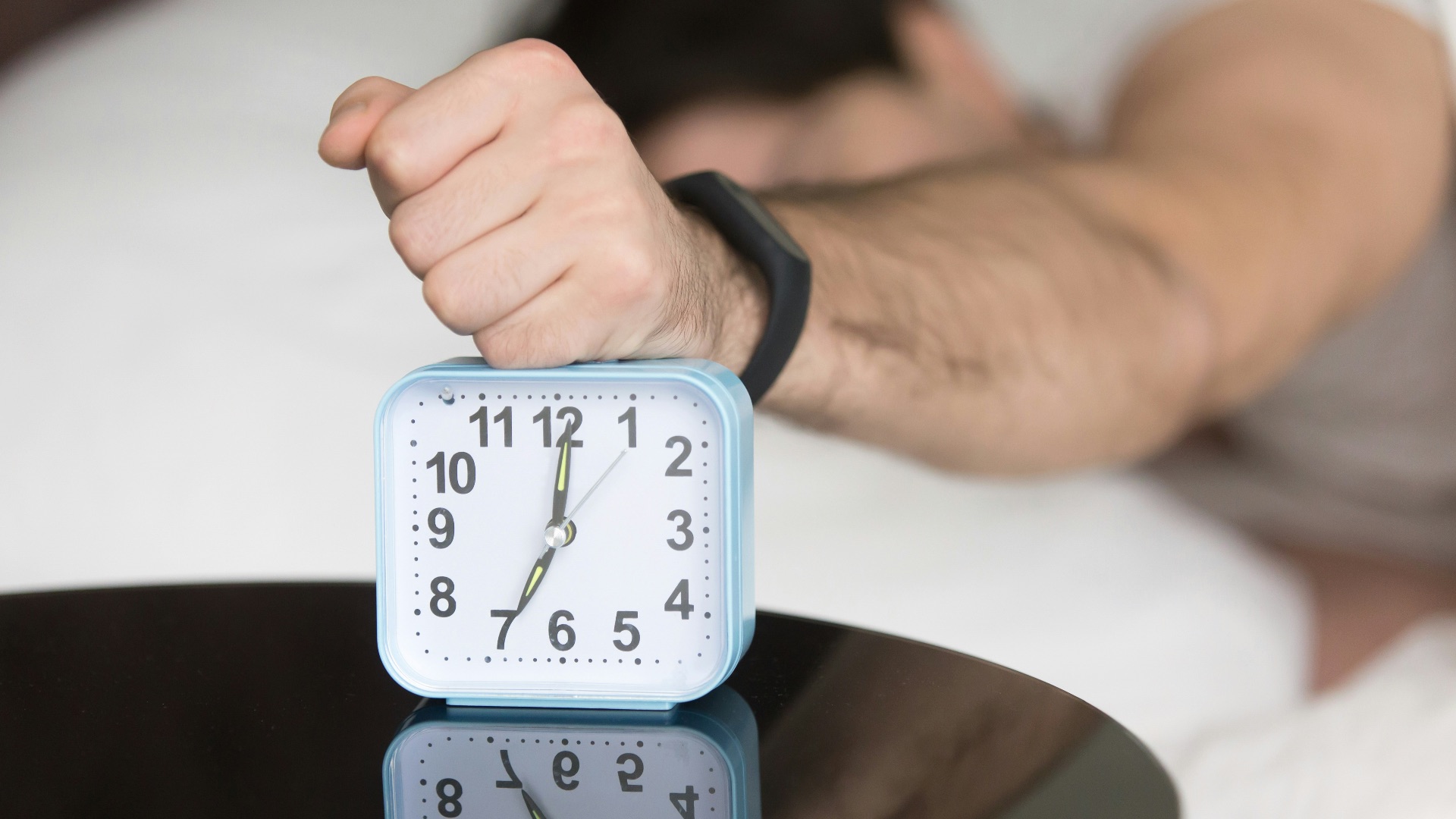
What's Keeping You Up at Night?
Admit it: you're probably sleeping much later than your usual bedtime once the weekend comes around, forcing yourself to stay awake just so you can watch one more episode, read one more Facebook post, only to snooze well into lunch the next day. And while you might think that's a harmless habit, what you're actually doing is completely throwing off your body's internal clock. After all, your circadian rhythm runs on a tighter schedule than you might realize, and it doesn't take much to steer it off course—even the time you eat dinner can confuse it. As you'll see, it's not just light and darkness that can influence when you're supposed to be awake and when you should be asleep. Here are 20 everyday culprits that might be sabotaging your sleep-wake cycle.

1. Sleeping in on the Weekend
Catching up on sleep can feel especially appealing after an exhausting week, but getting up several hours later on Saturday and Sunday changes the timing your body has been following. A large difference between weekday and weekend sleep schedules can leave you trying to readjust when Monday arrives. Keeping your wake time reasonably consistent from one day to the next gives your circadian system a more dependable signal.

2. Scrolling on Your Phone Before Bed
The combination of artificial light and an engaging stream of content makes late-night phone use particularly unhelpful when you're trying to wind down. Light reaching your eyes in the evening can delay the biological processes that prepare you for sleep, while whatever you're reading or watching may keep you mentally alert. Turning down the brightness helps somewhat, but putting the device away before bed removes both problems at once.

3. Spending Your Mornings in Dim Rooms
Evening light gets plenty of attention, but the light you receive after waking matters too. Morning light helps signal to your brain that the active portion of the day has begun and can support an earlier, more stable sleep-wake schedule. If you wake up and spend hours in a dark bedroom or dim office, you're missing one of the strongest environmental cues available to your body clock.

4. Drinking Coffee Late in the Day
That afternoon coffee may stick around in your system much longer than the initial burst of energy suggests. Caffeine promotes alertness and can interfere with the normal buildup toward sleep, particularly when you consume it close to bedtime. Because people process caffeine at different rates, someone who sleeps easily after an evening espresso isn't necessarily a useful guide for what your own cutoff time should be.

5. Having a Nightcap Before Bed
Alcohol can make you feel drowsy, which is why it sometimes gets mistaken for a sleep aid. The problem is that drinking near bedtime can lead to lighter, more disrupted sleep later in the night instead of producing the restorative rest you were hoping for. Regularly pairing alcohol with bedtime can therefore work against the stable nighttime routine your body benefits from.

6. Eating Dinner at a Different Time Every Night
Your eyes aren't the only way your body gathers information about what time of day it is. Meal timing also acts as a recurring cue for circadian rhythms, particularly for clocks operating in tissues and organs outside the brain. When dinner happens at 6 p.m. one night, 9 p.m. the next, and somewhere in between after that, your daily timing signals become less consistent.

7. Saving a Huge Meal for Late at Night
A late dinner occasionally isn't likely to completely rearrange your internal clock, but making substantial nighttime meals a regular habit can complicate your schedule. Eating is one of the behaviors your body uses to organize daily rhythms, and health authorities generally recommend maintaining regular meal times rather than routinely having late dinners. Large meals close to bedtime can also make comfortable sleep more difficult for some people.

8. Taking Long Late-Afternoon Naps
A nap can be useful when you're tired, but its timing and length make a difference. Sleeping for a long stretch late in the day can reduce the sleep pressure you've accumulated and leave you surprisingly alert when your normal bedtime arrives. Once bedtime starts drifting later as a result, waking at the usual hour becomes harder, potentially encouraging another nap the following afternoon.
9. Working Out Intensely Right Before Bed
Regular physical activity generally supports healthy sleep, so exercise itself isn't the problem. However, vigorous exercise immediately before bedtime can leave some people feeling too energized or physiologically activated to settle down on schedule. If late workouts consistently keep you awake, moving the hardest part of your training earlier is worth trying rather than giving up exercise altogether.

10. Using Nicotine in the Evening
Nicotine is a stimulant, even when the ritual surrounding it happens to feel relaxing. Using nicotine near bedtime can increase alertness and interfere with sleep, which is one reason sleep recommendations commonly advise avoiding it during the hours before bed. When nighttime nicotine repeatedly pushes against your body's normal preparation for sleep, maintaining a predictable schedule becomes more difficult.

11. Overusing Sleep Aids
Relying on melatonin supplements or other sleep aids too frequently can actually interfere with your body's ability to regulate its own natural rhythm. Your body may start depending on external help rather than producing the hormones it needs on its own schedule. Using sleep aids sparingly and addressing the root causes of your sleep issues tends to be a more sustainable long-term solution.

12. Sleeping with Light in the Room
Streetlights through the curtains, a television left on, or a bright lamp in the hallway can expose you to light when your body is expecting darkness. Research on circadian rhythms shows that nighttime light can interfere with the biological signals associated with sleep, and even closed eyelids don't completely block incoming light. A darker bedroom gives your body a clearer distinction between daytime and nighttime.

13. Using Your Bed for Activities Other Than Sleep
When you use your bed for working, watching TV, or scrolling through social media, your brain starts to associate that space with wakefulness instead of rest. This weakens the mental connection between your bed and sleep, making it harder to relax once you actually lie down for the night. Reserving your bed strictly for sleep and intimacy helps reinforce that association over time.
 https://kaboompics.com/ on Pexels
14. Pulling an All-Nighter
Staying awake through the night does more than leave you tired the following day. You're forcing wakefulness into a period when your circadian system would ordinarily be promoting sleep, then asking yourself to remain functional when sleep pressure is unusually high. Sleeping deep into the following day to recover can push the schedule even farther away from its normal timing.

15. Working Rotating Shifts
A schedule that repeatedly moves between mornings, evenings, and overnight work asks your circadian system to operate at different times before it has fully adjusted to the previous pattern. Light exposure, meals, activity, and sleep may all occur during dramatically different portions of the day as a result. That's one reason shift workers can have particular difficulty maintaining consistent sleep and alertness.

16. Flying Across Several Time Zones
Jet lag is essentially a disagreement between the time displayed on the local clock and the time your body still thinks it is. Crossing several time zones quickly changes when daylight, darkness, meals, and social activity occur without giving your circadian rhythms enough time to adjust beforehand. Your internal timing gradually catches up, but sleepiness, wakefulness, appetite, and concentration can feel misplaced in the meantime.

17. Changing the Clocks for Daylight Saving Time
As daylight hours shift throughout the year, your body's natural rhythm shifts along with them, whether you consciously notice it or not. Shorter winter days can leave you feeling sluggish, while longer summer days might make it harder to wind down at a reasonable hour. Adjusting your habits seasonally, like using a light therapy lamp in winter, can help you stay in sync despite these natural fluctuations.
18. Letting Stress Take Over Your Evening
Stress doesn't have to change the time on the clock to interfere with when you're able to sleep. If you're answering tense work messages, worrying about tomorrow, or dealing with emotionally demanding tasks until you get into bed, your level of alertness may remain elevated when you're supposed to be winding down. Since stress is one of the factors known to affect circadian rhythms and sleep, a calmer and more predictable final portion of the day can help reinforce your routine.

19. Stressing About Sleep Itself
Worrying about whether you'll fall asleep can create a cycle of anxiety that actually makes it harder to drift off. Your mind stays alert and racing, which works against the relaxation your body needs to transition into sleep. Practicing calming techniques, like deep breathing or a consistent wind-down routine, can help ease this mental tension and support a more natural sleep onset.

20. Changing Your Wake-Up Time Constantly
Bedtime tends to receive most of the attention, but the time you get out of bed is one of the most useful anchors in a consistent daily schedule. Waking at 6:30 one morning, 9:00 the next, and 7:30 after that continually changes when you encounter morning light, eat your first meal, and begin being active. A steadier wake time keeps several important timing cues lined up, making it easier for your body to anticipate when the day begins and when sleep should eventually follow.