He Walked Out After 40 Years Of Marriage Without A Word - Then She Found Out Why
The Day My World Collapsed
For forty years, we lived what everyone called a 'perfect marriage.' We raised three beautiful children—Michael, Sarah, and James—who grew into successful adults with families of their own.
We built a comfortable home in the suburbs I'd always dreamed of as a girl.
We celebrated our 40th anniversary in Paris, drinking champagne under the Eiffel Tower as he promised me another twenty-five years of happiness.
Our friends envied our relationship, often commenting on how we still held hands at dinner parties and laughed at each other's jokes.
I thought I knew everything about the man I'd shared my life with—every dream, every fear, every secret. But one ordinary Tuesday morning in April, I came home from my weekly book club to find his closet empty, his car gone, and a handwritten note on the kitchen table that simply read, 'I'm sorry.'

The Deafening Silence of Abandonment
I thought it was a mistake. A misunderstanding.
Perhaps he'd gone to visit his brother in Oregon and forgotten to tell me. Maybe he needed space after our minor disagreement about remodeling the kitchen last week.
He'd never raised his voice in four decades, never slammed doors, never hinted he was unhappy with our life together. For days, I was devastated—pacing our home, checking my phone every few minutes, leaving voicemails that grew increasingly desperate.
No explanation, no warning, no closure. Just silence.
I called our children, who rushed to my side, equally bewildered by their father's disappearance. 'Dad would never just leave,' Michael insisted, his voice cracking with emotion.
'Something must have happened to him.' We filed a missing person report, though the police seemed unconvinced a man who took his clothes and car was truly missing. Friends brought casseroles and concerned glances, whispering theories when they thought I couldn't hear.
The weight of uncertainty was crushing me more with each passing day.
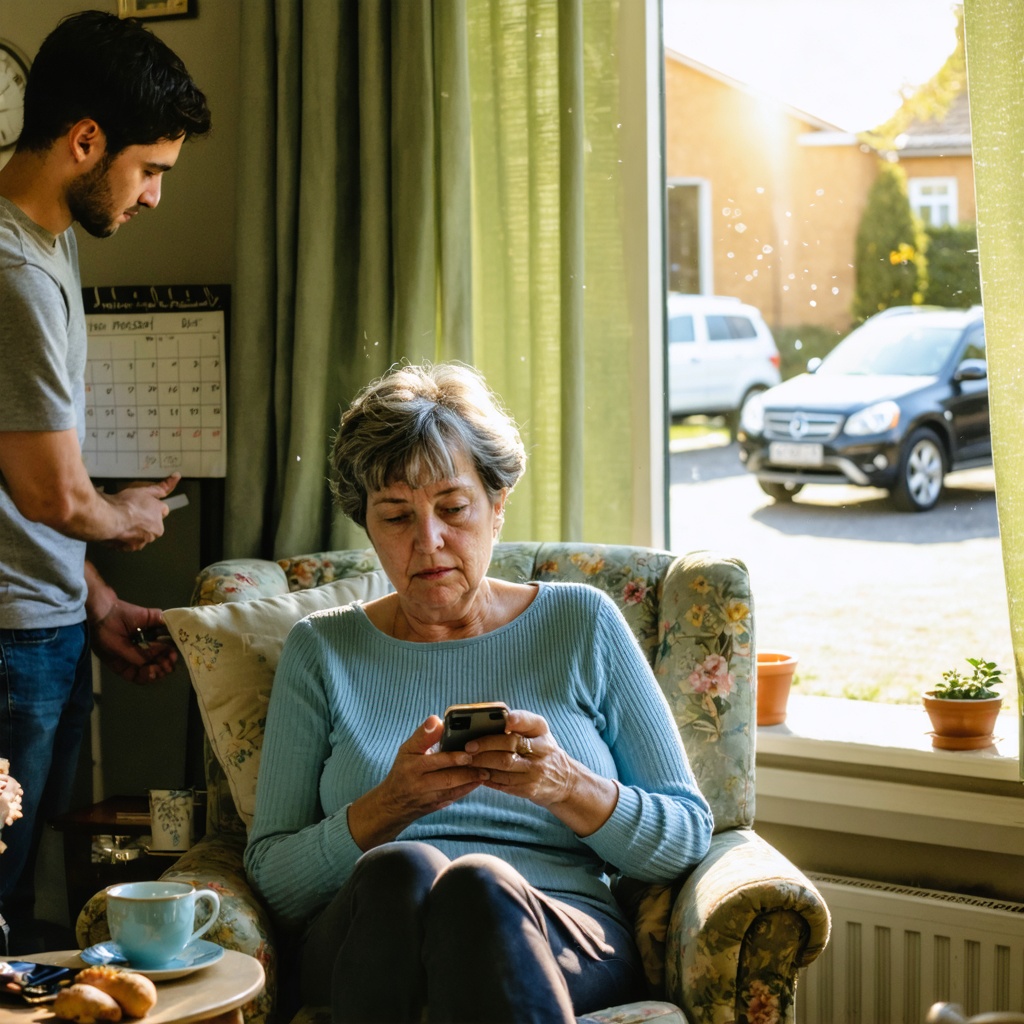 Image by RM AI
The Mysterious Call That Changed Everything
On the tenth day after his disappearance, while I was sorting through old photographs in a desperate attempt to find clues I might have missed, my phone rang. An unknown number flashed on the screen.
I almost didn't answer, having grown tired of well-meaning friends offering empty reassurances. But something—intuition perhaps—made me press the green button.
A woman's voice, soft but confident, asked if I was Richard's wife. My heart raced as I confirmed, hoping for information but dreading what might come next.
And then she said something that made my knees buckle, forcing me to grip the kitchen counter for support: 'He's with me in Portland.
And I think you deserve the truth.' The room seemed to spin around me as my mind raced through possibilities. Who was this woman?
How long had they known each other? Was our entire marriage a lie?
I sank into a chair, my legs no longer able to support the weight of my breaking heart. The truth, she promised, would explain everything—but was I ready to hear it?
Not the Betrayal I Expected
I assumed it was an affair—the most obvious explanation for a husband's sudden departure. I braced myself for the confession of infidelity, mentally calculating how many years they might have been sneaking around behind my back.
Was she younger? More exciting?
Did she make him feel alive in ways I no longer could? The bitter taste of jealousy rose in my throat as I prepared to hear the details of their relationship.
But the truth, as the woman carefully explained, was far more complicated than a midlife crisis or a passionate affair. He wasn't running away from me or our marriage—he was running to someone else who desperately needed him.
'My name is Elaine,' she said, her voice steady despite the weight of her words. 'And Richard is with my son, Jason.
His son.' The phone nearly slipped from my grasp as I tried to process what she was saying. His son?
A child I knew nothing about? How could the man who'd shared my bed for forty years have kept such a monumental secret?
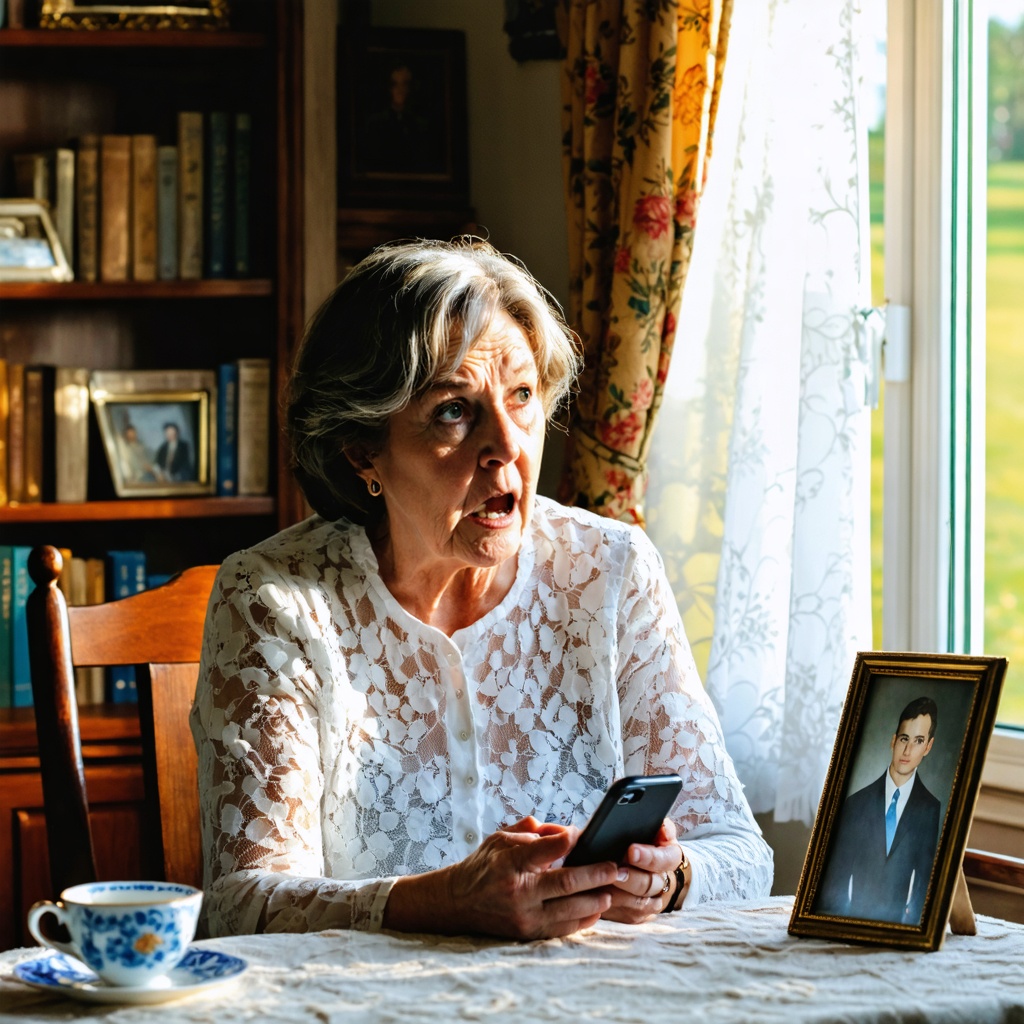 Image by RM AI
A Past That Never Truly Disappeared
Forty-two years ago, before we met at that crowded New Year's Eve party where he spilled champagne on my new dress, Richard had a relationship with Elaine.
They were young—just twenty-two—and their romance was brief but intense, lasting only a summer before her family relocated across the country.
No one in his family knew about her; they'd kept their relationship private, sneaking away to the lake or meeting in quiet coffee shops away from prying eyes.
When Elaine left town, she was pregnant but didn't know it yet. By the time she discovered she was carrying Richard's child, she had already started a new life in Portland and made the difficult decision not to disrupt his.
'I never told him,' she admitted, regret evident in her voice. 'I married someone else who raised Jason as his own.
It wasn't until my husband died last year that Jason started asking questions about his biological father.' The pieces were falling into place, creating a picture I never could have imagined—a parallel life that had been running alongside ours for decades.
 Killian Cartignies on Unsplash
The Son He Never Knew Existed
Richard only found out last year when the man claiming to be his son reached out through social media. At first, he dismissed it as a scam or a case of mistaken identity.
But something about Jason's message—details about Elaine, about that summer they spent together—rang true. They arranged to meet in a neutral location, a coffee shop halfway between our home and Portland.
Richard told me he was attending a conference that weekend, the first lie he'd ever told me in our marriage. When they met, the resemblance was undeniable.
Jason had Richard's eyes, his distinctive laugh, even the way he gestured when making a point. DNA confirmed what their matching features already suggested:
Richard was indeed Jason's biological father. For months, Richard had been processing this revelation alone, sneaking phone calls when I was out gardening, deleting text messages, living a double life of sorts.
Not out of malice or deception, but out of confusion and fear—fear of disrupting the life we'd built together, fear of my reaction to this bombshell from his past.
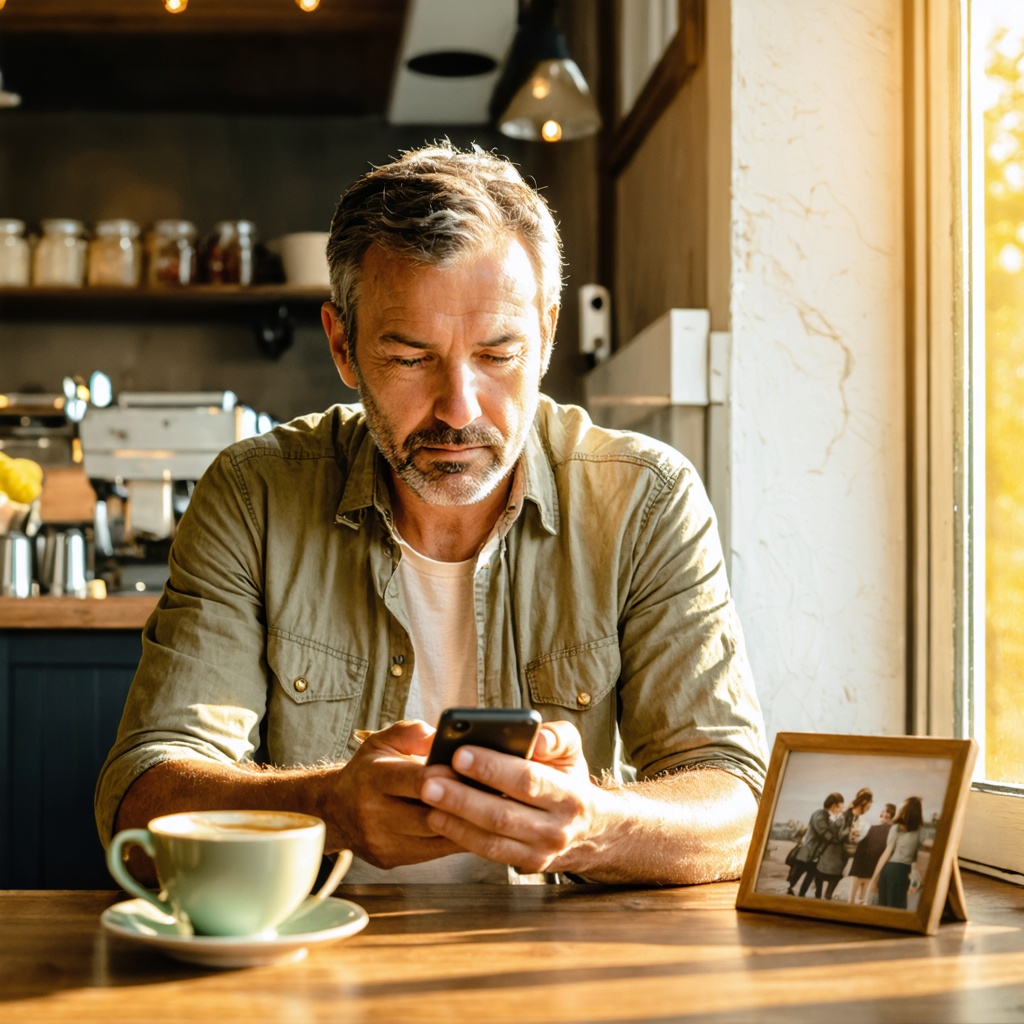 Image by RM AI
The Devastating Diagnosis
But here's the twist that changed everything: Jason was dying.
At forty-one, he had been diagnosed with end-stage renal disease, his kidneys failing rapidly despite multiple treatments. He needed a transplant, and time was running out.
After exhausting all other options, he had sought out his biological father in a desperate attempt to find a compatible donor.
When Richard was tested, the results showed he was a match—perhaps the only match that could save his son's life.
The surgery was risky, especially for a man in his sixties, but Richard didn't hesitate. He didn't want to hurt me with this sudden revelation of a son from before our time together—he just couldn't bear to lose another chance to be a father to the child he never knew.
'He wanted to tell you,' Elaine explained, 'but he was afraid the shock would make you try to stop him, or worse, that you'd never forgive him for keeping this secret.' Instead of facing me, he chose to disappear, leaving only that inadequate note behind.
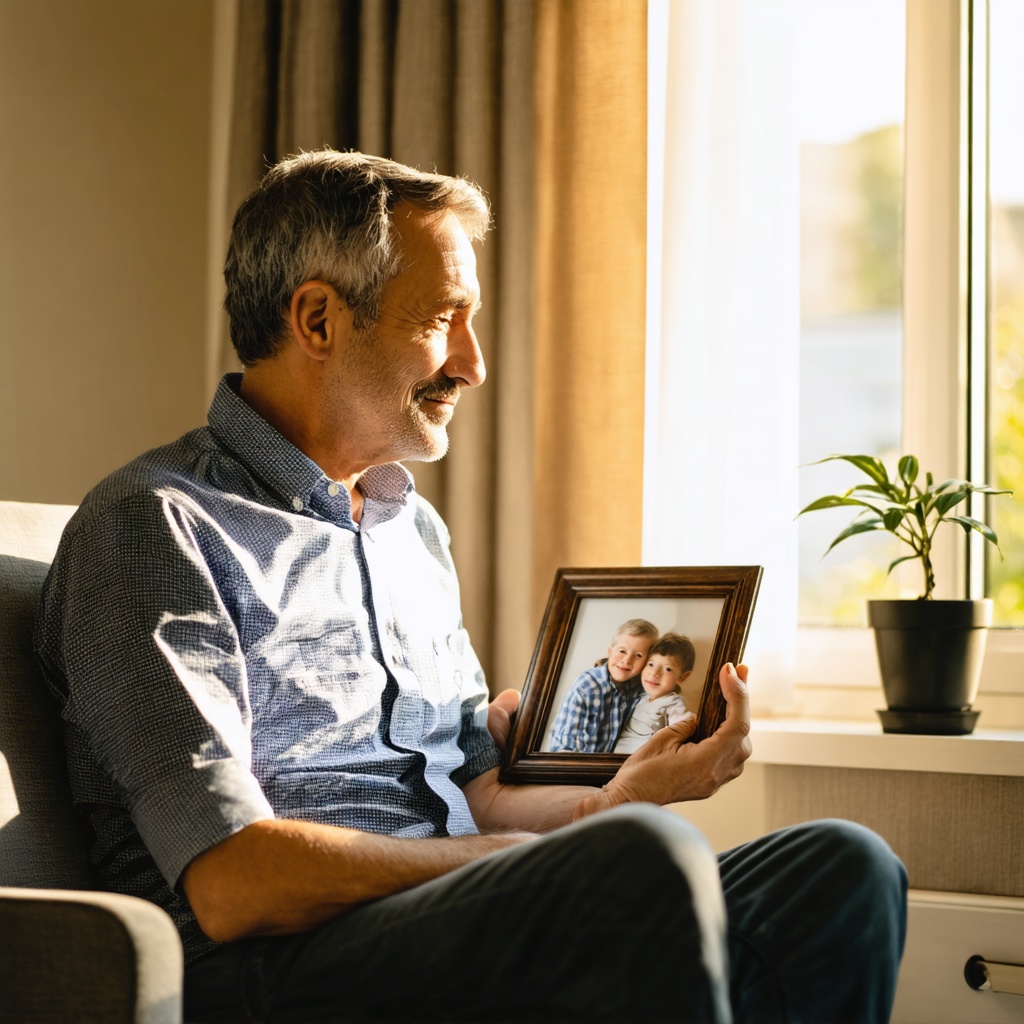 Image by RM AI
The Journey to Portland
After hanging up with Elaine, I sat motionless at our kitchen table for what felt like hours, watching the afternoon light shift across the walls of the home we'd shared for decades. My mind raced through every possibility, every reaction I could have to this earth-shattering news.
Anger seemed the most natural response—anger at his deception, at his choice to leave without explanation, at the years of secrets. But beneath the hurt and betrayal, another emotion was taking root:
understanding. I thought of our own children, of the lengths we had both gone to protect them throughout their lives.
Would I have done any differently in his position? The question haunted me as I packed a small suitcase and booked the next flight to Portland.
I didn't call ahead; I wasn't sure what I would say if Richard answered.
The five-hour journey gave me time to process, to prepare myself for whatever I might find at the address Elaine had provided.
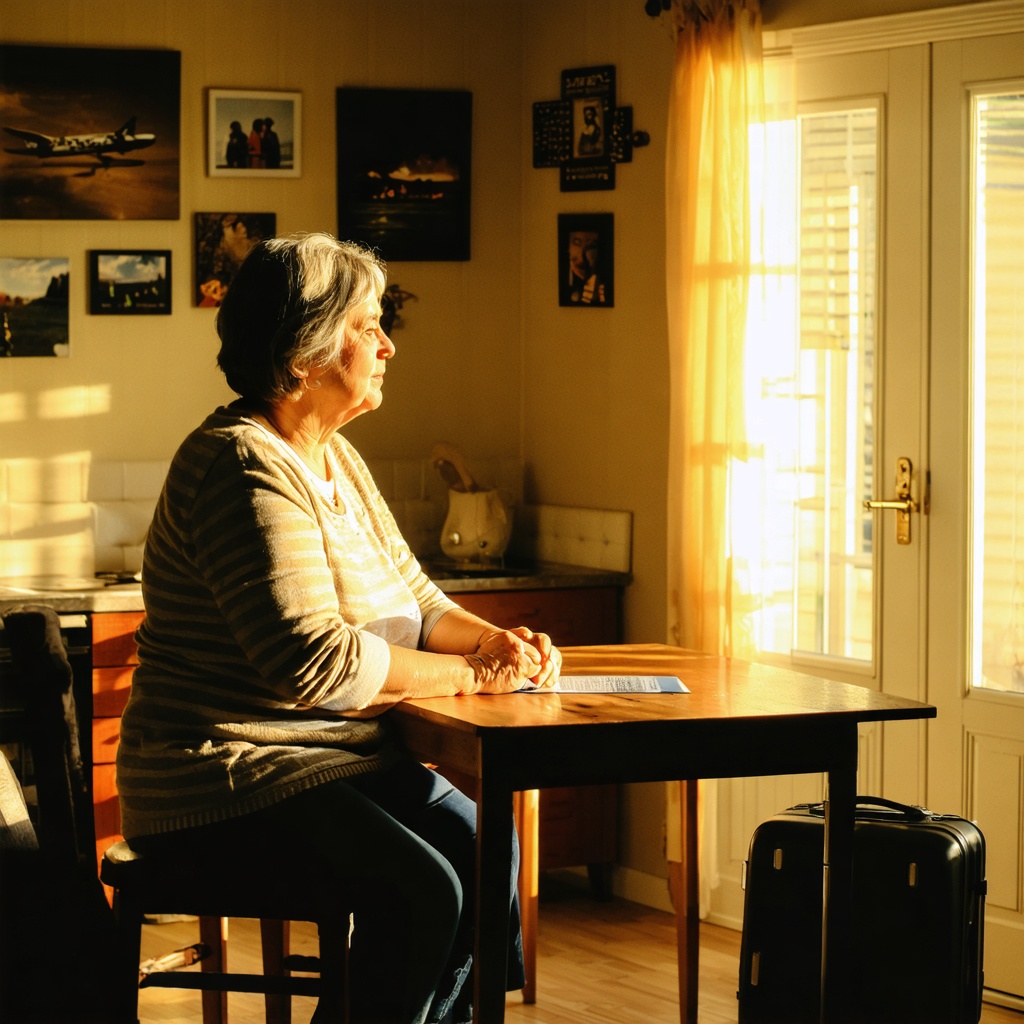 Image by RM AI
Face to Face with the Truth
The hospital was modern and sterile, with the antiseptic smell that always made my stomach clench. I followed the nurse's directions to the transplant wing, my heart pounding so loudly I was sure everyone could hear it.
Through the window of room 412, I saw them—Richard sitting beside the bed of a man who was undeniably his son. They had the same profile, the same way of tilting their heads when listening.
Richard looked older than when he'd left just days ago, worry etching new lines around his eyes. He was holding Jason's hand, speaking softly, their foreheads nearly touching in an intimate moment between father and son.
I thought I'd be furious when I finally found him. I had rehearsed angry speeches on the plane, demanding explanations, expressing my hurt at being excluded from such a monumental decision.
But when I saw them together—Richard connecting with the child he never knew he had—something shifted inside me. The anger didn't disappear, but it made room for something else:
compassion.
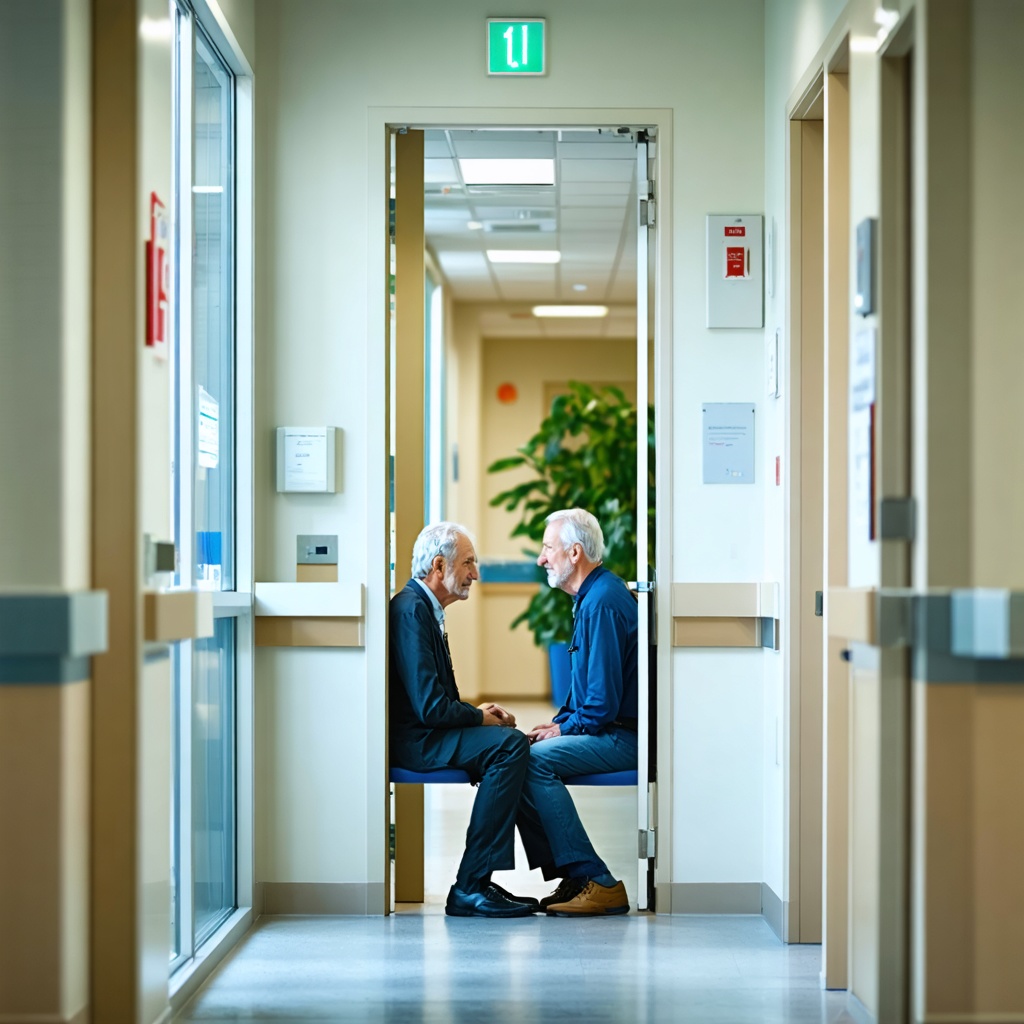 Image by RM AI
The Moment Our Eyes Met
I stood frozen in the doorway, unable to step forward or retreat. It was Jason who noticed me first, his eyes—so like Richard's—widening in recognition though we'd never met.
He must have said something because Richard turned, his face draining of color when he saw me standing there. The clipboard he was holding—consent forms for the surgery, I would later learn—clattered to the floor.
'Margaret,' he whispered, my name sounding like both a prayer and an apology on his lips. He stood shakily, looking torn between coming to me and staying by his son's side.
The room seemed to shrink, the air growing thick with unspoken words and emotions too complex to name. Elaine appeared from the adjoining bathroom, stopping short when she saw me.
She was attractive in a understated way, with kind eyes and silver-streaked hair pulled back in a practical ponytail. Not the home-wrecker I had imagined in my darkest moments, but a woman who had carried her own burdens silently for decades.
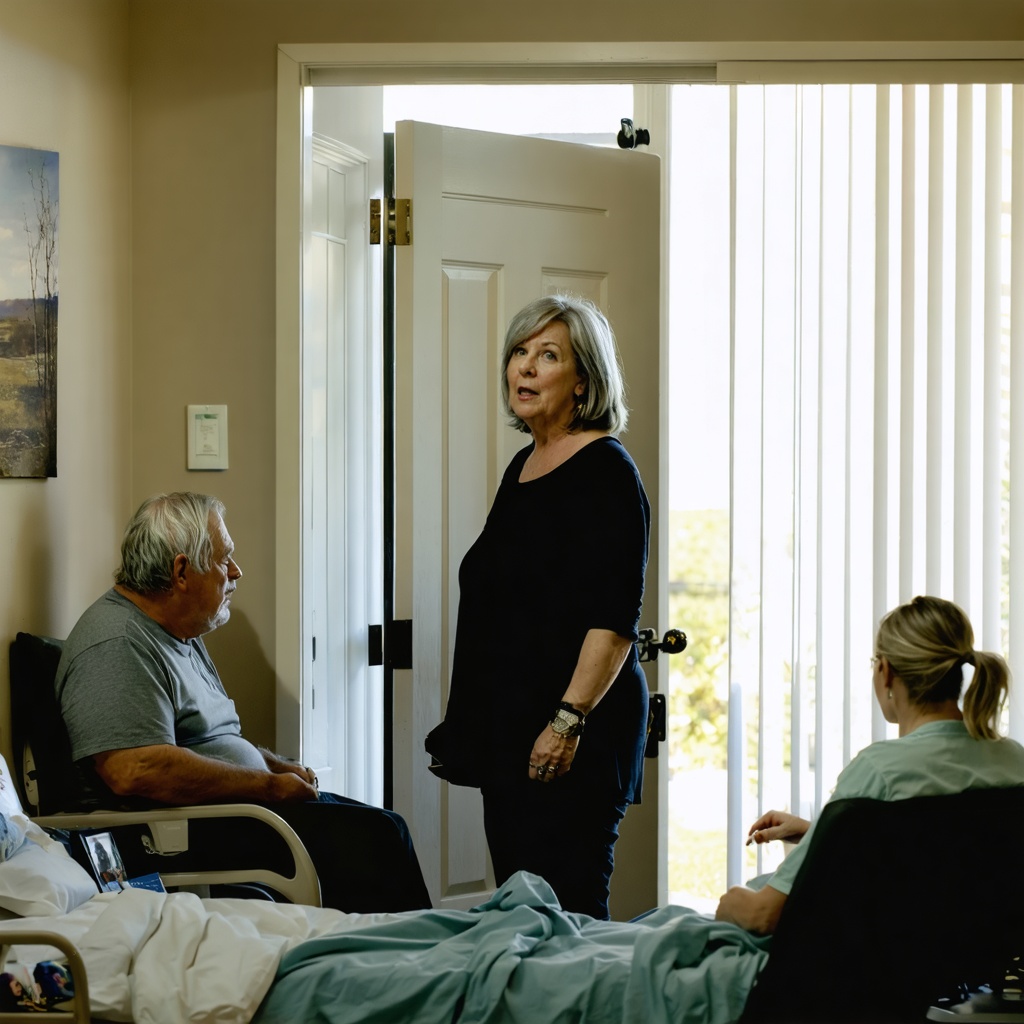 Image by RM AI
The Son I Never Knew About
Jason broke the uncomfortable silence, his voice weak but determined. 'You must be Margaret,' he said, attempting to sit up straighter in his hospital bed.
'I've heard so much about you.' The irony wasn't lost on me—this stranger knew about me, while I had known nothing about him until today. Up close, the resemblance to Richard was even more striking.
He had the same crinkles around his eyes when he smiled, the same slightly crooked front tooth that Richard had always refused to fix. He was thin—too thin—his illness evident in the hollows of his cheeks and the yellowish tint to his skin.
IV lines snaked from his arms, connecting to machines that beeped steadily beside his bed. Despite his condition, there was a warmth to him, an openness that reminded me of our youngest son, James.
'I'm sorry we're meeting like this,' he continued, gesturing weakly to the hospital room. 'And I'm sorry for taking him away from you.
That wasn't my intention.' His sincerity was disarming, making it impossible to direct my anger at him.
Richard's Confession
Elaine tactfully suggested that Jason needed rest, giving Richard and me privacy to talk. We walked silently to the hospital cafeteria, the fluorescent lights harsh against our tired faces.
For several minutes, we sat across from each other, untouched coffee growing cold between us. 'I don't know where to begin,' Richard finally said, his voice cracking with emotion.
'I've rehearsed this conversation a thousand times in my head, but now that you're here...' He trailed off, running his hands through his hair—a nervous habit I'd witnessed countless times during our marriage. I waited, giving him space to find the words.
'I should have told you the moment I found out,' he continued. 'But I was in shock.
And then when we learned about his condition, everything happened so fast.' He reached for my hand across the table, hesitating before making contact. 'I was a coward, Maggie.
I couldn't bear to see disappointment in your eyes. Or worse, to have you try to talk me out of the surgery.'
 National Cancer Institute on Unsplash
The Weight of Forty Years
I pulled my hand away, not ready for his touch despite the familiar comfort it would bring. 'Forty years, Richard,' I said, my voice steadier than I felt.
'Forty years of marriage, and you couldn't trust me with this? You thought disappearing was better than talking to me?' The hurt bubbled up, threatening to overflow into the anger I'd been suppressing.
'You left a two-word note. Do you have any idea what that did to me?
To our children?' He flinched at the mention of Michael, Sarah, and James, guilt washing over his features. 'They think you've had some kind of breakdown.
Sarah wanted to hire a private investigator.' I leaned forward, lowering my voice though the cafeteria was nearly empty. 'You made a unilateral decision about something that affects our entire family.
You're risking your life with this surgery. Did that occur to you?
That I might lose you completely?' The possibility hung between us, unspoken until now—that his attempt to save his newfound son could leave me a widow.
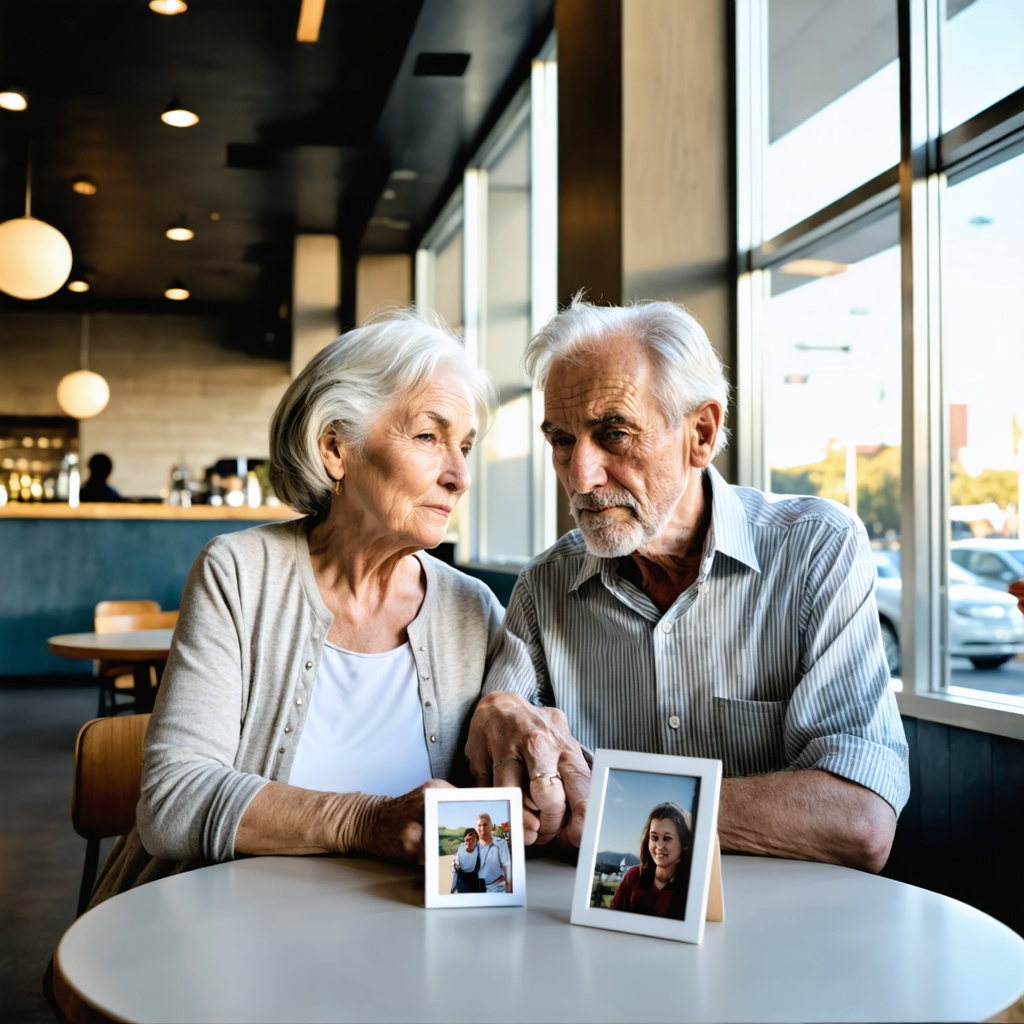 Image by RM AI
The Surgery's Risks
Richard's eyes filled with tears as he acknowledged the danger. At sixty-four, with his history of high blood pressure, the transplant carried significant risks.
The doctors had been clear about the potential complications: infection, blood clots, adverse reactions to anesthesia.
Recovery would be lengthy and painful. There was even a small but real possibility that his remaining kidney could fail in the future, leaving him dependent on dialysis for the rest of his life.
'I know it's selfish,' he admitted, wiping his eyes with the back of his hand. 'But when I look at Jason, I see all the years I missed.
His first steps, his graduation, his wedding. I wasn't there for any of it.' His voice broke as he continued, 'And now, knowing I could save him but choosing not to—how could I live with myself?' I understood his reasoning, even as it tore at my heart.
Richard had always been the most devoted father to our children, attending every soccer game and dance recital, helping with science projects and college applications. Of course he would feel compelled to do everything possible for this son he'd just discovered.
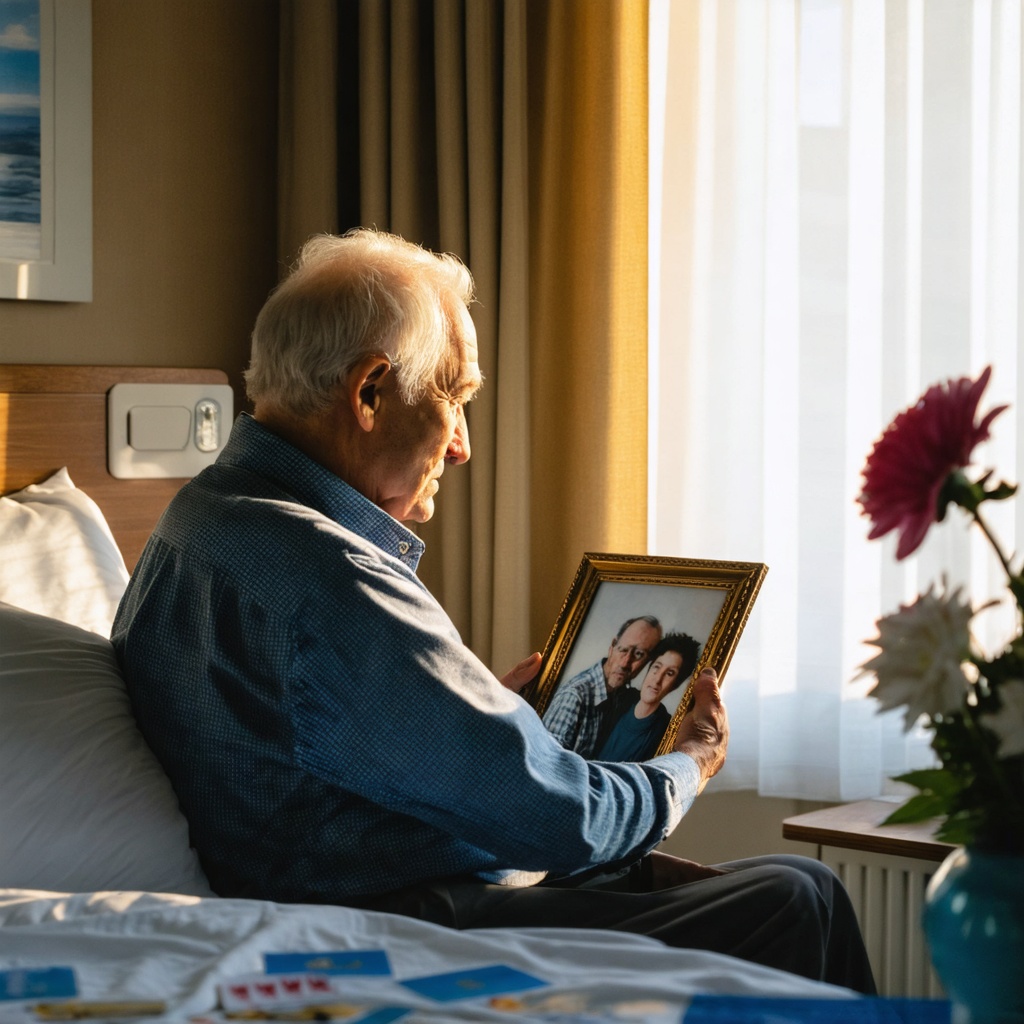 Image by RM AI
Meeting Elaine Properly
We returned to Jason's room to find him sleeping, the medication finally providing some relief from his pain. Elaine suggested we go to the hospital garden to talk.
The spring air was cool but refreshing after the sterile hospital environment. We sat on a stone bench surrounded by carefully tended flowers, an incongruously peaceful setting for such a difficult conversation.
'I never meant to disrupt your lives,' she began, her hands clasped tightly in her lap. 'When Jason's adoptive father died, he started asking questions about his biological heritage.
It was for medical reasons initially—family history forms at doctor's appointments that he couldn't complete.' She explained how Jason had used a DNA ancestry service, which eventually led him to Richard. 'I should have told Richard about the pregnancy all those years ago.
That's on me.' Her candor was disarming, her willingness to accept responsibility admirable. There was no jealousy or competition between us, just two women connected by the men we loved, trying to navigate an impossible situation.
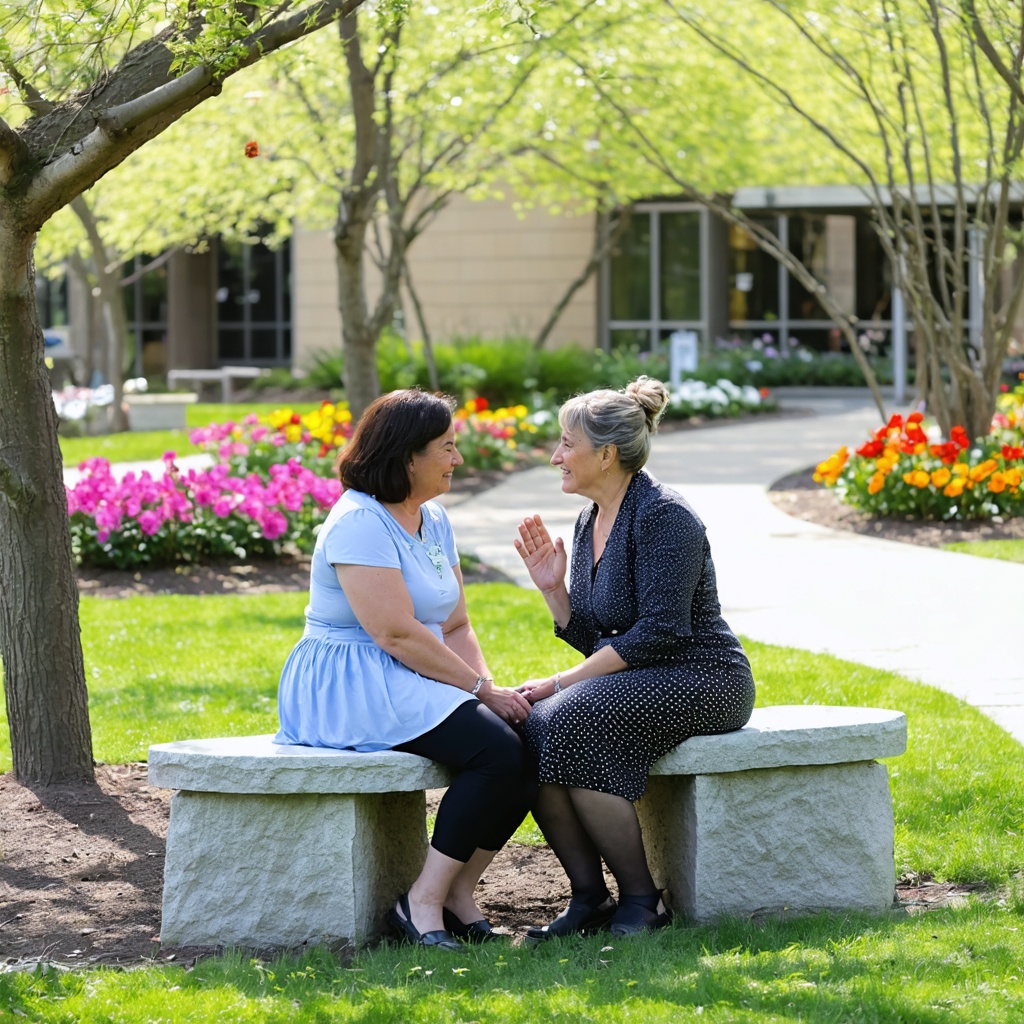 Image by RM AI
Jason's Life Story
As we talked, Elaine shared photos of Jason growing up—a gap-toothed first-grader holding a soccer trophy, a teenager in a graduation cap, a young man in a tuxedo on his wedding day.
'His wife, Melissa, is at home with their twins,' she explained, showing me pictures of two adorable five-year-old girls with their father's eyes.
'They're too young to understand what's happening, just that Daddy is very sick.' Each image was a glimpse into the life Richard had unknowingly missed, a parallel universe where his genes had continued without his knowledge. Jason had become a high school science teacher, passionate about inspiring the next generation.
He coached the school's robotics team and volunteered at a summer camp for underprivileged kids. He was, by all accounts, a remarkable man—kind, intelligent, devoted to his family.
The kind of son anyone would be proud to claim. I found myself wondering how much of Richard was reflected in Jason's character, what traits had been passed down through DNA rather than daily interaction.
Nature versus nurture playing out in the most personal way possible.
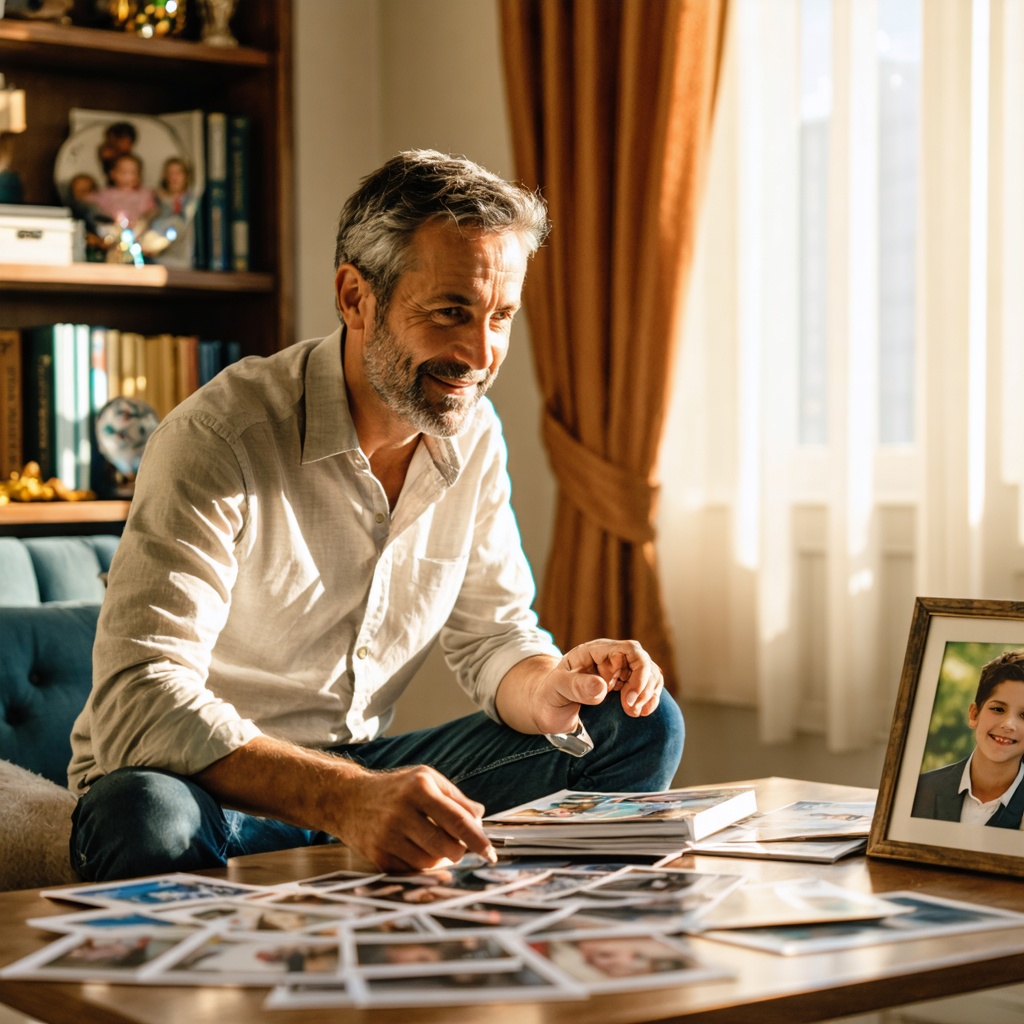 Image by RM AI
The Night Before Surgery
I decided to stay in Portland, calling our children to explain the situation as best I could. Their reactions ranged from shock to disbelief to cautious support.
'Should we come out there?' Michael asked, but I encouraged them to wait until after the surgery. There would be time for family reunions and processing this new reality later.
For now, Richard needed to focus on the procedure ahead. The night before the surgery, I sat with Richard in his hotel room, the tension between us gradually dissolving as we talked more openly than we had in years.
'I'm still angry that you left without explaining,' I told him honestly. 'But I understand why you're doing this.' He took my hand, relief evident in his expression.
'I was so afraid you'd never forgive me,' he admitted. 'For Elaine, for Jason, for leaving.' I squeezed his fingers, the familiar calluses and veins a map I'd memorized over decades.
'I haven't fully forgiven you yet,' I replied. 'But I'm working on it.' We talked until dawn about second chances and missed opportunities, about the strange twists life can take when you least expect it.
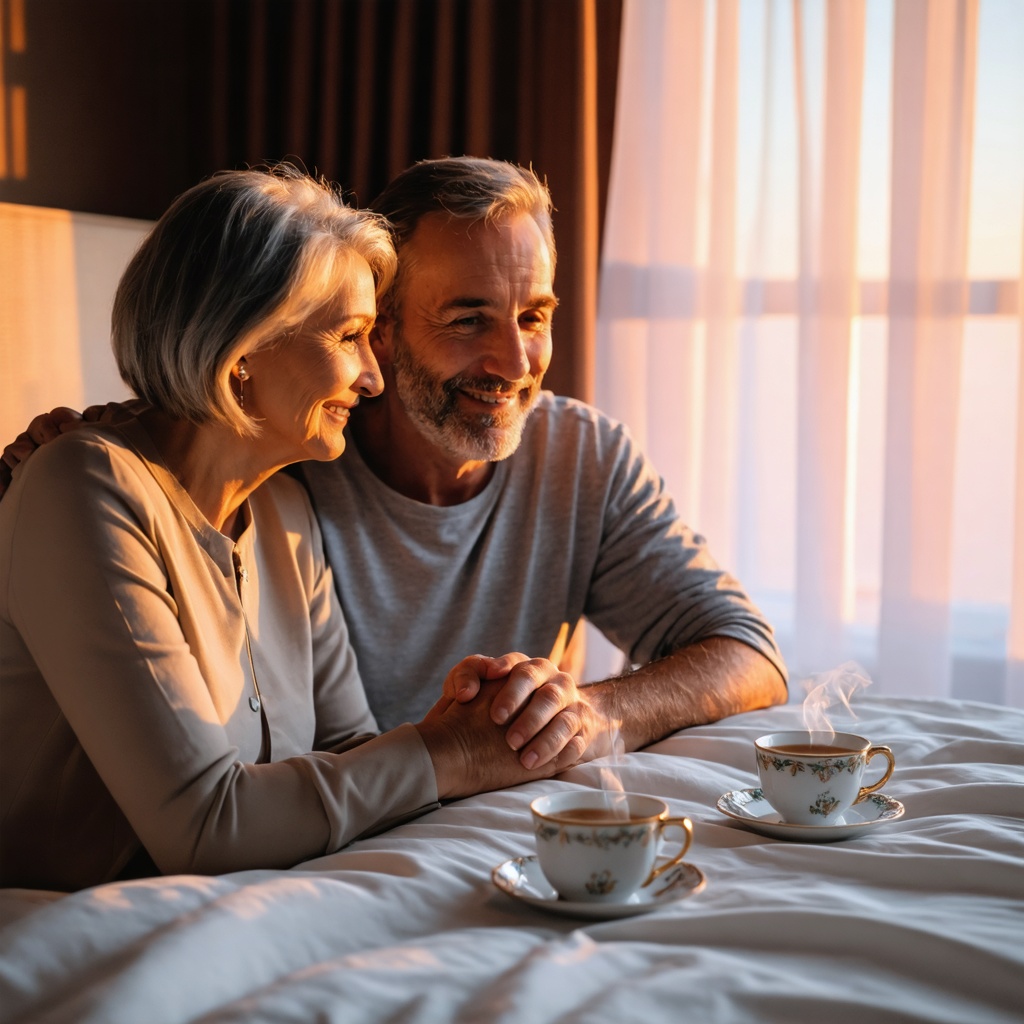 Image by RM AI
The Morning of the Transplant
The morning of the transplant arrived with a gentle rain tapping against the hospital windows. The surgical team explained the procedure again—how they would remove one of Richard's kidneys laparoscopically, then immediately transplant it into Jason.
Both surgeries would happen simultaneously in adjacent operating rooms. The recovery would be more difficult for Richard than for Jason, assuming everything went well.
I sat beside Richard's bed as the nurses prepared him, administering pre-surgical medications and attaching monitoring equipment. 'Are you scared?' I asked, noticing the slight tremor in his hands.
He nodded, vulnerability evident in his eyes. 'Not of the surgery,' he clarified.
'Of missing more time with him if something goes wrong.' I understood then that Richard wasn't just giving Jason a kidney—he was trying to give himself the gift of fatherhood that had been denied to him. Before they wheeled him away, I leaned down and kissed his forehead.
'I'll be here when you wake up,' I promised. 'Both of us will get through this.'
 Image by RM AI
The Longest Wait
The waiting room became my world for the next several hours. Elaine joined me, along with Jason's wife Melissa, who had arranged for her mother to watch the twins.
We were an unlikely trio—the current wife, the former girlfriend, and the daughter-in-law—united by our concern for the men in surgery. Melissa was younger than I expected, perhaps in her early thirties, with a quiet strength that reminded me of my daughter Sarah.
'Jason talks about Richard constantly,' she told me, twisting her wedding ring nervously. 'He's so grateful to have found him, even under these circumstances.' We shared stories as the hours passed—Melissa describing Jason's dedication to his students, Elaine recounting his childhood achievements, me offering anecdotes about Richard that might help them understand the man who connected us all.
The surgeon appeared periodically with updates, each one a momentary relief before anxiety crept back in. The procedure was taking longer than expected, though we were assured this wasn't unusual.
Still, every minute felt like an eternity as we waited to learn if both men would emerge safely.
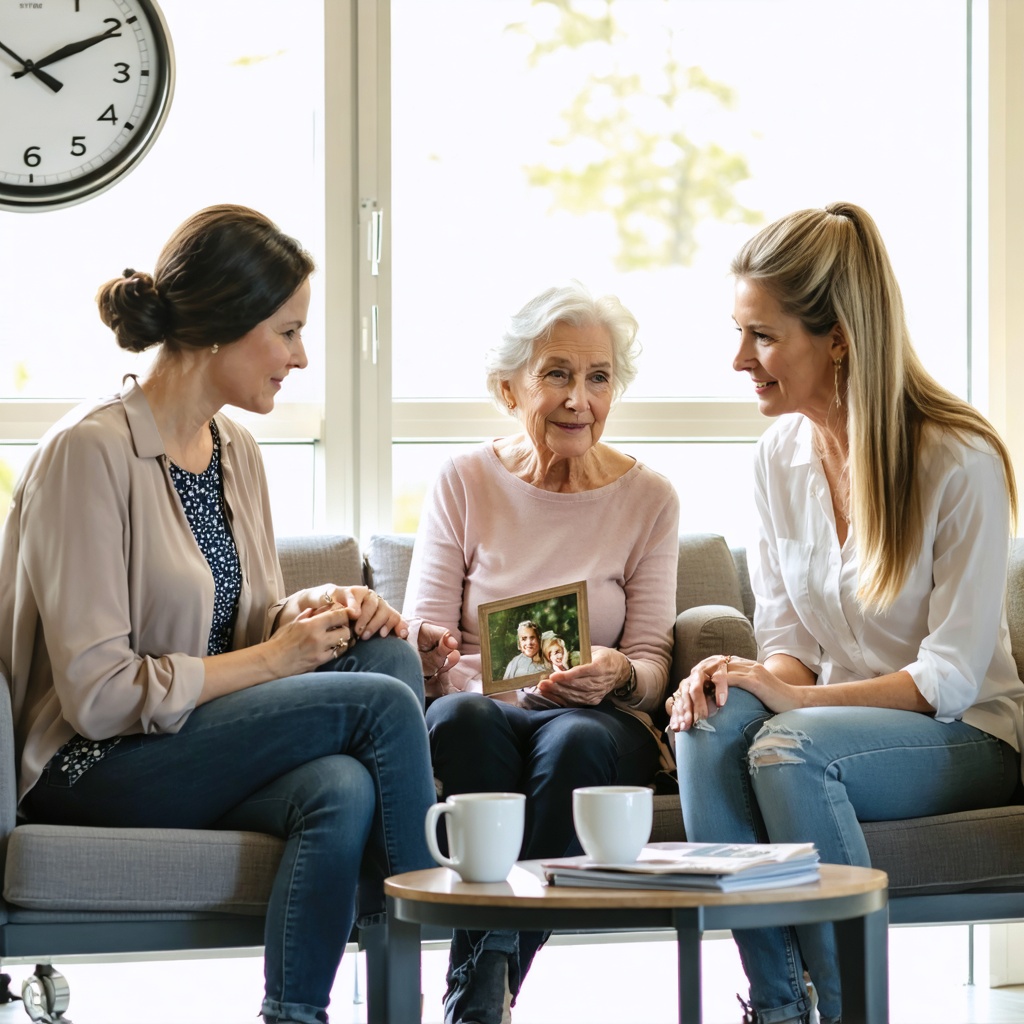 Image by RM AI
The First Glimpse of Recovery
Richard was the first to come out of surgery, the doctor explaining that everything had gone according to plan. 'The kidney was healthy and has been successfully transplanted to the recipient,' he informed us, his surgical mask hanging around his neck.
'Mr. Thompson is in recovery now.
He's still under anesthesia but should be waking up soon.' I was allowed to see him briefly—just five minutes to reassure myself that he was still with us. He looked smaller somehow, vulnerable against the white hospital sheets, tubes and wires connecting him to various machines.
His face was pale but peaceful, his breathing steady and strong. I touched his hand gently, careful not to disturb the IV line.
'You did it,' I whispered, though I knew he couldn't hear me. 'You brave, foolish man.' An hour later, we received word that Jason's surgery had also been successful.
The new kidney had been connected and was already functioning, a promising sign for recovery. Elaine broke down in tears of relief, Melissa holding her tightly as they absorbed the news.
Richard's Awakening
When Richard finally regained consciousness, I was sitting beside his bed, reading a dog-eared paperback I'd found in the hospital gift shop. His first words, spoken through dry lips, were about Jason.
'Is he okay?' he asked, his voice raspy from the breathing tube that had been removed. I set down my book and reached for the cup of ice chips the nurse had left.
'He's doing well,' I assured him, spooning a small amount between his lips. 'The kidney is working already.
The doctors are very optimistic.' Relief washed over his features, followed quickly by a grimace of pain as he tried to shift position. 'Easy,' I cautioned, pressing the button to summon the nurse.
'You've got a long recovery ahead.' He caught my hand, his grip weaker than usual but insistent. 'Thank you for being here,' he said, his eyes conveying what words couldn't—gratitude, love, and the unspoken question of whether we would be okay.
I wasn't ready to answer that question yet, but I wasn't running away either.
 Image by RM AI
The First Meeting After Surgery
Three days after the surgery, when both Richard and Jason were stable enough for brief visits, the nurses arranged for Jason to be wheeled into Richard's room.
I stood back, giving them space for this moment that felt both intensely private and somehow universal—a father and son connecting across decades of separation.
'You look better,' Richard observed, taking in Jason's improved color and clearer eyes. Jason smiled, the resemblance to Richard even more pronounced when his face lit up.
'Thanks to you,' he replied simply. There was an awkwardness between them, the natural result of being strangers despite their biological connection.
But there was also an undeniable bond, something that transcended their brief acquaintance. They talked about the surgery, about the medications they were both taking, about the strange coincidence of having the same favorite baseball team despite growing up in different states.
I watched Richard's face as he absorbed every detail about this son he was just beginning to know—hungry for information, storing away each new discovery like a treasure.
 Image by RM AI
Learning to Be a Family
Over the next two weeks, as both men gradually recovered their strength, a new routine emerged. I would spend mornings with Richard, helping him walk the hospital corridors as part of his rehabilitation, then afternoons with Jason and his family.
The twins, Emma and Lily, were initially shy around their new 'Grandpa Richard' and 'Grandma Margaret'—titles that felt strange but not unwelcome. They soon warmed up, bringing drawings and small treasures to show us during visits.
Our own children arrived one by one—Michael first, then Sarah with her husband, finally James—each processing this unexpected family expansion in their own way. There were awkward moments and difficult conversations, jealousy and confusion mingling with curiosity and cautious acceptance.
'It's weird to suddenly have a half-brother who's older than me,' James admitted one evening as we shared dinner in the hospital cafeteria. 'But he seems like a good guy.' Michael was more reserved, watching interactions carefully before forming opinions.
Sarah, always our most empathetic child, connected with Jason immediately, finding common ground in their shared profession as educators.
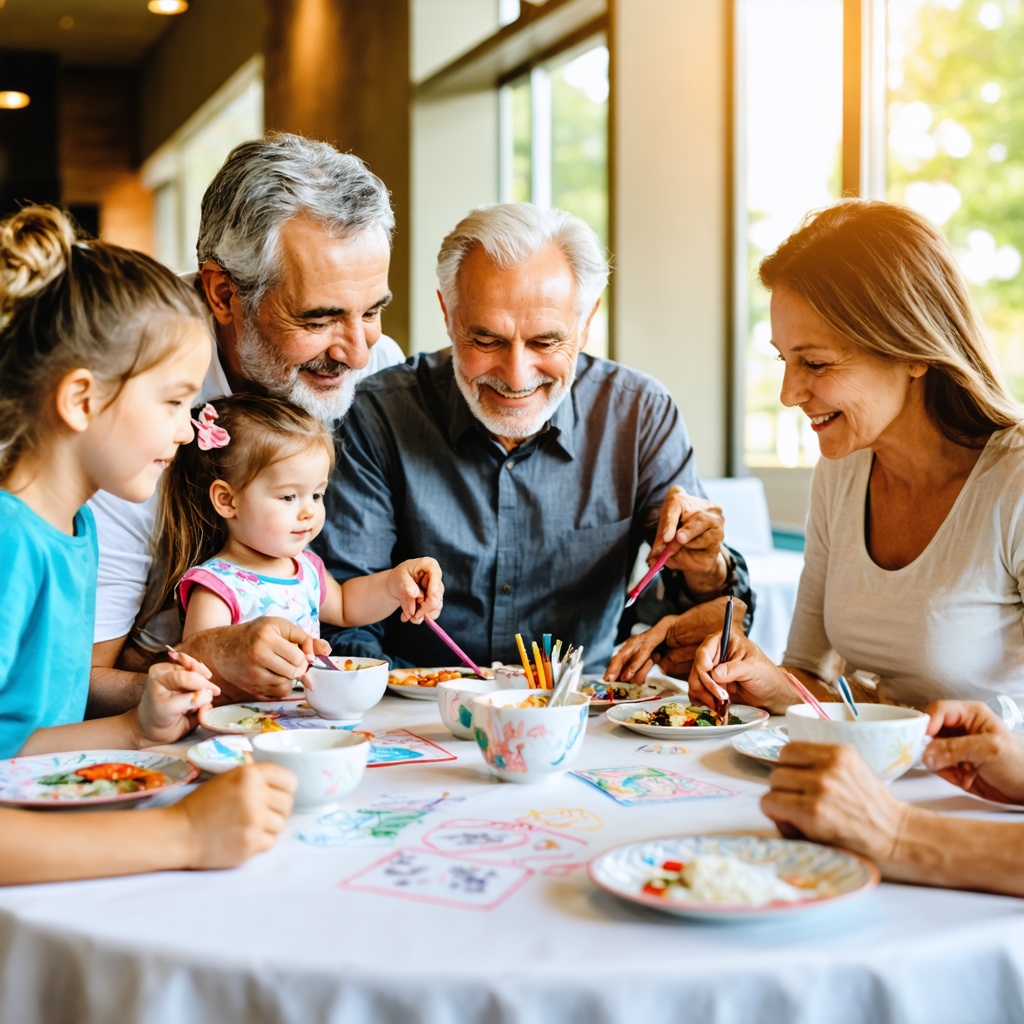 Image by RM AI
The Unexpected Bond
What surprised me most during those weeks was my own growing connection with Jason. I had expected to feel like an outsider—the wife who hadn't known about his existence, the woman who had unknowingly benefited from Elaine's silence all those years ago.
Instead, I found myself drawn to his quiet humor, his patience with the twins, his genuine interest in getting to know our family. One afternoon, while Richard was having tests done, Jason and I sat in the hospital garden, enjoying rare sunshine.
'I want you to know,' he said carefully, 'that I never intended to disrupt your marriage. When I started searching for my biological father, I just wanted medical information.' He paused, adjusting the surgical mask he still wore to protect his compromised immune system.
'Finding Richard—and by extension, you and your children—that was an unexpected gift.' His sincerity was touching, his desire to respect the boundaries of our established family evident. 'Sometimes the best things in life are unexpected,' I replied, surprising myself with how much I meant it.
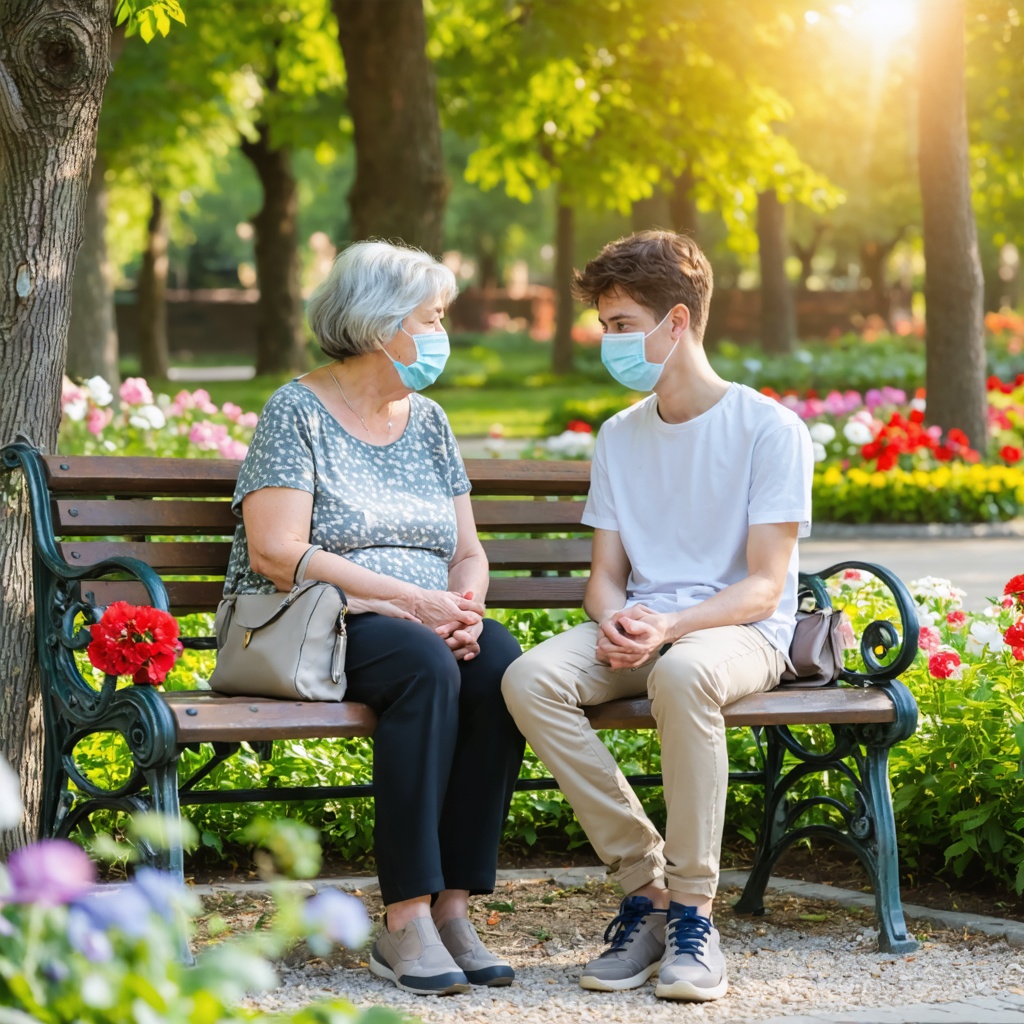 Image by RM AI
Richard's Confession of Fear
As discharge day approached for both patients, Richard and I had a conversation that finally addressed the elephant in the room—his decision to leave rather than tell me the truth. 'I've been trying to understand why you didn't trust me enough to share this,' I said one evening as we sat in his hospital room, the sunset casting long shadows across the floor.
He was stronger now, able to sit up in a chair rather than the bed, though still moving gingerly to protect his surgical site. 'It wasn't about trust,' he insisted, his eyes meeting mine directly for the first time since I'd arrived in Portland.
'It was about fear.' He explained how discovering Jason had thrown him into an emotional tailspin—joy at finding his son mixed with guilt over the years lost, anxiety about how this would affect our family, terror at the thought of losing Jason just when he'd found him. 'When the doctors said I was a match, everything happened so quickly.
I convinced myself that leaving was easier than explaining—that you might try to stop me or that our children would feel betrayed.' He reached for my hand, his fingers trembling slightly. 'I was a coward, Maggie.
The thought of disappointing you after forty years was unbearable.'
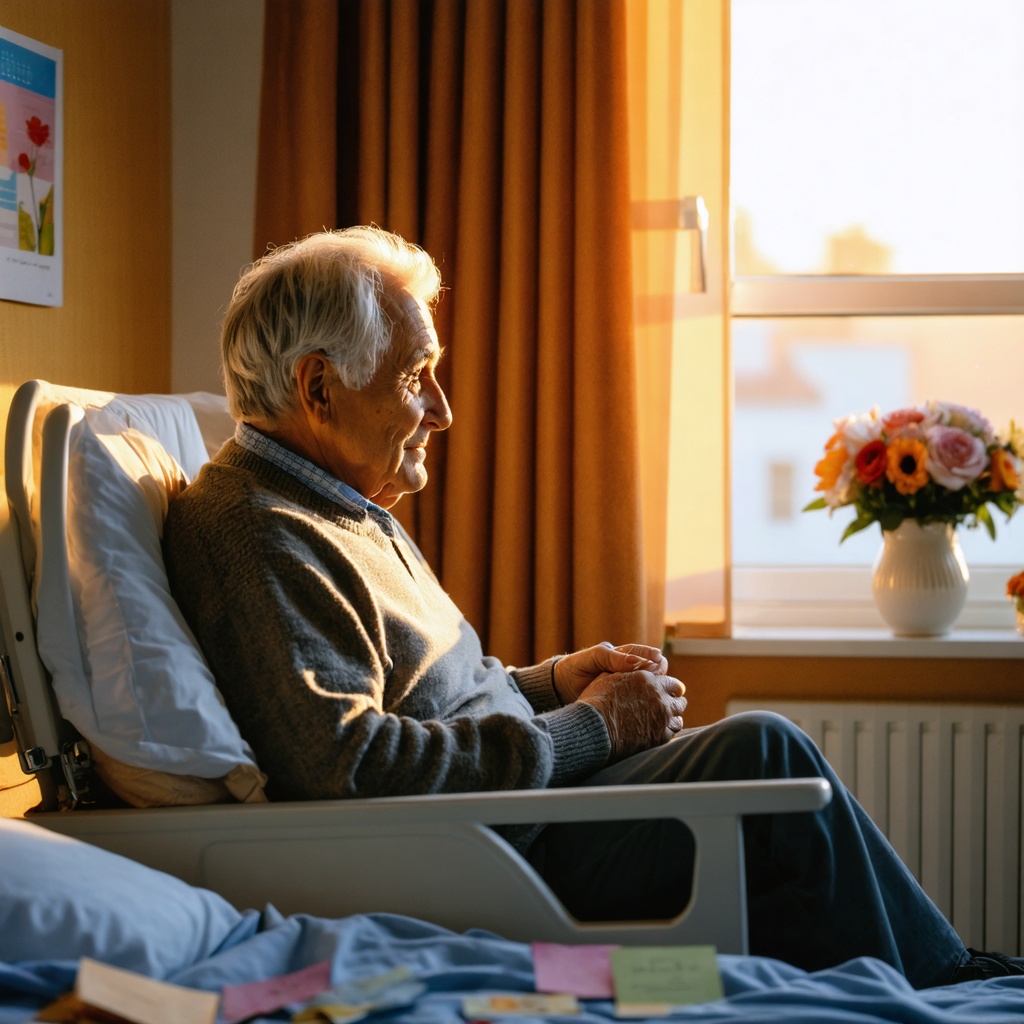 Image by RM AI
The Decision to Forgive
I thought I'd be furious when I finally heard his explanation. But when I saw the genuine remorse in his eyes, the fear that still lingered about my reaction, I realized something important:
forty years of love and trust couldn't be erased by one mistake, even one as significant as this. 'You should have told me,' I said firmly, needing him to understand the gravity of his choice.
'We could have faced this together, as we've faced everything else in our marriage.' He nodded, accepting the gentle rebuke. 'But I understand why you were scared,' I continued, surprising both of us with my next words.
'And I forgive you.' The relief on his face was immediate and profound, years seeming to fall away as tension left his body. 'I don't deserve your forgiveness,' he whispered, tears gathering in his eyes.
'Maybe not,' I agreed, 'but forgiveness isn't about deserving. It's about choosing to move forward together rather than staying stuck in hurt.' It wasn't that simple, of course—forgiveness would be an ongoing process, not a one-time declaration.
But it was a start, a foundation we could build upon.
 Image by RM AI
Planning for the Future
As Richard's discharge date approached, we faced practical questions about the future. He would need several weeks of recovery before being cleared to travel home, requiring regular follow-up appointments with the transplant team in Portland.
Jason, too, would need close monitoring to ensure his body didn't reject the new kidney. 'I've been thinking,' I said as we discussed logistics one morning.
'What if we stayed in Portland for a while? We could rent a furnished apartment near the hospital.' Richard looked surprised by the suggestion.
'You'd be willing to do that? What about your garden club?
Your volunteer work at the library?' I shrugged, the priorities that had seemed so important a month ago now feeling insignificant compared to what we were facing. 'The garden and the books will still be there when we get back.
This is more important.' We discussed the possibility with Jason and his family, who were cautiously enthusiastic about having us nearby during recovery. 'The girls would love having you close,' Melissa admitted.
'And honestly, so would I. This has been overwhelming.' Our own children had mixed reactions—concern about their father's health balanced against uncertainty about this new branch of the family tree.
 Image by RM AI
Finding a Temporary Home
With the help of a local realtor recommended by one of the hospital social workers, we found a small but comfortable furnished apartment just three blocks from Jason's home and ten minutes from the hospital. It was nothing like our spacious house in Connecticut, with its carefully curated decor and familiar comforts, but it would serve our needs for the next few months.
Richard was discharged on a Wednesday, wheeled out of the hospital with strict instructions about medication schedules, activity limitations, and warning signs to watch for. The transition from hospital to apartment was challenging—Richard was still in considerable pain, tired easily, and struggled with the side effects of anti-rejection medications he would need to take for the rest of his life.
I became his nurse, physical therapist, and cheerleader all in one, helping him navigate the slow process of recovery. Our days fell into a new routine:
morning medication with breakfast, short walks that gradually increased in length, afternoon rest periods, and often evening visits with Jason's family. The twins quickly overcame their initial shyness, delighting in having new grandparents to charm with their antics.
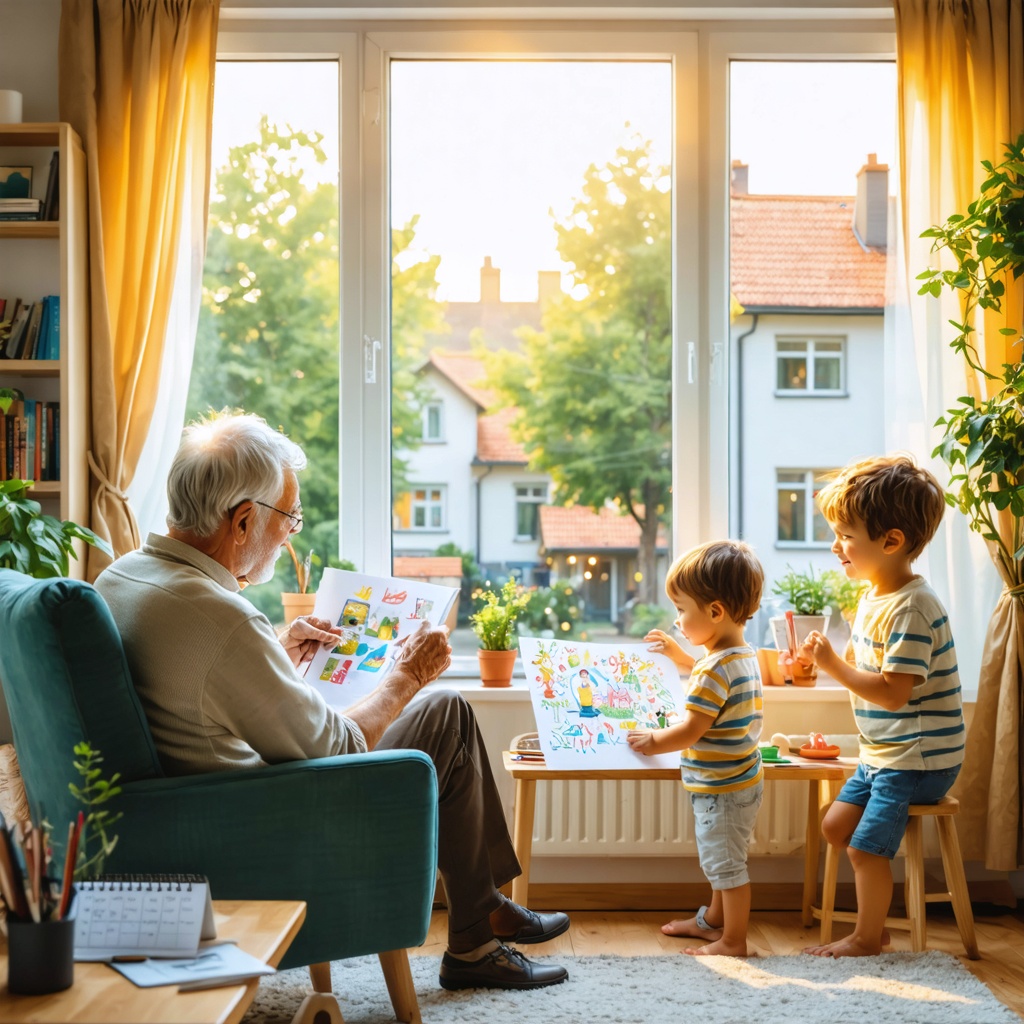 Image by RM AI
The First Family Dinner
Three weeks after the surgery, when both Richard and Jason were strong enough for extended social interaction, Melissa invited us to dinner at their home. It was to be a milestone event—the first proper family gathering that wasn't in a hospital room or cafeteria.
I spent the morning helping Richard shower and dress, noting with satisfaction that he was moving more easily now, the surgical pain gradually subsiding. 'Are you nervous?' I asked as we prepared to leave, noticing the way he kept adjusting his collar and checking his reflection.
He nodded, a rueful smile crossing his face. 'Ridiculous, isn't it?
I'm sixty-four years old, and I'm anxious about having dinner with my son.' I understood his apprehension. Despite the intense circumstances that had brought them together, Richard and Jason were still essentially strangers, still learning how to relate to each other outside the context of medical crisis.
The evening turned out to be both awkward and wonderful—conversation sometimes faltering before finding new paths, the twins providing comic relief with their unfiltered observations, Melissa's excellent cooking giving us all something to appreciate when words failed.
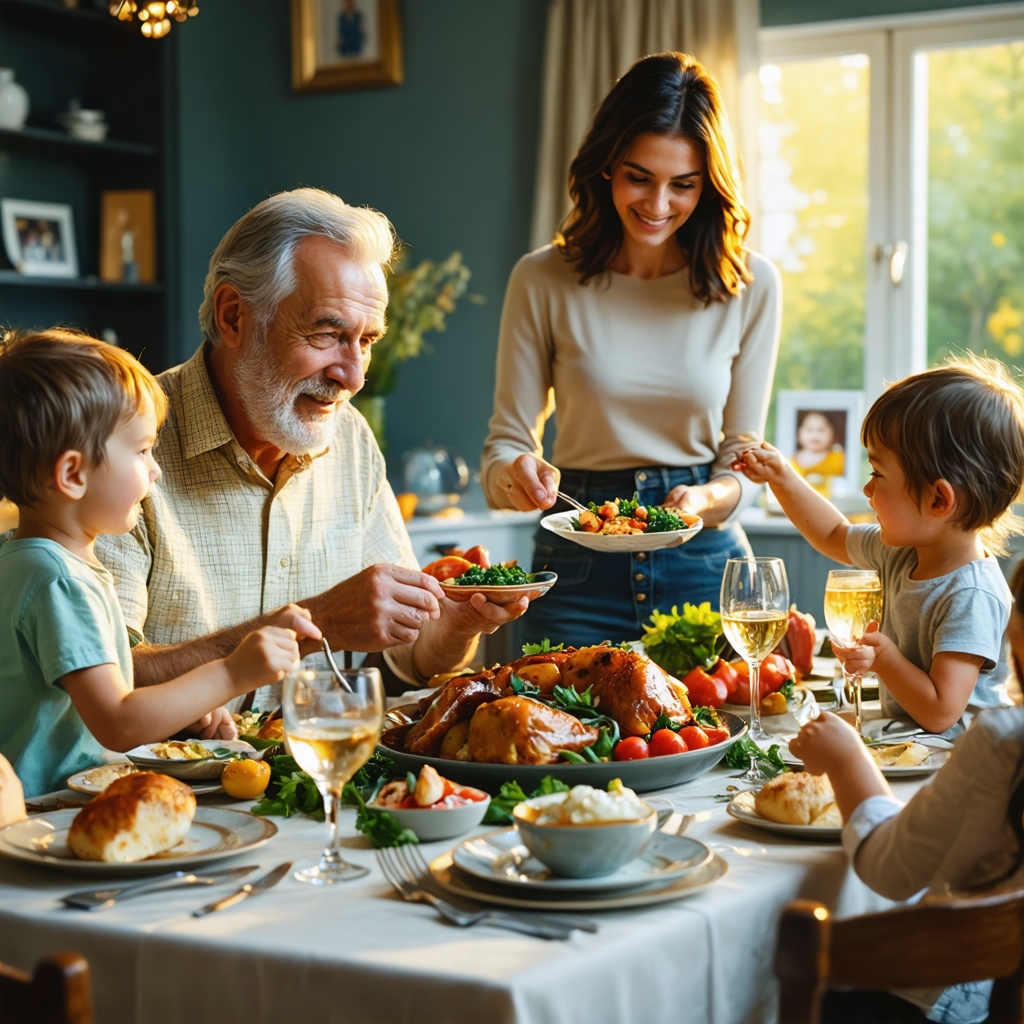 Image by RM AI
Learning Jason's Childhood Stories
As weeks passed and both patients continued to recover, we spent more time with Jason's family, gradually filling in the blanks of his life story. Elaine brought photo albums and home videos, sharing memories of Jason's childhood that Richard had missed.
We watched footage of his first bicycle ride, his elementary school plays, his high school graduation. Each milestone was bittersweet for Richard—joy at seeing his son's achievements mixed with grief for his absence from these important moments.
'He was always so determined,' Elaine recalled one evening as we looked through pictures of Jason's science fair projects. 'Once he set his mind to something, nothing could distract him.' Richard smiled, recognition flickering in his eyes.
'James is the same way,' he noted, referring to our youngest son. 'Remember how he taught himself Japanese because he wanted to read manga in its original form?' The parallels between Jason and our children became a source of fascination—shared traits that couldn't be explained by environment, only by the invisible threads of DNA connecting them.
We discovered that Jason had Richard's analytical mind, his patience when solving problems, even his distinctive laugh that started low and built to an infectious chuckle.
 Image by RM AI
The Twins' Curiosity
Emma and Lily, with the unfiltered curiosity of five-year-olds, asked questions that adults would have considered too direct or uncomfortable. 'Why didn't you know about Daddy when he was little?' Emma asked Richard one afternoon as they colored together at the kitchen table.
Richard looked to me for help, but I simply raised an eyebrow, equally interested in how he would answer. He considered for a moment before responding in terms they could understand.
'Sometimes grown-ups make mistakes or don't have all the information they need,' he explained gently. 'I didn't know your daddy existed when he was little, or I would have wanted to be part of his life, just like I want to be part of yours now.' Lily, the more thoughtful of the twins, considered this answer carefully.
'So you're making up for lost time?' she asked, using a phrase she'd clearly heard from an adult. Richard nodded, swallowing hard against the emotion her innocent question evoked.
'Yes, sweetheart. That's exactly what I'm trying to do.' The girls seemed satisfied with this explanation, accepting with childlike ease the complicated reality that had the adults still struggling to navigate.
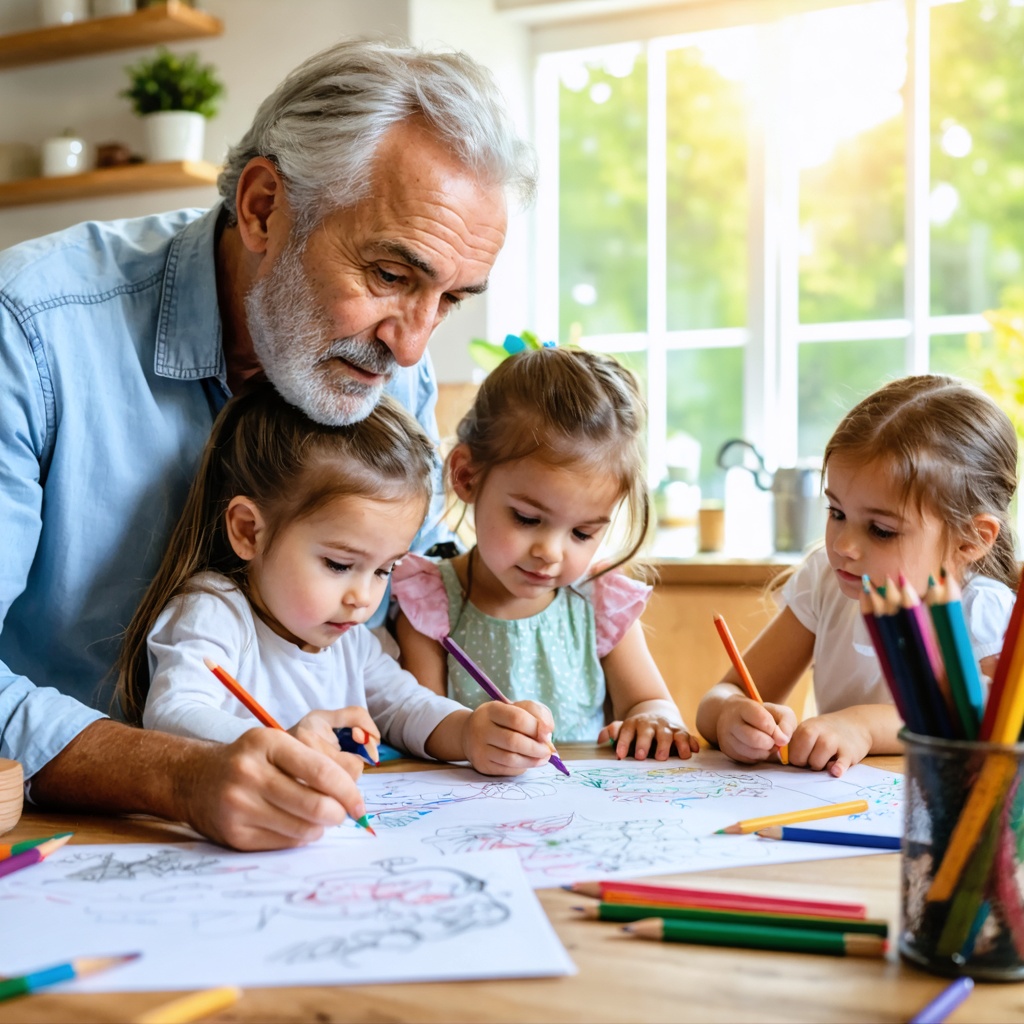 Image by RM AI
Our Children Meet Their Half-Brother
When Jason was strong enough for more visitors, we arranged for our children to meet him properly. Michael flew in from Chicago, Sarah and her husband drove up from San Francisco, and James took a week off from his residency program in Boston.
The first meeting was held at our temporary apartment, neutral territory that felt less intimidating than Jason's home. I prepared far too much food, channeling my nervous energy into cooking all of Richard's and the children's favorites.
The atmosphere was tense initially, everyone hyper-aware of the unusual circumstances bringing them together. Michael, our oldest and most reserved, shook Jason's hand formally.
Sarah, always our bridge-builder, broke the ice by commenting on the striking resemblance between Jason and Richard. James, the scientist of the family, was fascinated by the genetic connections evident in their similar features and mannerisms.
'It's like looking at Dad thirty years ago,' he observed, studying Jason with undisguised interest. Gradually, the conversation became more natural, moving from cautious small talk to genuine exchange.
By dessert, Sarah was showing Jason pictures of her children on her phone, Michael was discussing baseball statistics with him, and James was explaining his research in terms that had everyone else's eyes glazing over.
 Image by RM AI
The Medical Milestone
Two months after the transplant, Jason reached a significant medical milestone—his body showed no signs of rejecting the kidney, and his lab values had stabilized at near-normal levels. The transplant team was cautiously optimistic about his long-term prognosis, though he would need lifelong medication and monitoring.
We celebrated this news with a small gathering at Jason and Melissa's home, the first time Jason felt well enough to host. Richard, too, was recovering well, though more slowly due to his age.
He tired easily and still experienced occasional pain, but the surgical site was healing properly, and his remaining kidney was functioning normally. 'You two are my success story,' Dr.
Patel, the transplant surgeon, told them during a joint follow-up appointment. 'This is why I do what I do.' The medical crisis that had brought us all together was gradually receding, leaving us to figure out what our relationship would look like without the urgency of life-and-death decisions.
Would we remain close once Richard was cleared to return home? Would the connection between our families survive the distance?
These questions lingered unspoken as we celebrated the medical victory, no one quite ready to address the emotional complexities that lay ahead.
 Image by RM AI
Richard's Reflection on Fatherhood
One evening, as Richard and I sat on the small balcony of our rented apartment watching the sunset, he shared thoughts that had been percolating during his recovery. 'I keep thinking about what it means to be a father,' he said, his voice contemplative.
'With our kids, I was there from the beginning—midnight feedings, first steps, skinned knees, driving lessons. I thought that's what made me their dad.' He paused, watching a pair of birds settle on a nearby rooftop.
'But with Jason, it's different. I missed all that, yet there's still this...
connection. This recognition.' I understood what he meant.
Despite missing the formative years of Jason's life, Richard had slipped into a paternal role with surprising ease, his protective instincts and pride in Jason's accomplishments unmistakably those of a father. 'Biology is powerful,' I acknowledged, 'but so is choice.
You're choosing to be his father now, even though it's complicated and messy.' Richard nodded, reaching for my hand. 'And he's choosing to let me, which amazes me every day.
After everything he's been through, he has every right to be angry that I wasn't there.'
 Image by RM AI
The Unexpected Gift
As Jason's strength returned, he began sharing more about his life before the illness—his passion for teaching science, his volunteer work with underprivileged students, his dreams for the twins' future. 'I want to show you something,' he said one afternoon when we visited.
He disappeared into his home office, returning with a worn leather journal. 'After my adoptive dad died and I started looking for my biological father, I began writing letters I never intended to send.' He handed the journal to Richard, who accepted it with visible emotion.
'They're yours now, if you want them.' That night, Richard sat up late reading Jason's unsent letters—decades of thoughts, questions, and milestones that he had missed. Some entries were angry, demanding to know why he hadn't been part of Jason's life.
Others were reflective, wondering what traits they might share. Many were simply updates on important moments:
'I graduated college today. Are you proud of me, wherever you are?' The journal was both heartbreaking and healing, offering Richard a glimpse into the years he had missed while giving Jason a way to process his complicated feelings about his unknown father.
 Image by RM AI
The Decision to Stay Connected
As Richard's three-month follow-up appointment approached—the one that would likely clear him to return home—we faced the question we'd been avoiding: what happened next?
One evening, after the twins were in bed, the four adults—Richard and I, Jason and Melissa—sat in their living room discussing the future. 'The doctor thinks I'll be cleared to travel next week,' Richard began, the statement hanging in the air like a deadline.
Jason nodded, his expression carefully neutral though I could see the concern in his eyes. 'That's great news.
You must be eager to get back to your real life.' The phrase 'real life' struck me as significant—as if these months in Portland had been some kind of intermission rather than a new chapter. 'Actually,' I found myself saying, 'we've been talking about splitting our time.
Maybe spending winters here and summers in Connecticut.' The idea had formed gradually over the past weeks, but this was the first time I'd articulated it aloud. Richard looked at me with surprise and gratitude, clearly having considered the same possibility but unsure of my willingness.
'We're not ready to say goodbye,' he added simply.
 Image by RM AI
Planning Two Homes
The suggestion of dividing our time between Connecticut and Portland opened a flood of practical considerations. Our house in Connecticut was too large for just the two of us anyway—we'd been talking about downsizing for years but had never taken the step.
Perhaps this was the push we needed. We could keep a smaller place near our other children and grandchildren on the East Coast while establishing a second base in Portland.
Tax implications, healthcare continuity, community connections—all these factors needed consideration. But underlying the practical discussions was a more fundamental truth:
in the space of a few months, Jason and his family had become essential to us. The thought of returning to our previous life as if this transformative experience hadn't happened seemed impossible.
'We could look for something in this neighborhood,' Richard suggested, his enthusiasm growing as the idea took shape. 'Nothing too big, just enough space for us and maybe one or two of the kids to visit at a time.' Melissa, who had been quiet during much of the discussion, finally spoke up.
'The girls would love having you nearby,' she said softly. 'And so would we.'
 Image by RM AI
Telling Our Other Children
Breaking the news to our other children about our decision to split our time between coasts was met with mixed reactions. Michael, always the practical one, immediately raised concerns about the financial implications and the strain of maintaining two households at our age.
'Have you really thought this through?' he asked during our video call, his forehead creased with worry. 'What about Mom's arthritis?
The travel back and forth will be hard on both of you.' Sarah was more supportive, understanding our desire to build a relationship with Jason and his family. 'I think it's wonderful,' she said, though I could hear the slight hesitation in her voice.
'But we'll miss having you around as much.' James, surprisingly, was the most enthusiastic. 'You've always talked about wanting adventure in retirement,' he reminded us.
'This isn't exactly what you planned, but it's definitely an adventure.' Their concerns were valid, their support touching in different ways. We assured them that our presence in their lives wouldn't diminish—we'd still be present for important events, still available for grandchild babysitting duties, still the parents they'd always known.
We were expanding our family circle, not replacing one part with another.
 Image by RM AI
Finding Our Portland Home
With Richard cleared to travel but committed to our new plan, we extended our apartment lease while beginning the search for a more permanent Portland residence. The real estate market was challenging, but with Jason and Melissa's knowledge of the area, we focused our search on neighborhoods that would keep us close to them while meeting our needs for walkability and access to services.
After viewing nearly a dozen properties, we found a charming craftsman bungalow just four blocks from Jason's family. It was smaller than our Connecticut home but had character and warmth that appealed to both of us—original woodwork, a covered front porch perfect for morning coffee, and a manageable garden where I could indulge my horticultural interests.
'I can see us here,' Richard said as we stood in the sunny kitchen during our second viewing. 'It feels right.' The owner was motivated to sell quickly, and our offer was accepted with minimal negotiation.
As we signed the paperwork, I felt a strange mixture of excitement and disbelief. Six months ago, I couldn't have imagined owning property on the opposite coast, yet here we were, putting down roots near a son we hadn't known existed.
 Image by RM AI
The Return to Connecticut
With our Portland home purchase in process, we needed to return to Connecticut to sort through forty years of accumulated possessions and prepare our house for sale. The farewell at the Portland airport was emotional, especially for Richard and Jason, who had formed a bond that transcended their brief acquaintance.
'We'll be back in six weeks,' Richard promised, embracing his son carefully, mindful of both their still-healing bodies. The twins clung to my legs, extracting promises of video calls and souvenirs.
As our plane took off, I watched Portland recede beneath us, marveling at how a city that had been just a name on a map months ago now held such significance in our lives. Our Connecticut home felt simultaneously familiar and strange when we arrived—everything exactly as we'd left it during our hasty departure, yet somehow different because we were different.
The carefully tended garden had grown wild in our absence, the mail had accumulated despite our forwarding order, and a fine layer of dust covered the furniture. Our neighbor Martha had kept an eye on the property but couldn't prevent the slightly abandoned feeling that permeated the rooms.
 Image by RM AI
Sorting Through Memories
The process of downsizing forty years of married life proved more emotional than either of us had anticipated. Each object held memories—the dining table where we'd hosted countless family dinners, the rocking chair where I'd nursed all three children, the collection of seashells from beach vacations spanning decades.
'How do we decide what to keep?' I wondered aloud, standing in our crowded attic surrounded by boxes of children's artwork, old photo albums, and holiday decorations. Richard, sorting through his collection of vinyl records, looked up with a thoughtful expression.
'Maybe we ask ourselves what we want to bring into this new chapter,' he suggested. 'What still brings us joy, and what are we holding onto out of habit?' We established a system:
items to move to our new Portland home, things to keep in the smaller Connecticut property we planned to purchase, possessions to pass on to our children, and donations for charity. The sorting became a journey through our shared history, prompting conversations about experiences I'd nearly forgotten and dreams we'd set aside.
Some decisions were easy—Richard's beloved woodworking tools would come to Portland, where he hoped to set up a small workshop in the garage. Others were agonizing—which family heirlooms to keep and which to entrust to the next generation.
 Image by RM AI
Our Children's Reactions to the Changes
Our children visited individually and together during the sorting process, each responding differently to the physical dismantling of their childhood home. Sarah became unexpectedly emotional over seemingly minor items—the kitchen timer that had counted down countless batches of cookies, the height chart penciled on the laundry room doorframe.
'I always thought my kids would visit this house,' she admitted, running her fingers along the worn banister. 'That they'd sleep in the same rooms we did growing up.' Michael approached the process with characteristic efficiency, helping us organize estate sales and donation pickups, though I noticed him quietly pocketing his father's old pocket watch without comment.
James, our most sentimental child despite his scientific career, spent hours in the basement going through old science fair projects and books, creating a detailed inventory of what should be preserved. 'This is weird,' he confessed one evening as we sat among half-packed boxes.
'It's like you're choosing between us and Jason.' Though he tried to keep his tone light, I heard the underlying concern. 'We're not choosing,' I assured him, reaching for his hand.
'We're expanding. There's room in our hearts for all of you.'
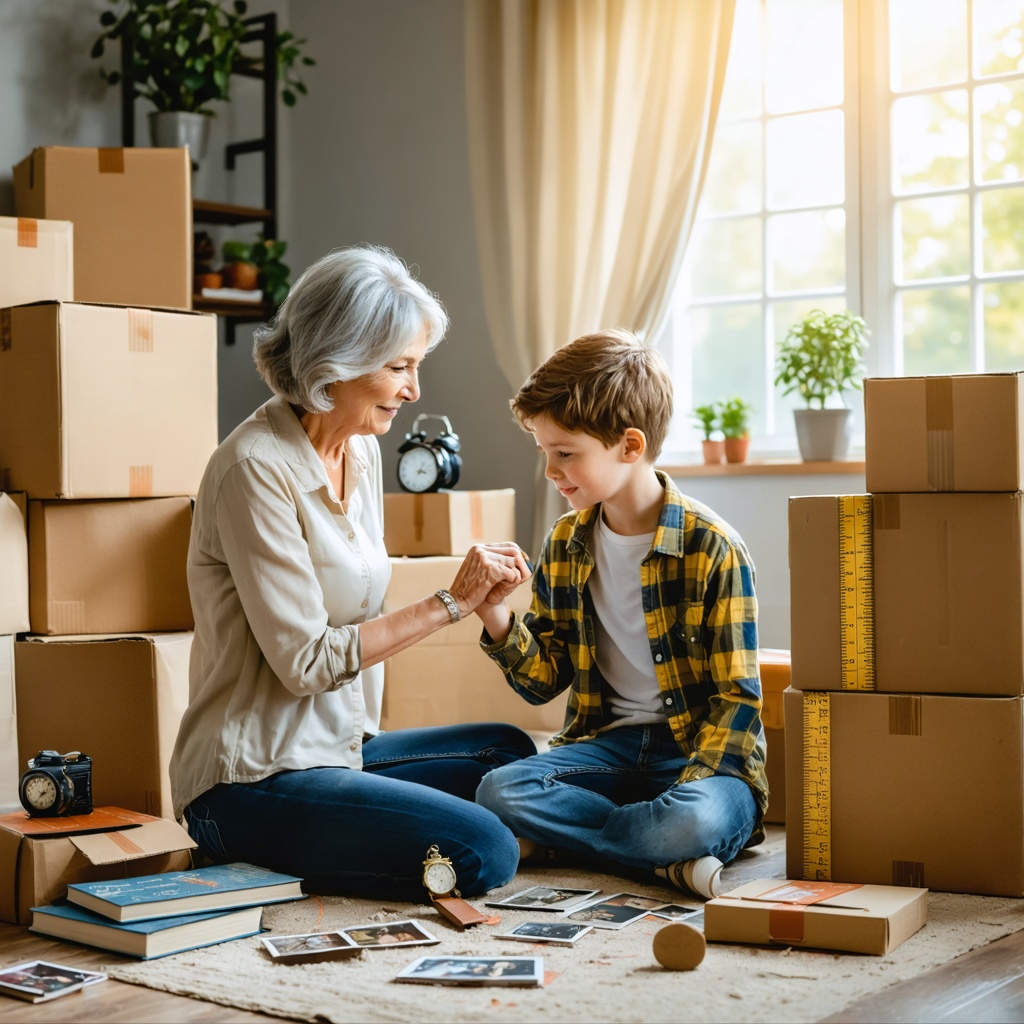 Image by RM AI
The Unexpected Community Support
News of our situation spread through our small Connecticut town, where we'd been fixtures in the community for decades. I'd dreaded the gossip, the raised eyebrows, the judgment that might come with Richard's unexpected paternity and our decision to divide our lives between coasts.
Instead, we were met with surprising support and understanding. My book club organized a packing party, bringing boxes and bubble wrap along with casseroles and wine.
Richard's fellow Rotary Club members helped disassemble furniture too large to move. Our pastor visited to offer counsel and ended up sharing a similar story from his own family.
'Life rarely follows the paths we expect,' he observed as we shared coffee on our soon-to-be-former porch. 'The measure of a person isn't in avoiding complications but in how they handle them when they arise.' Even Martha, our somewhat nosy neighbor who had initially seemed scandalized by the rumors, appeared at our door with a houseplant for our new Portland home.
'For new beginnings,' she said simply, pressing the ceramic pot into my hands. These gestures of community support reinforced what I was slowly learning—that most people understood life's complexities because they'd faced their own unexpected chapters.
 Image by RM AI
The First Holiday Season
As Thanksgiving approached, we faced the challenge of navigating our first holiday season with our expanded family. Traditionally, all three children and their families gathered at our Connecticut home for Thanksgiving, while Christmas rotated between their homes.
Now, with our Connecticut house on the market and our Portland home not yet fully furnished, the logistics became complicated. After numerous family discussions and a fair amount of compromise, we decided to host Thanksgiving in Portland, inviting all our children to join us and meet Jason's family together.
It was a financial stretch to fly everyone west, but Richard and I agreed it was worth the investment to bring our blended family together. The preparations were both exciting and anxiety-inducing—would our children get along with Jason?
Would the different family traditions mesh or clash? Would the twins be overwhelmed by the sudden influx of relatives?
Melissa proved an invaluable partner in the planning, offering her larger home as the gathering place and helping coordinate menus that would incorporate traditions from both families. 'We'll make new traditions together,' she suggested with characteristic optimism.
'The girls are already excited about having so many cousins to play with.'
 Image by RM AI
The Family Gathering
The Thanksgiving gathering was chaotic, crowded, and ultimately healing in ways I hadn't anticipated. Watching our Connecticut children interact with Jason—finding common interests, sharing family stories, discovering the genetic traits they shared—filled me with a bittersweet joy.
Sarah's children immediately bonded with the twins over a shared love of a popular animated movie, their childish laughter providing a soundtrack to the adult conversations. Michael, initially the most reserved about our new arrangement, found common ground with Jason over their shared interest in educational reform.
James and Jason discovered they had both competed in the same national science competition as teenagers, albeit years apart. 'It's uncanny,' James remarked, shaking his head in amazement.
'We even chose similar project topics.' The dinner itself was a blend of traditions—Richard's mother's stuffing recipe alongside Melissa's family cranberry relish, my pumpkin pie next to Elaine's apple crisp. As I looked around the crowded table, at faces both familiar and new, I realized we had created something remarkable from circumstances that could have torn us apart.
Richard caught my eye across the table and smiled, the same thought clearly reflected in his expression.
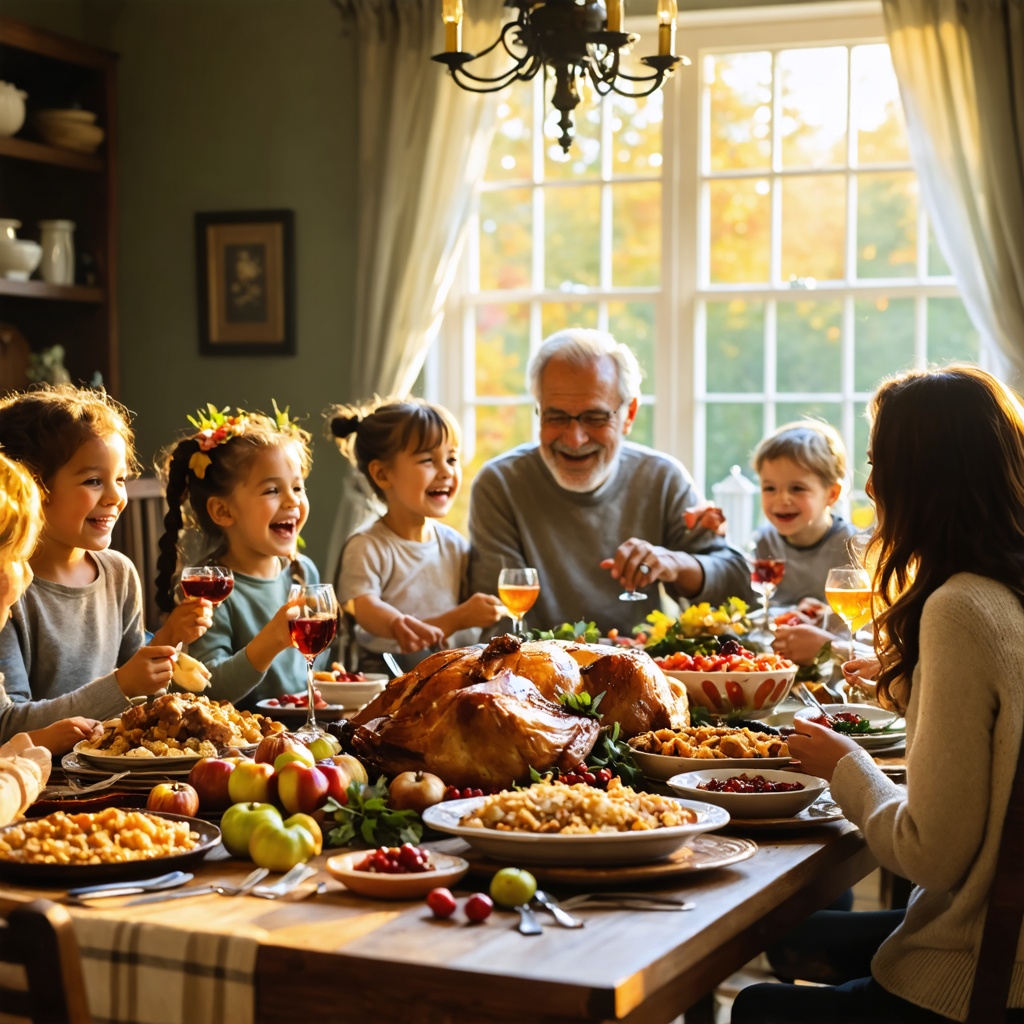 Image by RM AI
One Year Later
One year after Richard's disappearance and the subsequent upheaval of our lives, we settled into a new normal that would have been unimaginable twelve months earlier. Our time was divided between our cozy Portland bungalow and the small Connecticut condo we'd purchased near Sarah's family.
Jason's health continued to improve, the transplanted kidney functioning well with only minor medication adjustments. Richard had fully recovered from the surgery, though he tired more easily than before—a small price to pay for his son's life.
Our relationship with Jason and his family deepened beyond the medical crisis that had brought us together. Richard taught the twins to fish during summer weekends at a nearby lake, while I helped Jason establish a vegetable garden in his backyard.
Melissa and I discovered a shared passion for historical fiction, starting a two-person book club that met monthly over wine and cheese. Our Connecticut children visited Portland with increasing frequency, the initial awkwardness giving way to genuine connections.
The family expanded again when James announced his engagement to a fellow doctor, with plans for a wedding that would include all branches of our now-extended family.
 Image by RM AI
The Unexpected Lesson
On the anniversary of Richard's surgery, we gathered for a quiet dinner at our Portland home—just the four of us: Richard and me, Jason and Melissa.
The twins were having a sleepover at a friend's house, giving the adults rare uninterrupted conversation time. After dinner, as we sat in the backyard watching fireflies emerge in the summer twilight, Jason raised his glass in a toast.
'To second chances,' he said simply. 'And to the family we found in each other.' As we clinked glasses, I reflected on the extraordinary journey of the past year—from devastation to forgiveness, from shock to acceptance, from strangers to family.
When Richard walked out after forty years of marriage without a word, I thought my life was ending. Instead, it was expanding in ways I never could have imagined.
The path hadn't been easy. There had been tears and arguments, misunderstandings and adjustments.
But sitting there in the gathering darkness, surrounded by love both old and new, I knew with certainty that I wouldn't change a thing. Sometimes life's greatest gifts come disguised as its greatest challenges.
And sometimes, when someone walks away, they're actually leading you toward something remarkable.
 Image by RM AI
I Took a DNA Test for Fun — What I Discovered Shattered Everything I Knew About My Family
The Unwanted Gift That Changed Everything
I never thought much about my ancestry or family history. Growing up, I was just another kid in a loving family with two parents who seemed to adore me and, later, my younger siblings who came along.
Our family photos showed the same nose passed down through generations, the same crinkle around the eyes when we smiled. I had my dad's height and my mom's curly hair—or so everyone said.
So when I received one of those DNA testing kits during a gift exchange at work, I tossed it into my closet without much thought. What was the point?
I already knew who I was: just another Smith from Ohio with the predictable mix of European ancestry that made up most of middle America.
Little did I know that this forgotten gift would soon unravel the carefully constructed reality I had lived in for twenty-eight years.
 Image by RM AI
Boredom Leads to Life-Altering Discoveries
Six months later, on a particularly uneventful Sunday afternoon, I found myself scrolling mindlessly through social media, fighting the familiar weekend boredom that settles in when you've already binged all your shows and cleaned your apartment twice. Rain tapped against my windows, eliminating any possibility of outdoor activities.
While reorganizing my closet out of sheer desperation for something to do, I rediscovered the DNA kit, still in its cheerful packaging with promises of discovering your 'true self' emblazoned across the front. I laughed at the marketing—as if some spit in a tube could tell me anything about myself that I didn't already know.
On a whim, I decided to finally open it. What harm could come from confirming what I already knew?
I followed the instructions, spat into the little tube, sealed it up, and sent it off, promptly forgetting about it as life moved on. I had no idea I had just set in motion a series of events that would completely shatter the foundation of my identity.
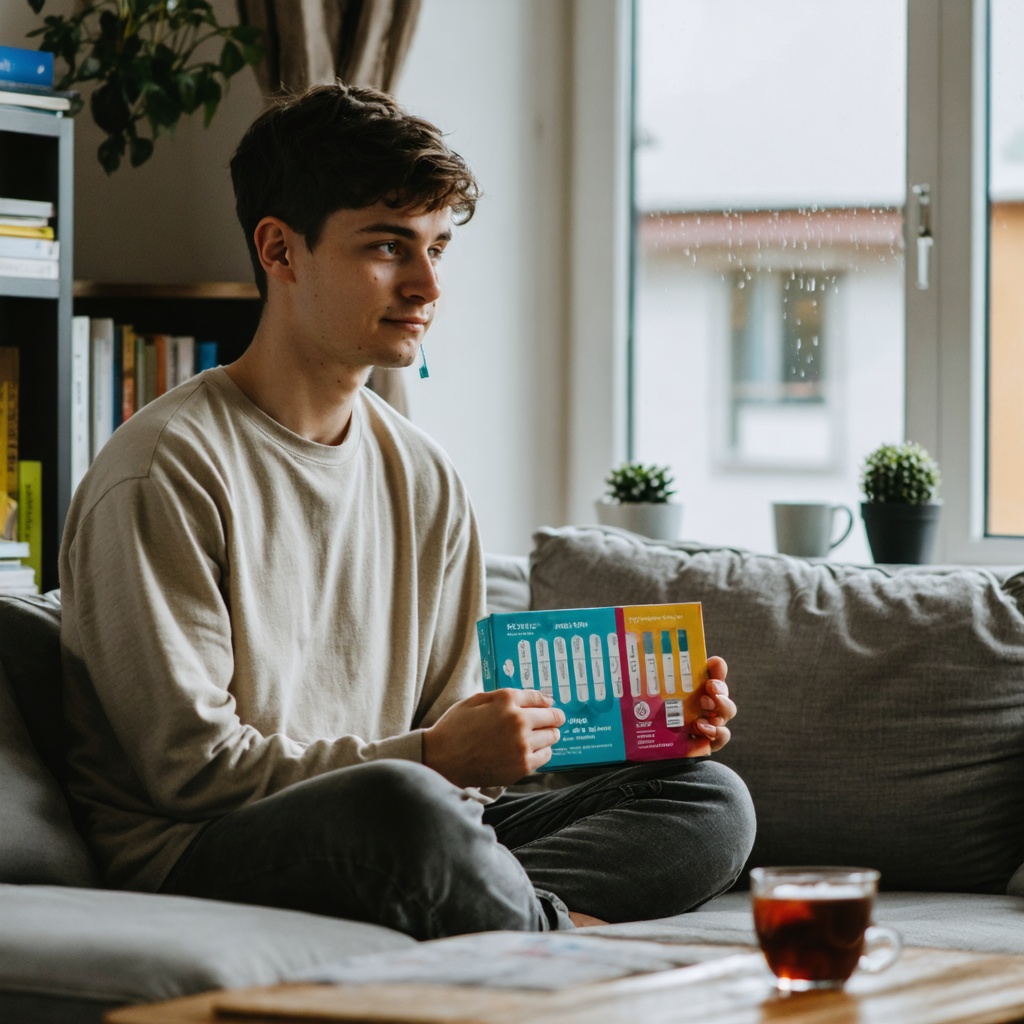 Image by RM AI
The Email That Changed Everything
Weeks later, I was in the middle of a particularly boring conference call when my phone buzzed with an email notification. 'Your DNA Results Are Ready!' the subject line announced with far too many exclamation points.
I opened it immediately, grateful for any distraction from the droning voice discussing quarterly projections. As I clicked through to view my results, I expected to see the predictable breakdown:
Mostly European, perhaps with a small percentage of something unexpected to make for interesting dinner conversation. Instead, what loaded on my screen made no sense at all.
According to this report, I was predominantly East Asian with significant South Asian markers. There wasn't a trace of the Northern European ancestry that should have dominated my genetic makeup based on my family history.
I stared at the colorful pie chart, waiting for my brain to make sense of what I was seeing. This had to be a mix-up—someone else's results sent to my account.
It was the only explanation that made any logical sense.
 Image by RM AI
Surely This Must Be a Mistake
I laughed it off initially, taking screenshots to share with friends about the ridiculous error this company had made. How could they mess up something so basic?
I imagined my actual results sitting in someone else's inbox, probably causing just as much confusion. I drafted a polite but firm email to customer service, explaining that they had clearly sent me the wrong results and requesting that they correct the error.
I even attached a family photo as evidence—me standing between my very obviously Caucasian parents at my college graduation. The response came back surprisingly quickly, within hours rather than the days I had expected.
'We understand your confusion,' the email began professionally, 'but we assure you, based on the sample you provided, these findings are correct. Our testing procedures include multiple verification steps to prevent sample mix-ups.' They went on to explain their quality control process in technical detail, as if scientific jargon would somehow make me accept results that were clearly impossible.
 Image by RM AI
Denial Gives Way to Doubt
I read the email three times, my initial amusement fading with each pass. Something cold and unsettling began to form in the pit of my stomach.
I found myself studying my own features in my phone's reflection—features I had always attributed to my parents. Was my nose really shaped like my father's?
Did I actually have my mother's eyes, or had I just convinced myself of these similarities after years of hearing relatives comment on them at family gatherings? I shook my head, trying to dislodge these ridiculous thoughts.
There had to be a logical explanation. Maybe the test was flawed.
Maybe the company's database was skewed. I decided to call my mom—she would laugh about this with me, maybe suggest I try a different company just to prove how wrong these results were.
I dialed her number, already rehearsing the funny way I would tell this story. The phone rang three times before she picked up, her familiar voice instantly comforting.
'Mom, you won't believe this crazy mix-up,' I began, forcing a laugh that sounded hollow even to my own ears.
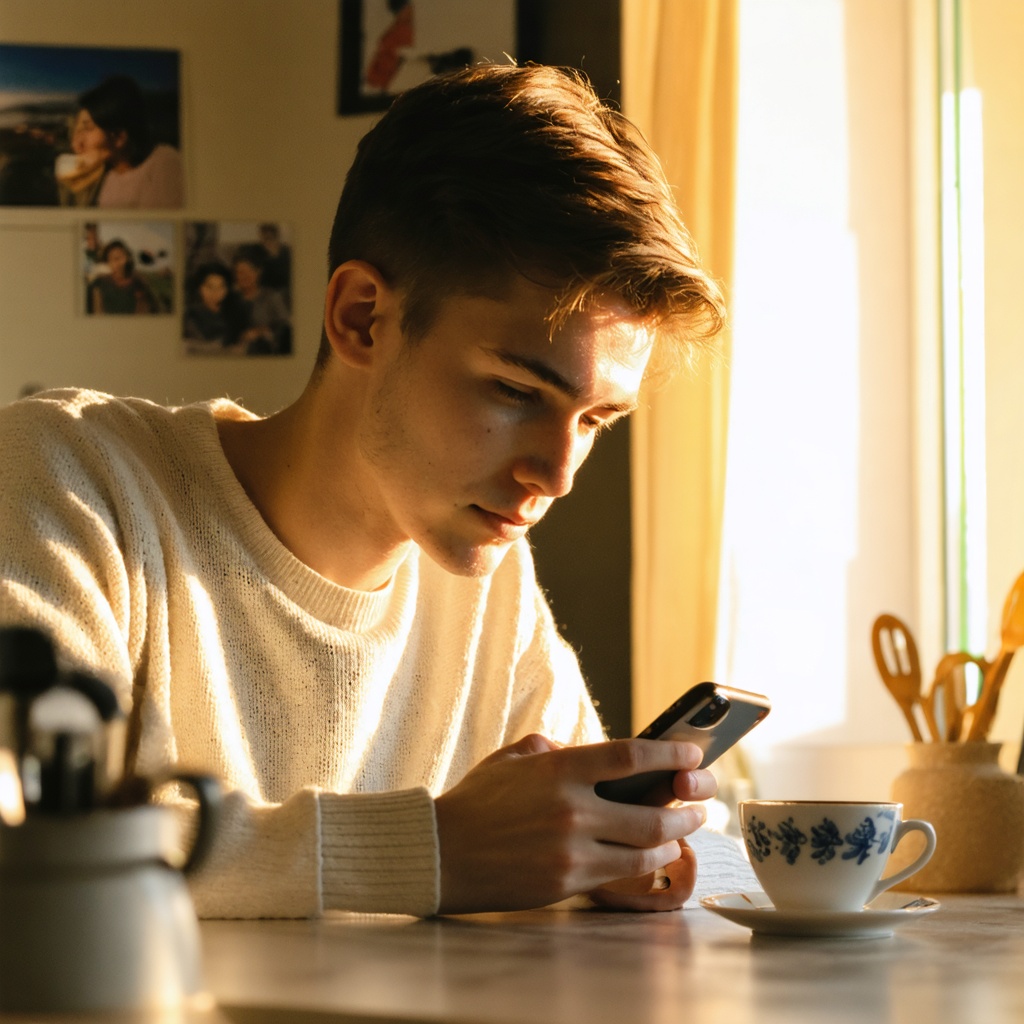 Image by RM AI
The Silence That Said Everything
I explained about the DNA test and the ridiculous results, waiting for her to join in my disbelief. But instead of the immediate laughter or indignation I expected, there was only silence on the other end of the line.
A silence so profound and heavy that it seemed to stretch across the miles between us and wrap around my chest, making it difficult to breathe. 'Mom?' I prompted, my voice suddenly small and uncertain.
I could hear her breathing, slightly uneven, and in the background, the muffled sound of what might have been my father asking a question. 'Are you there?' I asked, a new note of panic creeping into my voice.
Something was wrong. Very wrong.
The silence continued for what felt like an eternity but was probably only seconds. When she finally spoke, her voice was different—tight and controlled in a way I had rarely heard before.
'There's something I need to tell you,' she said quietly. 'Something your father and I should have told you a long time ago.' In that moment, before she had even explained, I knew.
Some deep, instinctive part of me recognized that everything was about to change.
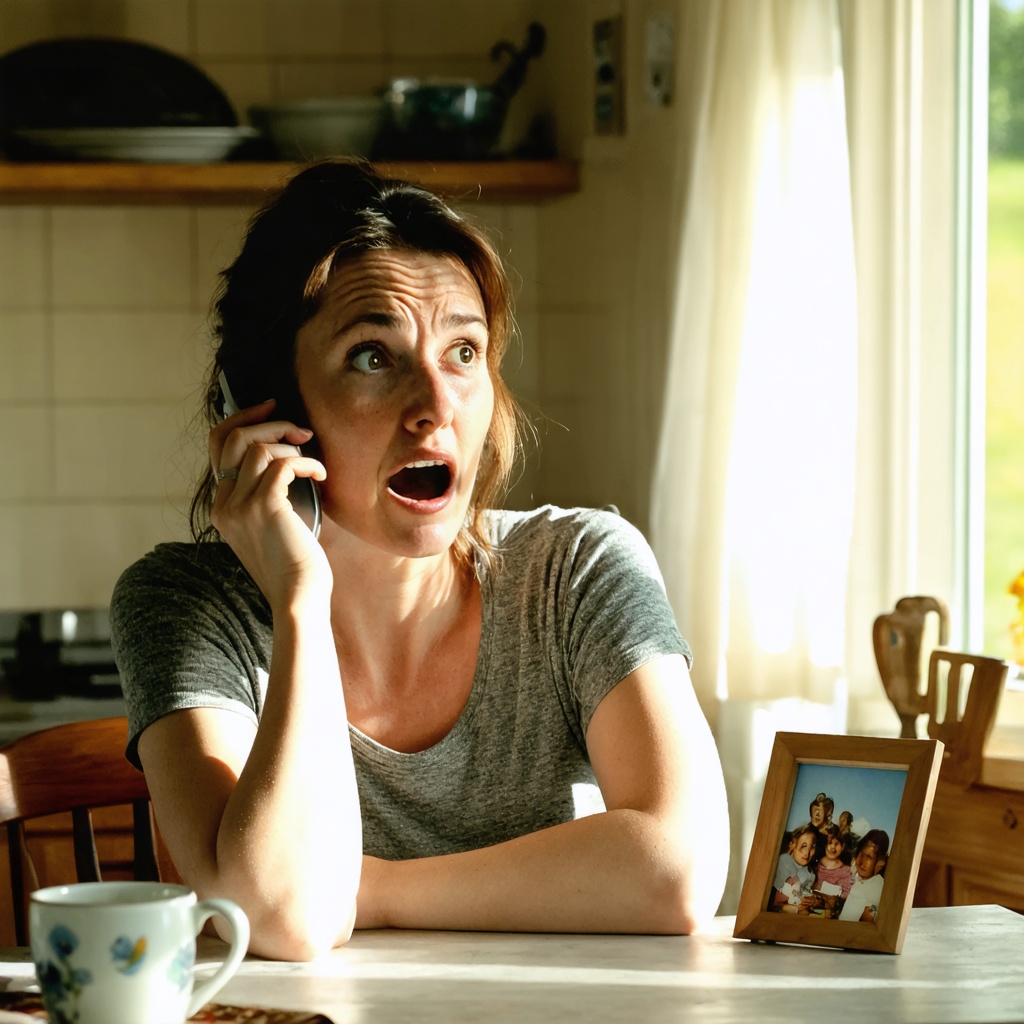 Image by RM AI
The Truth Comes Crashing Down
My mother's voice trembled as she began to speak, each word carefully chosen as if she had rehearsed this conversation many times in her head. 'You were three days old when you came into our lives,' she said, and I felt the room tilt around me.
I sank onto my couch, gripping the phone so tightly my knuckles turned white. She continued, her words washing over me in waves that I could barely process.
I was left at a fire station in the middle of the night, wrapped in a blanket with no note, no explanation—just a tiny baby abandoned in the cold. My father—the man I had called Dad my entire life—was the firefighter on duty who found me.
He and my mother had been trying to have children for years without success. They had just begun considering adoption when I literally appeared on their doorstep.
It seemed like fate, she said. They fell in love with me instantly.
The words kept coming, but they seemed distant now, as if she were speaking from the bottom of a well. Something about emergency foster care that became permanent adoption.
Something about how they had always planned to tell me but could never find the right time.
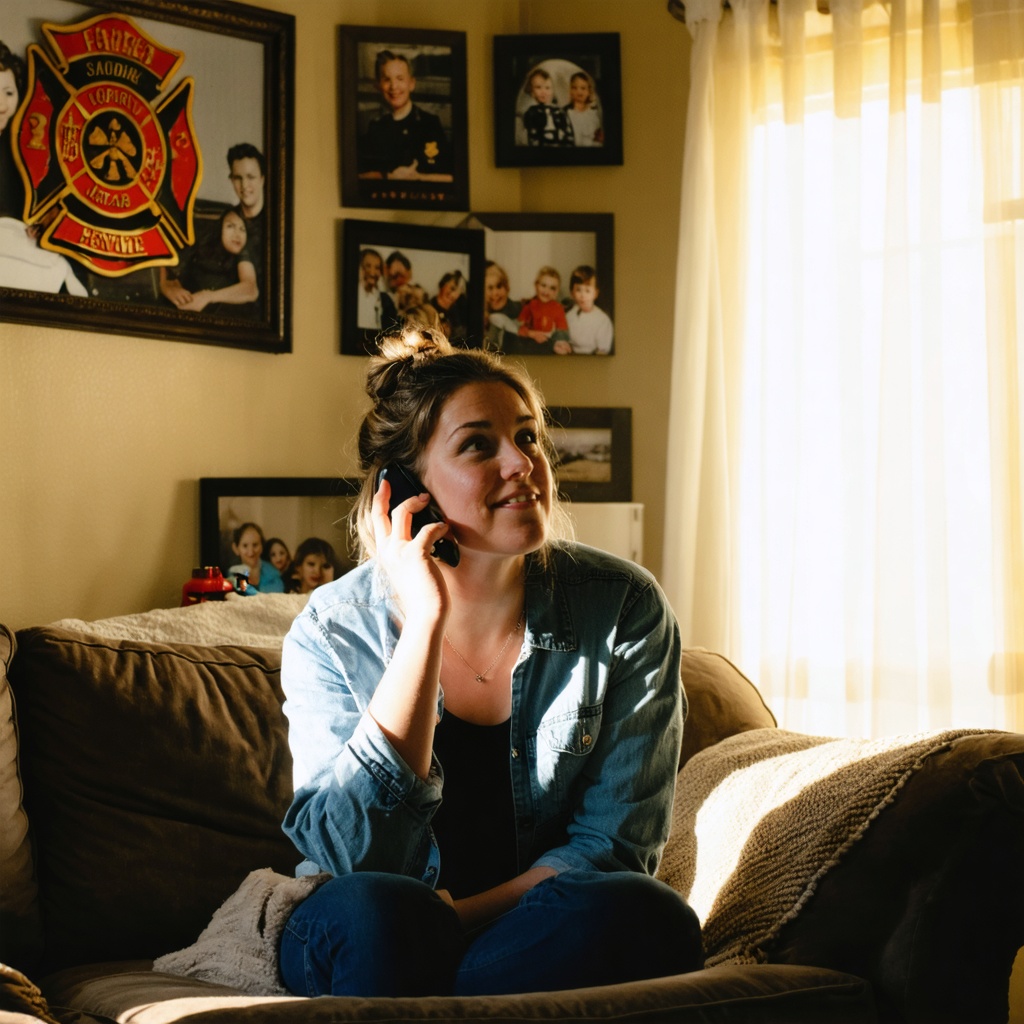 Image by RM AI
A Lifetime of Unintentional Deception
As my mother continued her explanation, fragments of memories began to rearrange themselves in my mind. The family photo albums that mysteriously had no pictures of my birth or my mother pregnant with me.
The jokes about how I must have gotten my musical ability from a distant relative since neither of my parents could carry a tune. The strange comments from my grandmother about how I was their 'miracle baby.' It all made sense now, in the most painful way possible.
'When your brother and sister were born a few years later,' my mother was saying, 'you all looked so much alike. You have the same mannerisms, the same smile.
People always commented on how strong the family resemblance was. After a while, it just seemed...
unnecessary to explain. You were ours in every way that mattered.' Her voice broke on these last words, and I could hear that she was crying now.
I should have felt something—anger, betrayal, grief—but instead, there was only numbness, as if my emotions had short-circuited from overload. 'Why are you telling me now?' I finally managed to ask, my own voice sounding strange and distant to my ears.
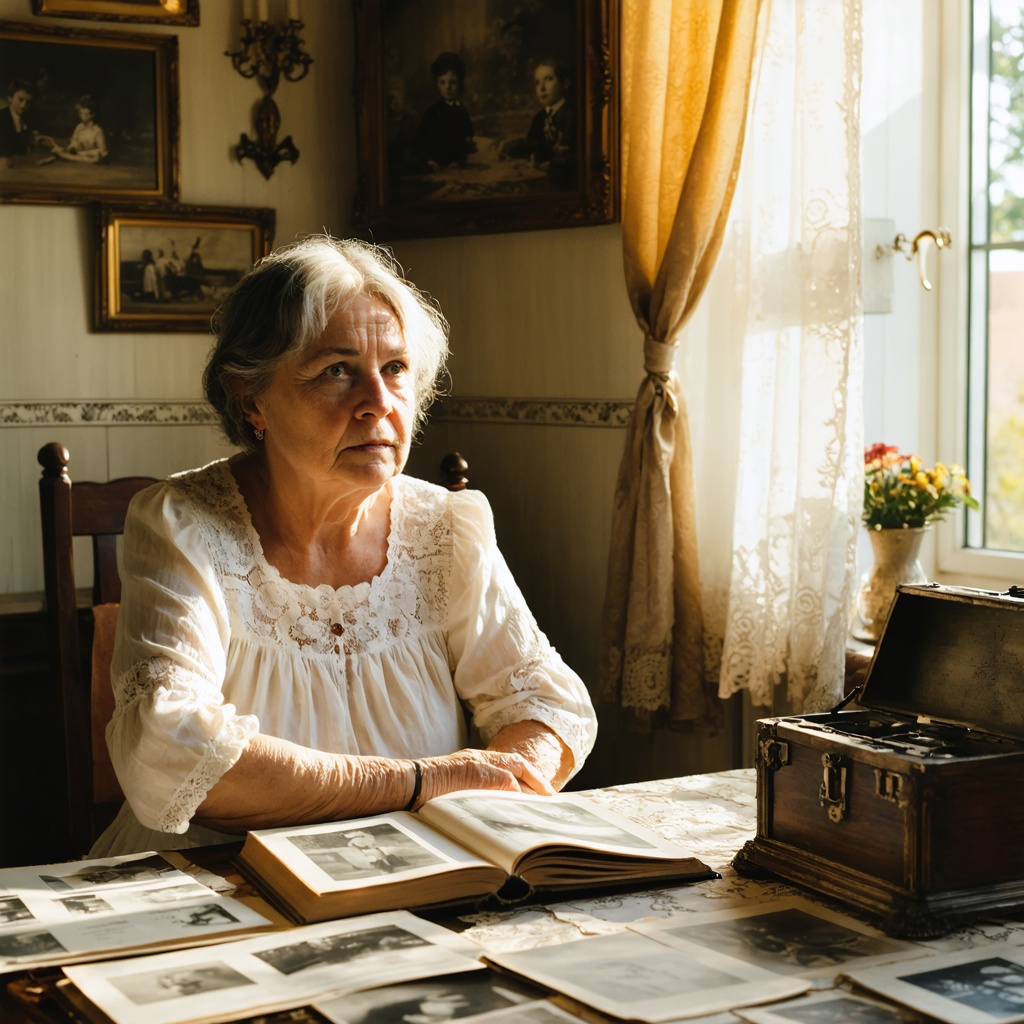 Image by RM AI
The Weight of Good Intentions
My mother's answer came through her tears, a mixture of regret and justification that I would come to recognize in the difficult conversations that followed. 'We thought the truth would only do more harm than good,' she admitted.
'You were so happy, so secure in who you were. We didn't want to disrupt that or make you feel different from your siblings.' She paused, and I could almost see her wiping away tears with the back of her hand, the way she always did when upset.
'But I've always wondered if we made the right choice. There were so many times I almost told you...' Her voice trailed off, leaving the sentence unfinished.
I sat in my apartment, surrounded by photos of family vacations and holiday gatherings—moments that now felt like scenes from someone else's life. The silence stretched between us again, filled with twenty-eight years of unspoken truths.
I had a thousand questions, but they were all tangled together in my mind, impossible to separate into coherent thoughts. Who was I really?
Where did I come from? Why was I abandoned?
And perhaps most troubling: if this fundamental truth about my existence had been hidden from me, what else didn't I know?
 Image by RM AI
The Stranger in the Mirror
After hanging up with my mother, I walked to the bathroom in a daze and stood before the mirror, studying my reflection with new eyes. The face looking back at me was suddenly unfamiliar—a collection of features that belonged to unknown people, genetic strangers who had contributed to my existence and then disappeared.
I traced the shape of my eyes, the curve of my cheekbones, searching for clues to my origins. According to the DNA test, I was predominantly East Asian—likely Chinese or Korean—with South Asian ancestry as well.
I had always identified as white because that's what my family was, what my community was. I had never questioned it, never had reason to.
Now, I wondered how I had never seen what should have been obvious. Had I been so eager to belong that I had blinded myself to the truth?
Or had I simply accepted the reality presented to me, the way children do? I splashed cold water on my face, hoping the shock would somehow reset my brain, make this all make sense.
But when I looked up again, dripping water onto the counter, nothing had changed. I was still the same person I had always been, except now I understood that person was a stranger.
 Image by RM AI
The Questions That Haunt the Night
Sleep eluded me that night as questions circled endlessly in my mind. Who were my biological parents?
Were they still alive? Did I have siblings somewhere—people who shared my DNA, my actual heritage?
What circumstances had led them to leave a newborn at a fire station in the middle of the night? Had it been an act of desperation or abandonment?
I created countless scenarios in my head: young parents overwhelmed and unable to care for a child;
a mother in crisis with no support; immigrants afraid of deportation;
a family facing financial ruin. Each possibility led to more questions, more scenarios, more imagined faces that might share my features.
Around 3 AM, I found myself scrolling through the DNA testing website again, this time exploring a feature I had overlooked before—the option to connect with genetic relatives who had also taken the test. My finger hovered over the button that would opt me in to this service.
Did I want to know? Was I ready to potentially connect with biological family members who might not even know I existed?
What would that mean for my relationship with the family who had raised me, loved me, and in their own misguided way, tried to protect me from exactly this kind of identity crisis?
 Image by RM AI
The Morning After Revelation
Morning arrived with no answers, just the harsh reality that I needed to somehow continue with normal life while processing this seismic shift in my understanding of myself. I called in sick to work, unable to imagine sitting through meetings and making small talk as if my entire world hadn't just been upended.
My phone buzzed repeatedly with texts from my parents—both of them now, checking in, asking if I was okay, if I wanted to talk more. I couldn't bring myself to respond yet.
What was there to say? Thank you for loving me?
I'm angry you lied? I don't know who I am anymore?
All of these feelings swirled together, impossible to separate or express coherently. Instead, I made coffee and sat by my window, watching strangers pass by on the street below.
How many of them, I wondered, were carrying secrets about their identities? How many families held truths that could shatter someone's sense of self?
The world looked different now, as if the revelation about my own life had pulled back a curtain on the complexity of human experience. Nothing was as simple or straightforward as it appeared—not family, not identity, not even the story of how we come into this world.
 Image by RM AI
The Siblings Who Never Knew
By mid-afternoon, I had gathered enough emotional strength to call my younger brother and sister. They deserved to hear this from me rather than from our parents.
My brother answered on the second ring, his voice cheerful and oblivious to the bomb I was about to drop on our shared reality. 'Hey, what's up?' he asked, and for a moment I almost lost my nerve.
How do you tell someone that the sibling relationship they've never questioned is built on a foundation of half-truths? I took a deep breath and just said it, as gently as I could.
The silence that followed was different from my mother's—not guilty or fearful, but genuinely shocked. 'That's...
that's not possible,' he finally said. 'We look alike.
Everyone always says so.' My sister's reaction, when I conference-called her in, was similar: disbelief followed by confusion, then a flood of questions I couldn't answer.
They had never known, had never been part of the deception. In their minds, I was simply their older sibling, the one who had taught them to ride bikes and helped with homework and teased them mercilessly as all good siblings do.
The realization that they had been kept in the dark too was strangely comforting—we were all processing this new reality together.
 Image by RM AI
The Family Meeting That Couldn't Wait
My parents suggested we wait until the weekend for a family meeting, but I couldn't bear the thought of days passing with this unresolved tension hanging between us. I needed answers now, not carefully prepared explanations after they'd had time to decide what to tell me and what to continue hiding.
So that evening, I drove the forty minutes to my childhood home, the familiar route now feeling like a journey into unknown territory. My siblings had insisted on being there too, united in our need for the complete truth.
Walking up the driveway where I had learned to ride a bike, past the tree I had fallen from and broken my arm at age nine, through the front door I had slammed during countless teenage arguments—it all felt surreal now, like visiting a movie set of my life rather than the actual place where I had grown up. My parents were waiting in the living room, looking smaller and older than I remembered, their faces etched with worry and regret.
The family photos that lined the walls seemed to watch us accusingly as we all sat down, the weight of unspoken truths making the air heavy and difficult to breathe.
 Image by RM AI
The Full Story Finally Emerges
My father—I still couldn't think of him any other way despite everything—was the one who finally broke the tense silence. His voice, usually so confident and steady, wavered as he began to tell the story from the beginning.
It was a cold February night, he explained, when the station's alarm system indicated that someone had opened the external safe haven door where people could legally surrender infants. He was the first to respond, expecting to find the usual—a baby with a note, perhaps some medical information.
Instead, he found me: a tiny three-day-old infant with no information at all, not even a name.
I was healthy but hungry, with a full head of dark hair and what he described as 'the most serious expression I'd ever seen on a baby.' He and the other firefighters had cared for me until social services arrived, but something about me had already worked its way into his heart. 'I called your mother from the station,' he said, his eyes fixed on some point in the past.
'I told her I had found our baby. She thought I was crazy, but she came down anyway.
And when she held you...' He looked at my mother, who nodded through her tears. 'We just knew,' she finished for him.
 Image by RM AI
The Legal Gray Areas of Love
What followed was a complicated story of emergency foster care, expedited adoption proceedings, and what my parents euphemistically called 'administrative shortcuts.' My father's position as a respected firefighter and my mother's connections through her work at the county clerk's office had apparently smoothed a path that might otherwise have been much more difficult. There were forms that were processed unusually quickly, background checks that were given priority, home studies that were conducted by friendly social workers.
'We were afraid,' my mother admitted, 'that if we didn't move quickly, you would be placed in the system and we might lose you.' I listened with growing unease, realizing that my adoption might not have followed all the proper legal channels. Had corners been cut?
Rules bent? The implications were troubling, raising questions about whether someone had been looking for me, whether proper efforts had been made to locate my biological family before I was placed for adoption.
My siblings exchanged glances, clearly thinking the same thing. Our parents had always been so strict about following rules, about honesty and integrity.
This revelation about administrative shortcuts and expedited processes showed a side of them we had never seen—people willing to bend rules and leverage connections when it served their purposes.
 Image by RM AI
The Birth Certificate Revelation
My mother left the room briefly and returned with a folder I had never seen before. From it, she withdrew my original birth certificate—not the amended one I had used all my life, but the first one, created before my adoption was finalized.
The space for 'Mother's Name' and 'Father's Name' were both blank, with 'Unknown' typed neatly in their place. My time of birth was listed as 'Approximately 2:00 AM' and my date of birth had been estimated by the hospital staff who had examined me after I was found.
Even my name—the name I had answered to my entire life—wasn't there. Instead, I was listed simply as 'Baby Doe.' I stared at this document, this official record of my earliest existence, and felt a profound sense of emptiness.
I had begun as a blank slate, a human being with no history, no context, no name. My entire identity had been assigned to me after the fact, created by the people sitting across from me now.
They had given me a name, a birthday celebration (one day off from the estimated date, I now realized), a family history, a sense of belonging. They had filled in all the blanks with their love and care, but also with their fiction.
I looked up from the birth certificate to find all of them watching me anxiously, waiting for my reaction.
 Image by RM AI
The Search for Biological Origins Begins
In the days that followed that difficult family meeting, I found myself drawn deeper into the mystery of my origins. The DNA test had provided some broad strokes—my ethnic background, some distant genetic cousins (fourth or fifth removed, none who seemed to know anything about a baby given up in the early 1990s)—but the specifics remained elusive.
I requested my full adoption file from the county, only to discover that as a safe haven baby, there was very little information to be had. No names, no medical history, not even a description of whoever had left me at the fire station.
The security camera that might have captured something had been broken that night—a coincidence that now seemed suspicious given everything else I had learned. Had someone known about the camera?
Had they chosen that particular fire station for a reason? I found myself studying the faces of Asian people I passed on the street, wondering if any of them might be related to me.
I downloaded every DNA matching app available, uploaded my results everywhere I could, hoping for a closer match than the distant cousins I had found so far. Each night I fell asleep scrolling through forums for adoptees searching for biological families, reading success stories and heartbreaks alike.
 Image by RM AI
The Unexpected Support System
What surprised me most during those first few weeks of searching was the unexpected support system that emerged around me. My siblings, after their initial shock, became my most dedicated research assistants.
My brother, always the tech-savvy one, helped me navigate the various DNA databases and ancestry forums. My sister, with her meticulous attention to detail, created spreadsheets tracking every possible lead and connection.
Even my parents, despite their obvious fear that finding my biological family might somehow diminish my connection to them, provided what information they could about the circumstances of my discovery. Friends I hadn't expected to understand became pillars of support—listening without judgment, offering perspectives I hadn't considered, accompanying me to adoption support group meetings when I couldn't face going alone.
My roommate from college, whose mother was Korean, invited me to a Lunar New Year celebration with her family, my first tentative step toward exploring the culture that might be part of my heritage. Colleagues brought books about transracial adoption and identity formation, sharing their own complicated family stories.
It seemed that once I began speaking openly about my situation, hidden complexities in other people's lives came to light as well.
 Image by RM AI
The First Solid Lead
The breakthrough came almost two months after I first received my DNA results, through a connection I had almost overlooked. A woman named Elena had appeared in my 'possible relatives' list on one of the DNA sites, estimated as a second or third cousin.
I had messaged her immediately, but weeks had passed with no response, and I had nearly forgotten about her among the dozens of other distant matches I was pursuing. Then, on an ordinary Tuesday evening as I was making dinner, my phone chimed with a notification.
'I think I might know who your birth mother is,' Elena's message began, and my heart nearly stopped. I abandoned the half-chopped vegetables on my cutting board and sank into a chair, hands shaking as I read the rest of her message.
Elena explained that her aunt—her mother's sister—had disappeared for several months in the early 1990s. When she returned, she was different—depressed, withdrawn, never quite the same.
The family suspected she had been pregnant and given up the baby, but no one ever spoke of it directly. The timing matched.
The location matched. And most convincingly, Elena's aunt was Chinese-American, married at the time to a man of Indian descent—a genetic combination that would explain my DNA results perfectly.
I stared at my phone, hardly daring to breathe. After weeks of searching, could this really be it?
Could this woman—this stranger whose name I now knew was Mei Lin—be my birth mother?
 Image by RM AI
The Ethical Dilemma of Truth
Elena's revelation presented me with an ethical dilemma I hadn't fully prepared for. I now had a name, and with some basic internet searching, I quickly found Mei Lin's current address and phone number.
She lived less than a hundred miles away—close enough that I could drive there in a morning. I could show up on her doorstep today if I wanted to.
But should I? According to Elena, Mei Lin had never spoken about having a baby, never acknowledged that period of her life even to her closest family members.
Her marriage had ended shortly after her mysterious absence, and she had never remarried or had other children. She lived quietly, taught piano lessons from her home, and kept largely to herself.
Would my sudden appearance in her life be an act of healing or of violence? Would I be fulfilling my own need for answers at the expense of her carefully constructed peace?
I called my adoptive mother that night, needing her perspective despite the complicated feelings still swirling between us. 'If it were you,' I asked her, 'if a child you had given up appeared at your door thirty years later, would you want to know them?' There was a long pause before she answered, her voice thoughtful.
'I would want to know you were okay,' she said finally. 'But I would be terrified of what you might think of me, of the choices I had made.'
 Image by RM AI
The Letter That Took Days to Write
After much consideration and advice from both family and the adoption support group I had joined, I decided to write to Mei Lin rather than appear unannounced. This approach would give her space to process the information and decide whether she wanted contact with me.
But what does one say in such a letter? How do you introduce yourself to the woman who gave you life and then disappeared from it?
I wrote draft after draft, each attempt feeling either too emotional or too detached, too demanding or too apologetic. I wanted to convey that I wasn't angry, that I understood there must have been compelling reasons for her choice, that I didn't expect anything from her—but also that I desperately wanted to know my story, to understand where I came from, to see if my hands looked like hers or if we shared the same laugh.
After five days of writing and rewriting, I finally produced a letter that felt right. It was simple, honest, and left the door open for whatever level of contact she might be comfortable with.
I included my phone number, email address, and a recent photo of myself. I also enclosed a copy of the firefighter's report from the night I was found—the only official documentation of our connection.
Before I could lose my nerve, I addressed the envelope, affixed a stamp, and walked to the mailbox at the end of my street. As I dropped the letter into the slot, I felt a strange mixture of terror and relief.
The next move was hers.
 Image by RM AI
The Longest Week of Waiting
The week after I mailed the letter to Mei Lin was the longest of my life. Every phone call, every email notification, every knock at the door sent my heart racing.
I imagined countless scenarios: a tearful phone call where she explained everything;
a letter asking me never to contact her again; a surprise visit where we would recognize each other instantly despite never having met as adults.
I tried to prepare myself for all possibilities, including the very real chance that she might simply never respond at all. To distract myself, I threw myself into researching Chinese and Indian culture, watching documentaries, reading books, cooking traditional dishes from both cuisines.
It felt important somehow to connect with these heritages that were suddenly part of my identity, even if I had no lived experience of them. My siblings joined me for an impromptu 'cultural exploration dinner' where we attempted to make dumplings from scratch and failed spectacularly, ending up with misshapen lumps that tasted delicious despite their appearance.
In these moments of laughter and discovery, I found myself thinking that regardless of what happened with Mei Lin, this journey had already changed me in ways I couldn't have anticipated. I was expanding my understanding of myself, creating a new identity that incorporated both my biological origins and the family that had raised me.
 Image by RM AI
The Phone Call That Changed Everything Again
The call came on a rainy Thursday evening, from a number I didn't recognize. I almost didn't answer, assuming it was yet another telemarketer, but some instinct made me pick up at the last moment.
'Hello?' I said, distracted, still half-focused on the TV show I had been watching. There was a pause, and then a woman's voice—soft, slightly accented, hesitant.
'Is this...' she began, and then said my name, the name my adoptive parents had given me. 'Yes,' I replied, suddenly alert, my heart pounding so loudly I was sure she could hear it through the phone.
Another pause, longer this time. I waited, hardly breathing.
'This is Mei Lin,' she finally said. 'I received your letter.' The world seemed to stop in that moment.
After all the searching, all the wondering, all the imagining, here she was—the woman who had carried me, given birth to me, and then left me at a fire station in the middle of the night. My birth mother.
The missing piece of my story. I gripped the phone tighter, searching for words that wouldn't come.
What do you say in such an unprecedented moment? How do you begin a conversation thirty years delayed?
'Thank you for calling,' I managed finally, my voice barely above a whisper. 'I wasn't sure if you would.'
 Image by RM AI
The Voice from the Past
Mei Lin's voice was nothing like I had imagined, yet somehow exactly right—gentle but with an underlying strength, carefully controlled as if she was working hard to keep her emotions in check. 'Your letter was...
unexpected,' she said, each word measured. 'I have thought about you every day for thirty years, but I never thought I would hear from you.' This simple admission—that she had thought of me, remembered me, carried me in her mind all this time—brought tears to my eyes.
Whatever her reasons for leaving me, I had not been forgotten. We spoke cautiously at first, exchanging basic information.
She asked about my life, my education, my work. I told her about growing up in Ohio, about my adoptive parents and siblings, about my current job in marketing.
I carefully avoided any questions that might seem accusatory or demanding, focusing instead on establishing some tentative connection. She volunteered little about herself beyond confirming what Elena had told me—that she taught piano, lived alone, had no other children.
As the conversation progressed, however, I could sense her gradually relaxing, her responses becoming less guarded. When I mentioned my recent attempts at cooking Chinese food, she laughed—a warm, musical sound that resonated through the phone line.
'Perhaps I could teach you properly someday,' she said, and in that tentative offer of a future meeting, I felt a door opening between us.
 Image by RM AI
The Story Behind the Abandonment
It wasn't until our third phone conversation, nearly two weeks after the first, that Mei Lin finally felt ready to tell me the story of my birth and why she had left me at the fire station. 'I was twenty-two,' she began, her voice taking on a distant quality as she traveled back in time.
'I had come to America for college and met your father—Arjun—in my sophomore year. We fell in love quickly, too quickly.
My parents in China were traditional, disapproved of me dating outside our culture. His family in India felt the same.
But we were young, stubborn, in love.' They had married in secret during their senior year, planning to tell their families once they were established in careers and could prove they had made the right choice. But then Mei Lin had become pregnant—with me—before they were financially stable.
'We were so happy at first,' she said softly. 'Arjun was working two jobs to save money.
I had just started graduate school. We thought we could make it work.' Her voice caught, and I heard her take a deep breath before continuing.
What she told me next explained everything: when she was seven months pregnant, Arjun was killed in a car accident, leaving her alone, grieving, and about to become a single mother in a country where she had no family support.
 Image by RM AI
The Impossible Choice
Mei Lin's voice grew even quieter as she described the weeks following Arjun's death. She had been devastated, unable to eat or sleep, terrified about the future.
Her student visa was expiring, her parents were pressuring her to return to China, and Arjun's family—who hadn't even known about their marriage—wanted nothing to do with her. 'When you were born,' she said, 'you looked so much like him.
His eyes, his smile. It broke my heart every time I looked at you.' She had tried for three days to care for me alone in the tiny apartment she and Arjun had shared, but overwhelmed by grief, isolation, and postpartum depression, she had reached a breaking point.
'I knew I couldn't give you what you needed,' she explained, her voice thick with tears. 'I was afraid I would hurt you or myself.
I had read about safe haven laws, that firefighters would make sure you found a good home.' The night she left me at the fire station was cold and clear, she remembered. She had wrapped me in Arjun's favorite sweater, kissed my forehead one last time, and placed me in the safe haven box.
'I stood across the street and watched until someone came for you,' she admitted. 'I saw the firefighter pick you up, saw how carefully he held you.
I told myself you would be better off, that someone would love you properly.' After that night, she had spiraled further into depression, eventually being hospitalized briefly before her visa situation forced her return to China.
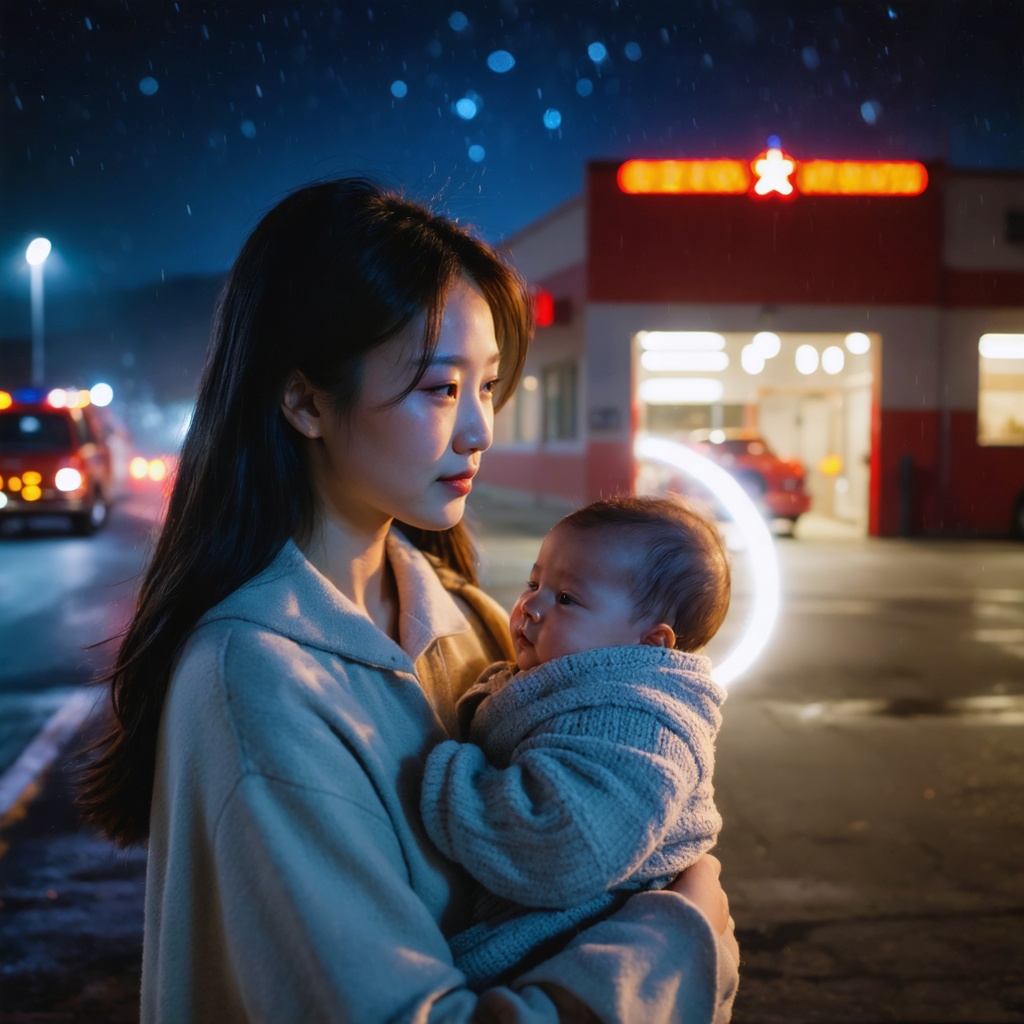 Image by RM AI
The Return and the Silent Years
Mei Lin explained that she had spent five years in China, living with her parents, trying to rebuild her life. She never told them about me or about Arjun's death, allowing them to believe her depression was simply from academic pressure and culture shock.
'In our culture, these things—unmarried pregnancy, giving up a child—bring great shame,' she explained. 'I couldn't bear to disappoint them further.' Eventually, she had managed to return to the United States on a work visa, settling in a different state but gradually making her way back to the area where she had left me.
'I think I always hoped I might see you somehow,' she confessed. 'In a store, on the street.
I would look at children your age and wonder if they were you.' She had never remarried, never had other children. Teaching piano had become her life, her students filling some of the emptiness she carried.
'I told myself you were happy, that you had a family who loved you,' she said. 'But I always wondered if I had made the right choice.' I listened to her story with tears streaming down my face, finally understanding the circumstances that had led to that night at the fire station.
There had been no malice in her actions, no casual abandonment—only a young woman in impossible circumstances, making the hardest decision of her life out of what she believed was love.
 Image by RM AI
The Question of Forgiveness
As Mei Lin's story unfolded, I found myself confronting complex emotions I hadn't anticipated. There was sadness for the young woman she had been, grief for the father I would never know, and a strange sense of relief at finally understanding the circumstances of my beginning.
But was there anger? Did I resent her for the choice she had made?
I searched my heart and found that I couldn't blame her. In her position—alone, grieving, without support—I might have made the same impossible choice.
'I want you to know,' I told her when she had finished speaking, my voice steady despite my tears, 'that I had a good life. The family that adopted me—they loved me completely.' I told her about my childhood, about learning to ride a bike in our driveway, about family vacations to the lake each summer, about my father teaching me to change a tire and my mother helping with science fair projects.
I wanted her to know that her sacrifice had achieved what she hoped—I had been safe, loved, given opportunities. 'You don't have to forgive me,' she said softly.
'I've never forgiven myself.' But forgiveness, I was discovering, wasn't a simple yes or no proposition. It was a process, a journey we would navigate together if she was willing.
'I'd like to meet you,' I said finally. 'In person.
If you're comfortable with that.'
 Image by RM AI
The Meeting at the Café
We agreed to meet at a small café halfway between our homes, on a Sunday afternoon two weeks later. Those fourteen days felt both endless and too short—I was desperate to see her, yet terrified of the reality of coming face to face with my birth mother.
What if we had nothing to say to each other? What if the connection I felt over the phone didn't translate to real life?
What if I looked nothing like her and everything like the father I would never meet? I changed my outfit four times the morning of our meeting, ridiculous as that seems now.
I wanted to look nice but not like I was trying too hard, to seem put-together but not unapproachable. I arrived twenty minutes early and chose a table in the corner, away from the windows, where we would have some privacy.
And then I waited, my hands wrapped around a cooling cup of tea, my eyes fixed on the door. When she walked in exactly on time, I knew her immediately.
It wasn't just that she matched the photos I had found online—it was something deeper, more instinctive. She paused just inside the door, scanning the café, and when our eyes met across the room, something electric passed between us.
Recognition. Connection.
The undeniable pull of shared DNA. She was smaller than I had imagined, delicate almost, with the same high cheekbones I saw every day in my mirror.
 Image by RM AI
The Awkward First Moments
Those first moments were awkward in the way that only truly momentous occasions can be. We both stood as she approached the table, uncertain whether to shake hands, hug, or simply nod in acknowledgment.
'You look like him,' were her first words, spoken softly as she studied my face. 'Your father.
Especially around the eyes.' I hadn't expected this immediate reference to my biological father, and it caught me off guard. I had seen no photos of him, had no mental image to compare myself to.
'I have pictures,' she added quickly, seeming to read my thoughts. 'I brought them, if you want to see.' She gestured to the large purse she carried.
We sat down across from each other, the small café table both a barrier and a bridge between us. A waitress approached, breaking the tension momentarily as we ordered—green tea for Mei Lin, a refill for me.
When the waitress left, silence fell again. I had rehearsed this moment countless times in my mind, prepared questions and comments, but now that she was here, flesh and blood across from me, all my careful preparations evaporated.
'Thank you for coming,' I said finally, the words inadequate but sincere. She nodded, her hands clasped tightly on the table.
'I almost didn't,' she admitted. 'I was afraid.
But then I thought—I've missed thirty years already. I couldn't miss this chance too.'
 Image by RM AI
The Photos That Bridged Time
After our tea arrived, Mei Lin reached into her purse and withdrew a small photo album, its cover faded and corners worn from years of handling. 'These are the only pictures I have of your father,' she explained, sliding it across the table to me.
'And there are a few of us together, and...' she hesitated, 'two of you, as a newborn.' My hands trembled slightly as I opened the album. The first photo showed a young man with warm brown skin, laughing at the camera, his eyes crinkled at the corners exactly the way mine did when I smiled.
Arjun. My father.
I stared at his image, drinking in every detail—the shape of his nose, the set of his shoulders, the way his hair curled slightly at his temples. The resemblance between us was unmistakable, especially around the eyes and mouth.
I turned the page to find a photo of him with a young Mei Lin, his arm around her shoulders, both of them beaming at the camera in front of what looked like a college building. They looked so young, so happy, so unaware of the tragedy that awaited them.
Page after page revealed glimpses of their brief life together—picnics in the park, study sessions in the library, a small wedding ceremony with no guests, just the two of them and what appeared to be a justice of the peace.
 Image by RM AI
The Baby I Once Was
Near the end of the album, I found the photos Mei Lin had mentioned—two Polaroids of a newborn, clearly taken in a hospital. In the first, I was wrapped in a standard hospital blanket, eyes closed, face still puffy from birth.
In the second, I was being held—just a glimpse of hands visible, which I realized must be Arjun's, taken during the brief time he had to be a father before his death. 'He was so proud,' Mei Lin said softly, watching me study the photos.
'He talked to you constantly, even before you were born. He had such plans for you—music lessons, science camps, trips to India to meet his family someday.' Her voice caught on these last words.
'He would have been a wonderful father.' I looked up from the photos to find her wiping away tears. Without thinking, I reached across the table and took her hand.
It was the first time we had touched as adults, and the contact sent a strange current through me—a sense of connection that transcended the years of separation. 'Thank you for keeping these,' I said.
'For sharing them with me.' She nodded, unable to speak for a moment. When she did, her words surprised me.
'I have copies,' she said. 'These are for you to keep.
They've always been yours.'
 Image by RM AI
The Stories That Filled the Gaps
Over the next few hours, as our tea grew cold and was replaced, then grew cold again, Mei Lin filled in the gaps of my origin story. She told me about meeting Arjun in an economics class, about their first date at a campus coffee shop, about how he had proposed with a ring made from a twisted paper clip because he couldn't afford a real one yet.
She described his voice, his laugh, his passion for mathematics and music. 'He played the violin,' she said, smiling at the memory.
'Not very well, but with great enthusiasm.' She told me about their tiny apartment, how they had prepared for my arrival by converting a closet into a nursery, painting it yellow because they had decided not to find out if I was a boy or girl. She spoke of the night she went into labor, how scared she had been going to the hospital alone, how the nurses had been kind but couldn't replace the partner she had lost.
And she told me about those three days after bringing me home, her desperate attempts to care for me while drowning in grief and exhaustion. 'You wouldn't stop crying,' she remembered.
'Nothing I did helped. I couldn't sleep, couldn't eat.
I started to have thoughts that frightened me—that maybe I should join Arjun, that we would both be better off...' She had recognized, even in her despair, that she was a danger to herself and possibly to me. The fire station had seemed like the only safe option.
 Image by RM AI
The Unexpected Connection
What surprised me most about our meeting was how comfortable it felt once the initial awkwardness passed. There was an ease between us that defied the thirty years of separation, a sense of familiarity that couldn't be explained by our brief phone conversations.
I recognized my own gestures in her hands as she spoke, noticed that we both had the same habit of tucking hair behind our ear when thinking. When she laughed at something I said, I heard echoes of my own laugh.
These small similarities—these genetic echoes—were both unsettling and profoundly comforting. They answered questions I hadn't even known to ask about myself.
Why did I love spicy food when no one else in my adoptive family could tolerate it? Mei Lin explained that in her hometown in China, every dish was laden with chili peppers.
Why had music always come so naturally to me despite my adoptive parents' complete lack of musical ability? Arjun's mother had been a classical Indian vocalist.
Why did I hate the cold so intensely? Both my biological parents had grown up in warm climates.
Each revelation was a small piece of the puzzle of myself, filling in gaps I hadn't fully recognized were there. As our conversation continued, I found myself thinking of my adoptive parents with a rush of gratitude.
They had given me a foundation of love and security that made this exploration possible. I wasn't searching because something was missing;
I was expanding because I was secure enough to do so.
 Image by RM AI
The Question of What Comes Next
As afternoon stretched into early evening, the café beginning to fill with the dinner crowd, we finally addressed the question that had been hovering unspoken between us: what happened next?
Was this a one-time meeting, a chance to satisfy curiosity and find closure? Or was it the beginning of some new kind of relationship?
Neither of us had a clear answer. 'I don't want to intrude on your life,' Mei Lin said carefully.
'You have a family, a mother who raised you. I don't want to complicate things.' I understood her concern.
My relationship with my adoptive parents was still healing from the revelation of their decades-long deception. Adding a birth mother to the mix would certainly complicate matters further.
And yet, sitting across from this woman who had given me life, who shared my DNA, who could tell me about the father I would never meet, I couldn't imagine simply walking away and never seeing her again. 'Maybe we could start slowly,' I suggested.
'Emails, phone calls. Another meeting in a few weeks.' She nodded, relief evident in her expression.
'I would like that,' she said. 'Very much.' As we prepared to leave, gathering our things and settling the bill, she hesitated, then asked the question that clearly weighed on her mind:
'Will you tell them—your parents—about meeting me?'
 Image by RM AI
The Two Mothers Dilemma
The question of how to integrate Mei Lin into my life—and how my adoptive parents would react to her presence—weighed heavily on me in the days following our meeting. I had told my siblings about the planned meeting, but not my parents.
Part of me feared their reaction, worried they might see my desire to know Mei Lin as some kind of betrayal or rejection. Another part simply wanted to process the experience myself before sharing it.
But as the days passed, I realized I couldn't—and didn't want to—keep this significant development from them. They deserved to know, and more importantly, I needed their support as I navigated this new territory.
I invited them over for dinner the following weekend, cooking my mother's favorite lasagna as a small peace offering for the conversation to come. As we sat around my dining table, the familiar family dynamic both comforting and strange in light of all we now knew, I carefully explained about finding Mei Lin, our phone conversations, and our recent meeting.
I showed them the photo album she had given me, including the pictures of me as a newborn. My mother's hands trembled slightly as she turned the pages, seeing for the first time images of the baby she had adopted before she knew me.
My father was quiet, his expression unreadable as he studied the photos of Arjun—the man whose death had, in a tragic way, made possible his becoming my father.
 Image by RM AI
The Unexpected Reaction
I had prepared myself for jealousy, hurt, perhaps even anger from my adoptive parents. What I hadn't anticipated was their reaction when I finished speaking.
My mother reached across the table and took my hand, her eyes filled not with resentment but with a complex mixture of emotions I couldn't quite decipher. 'I've always wondered about her,' she said quietly.
'The woman who gave birth to you. I used to imagine what she was like, why she left you at the fire station.
Sometimes I would look at you sleeping as a child and think about her—if she was thinking of you too, if she regretted her choice.' She squeezed my hand gently. 'I'm glad she's okay.
I'm glad you found each other.' My father cleared his throat, clearly emotional but trying to maintain his composure. 'You know,' he said, his voice rougher than usual, 'that night at the fire station—when I found you—I always felt like it wasn't just chance.
Like I was meant to be the one on duty.' He looked down at the photos of Arjun again. 'Maybe he was watching out for you somehow, making sure you found your way to us.' It was such an uncharacteristically spiritual statement from my practical, no-nonsense father that it brought tears to my eyes.
In that moment, I realized that my fear had been unfounded. My parents' love was big enough, secure enough, to make room for this new dimension of my identity.
 Image by RM AI
The Proposal That Changed Everything
What my mother said next stunned me completely. 'I'd like to meet her,' she announced, looking from me to my father and back again.
'If she's willing, and if you're comfortable with it. I'd like to thank her.' My father nodded in agreement, though I could see the idea made him nervous.
'We owe her a debt we can never repay,' he said simply. I sat back in my chair, trying to process this unexpected turn.
My adoptive mother wanted to meet my birth mother. The woman who had raised me wanted to meet the woman who had given me life.
It seemed impossible, surreal—and yet somehow right. These two women, connected through me, each holding different pieces of my story, my identity.
Could they really meet? What would they say to each other?
Would it bring healing or open new wounds? I thought about Mei Lin, her guilt and regret, her thirty years of wondering if she had made the right choice.
And I thought about my mother, her decades of love and care, her recent confession of the deception that had shadowed our relationship. Both women had made difficult choices.
Both had acted out of what they believed was love. 'I'll ask her,' I said finally.
'But I think... I think she might like that.'
 Image by RM AI
The Meeting of the Mothers
The meeting between my two mothers took place three weeks later, in the neutral territory of a quiet restaurant I had carefully selected for its private corner tables and calm atmosphere. I arrived first, heart pounding with anxiety about what was to come.
My adoptive parents arrived next—my mother nervous but determined, my father protective at her side. When Mei Lin walked in, I saw her falter slightly at the sight of them, her composure briefly slipping to reveal the enormity of this moment for her.
I made the introductions, my voice steadier than I felt, watching as these two women—these two mothers—regarded each other across an impossible divide of time and circumstance. The initial conversation was stilted, formal, everyone hyperaware of the extraordinary situation.
But then my adoptive mother reached into her purse and pulled out a small photo album—different from the one Mei Lin had given me, but similar in its worn edges and well-handled appearance. 'I thought you might like to see these,' she said, sliding it across the table.
'The years you missed.' Mei Lin's hands trembled as she opened the album to find photos of me as a toddler, a school child, a teenager—the chronology of a life she had not been part of. My first day of kindergarten, soccer games, birthday parties, high school graduation.
The visual evidence of a childhood well-loved.
 Image by RM AI
The Healing Power of Truth
As Mei Lin turned the pages of the photo album, my adoptive mother began to narrate the stories behind the images. The time I had insisted on wearing my Superman costume to picture day in second grade.
The science fair project that had gone spectacularly wrong, resulting in foam all over the kitchen. My brief, disastrous attempt at learning the trumpet.
With each story, the tension in the air dissipated slightly, replaced by something warmer, more genuine. My father joined in occasionally, adding details or gentle corrections to my mother's recollections.
I watched Mei Lin's face as she absorbed these glimpses of the life she had missed—saw her smile at the happy moments, her eyes grow sad at others. When she reached the end of the album—a photo of my college graduation—she looked up at my adoptive mother with tears in her eyes.
'Thank you,' she said simply. 'For everything you gave him that I couldn't.' My mother reached across the table then, in a gesture that surprised us all, and took Mei Lin's hand.
'Thank you,' she replied, 'for the gift of him.' It was a moment of such raw honesty, such genuine connection between these two women who had shaped my life in such different ways, that I felt something shift and settle within me—some piece of my fractured identity finding its proper place at last. The truth, it seemed, had the power to heal after all.
 Image by RM AI
The New Normal
In the months that followed that remarkable meeting, we all began to find our way toward a new kind of family configuration—one that had room for both my birth mother and the parents who had raised me. It wasn't always easy or comfortable.
There were awkward moments, missteps, times when old insecurities flared. My adoptive mother occasionally struggled with feelings of inadequacy when confronted with the genetic connections I shared with Mei Lin.
Mei Lin sometimes withdrew, afraid of overstepping boundaries or disrupting the family dynamic. My father watched it all with quiet concern, protective of my mother's feelings while genuinely wanting to honor my need for connection with my biological heritage.
And I found myself in the strange position of mediator, trying to balance everyone's needs and emotions while still processing my own complex feelings about my dual identity. But there were beautiful moments too.
Mei Lin teaching me to make dumplings in my kitchen, the recipe passed down through generations of her family. My adoptive mother sharing embarrassing stories from my childhood that made us all laugh until we cried.
My father and Mei Lin discovering a shared love of jazz music, exchanging recommendations and debating the merits of different musicians. Slowly, cautiously, we were creating something new—a blended family built not on traditional bonds but on honesty, respect, and the shared love of me.
 Image by RM AI
The Search for Arjun's Family
As my relationship with Mei Lin deepened, I found myself increasingly curious about my father's side of the family. Arjun had been an only child, Mei Lin explained, but his parents were still alive as far as she knew, living in Mumbai.
They had never known about their son's marriage or about my existence. After his death, Mei Lin had been too overwhelmed by grief and her own precarious situation to contact them.
'I was afraid,' she admitted. 'Afraid they would blame me for his death somehow, or reject you because I wasn't Indian.
And later, after I had given you up, what right did I have to tell them about a grandchild they would never know?' But now, with my encouragement, she agreed to help me try to find them. We had little to go on—Arjun's full name, his parents' names as they had been thirty years ago, and the neighborhood in Mumbai where they had lived.
But in the age of social media and global connectivity, it proved enough. After weeks of searching, sending messages that went unanswered, and following tenuous connections, I received an email from a woman named Priya who identified herself as Arjun's cousin.
'My uncle and aunt have spoken of their son with grief every day for thirty years,' she wrote. 'To learn he had a child—that a part of him lives on—would be both shocking and perhaps the greatest gift they could receive in their old age.'
 Image by RM AI
The Video Call Across Oceans
The first meeting with my paternal grandparents took place via video call, with Priya acting as both translator and emotional buffer. Mei Lin sat beside me, nervous but determined to face this connection to her past.
When the call connected and I saw their faces for the first time—an elderly couple sitting close together on a sofa, their expressions a mixture of disbelief and cautious hope—I felt an immediate jolt of recognition. My grandfather had the same eyes as me, the same eyes as Arjun in the photos.
My grandmother's smile, when it finally came, was startlingly familiar—I had seen it in my own mirror countless times. They spoke rapidly in Hindi to Priya, their gaze never leaving my face.
'They say you look just like him,' Priya translated. 'They cannot believe they have a grandson.' Through Priya, they asked questions about my life, my education, my work.
They wanted to know everything, to fill in the thirty years of absence. When Mei Lin introduced herself, there was a moment of tension—these parents who had lost their only son now face to face with the woman who had married him in secret.
But then my grandmother said something that made Mei Lin's eyes fill with tears. 'She says she can see that you loved him,' Priya translated.
'And that is all that matters now.' By the end of the call, tentative plans had been made for a visit. My grandparents wanted to meet me in person, to welcome me into the family I had never known existed.
Another piece of my identity, another branch of my story, was opening before me.
 Image by RM AI
The Unexpected Gift of Truth
As I reflect now on the journey that began with that forgotten DNA test, I'm struck by how differently things might have turned out. If I hadn't been bored that rainy Sunday.
If I had thrown the test away instead of taking it. If I had accepted the company's assurances that there was no mistake.
If my mother had continued to insist that I was biologically hers. So many points where the truth might have remained buried, where I might have continued living with only half my story.
Instead, I find myself in this unexpected place—with two mothers who have found a way to share me without diminishing each other's importance in my life. With grandparents across the ocean who see their lost son in my face.
With siblings who have embraced the complexity of our family with open hearts. The truth was painful, yes.
It shattered the narrative I had believed about myself for twenty-eight years. It forced my adoptive parents to confront the consequences of their well-intentioned deception.
It reopened wounds for Mei Lin that had never fully healed. But from that pain has come a fullness, a richness to my life and identity that I could never have imagined.
I am the child of Mei Lin and Arjun, born of their brief, tragic love story. I am the son of the parents who chose me, who raised me, who shaped me into the person I am today.
I am the grandson of people I am only just beginning to know. I am the product of multiple cultures, multiple histories, multiple loves.
The truth, it turns out, was not something to be feared but the greatest gift I could have received—the gift of my complete self.
 Image by RM AI