
Doable Resets
A long day of hunching over creeps in while you’re answering emails, leaning over a laptop, looking down at your phone, driving, cooking, or doing whatever task has quietly pulled your head and shoulders forward for hours. By the end of the day, your neck may feel tight, your upper back may feel stiff, and your hips may feel like they’re stuck in place. None of that means you need a long-winded evening routine or a full workout to feel a little more human again. These 20 tiny habits can help you ease routine tension, move out of that folded-forward shape, and give your body some reprieve.

1. Do a One-Minute Posture Reset
Stand with your feet under your hips, soften your knees, and let your arms hang naturally at your sides. Gently stack your ears over your shoulders, let your shoulder blades settle down your back, and take a few easy breaths.
 sippakorn yamkasikorn on Unsplash
2. Take a Short Walk
A brief walk can help shake off the stillness that builds after hours in one position. It gets your hips moving, lets your arms swing, and gives your neck and shoulders a break from staring straight ahead or down. Even a slow loop around the house, office, or block counts.

3. Open Your Chest in a Doorway
Place your forearms against a doorway, step one foot forward, and lean in just until you feel a gentle stretch across your chest. This small opener can feel especially useful after hours of typing, scrolling, or driving.

4. Roll Your Shoulders Back
Shoulder rolls are basic in the best possible way. Lift your shoulders toward your ears, roll them back, and let them drop slowly instead of rushing through the movement. A few smooth rounds can help loosen the braced, lifted feeling that often settles around the neck and upper back.
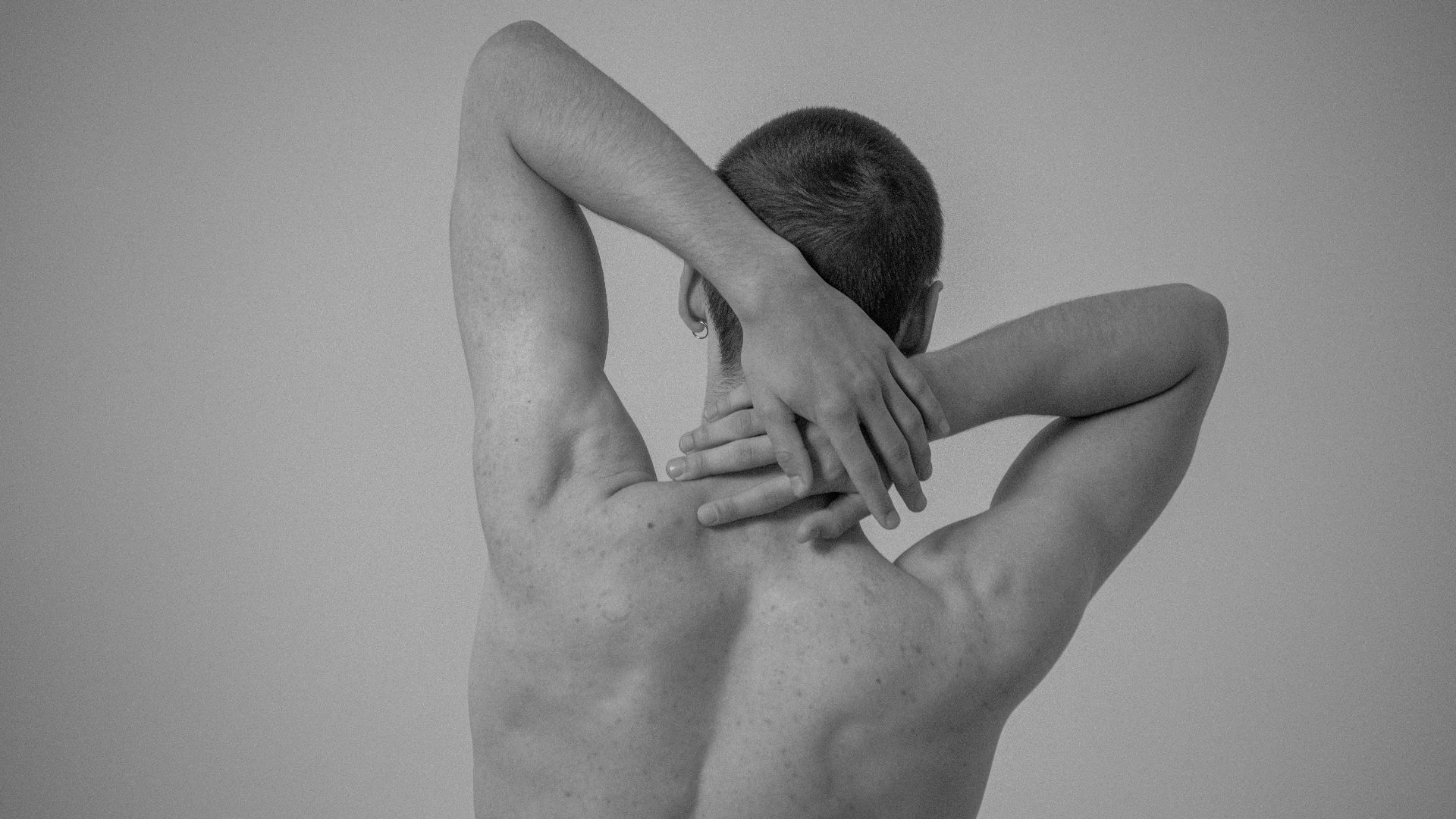
5. Try a Gentle Chin Tuck
A chin tuck can help counter the forward-head position that shows up when you’ve been looking at a screen or phone for too long. Keep your gaze level, then glide your head straight back as though you’re making a small double chin. Keep it subtle, controlled, and free from any sharp or pinching discomfort.

6. Stretch the Sides of Your Neck
Let one ear drift gently toward the same-side shoulder while keeping both shoulders relaxed. Hold the stretch for a few slow breaths, then switch sides and do the same thing again. This can help ease the tight, ropey feeling that often collects along the sides of the neck.

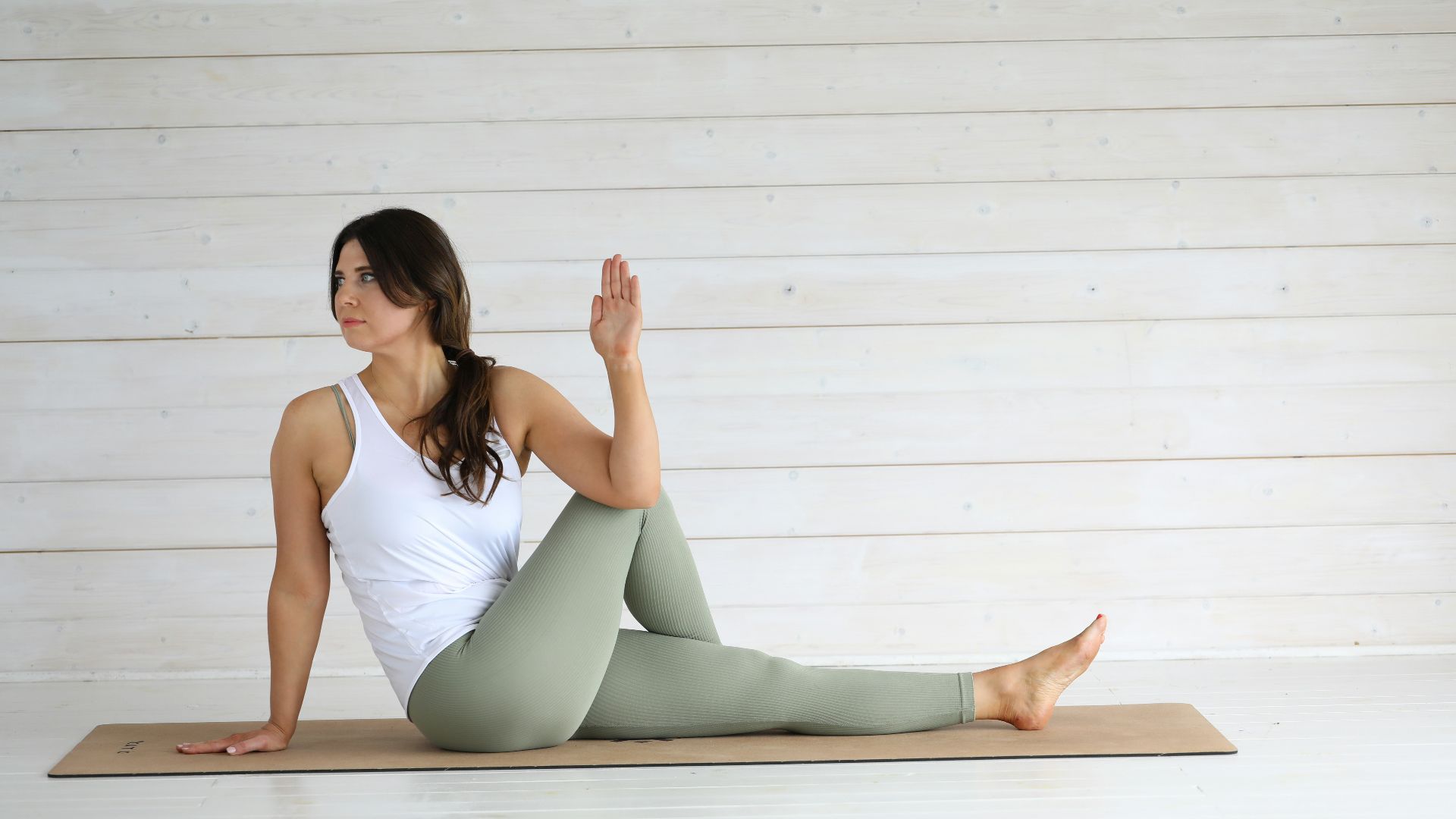
7. Move Through a Seated Twist
Sit tall, place one hand on the opposite thigh, and gently rotate through your upper back. The movement should feel smooth and easy. After a day spent rounded forward, a little controlled rotation can help your mid-back feel less stuck.
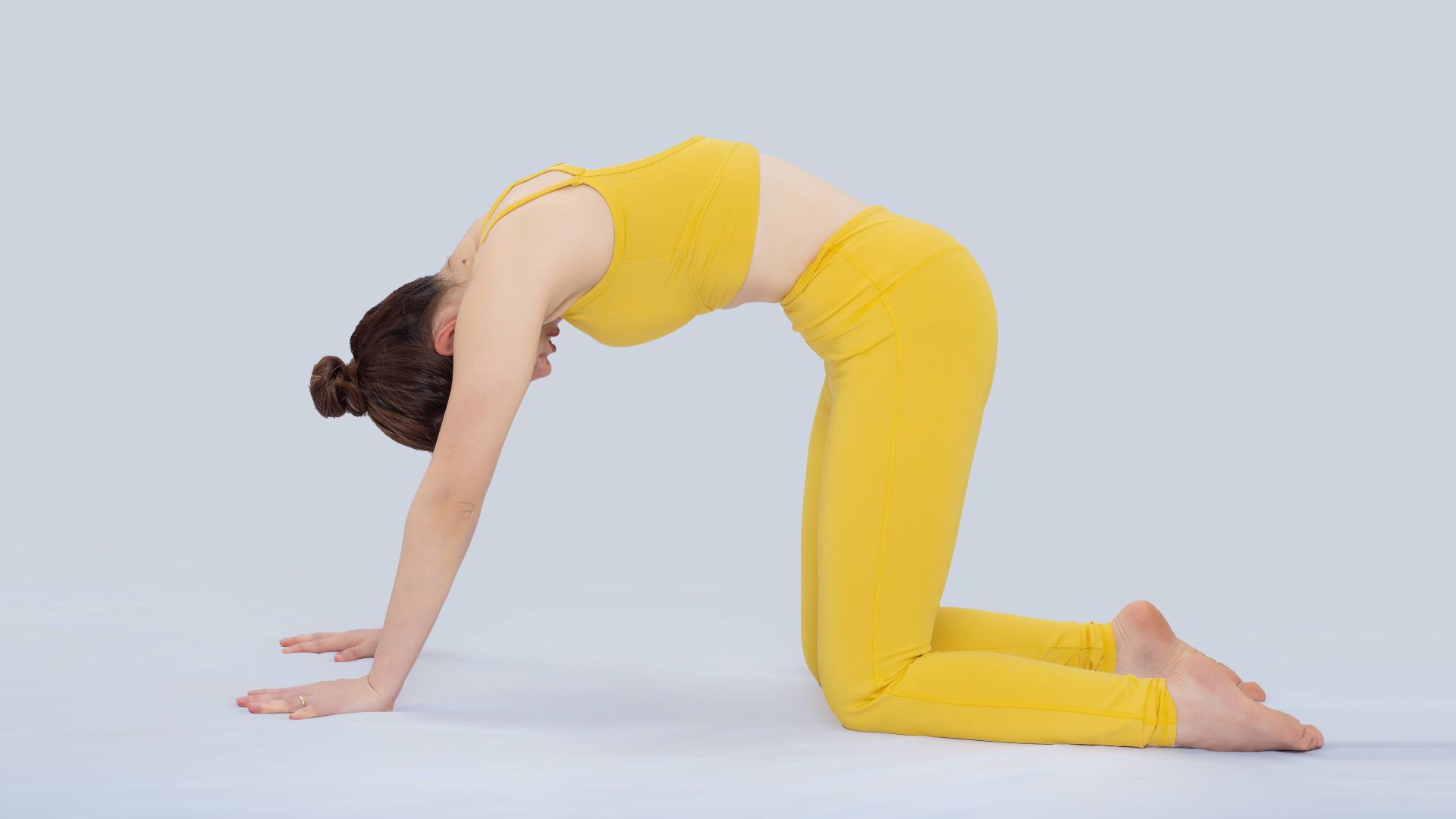
8. Do a Few Cat-Cows
Cat-cow gives your spine a simple way to move through rounding and arching. Start on your hands and knees, gently round your back, then slowly let your chest move forward as your spine arches. Stay within a comfortable range, and treat the movement like a reset rather than a flexibility test.
9. Add Wall Slides
Stand with your back near a wall and slide your arms up and down as comfortably as you can. Keep your ribs from flaring forward, and make the movement smaller if your shoulders feel restricted. This is a useful way to reconnect with shoulder motion after a stiff, rounded day.

10. Squeeze Your Shoulder Blades Lightly
Sit or stand tall, then gently draw your shoulder blades toward each other. Hold for a couple of seconds before releasing, keeping the squeeze light and controlled. This should feel like waking up the muscles between your shoulders, not pinching your upper back as hard as possible.

11. Stretch Your Hip Flexors
Sitting often leaves the fronts of the hips feeling tight, especially after a long workday. Try a half-kneeling stretch with one knee down and the other foot forward, keeping your ribs stacked over your hips. You’re looking for a mild stretch at the front of the hip, not pressure in your lower back.

12. Wake Up Your Glutes
Lie on your back with your knees bent and your feet flat on the floor. Press through your heels, lift your hips, pause briefly, and lower back down with control. A few glute bridges can help your lower body feel more engaged after spending too much time parked in a chair.

13. Stretch Your Wrists and Forearms
A hunched-over day often comes with plenty of keyboard, mouse, and phone time. Extend one arm, gently draw your fingers back with the other hand, then switch directions to stretch the underside of the forearm.

14. Use Warmth for Stiff Muscles
A warm shower, warm towel, or heating pad on a low setting can feel soothing when your neck, shoulders, or upper back feel tight. Use a layer between your skin and the heat source, and keep the temperature comfortable.

15. Take Five Slow Belly Breaths
When you’ve been hunched over for hours, your breathing can become shallow without you really noticing. Place one hand on your chest and one near your belly, then breathe slowly so the lower hand moves more. This small habit can help your body ease out of that tense, braced feeling.

16. Look Away From Your Screen
Every so often, look away from your screen and focus on something farther away for a short stretch. This gives your eyes a break and nudges your head out of that frozen, forward-leaning position.

17. Raise Your Phone Toward Eye Level
Evening scrolling can put your neck right back where it was all day. Instead of dropping your head toward your phone, bring the phone higher and support your elbows with a pillow if that feels easier.

18. Sit With Better Support
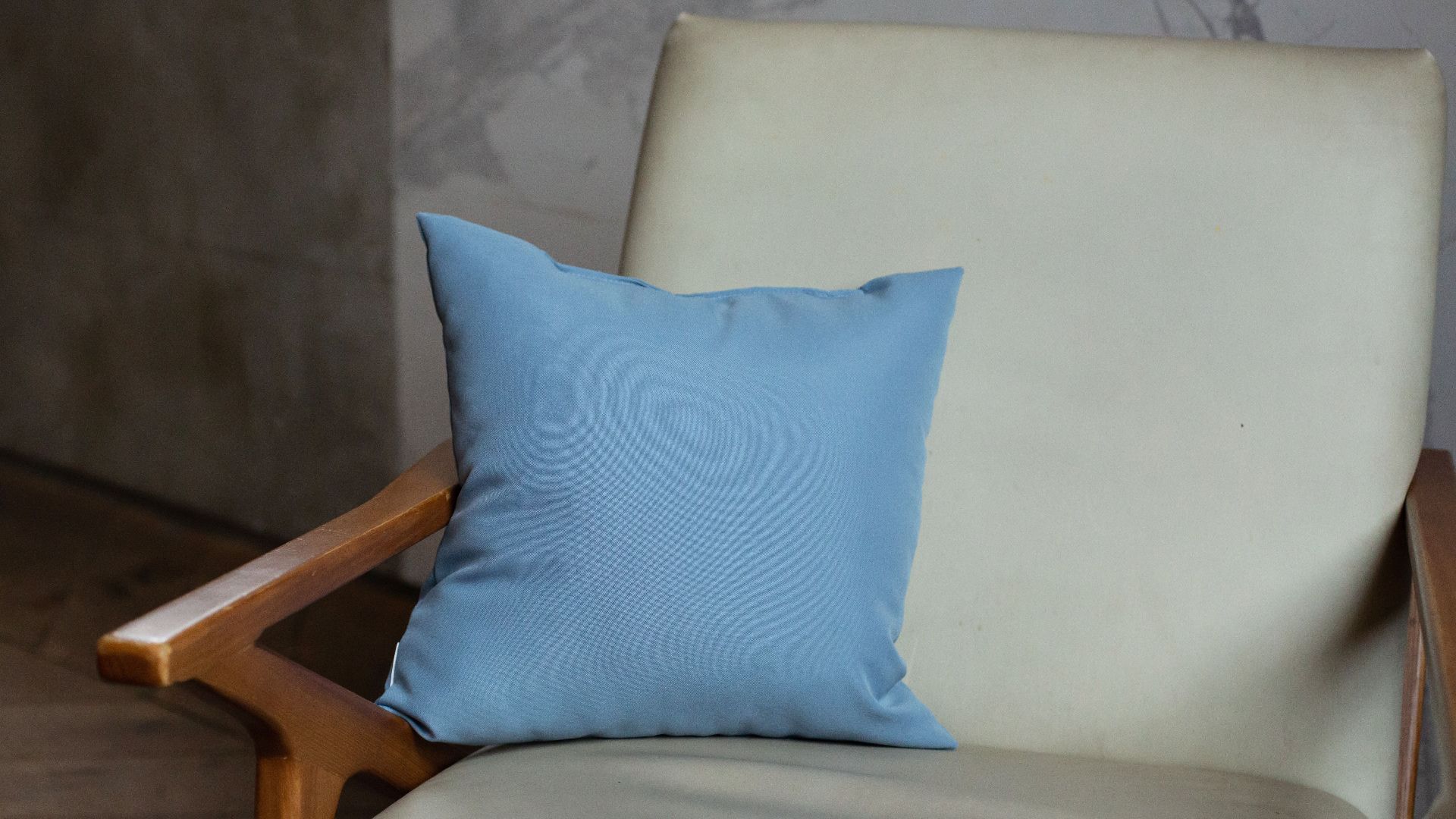
Couch time doesn’t have to mean collapsing into the deepest slump available. Add a small pillow behind your lower back, keep your feet supported, and change positions every so often. You can still be comfortable without putting your spine right back into its workday shape.
19. Set Up Tomorrow’s Space Tonight
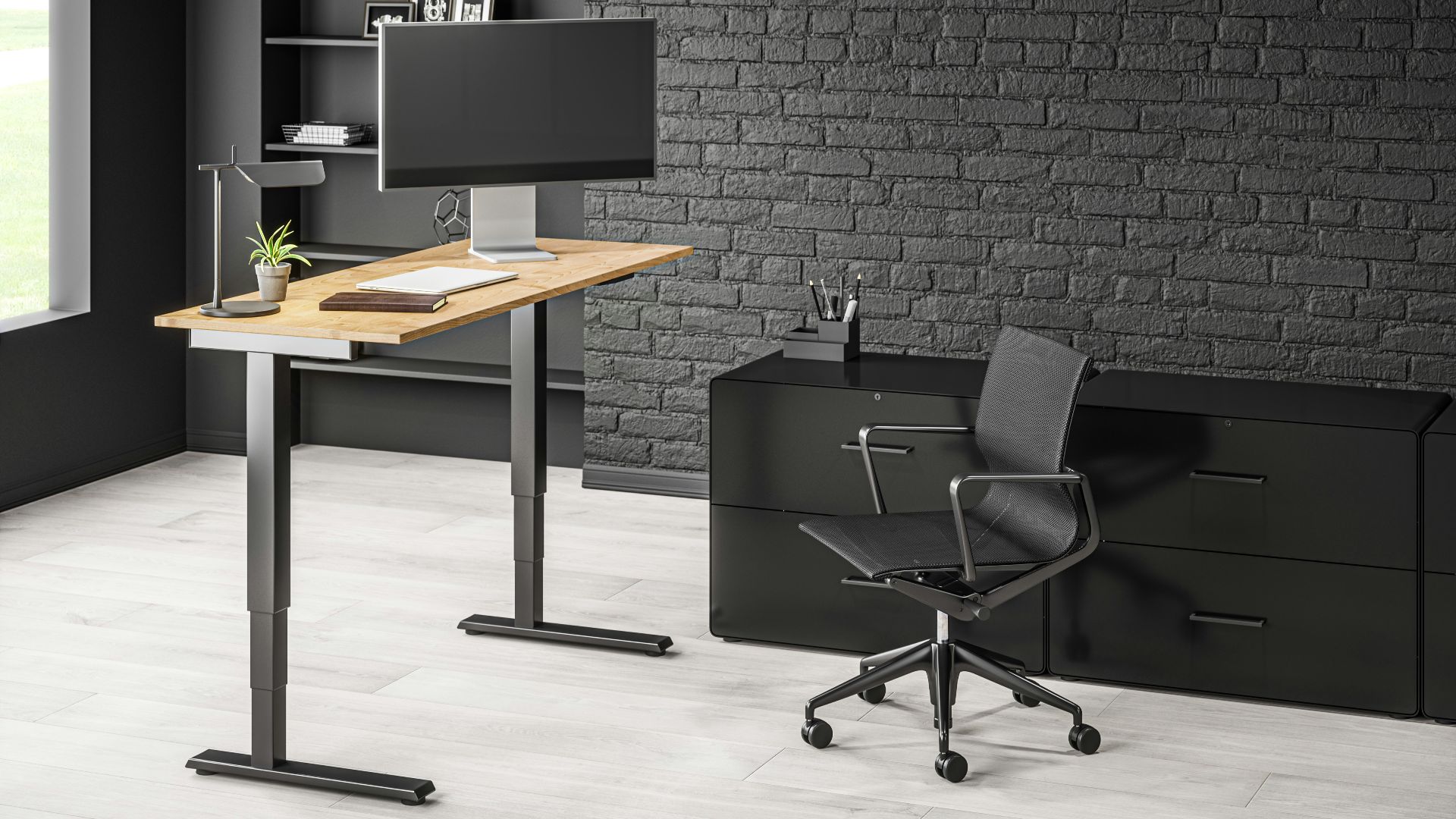
A tiny bit of setup can make tomorrow’s posture easier before the day even starts. Raise your screen closer to eye level, move your keyboard and mouse within easy reach, and make sure your feet can rest comfortably. The goal isn’t a showroom-perfect desk, but a setup that asks less from your neck, shoulders, and back.
20. Notice Symptoms That Need More Care
Everyday stiffness after a hunched-over day is common, but some symptoms deserve more attention. Pain that follows an injury, spreads into your arms or legs, comes with numbness, tingling, weakness, or a severe headache, or doesn’t improve after a few days should be checked by a healthcare professional.

KEEP ON READING


20 Things That Can Make You Short of Breath