Better Than Reading It Again
No matter what someone selling a memory course promises, nothing gets permanently lodged in your head in one second. What psychology does offer is a set of techniques that reliably outperform rereading and highlighting, including several researchers have been testing for more than a century. Memory competitors use some of the more elaborate versions to memorize a shuffled deck of cards in under a minute, but most are much less dramatic. Here are 20 memory tricks that actually hold up in the lab.

1. The Memory Palace
Greek and Roman orators delivered hour-long speeches from memory by walking a familiar building in their heads and parking a vivid image at each spot along the route. The Rhetorica ad Herennium, written around 80 BC, spells the whole technique out in working detail for students of oratory. Competitors at memory championships still run on it, since the brain tracks places far more willingly than it tracks lists of unconnected items.

2. Spacing
Forty minutes of studying in one sitting is usually less effective than splitting that time across two different days. The time between sessions is part of what makes it work: you forget just enough that recalling the material requires more effort the next time. That extra retrieval effort helps strengthen the memory instead of simply making the material feel familiar.
3. Retrieval Practice
Henry Roediger and Jeffrey Karpicke gave students passages to learn, then had one group reread while a second group took practice tests. A week later the tested students remembered considerably more, despite rereading having felt more productive at the time. Shutting the book and writing down whatever surfaces is the most dependable study move in the literature.

4. Pretesting
Guessing at answers before you've studied anything sounds like wasted effort. Work on pretesting shows that wrong guesses followed by the correct answer produce stronger retention than an equal stretch of plain studying. The failed attempt seems to carve out a slot that the right answer drops into a moment later.
5. Chunking
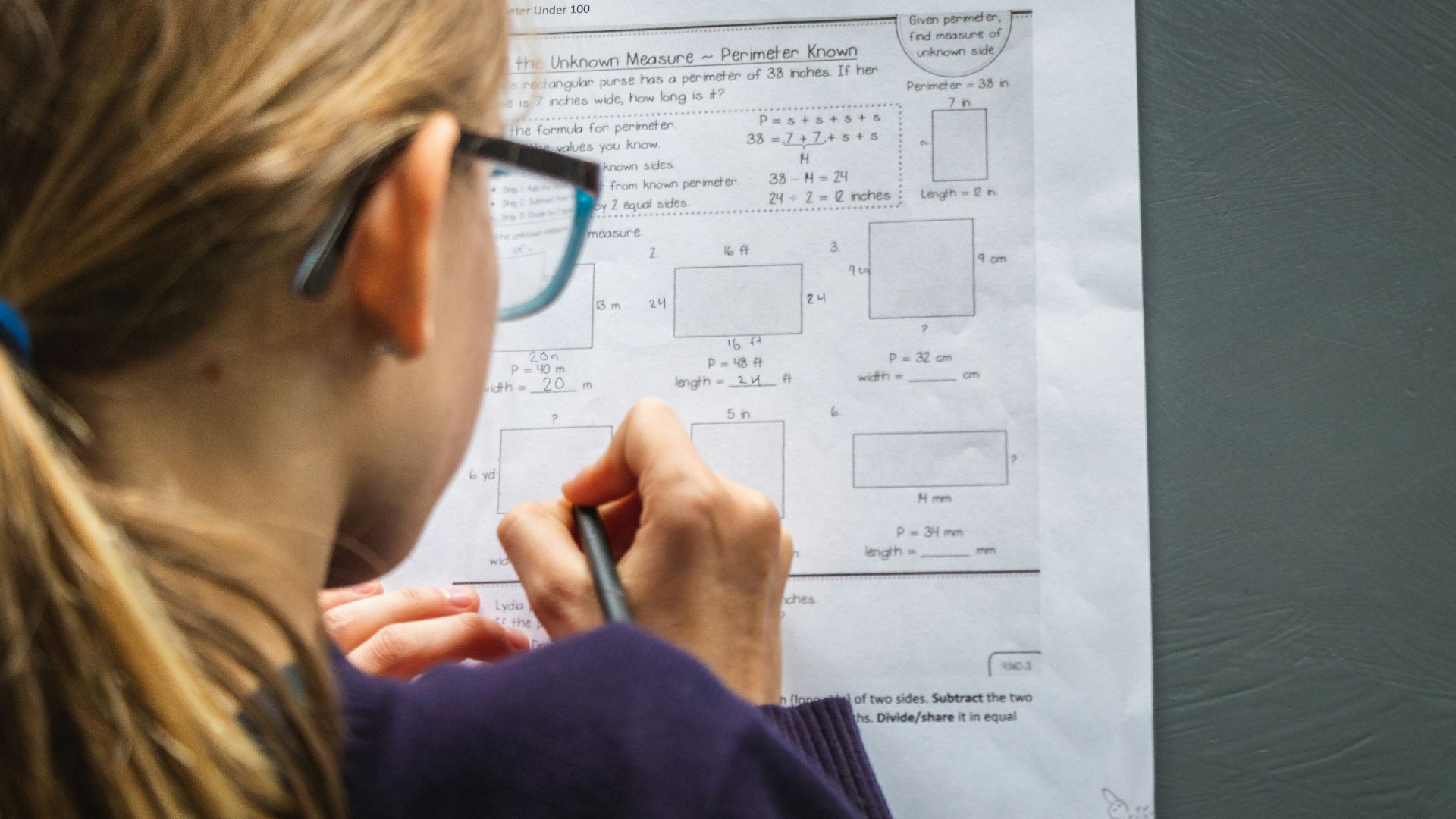
George Miller's 1956 paper pegged short-term capacity at roughly seven items, give or take two. Chunking sidesteps that ceiling by bundling material into single units, which is why phone numbers arrive in short blocks instead of one long string. One runner trained by Anders Ericsson pushed his digit span past 80 digits by hearing the numbers as race times.

6. The Major System
Digits resist visualization, so mnemonists convert each one into a consonant sound and build words out of the sounds. Thirty-two becomes a pair of consonants that might turn into the word moon, and a moon is something anybody can picture without effort. Once the number has become an image, it files into a memory palace alongside everything else you've stored there.

7. The Story Method
Grocery lists lie there flat, so chain the items into an absurd narrative where each one causes the next. Your bananas trip the mailman, who lands face down in a birthday cake that is somehow already on fire. Absurdity earns its place here, because a strange image outlives a sensible one every time.

8. The Keyword Method
Foreign vocabulary sticks when you find an English sound hiding inside the word, then picture the two things together in one scene. Richard Atkinson ran this on Russian learners in the 1970s, and his students beat the groups drilling straight translations. The Russian zvonok means bell and carries the sound of oak, so learners pictured a bell hanging in an oak tree.
9. The Baker-Baker Paradox
Tell someone a stranger's name is Baker and it evaporates inside of a few minutes. Tell them the stranger is a baker and it holds, because an occupation connects to aprons and hot ovens while a name connects to nothing whatsoever. Names need something to grab hold of, which in practice means a picture you invent on the spot and never say out loud.
10. Spaced Name Repetition
Say a new name back during the introduction, again a minute later, then once more before you leave the room. A 1978 study led by Peter Morris found this expanding pattern outperformed plain repetition of the very same names. Every successful pull stretches how long the name stays available, and three pulls in five minutes costs you nothing.

11. The Generation Effect
Notes work harder as questions, with you producing the answers instead of reading them. Slamecka and Graf established in 1978 that self-generated words survive in memory while words merely read off a page fade. Filling a blank helps even when the answer feels too obvious to bother writing down.

12. Reading Aloud
Read the important lines out loud instead of running your eyes over them. Colin MacLeod calls this the production effect, and it appears to work by adding a second trace along with a bit of distinctiveness. Reserve it for the handful of things that matter, since nobody is reading a whole chapter aloud twice.

13. The Self-Reference Effect
A fact you've tied to your own life buries itself deeper than one you've only defined. Timothy Rogers and colleagues documented the pattern in 1977 using adjectives judged for personal relevance against adjectives judged for meaning. Historical dates stop sliding around once you hang them on your own family's timeline instead of a century line.

14. Picture Superiority
Images come back more reliably than words do, an effect replicated across decades of experiments. Allan Paivio's dual coding account holds that a picture gets stored twice over, once as a visual and once verbally. A terrible sketch of a concept does more for you than a second copy of the definition ever will.
 Kristyna Squared.one on Unsplash
15. The Von Restorff Effect
Hedwig von Restorff showed in 1933 that one odd item in a list of similar items gets remembered far better than its neighbors do. That's why one highlighted line works and a page drowned in yellow marker accomplishes nothing at all. Make the thing you need distinct from what sits around it, not distinct from the white of the page.
 Glenn Carstens-Peters on Unsplash
16. Asking Why
Elaborative interrogation is a heavy name for stopping on a fact and asking why it happens to be true. Students who generate their own explanations beat students who read the same material twice. Your explanation doesn't even have to be correct, since the searching is where the connections get built.
 Christina @ wocintechchat.com M on Unsplash
17. Matching the Room
Godden and Baddeley had divers learn word lists underwater and on dry land in 1975, then tested both groups in both places. Performance improved whenever the testing environment matched the place where the learning had happened. You can't drag the exam into your kitchen, so work through the material in several different rooms.

18. First and Last
Whatever lands in the middle of a list is what goes missing first. Put the material that matters at the start or the finish, then break long lists into short ones so you end up with more starts and finishes to use. Speakers work the same effect from the other side, front-loading the point instead of building toward it.

19. Ten Minutes of Nothing
Sit with your eyes closed and do nothing at all for ten minutes after you finish studying. Michaela Dewar's experiments put the resting group well ahead, days later, of people who moved straight into the next task. Leaving the phone face down is the entire intervention, which makes this the cheapest item here.

20. Sleeping On It
An all-nighter trades the storage step for a few more hours of input, which is a bad trade. Jenkins and Dallenbach reported in 1924 that sleepers forgot less than people who stayed awake the same number of hours. Sleep consolidates what you studied instead of merely pausing the decay, so cutting it short throws away work you already paid for.

KEEP ON READING

10 Pre-Workout & 10 Post-Workout Tips To Follow