The Recipe Box Mystery: How My Aunt's Secret Notes Uncovered a Family Scandal That Changed Everything
The Recipe Box Mystery: How My Aunt's Secret Notes Uncovered a Family Scandal That Changed Everything
The Last Goodbye
My name is Karen, I'm 60, and I'm standing in the funeral home trying not to fall apart as people file past my Aunt Margie's casket. The room smells like too many lilies and that artificial air freshener funeral homes use to mask the scent of grief. Everyone keeps touching my arm and saying how sorry they are, but their words just float around me like those dust particles you can only see in sunlight. Aunt Margie wasn't just my aunt—she was the woman who understood me when my own mother couldn't, who called at 6 a.m. on my birthday because she "couldn't wait another minute," who slipped me extra pie at Thanksgiving when no one was looking. She never married or had kids, but she treated me like the daughter she never got. Now I'm watching distant relatives who barely called her and neighbors who only knew her from church shuffling past, dabbing dry eyes with tissues they don't need. My cousin Janet keeps saying, "She's in a better place," and I want to scream that the better place was HERE, with ME, baking those peppermint bars in her dented red tin from the seventies. As I stand here in my sensible black dress, I realize I'm facing a world without Aunt Margie's steady presence for the first time in sixty years. What I don't realize yet is that she left behind far more than just memories—and that her final gift to me would turn my entire world upside down.
 Image by RM AI
Empty Rooms
Two weeks after the funeral, I'm standing in Aunt Margie's living room, surrounded by the physical remnants of her life. The silence is deafening. I've been putting this off, but her lawyer called yesterday about finalizing the estate, so here I am. Every surface holds memories – the worn armchair where she'd sit crocheting while we talked, the bookshelf with her dog-eared mystery novels, the china cabinet with teacups she never used but loved to display. I pick up a framed photo of us from my high school graduation, my smile wide and her eyes beaming with pride. She'd driven three hours to be there, smuggling a homemade cake into the hotel despite their strict 'no outside food' policy. "Rules are suggestions, Karen," she'd whispered with a wink. Now I'm faced with the impossible task of dismantling her life – closets stuffed with yarn in every color imaginable, drawers full of coupons she clipped but never used, recipe books with half the pages falling out. Each item I touch feels sacred somehow, like I'm disturbing something that should be left alone. I've brought dozens of cardboard boxes, but they seem woefully inadequate for the job. How do you pack up sixty years of someone's existence? What do you keep? What can you bear to throw away? I sit on her floral couch, overwhelmed by it all, when the phone rings. It's her lawyer again, and what he says next makes my heart skip a beat: "Mrs. Thompson, there's something else about your aunt's will we need to discuss."
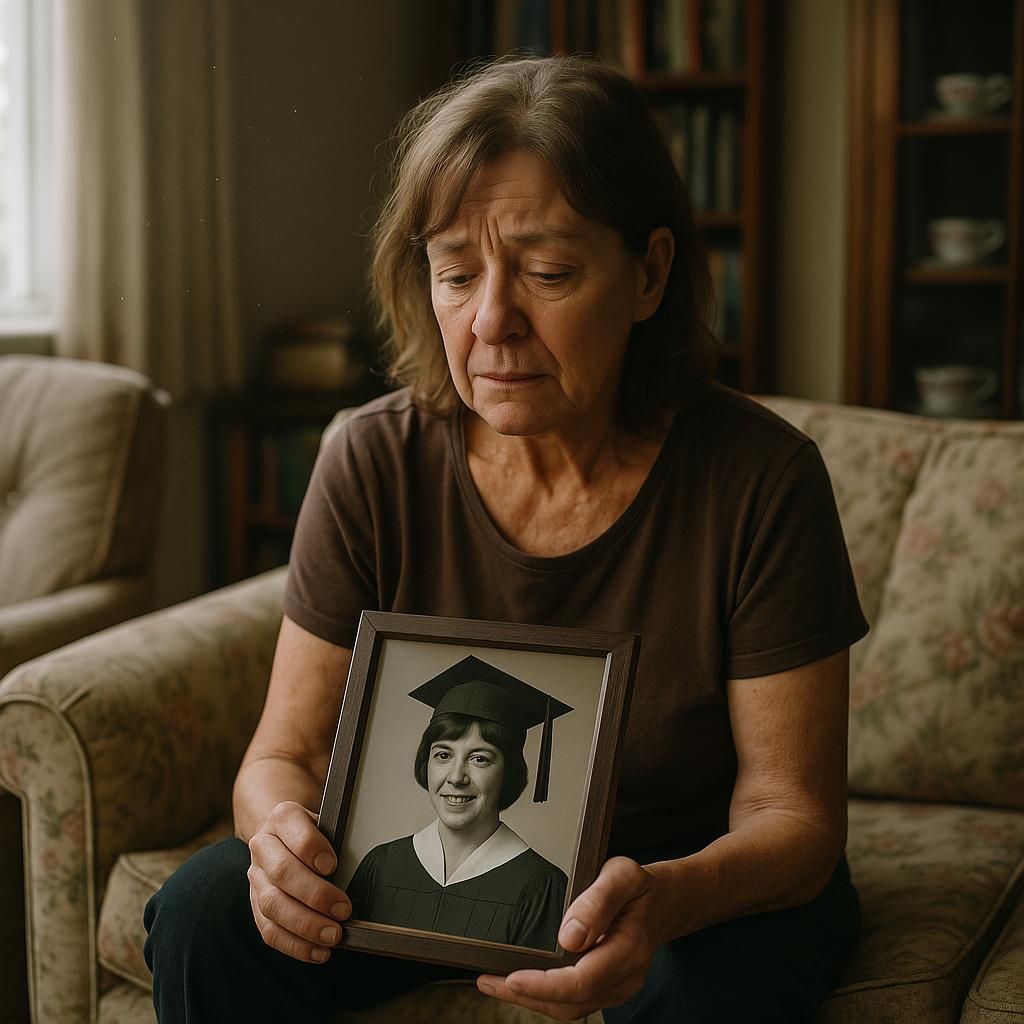 Image by RM AI
The Unexpected Call
I'm sitting cross-legged on Aunt Margie's bedroom floor, surrounded by sweaters that still smell like her lavender detergent, when my phone buzzes. Mr. Hoffman's name flashes on the screen, and I feel that familiar tightness in my chest. Every call about Margie's estate feels like losing her all over again. "Mrs. Thompson," he says in that formal tone lawyers never seem to drop, "I wanted to confirm our appointment for the will reading next Tuesday." I mumble something affirmative while folding a cardigan she wore last Christmas. "As I mentioned," he continues, "you're listed as the primary recipient of her personal effects." I picture some sentimental trinkets—maybe her favorite brooch or the little ceramic bird collection from her mantel. Nothing valuable, just pieces of her. After hanging up, I abandon the sorting and pull out a dusty photo album from her nightstand. There's Margie at my wedding, beaming brighter than I was. There she is teaching me to make pie crust when I was twelve, both of us covered in flour. I trace her face with my fingertip, wondering what small treasures she might have chosen to leave me. Something meaningful, no doubt. Something that would make me feel close to her again. What I don't realize, as I sit there surrounded by her things, is that Aunt Margie's final gift isn't going to be small or simple—and it's about to change everything I thought I knew about the woman who raised me.
 Image by RM AI
The Reading of the Will
Mr. Hoffman's law office feels like a museum—too quiet, too formal, with that distinct smell of old books and furniture polish. I'm sitting in an uncomfortable leather chair that squeaks every time I shift my weight, which is often because I can't seem to sit still. My uncle Robert is across from me, suddenly fascinated by his fingernails or the carpet pattern—anything to avoid meeting my eyes. The tension between us is thick enough to slice with one of Aunt Margie's serving knives. Mr. Hoffman drones through the will with all its legal jargon, and I find myself zoning out until I hear my name. "To my niece, Karen Thompson, I leave Margie's recipe box." That's it. Just a recipe box. I feel a moment of confusion—after all those months of sorting through her house, this is my inheritance? The lawyer hands me a faded wooden box covered in hand-painted strawberries, and the instant it touches my hands, I nearly gasp. It still smells like cinnamon and that Jergens hand lotion she always used. Tears spring to my eyes as I run my fingers over the worn edges, remembering how she'd guard this box like it contained gold instead of instructions for cornflake cookies and potluck lasagna. My uncle shifts uncomfortably in his seat, and when I glance up, there's something in his expression I can't quite read—is it guilt? Concern? Whatever it is, it disappears quickly as he looks away. I clutch the box to my chest, feeling like I've been given something precious, though I couldn't explain why. What I didn't know then was that this unassuming little box wasn't just full of recipes—it was full of secrets that would unravel everything I thought I knew about my family.
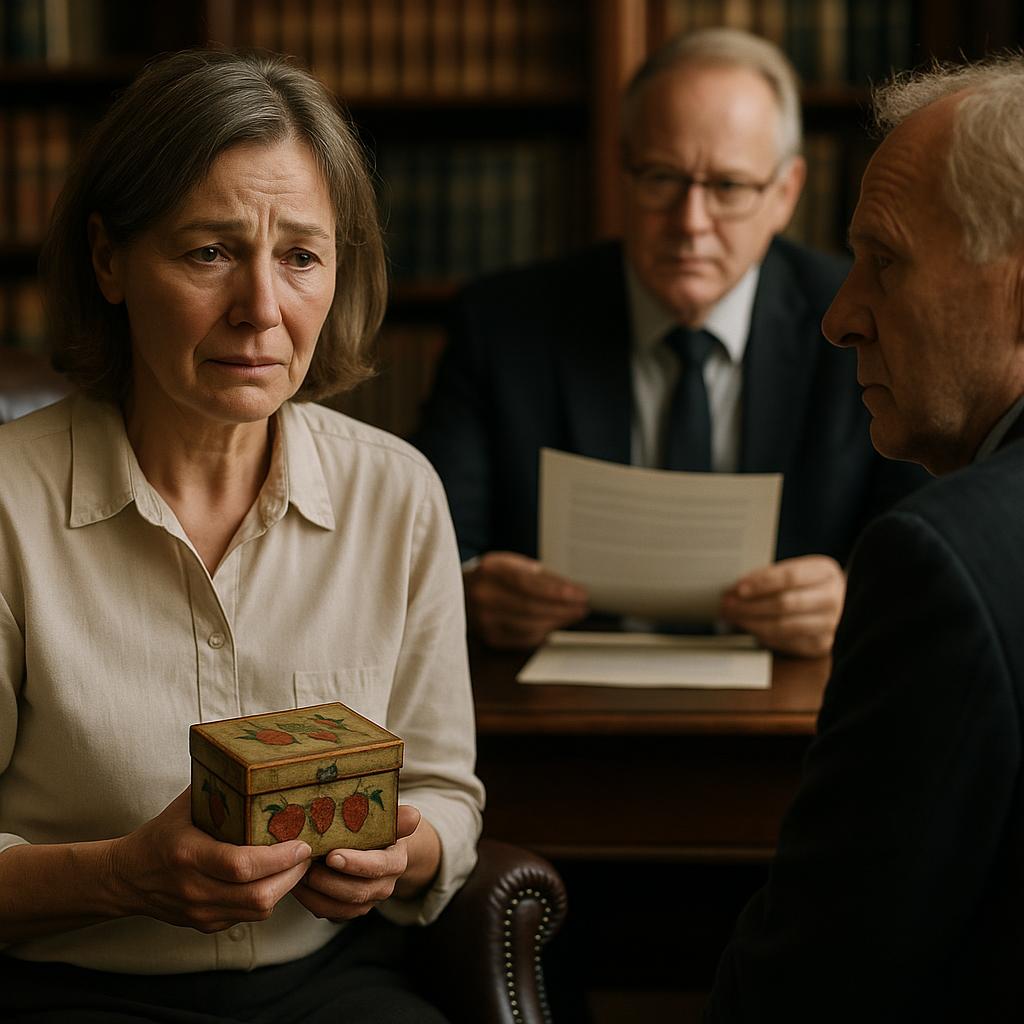 Image by RM AI
The Untouched Box
For three weeks, that strawberry-painted recipe box sits on my kitchen counter like some kind of sacred artifact I'm afraid to touch. I dust around it every morning, sometimes letting my fingers hover over the lid before pulling back. It's ridiculous, I know. It's just recipes—cornbread and casseroles and those peppermint bars she'd bring every Christmas. But opening it feels like saying a final goodbye, and I'm not ready. My daughter Melissa calls every few days, her voice gentle but prodding. "Mom, maybe making some of Aunt Margie's recipes would help. You know, comfort food actually does comfort." She doesn't understand that I can't bear to see Margie's handwriting yet—those loopy g's and the way she'd draw little stars next to her favorites. Sometimes at night, I sit at the kitchen table with a cup of tea, just staring at that box, remembering how Margie would guard it fiercely, swatting away hands that came too close. "Family secrets in here," she'd joke with a wink. "Not for prying eyes." I'd always laughed it off as her being dramatic. Now I wonder if there was something more to it. December arrives with its relentless cheer, and suddenly I'm faced with the first Christmas without her. The thought of no peppermint bars in that dented red tin makes my chest ache. That's when I realize—if I want to taste them again, I'll have to make them myself. With trembling hands, I finally reach for the box. What I find inside will change everything I thought I knew about the woman who loved me more than anyone.
 Image by RM AI
December Memories
The first snowfall of December arrived overnight, dusting my windowsills with white powder that glittered in the morning light. I stood at my kitchen window, coffee mug in hand, watching the flakes dance in the wind. It hit me like a physical ache—this would be the first Christmas without Aunt Margie showing up at my door, that dented red tin tucked under her arm, her cheeks flushed from the cold. "These bars won't deliver themselves, Karen!" she'd always announce. I turned to look at her recipe box still sitting on my counter, untouched for weeks. Something shifted inside me. If I couldn't have Margie, I could at least have her peppermint bars. With a deep breath, I set down my coffee and picked up the box. The lid creaked slightly as I opened it, releasing the faint scent of cinnamon and her hand lotion. My throat tightened as I flipped through the cards—each one covered in her distinctive handwriting, those loopy g's and the little stars next to her favorites. I found myself smiling for the first time in months when I saw her notes: "Add more vanilla if you're feeling wild" and "Don't skimp on the butter, Karen—calories don't count at Christmas!" Finally, I found it—"Margie's Famous Peppermint Bars," the card slightly more worn than the others from years of use. I traced my finger over her handwriting, feeling closer to her than I had since the funeral. What I didn't expect was what I'd find as I continued flipping through the cards, deeper into the box where recipes gave way to something else entirely.
 Image by RM AI
Familiar Recipes
I spread the recipe cards across my kitchen table, each one a little time capsule of my life with Aunt Margie. The familiar sight of her handwriting—those perfect loops and swirls—made my heart ache with both joy and sadness. I ran my fingers over the cornflake cookie recipe, remembering how she'd let me eat the raw dough despite my mother's protests. "A little salmonella never killed anyone worth knowing," she'd whisper with a conspiratorial wink. The gingerbread loaf card had a coffee stain in the corner from the time we'd stayed up all night baking for the church fundraiser. Her potluck lasagna card was practically translucent from use, with little notes scribbled in the margins: "add extra salt—your uncle likes it this way" and "bake longer if oven acts up." I smiled at her practical wisdom. When I finally found the peppermint bar recipe, I noticed a small Christmas stamp in the corner—a tiny Santa with rosy cheeks. It seemed so like her to add that little decorative touch. I gathered the ingredients, lining them up on the counter just as she would have done. As I measured and mixed, I could almost hear her voice: "Don't skimp on the peppermint extract, Karen—that's what makes them special." For the first time since the funeral, I felt her presence so strongly it was as if she were standing beside me. What I didn't realize as I happily stirred the batter was that the deeper I'd go into that recipe box, the more I'd discover that Aunt Margie had been hiding far more than just baking secrets.
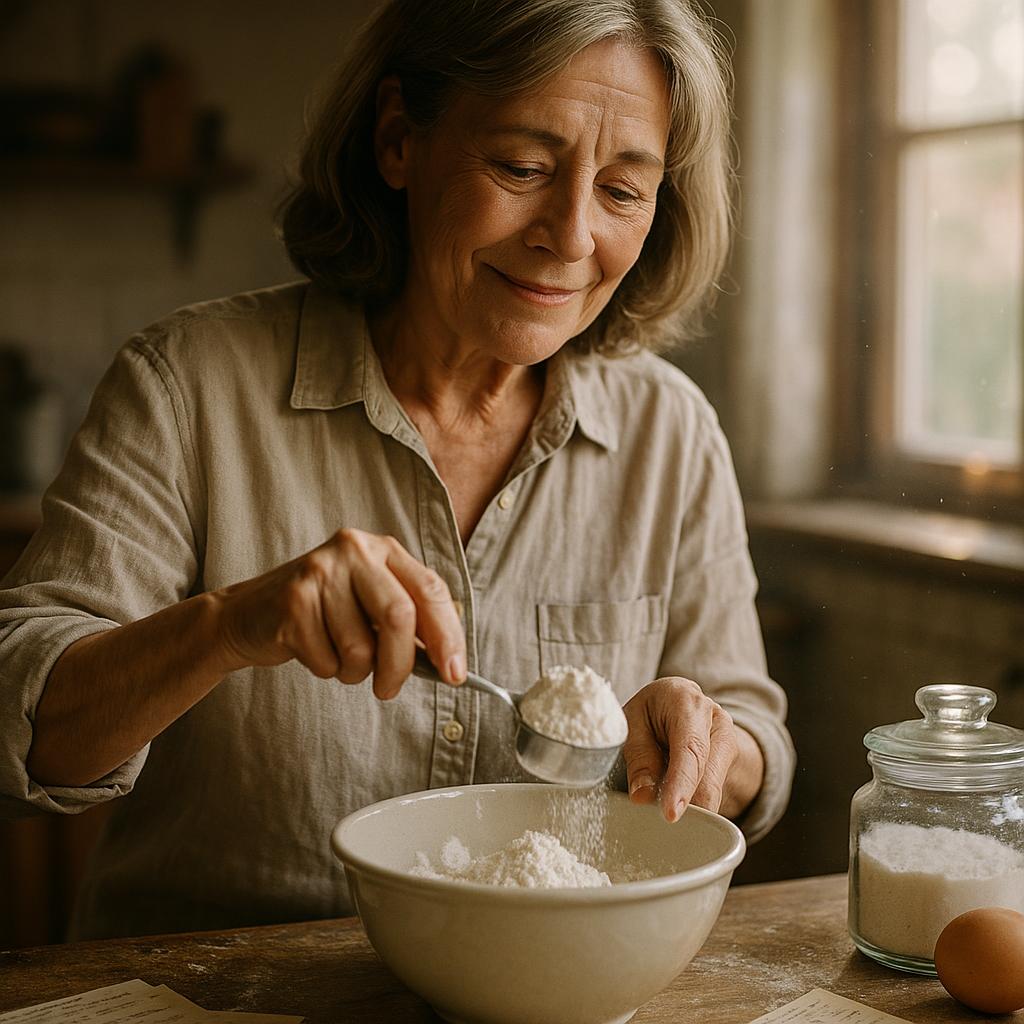 Image by RM AI
The First Strange Card
I was halfway through the recipe box, hunting for Aunt Margie's chicken casserole, when something changed. The cards at the bottom weren't like the ones on top. The handwriting—once so neat and precise—had become frantic, almost desperate. I pulled out a brownie recipe and flipped it over, expecting to find a note about substituting walnuts or maybe a serving suggestion. Instead, scrawled in hasty blue ink, were the words: 'Don't forget what he said.' A chill ran through me despite the warmth of my kitchen. I dug deeper, my fingers trembling slightly as I pulled out more cards. A banana bread recipe had 'If something happens to me, it's in the blue folder' written across the ingredients list. Another card simply read: 'I heard them again last night.' My stomach twisted into a tight knot. These weren't recipes anymore—they were messages. Hidden messages. I spread the cards across my table, trying to make sense of them. 'They think I don't know' was written on the back of her apple pie instructions. The handwriting was still Margie's, but it looked like it had been written by someone afraid—someone in a hurry. I sat back in my chair, suddenly aware of how quiet my house was, how the shadows seemed longer than they had moments before. The recipe box wasn't just a collection of family favorites. It was something else entirely. Something Aunt Margie had hidden in plain sight, knowing that someday I would find it. And as I stared at the scattered cards with their cryptic messages, I couldn't help but wonder: what exactly had my sweet, seemingly ordinary aunt been afraid of?
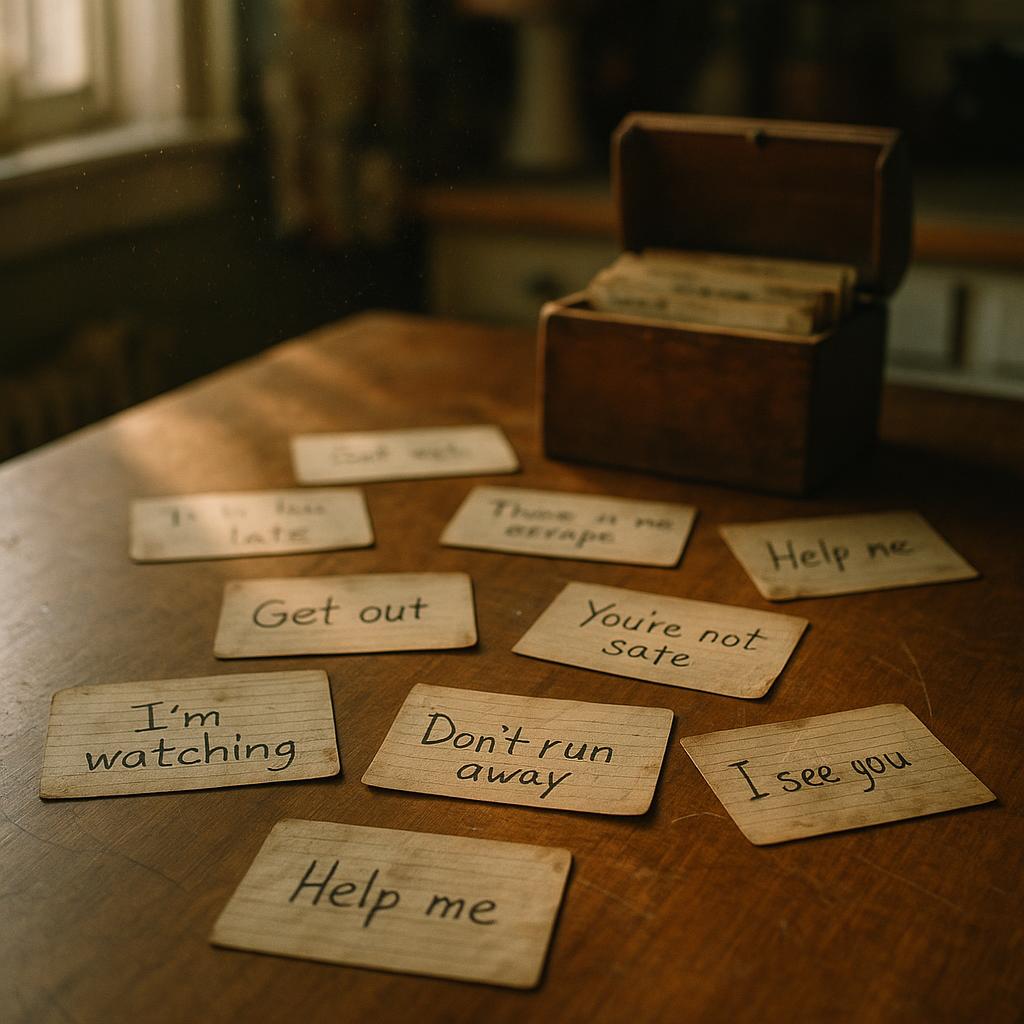 Image by RM AI
Midnight Discoveries
The digital clock on my microwave glows 3:17 a.m., casting an eerie blue light across my kitchen. Sleep is impossible now. I've arranged all the recipe cards in two piles on my table – normal recipes to the left, disturbing messages to the right. The right pile keeps growing. My hands shake as I examine a card for snickerdoodles with 'Check the stamps. Not the envelopes—the stamps' scrawled on the back. What stamps? I flip through more cards, my heart pounding against my ribs. 'I heard them again last night' is written in shaky letters across a meatloaf recipe. The most chilling one, on the back of her apple pie instructions, simply reads: 'They think I don't know.' I run my fingers through my hair, trying to make sense of it all. This isn't the Aunt Margie I knew – or thought I knew. The woman who baked cookies and called me on my birthday wasn't supposed to have dark secrets. I make myself a cup of tea, but it grows cold beside me as I obsessively sort through the cards again. That's when I notice something I'd completely overlooked – almost all of her recipe cards have little vintage stamps glued in the corners. Birds, flowers, holiday designs. She always said she used them 'because they're pretty.' But now I wonder if there's more to it. With trembling fingers, I carefully peel back the corner of a Christmas stamp, and what I find underneath makes my blood run cold.
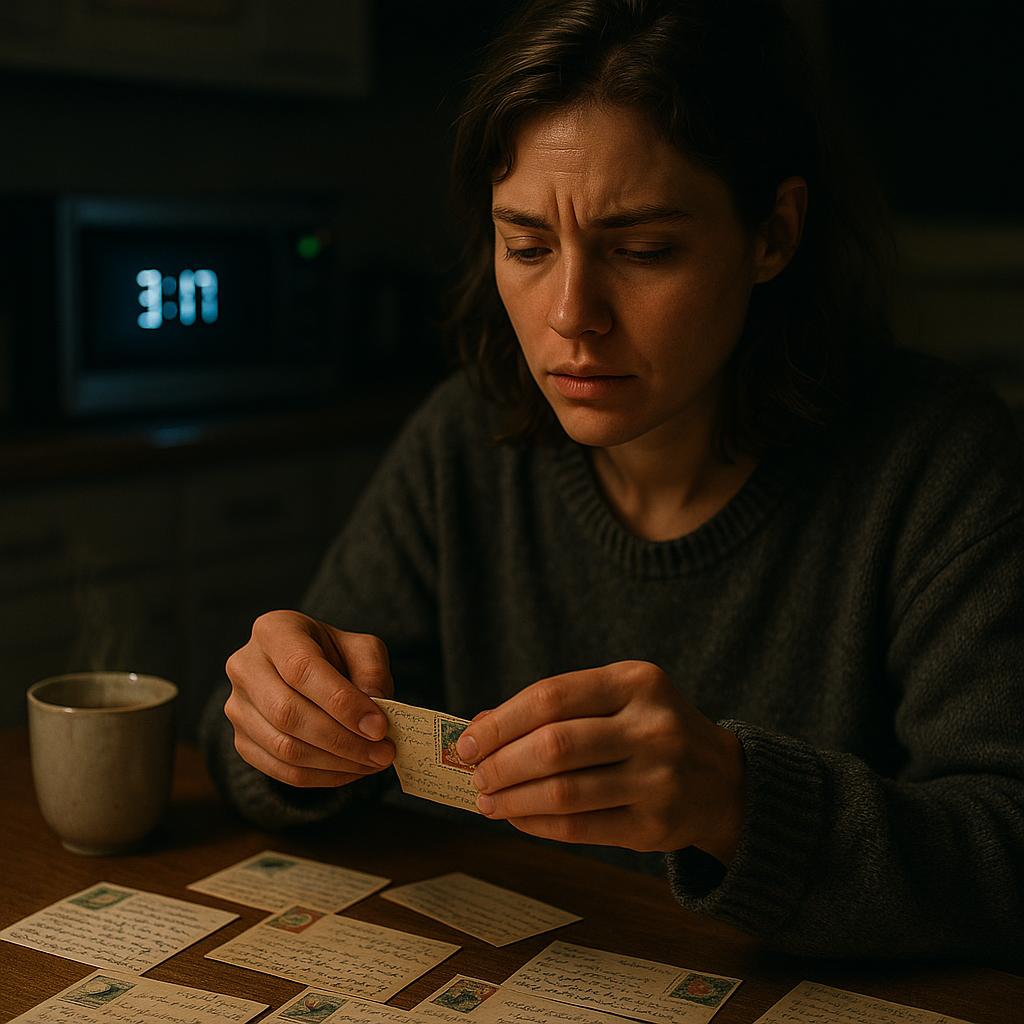 Image by RM AI
The Secret Under the Stamps
Morning light streams through my kitchen window as I sit hunched over the recipe box, my eyes burning from lack of sleep. I've been up all night, and what I'm seeing now makes my skin crawl. Almost every recipe card has a little vintage stamp glued in the corner – birds, flowers, Christmas designs. I'd always thought they were just Aunt Margie being her usual crafty self. "I like pretty things," she'd say whenever I commented on them. But now, with everything else I've found, these stamps feel sinister. With shaking hands, I carefully peel one off – a bluebird from an old postage series. Underneath, in handwriting so tiny I have to squint, are the words: "Call canceled without notice." My heart hammers against my ribs as I peel back another – a rose stamp hiding "Spoke to neighbor—he warned me." Under a Christmas stamp: "If Karen finds this, tell her I'm sorry." I work methodically, card after card, uncovering this secret language my aunt had created. By noon, my kitchen table is covered with stamps on one side, recipe cards with their hidden messages on the other. My coffee sits untouched, long gone cold. I press my palms against my eyes, trying to process what this means. Aunt Margie wasn't just leaving recipes behind – she was leaving evidence. But evidence of what? And why hide it this way? The most disturbing thought keeps circling in my mind: whatever she was afraid of, whoever she was hiding these messages from, they might still be out there. And they might not know that I've just discovered their secret.
 Image by RM AI
The Christmas Stamp
I stare at the peppermint bar recipe card, my fingers hovering over that innocent-looking Christmas stamp in the corner—a jolly Santa with rosy cheeks that suddenly feels like a warning sign. Something pulls at me, an instinct I can't explain. With trembling fingers, I carefully lift the edge of the stamp, trying not to tear the card. What I see makes my heart plummet to my stomach. There, in handwriting so tiny it's barely visible, are the words: 'If Karen finds this, tell her I'm sorry.' My name. MY name. I push back from the table so quickly my chair nearly topples over. The room spins slightly as I grab my phone, scrolling to Emma's number. "I can't make lunch," I tell her, my voice sounding strange even to my own ears. "Something's come up with Aunt Margie's things." Emma starts asking questions, but I barely hear her. My mind is racing. Sorry for what? What was Aunt Margie involved in that required this elaborate system of hidden messages? I grab my car keys, the recipe box, and my coat. Whatever secrets my aunt was keeping, they're waiting for me at her house. As I back out of my driveway, I can't shake the feeling that I'm being watched—that whoever Aunt Margie was hiding from might now be watching me. The Christmas stamp with its cheerful Santa face seems to mock me from the passenger seat where I've placed the recipe box. What I don't realize yet is that returning to Aunt Margie's house will uncover far more than just hidden messages—it will reveal a side of my family I never knew existed.
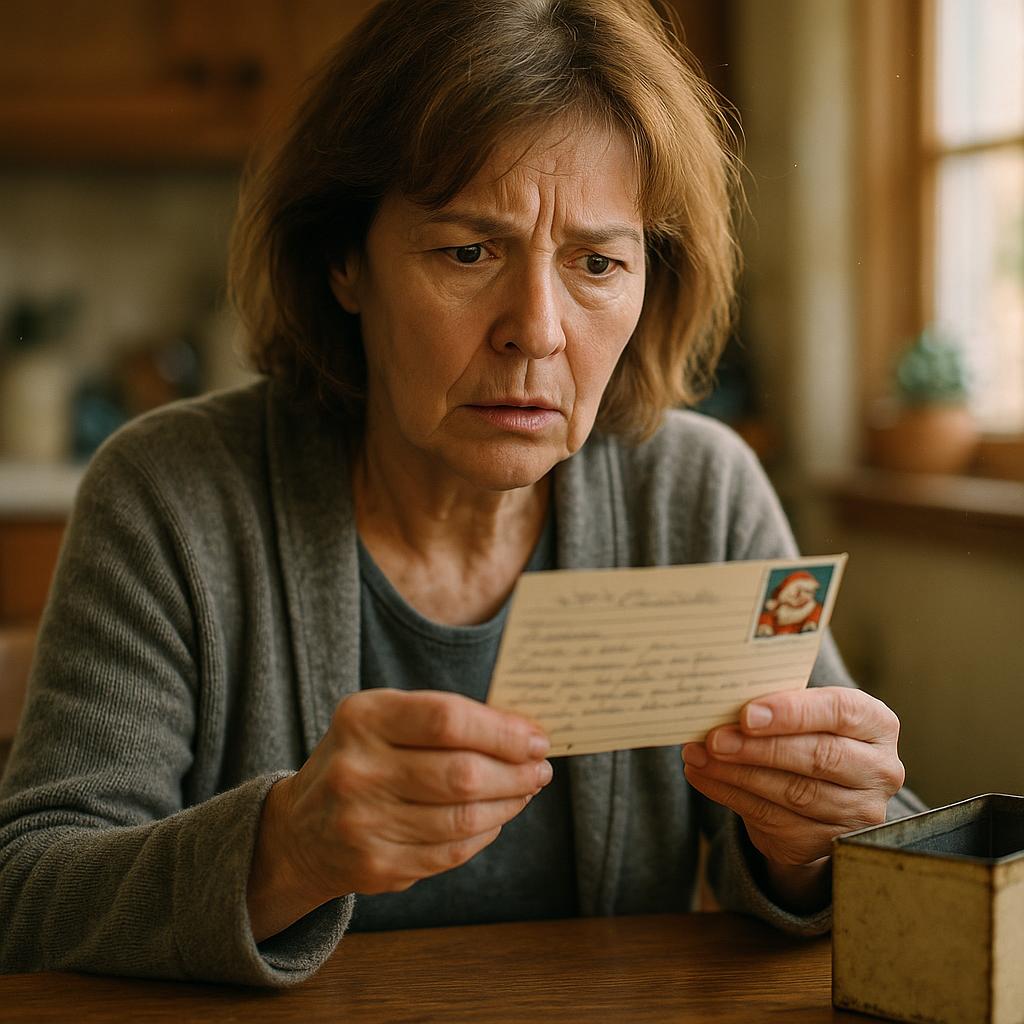 Image by RM AI
Return to the Empty House
Aunt Margie's house feels like a stranger now. I stand in the entryway, keys still warm in my hand, and listen to the silence that wasn't there when she was alive. Every creak and settling noise makes me jump. I've been through this place a dozen times already, sorting through her belongings, but now I'm looking with new eyes. The recipe box messages have turned this familiar space into something mysterious, almost threatening. I move from room to room like a detective, checking spots I'd already cleared out. I run my fingers along the undersides of drawers, behind picture frames, inside the hollow bases of lamps. In her sewing room, I get down on my hands and knees, feeling around the bottom of her ancient Singer machine. "Where would you hide something important, Margie?" I whisper to the empty room. The blue folder she mentioned has to be somewhere. I check inside books, behind the loose baseboard in the hallway, even inside the stuffing of her old throw pillows. Nothing. I sit on the floor of her bedroom, surrounded by the ghosts of her possessions, when something catches my eye – her sewing machine. Not the machine itself, but the cabinet it sits on. I'd cleaned it out weeks ago, but had I checked behind it? I push the heavy wooden cabinet away from the wall, and there, taped to the back with yellowing masking tape, is a blue folder. My heart nearly stops when I see what's written on it in Margie's handwriting: "For Karen – Open only when necessary."
 Image by RM AI
Behind the Sewing Machine
I stare at the back of Aunt Margie's sewing cabinet, my heart pounding so loudly I swear it echoes in the empty house. There it is—the blue folder she mentioned, wedged tightly behind the machine she'd barely used in her later years. How many times had I dusted this cabinet during my cleaning sprees without noticing this hiding spot? My fingers tremble as I carefully pull it free, surprised by its weight. The folder feels warm in my hands, like it's alive with secrets. When I open it, the contents nearly take my breath away: yellowed newspaper clippings, meticulously organized bank statements, and a photograph of Aunt Margie standing beside a man I've never seen before. His arm is around her shoulders, both of them smiling, but something about his eyes makes my skin crawl. At the bottom of the stack is an envelope with my name written in her familiar looping handwriting. I trace the letters with my fingertip, suddenly terrified of what might be inside. This isn't just some sentimental keepsake—this is evidence of something. Something Aunt Margie was afraid of. Something she needed to hide. I glance over my shoulder, half-expecting to see someone watching me through the window. The house feels different now, charged with an energy I can't explain. I take a deep breath and carefully open the envelope, unfolding the letter inside. "My dearest Karen," it begins, and I have to blink back tears at the sight of her handwriting. "Please forgive me for leaving this burden behind, but I didn't know where else to put it." The next lines make my blood run cold.
 Image by RM AI
The Newspaper Clippings
I spread the contents of the blue folder across Aunt Margie's kitchen table, the same table where she'd taught me to roll pie crust when I was twelve. The newspaper clippings, yellowed with age and smelling faintly of attic dust, all related to a financial scandal from twenty years ago involving Helping Hands Community Fund. My stomach tightened as I remembered Aunt Margie working there briefly—she'd been so excited about the job, then suddenly quit, claiming she was 'too tired for office work.' I'd never questioned it. One headline jumped out at me: "Local Charity Under Investigation: Funds Misappropriated." Another article mentioned 'irregularities discovered by an unnamed staff member who resigned shortly after.' I traced the words with my finger, a chill running through me. That unnamed staff member—it had to be her. I studied the photo of Aunt Margie standing next to the man I didn't recognize. According to the caption, he was Richard Donovan, the charity's director. His smile didn't reach his eyes, and his arm around Margie's shoulders suddenly seemed less friendly and more possessive. I shuffled through more clippings, piecing together a story of missing donations and cooked books. The charity had eventually recovered from the scandal, but no one had ever been formally charged. I glanced at the letter addressed to me, still unopened, my name written in Aunt Margie's familiar handwriting. Whatever she'd discovered had frightened her enough to create an elaborate system of hidden messages. And as I unfolded her letter with trembling fingers, I realized with growing horror that one name kept appearing in the articles—a name I knew all too well.
 Image by RM AI
The Man in the Photograph
I stare at the photograph, my fingers tracing the outline of Aunt Margie's face. She's smiling, but now I notice something I didn't see at first glance—a tightness around her eyes, a slight stiffness in her posture. The man beside her has his arm draped casually around her shoulders, his smile wide and confident. James Whitaker. The name rings a bell now as I cross-reference it with the newspaper clippings. Director of Helping Hands Community Fund. The banner behind them confirms it—some office party that probably featured cheap wine and forced small talk. I check the date scribbled on the back of the photo: March 15th, twenty years ago. But according to the newspaper article in my hand, Whitaker didn't resign until July that same year, months after this picture was taken. The article describes him as 'stepping down amid allegations of financial impropriety' but notes that no charges were ever filed. He simply vanished from public life. I grab my phone and type his name into the search bar, wondering if he's still in town, if he's still alive, if he knows that Aunt Margie left behind evidence. What I find makes my blood run cold—not only is James Whitaker still very much alive, but he's now serving on the city council. And according to his public profile, he's close friends with my uncle.
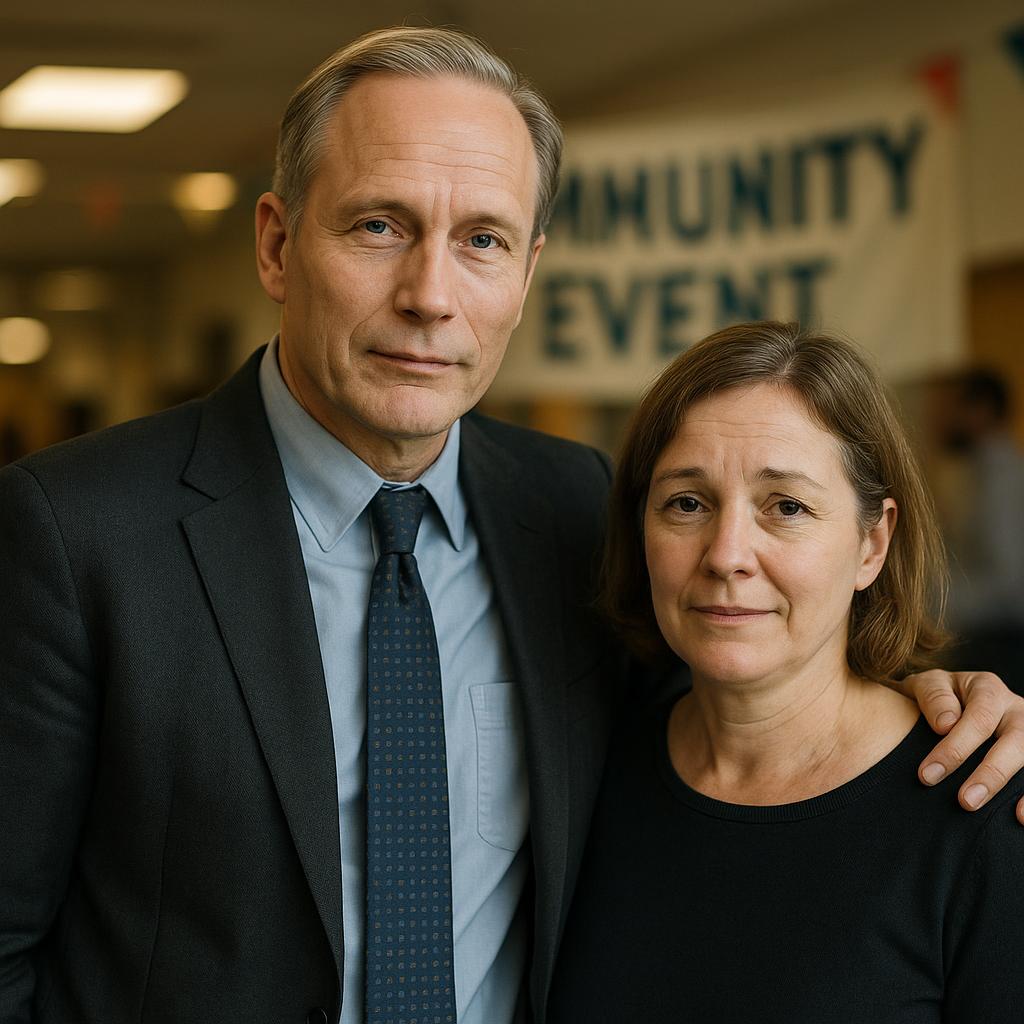 Image by RM AI
The Sealed Letter
The kitchen had grown dark around me, but I hadn't noticed until now. I flicked on the light and settled deeper into Aunt Margie's old chair, the letter trembling in my hands. 'My dearest Karen,' it began in her familiar looping script, 'Please forgive me for leaving this burden behind, but I didn't know where else to put it.' I took a deep breath and continued reading. Twenty years ago, while working at Helping Hands, Aunt Margie had discovered financial records that didn't add up—donations being redirected, funds disappearing. She'd done what any honest person would do: reported it to the board, expecting them to handle it discreetly. Instead, her life turned into something from a thriller movie. 'Someone began following me home,' she wrote. 'The calls started at odd hours—just breathing on the other end. Letters with no return address appeared in my mailbox.' My stomach twisted as I read how she'd gone to the police, who dismissed her concerns as paranoia from 'a nervous older woman.' The calls eventually stopped, but she never felt safe again. 'I hid everything,' she explained, 'in the only place no one would think to look—my recipe box.' I had to set the letter down for a moment, my hands shaking too badly to hold it steady. The final page contained the line that made my blood freeze: 'If you are reading this, it means something has changed. Please be careful. People who hide things once will hide them again.' And then, at the bottom of the page, a list of names—people she believed knew more than they admitted. One name was circled, highlighted, starred. My uncle's name.
 Image by RM AI
The Warning
I clutch the letter so tightly my knuckles turn white, reading the final lines over and over. 'If you are reading this, it means something has changed. Please be careful. People who hide things once will hide them again.' A chill runs through me that has nothing to do with the temperature in Aunt Margie's house. I get up and check the locks on all the doors, peering through the curtains to make sure no one's watching the house. Am I being paranoid? Maybe. But Aunt Margie wasn't the type to exaggerate, and the fear in her words is palpable. I return to the kitchen table, my footsteps echoing in the empty house. The recipe box sits there innocently, no longer just a collection of family favorites but a carefully constructed vault of secrets. I think about how many times she'd opened it in front of me, calmly flipping through cards that contained hidden warnings while chatting about adding more vanilla to the cookie dough. How terrified must she have been, living with this knowledge for decades? And my uncle—his name circled and starred on her list—what role did he play in all this? The brother of the woman who practically raised me might be involved in something sinister enough to make Aunt Margie fear for her safety. I pull out my phone, hesitate, then put it back in my pocket. Who can I even trust with this? The walls of the house suddenly feel like they're closing in on me, and I realize with startling clarity that by finding these secrets, I might have put myself in the same danger that haunted Aunt Margie for twenty years.
 Image by RM AI
The List of Names
I stare at the last page of Aunt Margie's letter until my eyes burn, unable to process what I'm seeing. A list of names—people she believed were involved in the charity scandal—and there, at the top, circled in red ink, highlighted in yellow, with a star drawn beside it: Robert Lawson. My uncle. My mother's twin brother. Aunt Margie's own flesh and blood. My hands start shaking so badly I have to set the paper down on the kitchen table. Suddenly, all those awkward family gatherings make sense—the way Uncle Robert and Aunt Margie would avoid being in the same room, how conversations would die when they both appeared, the strained politeness that felt like a thin veneer over something darker. I remember how he'd refused to visit her in the hospital, claiming he was "too busy with work." How he'd stood at her funeral, stone-faced and distant, leaving immediately after the service without speaking to anyone. I'd always assumed it was just typical family drama—the kind everyone has but nobody talks about. But this? This was something else entirely. I pull out my phone and scroll to Uncle Robert's number, my thumb hovering over the call button. What would I even say? 'Hey Uncle Rob, just wondering if you threatened Aunt Margie over some charity fraud twenty years ago?' The thought makes me feel sick. If Aunt Margie was right—if Uncle Robert was involved in whatever made her so afraid—then who could I trust? And worse, if he realizes I've found her hidden messages, am I in danger too?
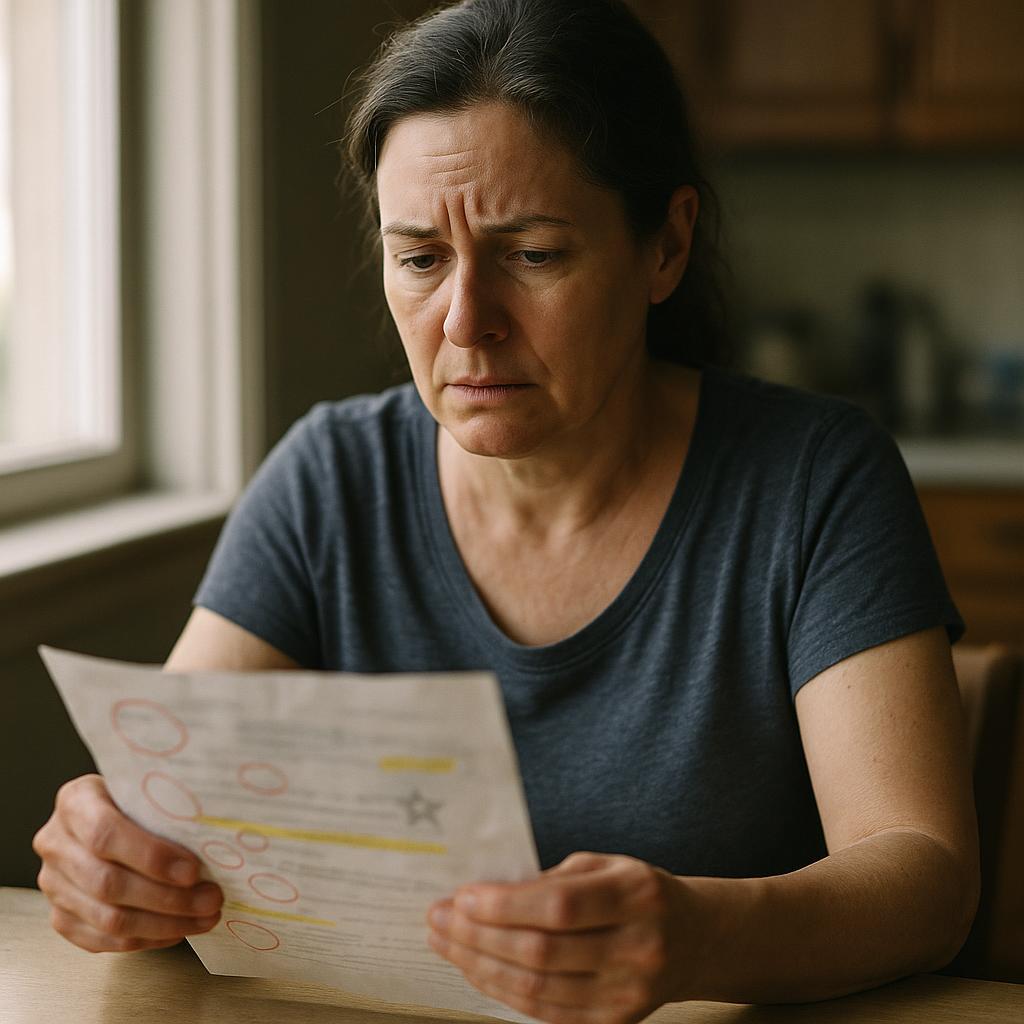 Image by RM AI
Midnight Call
It's 1:37 AM when I finally break down and call Emma. My fingers tremble as I dial, and I realize I haven't eaten since breakfast. 'Mom?' Her voice is thick with sleep. 'What's wrong?' I take a deep breath and try to organize my thoughts, but everything tumbles out in a chaotic rush – the recipe cards, the hidden messages under stamps, the newspaper clippings about the charity scandal, and Uncle Robert's name circled in red. 'Slow down,' Emma says, her tone shifting from groggy to concerned. 'Are you saying Aunt Margie was... what? Being threatened?' I can hear the skepticism creeping into her voice, and honestly, I don't blame her. If someone called me in the middle of the night with this story, I'd think they'd lost their mind too. 'Maybe Aunt Margie was confused near the end,' Emma suggests gently. 'Remember what Dr. Levine said about cognitive changes?' I close my eyes, gripping the phone tighter. Of course I'd considered that possibility – it would be so much easier to believe this was all the product of an aging mind. But the evidence is too organized, too deliberate. The newspaper articles are real. The charity scandal happened. And Uncle Robert's strange behavior at the funeral suddenly makes perfect sense. 'I know how it sounds,' I tell her, my voice steadier now. 'But I need you to trust me on this. Something happened twenty years ago, and Aunt Margie was scared enough to create this elaborate system to preserve the truth.' There's a long pause before Emma speaks again. 'What are you going to do?' she asks, and I realize I've already made my decision. 'I'm going to talk to Uncle Robert.'
 Image by RM AI
The Bank Statements
I spread the bank statements across Aunt Margie's kitchen table, squinting in the morning light that streamed through the windows. Coffee in hand, I tried to make sense of the financial trail she'd left behind. The statements showed regular bi-weekly deposits from Helping Hands—her salary, I assumed—until they abruptly stopped twenty years ago. Then there it was: a single large deposit labeled 'severance.' Hush money? I wondered, my stomach knotting. But what really caught my attention was what came after. For nearly a year following her departure, Aunt Margie had made withdrawals of exactly $267.50, always on the first Monday of each month. Same amount, same day, like clockwork. I circled each one with a red pen, the pattern unmistakable. This wasn't groceries or utilities—those varied month to month. This was something specific, something regular that started immediately after she left the charity. Was she paying someone? Being blackmailed? I flipped through her checkbook register, hoping for notes, but found nothing. Just the notation 'cash' beside each withdrawal. Whatever—or whoever—she was paying for, she didn't want a paper trail. I sat back, rubbing my temples. Aunt Margie, the woman who taught me to always keep receipts, who balanced her checkbook to the penny, was deliberately covering her tracks. And the most disturbing part? The payments stopped abruptly the same month Uncle Robert was promoted at his job—a connection that couldn't possibly be coincidence.
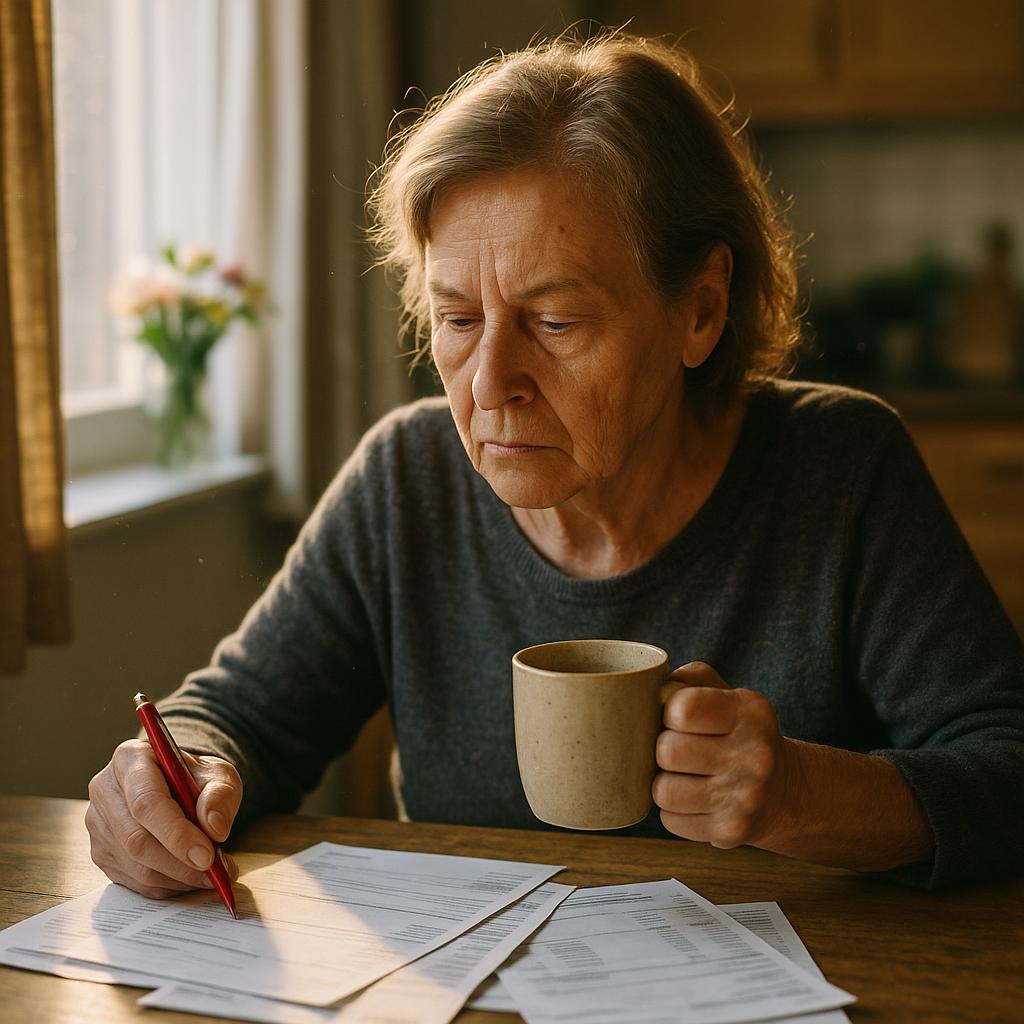 Image by RM AI
The Library Archives
The next morning, I drove to the town library, desperate for more information. The building hadn't changed since I was a kid—same faded carpet, same musty smell of old books. Mrs. Winters, the head librarian with her signature silver bun, lit up when she saw me. "Karen! How are you holding up, dear?" When I mentioned Aunt Margie, her expression softened. "Oh, Margie was a regular. Always researching something," she said with a fond smile. "Spent hours in our archives section." She led me to a back room filled with microfilm readers that looked straight out of the 1980s. "These go back to the 50s," she explained, showing me how to thread the film. I spent the next four hours hunched over that machine, my back aching, eyes burning from the blue-white glow. The articles about Helping Hands were more extensive than what Aunt Margie had collected. Names, dates, accusations—it was all there in black and white. But what made my heart stop was a piece about the charity's major donors. There, listed prominently among the town's elite, was my grandmother's name—a $50,000 donation made the year before the scandal broke. Aunt Margie had every article about the scandal except this one. She'd deliberately hidden the family connection. I sat back, rubbing my eyes, as pieces started clicking into place. This wasn't just about financial fraud anymore—this was about protecting our family name. And suddenly, Uncle Robert's involvement made a terrifying kind of sense.
 Image by RM AI
The Phone Call to Uncle Robert
I've been staring at my phone for what feels like an eternity, Uncle Robert's contact info glowing up at me like some kind of accusation. My finger hovers over the call button, trembling slightly. What am I even going to say? 'Hey, so I found Aunt Margie's secret evidence about that charity scandal you might have been involved in?' Yeah, that'll go over well. I finally take a deep breath and press call before I can chicken out. Three rings, then his gruff voice answers. "Karen?" He sounds surprised, maybe even a little wary. I keep my voice casual, like this is just another family check-in. "Hi Uncle Robert, just calling to see how you're doing." We exchange awkward pleasantries before I casually mention I'm still sorting through Aunt Margie's things. "Actually," I say, trying to keep my voice steady, "I found some interesting old papers about Helping Hands. Did you know she worked there?" The silence that follows is so complete I check my phone to make sure we're still connected. When he finally speaks, his voice has dropped to almost a whisper. "You should leave that alone, Karen. Some things are better left in the past." The line goes dead before I can respond, and I'm left staring at my phone in shock. That wasn't just avoidance—that was fear. And suddenly I realize that whatever Aunt Margie was afraid of, Uncle Robert is afraid of it too.
 Image by RM AI
The Former Colleague
Patricia Simmons lived in one of those quaint bungalows that screamed 'retired schoolteacher,' complete with wind chimes and a garden gnome army standing guard. I clutched Aunt Margie's list in my purse as I approached her door, my heart pounding. When she opened it, her eyes widened slightly at the sight of me. 'You look just like her,' she said softly, ushering me inside. Her living room was a time capsule of floral prints and doilies, and as she poured tea into delicate cups that probably hadn't seen the light of day in years, I noticed her hands weren't steady. 'I was so sorry to hear about Margie,' she said, passing me a cup. 'She was a good woman.' I nodded, taking a sip before diving in. 'I found some things in her belongings,' I said carefully. 'About Helping Hands.' The change was immediate—Patricia's posture stiffened, her eyes darting to the window like she expected someone to be peering in. 'Your aunt was very thorough with the books,' she finally said, her voice barely above a whisper. 'Too thorough, some thought.' When I asked who might have threatened Aunt Margie, Patricia's hands shook so violently that tea sloshed over the rim of her cup, staining the lace tablecloth. 'I don't know anything about that,' she insisted, but her eyes—wide with unmistakable fear—told a different story. As she hurriedly mopped up the spill, I noticed something that made my blood run cold: on her side table sat a framed photo of Patricia with a group of people, and there in the back row, with his arm around my uncle, stood James Whitaker.
 Image by RM AI
The Missing Files
The county records office was my next stop—a beige government building that smelled like old paper and industrial cleaner. I approached the front desk with my most polite smile, explaining I needed files related to the Helping Hands investigation from twenty years ago. The clerk, a woman with reading glasses hanging from a beaded chain, nodded and disappeared into the back room. When she returned ten minutes later, her expression had changed from helpful to confused. 'That's strange,' she said, tapping at her computer screen. 'The files should be here, but they've been checked out.' My stomach dropped. 'By whom?' I asked, trying to keep my voice casual. She scrolled through her database, frowning. 'They were requested by the charity itself about three months ago.' I felt like someone had dumped ice water down my back. Three months ago—just weeks before Aunt Margie passed away. 'Is that... normal?' I asked. The clerk shrugged. 'Organizations sometimes request their own historical records for anniversaries or internal reviews.' But the timing felt too perfect to be coincidence. Had someone at Helping Hands known Aunt Margie was sick? Were they cleaning up loose ends before she could share what she knew? Or worse—had the stress of whatever happened back then contributed to her decline? I thanked the clerk and walked out on shaky legs, the weight of Aunt Margie's recipe box suddenly feeling heavier in my purse. Someone was still actively covering their tracks after all these years, and I couldn't help wondering if they knew I was now following the same trail.
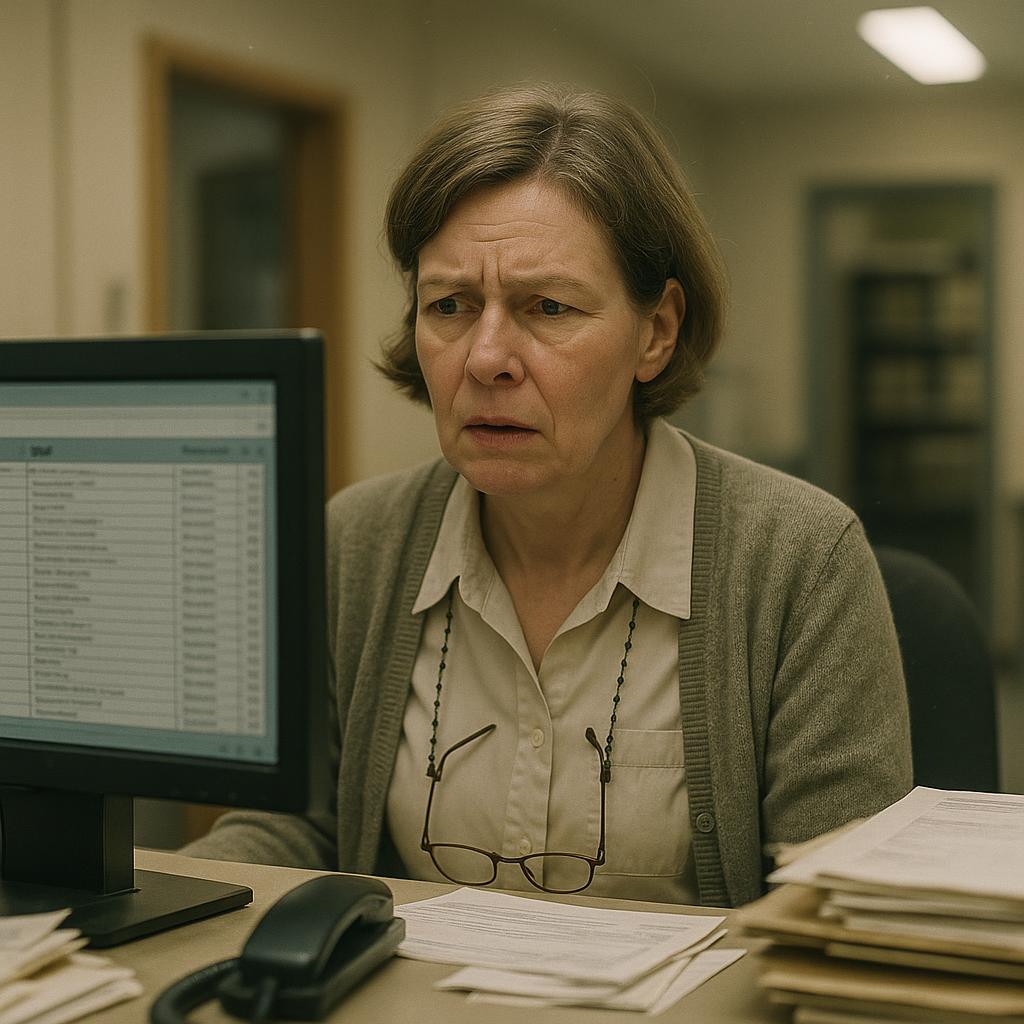 Image by RM AI
The Current Director
I decided to go straight to the source. Helping Hands had moved from the modest building Aunt Margie described to a sleek downtown office with glass doors and motivational posters about community service. I'd made an appointment with Dr. Elaine Foster, the current director, claiming I was researching local charities for a community project. She welcomed me into her office with a practiced smile that didn't quite reach her eyes. 'We've been serving this community for over thirty years,' she said proudly, handing me a glossy brochure. I nodded, taking notes while asking innocent questions about their programs and funding. Then, as casually as I could manage, I mentioned the financial 'irregularities' from twenty years ago. The change was immediate—like watching a door slam shut. Her smile froze, her posture stiffened. 'That was before my time,' she said firmly, shuffling papers on her desk. 'But I assure you our financial controls are impeccable now.' The interview ended shortly after, with Dr. Foster suddenly remembering another appointment. As I walked through the lobby, something caught my eye—a brass plaque listing the board of directors. I stopped, my heart pounding as I read the familiar name near the top: Robert Lawson. My uncle wasn't just involved twenty years ago. He was still here, still connected to the organization that had terrified Aunt Margie enough to hide evidence in her recipe cards. And suddenly I understood why he'd been so eager to get me to 'leave the past alone.'
 Image by RM AI
The Unexpected Visitor
I was knee-deep in Aunt Margie's papers, surrounded by stacks of old bills and photographs, when three sharp knocks at the door made me jump. I wasn't expecting anyone. When I opened the door, my stomach dropped. Standing on my porch was an older man with silver hair and piercing blue eyes that I recognized immediately from the photograph—James Whitaker, former director of Helping Hands. 'I heard you've been asking questions,' he said without so much as a hello. My mouth went dry. How did he know where I lived? How did he know what I was doing? For a moment, I considered slamming the door, but curiosity won out. 'Come in,' I said, my voice steadier than I felt. He walked past me with the confidence of someone who'd spent a lifetime being in charge, surveying my living room before settling into the armchair—Aunt Margie's favorite spot when she visited. The irony wasn't lost on me. 'Your aunt was a good woman,' he said, his fingers drumming against the armrest. 'Principled. Stubborn.' He said this last word with something like respect. 'And I think it's time someone told you the truth.' He reached into his jacket pocket, and I tensed, but he only pulled out an envelope, yellowed with age. 'The whole truth,' he added, 'not just Margie's version of it.' As he handed me the envelope, I noticed his hand was trembling slightly. Whatever was inside, it clearly wasn't just about financial fraud at a small-town charity—and I had a sinking feeling I was about to discover exactly why my uncle's name had been circled on Aunt Margie's list.
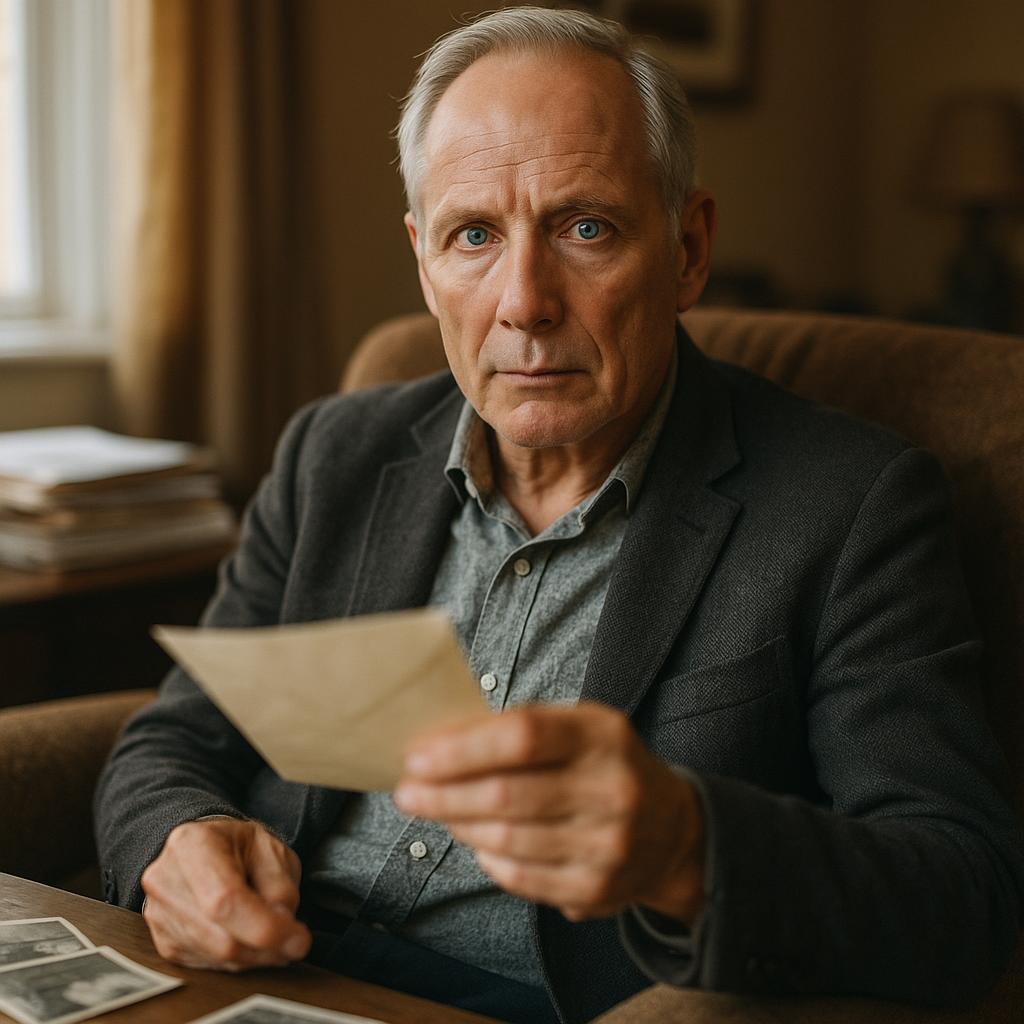 Image by RM AI
Whitaker's Story
I sat frozen in my chair as James Whitaker leaned forward, his weathered hands clasped together. 'Your aunt wasn't wrong about the fraud,' he said, his voice low and steady. 'But she was wrong about who was behind it.' He explained how Aunt Margie had discovered large donations—including my grandmother's $50,000—being siphoned into private accounts. 'When Margie brought her findings to me, I was shocked. I started digging myself, quietly.' His eyes darted to the window before continuing. 'That's when the threats started—for both of us.' According to Whitaker, he wasn't the villain but another target. 'The board members orchestrated the whole thing. They needed a fall guy, and the director was the perfect scapegoat.' I wanted to believe him—his story filled the gaps in Aunt Margie's evidence—but something felt off. 'If you were innocent, why didn't you fight back?' I asked. Whitaker's face darkened. 'Because they threatened my family... and Margie.' He pulled out another envelope from his jacket. 'This is why your uncle's name was on her list. He wasn't threatening her—he was warning her.' My hands trembled as I reached for the envelope. 'Robert knew what they were capable of because he was in too deep himself.'
 Image by RM AI
The Board Members
Whitaker slid a yellowed piece of paper across my coffee table. I recognized it immediately as the Helping Hands letterhead from twenty years ago. At the top was a list of board members, and as I scanned the names, my blood ran cold. Nearly every name matched those on Aunt Margie's list. 'These people,' Whitaker said, tapping the paper with his index finger, 'had everything to lose if the truth came out. We're talking pillars of the community—doctors, lawyers, business owners. The scandal would have destroyed their reputations, their social standing. Some might have even faced criminal charges.' I stared at my uncle's name, trying to reconcile the man who'd taught me to ride a bike with someone who could be involved in something so sinister. 'But why was Robert's name circled so many times in Aunt Margie's notes?' I asked, my voice barely above a whisper. Whitaker's face darkened, and he leaned forward, his eyes never leaving mine. 'Your uncle wasn't just any board member, Karen. He was the treasurer—the one person who should have caught these discrepancies long before your aunt ever did.' He paused, letting the weight of his words sink in. 'The question you should be asking isn't whether Robert knew about the fraud. It's why he pretended not to notice it for so long.' My hands trembled as I set down the list. If Whitaker was telling the truth, my uncle hadn't just failed to protect Aunt Margie—he'd been an active part of what she was trying to expose.
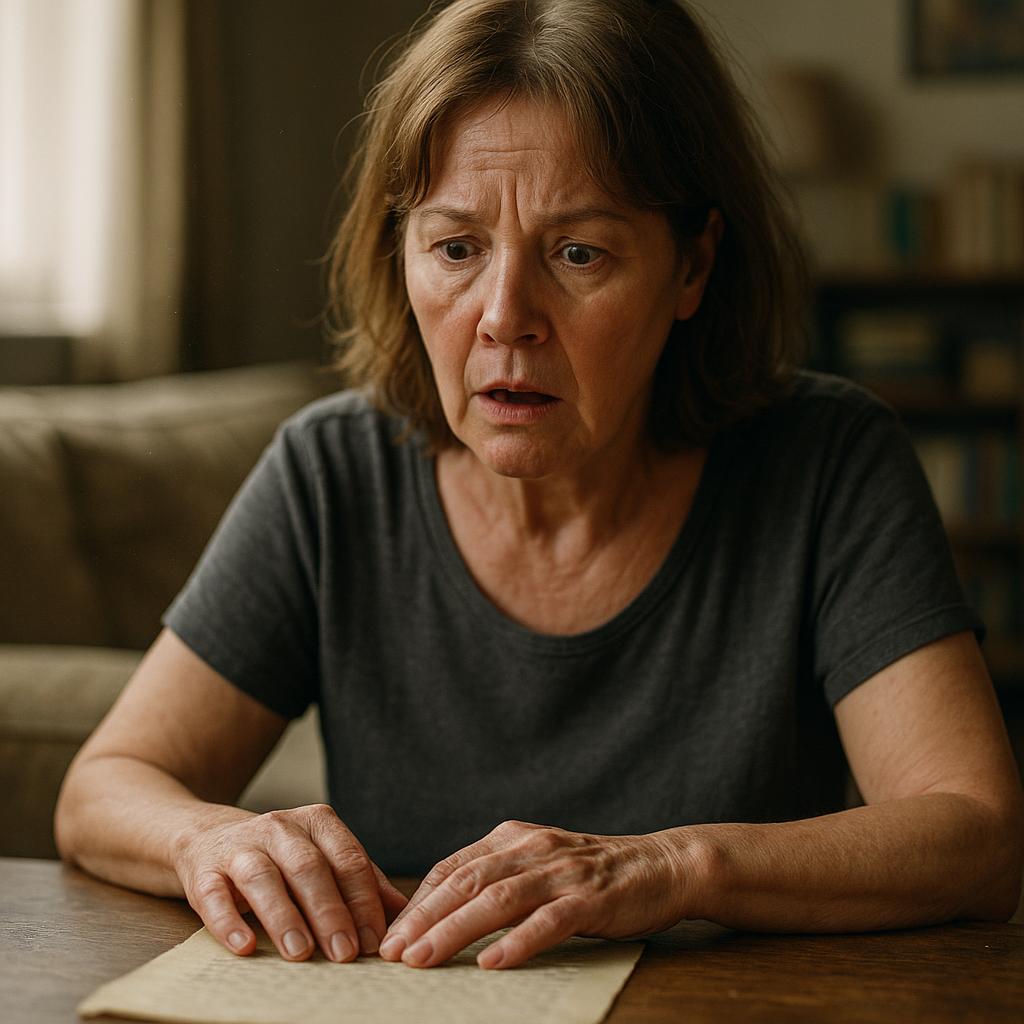 Image by RM AI
The Family Connection
I called Emma back the next morning, my mind racing with new questions. 'Em, what do you remember about Grandmother's involvement with Helping Hands?' I asked, pacing my kitchen floor. 'She was their biggest donor for years,' Emma replied, sounding more alert than during our midnight call. 'Uncle Robert got her involved - it was his pet project. Don't you remember how he was always dragging her to those fancy fundraising galas?' Suddenly, a memory surfaced like a bubble breaking the water's surface. That Thanksgiving dinner, maybe fifteen years ago. Grandmother had proudly announced she'd included a substantial bequest to Helping Hands in her will. Uncle Robert had been sitting next to her, practically glowing with pride as everyone raised their glasses in approval. Everyone except Aunt Margie. She'd abruptly excused herself from the table, mumbling something about feeling unwell. Mom had followed her to check if she was okay, returning with a tight smile saying Margie just needed some air. I'd thought nothing of it at the time - Aunt Margie occasionally got migraines - but now the scene replayed with chilling new context. She hadn't been sick. She'd been horrified. The charity that had threatened her, that had covered up financial misconduct, was about to receive even more of our family's money. And the person orchestrating it all had been sitting right there at our Thanksgiving table, carving the turkey with a smile. What made my stomach turn even more was realizing that Grandmother's bequest would have been processed after her death five years ago - which meant Helping Hands was still benefiting from our family's money even now.
 Image by RM AI
The Threatening Notes
I returned to Aunt Margie's house the next day, determined to leave no stone unturned. The conversation with Whitaker had left me shaken, but I needed more evidence. I started in her bedroom closet, methodically checking every shoebox, hatbox, and storage container. That's when I found it—a small wooden box pushed far back behind her winter boots, almost invisible unless you were really looking. My hands trembled as I pulled it out and lifted the lid. Inside were dozens of notes, all typed on plain white paper, no envelopes, no return addresses. My blood ran cold as I read them one by one. "Drop it or regret it." "Some secrets should stay buried." "Think about your family." Each one more threatening than the last. I checked the dates she'd carefully written in the corner of each note—all from the months right after she left Helping Hands. I sank down onto her bedroom floor, surrounded by these chilling messages, my mind racing. How had she lived like this? Twenty years of looking over her shoulder, jumping at every unexpected knock, screening her calls. The woman who taught me to stand up for myself had been terrorized into silence. And the worst part? She'd faced this alone, never telling anyone, not even me. I gathered the notes with shaking hands, adding them to my growing pile of evidence. Whoever had sent these hadn't just threatened Aunt Margie—they'd stolen decades of her peace. And as I read the final note—"We're always watching"—I couldn't shake the feeling that maybe, just maybe, they were watching me now too.
 Image by RM AI
The Confrontation
I drove to Uncle Robert's house with my heart pounding so hard I could feel it in my throat. No phone call, no warning—just me, showing up on his doorstep with twenty years of secrets in my purse. When he opened the door, the color drained from his face like someone had pulled a plug. "Karen," he whispered, my name sounding like an apology already. I didn't wait for an invitation, just walked past him into his pristine living room—all leather and polished wood, not a thing out of place. How fitting for a man who'd spent decades carefully arranging his life. I laid everything out on his coffee table like playing cards in a losing hand: Aunt Margie's recipe box messages, her letter, Whitaker's claims, and finally, the threatening notes. They looked so ordinary there, these pieces of paper that had terrorized my aunt for half her life. "Did you know about these?" I asked, surprised by how steady my voice sounded when everything inside me was screaming. Uncle Robert didn't answer right away. He walked to his bar cart, poured himself a generous scotch, and I noticed his hands trembling so badly he sloshed amber liquid onto the polished wood. He didn't wipe it up—the first imperfection I'd ever seen him allow. When he finally turned to face me, he looked twenty years older, the weight of whatever he was about to say already crushing him. "It wasn't supposed to go that far," he finally whispered, and those seven words confirmed everything I'd feared and somehow made it infinitely worse.
 Image by RM AI
Robert's Confession
Uncle Robert sat there, his shoulders slumped like a man carrying the weight of two decades on his back. 'It wasn't supposed to go that far,' he repeated, staring into his scotch as if it held answers. I waited, letting the silence do the work. Finally, he looked up, his eyes red-rimmed. 'I knew about the money, Karen. Not because I was taking it—I swear to you—but because I was covering it up.' He explained how certain board members had been skimming funds, and he'd discovered it but kept quiet. 'Your grandmother's donation meant everything to us. If the scandal broke, we'd lose it all.' His voice cracked. 'When Margie found those discrepancies, she was so... righteous about it. So determined.' He ran a trembling hand through his thinning hair. 'I begged her to let it go. I told her we could fix it quietly.' The way his voice broke told me everything. 'The board panicked. They started sending those... those notes.' He couldn't even look at them on the table. 'I swear to God, Karen, I never thought they'd threaten her. I didn't know how far they'd go.' He finally met my eyes, his own swimming with tears. 'By the time I found out, it was too late. She wouldn't even speak to me.' I sat there, processing his words, wondering how many family dinners we'd all sat through, smiling and passing dishes, while this secret festered between them. But something still didn't add up—if Uncle Robert wasn't behind the threats, then who was? And more importantly, were they still out there, watching me now?
 Image by RM AI
The Real Culprits
Uncle Robert's hands shook as he pulled out a folded piece of paper from his wallet—worn at the creases like he'd opened and closed it a thousand times. 'These are the people who were actually taking the money,' he said, sliding it across the table. The names hit me like a physical blow: Judge Harrington, Dr. Melissa Peters, and Lawrence Simmons—the mayor's brother-in-law. 'They were untouchable,' Uncle Robert whispered. 'Pillars of the community with connections everywhere.' He explained how they'd systematically siphoned funds from major donations—including my grandmother's—while making Whitaker their fall guy. 'He was perfect,' Robert said bitterly. 'New in town, ambitious, no local connections.' When I asked why he never came forward with the truth, his eyes filled with tears. 'Because they made it crystal clear what would happen if I did.' His voice cracked. 'Not just to Margie, but to all of us.' He described finding photos of me at school in his mailbox. Of my mother shopping. Of Aunt Margie gardening. Each with the same message: 'Accidents happen to families who don't keep secrets.' I felt sick realizing my uncle's silence wasn't just cowardice—it was a desperate attempt to protect us. 'But Aunt Margie still tried to expose them,' I said softly. Uncle Robert nodded, his face crumpling. 'That's why I circled my own name on her list. I wanted her to know I was the weak link—the one who chose family safety over the truth. I never imagined she'd carry that burden alone for twenty years, or that she'd leave it to you.'
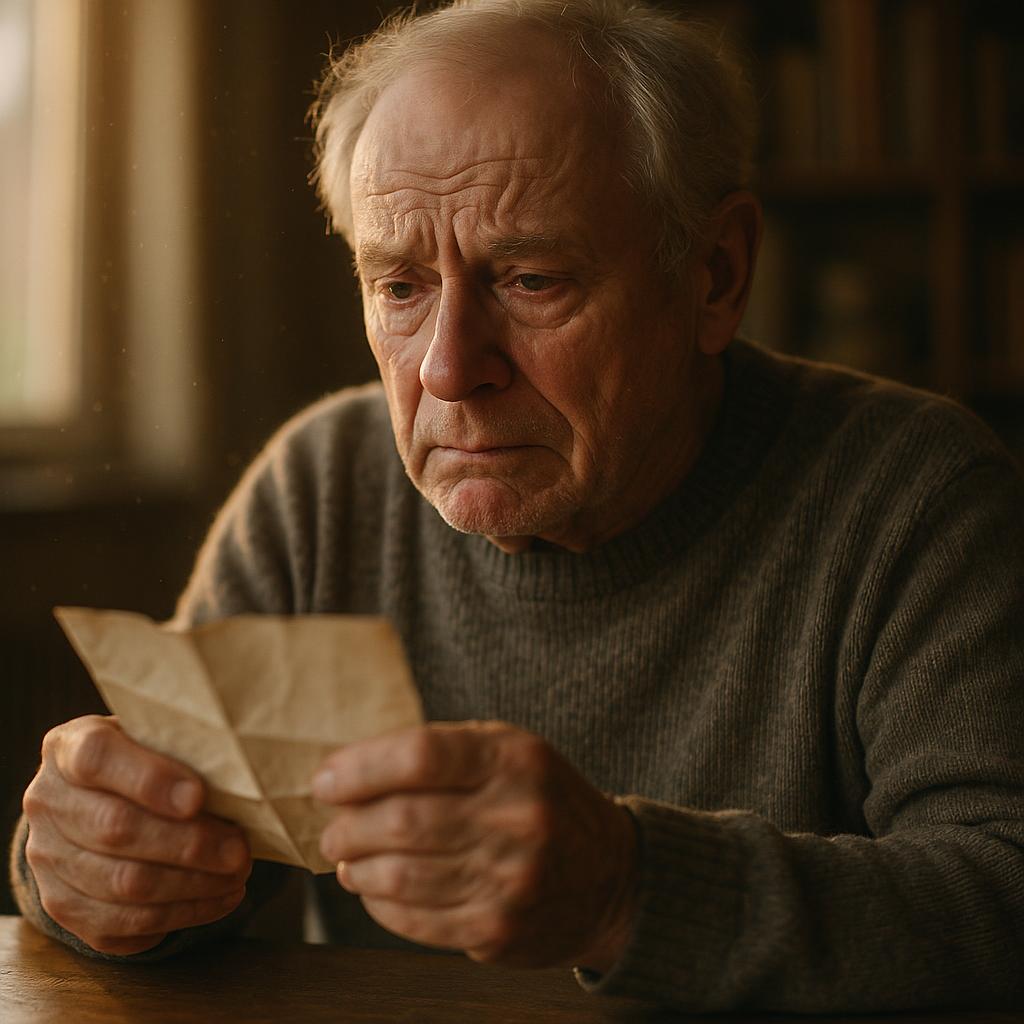 Image by RM AI
The Broken Siblings
Uncle Robert pulled a worn leather photo album from his bookshelf, his hands trembling as he opened it. Inside were decades of family photos—holidays, birthdays, graduations—but what caught my eye were the handwritten letters tucked between pages. 'She wrote to me for years,' he said, voice cracking as he handed me one. The paper was thin, Aunt Margie's looping handwriting covering both sides. 'Robert, this isn't just about money anymore. People deserve to know the truth.' I read through letter after letter, watching their tone shift from pleading to angry to resigned. 'The last real conversation we had was at your mother's funeral,' Uncle Robert said, wiping his eyes with a handkerchief. 'Everyone thought we were just grieving differently, but Margie cornered me by the coat closet.' He described how she'd gripped his arm, her voice low but intense: 'You still have time to make this right, Robert. Before it's too late for both of us.' My uncle's shoulders shook with silent sobs. 'I told her I'd think about it. But I never did. I was too afraid of what they might do.' He looked at me, his eyes red-rimmed and desperate. 'Do you know what it's like to watch your sister die, knowing she went to her grave thinking you were a coward? Knowing she was right?' I sat there, letters scattered between us, realizing that the recipe box hadn't just revealed a financial scandal—it had exposed the broken relationship between two siblings who'd once been inseparable. And somewhere in this web of secrets and silence was the answer to why Aunt Margie had chosen me, not him, to finally uncover the truth.
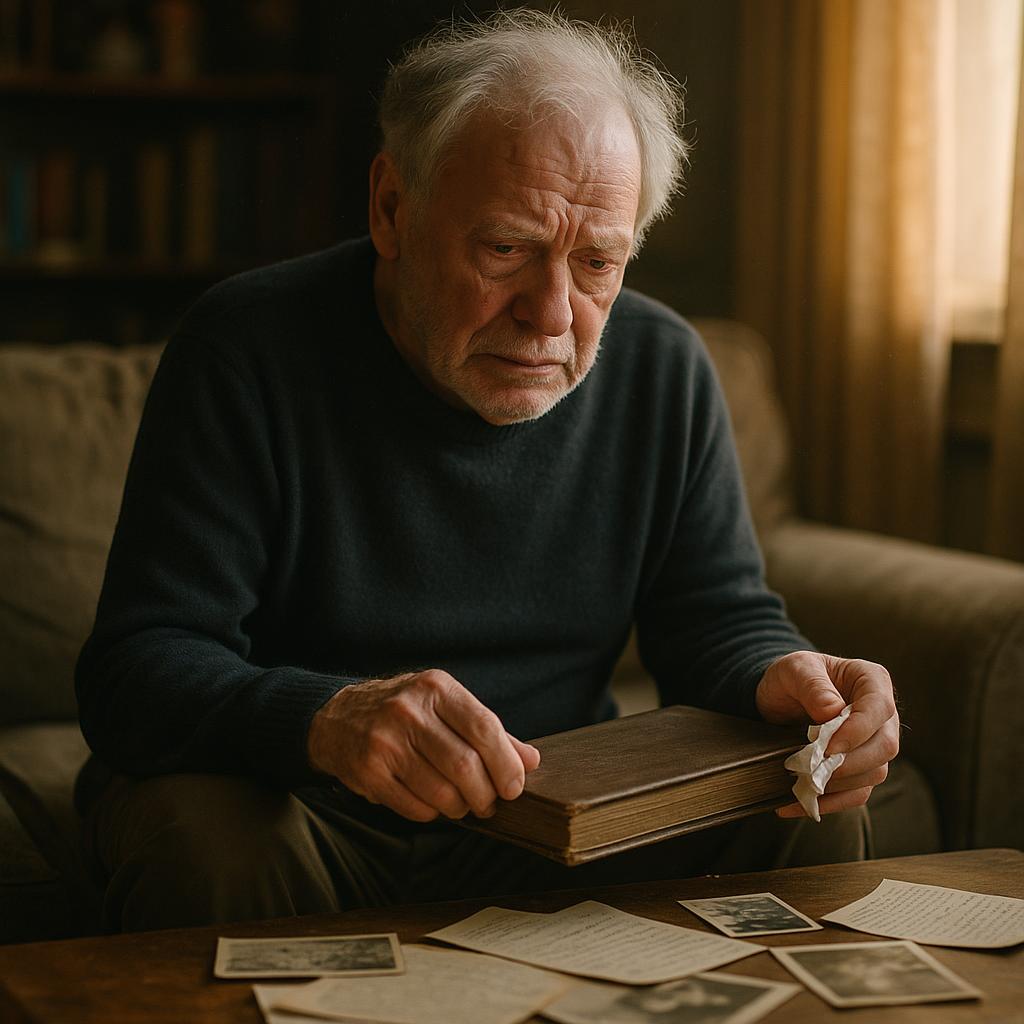 Image by RM AI
The Current Board
I spread the Helping Hands board of directors list across my kitchen table, the glossy paper reflecting the afternoon light. Uncle Robert's hand trembled as he pointed to three names, his finger lingering on each one like he was touching something toxic. 'These three,' he said, his voice barely above a whisper. 'They're still there, Karen. Twenty years later, and they're still controlling everything.' Judge Harrington, Dr. Peters, and Lawrence Simmons—the unholy trinity that had terrorized Aunt Margie for decades. 'Are they still embezzling?' I asked, the word feeling dirty in my mouth. Uncle Robert shook his head, his eyes never leaving the paper. 'The scandal made them more careful. They learned their lesson about paper trails. But they've never been held accountable for what they did.' I stared at the names, trying to reconcile these respected community figures with the monsters who'd sent those threatening notes. These were people I'd seen at community events, people who'd smiled and shaken my hand, never knowing I was Margie's niece. People who might recognize my name now that I was asking questions. 'Do you think...' I hesitated, not wanting to voice my fear. 'Do you think they're the reason Aunt Margie was still looking over her shoulder? Even after all these years?' Uncle Robert finally looked up at me, his eyes hollow with a guilt that two decades hadn't erased. 'Karen,' he said slowly, 'I don't think they ever stopped watching her. And now that you're digging into this...' He didn't finish the sentence. He didn't have to.
 Image by RM AI
The Missing Evidence
Uncle Robert's eyes widened as I asked about additional evidence. 'Margie was meticulous,' he said, his voice dropping to almost a whisper. 'She collected everything—bank statements with suspicious transfers, meeting minutes where decisions were mysteriously omitted, even recordings of conversations.' He shook his head in disbelief. 'She had this little tape recorder she'd hide in her purse during board meetings. Said she was "documenting the truth for when the time was right."' My heart raced. If Aunt Margie had gathered all this evidence, where was it now? When I asked Uncle Robert, he looked genuinely confused. 'I always assumed she destroyed it years ago, after the threats escalated.' I thought about the recipe box with its hidden messages, the blue folder tucked behind her sewing machine. The pattern was clear—Aunt Margie never threw away evidence; she hid it. 'Robert,' I said slowly, 'what if there's more? What if she hid the most damning evidence somewhere else entirely?' His face paled. 'If those recordings still exist...' he trailed off, not finishing the thought. I grabbed my keys, suddenly certain that Aunt Margie's house—which thankfully hadn't sold yet—held more secrets than we'd discovered. As I headed for the door, Uncle Robert called after me, 'Karen, be careful. If you find something, don't tell anyone—not even me.' The fear in his eyes made my blood run cold. What exactly had Aunt Margie recorded that had everyone so terrified after all these years?
 Image by RM AI
The Safety Deposit Box
I found it while sorting through Aunt Margie's bank statements—a receipt for a safety deposit box rental that had been paid annually for twenty years, with the last payment made just weeks before she died. My heart raced as I stared at the paper. This wasn't just another bill; this was deliberate preservation. The next morning, I marched into First National with her death certificate and will clutched in my hand, determined but nervous. The bank manager—a balding man with suspicious eyes—looked me up and down like I was trying to pull a fast one. 'I'm the executor of her estate,' I explained, sliding the documents across his desk. He hemmed and hawed, citing policies and procedures, but eventually relented when I pointed to the specific clause in her will naming me as the 'primary recipient of her personal effects.' When the heavy metal box was finally placed before me in the private viewing room, my hands trembled so badly I could barely work the key. Inside was exactly what I'd suspected but feared: a thick manila folder bulging with original financial documents—all meticulously organized, tabbed, and annotated in Aunt Margie's precise handwriting. Bank transfers with question marks beside suspicious amounts. Board meeting minutes with sections highlighted and notes like 'Compare to actual discussion!' scrawled in the margins. And most damning of all, photocopies of checks with familiar signatures made out to shell companies. She hadn't destroyed the evidence—she'd preserved it, protected it, and waited for the right moment. Or rather, the right person. What I didn't expect to find, tucked at the very bottom of the stack, was a small cassette tape labeled simply: 'Insurance.'
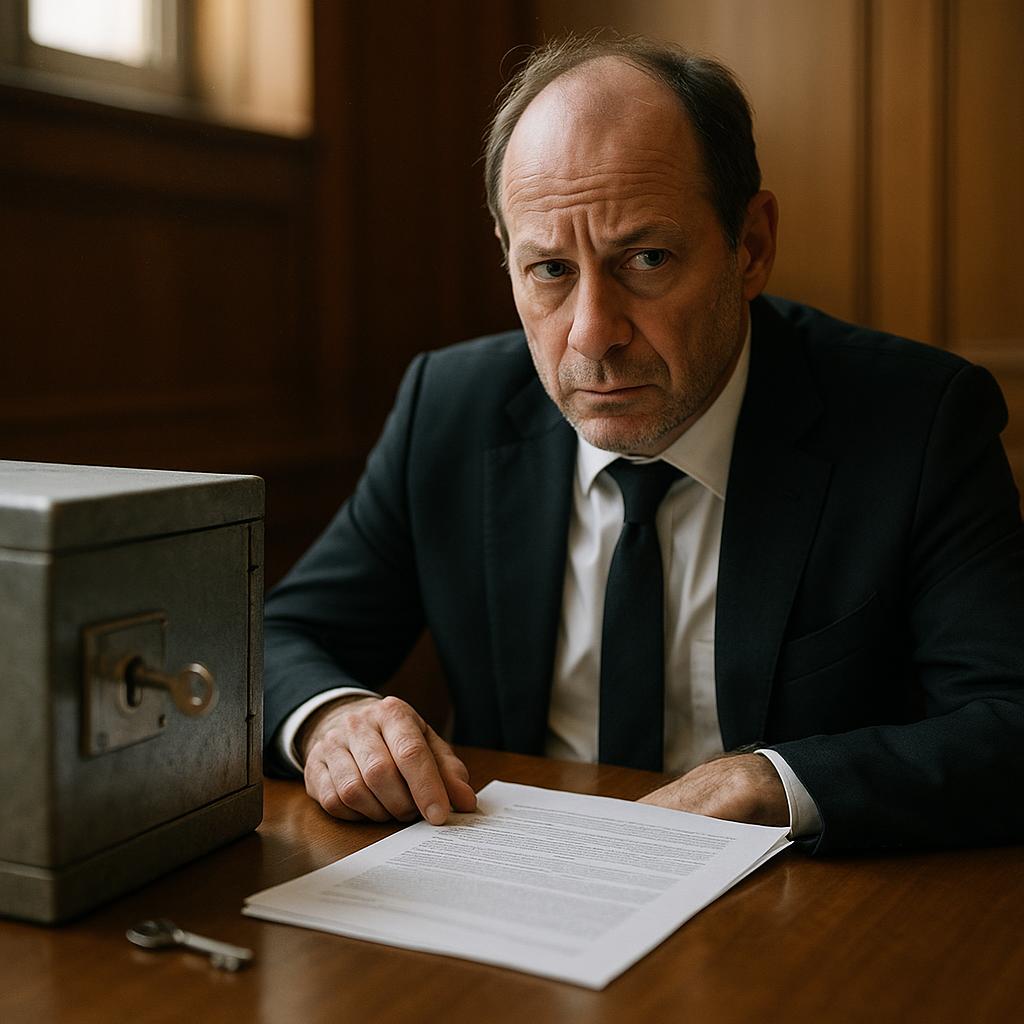 Image by RM AI
The Recorded Conversations
I found an old tape player in Aunt Margie's bedroom closet, dusty but still functional. My hands trembled as I inserted the first mini-cassette from the safety deposit box. The tape hissed to life, and suddenly, Aunt Margie's voice filled the room—younger, sharper, but unmistakably hers. "So you're admitting the funds were diverted?" she asked. What followed made my blood run cold. Clear as day, I heard George Harmon—still the chairman of Helping Hands—laugh dismissively. "Of course they were diverted. That's how the game is played, Margie." I sat frozen as voices I recognized from community events casually discussed moving money through shell companies, falsifying reports, and their plan to pin everything on Whitaker if questions arose. The most chilling tape was labeled simply "Warning." "She needs to understand what's at stake," Harmon's voice said coldly. "Send her something that makes it clear—we know where she lives, where her family lives." Another voice chimed in, "What about her niece? The little one she's always talking about?" My stomach dropped—they were talking about me. I was the leverage they used against her. I ejected the tape with shaking hands, suddenly aware that these recordings weren't just evidence of financial crimes. They were proof of a conspiracy that had stolen twenty years of peace from my aunt... and might now be coming for me.
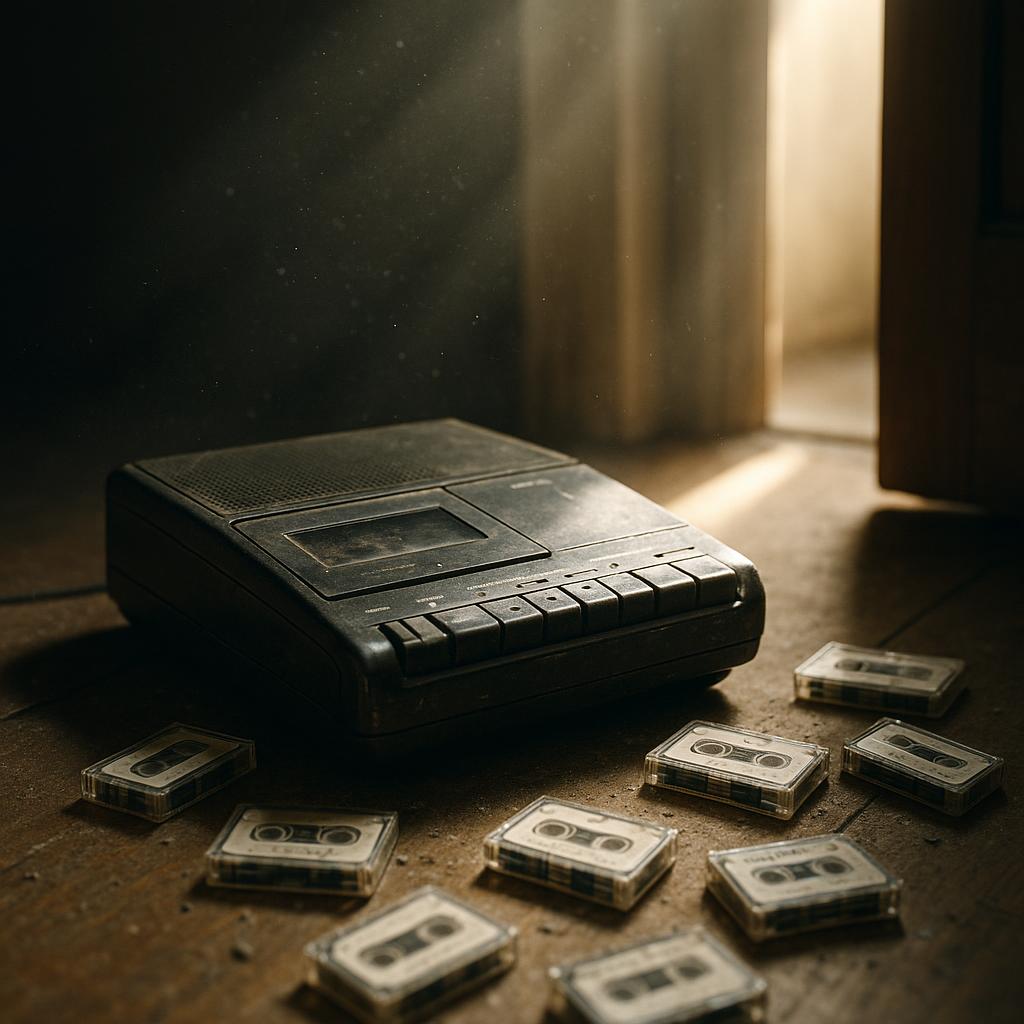 Image by RM AI
The Legal Consultation
I sat across from Ms. Rivera in her sleek downtown office, the evidence from Aunt Margie's safety deposit box spread between us like pieces of a disturbing puzzle. The lawyer's reading glasses perched on her nose as she methodically reviewed each document, occasionally making notes or pausing to study the bank statements more closely. I watched her expression shift from professional interest to genuine concern as she listened to snippets of the recordings. 'This is compelling evidence, Karen, even after all these years,' she finally said, removing her glasses. 'The statute of limitations has expired on some of the financial charges, but not all—especially if the threats continued.' When I mentioned that Harrington, Peters, and Simmons were still serving on the board, her eyebrows shot up. 'These people are still in positions of power?' She tapped her pen against her legal pad. 'They could face serious consequences if this goes public. Not just legal charges, but complete professional ruin.' She leaned forward, her eyes searching mine. 'Are you prepared for what might happen if you pursue this? These aren't just random embezzlers—they're connected people who've been protecting themselves for decades. They threatened your aunt. They used you as leverage.' I thought about Aunt Margie, living in fear for twenty years while still meticulously preserving the truth, waiting for the right moment—or the right person. 'What would you do,' I asked quietly, 'if it was your aunt who'd suffered all those years?' Ms. Rivera's expression softened, but her next words sent a chill down my spine: 'I'd make absolutely certain I wasn't being watched before making my next move.'
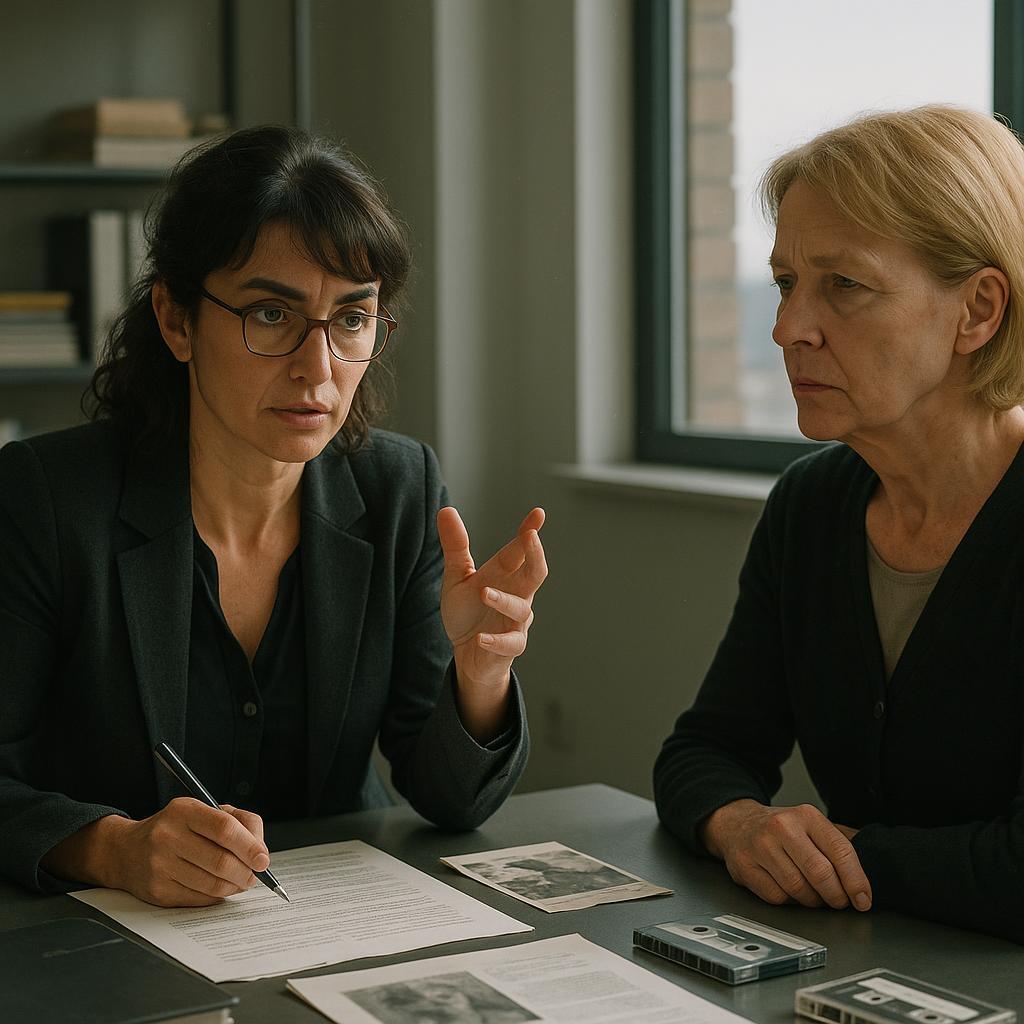 Image by RM AI
The Warning Call
I was loading the dishwasher when my phone rang, an unknown number lighting up the screen. Normally I'd let it go to voicemail, but something—maybe Aunt Margie's influence—made me answer. 'Hello?' The silence on the other end lasted just long enough to make me uncomfortable before a man's voice broke through. 'I understand you've been asking questions about Helping Hands.' My stomach dropped like I'd missed a step on a staircase. The voice wasn't familiar, but the implied threat was crystal clear. 'For your own good, I suggest you stop.' My hand gripped the counter as he continued, his tone casual yet menacing. 'Your aunt knew when to be quiet. You should learn from her example.' The line went dead before I could respond. I stood frozen in my kitchen, phone still pressed to my ear, suddenly understanding with perfect clarity the fear that had shadowed Aunt Margie for twenty years. The difference was, she'd faced this alone. I looked down at my phone, my hands trembling as I pulled up Ms. Rivera's number. Unlike Aunt Margie, I wasn't going to let them isolate me. Unlike Aunt Margie, I had allies. And unlike Aunt Margie, I wasn't going to wait twenty years to expose the truth. As I pressed 'call,' I couldn't shake the feeling that somewhere, in whatever comes after this life, Aunt Margie was watching—and for the first time in decades, she wasn't afraid anymore.
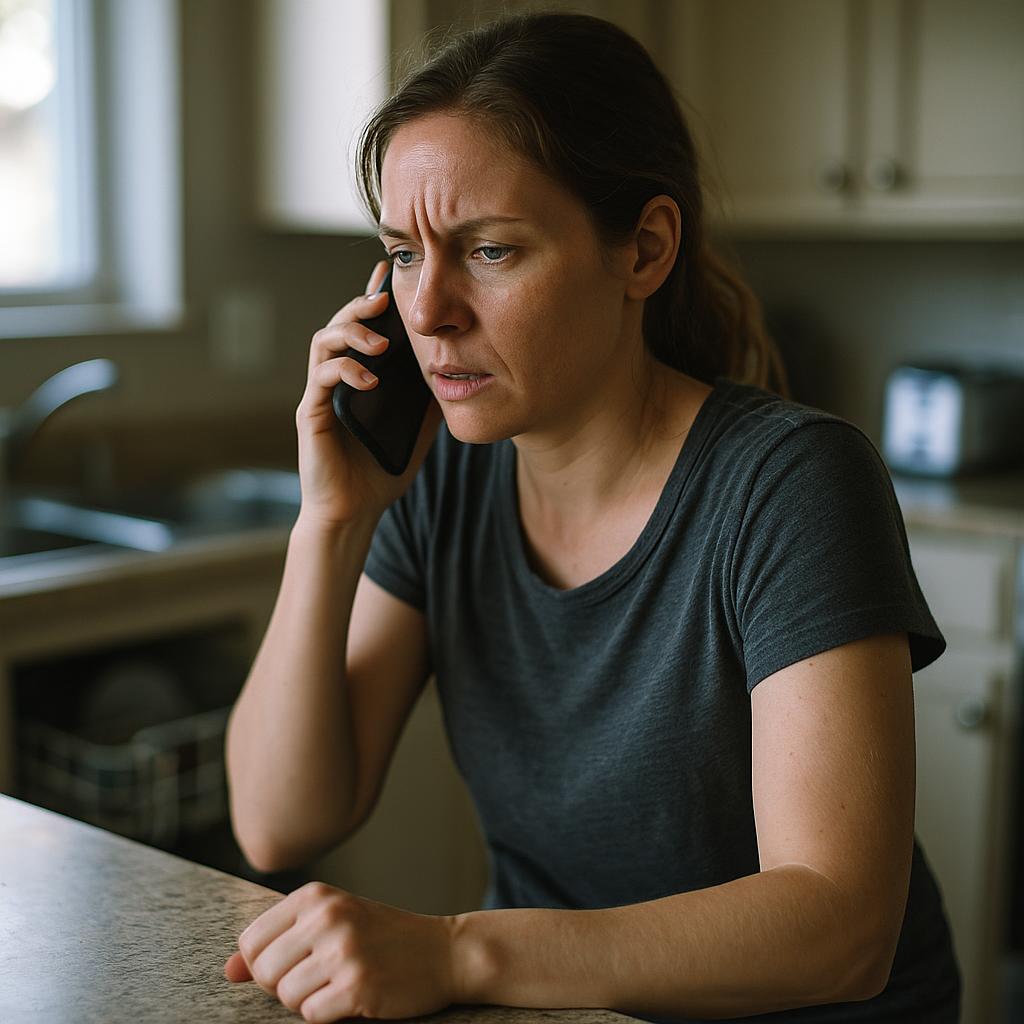 Image by RM AI
Family Meeting
I called an emergency family meeting the next day. My living room felt too small with Emma, her husband Mike, and Uncle Robert all squeezed onto my furniture, their faces tense as I methodically laid out everything—the recipe box messages, the safety deposit box contents, the recordings, and finally, the threatening phone call. Emma gasped when I played the caller's message from my voicemail. 'This is happening NOW?' she demanded, her face flushing with anger. 'You need to go to the police immediately!' Uncle Robert shook his head, his hands trembling slightly as he reached for his water glass. 'These people have connections everywhere,' he warned, his voice barely above a whisper. 'The police chief plays golf with Harrington every Sunday.' I could see the familiar fear in his eyes—the same fear that had kept him silent for decades. But then I played one of Aunt Margie's recordings, the one where they specifically mentioned using me as leverage against her. The color drained from Uncle Robert's face as he listened to these powerful men casually discussing how to threaten his sister using her love for me. When the tape clicked off, the silence in the room was deafening. Finally, Uncle Robert looked up, something shifting in his expression—fear giving way to something I'd never seen in him before: resolve. 'She kept this evidence all these years,' he said quietly, his voice steadier than I'd heard it in days. 'We can't let her courage be for nothing.' What none of us realized was that someone else was listening to our family meeting—someone parked just down the street, watching my house through binoculars.
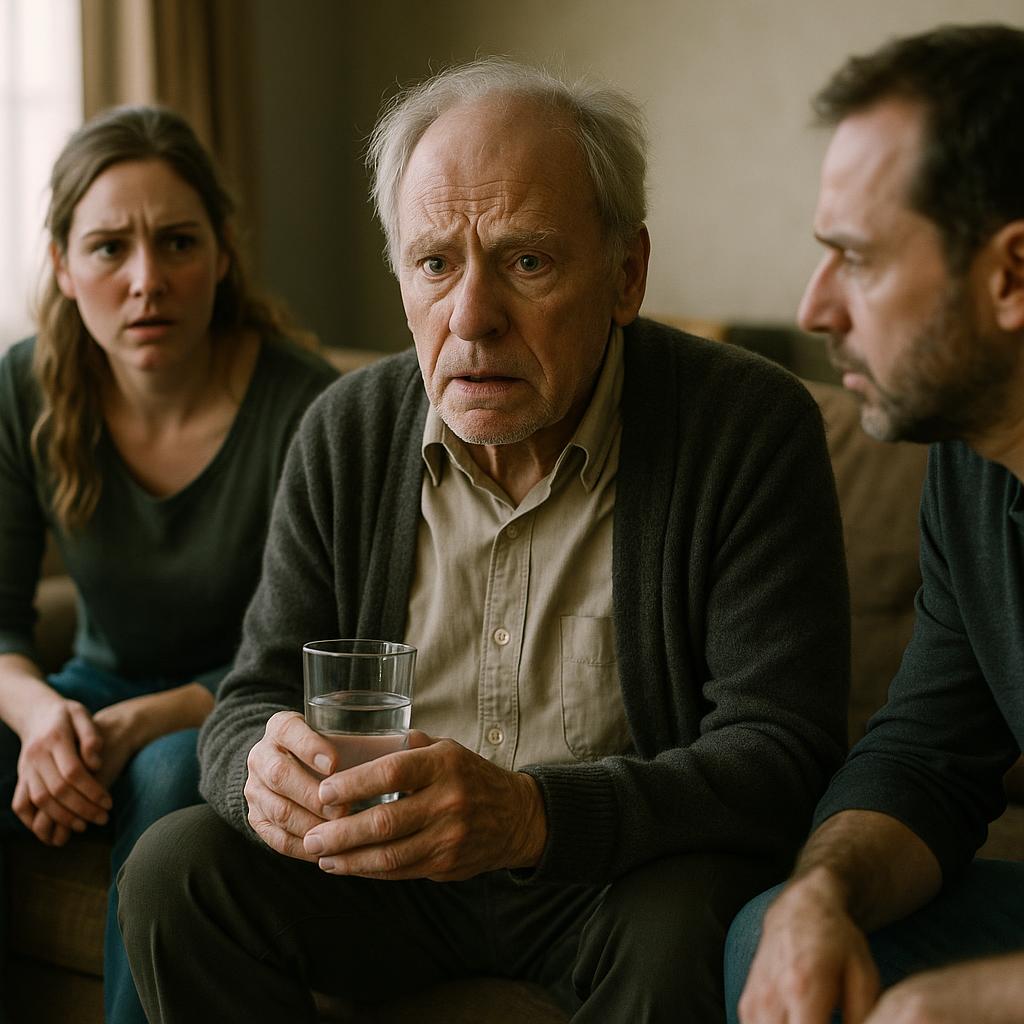 Image by RM AI
The Police Report
Detective Morales didn't look up from his notepad as I spread Aunt Margie's evidence across his desk like a bizarre scrapbook of corruption. The fluorescent lights of the police station made everything look harsh and clinical—nothing like the warm kitchen where I'd first discovered her secrets. 'So you're telling me,' he said finally, 'that your aunt collected all this evidence about financial crimes at Helping Hands charity twenty years ago, hid it in recipe cards and a safety deposit box, and now someone's threatening you for asking questions?' His tone wasn't dismissive exactly, but I could hear the skepticism. That changed when I played the recording of the threatening call. His posture shifted immediately, and he leaned forward, eyes sharp. 'That,' he said, pointing to my phone, 'is something we can work with.' He explained that while the statute of limitations might protect some of the financial criminals, threats and intimidation were another matter entirely—especially when recorded. 'These types of cases get complicated,' he warned, writing something on a card. 'Powerful people don't like being exposed.' He slid his direct number across the desk and promised to have patrol cars drive by my house regularly. As I gathered up Aunt Margie's evidence, Detective Morales gave me a long look. 'Your aunt was brave to collect all this,' he said quietly. 'But she was alone. You don't have to be.' I nodded, grateful but uneasy. What he didn't say—what we both knew—was that bravery sometimes comes with a price tag that's paid in fear.
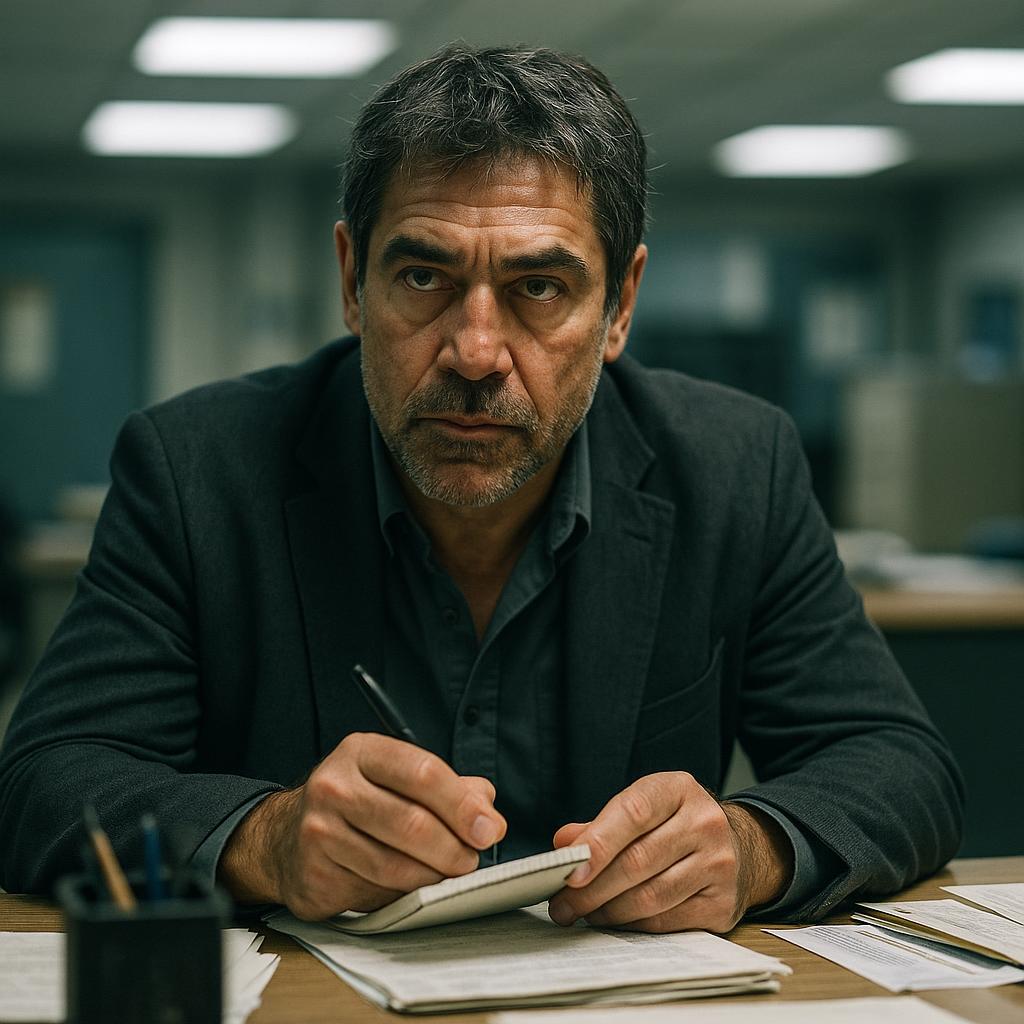 Image by RM AI
The Break-In
I knew something was wrong the moment I turned onto my street. Call it intuition or maybe just Aunt Margie's voice in my head, but something felt off. My suspicions were confirmed when I saw my front door slightly ajar, a sliver of darkness where there should have been security. My heart hammered against my ribs as I called Detective Morales from my car. 'Don't go inside,' he instructed firmly. But I couldn't wait. What if they were still in there? What if they'd found something I'd missed? I pushed the door open with my foot, keys clutched between my fingers like makeshift brass knuckles—a self-defense tip I'd learned from some viral Facebook post years ago. The destruction inside knocked the wind out of me. My living room looked like it had been hit by a tornado—cushions slashed open, books swept from shelves, photo frames smashed. They'd been thorough and ruthless. In the kitchen, Aunt Margie's recipe box lay open on the table, her carefully preserved cards scattered across the floor like fallen leaves. I almost laughed despite the violation—they were too late. Every piece of real evidence was already locked away in Ms. Rivera's office safe. As I surveyed the damage, something caught my eye on the refrigerator: a Christmas tree magnet I'd never seen before, positioned dead center among my collection of takeout menus and grocery lists. My blood ran cold as I remembered Aunt Margie's recipe cards with their hidden stamps. This wasn't just a break-in. It was a message: We can get to you anytime. And suddenly I understood why Aunt Margie had spent twenty years looking over her shoulder.
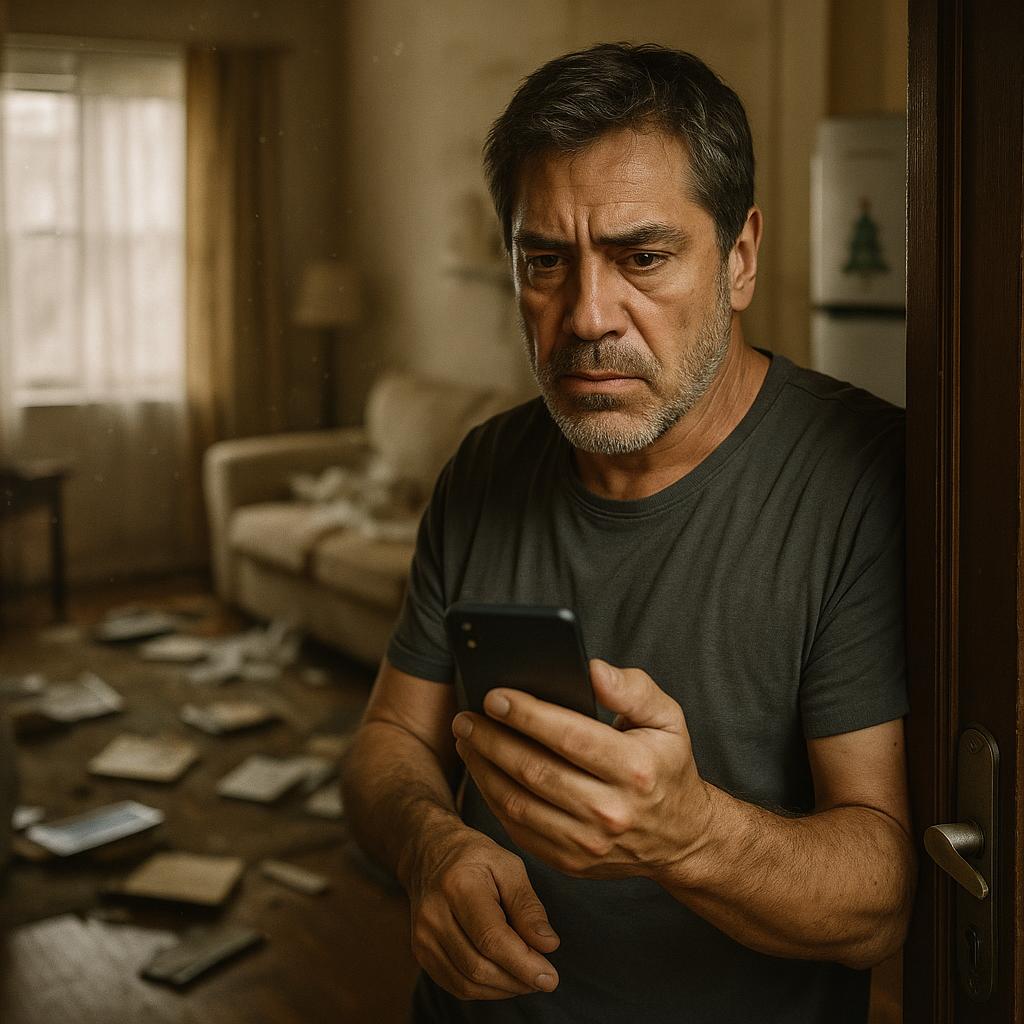 Image by RM AI
The Safe House
I'm sitting in room 214 of the Baymont Inn, registered under the name 'Margaret Wilson'—a small tribute to Aunt Margie that probably isn't the smartest move security-wise, but it felt right. Detective Morales practically ordered me to disappear after the break-in, his face grim as he surveyed my ransacked living room. 'These people don't mess around, Karen,' he'd said, picking up one of Aunt Margie's torn recipe cards from the floor. 'They're sending a message.' Emma and David begged me to stay with them, but the thought of those people—whoever they are—showing up at their doorstep with my niece and nephew inside? Absolutely not. So here I am, surrounded by manila folders spread across a floral bedspread that's seen better days, piecing together Aunt Margie's twenty-year puzzle. I've created a timeline on the hotel notepad, connecting dates from bank statements to board meeting minutes to threatening notes. The TV drones in the background—some home renovation show where everything gets fixed in an hour. If only real life worked that way. As I organize everything chronologically, patterns emerge that weren't obvious before. The threats intensified whenever Aunt Margie reached out to potential allies. Each time she tried to find someone to help her, something would happen—a break-in at her house, a threatening note left on her car, or worst of all, a 'chance encounter' with one of the board members asking about me. They systematically isolated her, using her love for family as a weapon. No wonder she kept silent for so long. What terrifies me most isn't what they might do to me—it's realizing that Aunt Margie wasn't paranoid after all. She was right all along.
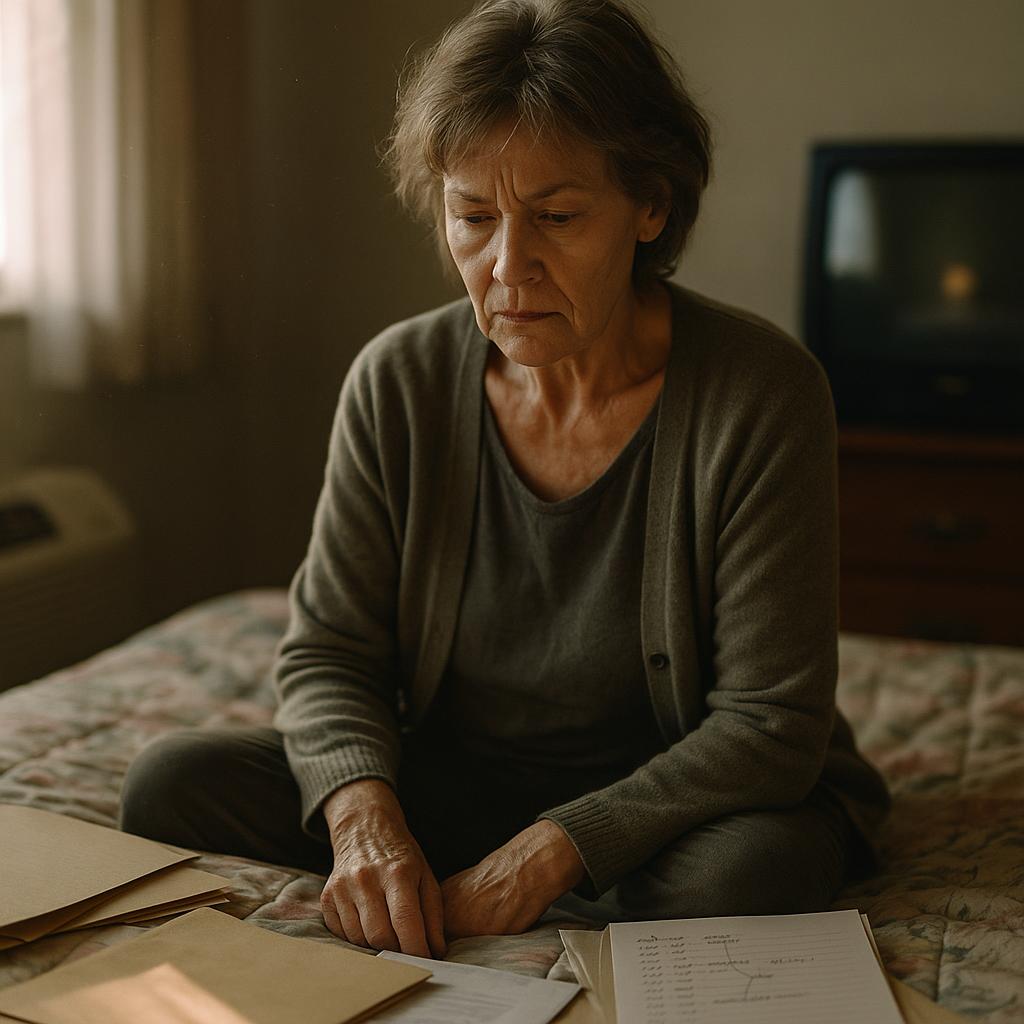 Image by RM AI
The Journalist
Ms. Rivera's office felt different today—less intimidating, more like a war room. She introduced me to Sophia Chen, an investigative journalist with sharp eyes and an even sharper reputation. 'Karen, Sophia specializes in corruption cases,' Ms. Rivera explained, sliding Aunt Margie's evidence folder across her desk. 'Sometimes the court of public opinion is as powerful as a legal courtroom.' Sophia didn't waste time with pleasantries. She flipped through bank statements and board minutes with practiced efficiency, occasionally pausing to jot notes or take photos with her phone. When she reached the cassette recordings, her eyebrows shot up. 'May I?' she asked, already reaching for the player. We sat in silence as the voices of Harrington and the others filled the room, their casual discussion of threats making my skin crawl all over again. When the tape clicked off, Sophia leaned back in her chair, her expression a mix of disgust and determination. 'This is the kind of story that could bring down the entire organization,' she said, her voice quiet but intense. 'These people have been operating with impunity for decades. Are you sure you want to go public?' I thought about Aunt Margie hiding in plain sight all those years, encoding warnings in recipe cards, living with fear as her constant companion. I thought about the break-in at my house, the threatening call, the Christmas tree magnet left as a warning. My answer came easily: 'Absolutely.' What I didn't realize then was that Sophia had taken down bigger fish than Helping Hands—and those fish had powerful friends who were already circling.
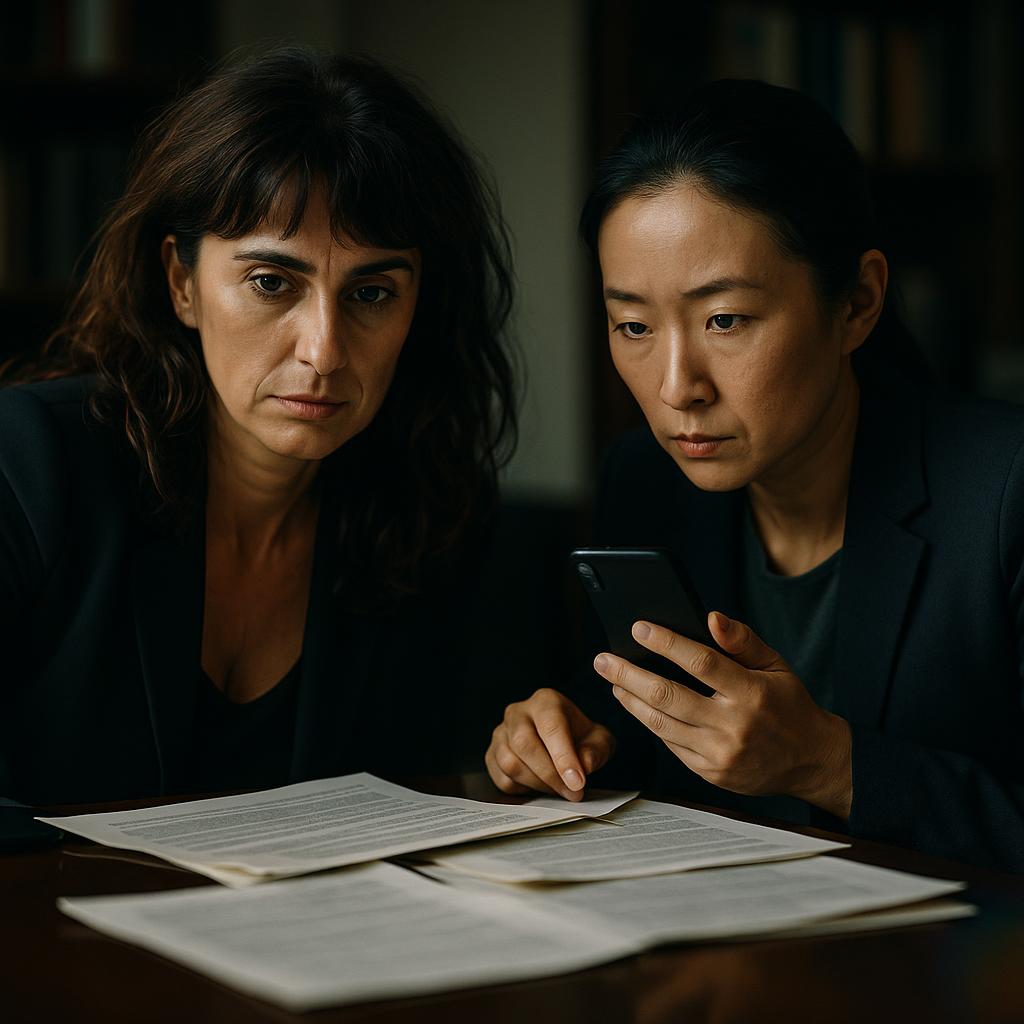 Image by RM AI
The Board Meeting
I sat in my car outside the Helping Hands headquarters, watching Uncle Robert adjust his tie in the passenger seat mirror. The wire Detective Morales had taped to his chest was invisible under his button-down shirt, but he kept touching his sternum nervously. 'You don't have to do this,' I told him for the third time. He shook his head, a determination in his eyes I'd never seen before. 'For twenty years, I've been a coward,' he said quietly. 'I let Margie face them alone because I was scared.' Through Sophia's contacts, we'd learned that George Harmon and the original board members were meeting today to discuss a major new fundraising campaign—a million-dollar initiative that would cement their legacy in the community. The irony wasn't lost on me. 'Remember,' I said, handing him the small receiver that would allow Detective Morales to hear everything, 'just get them talking about the past. About the "old days."' Uncle Robert nodded, his hands trembling slightly as he tucked the device into his pocket. 'Margie tried to tell me what was happening,' he said, his voice catching. 'She came to me first, before anyone else. And I told her to keep quiet.' He looked at me, eyes glistening. 'I won't make that mistake again.' As he walked toward the building's glass doors, shoulders squared and back straight, I couldn't help but wonder if we were sending him straight into the lion's den—and if the lions already knew we were coming for them.
 Image by RM AI
The Confrontation at the Board
Uncle Robert stumbled through my motel room door looking like he'd aged a decade in just two hours. His tie hung loose around his neck, and his usually neat hair was disheveled from running his hands through it repeatedly. 'I did it, Karen,' he said, collapsing into the chair by the window. 'I confronted them all.' My heart pounded as I poured him a glass of water with shaking hands. He took a long sip before continuing. 'I walked right into that boardroom where they were planning their million-dollar legacy campaign and told them I knew everything. That Margie had kept evidence. That it was all coming out.' He gave a hollow laugh. 'You should have seen their faces.' According to Uncle Robert, Harmon's face had turned an alarming shade of purple. 'He actually threatened me right there in front of everyone,' he said, his voice cracking. 'Said I'd regret betraying the family like Margie did.' The wire had captured everything—exactly what Detective Morales had hoped for. Panic. Threats. Incriminating statements from people who thought they were untouchable. 'Twenty years,' Uncle Robert whispered, staring at his hands. 'For twenty years I let fear control me while Margie stood alone.' He looked up at me, and despite the exhaustion in his eyes, I saw something I'd never seen before—peace. 'But that ends today.' What we didn't know then was that Harmon had already made a phone call of his own, and the clock was now ticking faster than any of us realized.
 Image by RM AI
The Article
I woke up Sunday morning to my phone buzzing non-stop with notifications. Sophia's article had dropped, and it was everything we'd hoped for. 'DECADES-OLD CHARITY FRAUD EXPOSED: WHISTLEBLOWER'S HIDDEN EVIDENCE REVEALS ALL' screamed the headline across the regional newspaper's front page. My hands trembled as I scrolled through the digital version, seeing Aunt Margie's story laid bare for everyone to see. Sophia had woven together the embezzlement scheme, the cover-up, Whitaker's wrongful blame, and the systematic intimidation campaign against my aunt with the precision of a master storyteller. But what hit hardest were the excerpts from Aunt Margie's recipe cards—her desperate messages hidden in plain sight all those years—and the damning transcripts from her secret recordings. By afternoon, my motel room TV was showing clips of reporters camped outside Helping Hands headquarters, where bewildered staff tried to manage phones that wouldn't stop ringing as donors demanded explanations. Uncle Robert called around dinner time, his voice thick with emotion. 'She did it, Karen,' he said. 'After all these years, Margie finally got justice.' I smiled through my tears, picturing Aunt Margie's face if she could see this moment. What I didn't realize then was that cornered animals are at their most dangerous—and George Harmon had nothing left to lose.
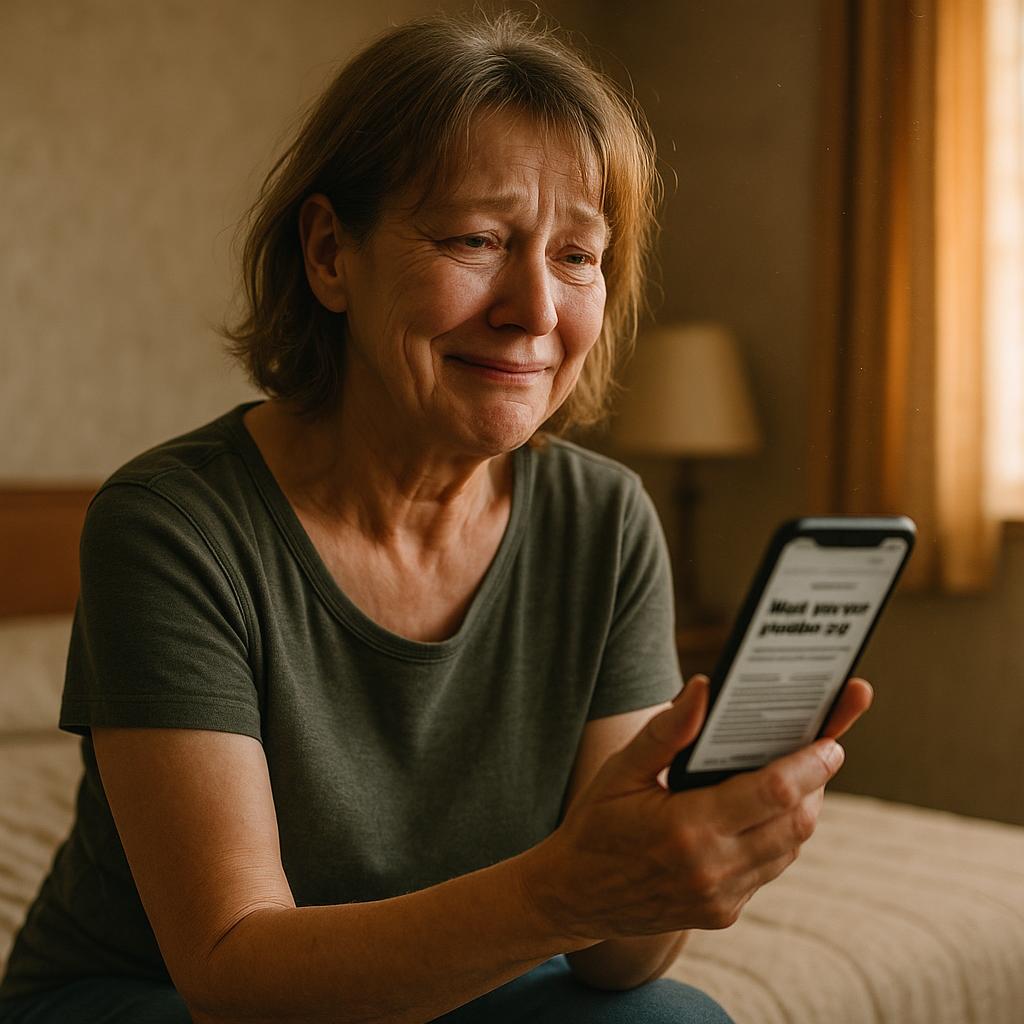 Image by RM AI
The Arrests
The call from Detective Morales came at 6:17 AM Monday, jolting me from a fitful sleep. I fumbled for my phone, heart racing as I recognized his number. 'We're moving in now,' he said, his voice steady but urgent. 'Arrest warrants have been issued for Harmon, Peters, and Whitaker.' I sat up straight, suddenly wide awake. 'The financial crimes might be too old to prosecute,' he continued, 'but witness intimidation, breaking and entering, and making criminal threats? Those are fresh charges.' I clutched the phone tighter, thinking of Aunt Margie and how she'd lived with this shadow for twenty years. By 8 AM, I was glued to the local news livestream, watching in disbelief as George Harmon—the man whose name had been whispered with reverence in our community for decades—was led from his sprawling colonial home in handcuffs. His face was a mask of indignant outrage, like someone who'd never imagined consequences would apply to him. The camera caught him looking directly into the lens, and for a split second, I felt the same chill I'd experienced when finding that Christmas tree magnet on my refrigerator. But this time, I wasn't afraid. For the first time since discovering Aunt Margie's recipe box, I felt something that had eluded both of us for too long: justice. What I didn't realize then was that Harmon's arrest wasn't the end of the story—it was just the beginning of unraveling a web that stretched far beyond Helping Hands Charity.
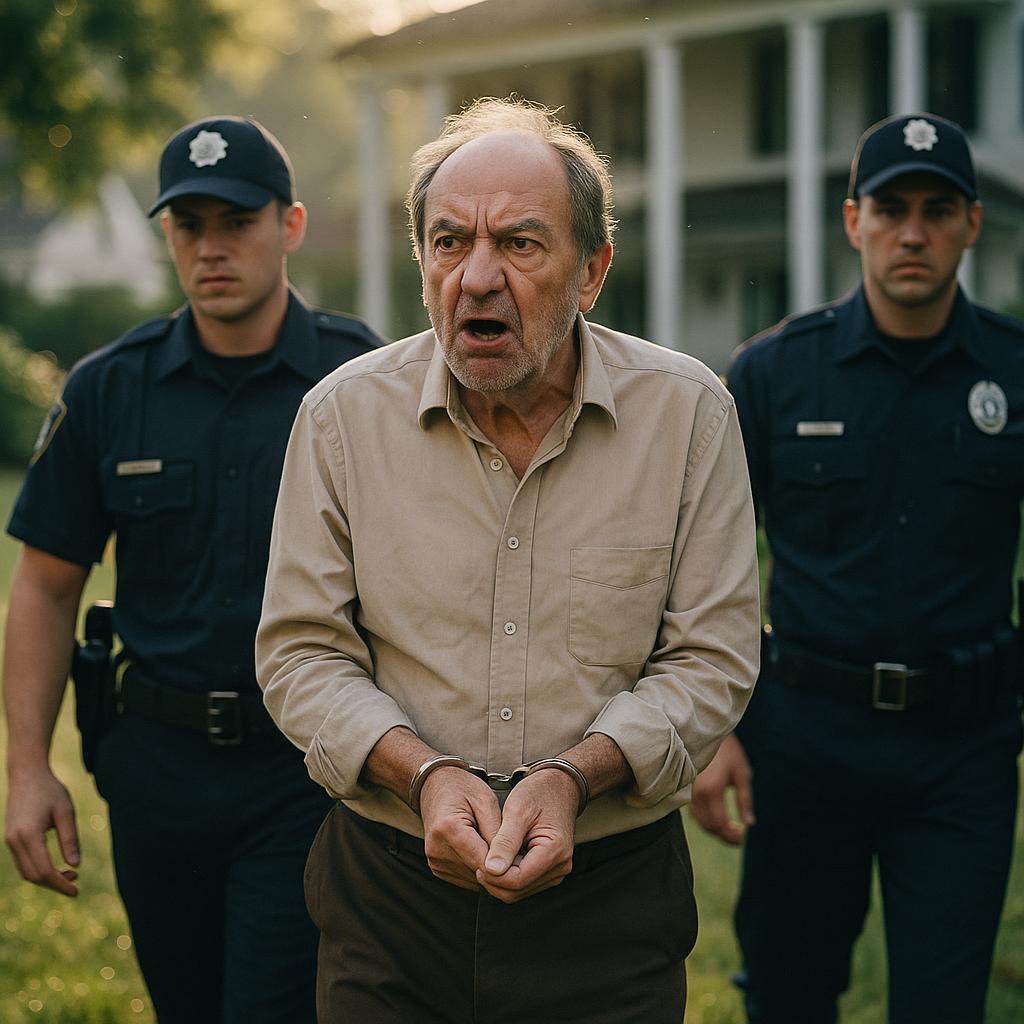 Image by RM AI
The Emergency Board Meeting
The email from Dr. Foster arrived three days after Harmon's arrest, its formal tone contrasting sharply with its explosive content: an invitation to attend Helping Hands' emergency board meeting. 'We need to understand exactly what happened so we can move forward with transparency,' she wrote. I forwarded it to Uncle Robert immediately, my fingers trembling slightly. 'Should we go?' I texted. His response came within seconds: 'Absolutely. It's time we both stop hiding.' The boardroom felt surreal when we entered—the same space where Uncle Robert had confronted Harmon just days earlier, now filled with shell-shocked faces and urgent whispers that died the moment we walked in. I recognized several board members from newspaper photos, their expressions ranging from embarrassment to genuine distress. Dr. Foster, a woman with silver-streaked hair and kind eyes behind stylish glasses, stood as we entered. 'Ms. Lawson, Mr. Lawson, thank you for coming,' she said, gesturing to two empty chairs. The tension in the room was thick enough to cut with Aunt Margie's favorite bread knife. After brief introductions, Dr. Foster cleared her throat and made an announcement that left me speechless: 'The board has voted unanimously to establish a whistleblower fund in Margie Lawson's name, to support those who speak truth to power.' Tears sprang to my eyes as Uncle Robert reached for my hand under the table. 'Your aunt's courage deserves recognition,' Dr. Foster continued. 'But first, we need to understand everything that happened.' What followed was three hours of painful truth-telling—but what none of us realized was that someone was taking very detailed notes, someone with connections to people far more powerful than George Harmon had ever been.
 Image by RM AI
Whitaker's Vindication
The call from James Whitaker came on a Tuesday morning while I was sorting through what remained of Aunt Margie's recipe cards. His name flashed on my screen, and for a moment, I just stared at it, thinking about how our lives had been invisibly connected all these years. 'I still can't believe it,' he said when I answered, his voice cracking with emotion. 'Twenty years, Karen. Twenty years of people looking at me sideways, wondering if I stole from a charity.' Helping Hands had issued a formal public statement clearing him of any wrongdoing—a small gesture that could never give back the decades of suspicion he'd endured. 'Every job interview, every new neighborhood... always that question mark hanging over me.' I closed my eyes, picturing Aunt Margie at her kitchen table, writing those hidden messages while this man's life unraveled across town. 'Your aunt tried to help me back then, when no one else would,' he continued. 'I wish I could thank her in person.' I found myself inviting him for coffee at the little shop near the courthouse where Harmon's hearings would soon begin. 'I'll be there every day,' he told me. 'Front row. I need to see their faces when they finally face consequences.' After we hung up, I sat holding one of Aunt Margie's recipe cards—her famous peppermint bars—and realized something profound: her recipe box hadn't just preserved evidence; it had connected lives that might never have intersected otherwise. What I couldn't possibly know then was that my coffee meeting with James Whitaker would reveal the most shocking twist in Aunt Margie's story yet.
 Image by RM AI
The Memorial Service
I never imagined Aunt Margie would fill a community center. Yet here we were, every folding chair occupied, people standing along the walls, all gathered for a woman most of them had only met through newspaper headlines. The Helping Hands Memorial Service felt surreal—like watching someone else's life movie with my aunt as the unexpected hero. Dr. Foster stood at the podium, her silver-streaked hair catching the light as she spoke about integrity and courage. 'Margie Lawson reminded us that truth isn't just a concept—it's a choice we make every day,' she said, her voice carrying through the hushed room. I clutched the small program in my hands, tracing my finger over Aunt Margie's photo—the one from her 55th birthday where she's laughing with frosting on her nose. Beside me, Uncle Robert sobbed openly, his shoulders shaking with each breath. I slipped my hand into his, feeling the tremors of his grief and regret. When they unveiled the bronze plaque—'In honor of Margie Lawson, whose courage and integrity remind us that one person's commitment to truth can change an entire community'—a collective gasp rippled through the crowd. I thought about her dented red tin of peppermint bars, her 6 a.m. birthday calls, and how she'd carried this burden alone for twenty years while still being the aunt who made everyone feel special. As people approached me afterward with stories of how the case had affected them, I noticed a man in the back, watching intently. He wasn't part of the charity, wasn't family, and something about his focused attention made the hair on my arms stand up. When our eyes met, he didn't look away—he nodded, almost imperceptibly, before slipping out the side door.
 Image by RM AI
The Court Proceedings
The courtroom felt smaller than it looked on TV, with its polished wooden benches and fluorescent lighting that made everyone look slightly ill. I sat with my hands clasped so tightly my knuckles turned white as I testified about finding Aunt Margie's recipe box, my voice cracking when I described the Christmas tree magnet left on my refrigerator. 'And you interpreted this as a threat?' Ms. Rivera asked, her voice steady and professional. 'I knew it was a threat,' I replied, meeting George Harmon's eyes across the room. 'Just like my aunt knew for twenty years.' Uncle Robert's testimony hit even harder. The courtroom fell completely silent as he admitted his own role—not in the embezzlement, but in the conspiracy of silence that followed. 'I chose my reputation over my sister's safety,' he said, tears streaming down his face. 'I will regret that choice every day for the rest of my life.' During the recess, I stood outside gulping fresh air when a woman in her sixties approached me, clutching her purse like a shield. 'I'm Patricia Simmons,' she said, her voice barely above a whisper. 'I worked with your aunt at Helping Hands.' My heart skipped. Aunt Margie had mentioned her in the notes. 'I was too afraid to speak up before,' Patricia continued, glancing around nervously. 'But I'm not afraid anymore.' She reached into her purse and pulled out a small envelope. 'Margie gave me this years ago. Said if anything ever happened to her, I should find you.' As I took the envelope with trembling fingers, I realized Aunt Margie's recipe box might have been just the beginning of the trail she'd left behind.
 Image by RM AI
The Plea Deal
Ms. Rivera's call came on a Thursday afternoon while I was sorting through Aunt Margie's Christmas ornaments I'd finally found the courage to unpack. 'They're offering a plea deal,' she said, her voice carefully neutral. I sank onto the couch, clutching an old glass angel Margie had given me when I was twelve. The prosecutor wanted our blessing on an agreement: reduced sentences for Harmon and his cronies in exchange for full financial restitution to Helping Hands and public admissions of guilt. 'It means closure, Karen,' Ms. Rivera explained. 'No lengthy trial, guaranteed money back to the charity, and they have to stand up and admit what they did.' I called Uncle Robert immediately, finding him as conflicted as I felt. 'Part of me wants them to rot in prison,' he confessed, his voice heavy with twenty years of regret. 'But another part just wants this nightmare over.' We sat in silence for a moment, the phone line humming between us. 'What would Margie want?' he finally asked, his voice barely above a whisper. I closed my eyes, picturing Aunt Margie at her kitchen table, meticulously documenting everything on those recipe cards, hiding stamps over tiny messages, waiting patiently for decades for someone to find the truth. 'She'd want the truth acknowledged,' I said finally, running my finger over the angel's delicate wing. 'That's all she ever wanted—for them to admit what they did.' What I didn't realize then was that Harmon's public confession would reveal connections to people far more powerful than we'd imagined—people who wouldn't take kindly to being named.
 Image by RM AI
The Public Apology
The courthouse steps were packed tighter than a Black Friday sale when George Harmon finally faced the music. I stood in the crowd, my heart hammering against my ribs, as the man who had terrorized my aunt for two decades approached the microphone. He looked smaller somehow—his expensive suit hanging a bit loose, his once-commanding presence diminished by disgrace. The sea of reporters fell silent as he cleared his throat and unfolded a crisp piece of paper. 'I betrayed the trust of this community and the mission of Helping Hands,' he read, his voice lacking the confidence that once made board members tremble. 'And I participated in threatening and intimidating Margie Lawson, a woman of integrity who only tried to do what was right.' The words felt rehearsed, hollow—probably crafted by some high-priced lawyer—but hearing Aunt Margie's name spoken with respect in front of all these people sent a wave of emotion through me that I wasn't prepared for. Uncle Robert squeezed my hand, his eyes glistening. 'She's hearing this,' he whispered. 'Wherever she is, she's hearing this.' I nodded, unable to speak past the lump in my throat. Twenty years of hiding, of encoding warnings in recipe cards, of looking over her shoulder—all validated in this moment of public reckoning. As Harmon continued his statement, I noticed a man in a dark suit standing at the edge of the crowd, watching intently—the same man from the memorial service. When our eyes met this time, he didn't just nod. He started walking toward me.
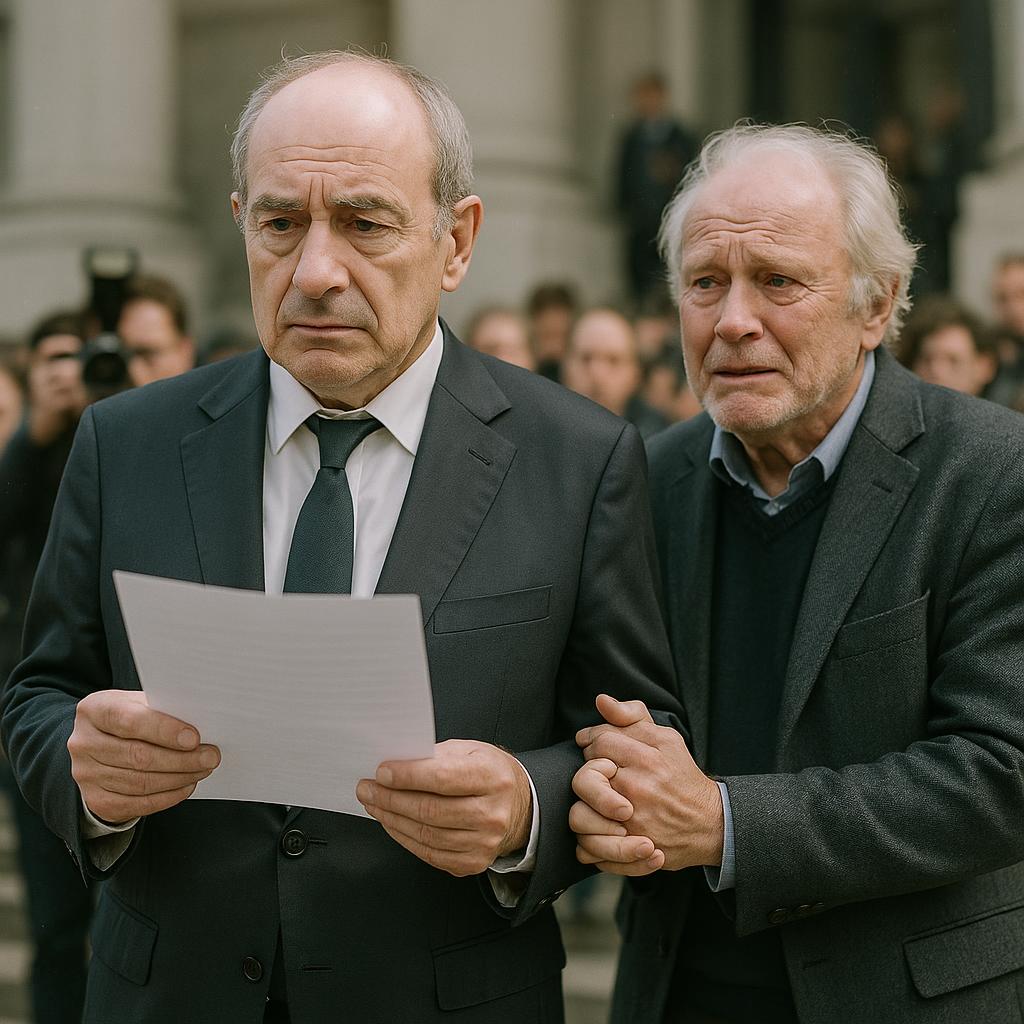 Image by RM AI
The Margie Lawson Fund
The Helping Hands ballroom looked nothing like the austere boardroom where this whole saga began. Crystal chandeliers cast a warm glow over tables adorned with centerpieces of recipe cards and vintage stamps—a tribute that brought tears to my eyes when I first walked in. Six months after Harmon's confession, we were here to officially launch the Margie Lawson Whistleblower Protection Fund. I smoothed my dress nervously as Dr. Foster introduced me, my speech cards trembling slightly in my hands. When I reached the podium, I looked out at the sea of faces—some familiar, some strangers who only knew Aunt Margie through headlines. 'My aunt wasn't just a whistleblower,' I began, my voice steadier than I expected. 'She was the woman who slipped me extra pie at Thanksgiving, who called at 6 a.m. on my birthday because she "couldn't wait another minute," and who brought peppermint bars in a dented red tin every Christmas.' I shared how she'd hidden her truth in plain sight, encoding her fear in recipe cards while still showing up with casseroles when neighbors were sick. 'Margie believed in doing what was right,' I concluded, 'both in big moments of crisis and in the quiet moments that make up a life.' As applause filled the room, I noticed Uncle Robert wiping his eyes in the front row. What none of us realized then was that someone in that very room was taking notes for reasons that had nothing to do with honoring my aunt's memory.
 Image by RM AI
The Recipe Book
Emma's idea to compile Aunt Margie's recipes into a cookbook hit me like a lightning bolt of brilliance. 'It's perfect,' I told her over coffee. 'The Margie Lawson Fund could use the proceeds, and people would get something beautiful in return.' So began our weekend ritual—Emma and I in my kitchen, flour dusting our clothes, testing recipes that had been hidden in plain sight for decades. 'Two teaspoons of vanilla, not one!' Emma would exclaim, waving a recipe card like she'd discovered buried treasure. Uncle Robert started joining us after a few weeks, hesitant at first, like a cat testing new territory. The kitchen became neutral ground where old wounds could finally heal. 'Your aunt would measure cinnamon three times before adding it,' he told us one Saturday, demonstrating with shaking hands over an apple pie. 'Said baking was chemistry, not art.' I caught Emma's eye across the counter and we both smiled. These moments felt sacred—transforming recipes that once concealed desperate messages into celebrations of Aunt Margie's true legacy. I never mentioned the stamps or the hidden notes to Emma. Those recipes had served their purpose, bringing truth to light after decades of darkness. These new recipes—the ones we were testing, laughing over, and occasionally ruining—were about life moving forward. What I didn't realize then was that one particular recipe card, tucked in the very back of the box, contained a message I hadn't yet discovered—one that would change everything all over again.
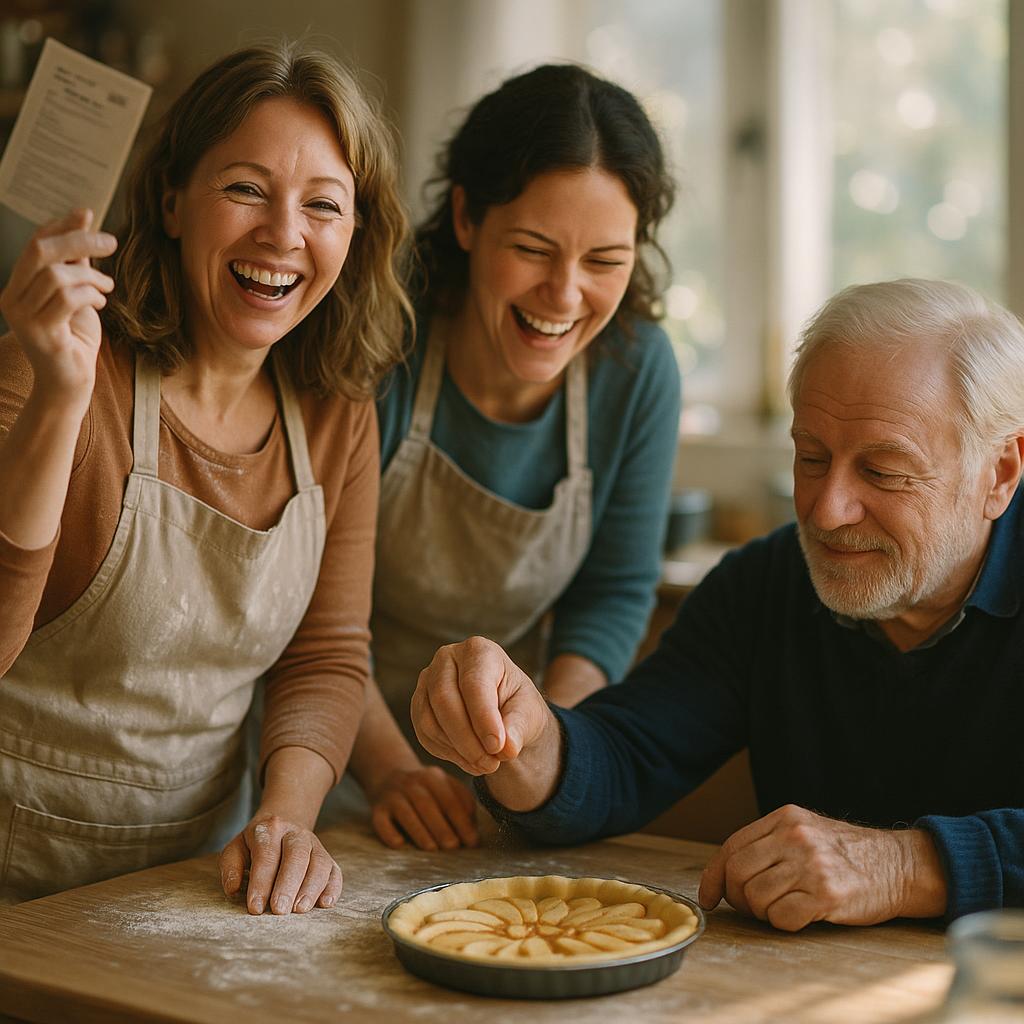 Image by RM AI
The First Christmas
The house smelled like cinnamon and pine when everyone arrived for Christmas dinner. I'd spent all day cooking, trying to channel Aunt Margie's energy into every dish. Emma brought her famous cranberry sauce, Uncle Robert arrived with a bottle of Margie's favorite wine, and James Whitaker—a man who'd been a stranger just months ago—brought homemade rolls. 'She always said store-bought bread was a crime,' he explained with a shy smile. After the main course, I disappeared into the kitchen and returned with Aunt Margie's dented red tin, now filled with peppermint bars I'd made from her recipe. The room fell silent. 'I found it in her kitchen,' I explained, my voice catching. 'I couldn't bear to throw it away.' Uncle Robert reached out, touching the tin's scratched surface like it was made of gold. 'She bought this at a yard sale in 1978,' he said, his eyes misty. 'Mother told her it was tacky, but she loved it anyway.' We passed the tin around, each person taking a bar and sharing a memory. Emma talked about Margie teaching her to make pie crust when she was ten. James recalled how she'd defended him at a board meeting when no one else would. Uncle Robert told us about her first apartment, how she'd painted the kitchen yellow against their parents' wishes. 'To sunshine and stubbornness,' he toasted, raising his glass. We stayed up late into the night, laughing and crying, the recipe box sitting open on my coffee table—no longer a vessel of secrets but a treasure chest of memories. What none of us realized was that the most important recipe card was still waiting to be discovered, tucked in a place even I hadn't thought to look.
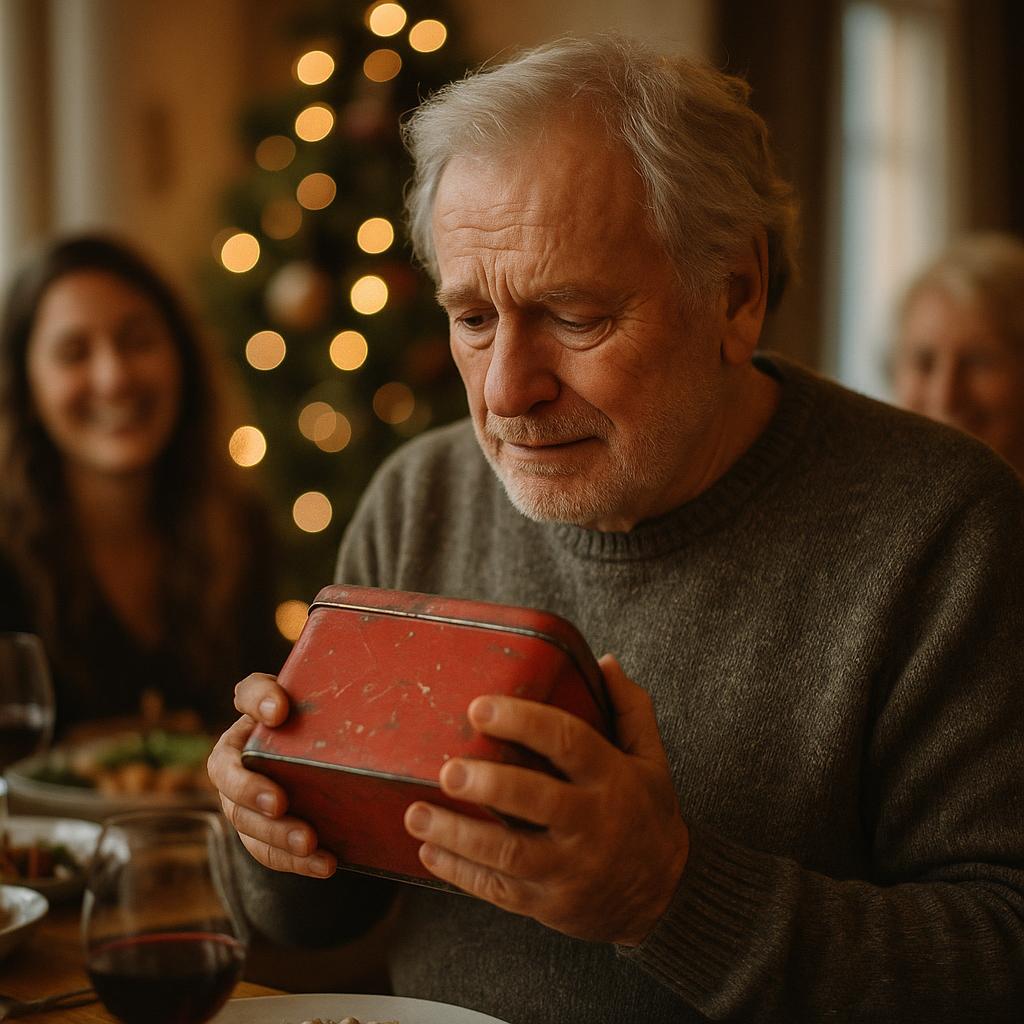 Image by RM AI
The Book Launch
The bookstore was packed wall-to-wall, with people spilling out onto the sidewalk. I never imagined 'Margie's Kitchen: Recipes and Remembrances' would draw such a crowd, but there I was, signing copies until my hand cramped. Emma sat beside me, beaming as she pointed out her favorite recipes to customers, while Uncle Robert charmed everyone with stories about Aunt Margie's kitchen disasters. 'She once set off the smoke alarm making toast,' he told an elderly couple, who nodded knowingly. 'But her peppermint bars were worth risking a fire department visit.' What touched me most were the stories people shared as they approached our table—how Aunt Margie had delivered soup when they were sick, or taught their daughter to make pie crust, or simply listened when no one else would. Dr. Foster arrived midway through, squeezing my shoulder as she leaned down to whisper, 'The fund has already helped two whistleblowers come forward safely. Your aunt's legacy extends far beyond our community now.' I blinked back tears, imagining Aunt Margie watching us from somewhere, probably rolling her eyes at all the fuss. As I signed the last book, a tall man in a dark suit approached our table, his expression unreadable. 'Ms. Lawson,' he said quietly, sliding a business card across the table. 'I think there's something about your aunt's case you should know.'
 Image by RM AI
The Recipe Box
I sat at my kitchen table on a quiet Sunday afternoon, exactly one year after finding Aunt Margie's recipe box. The painted strawberries on the wooden lid had faded slightly from my frequent handling, but they still made me smile. One by one, I carefully placed each recipe card back inside—cornflake cookies, gingerbread loaf, and yes, those famous peppermint bars. I paused when I came to the cards with hidden messages, running my fingers over the places where stamps once concealed her desperate notes. The scandal had finally faded from the headlines. Harmon was serving his time, the charity had been rebuilt, and Uncle Robert and I had found a healing neither of us thought possible. "You'd be proud, Margie," I whispered, feeling that familiar ache in my chest—not as sharp now, but still there. The recipe box had taught me what Aunt Margie knew all along: that quiet people often carry the heaviest truths, and that sometimes love looks like trying to protect someone even when you're the one who needs protecting. I closed the lid gently, imagining Emma someday opening it with her own children, explaining how Great-Aunt Margie's courage changed everything. The most important ingredients in any recipe, after all, aren't measured in cups or teaspoons—they're measured in courage and integrity. As I placed the box back on my shelf, my phone buzzed with a text from that mysterious man in the dark suit. "Found something else," it read. "Something your aunt wanted you to see."
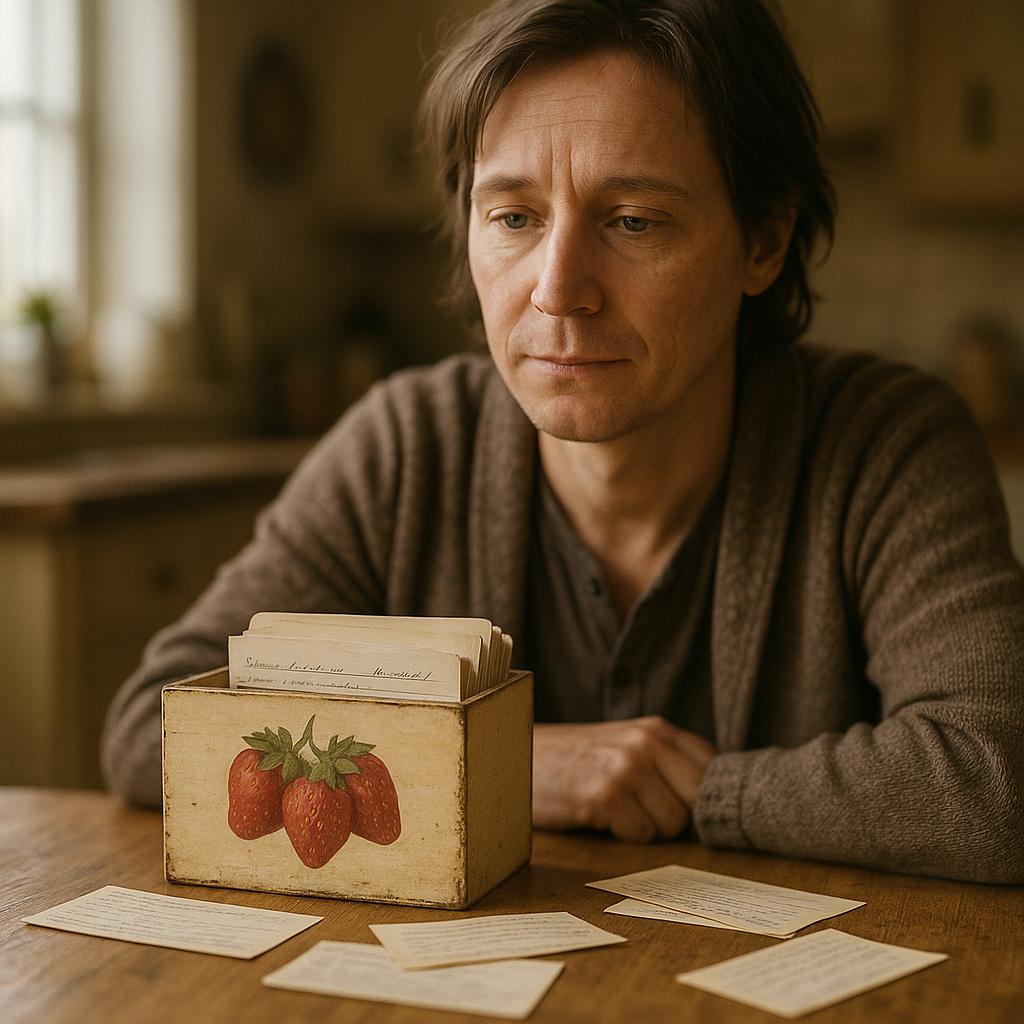 Image by RM AI