17-Year-Old Son Kept Sneaking Out At Night. My Wife Wanted To Ground Him—But I Had A Better Plan…
17-Year-Old Son Kept Sneaking Out At Night. My Wife Wanted To Ground Him—But I Had A Better Plan…
17-Year-Old Son Kept Sneaking Out At Night. My Wife Wanted To Ground Him—But I Had A Better Plan…
The Empty Room
I woke up at 2 AM for no reason I could name. You know that feeling when something just pulls you out of sleep? No alarm, no noise, just your eyes opening in the dark. I lay there for a minute, listening to the house settle around me, then got up to check the usual things—doors locked, windows secure. When I passed Tyler's room, I almost kept walking. Almost. But something made me push his door open just a crack. The lump under his covers looked right at first glance. Pillow positioned where his head should be, blankets pulled up the way he always arranged them. But when I stepped closer, I could see the shape was wrong. Too flat. Too still. I pulled back the comforter and found pillows stacked to mimic a sleeping body. My stomach dropped. I moved through the house faster then, checking the bathroom, the basement, anywhere he might be. That's when I found the back door. Unlocked. Slightly ajar. Cold October air drifting through the gap. I stepped outside onto the back porch, and that's when I saw them. The footprints in the dew led away from the house, visible and unmistakable in the moonlight.
 Image by RM AI
Waiting in the Dark
I stood there on the porch for maybe thirty seconds, debating whether to wake Laura. But what would I tell her? That our sixteen-year-old son had snuck out and I had no idea where he'd gone or why? She'd panic, want to call the police, start driving around the neighborhood. No. I needed to wait, to see if he came back on his own. I went to the living room and settled into the armchair in the corner, the one with a clear view of the back door. I didn't turn on any lights. Just sat there in the darkness, watching, listening to the clock tick on the wall. Twenty minutes passed. Then thirty. I heard the back door handle turn, watched it swing open slowly. Tyler slipped inside, easing the door closed behind him with barely a sound. He bent down and removed his shoes, holding them in one hand as he padded across the kitchen floor in his socks. His movements were careful, practiced, economical. He knew exactly which floorboards creaked, which path through the house would keep him silent. He walked down the hallway without turning on a single light, navigating in near-total darkness like he'd memorized every step. Tyler moved through the house like he'd done this a hundred times before.
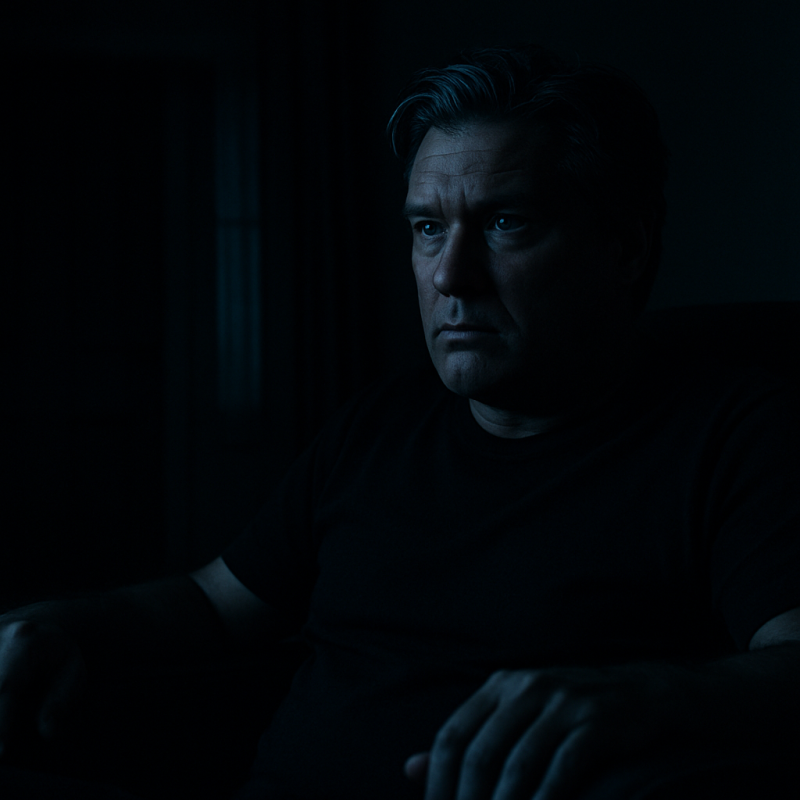 Image by RM AI
The First Lie
Morning came with the smell of coffee and the sound of Laura making breakfast. Tyler appeared in the kitchen right on schedule, hair still damp from his shower, backpack slung over one shoulder. He grabbed a piece of toast and kissed his mom on the cheek like any other Thursday. I watched him from my spot at the table, waiting for the right moment. "Sleep okay last night?" I asked, keeping my tone casual. Tyler didn't even pause. "Yeah, fine," he said, reaching for the orange juice. "Out like a light." Laura glanced up from the stove. "You were in your room all night?" I added, still watching his face. "Where else would I be?" Tyler said, meeting my eyes directly. No hesitation. No nervous laugh or shift in his posture. No tell at all. He took a bite of toast, scrolled through something on his phone, completely at ease. Laura moved past us with a plate of eggs, asking Tyler about his history test. He answered her, then grabbed his backpack and headed for the door, calling goodbye over his shoulder. The lie had come too easily, too smoothly, as if Tyler had been expecting the question.
 Image by RM AI
Watching
After that morning, I started paying attention to the small things I'd been missing. Tyler's evening routine looked completely normal on the surface. Homework at the kitchen table, dinner with the family, an hour of video games before bed. Around ten o'clock, his bedroom door would close. I'd hear music playing softly through the walls, see the strip of light under his door. Then the light would go off right on schedule, like clockwork. But now I was watching differently. I'd find reasons to stay up late—work emails to catch up on, a book I was reading, anything that kept me downstairs past midnight. I'd position myself where I could hear the sounds of the house. That first creak of Tyler's door opening. The soft pad of footsteps down the hallway. The quiet click of the back door latch. It happened on Friday night. Then Saturday. Sunday too, even though he had school the next morning. I started tracking it mentally, noting the times, the patterns. Always between 1:45 and 2:15 AM. Always the back door. Always that same careful silence. By the third night, the pattern was unmistakable.
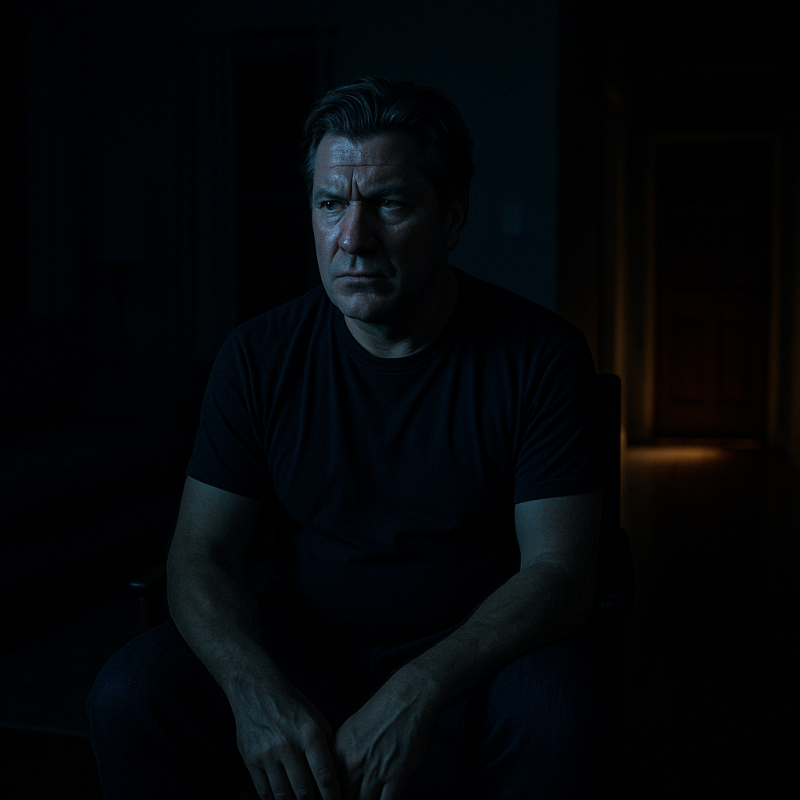 Image by RM AI
The Pattern
I kept a notepad in my nightstand drawer and started writing it down. Monday: left at 2:03 AM, returned at 2:47 AM. Tuesday: left at 1:58 AM, returned at 3:12 AM. Wednesday: left at 2:11 AM, returned at 2:53 AM. Five nights of solid documentation. The departure time varied by maybe fifteen minutes either way, but it always clustered around 2 AM. The duration changed more—sometimes forty-five minutes, sometimes over an hour—but he always came back. Always used the back door. Always moved through the house with that same practiced quiet. I watched for signs of exhaustion during the day, but Tyler seemed fine. Alert in the mornings, focused on his schoolwork, normal energy levels. Whatever he was doing out there, it wasn't affecting his sleep enough to show. That bothered me more than I wanted to admit. This wasn't some impulsive teenager thing, some one-time bad decision. This was planned. Systematic. He'd built a routine around it, worked it into his life so seamlessly that no one would notice unless they were specifically looking. Whatever Tyler was doing, it had become routine.
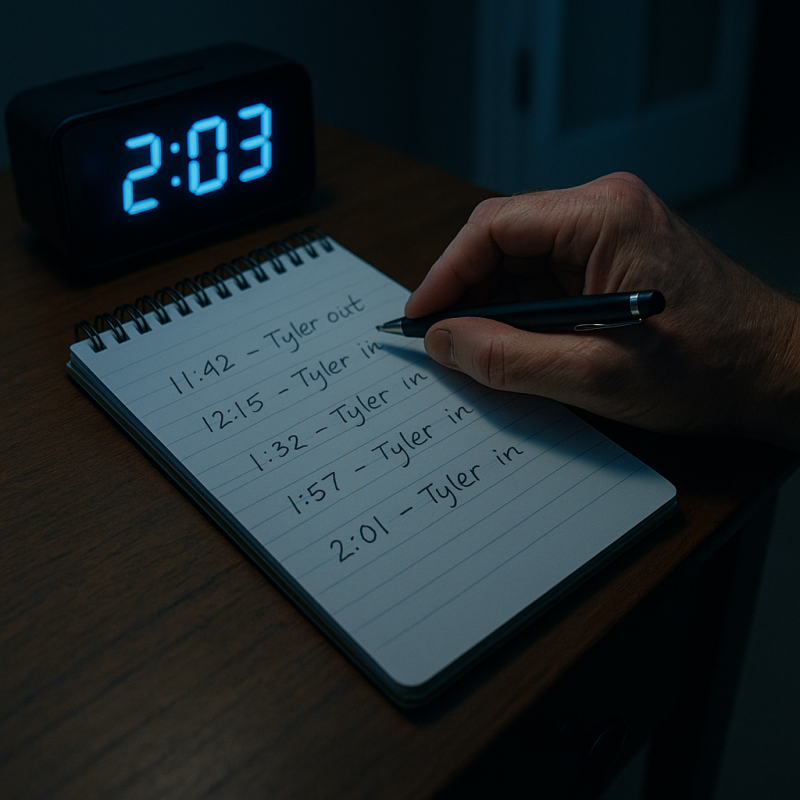 Image by RM AI
Telling Laura
I waited until Tyler left for soccer practice before I told Laura. She was folding laundry in the living room, and I just came out with it. "Tyler's been sneaking out at night. Regularly. For at least two weeks." She stopped mid-fold, a towel hanging from her hands. "What?" I showed her my notes, explained what I'd observed, walked her through the pattern. I watched her face shift from confusion to shock to something harder. "Two weeks?" she said. "You've known for two weeks and you're just telling me now?" "I needed to be sure," I said. "I needed to know it wasn't just once." Laura dropped the towel onto the couch. "Where is he going? Who is he with?" "I don't know yet." "You don't—" She crossed her arms, that familiar gesture when she was trying to contain her frustration. "David, this is serious. He's sixteen years old, sneaking out in the middle of the night. We need to ground him. Take his phone. End this now." "I know it's serious," I said. "But—" "No buts," Laura said. "We confront him tonight. We lay down consequences. This stops immediately." Laura's solution was simple: ground him, take his phone, end it now.
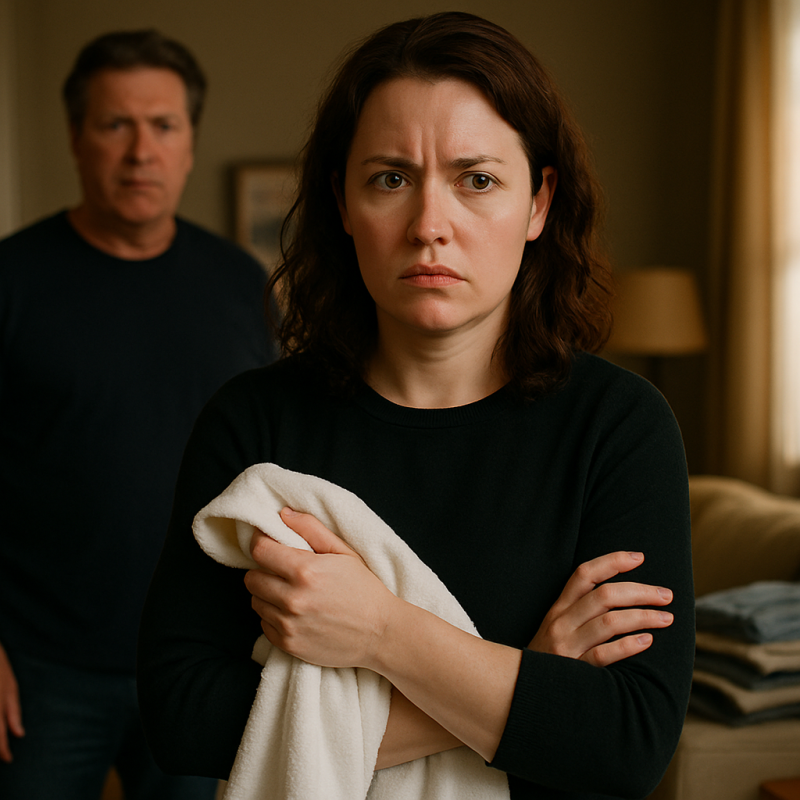 Image by RM AI
The Request
"Just hear me out," I said. Laura was pacing now, her frustration filling the room. "If we ground him without understanding why he's doing this, we're just going to push him away. He'll shut down completely." "He's already shut down," Laura shot back. "He's lying to our faces every single day." "I know. But punishment won't tell us what's actually happening. It won't tell us if he's in trouble, or if someone's pressuring him, or—" "Or if he's just being a stupid teenager who thinks rules don't apply to him?" Laura said. "Maybe," I admitted. "But I need to know which one it is before we come down on him." She stopped pacing and looked at me. "You're asking me to just let this continue?" "I'm asking for a few more days. Let me figure out where he's going, what he's doing. Then we'll have the full picture when we talk to him." Laura's jaw tightened. "I don't like this." "I know you don't." "If something happens to him while we're waiting—" "It won't," I said, hoping I was right. "How long?" she asked. "A few days. Maybe a week." She agreed to wait, but not for long.
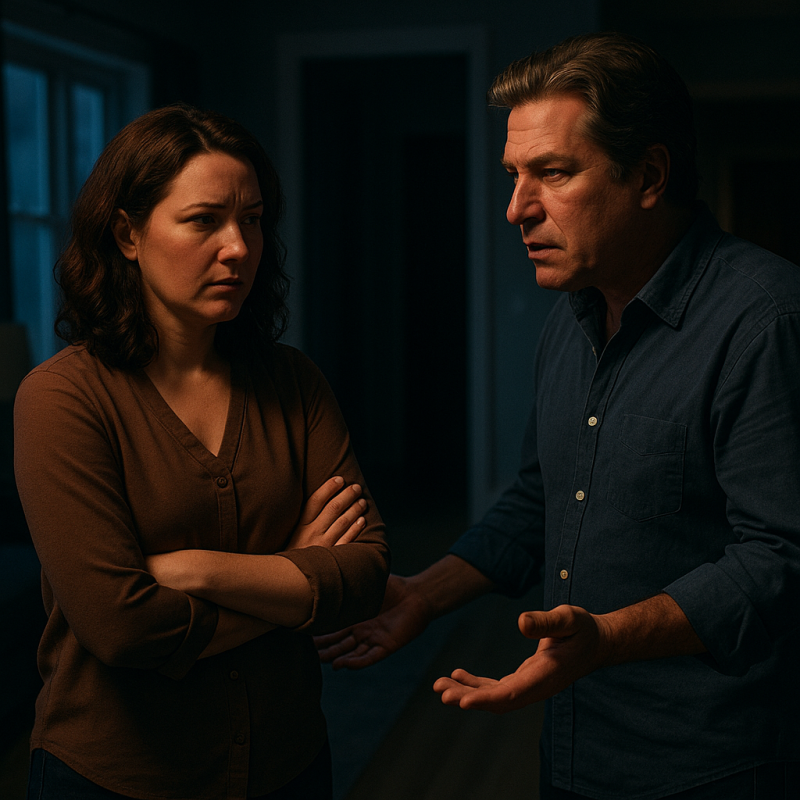 Image by RM AI
The Girlfriend Theory
After Laura went to bed, I sat in the dark living room and tried to piece it together. The most obvious explanation was a girl. Tyler had mentioned Emily a few times over the past month—casual references, but his voice changed when he said her name. That slight shift in tone that parents learn to recognize. I pulled out my phone and looked up her family's address in the school directory. The Carters lived about eight blocks away, close enough to walk but not directly on any route I'd seen Tyler take from our backyard. Maybe they were meeting somewhere in between? A park, maybe, or some neutral spot where they could talk without parents hovering. But the timing still bothered me. What sixteen-year-old girl was sneaking out at 2 AM on school nights? And why would they need an hour or more together in the middle of the night? A quick visit, a conversation, even a make-out session in a park—none of that required the kind of time Tyler was spending out there. I realized I was building a theory on assumptions, filling in gaps with guesses. If it was about a girl, why would he need to stay out for over an hour in the middle of the night?
 Image by RM AI
The Decision to Follow
I told Laura the next morning over coffee. She was folding laundry at the kitchen table, and I just said it straight: I was going to follow Tyler the next time he went out. She stopped mid-fold, holding one of his t-shirts, and looked at me like I'd suggested something dangerous. "You're going to spy on our son?" she asked. I explained that I'd exhausted every other option—asking directly hadn't worked, and waiting for him to volunteer information clearly wasn't happening either. She didn't like it. I could see it in the way she set the shirt down and crossed her arms. "What if he sees you?" she asked. I'd thought about that. I told her I'd stay far back, keep to the shadows, dress in dark clothes. She wanted to know what I'd do if I discovered something terrible, and I didn't have a good answer for that. We agreed I'd go through with it, but the conversation left both of us uneasy. That night, I set my alarm for 1:30 AM and laid out dark jeans and a navy jacket. I mentally traced the streets around our house, thinking through possible routes Tyler might take. Laura squeezed my hand before we went to sleep, and I knew she was as worried about what I'd find as I was.
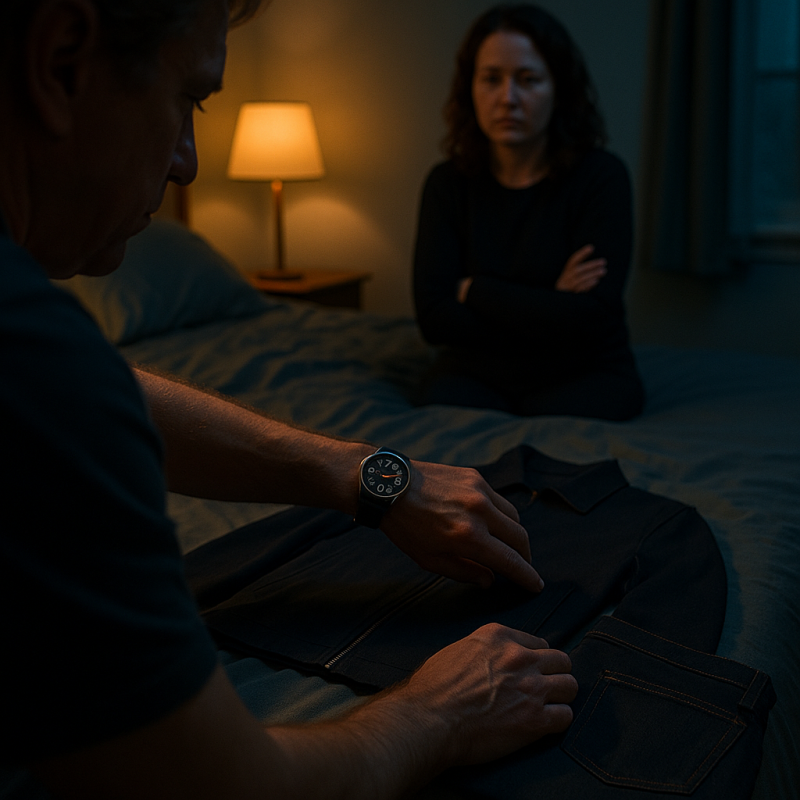 Image by RM AI
Following
I positioned myself outside at 1:45 AM, standing in the shadow of our neighbor's fence where I could see our back door. The air was cold enough that my breath came out in small clouds. At 2:03, the door opened and Tyler slipped out, pulling it closed behind him with practiced quiet. He walked with purpose, hands in his pockets, heading down the driveway and turning left onto our street. I waited until he'd gone about half a block before I started following. He never looked back. We passed through two residential streets, the houses dark and silent around us. I expected him to turn right at Maple—that would take him toward Emily's neighborhood. Instead, he kept going straight. My confusion grew as we entered an older section of town, where the houses were smaller and the streetlights more scattered. The sidewalks here were cracked and uneven, and I had to watch my footing while keeping Tyler in sight. He walked like he knew exactly where he was going, and it definitely wasn't anywhere I'd anticipated.
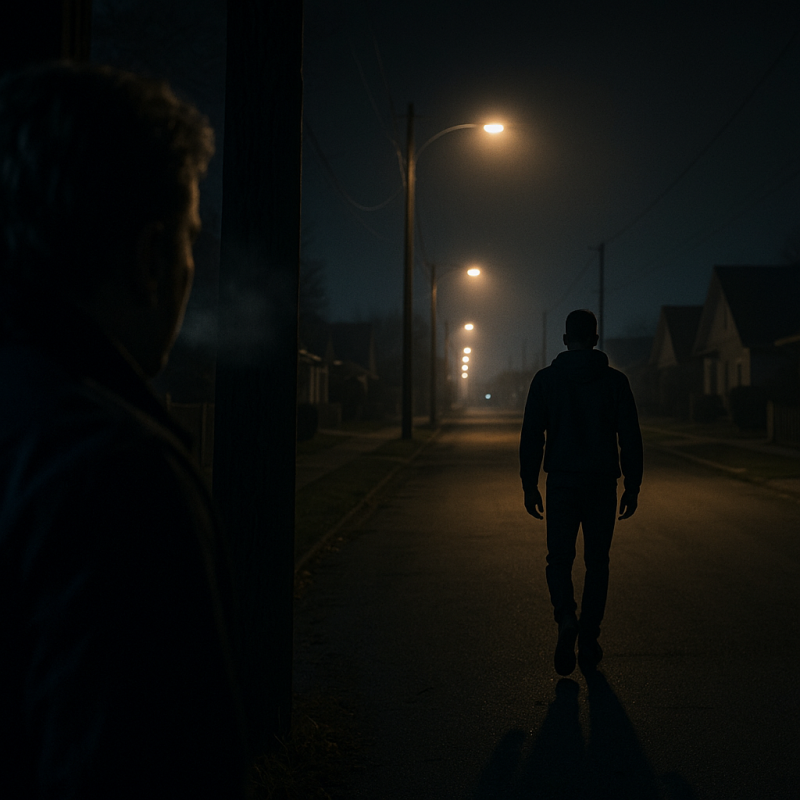 Image by RM AI
The Wrong House
Tyler stopped in front of a small house I'd never seen before. It was weathered, the paint faded, with a single light glowing in the front window. The yard was overgrown in spots, and the porch sagged slightly on one side. Tyler walked straight up to the door without hesitation and knocked—not a random knock, but a specific pattern. Three quick taps, a pause, then two more. I ducked behind a parked car across the street, my heart pounding harder than it should have been. The neighborhood was completely quiet at this hour, just the distant hum of a car on a main road somewhere. Tyler stood on that porch like he'd done this before, like he was expected. He didn't look nervous or uncertain. He just waited. None of this fit with anything I'd imagined. This wasn't Emily's house. This wasn't some teenage hangout spot. This was a stranger's home in a part of town Tyler had no reason to be in, and he was standing there at 2 AM like it was the most normal thing in the world.
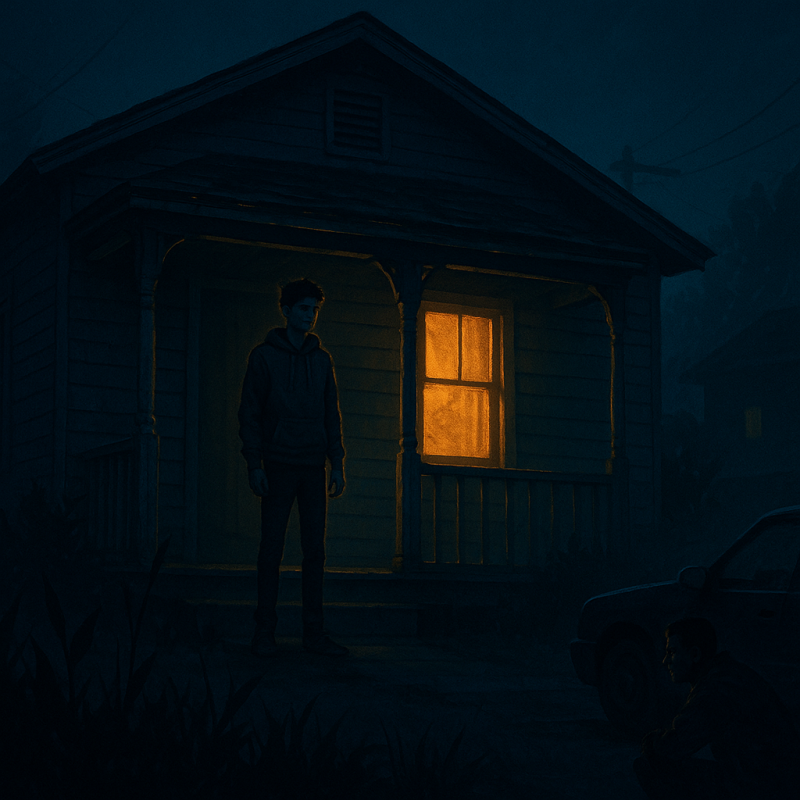 Image by RM AI
The Door Opens
The door opened, and a woman appeared in the doorway. She looked to be in her fifties, wearing what seemed like comfortable home clothes—a cardigan over a simple shirt. Even from across the street, I could see her posture suggested fatigue, a kind of frailness in how she held herself against the doorframe. She greeted Tyler with recognition, not surprise. There was no lengthy conversation at the threshold, no explanation needed. Tyler just stepped inside, and she moved back to let him pass. She didn't look outside before closing the door, didn't check the street or seem concerned about neighbors. I caught only the briefest glimpse of the interior—a lamp, part of a couch, ordinary furniture. Then the door closed, and the house went quiet again. I stood there in the darkness behind that parked car, my mind racing through possibilities and coming up empty. Who was this woman? Why was Tyler visiting her in the middle of the night? I'd followed him expecting answers, but now I had more questions than when I'd started.
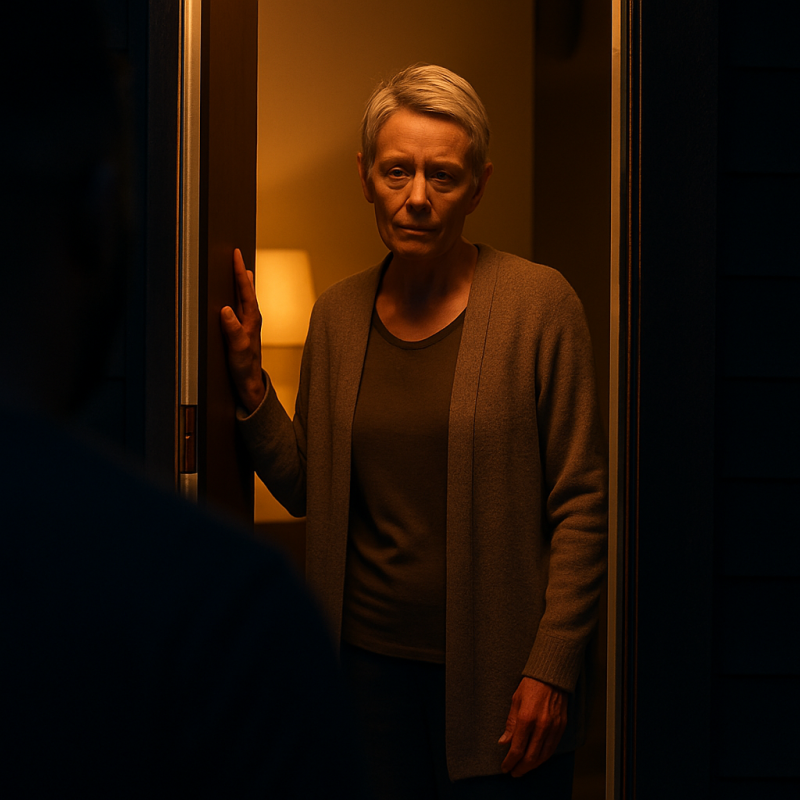 Image by RM AI
The Long Wait
I found a spot between two bushes where I could watch the house without being obvious if anyone happened to drive by. The temperature kept dropping, and I pulled my jacket tighter. I checked my phone: 2:47 AM. The house remained quiet, no movement visible through the lit window. At 3:15, I checked again. Nothing had changed. I considered walking up and knocking on the door myself, demanding to know what was going on, but something held me back. I had no idea what I'd be interrupting or how Tyler would react to being caught. I thought about calling Laura, but what would I even tell her? That our son was inside a stranger's house and I was standing outside in the cold like some kind of stalker? At 3:23 AM, the front door finally opened. Tyler emerged alone, and the woman appeared briefly behind him to say goodbye. I couldn't hear what they said, but her hand rested on the doorframe like she needed the support. Tyler walked back the way he'd come, his shoulders slightly slumped, looking tired but not upset. Whatever he'd been doing in there, it seemed routine to him.
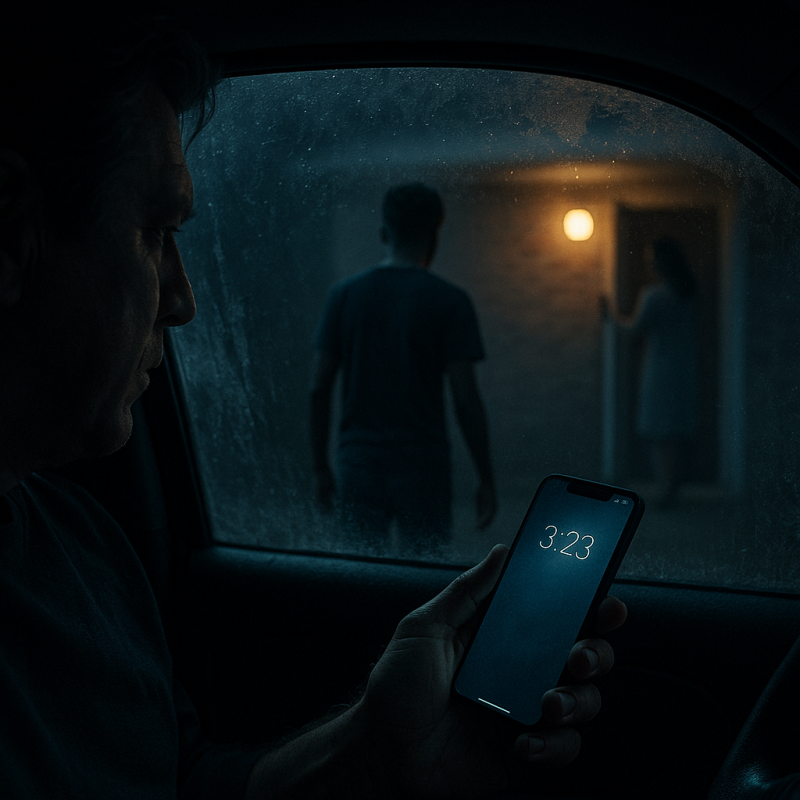 Image by RM AI
The Return
I followed Tyler back through the quiet streets, keeping the same distance I'd maintained before. His pace was steady but not hurried, the walk of someone completing a familiar routine. We arrived back at our house around 3:35 AM. He went straight to the back door, let himself in with the same careful quiet, and I heard his footsteps move through the house toward his bedroom. I waited outside a few more minutes, letting the cold air clear my head, trying to process what I'd witnessed. When I finally went inside, I heard Tyler's bedroom door close. I walked quietly down the hall and looked in on him—he was getting into bed, pulling the covers up, settling in like he'd just gotten up for a glass of water. The room showed no signs of anything unusual. No evidence of where he'd been or what he'd done. I returned to my own bedroom where Laura was sleeping and lay down beside her, staring at the ceiling. In a few hours, Tyler would wake up for school, and if I asked him where he'd been tonight, he'd lie to me again. And I still had no idea what to do about it.
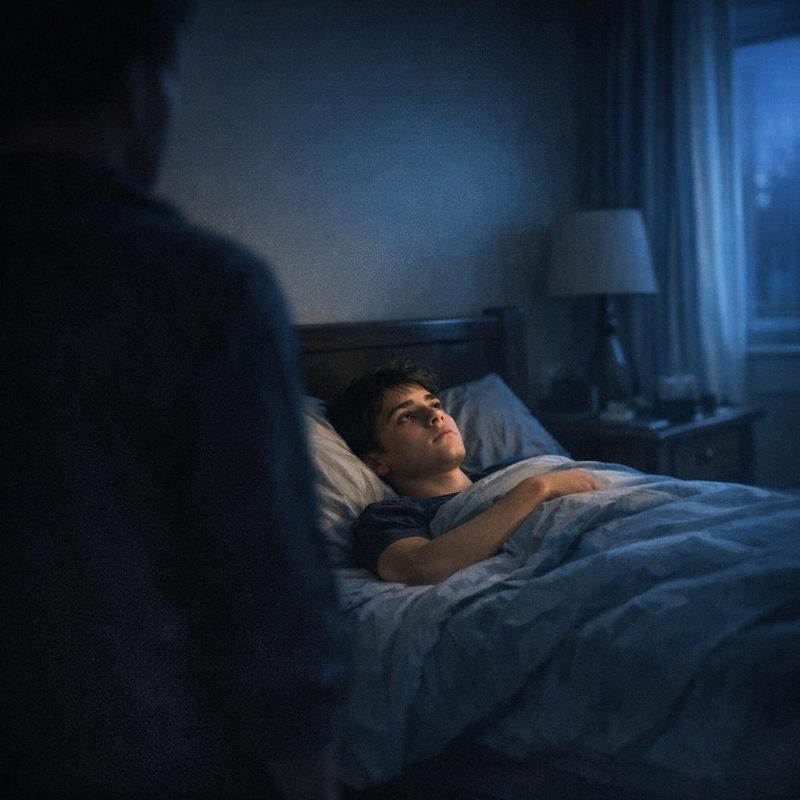 Image by RM AI
Research
I spent the next day trying to find out who lived in that house. I'd memorized the address while standing outside in the dark, and now I pulled up property records online. The house was a single-family home, owned by a woman who'd registered the property several years ago. I searched for her name, hoping for some obvious connection to Tyler's school or our neighborhood or Emily's family. Her social media presence was minimal—an old profile with barely any activity. No indication of family nearby, no business listings, no professional profile that would explain why a sixteen-year-old would visit her at 2 AM. I cross-referenced her name with Emily's last name, looking for any family connection. Nothing. I searched for her address combined with Tyler's school, with our street, with every keyword I could think of. The research took me through lunch and into the afternoon, and all I accomplished was ruling out the explanations that made sense. She wasn't a tutor. She wasn't a relative. She wasn't connected to any of Tyler's activities that I could find. The public records gave me a name and an address, but nothing that explained why my son was sneaking out to see her.
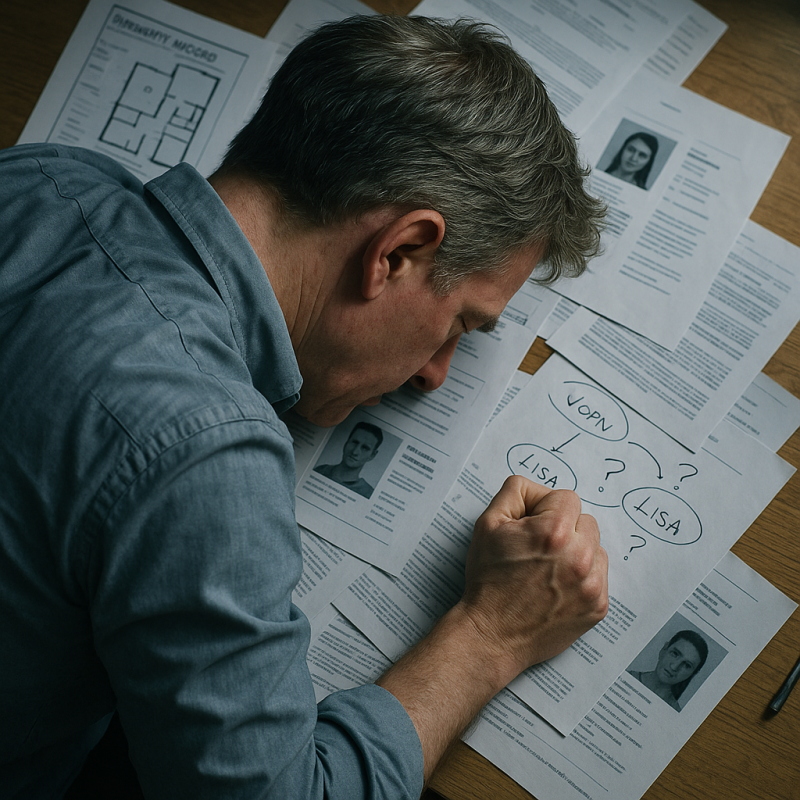 Image by RM AI
The Frail Neighbor
I drove past the house the following afternoon, telling myself I just needed to see it in daylight. I parked down the street where I could observe without being obvious. The house looked even more worn in the sunlight—the paint more faded, the porch more weathered. After about ten minutes, the front door opened and the woman came outside. She moved slowly and carefully, using the porch railing for support as she made her way down the steps. She had a small gardening tool in one hand and knelt with visible effort beside a patch of struggling flowers near the walkway. Her movements suggested chronic health problems, the kind that make simple tasks exhausting. She worked on the garden for maybe five minutes before standing up again, one hand pressed to her lower back. No one else appeared—no family member checking on her, no neighbor stopping by. She went back inside alone, and the house returned to its quiet stillness. I sat there trying to reconcile what I was seeing with Tyler's midnight visits. She looked genuinely unwell, which made the whole situation seem less suspicious but somehow more confusing.
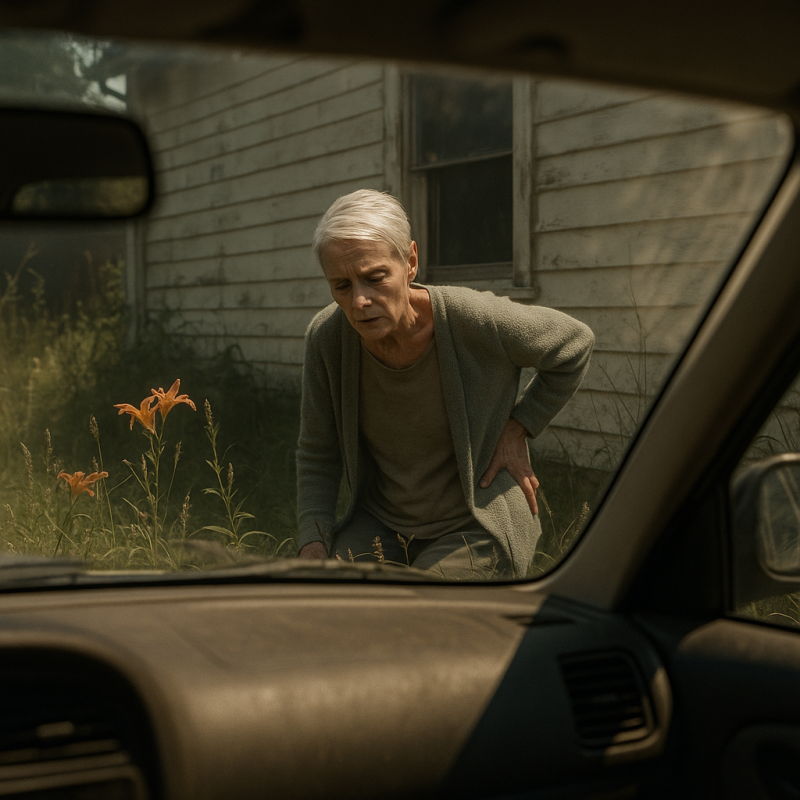 Image by RM AI
Laura's Patience Runs Out
Laura cornered me in the kitchen three days after I'd followed Tyler to that house. She didn't waste time with pleasantries. "What did you find out?" she asked, arms already crossed. I told her about the house, the older woman who looked unwell, the quiet neighborhood. I explained that Tyler seemed to be helping her somehow, though I still didn't understand the details. Laura's expression hardened with each word. "So our son is sneaking out in the middle of the night to visit some stranger's house, and you think we should just keep watching?" Her voice had that edge that meant her patience was gone. I tried to explain that we still didn't know enough, that confronting Tyler without understanding could backfire. She cut me off. "David, he's lying to us every single day. Every morning he sits at that table and looks us in the eye and lies." She wasn't wrong. I felt the weight of that too. "Two more days," I said finally. "Give me two more days to figure this out. If I don't have real answers by then, we'll do it your way." Laura stared at me for a long moment before nodding once, sharp and final. The deadline was set, and I could feel it ticking.
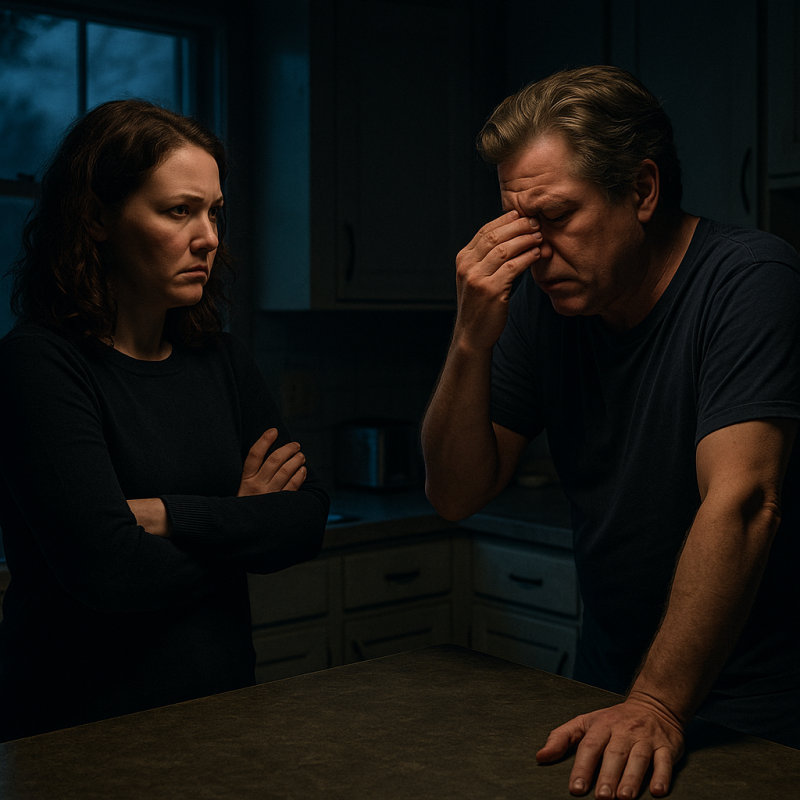 Image by RM AI
Defending the Method
Laura didn't walk away after agreeing to the deadline. She stood there, waiting for me to justify the approach that was clearly driving her crazy. So I laid it out as clearly as I could. "If we confront Tyler right now, he'll shut down completely," I said. "He'll give us some explanation that sounds reasonable enough, and we'll never know what's really happening." I explained that we still didn't know if Tyler was helping this woman or if she was somehow manipulating him. Laura's face showed the fear I'd been trying not to voice—that our son might be in over his head with something he couldn't handle. I admitted that was possible, maybe even likely, but said we needed context before we could actually help him. "Grounding him won't stop this," I added. "It'll just make him better at hiding it." Laura's shoulders dropped slightly. "I see your point," she said quietly, "but I hate this. What if waiting is the wrong choice?" I promised to move faster, to push harder in my investigation. We agreed that when we did confront Tyler, we'd do it together, united. Neither of us said what we were both thinking—that this was harder and more complicated than we'd expected. Laura's warning hung in the air as she finally left the kitchen: if Tyler was in trouble, we might be running out of time to help him.
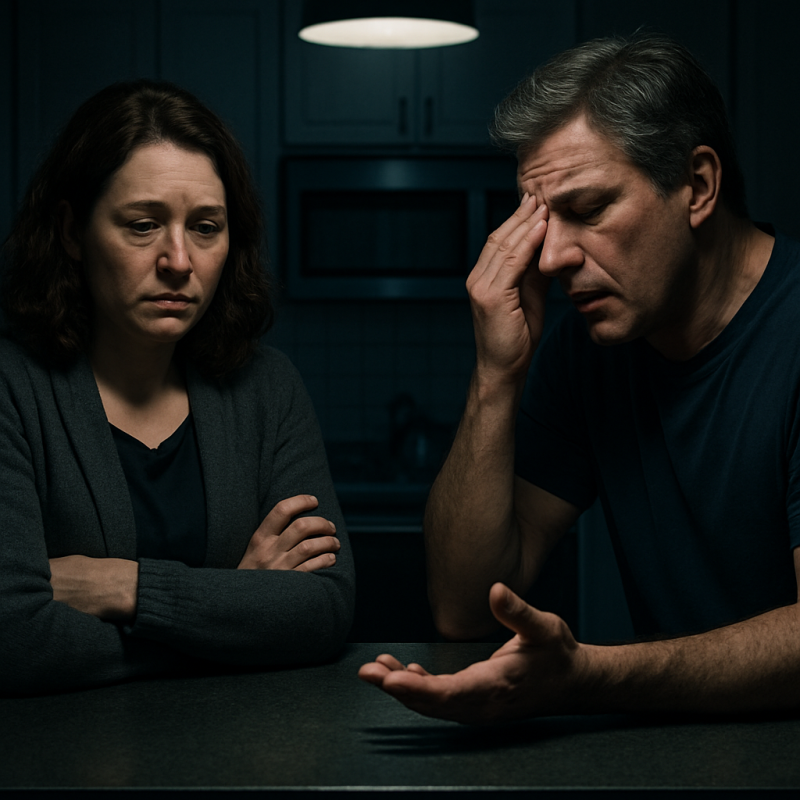 Image by RM AI
The Effortless Lie
The next morning, Tyler sat across from me at breakfast like nothing in the world was wrong. Laura poured coffee while I watched our son butter his toast with the casual ease of someone who had nothing to hide. "How'd you sleep?" I asked, keeping my tone light. Tyler looked up and smiled. "Good. Didn't wake up once." The lie came out so smoothly it could have been the truth. Laura asked about his plans for the day, and Tyler launched into a detailed explanation about homework and maybe meeting up with friends later. He made eye contact. He laughed at the right moments. He engaged in the conversation like any normal teenager on any normal morning. I searched his face for some sign of guilt or nervousness, some crack in the facade. There was nothing. He'd become so comfortable with deception that it looked like honesty. When he asked me to pass the juice, his hand was steady. When Laura mentioned something funny from the news, he responded with genuine interest. The performance was flawless, and that's what made it so disturbing. I found myself wondering how long he'd been this good at lying, and what else he might be hiding that I hadn't even thought to question.
 Image by RM AI
Stress Beneath the Surface
I watched Tyler more carefully that evening, looking past the surface-level normalcy. He settled at the dining room table with his homework, textbooks spread out in what looked like focused concentration. But I noticed things I'd been missing before. His shoulders carried tension that didn't match his calm expression. He checked his phone more frequently than usual, and each time he did, his jaw tightened slightly. During dinner, Laura asked him about a test coming up, and Tyler answered appropriately, but I caught him losing the thread of conversation twice. Around eight-thirty, he announced he was heading to his room to finish an essay. That was earlier than normal. From the hallway, I heard him pacing before his footsteps finally settled. The stress I was seeing didn't look like typical teenage rebellion or the excitement of getting away with something forbidden. It looked like burden. Like he was carrying something heavy that he couldn't quite manage but also couldn't put down. This wasn't defiance—it was something more complicated. Tyler wasn't sneaking out because he wanted to break rules or assert independence. He was sneaking out with the weight of something he couldn't quite carry, and that realization shifted everything I thought I understood about the situation.
 Image by RM AI
The Search
I waited until Tyler's bus pulled away the next morning before heading to his room. Laura had already left for work, and the house felt uncomfortably quiet as I stood in the doorway of my son's space. I'd never searched his room before—it felt like a violation of trust that was already badly damaged. But I needed answers. I started with his desk, checking drawers methodically. Normal stuff—pens, old assignments, a few gaming magazines. His closet revealed nothing unusual. Under the bed, just dust and a forgotten sock. The room was surprisingly organized for a teenager, everything in its place. I was about to give up when I noticed a small spiral notebook tucked between two textbooks on his shelf. I pulled it out and flipped it open. Pages of dates and times, all in Tyler's handwriting. My stomach dropped as I recognized them—they matched the nights I knew he'd snuck out, plus several more I'd probably slept through. Some entries had single-word notes beside them: "medications," "appointment," "groceries." No names. No addresses. Nothing that explained who or why. I pulled out my phone and photographed each page, my hands not quite steady. The notebook confirmed Tyler's pattern but gave me no real answers about what he was actually doing at that house.
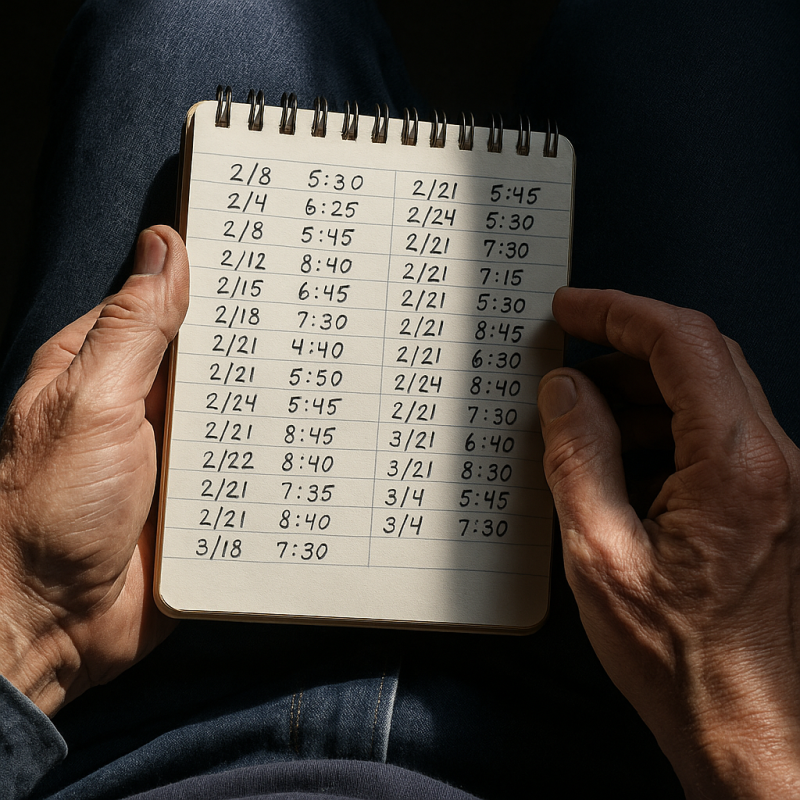 Image by RM AI
Outside Perspective
I ran into Marcus at the grocery store that afternoon, purely by chance. Tyler's best friend was in the produce section, and I seized the opportunity before I could overthink it. "Hey Marcus," I called out, keeping my tone casual and friendly. He looked up and smiled, though it seemed a bit uncertain. We exchanged the usual pleasantries about school and the weather. Then I mentioned, as offhandedly as I could manage, that I hadn't seen him around the house lately. Marcus shifted his weight. "Yeah, Tyler's been kind of busy," he said. I asked if everything was okay with Tyler, trying to sound like a dad making conversation rather than a dad investigating. Marcus paused before answering, and that hesitation made my chest tighten. "I mean, he seems fine," Marcus said slowly. "But also kind of stressed, I guess?" I asked what Tyler had been busy with, hoping Marcus might know something I didn't. Marcus admitted he didn't really know, which seemed to bother him. "He's just been less available to hang out," Marcus added, looking uncomfortable. The pause before his answer had told me more than his actual words. Marcus had noticed something was off too, and he didn't know what to make of it either.
 Image by RM AI
The Friend's Worry
Marcus seemed relieved to talk about it once I'd opened the door. "Tyler used to hang out with us all the time," he explained. "Like, several times a week. Now he barely responds to texts." I asked if he'd tried talking to Tyler about it, and Marcus nodded. "I asked if something was wrong, but he just brushed me off and changed the subject." Marcus described seeing Tyler at school looking tired, checking his phone anxiously between classes. The picture he painted matched what I'd been observing at home—someone distracted and burdened by something they wouldn't share. "I thought maybe it was family stuff," Marcus admitted, looking embarrassed. "Like, I didn't want to push if something was going on at home." I assured him everything was fine with the family, which was technically true even if it felt like a lie. I asked if Marcus had met anyone new that Tyler was spending time with, hoping for a lead. Marcus shook his head. "That's what makes it weird. He's not hanging out with anyone else that I know of. He's just... gone." We said our goodbyes, but Marcus's expression stayed with me. When I'd asked if he thought Tyler was in trouble, the worry in the boy's eyes made it clear he'd been wondering the same thing.
 Image by RM AI
The Plan
That evening, I explained my plan to Laura. "I'm going to install a sensor on the back door," I said. "The kind that sends a notification to my phone the moment it opens." Laura looked up from her laptop, and I saw relief cross her face. This was more direct than my previous approach, more action-oriented. She asked how it would work, and I showed her the product I'd found online—a simple magnetic sensor, unobtrusive but effective. I could have it installed within two days. "So the next time he tries to sneak out, you'll know immediately," Laura said. I nodded. The waiting would be over. We'd force the confrontation I'd been avoiding. Laura asked what I planned to say when I caught him, and I admitted I still wasn't entirely sure. We agreed to stay calm, to listen first before reacting. But Laura was firm about one thing: regardless of Tyler's reasons, the sneaking out had to stop. I couldn't argue with that. I placed the order while Laura watched, both of us aware that we were crossing a line from observation to intervention. I spent the rest of the evening mentally preparing for what would come next, ready to set this trap. The next time Tyler tried to slip out that back door in the middle of the night, I'd be ready to confront him before he could disappear into the darkness.
 Image by RM AI
Setting the Trap
I installed the sensor the next afternoon while Tyler was at school. The device was smaller than I'd expected—two pieces, one for the door frame and one for the door itself, connected wirelessly to an app on my phone. I followed the instructions carefully, mounting the sensor on the back door frame where it would be nearly invisible unless you knew to look for it. The corresponding piece went on the door, aligned perfectly so the magnetic connection would register every time the door opened. I tested it three times, opening and closing the door slowly, then quickly. Each time, my phone vibrated silently in my pocket. The app showed a timestamp and a simple notification: "Back Door Opened." I adjusted the sensitivity settings to avoid false alarms from wind or the house settling. Then I wiped away any fingerprints and stepped back to examine my work. You couldn't tell anything had changed. That night, I kept my phone on the nightstand, volume off but vibration on. Laura was already asleep beside me, but I lay there fully awake, staring at the ceiling, waiting for the alert that would finally force the truth into the open.
 Image by RM AI
Caught
The vibration against the nightstand jolted me at 2:07 AM. I grabbed my phone and saw the notification glowing on the screen: "Back Door Opened." I was out of bed immediately, moving through the dark bedroom as quietly as I could. Laura stirred but didn't wake. I walked down the hallway toward the back of the house, my heart pounding harder with each step. Then I saw him—Tyler, halfway down the hall, already dressed in jeans and a hoodie. He was moving toward the back door when he noticed me. He stopped mid-step, his body going rigid. I reached for the hallway light switch and flipped it on. The sudden brightness made us both squint. Tyler's expression shifted in an instant—shock first, then something that looked like resignation. His shoulders slumped forward, and he stood there frozen, staring at me. I positioned myself between him and the door, blocking his path. Neither of us spoke for several long seconds. The silence stretched out, heavy and uncomfortable. Tyler finally looked down at the floor, and I knew he understood there was no way out this time.
 Image by RM AI
Breaking Down
"Where are you going?" I asked. My voice came out calmer than I felt. Tyler opened his mouth, and I could see him trying to form the word "nowhere," but it died on his lips. He couldn't even finish the lie. "I know you've been sneaking out," I said. "This isn't the first time. So I'm asking you again—where are you going?" Tyler kept his eyes fixed on the floor, his hands shoved deep in his hoodie pockets. "How long has this been going on?" I pressed. He shifted his weight from one foot to the other. "A few months," he finally admitted, his voice barely above a whisper. "Are you in trouble?" I asked. "Is someone making you do this?" He shook his head, but the gesture looked uncertain, like he wasn't entirely sure of his own answer. I took a breath and softened my tone slightly. "Tyler, we need to talk about this. Really talk. Let's sit down." He nodded without looking up, and I heard his voice crack slightly as he said, "Okay." I knew we were about to have the conversation that should have happened weeks ago.
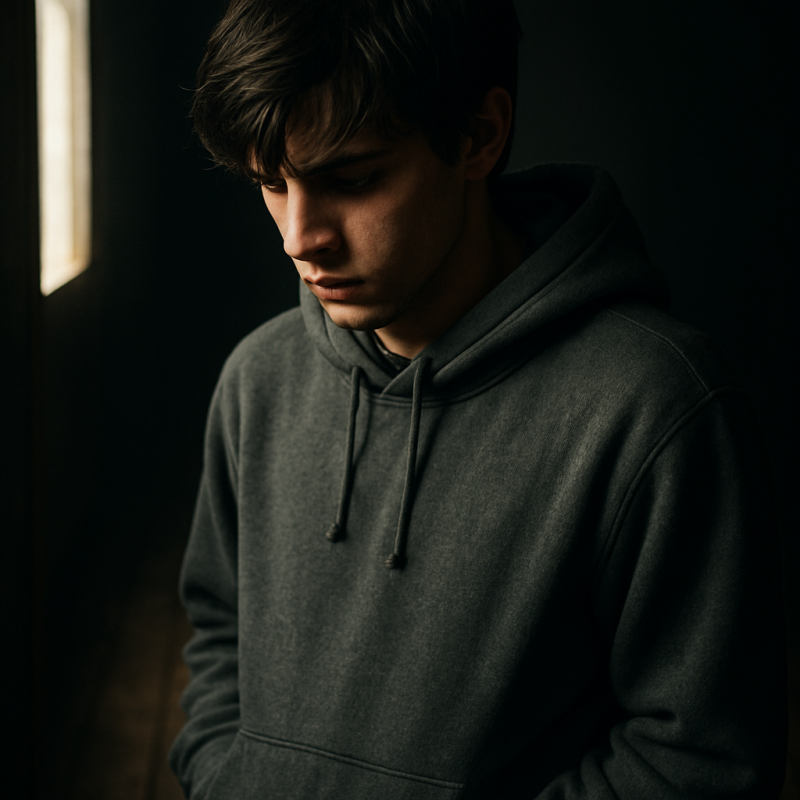 Image by RM AI
The First Explanation
We sat across from each other at the kitchen table, the overhead light casting harsh shadows. Tyler kept his hands folded in front of him, still avoiding eye contact. "There's this woman," he started. "She lives alone, a few streets over. She's been having health problems." I waited, letting him continue at his own pace. "She needs help with her medications," Tyler said. "She has trouble keeping track of what to take and when. I've been going over to make sure she takes them correctly." He explained that she also had difficulty managing doctor appointments, remembering when they were scheduled. "How did you meet her?" I asked. Tyler hesitated for just a moment. "I was walking in the neighborhood one day. It was by chance. She seemed like she needed help, so I offered." The story made sense on the surface—Tyler had always been compassionate, the kind of kid who'd help an elderly neighbor carry groceries. But something about the way he was choosing his words felt too careful, too measured. "Why didn't you tell us about this?" I asked. Tyler finally looked up, and I couldn't shake the feeling that he was leaving something out.
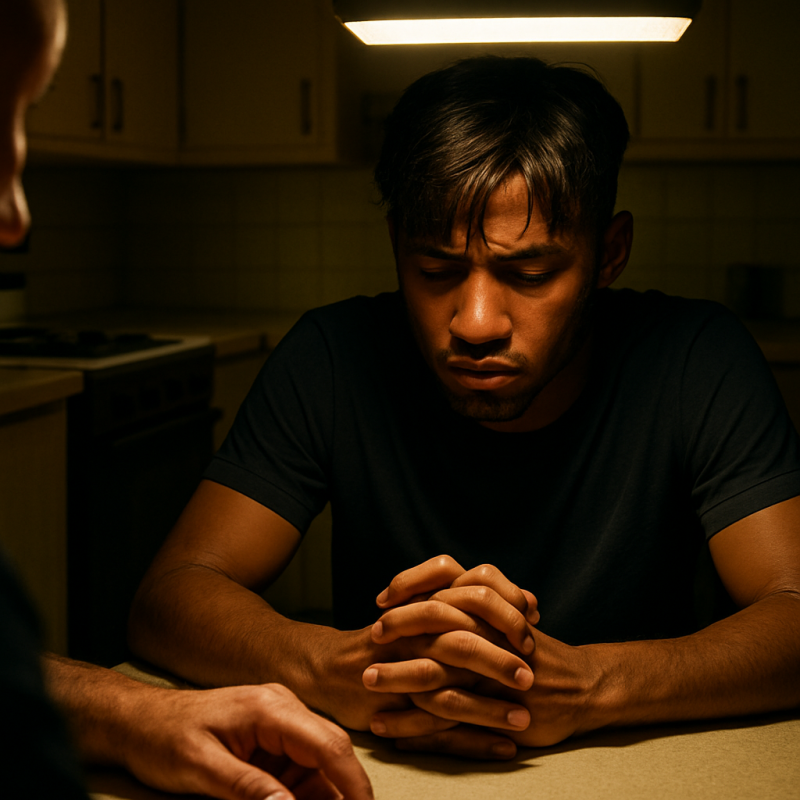 Image by RM AI
The Grandmother Connection
"She reminds me of Grandma," Tyler said quietly. The words hit me harder than I expected. My mother had passed away two years ago, and Tyler had been close to her. "I still miss her," Tyler continued, and I saw his eyes getting wet. "This woman—she has some of the same mannerisms, the same needs. I wanted to help someone the way we helped Grandma." I remembered how attentive Tyler had been during my mother's final months, how he'd sit with her when she couldn't sleep, how he'd organize her pill bottles without being asked. "She needs someone," Tyler said. "And I thought if I could help her, it would be like honoring Grandma's memory." I felt my anger softening despite myself. Grief did strange things to people, made them reach for connections in unexpected places. But even as I felt sympathy rising, the secrecy still didn't fit. "Tyler, I understand wanting to help," I said. "But why keep it secret? Why not tell us?" He looked down again. "I thought you'd tell me to stop," he said. The explanation tugged at my heart, but something about it still felt incomplete.
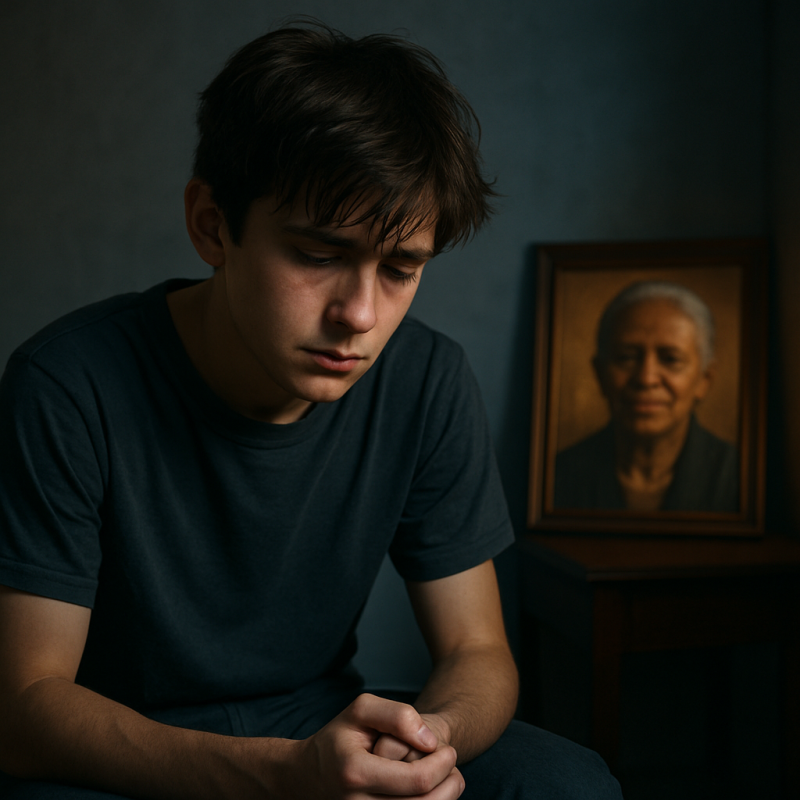 Image by RM AI
The Questions
"Walk me through it," I said. "When exactly did you first meet this woman?" Tyler thought for a moment. "About four months ago," he said. I did the mental math. The sneaking out had started closer to two months ago, based on when I'd first noticed his exhaustion. "Can you clarify the timeline?" I asked. "Because I'm trying to understand when the visits started." Tyler's eyes flickered with something—uncertainty, maybe. "Maybe three months," he corrected. "I'm not sure exactly." "What happened during that first meeting?" I pressed. "I was walking home from school," Tyler said. "I took a different route, and I saw her on her porch. She looked confused, like she didn't know where she was." "Which street was this?" I asked. Tyler paused for just a beat before answering. "Maple Street," he said. "Near the corner with Oak." I noted the hesitation but didn't comment on it yet. Maple Street wasn't anywhere near Tyler's usual route home from school. It wasn't even in the general direction. But I let it pass for now, filing it away as another piece that didn't quite fit.
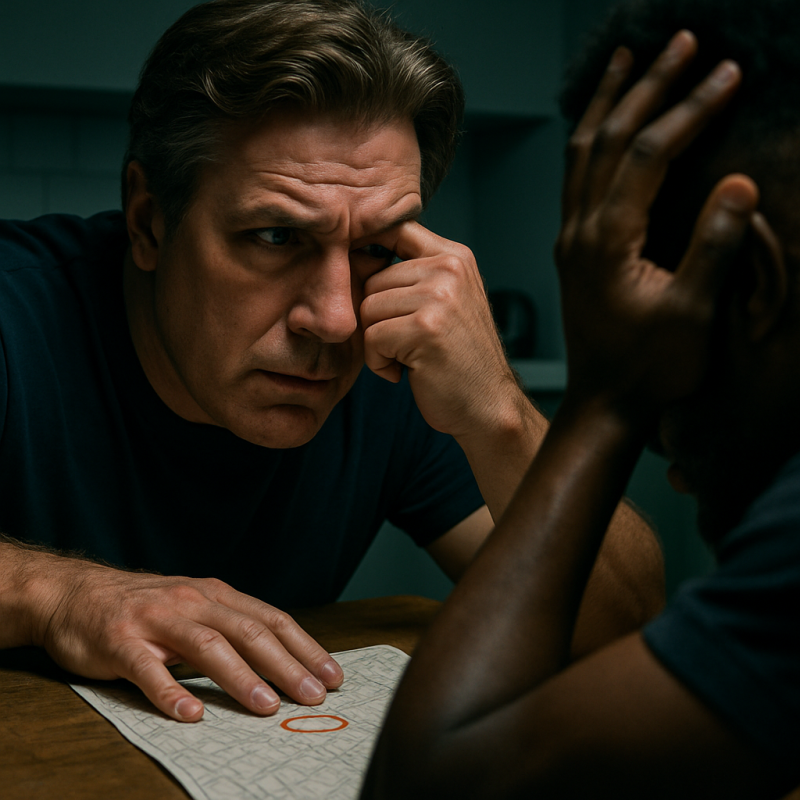 Image by RM AI
The Inconsistency
"Maple Street isn't on your way home," I pointed out. "What were you doing over there?" Tyler shifted in his chair. "I sometimes take different routes," he said. "Just to explore the neighborhood." "Exploring," I repeated. "But that doesn't explain why you'd keep going back regularly. At two in the morning." Tyler's jaw tightened. "Does it matter how we met? The point is she needs help." "The details matter if you're not being straight with me," I said, keeping my voice level. "I'm not lying," Tyler shot back, but he wouldn't elaborate further. He crossed his arms, his body language closing off. I could feel the conversation reaching an impasse. Every answer he gave seemed designed to satisfy my immediate question without revealing anything deeper. "Tyler, I'm trying to understand," I said. "But you're making it very difficult." He stared at the table, his expression stubborn. The deflection was obvious now—he was steering me away from something, and I realized my son was still hiding the truth.
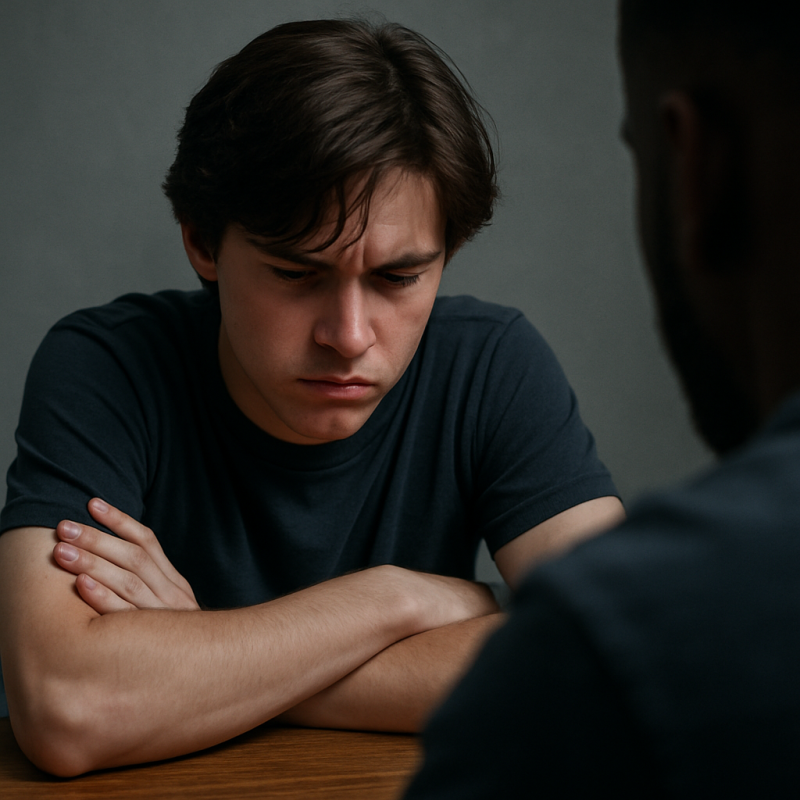 Image by RM AI
Pressing Further
"Explain something else to me," I said. "Why do these visits have to happen at two in the morning?" Tyler looked up, and I could see him searching for an answer that would satisfy me. "She has insomnia," he said. "She's awake then anyway, and that's when she needs the most help." "Why can't you help her during reasonable hours?" I asked. "After school, on weekends?" "She prefers nighttime," Tyler said. "For privacy. She doesn't like people seeing her when she's struggling." The explanation sounded hollow even as he said it. "Does this woman have no other support during the day?" I pressed. "No family, no daytime caregivers?" Tyler shook his head. "She doesn't trust many people." "That still doesn't explain why you had to keep this secret from your own family," I said. Tyler struggled visibly, his mouth opening and closing as he tried to find words that would make sense. Finally, he admitted, "I knew you'd make me stop." "Why would you think that?" I asked, and I could tell he was grasping for justifications that sounded reasonable but weren't the whole truth.
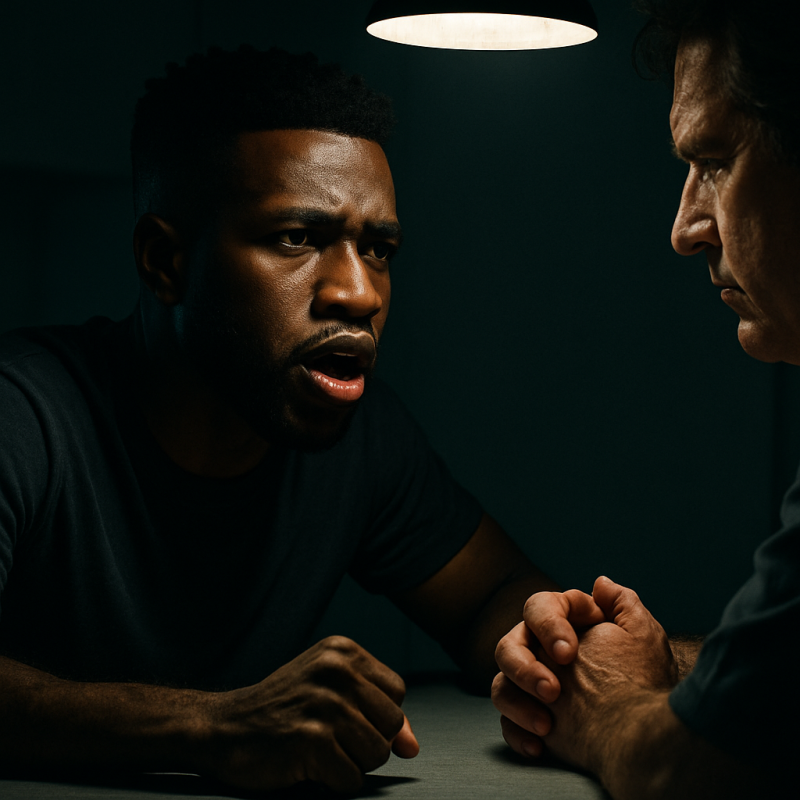 Image by RM AI
Cracks in the Story
I needed to understand the full picture, so I asked Tyler if the woman had any family who could help her. "No," he said quickly. "She's completely alone. That's why she needs me." I nodded slowly, letting that sit between us for a moment. Then I asked if anyone else ever checked on her, if she had neighbors who looked in on her. Tyler hesitated, and I watched something shift in his expression. "Well, she has a daughter," he said. "But they don't really talk." I felt my eyebrows raise. "Wait," I said. "You just told me she was alone." Tyler's face flushed. "I meant no one visits her," he said. "Her daughter lives nearby but doesn't come around." I leaned forward slightly. "Where does the daughter live?" Tyler opened his mouth, closed it, and I could see the exact moment he realized he'd painted himself into a corner. "Tyler," I said quietly. "Have you been lying to me?" His eyes filled with tears, but they looked more like frustration than sadness. The contradiction hung in the air between us, impossible to ignore.
 Image by RM AI
Partial Truth
Tyler wiped at his eyes with the back of his hand. "Okay," he said. "I haven't been completely honest about everything." I waited, giving him space to continue. "But the main thing is true," he insisted. "I really am helping someone who needs it." I asked him what else he'd lied about, and he shook his head. "The details don't change the basic situation," he said. "She needs help, and I'm helping her." I told him that details absolutely mattered, that they were the difference between understanding what was happening and being kept in the dark. Tyler became emotional then, his voice rising as he said he was trying to do the right thing, that he was trying to help someone. I acknowledged that his intentions might be good, but I emphasized that lying undermined everything, that I couldn't trust what he was telling me if half of it kept changing. "What do you want me to say?" Tyler asked, his voice breaking. "I want the complete truth," I said. "All of it." He looked away, and I knew we weren't there yet.
 Image by RM AI
The Decision
I stood up from the couch, feeling the weight of the conversation settling over both of us. "This conversation is over for now," I said. "I'm going to speak with this woman directly and get the full story myself." Tyler's reaction was immediate and visceral. "No," he said, practically jumping to his feet. "Dad, you can't do that. That'll make everything worse." I asked him why that would be a problem if everything he'd told me was true. He struggled to find words, his mouth working soundlessly for a moment. "She's really private," he finally said. "She won't talk to strangers." I pointed out that I wasn't a stranger, I was his father. "Please," Tyler said, and there was genuine desperation in his voice now. "Just trust me on this." I told him that trust required honesty, and he hadn't given me that. Tyler looked defeated, his shoulders sagging as he sank back onto the couch. The panic in his eyes told me everything I needed to know about how complicated this situation really was.
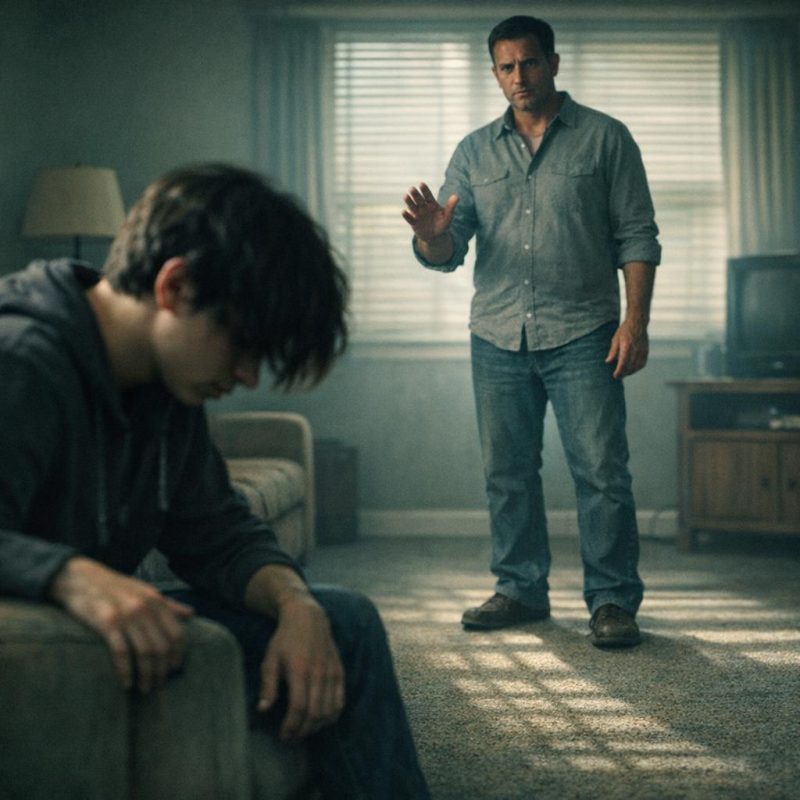 Image by RM AI
The Daytime Visit
The next afternoon, I drove to the address Tyler had been visiting. The house looked exactly as it had that night I'd followed him, modest and quiet in the daylight. I parked on the street and walked up to the front door, my heart beating a little faster than normal. I knocked and waited, preparing myself for whatever answers I might find. After a moment, I heard movement inside, and then the door opened. The woman who answered was pale and moved carefully, as though her body hurt. But what struck me most was her expression when she saw me. "You must be Tyler's father," she said, and there was no surprise in her voice, no confusion about who I was or why I might be there. I introduced myself and asked if we could talk. She hesitated for just a beat, then stepped back and invited me inside. Her careful neutrality immediately put me on guard.
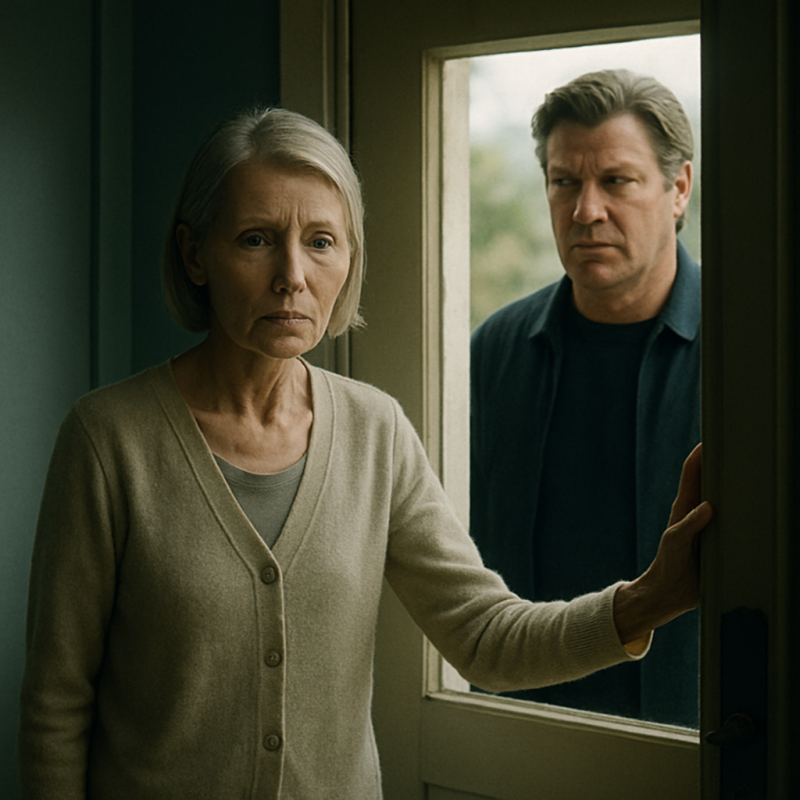 Image by RM AI
Her Side
Patricia's living room was modestly furnished, everything tidy but worn. She moved slowly as she gestured for me to sit, and I found myself watching the way she carried herself, fragile but composed. "Thank you for raising such a caring son," she said as she settled into a chair across from me. "Tyler has been wonderful." She explained that he'd been helping her manage her medications, that she had multiple prescriptions and sometimes got confused about the timing. Tyler reminded her when to take them, she said, and made sure she didn't miss doses. I asked how they'd met, and her version roughly matched what Tyler had told me, though the details were vague. She emphasized how lost she'd felt before Tyler started coming around, how much his support meant to her. The gratitude in her voice seemed genuine, and I found myself almost feeling guilty for suspecting something was wrong. But the late-night timing still made no sense, no matter how appreciative she sounded.
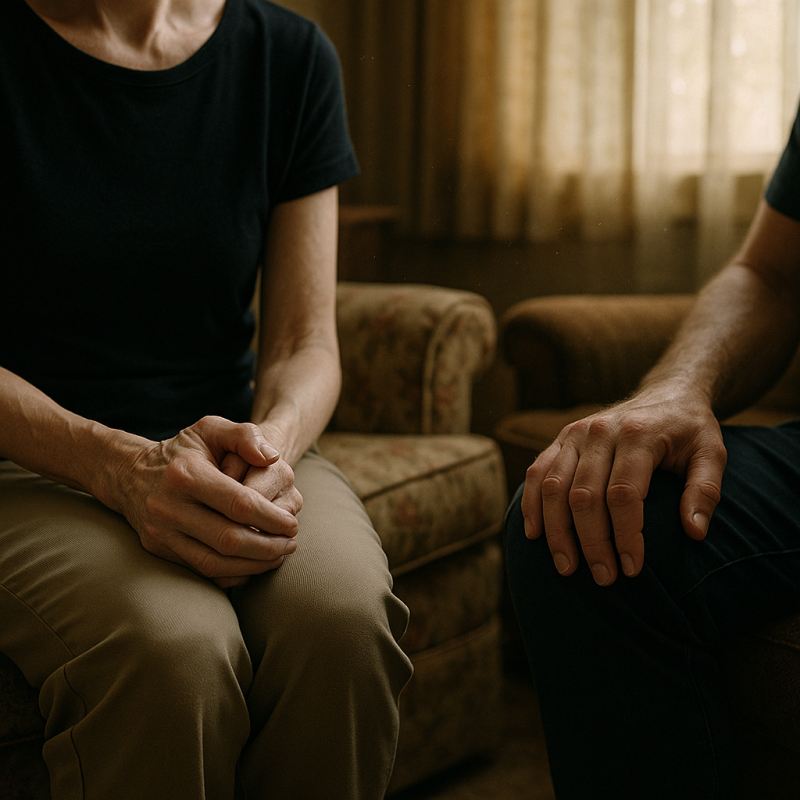 Image by RM AI
Medical Concerns
As we talked, Patricia mentioned that she'd been dealing with several health issues. "My doctors don't always listen to my concerns," she said, her voice taking on a wounded quality. "They just want to prescribe more pills without really hearing what I'm experiencing." She explained that Tyler had been supportive when she questioned some of the recommendations, that he'd validated her feelings when she felt dismissed. I asked what she meant by questioning recommendations, and Patricia said she'd become skeptical about some of the treatments. "I've reduced some of my medications," she admitted. "The side effects were terrible, and I know my body better than anyone." I asked if Tyler knew about this, and she nodded. "He's been very understanding," she said. "He helped me research alternatives." Patricia described how Tyler had listened to her medical concerns, how he'd supported her decisions about her own care. My stomach tightened as I realized Tyler might be involved in something far more complicated than simple acts of kindness.
 Image by RM AI
The Real Problem
I asked Patricia what specific medications she'd stopped taking. She listed several prescriptions, explaining why she'd modified or quit each one. I expressed concern about stopping medications without medical supervision, but Patricia defended her choices. "It's my body," she said. "I know myself better than doctors who spend ten minutes with me." I asked if she'd discussed these changes with her physician, and Patricia's expression hardened slightly. "Doctors just push pills," she said. "They don't actually listen." I suggested she might need to find a doctor she trusted more, someone who would take her concerns seriously. Patricia dismissed this as missing the point entirely, insisting that the medical establishment didn't care about patients as individuals. I realized Tyler was in over his head, that he'd been supporting decisions he didn't have the knowledge or experience to evaluate. When I suggested Patricia discuss her concerns with her doctor, her dismissive response revealed how deeply entrenched her mistrust had become.
 Image by RM AI
Research
I left Patricia's house and drove home with my mind racing. As soon as I got back, I opened my laptop and started searching for information about the conditions she'd mentioned. I looked up each medication she said she'd stopped taking, reading about what they treated and why they'd been prescribed. What I found made my chest tighten. These weren't optional medications or minor treatments. They were critical for managing chronic health issues, the kind that could spiral quickly without proper management. I read about the risks of stopping them suddenly, about the potential consequences that included serious medical emergencies. Then I researched the alternative treatments Patricia had mentioned, the ones Tyler had supposedly helped her find. There was little credible medical support for any of them. I sat back from the computer, feeling a weight settle over me. Patricia's choices weren't just risky. They were potentially life-threatening, and Tyler had become part of the problem.
 Image by RM AI
Background Check
I couldn't let it go. After everything I'd learned about Patricia's medical situation, I needed to understand who she really was. I opened my laptop again and started digging through public records and social media. I found older accounts under her name—Facebook posts from five or six years ago that showed a different version of her life. Back then, she'd had friends who commented regularly. There were photos from gatherings, check-ins at restaurants, the normal digital footprint of someone connected to the world. But the posts that caught my attention were the ones that mentioned a daughter. Never by name, just references. "My daughter thinks I'm being dramatic" in one post about a doctor's appointment. "Wish my daughter understood" in another complaint about medical care. I scrolled through months of posts, searching for a name, but it was never there in anything I could access. The recent years showed a stark change—fewer posts, fewer interactions, increasing isolation. Her complaints about healthcare became more frequent and more bitter. I sat back from the screen, staring at those vague references to a daughter. The records mentioned a daughter, but I couldn't find a name—and the absence of that detail felt like a missing puzzle piece.
 Image by RM AI
Too Close to Coincidence
I pulled up a map application on my computer, something I should have thought to do earlier. I typed in Patricia's address based on the route I'd driven to her house. The pin dropped on the screen, marking her location in the neighborhood grid. Then I thought about what Tyler had mentioned in passing weeks ago—where Emily lived, the general area he'd described when talking about picking her up or dropping her off. I marked an approximate location based on those details. My chest tightened as I zoomed out slightly to see both pins on the same screen. Three blocks. Patricia's house was three blocks from where Emily's family lived. The route between them was a straight shot down residential streets, the kind of path a teenager would walk without thinking twice. I stared at the map, my mind racing through Tyler's story about meeting Patricia by chance, stumbling upon someone who needed help. The randomness of that narrative had already felt thin, but now it seemed impossible. Tyler could have met Patricia through Emily. The proximity wasn't proof, but it made coincidence much harder to believe. The proximity could have been coincidence, but my instincts told me coincidences were getting harder to believe.
 Image by RM AI
The Direct Question
I found Tyler in the living room after school, sprawled on the couch with his phone. I sat down in the chair across from him, keeping my tone casual. "How are things going with Emily?" I asked. He glanced up, shrugged. "Fine." I nodded, letting a moment pass. "Have you ever met her parents?" His posture changed immediately—shoulders pulling inward, eyes dropping back to his phone. "Why?" "Just curious," I said. "You've been dating a while. Figured you might have met them by now." Tyler's thumb stopped scrolling. "Her dad, yeah. Once or twice." "What about her mom?" I asked, watching his face carefully. He shifted on the couch, his jaw tightening. "Emily's mom is complicated. They don't really talk about her much." I leaned forward slightly. "Have you met her?" The hesitation stretched too long. Tyler's eyes stayed fixed on his phone screen, but I could see he wasn't reading anything. "Tyler," I said quietly. "Why are you struggling to answer a simple question?" The silence filled the room until finally he looked up at me. Tyler's shoulders dropped in resignation, and I knew the conversation we'd been circling was finally about to happen.
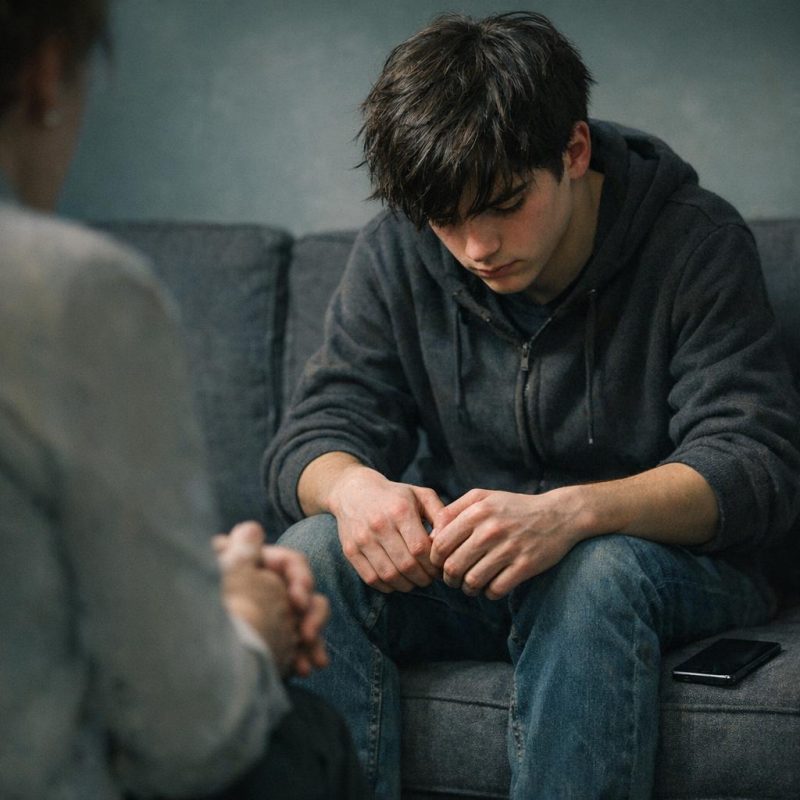 Image by RM AI
The Truth Revealed
"Is Patricia Emily's mother?" I asked, keeping my voice steady. Tyler's silence was answer enough, but I waited. He needed to say it. "Yes," he finally whispered. "Patricia is Emily's mom." The word hit me like a physical blow, reframing everything I thought I understood. "Why did you lie about meeting her by chance?" Tyler's hands twisted together in his lap. "Because I knew how it would sound. Emily introduced us a few months ago. Her mom was complaining to her about being sick and lonely, about how nobody cared. I offered to help because—because I care about Emily, and she was stressed about it." He looked up at me, his eyes pleading for understanding. "It was supposed to be just a few times. Helping with groceries, checking in. But then it became more. Patricia kept needing things, and I couldn't just stop." "So you didn't stumble upon someone who needed help," I said slowly. "You were brought into her life." Tyler nodded miserably. "I didn't know how to tell you the truth without it sounding bad." Everything I thought I understood about my son's late-night visits collapsed and reformed into something far more complicated.
 Image by RM AI
The Pattern Emerges
"Tell me how your grandmother came up in conversations with Patricia," I said. Tyler looked confused by the question. "I don't know. Early on, I mentioned that I used to help my grandma with stuff before she died. Patricia said she missed having someone like me around, someone who actually cared." My jaw tightened. "What else did she say?" "That doctors didn't care about her the way I did. That I understood her pain better than professionals who just wanted to push pills." Tyler's voice was quiet. "She made me feel like I was actually making a difference, you know? Like I was the only person who could help her." I leaned forward, making sure he heard every word. "Tyler, that wasn't coincidental. She found your soft spots and used them. The comparison to your grandmother, making you feel uniquely capable—that's how emotional manipulation works." Tyler's face went pale. "She made you feel important and needed so you'd keep coming back," I continued. "Your genuine desire to help was twisted into obligation. That's not your fault, but you need to understand what happened here." Tyler hadn't just been helping someone in need—he'd been pulled into serving someone who had learned exactly how to keep him coming back.
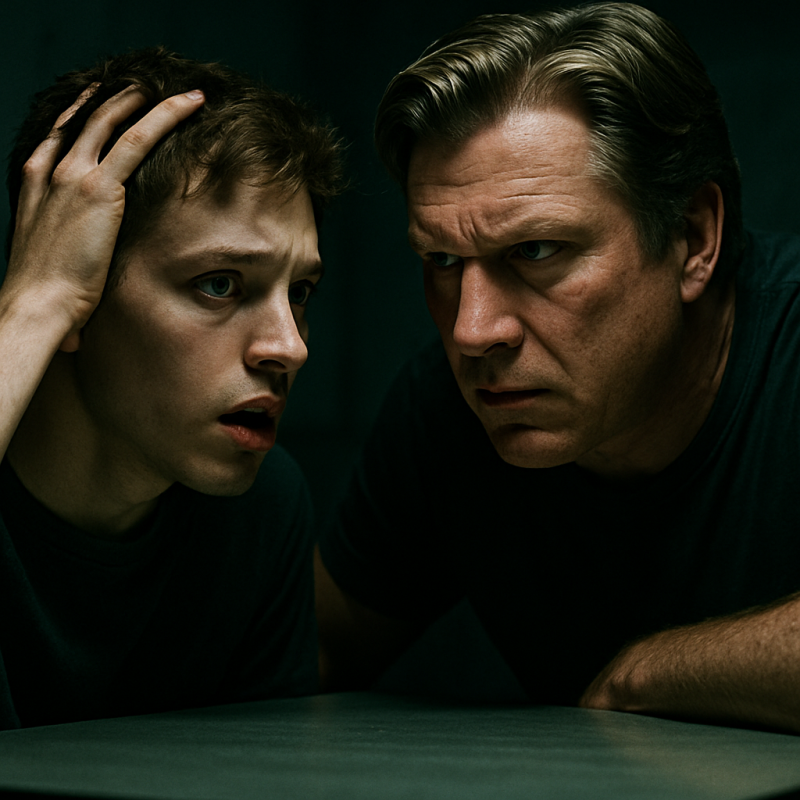 Image by RM AI
The Weight He Carried
Tyler's composure finally cracked. "I wanted to stop," he said, his voice breaking. "Months ago, I wanted to stop. But every time I tried to pull back, she'd get upset. She'd call me and tell me how much she needed me, how everyone else had abandoned her." Tears started running down his face. "I felt so guilty, Dad. Like if something happened to her, it would be my fault. She kept saying I was the only one who understood, the only one who cared enough to actually help." I moved to sit beside him on the couch. "She made comments about being abandoned by everyone," Tyler continued. "And I kept thinking about what would happen if I stopped coming. What if she got really sick? What if she ended up in the hospital because I wasn't there?" His hands were shaking. "I started lying because I didn't know what else to do. The visits became this thing I couldn't escape from." "Tyler," I said firmly, putting my hand on his shoulder. "This was never your responsibility to carry. None of this should have been on you." I finally understood that my son hadn't been sneaking out with defiance—he'd been sneaking out under a burden no teenager should carry alone.
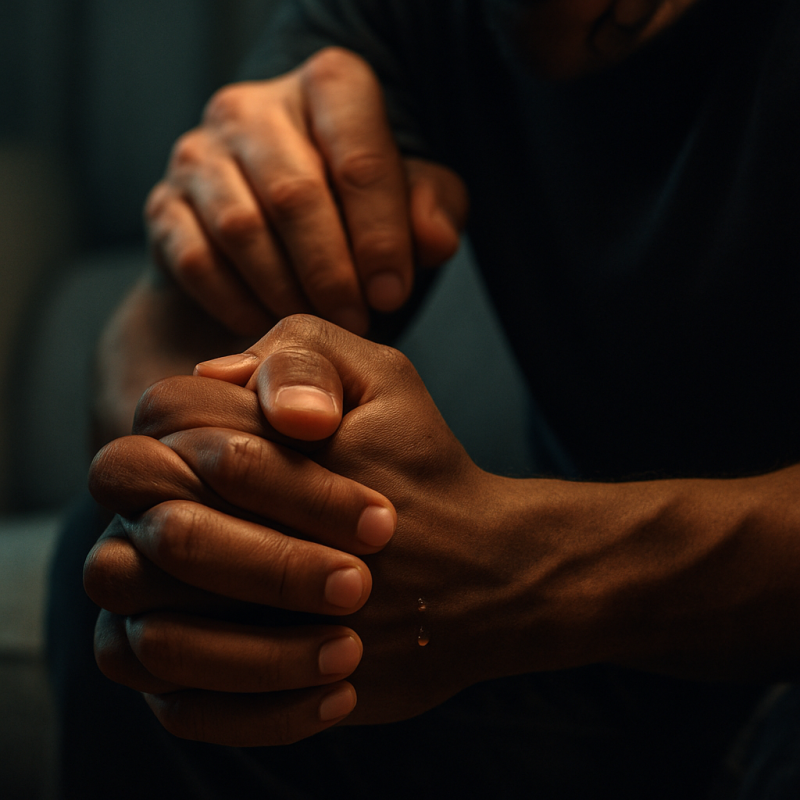 Image by RM AI
Naming What Happened
I walked Tyler through it step by step, making sure he understood. "Patricia identified your compassion and your desire to be helpful. She connected you emotionally to your grief over your grandmother, then positioned herself as someone only you could save. She escalated her dependency gradually so you wouldn't notice how much she was asking until you were already in too deep." Tyler listened, wiping his eyes. "Healthy relationships don't weaponize guilt," I continued. "Your instinct to help was good. That's who you are, and I'm proud of that. But she took advantage of it. She needs professional support—doctors, therapists, people trained to help her. Not a sixteen-year-old kid." "But what if she really does need help?" Tyler asked. "Then she needs to get it from the right people," I said. "You are not responsible for her choices. Setting boundaries isn't the same as abandonment. You're allowed to say no. You're allowed to protect yourself." Tyler nodded slowly, and I could see something shifting in his understanding. "She made you feel like you were the only one who could save her. That's the manipulation, Tyler. That's what was done to you." Tyler listened with tears in his eyes as I put words to what had been done to him—and what it would take to undo it.
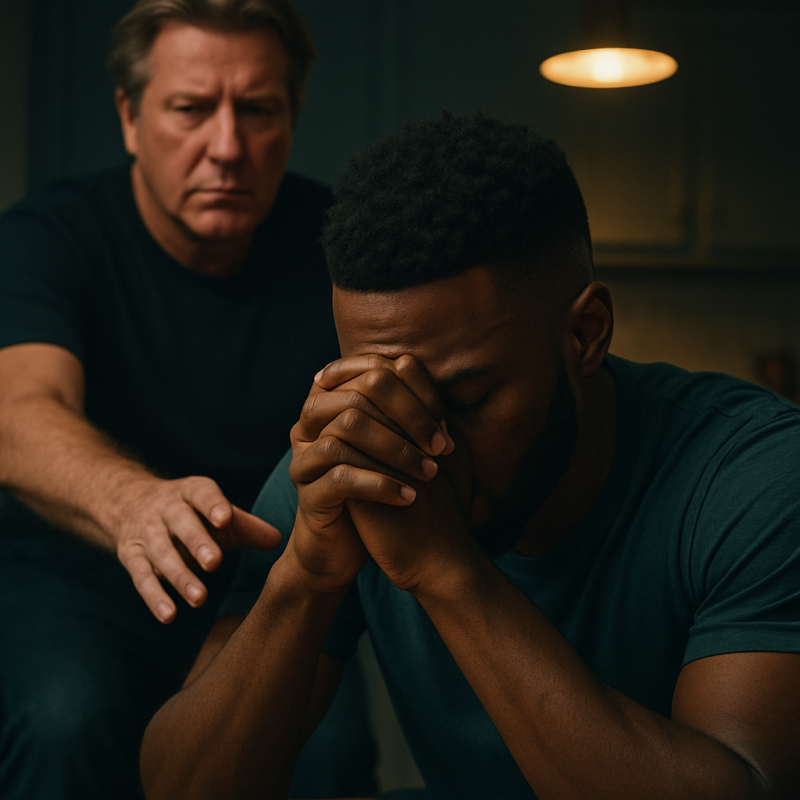 Image by RM AI
Planning Together
We sat at the kitchen table, and I asked Tyler what he thought should happen next. "I don't know," he said. "I'm worried about Emily. This is going to hurt her." "Emily is caught in a difficult position," I acknowledged. "But we can't let that stop us from doing what's right." We talked through the options. "The nighttime visits stop completely," I said firmly. "That's non-negotiable." Tyler nodded, though his face showed worry. "What if Patricia freaks out?" "I'll handle the confrontation," I assured him. "You don't have to face her alone." We discussed informing Patricia's doctor about the medications she'd stopped taking. Tyler agreed she needed real help from qualified people, not validation from a teenager. "I want you included in decisions that affect you," I told him. "But some things I need to handle as your father." Tyler looked relieved and anxious at the same time. We mapped out who needed to be contacted and in what order. We discussed how to approach Emily about her mother's situation without making her feel attacked. By the time we finished, we had a clear plan. The plan was clear, but I knew confronting Patricia would test everything—she wouldn't release her hold on Tyler without resistance.
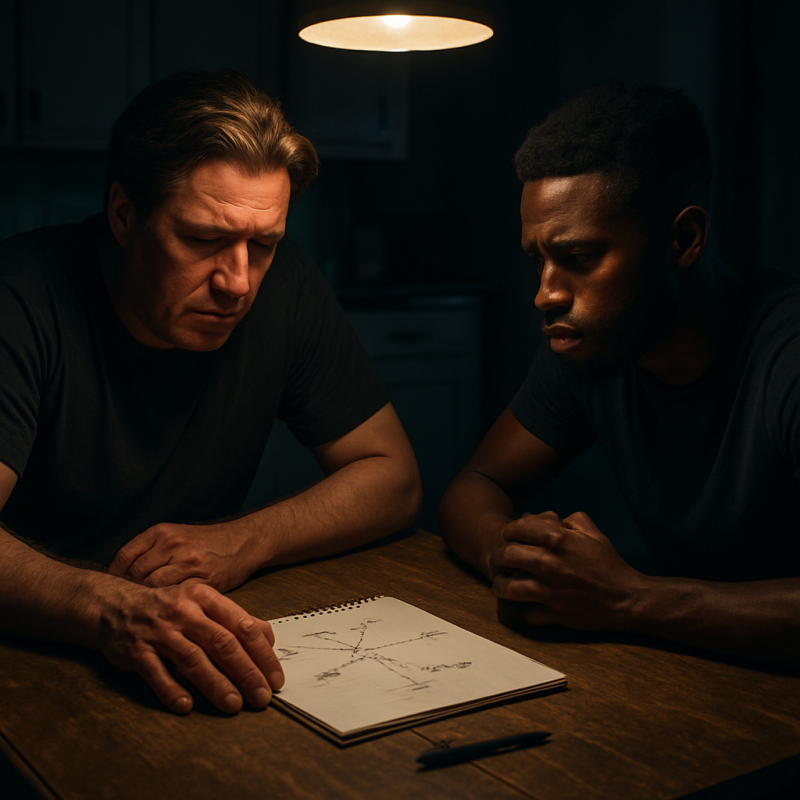 Image by RM AI
Preparing for Battle
I sat alone in my office that evening, door closed, and forced myself to think through what was coming. Confronting Patricia wouldn't be like talking to Tyler—she'd had years to perfect the techniques she'd used on my son, and she'd deploy every single one of them on me. I grabbed a notepad and started writing down the key points I needed to communicate, the boundaries that were non-negotiable. Tyler's involvement ends completely. She needs professional help, not a teenage caretaker. Any further contact with my son won't be tolerated. I wrote out likely responses she might give, the deflections Tyler had described. She'd position herself as the victim. She'd emphasize her isolation and suffering. She'd suggest I was being cruel to someone who was sick and alone. I needed to anticipate it all, prepare responses that wouldn't waver regardless of tears or guilt tactics. My primary goal was simple: end Tyler's involvement. Secondary: direct her toward appropriate medical resources. I considered whether Laura should come with me, then decided I needed to update her completely first—she deserved to know everything before any confrontation happened. I accepted that Patricia probably wouldn't respond well, that she might escalate or lash out. But I was going anyway. I had shielded Tyler from consequences; now I needed to shield him from someone who had pretended to be the one needing protection.
 Image by RM AI
United Front
Laura came home from work, and I asked her to sit down at the kitchen table. "I need to tell you everything I've learned," I said. "About Tyler, about the woman he's been visiting." She set down her bag, her expression already tense. I took a breath and said it plainly: "Her name is Patricia. She's Emily's mother." Laura's face went blank with shock. "Emily's mother? Tyler's been sneaking out to help his girlfriend's mother?" I explained how Patricia had manipulated Tyler's compassion, how she'd created an emotional dependency that fed on his grief over Mom. I described the late-night calls, the way she'd positioned herself as someone only he could help. Laura's hands clenched on the table. "That woman used our son," she said, her voice shaking with anger. "She knew exactly what she was doing." I outlined the plan Tyler and I had developed—the boundaries we'd set, the confrontation that needed to happen. "I want to be there," Laura said immediately. "When you talk to her, I'm coming with you." I nodded. We would face this together, as a united front. Laura's anger settled into cold resolve, and I knew that when we faced Patricia, we would do it as one.
 Image by RM AI
The Confrontation
I drove to Patricia's house the next afternoon, Laura beside me in the passenger seat. We'd agreed I would take the lead, but her presence gave me strength. Patricia opened the door with a warm smile, clearly surprised to see me. "Oh, hello," she said pleasantly. "Is everything all right?" I stayed on the porch, declining her gesture to come inside. "I need to talk to you about Tyler," I said directly. "His visits are over. He won't be coming here anymore." Her welcoming expression transformed instantly into wounded confusion. "I don't understand," she said softly. "Has Tyler said something? Did I do something wrong?" I kept my voice steady. "I understand the full situation now. Tyler is a teenager, not your caretaker. You need to work with your doctors and your own family for support." Patricia's eyes searched mine, and I saw her calculating, adjusting. "I never asked him to take care of me," she said, her voice trembling slightly. "He offered to help, and I was just so grateful to have someone who cared." I watched her begin the performance Tyler had described, the same tactics he'd fallen for. Patricia's expression shifted through surprise, hurt, and something harder beneath—and I saw the mask beginning to slip.
 Image by RM AI
The Victim Performance
Patricia's eyes filled with tears, and she pressed a hand to her chest. "I never meant to burden anyone," she said, her voice breaking. "I'm just a sick woman with no one else to turn to." The tears spilled over, tracking down her pale cheeks. "When Tyler offered to help, I tried to say no at first. But he was so insistent, so kind. I only accepted because he seemed to genuinely want to be there." She looked at me with those wounded eyes, the same look Tyler must have seen dozens of times. "I've been so alone since my health declined," Patricia continued. "Even my own daughter barely visits anymore. Tyler was the only person who made me feel like I mattered." I stood there watching her deploy every tactic Tyler had described—the emphasis on isolation, the gentle guilt, the positioning of herself as someone who'd tried to refuse help but was simply too desperate. "You're a parent," she said, appealing directly to me. "You understand what it's like to need someone. I would never intentionally hurt Tyler. I care about him deeply." Her voice dropped to almost a whisper. "It feels cruel to cut me off when I'm suffering so much." I recognized the performance for exactly what it was—the same approach she had used on my son, now directed straight at me.
 Image by RM AI
Drawing the Line
I let her finish, then spoke firmly. "Tyler's involvement is finished. That's not changing." Patricia wiped at her tears, her expression shifting slightly. "Can I at least say goodbye to him in person? Just once, to thank him for everything he's done?" "That won't be happening," I said. Her demeanor changed, the pleading tone giving way to something sharper. "You don't understand what I'm going through," she said, irritation creeping into her voice. "It's easy to judge from the outside, but you have no idea what it's like to be this sick, this alone." I kept my voice level. "I understand enough to know that Tyler cannot fix your situation. You have a doctor. You have a daughter. Those are the people who should be involved in your care." Patricia's jaw tightened. "So you're just going to abandon a sick woman? That's your solution?" "I'm directing you toward appropriate sources of support," I replied. "Professional resources exist for exactly what you're dealing with. Tyler is not one of those resources." Her expression became flat, closed off, the tears drying up as quickly as they'd appeared. Patricia's expression hardened, and for the first time I glimpsed the steel beneath the fragility she had been projecting.
 Image by RM AI
Caught in the Middle
A car pulled up to the curb behind mine, and Emily got out. She approached the porch with concern on her face, clearly recognizing me as Tyler's father. "What's happening?" she asked, looking between Patricia and me. Patricia immediately reached for her daughter. "Emily, thank God you're here. This man is trying to cut me off from the only person who's been helping me." I saw Emily's expression shift—not surprise, but a kind of weary recognition. "Mom," she said quietly. I explained briefly that I was ending Tyler's involvement with Patricia, that it had become inappropriate for a teenager to be so deeply involved in an adult's medical and emotional care. Emily looked at her mother with exhaustion and love mixed together in a way that seemed practiced, habitual. "I knew about Tyler's visits," Emily admitted, her voice barely above a whisper. "I tried to warn him it was becoming too much." Patricia stared at her daughter. "You knew? And you didn't stop it?" "I tried, Mom," Emily said. "I told Tyler you could be overwhelming. But he wouldn't listen." She looked at me with something like apology in her eyes. Emily's face showed she understood more about her mother's patterns than anyone had realized—and that knowledge came with its own burden of pain.
 Image by RM AI
The Daughter's Truth
I asked Emily if we could talk privately, and she nodded, following me down the driveway away from Patricia's hearing. Laura stayed near the porch, a silent barrier. "I'm sorry for what my mother put Tyler through," Emily said immediately. "She's always been like this." I asked her to explain, and she did—years of being her mother's primary emotional support, the constant crises, the way Patricia would create dependencies and then become devastated when people set boundaries. "I tried being her caretaker all through high school," Emily said. "I finally had to pull back for my own sanity. When I did, she found Tyler to fill that void." Her voice cracked slightly. "I thought maybe if Tyler helped her, it would take pressure off me. I realize now how unfair that was to him." I asked if she'd tried getting Patricia professional help. "So many times," Emily said. "She goes to doctors, gets medications, then stops taking them when she decides they're not working. She wants someone to fix her, but she won't do the work herself." Emily looked back toward the house where her mother stood watching us. "I love her, but I can't save her. And neither can Tyler." Emily had carried a weight similar to what Tyler took on—only she had been carrying it far longer, with no one to help her set it down.
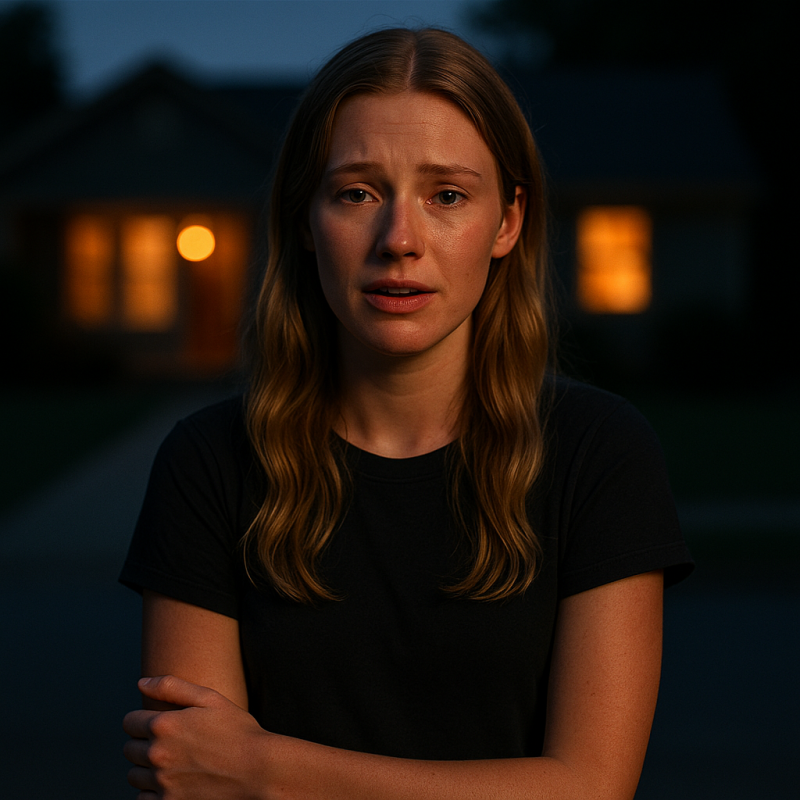 Image by RM AI
The Professional Call
That evening, I looked up the doctor Patricia had mentioned during our conversation—Dr. Chen, an oncologist at the regional medical center. I called the office and asked to speak with her directly. When she came on the line, I explained who I was and that I had serious concerns about a patient's medication compliance. "The patient's name is Patricia Morrison," I said. "I've learned she's been refusing to take prescribed medications and seeking validation for that decision from my teenage son." Dr. Chen listened carefully, asking clarifying questions about what Tyler had observed and what Patricia had told him. I explained how Tyler had been positioned as her primary emotional support, how she'd used him to justify medical decisions that should have been between her and her doctors. "This is very concerning," Dr. Chen said. "I appreciate you bringing this to my attention. I'll follow up through proper medical channels." I asked if there was anything else I should do from my end. "Continue supporting your son through processing this experience," she advised. "What he went through wasn't appropriate, and he'll need help understanding that." I thanked her and hung up. I couldn't force Patricia to accept help, but I could make certain the people who should know the truth finally had it.
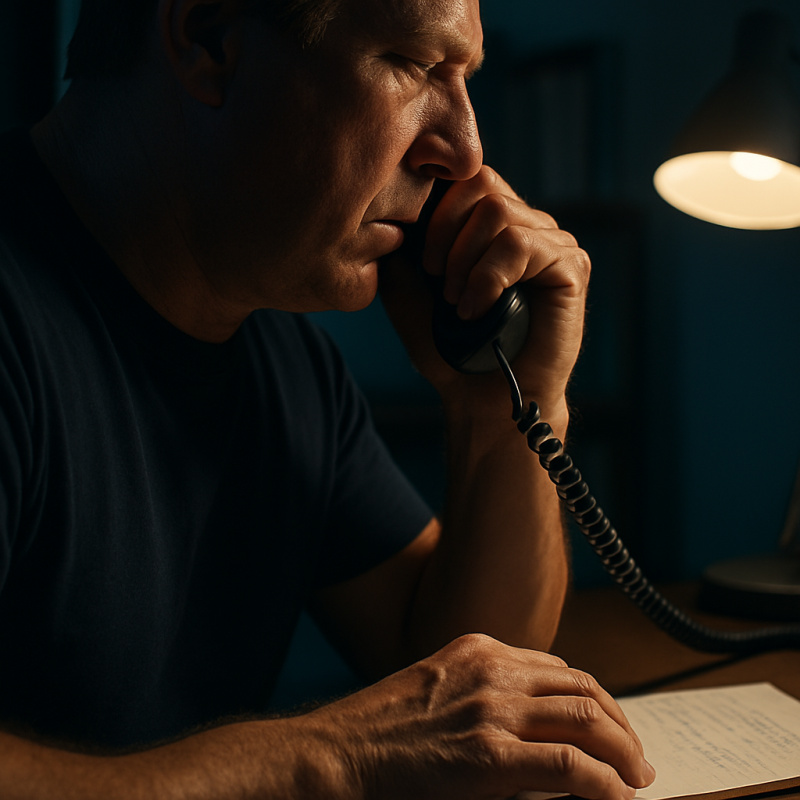 Image by RM AI
Setting the Terms
I arranged the meeting at Patricia's house two days later. Laura and Tyler came with me, and when we arrived, Emily answered the door with a tight expression that told me she knew exactly why we were there. Patricia sat in the living room, pale and composed, her hands folded in her lap. I explained calmly that we needed to establish clear boundaries moving forward—that Tyler's nighttime visits were finished, that Patricia's medical care needed to come from professionals and family, not from a seventeen-year-old boy. Laura reinforced my words, her tone direct but not cruel, making it clear that Tyler's involvement had crossed lines that should never have been blurred. Tyler spoke briefly, his voice steady despite the tension in his shoulders, saying he needed to focus on his own life and his own future. Patricia looked directly at him then, her eyes wounded and pleading. "Tyler, you understand what I was going through," she said softly. "You were the only one who truly listened." Emily cut her off before Tyler could respond. "Mom, stop," she said firmly. "Just stop." Patricia fell silent, her jaw tight, but she didn't argue further. The meeting ended with clear expectations established for everyone—and Tyler was finally released from an obligation he had never truly agreed to carry.
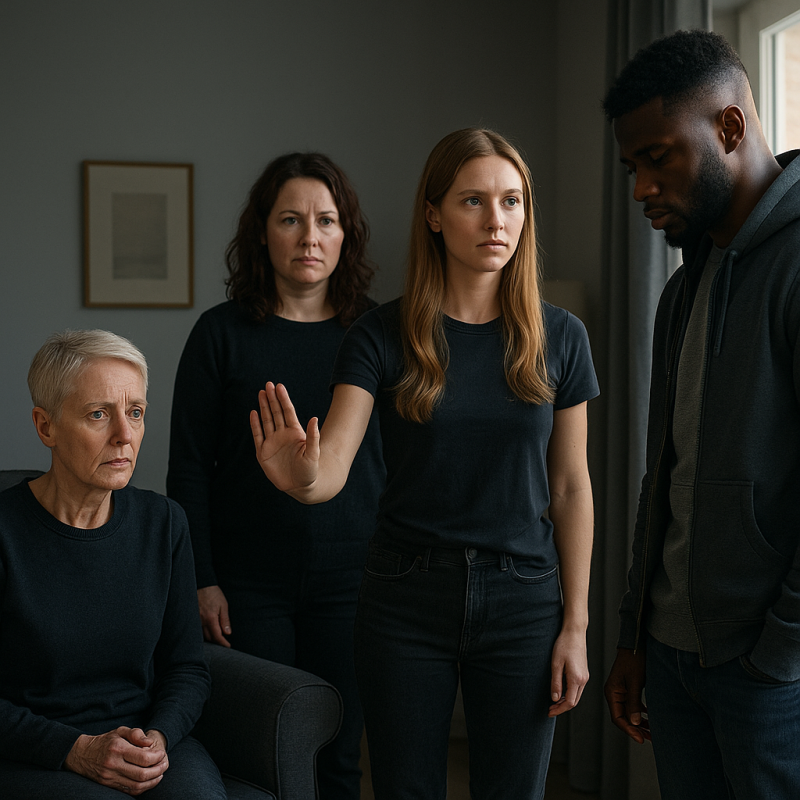 Image by RM AI
Sitting with It
Several days passed before I found Tyler sitting on the back porch after dinner, staring out at the yard as the evening light faded. I grabbed two bottles of water from the kitchen and joined him, settling into the chair beside his. "How are you feeling?" I asked. He was quiet for a moment, then shrugged. "Relieved, mostly," he said. "But also kind of guilty, which I know doesn't make sense." I told him guilt was natural but not deserved—that he'd tried to help someone who needed more than he could give, and recognizing that wasn't abandonment. We talked about what he'd learned from the experience, and he admitted he understood now why boundaries were necessary, even when they felt harsh. I acknowledged that his intentions had been good throughout, that his compassion was something I was proud of. "But compassion needs to be protected from people who would exploit it," I said. "That's not cynicism. That's wisdom." Tyler nodded slowly, then looked at me. "Thanks for not just punishing me when this all started," he said. "For trying to understand." For the first time in months, Tyler looked like a weight had lifted from his shoulders—and I felt the same release.
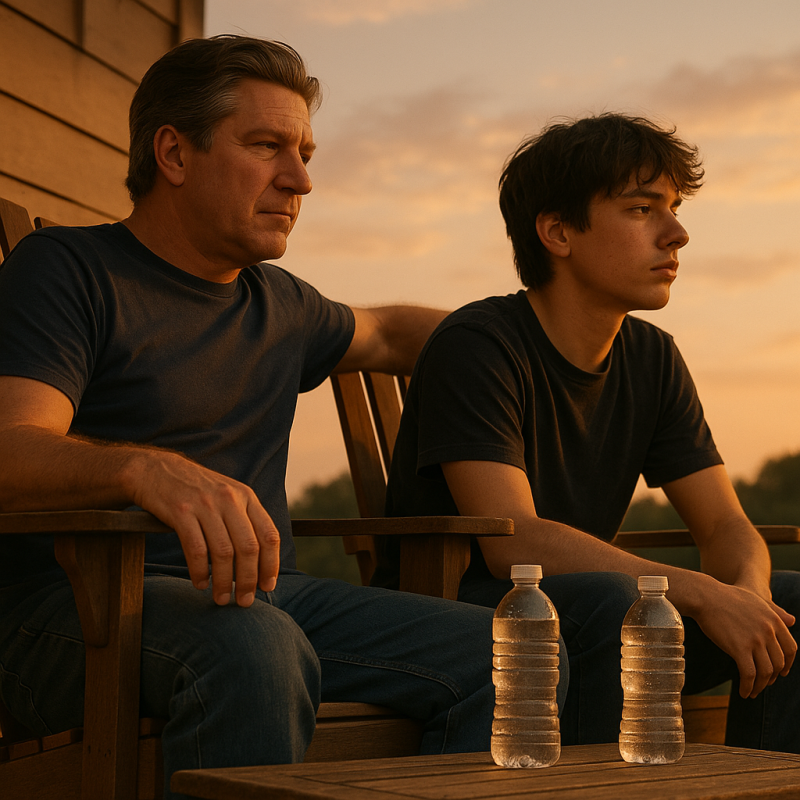 Image by RM AI
The Family Talk
That weekend, we sat down together for dinner—just the three of us, no distractions, no phones. Laura opened the conversation gently, saying we needed to talk about what we'd all been through and what it meant moving forward. Tyler apologized sincerely for the lying and secrecy, his voice thick with regret. Laura and I both acknowledged we could have noticed warning signs sooner, that we'd missed opportunities to intervene before things escalated. We discussed what to watch for in the future—changes in behavior, withdrawal, evasiveness. Laura admitted she'd been too quick to want punishment without understanding the full picture. I admitted I could have acted faster once I recognized something was wrong. Tyler promised he would come to them first if something ever felt wrong again, that he understood now why we needed to know what was happening in his life. The conversation gradually shifted to lighter topics—school, upcoming plans, small everyday things that felt almost revolutionary in their normalcy. The atmosphere felt easier than it had in months, like we'd finally exhaled after holding our breath for too long. The conversation didn't erase the past, but it built something new—a family that could face difficult truths and come through stronger.
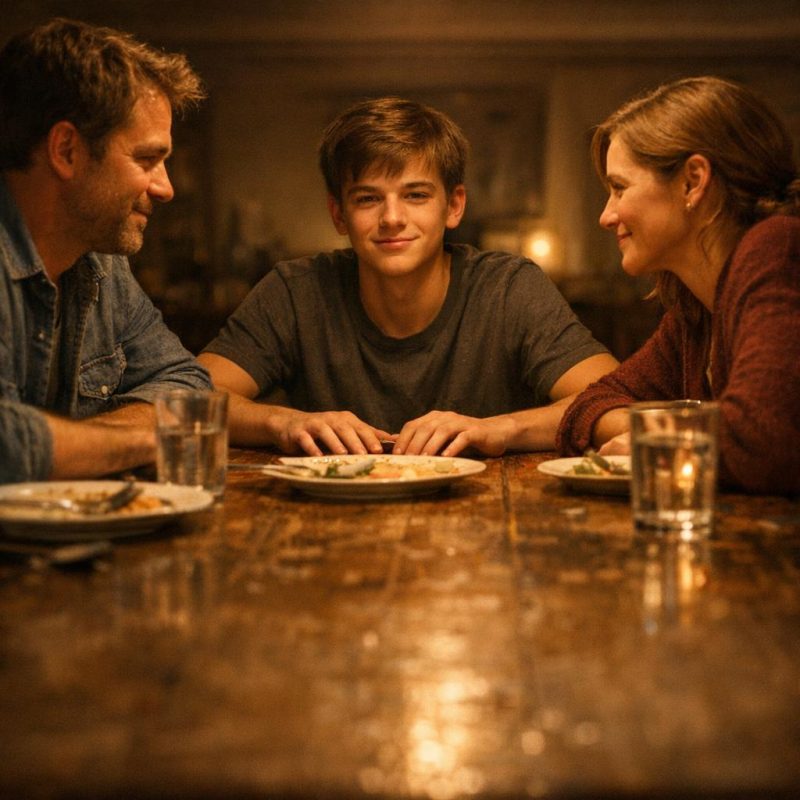 Image by RM AI
Moving Forward
Morning routine returned to its normal rhythm. Tyler came downstairs for breakfast looking rested and present in a way he hadn't been for months. I noticed he seemed more engaged, less distracted, his attention focused on the moment rather than somewhere else entirely. Over cereal, he mentioned he'd been talking with Emily about her mother, that they were trying to figure out what their relationship looked like now. I asked how that was going between them. "We're taking it slow," he said. "She's dealing with a lot, and I'm just trying to be there without getting pulled back into everything." I told him that sounded like exactly the right approach. I watched him grab his backpack and head toward the door, then he paused and turned back. "Thanks, Dad," he said. "For everything." I told him I was proud of the person he was becoming—not despite what happened, but because of how he'd handled it. Tyler left for school, and I sat with my coffee, reflecting on everything we'd been through and how it had changed us both. My son was more aware now, our trust rebuilt on stronger foundations, the lessons still shaping who we were becoming. The back door still creaked when it opened, but now it was just a sound—not a secret waiting to be uncovered.
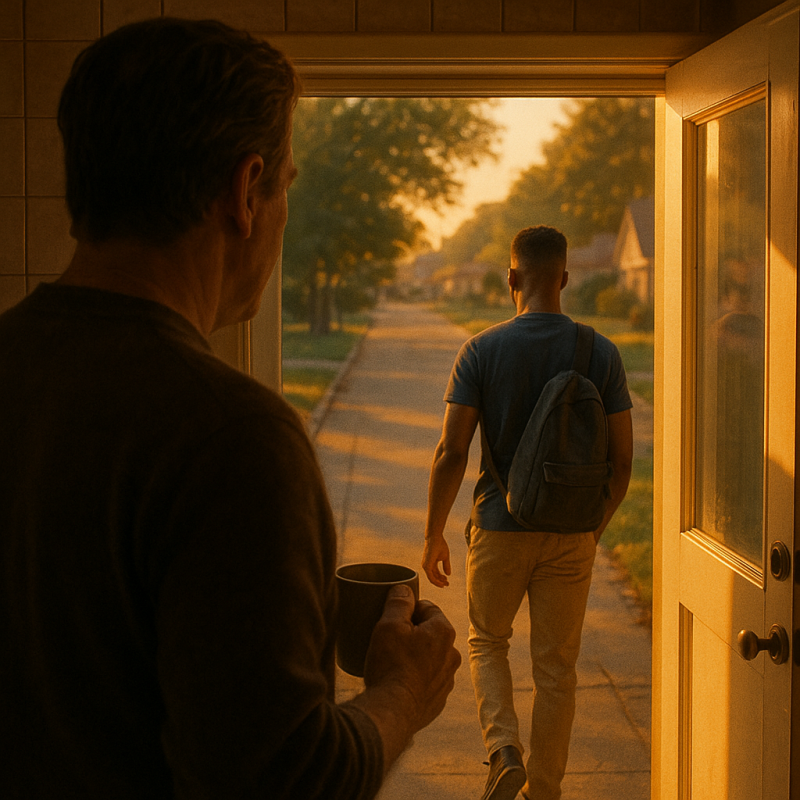 Image by RM AI
Moving Forward
Morning routine returned to its normal rhythm. Tyler came downstairs for breakfast looking rested and present in a way he hadn't been for months. I noticed he seemed more engaged, less distracted, his attention focused on the moment rather than somewhere else entirely. Over cereal, he mentioned he'd been talking with Emily about her mother, that they were trying to figure out what their relationship looked like now. I asked how that was going between them. "We're taking it slow," he said. "She's dealing with a lot, and I'm just trying to be there without getting pulled back into everything." I told him that sounded like exactly the right approach. I watched him grab his backpack and head toward the door, then he paused and turned back. "Thanks, Dad," he said. "For everything." I told him I was proud of the person he was becoming—not despite what happened, but because of how he'd handled it. Tyler left for school, and I sat with my coffee, reflecting on everything we'd been through and how it had changed us both. My son was more aware now, our trust rebuilt on stronger foundations, the lessons still shaping who we were becoming. The back door still creaked when it opened, but now it was just a sound—not a secret waiting to be uncovered.
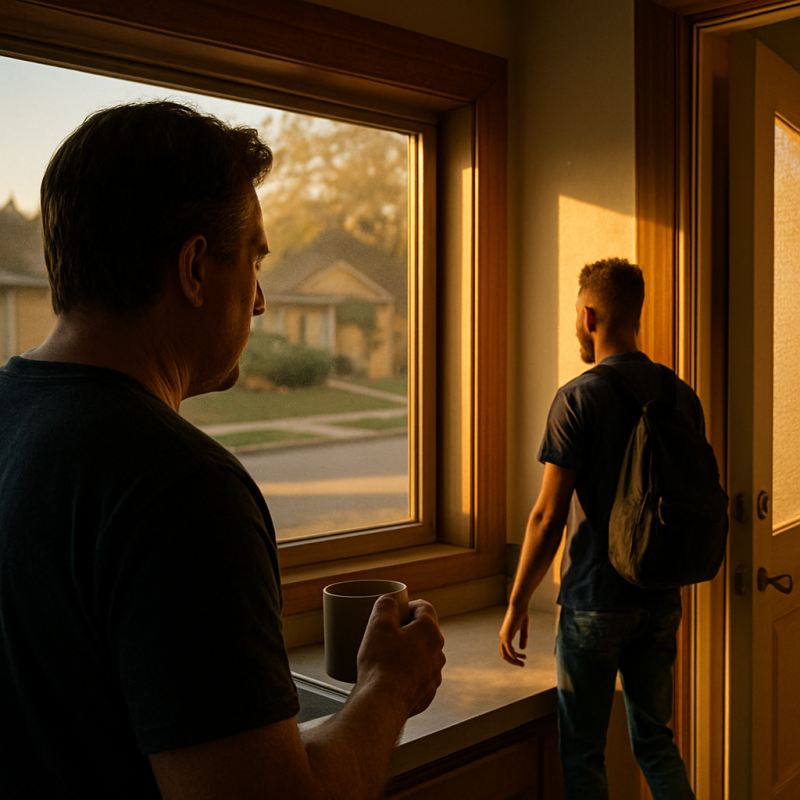 Image by RM AI
KEEP ON READING
20 Ways Your Body Only Gets Stronger As You Age